
When we decided to move back to the US, one of the first cities I wanted to visit was Miami. But as we planned our trips – weekend getaways, road trips, etc. – it just never seemed to fit in. Then, we discovered that Afro Nation – the world’s biggest afrobeats festival – would be taking place in Miami May 27-28 and just like that, we starting reworking our trips.
Our quick Southern road trip was moved and extended and our Great Lakes road trip got scrapped altogether (not exactly a vegan paradise anyway). The festival was the reason we were headed to Miami, but there was so much more that we wanted to see and do. We had 12 days (including some pretty long travel days), so we gave ourselves 4.5 of them in Miami. And we filled every single one of them.
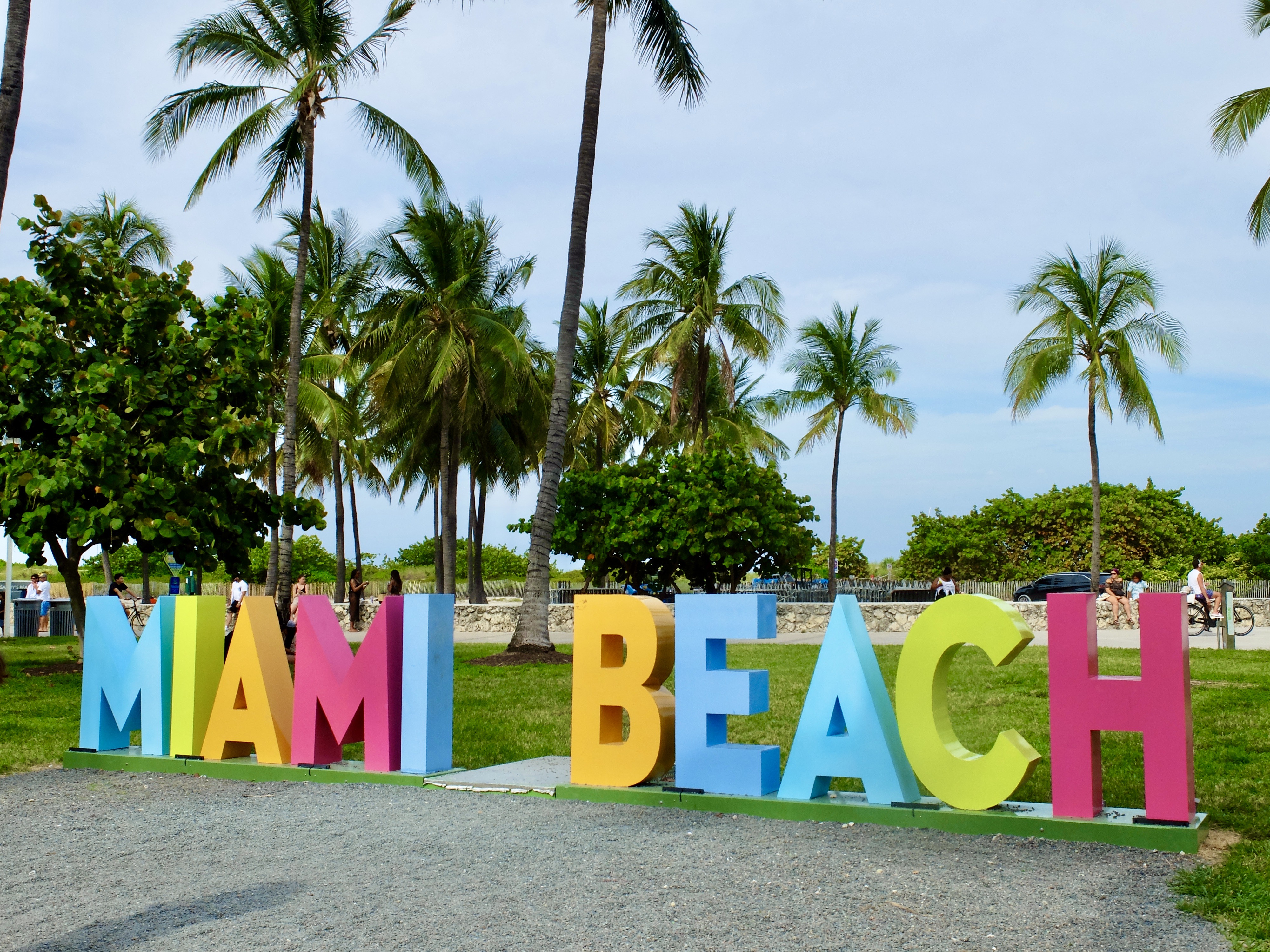
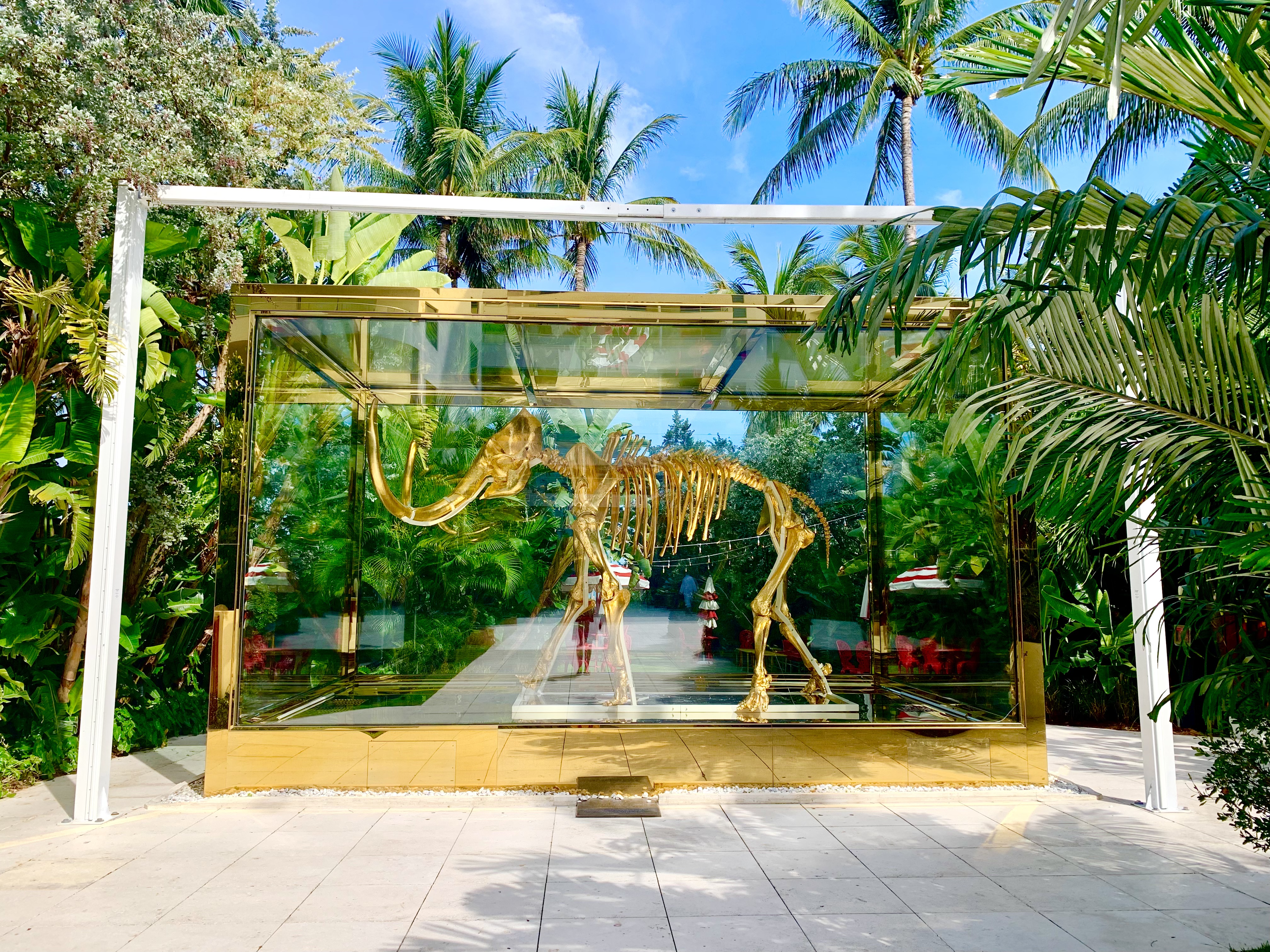
Miami may not be home to the best beach in Florida (shout out to Sarasota!), but Miami Beach is famous none-the-less and we had numerous reasons for wanting to spend some time at it. First, was a bucket list item for Chandler: A woolly mammoth skeleton that’s been coated in 24-karat gold. Located at Faena Hotel, artist Damien Hirst sealed it in a glass coffin after applying the gold.
We parked in a lot around the corner, walked into the well-appointed hotel like we owned the place (some of the hotel’s designers included Baz Luhrmann and Catherine Martin – known for making movies like The Great Gatsby), and made our way straight back to the gardens. There’s not much to do once you get to the mammoth other than marvel at the differences between seeing one so near the beach and dipped in gold vs seeing it at a natural history museum. We were out again in a few minutes, but it was 100% worth the stop.
After that, we spent some time walking along the beach. It was nicer than I had imagined, although it hasn’t escaped the sargassum that’s haunted our beach vacations from the Yucatan in Mexico to Fort Walton Beach in the Florida Panhandle over the last few years.
If you haven’t been to the beach in a while, you might have missed it, but sargassum is large brown seaweed that floats in island-like masses and never attaches to the seafloor. It’s quite useful to the ocean’s food web, but its overabundance these last few years leaves me itchy and because it breaks apart in such tiny pieces, it finds its way into each crack and crevice.
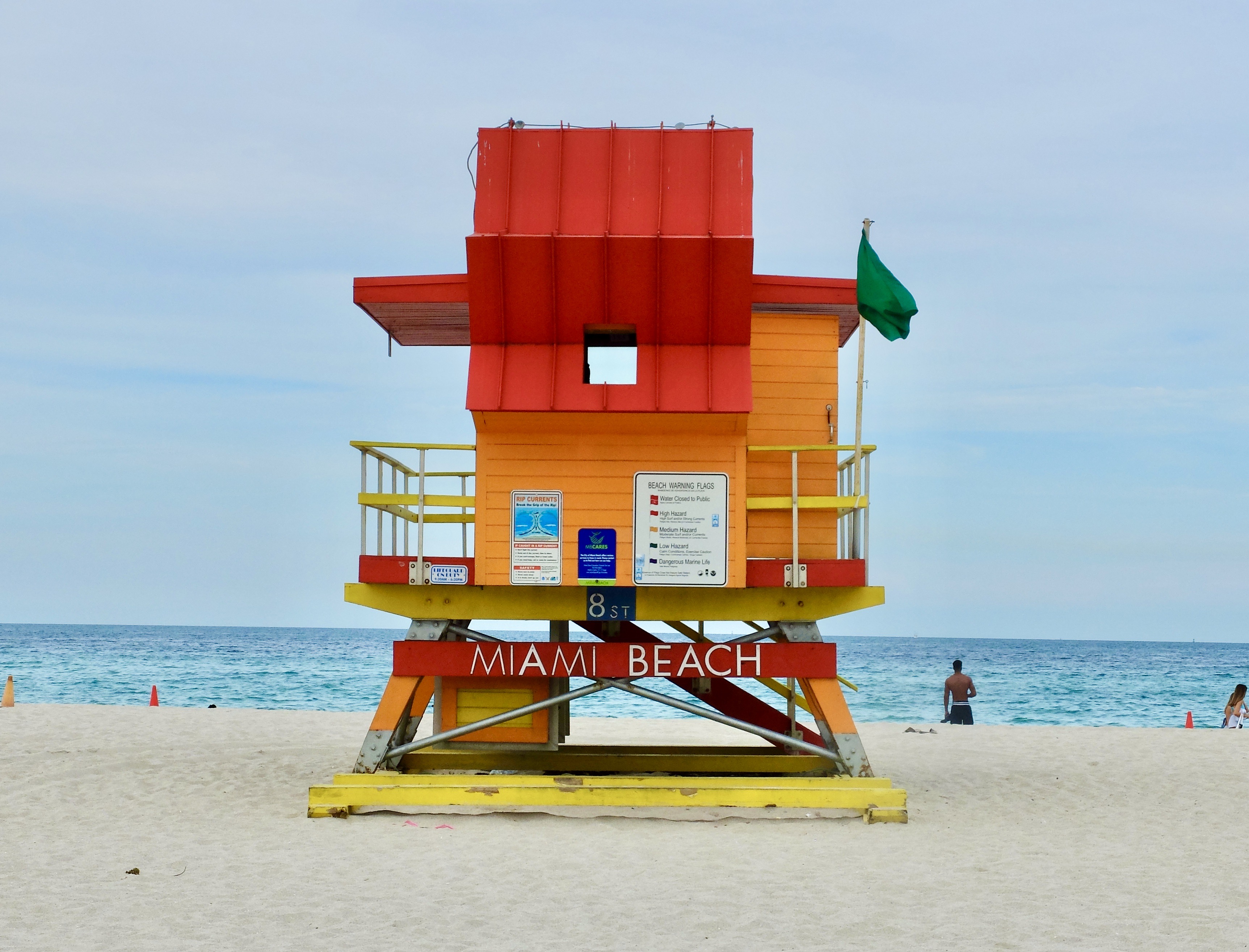
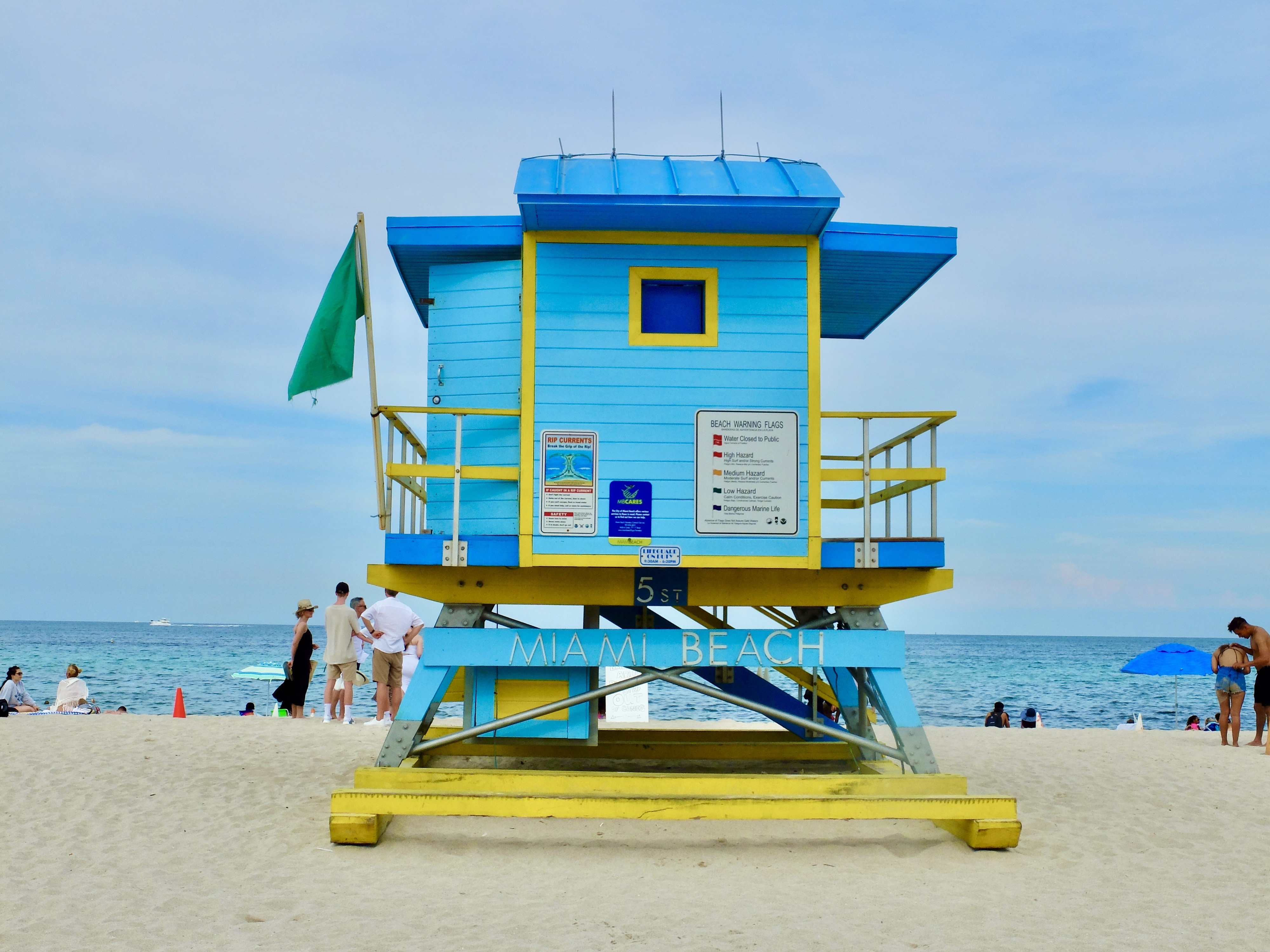
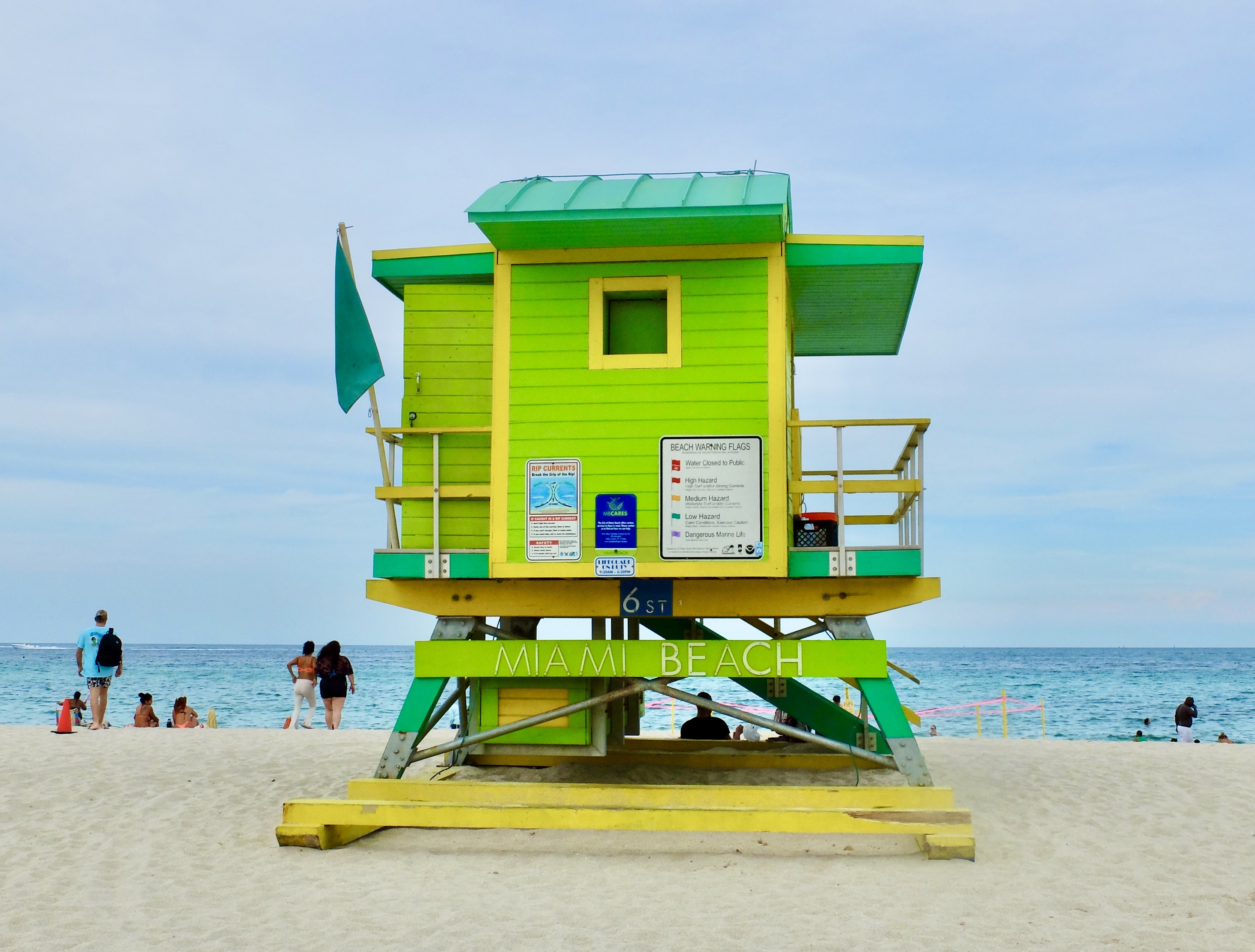
Luckily, we weren’t at the beach to swim, though it was clear that Miami Beach had gone to great lengths to remove it from the sand (nothing you can do about it in the water though!). And from the sand, the water looked lovely, but what really caught my eye on the beach were the lifeguard towers (designed by local architect William Lane). In a perfect world, I would have walked the length of the beach, photographing every single one of them, but I was running out of light and camera battery, so I got photos of three of them at 5th, 6th, and 8th Street.
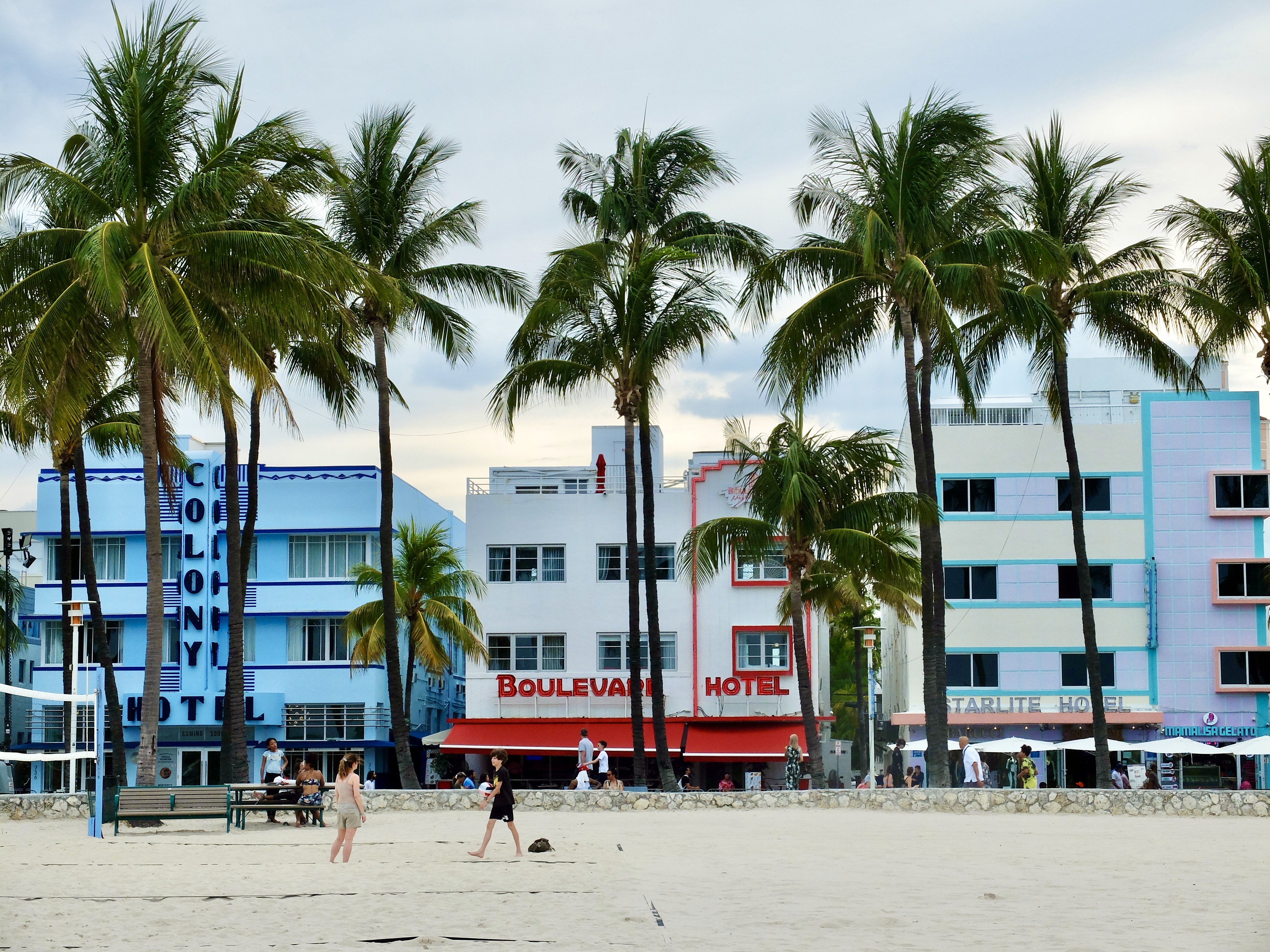
Another reason to go to Miami Beach is to walk along Ocean Drive and enjoy the Art Deco designs. I can only imagine the cost of staying at any one of these hotels (although if I’m being honest, a return to Miami would likely require a stay at the Faena Hotel), but it was a great place for a short stroll.
Miami Beach was the perfect combination of culture, tourism, and fun – I even got invited to play a game of volleyball, but I’m terrible!
Now, any reflection on Miami would be remiss not to mention the food scene. One thing we love about beach towns/cities is that there’s always an abundance of healthy vegan/vegetarian food options.
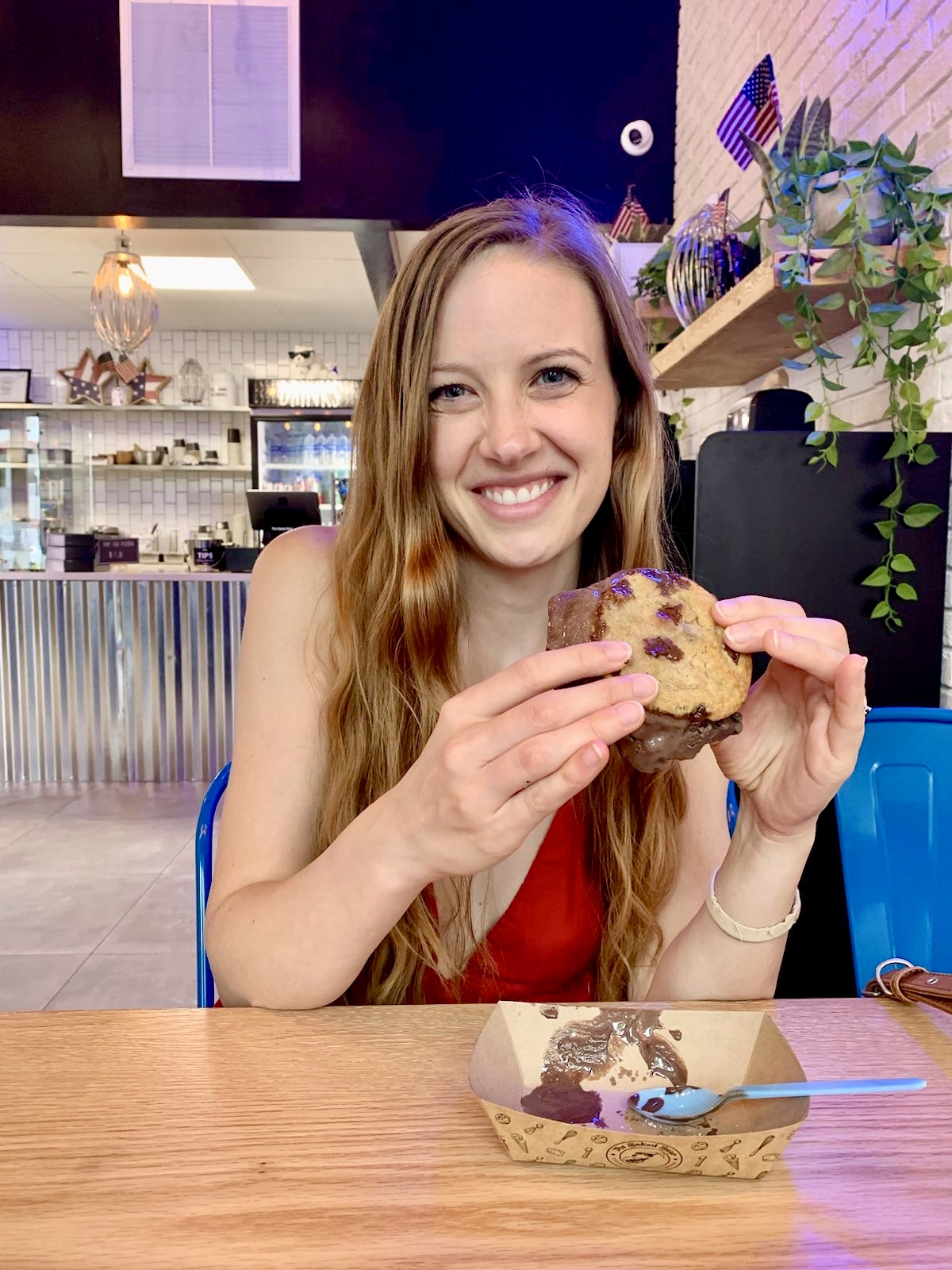
We didn’t eat out as much as I thought we would in Miami because two of our days were spent at the festival and we had some day trips as well, but what we did eat, we loved. Starting with The Baked Bear – an ice cream sandwich shop originating from San Diego, just off Ocean Drive.
With homemade ice cream and fresh-baked cookies, their menu is nothing short of divine. I opted to mix and match my cookies and use dark chocolate ice cream to hold together a chocolate chip cookie and Mexican hot chocolate cookie. Because I’m a purist, I skipped the toppings, but I did opt for the hot press to help hold it together.
This didn’t exactly fit into our healthy vegan vibe, but the other two restaurants did: Vegan Cuban Cuisine and Love Life Cafe.
Vegan Cuban Cuisine was the perfect restaurant in that we ordered six things off the menu (every single one of them heavenly) and there was still more that we wanted to try. My absolute favorites were the tostones (fried green plantains), “beef” empanada, and pulled “pork” bowl. As far as we could ascertain, they are the ONLY vegan Cuban restaurant in the city, which makes them exceptional.
Love Life Cafe was also incredible. They were out of their crispy tofu roll, so we ordered the Thai curry roll from their extensive vegan sushi menu. We also settled on their el chamo bowl (jackfruit mechada, brown rice, black beans, plantains, avocado, guasacaca sauce, cilantro aioli) because I’d been obsessing over plantains since the Afro Nation festival. I pretty much want them in every meal these days. In addition to only serving cruelty-free food made from scratch, Love Life Cafe uses eco-friendly materials and has partnered with Riverside House (a halfway house in Miami where people coming out of prison are supported as they rejoin society).
We discovered Love Life Cafe during our time in Wynwood. In addition to great food, Miami is also known for their diverse art scene. Our favorite museum happened to be Wynwood Walls, Miami’s original street art museum. We thought it might feel too Instagram-y, but it was actually filled with families. We went in the morning so the weather was perfect, but even if you went later in the day, there are some indoor exhibits in addition to the street art.


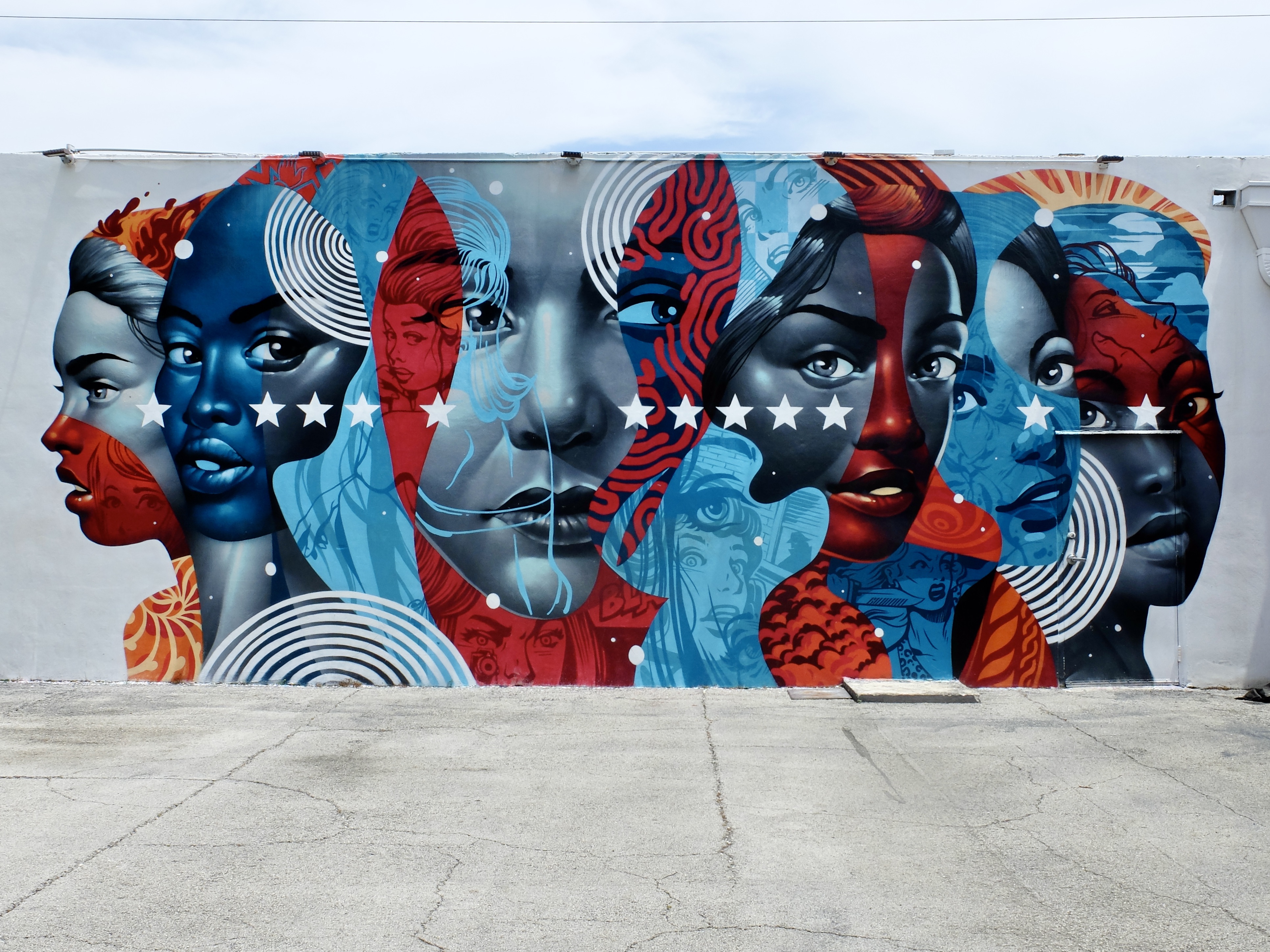
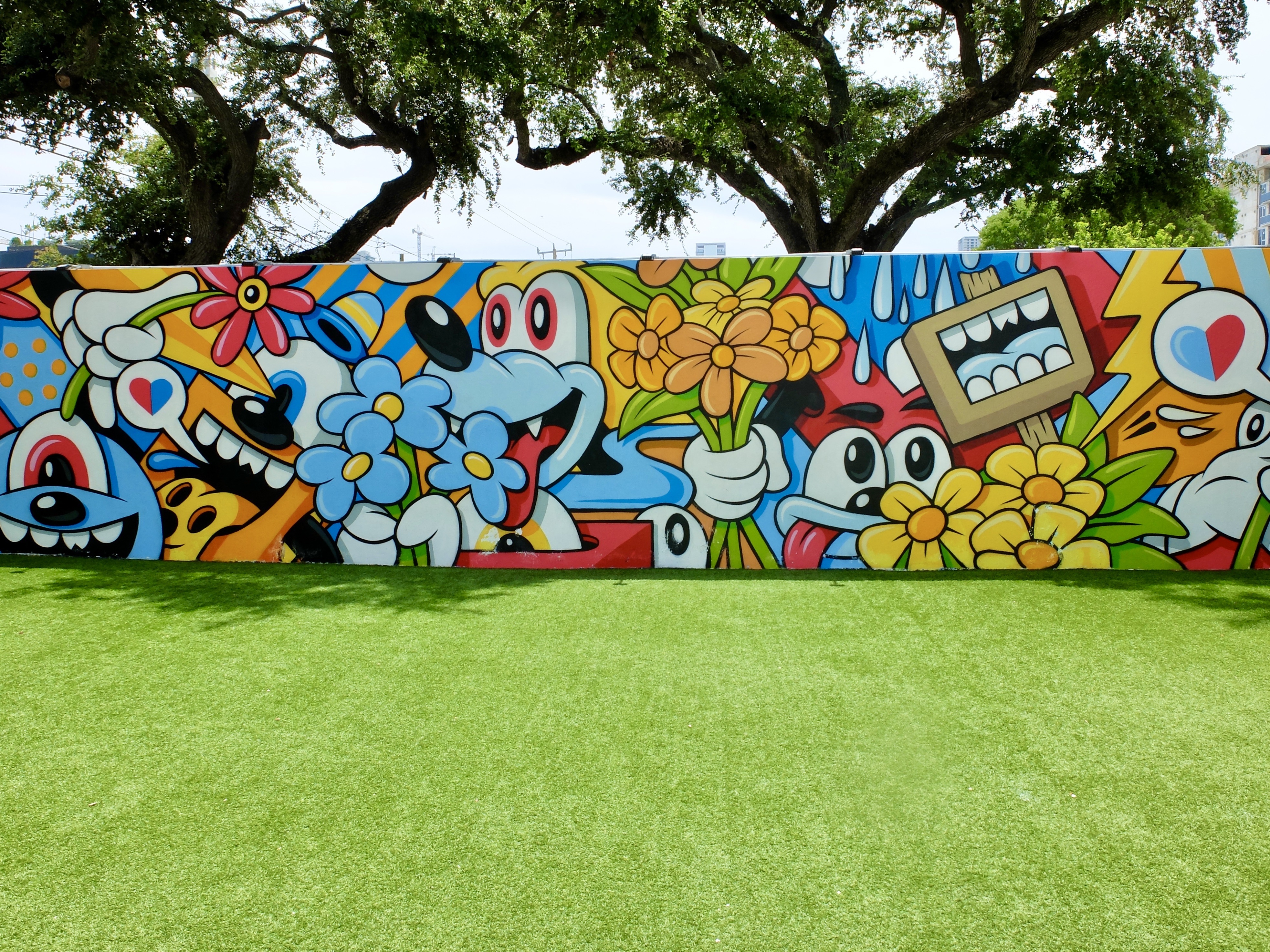
Artists photographed above include Hebru Brantley (statue) & Bicicleta Sem Freio (The Rehearsal – behind the statue), Mikael B (Everything Starts with Nothing – colorful wall behind me), Tristan Eaton (the women), and Greg Mike (cartoons).
The street art is not just contained to Wynwood Walls – the whole neighborhood of Wynwood is filled with colorful grafitti.
We also visited the Rubell Museum – another example of us not quite knowing what to expect. It’s across the street from Superblue Miami (which really does just look like an Instagram museum), so we didn’t know what the quality of the Rubell would be. Turns out, it’s pretty great.
A collection of modern art – pieces of which we either loved or hated – that included Ethiopian artist, Tesfaye Urgessa; Japanese artists, Yayoi Kusama & Takashi Murakami; and American artist Kerry James Marshall. But my favorite pieces are photographed below:

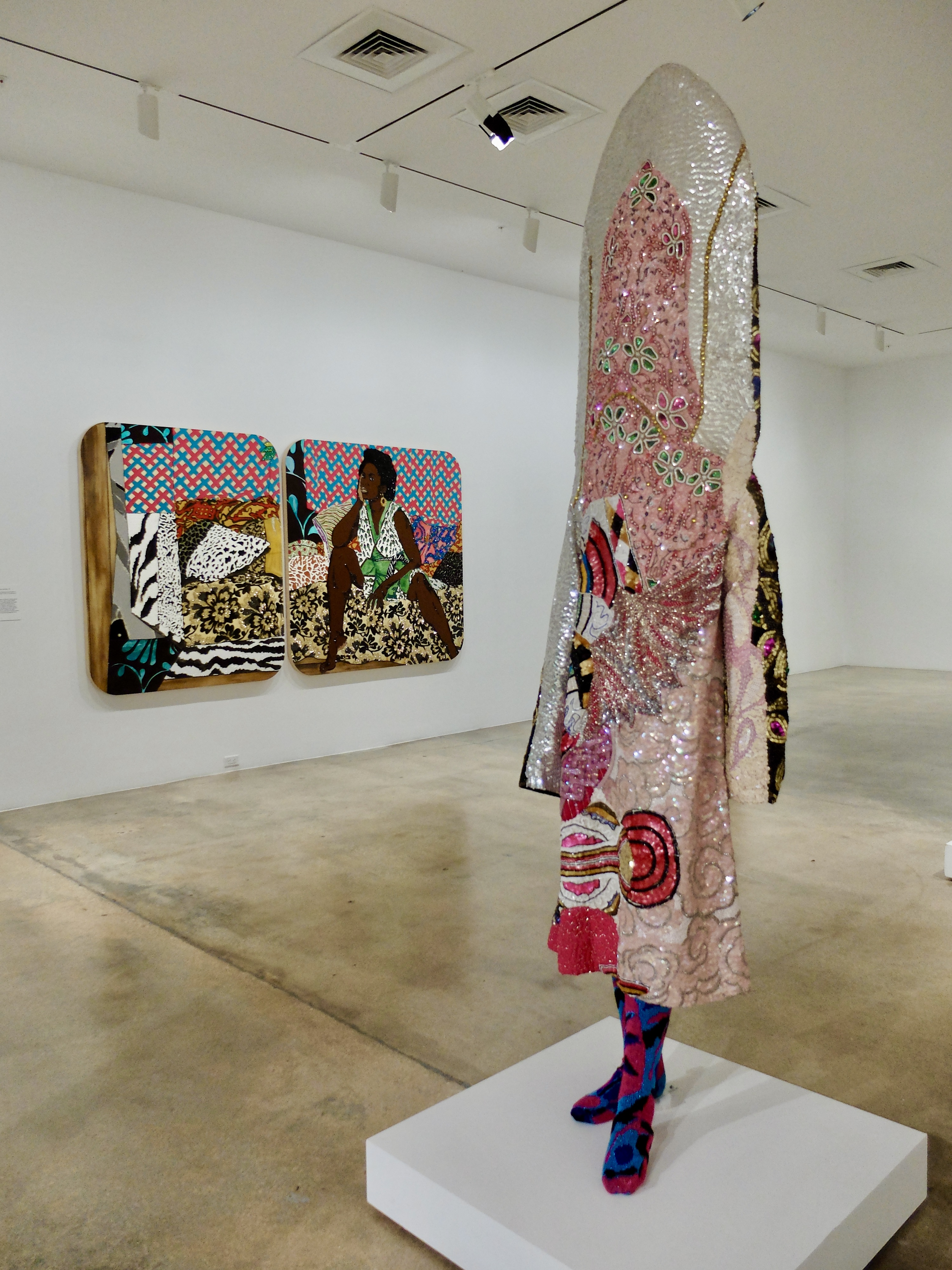
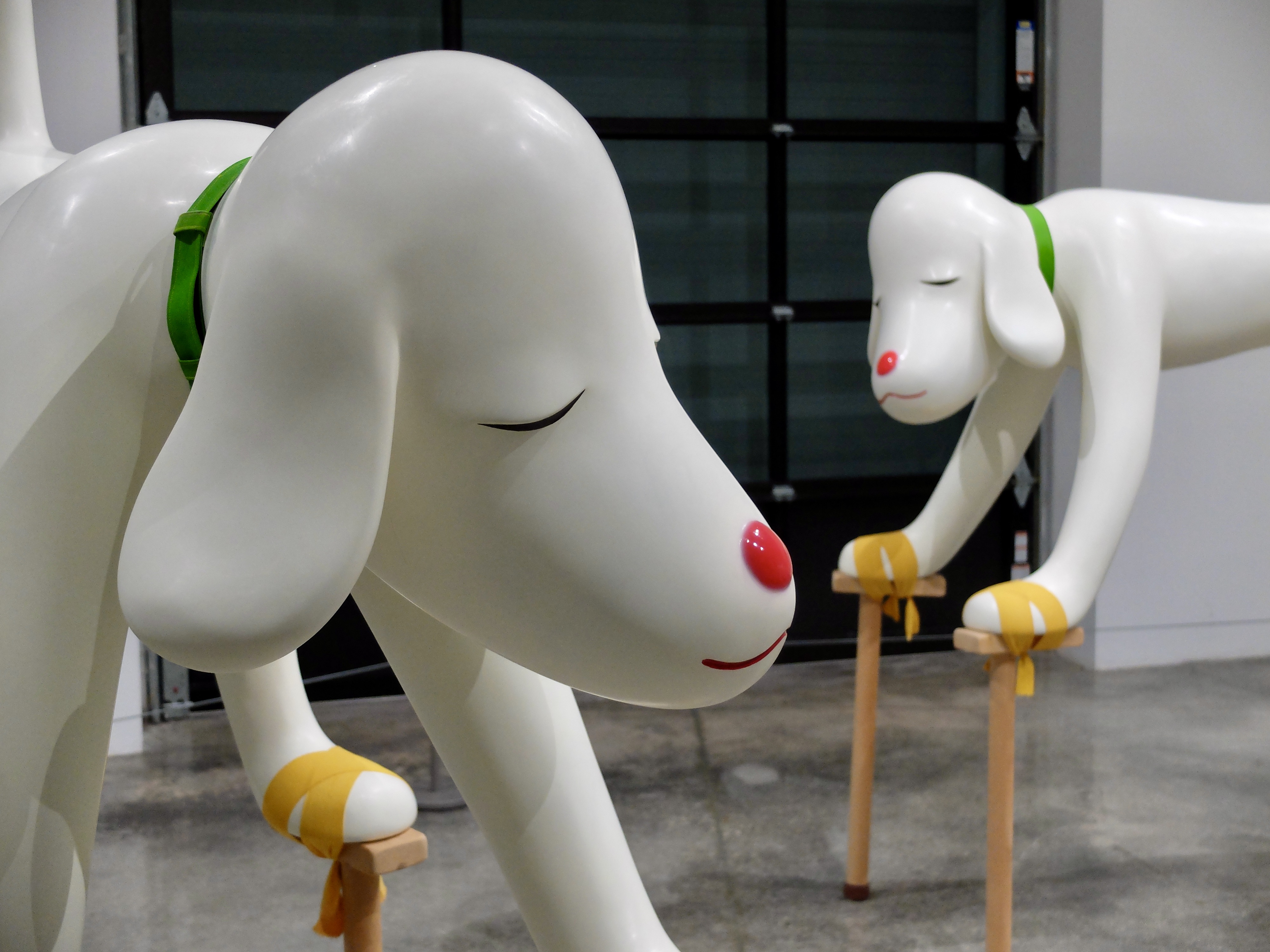

The giant floor to ceiling pieces are by French artist Alexandre Diop (The History of the World – Time and Space on the left & The Incredible Crossing of Abdoulaye the Great, Third in Line to the Throne on the right). Nick Cave’s Soundsuit with Mickalene Thomas’s Baby I Am Ready Now in the background (I fell in love with Nick Cave’s work last summer at the Museum of Contemporary Art in Chicago). Japanese artist Yoshitomo Nara’s Dogs from your childhood and Robert Longo’s Men Trapped in Ice. I’ve found myself drawn to larger and larger pieces of art lately, which is probably why I enjoyed so many of the diptychs and triptychs.
Our final museum in Miami was the Pérez Art Musuem. It started with some frustration – in addition to the far from free tickets themselves, we also had to pay for museum parking – which was full when we arrived and were told (with no sympathy) that we had 10 minutes to find a spot or we’d be required to leave. It worked out and we parked, but customer service could certainly be improved.
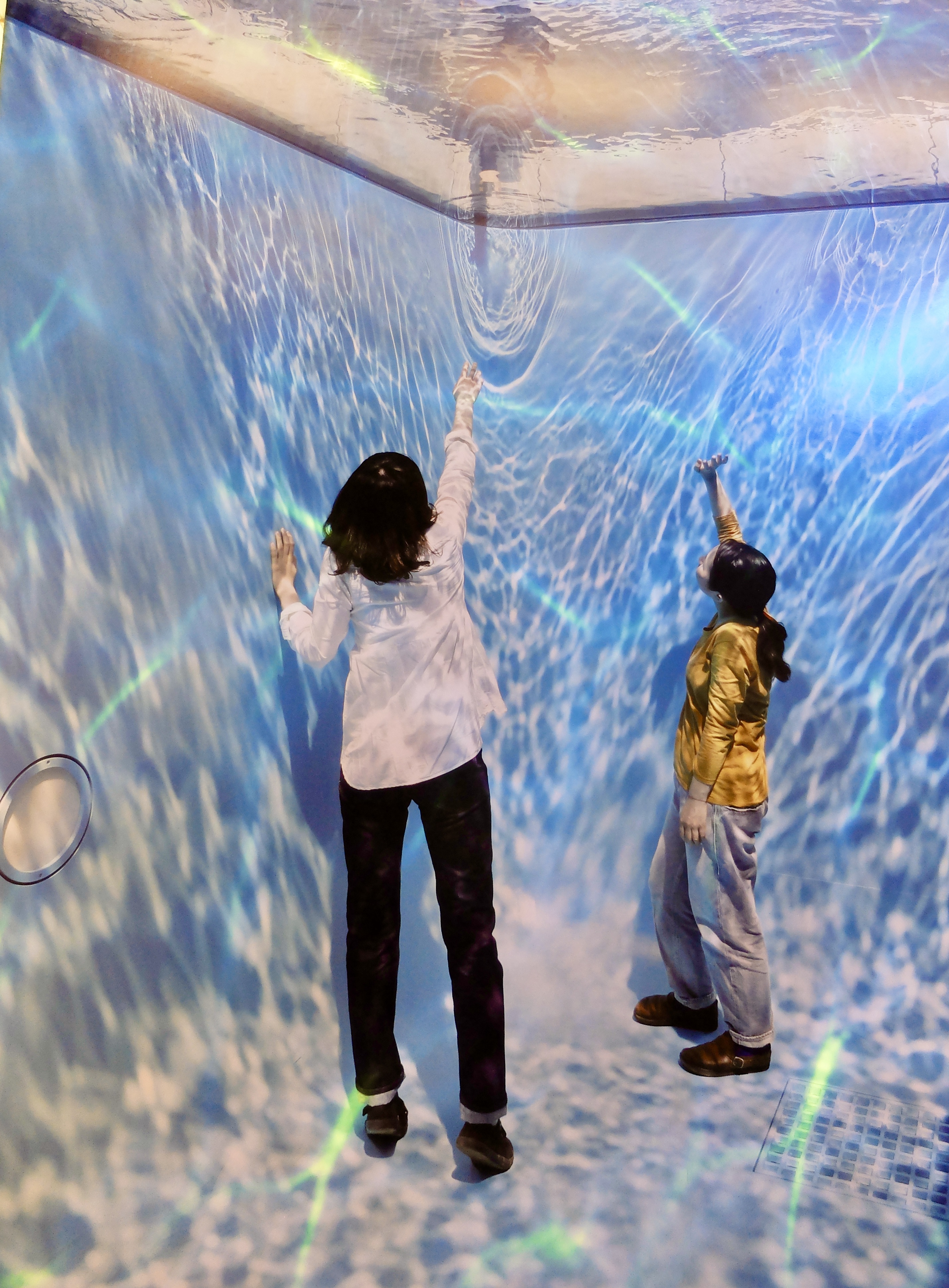
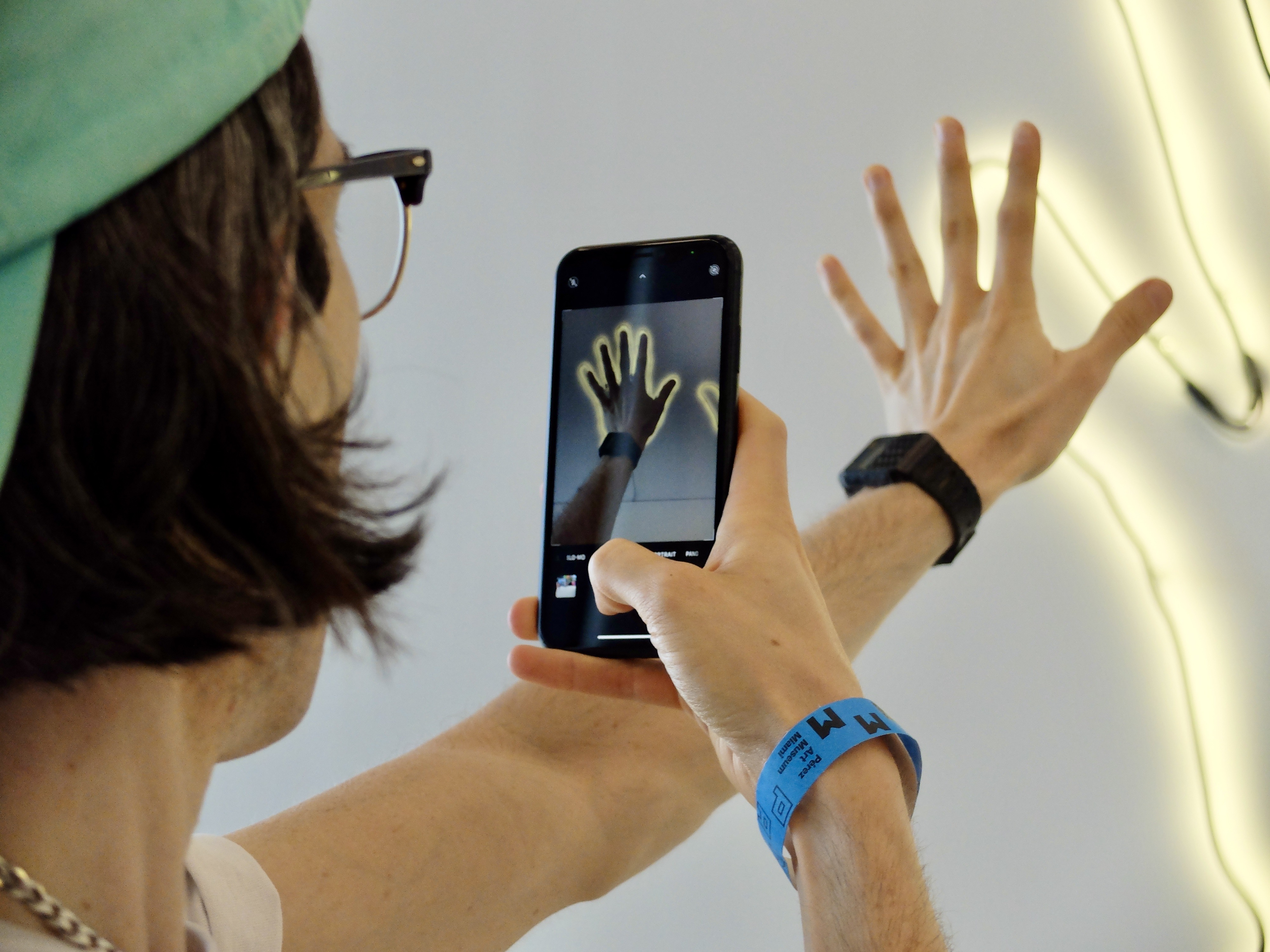
That bad mood quickly transformed into wonder as we started with Leandro Erlich’s interactive installation titled Liminal. In a move very unlike me, I ended up taking more videos than photos in the exhibit (you can view those on my Instagram page), but I did snap the water one below.
Erlich, an Argentinian artist, is known for creating sculptures and site-specific installations where the appearance of the everyday items and places (elevator, subway, classroom, hair salon, sidewalk, swimming pool, laundry room, window) function as a perceptual trap, leading the viewer into a visual paradox that defies certain laws and attributes of the material world.
Meaning, the stairs lead nowhere, elevators don’t stop at any destination, and spectators become participants. This exhibit is only open until September 4, 2023, so if you find yourself in Miami between now and then, I highly suggest it.
The other piece photographed below is Glenn Ligon’s Notes for a Poem on the Third World (also enjoyed for it’s interactive capabilities).

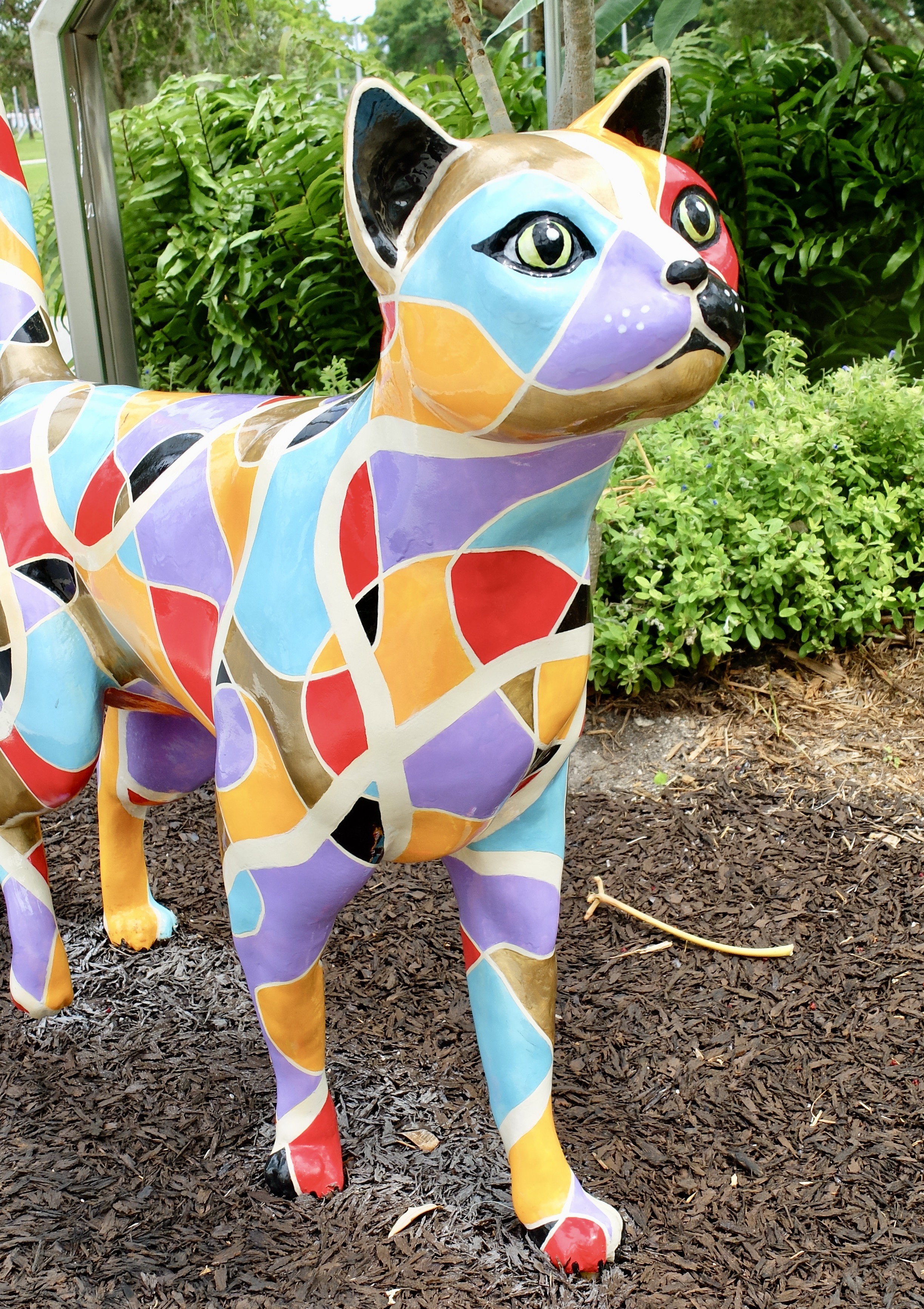
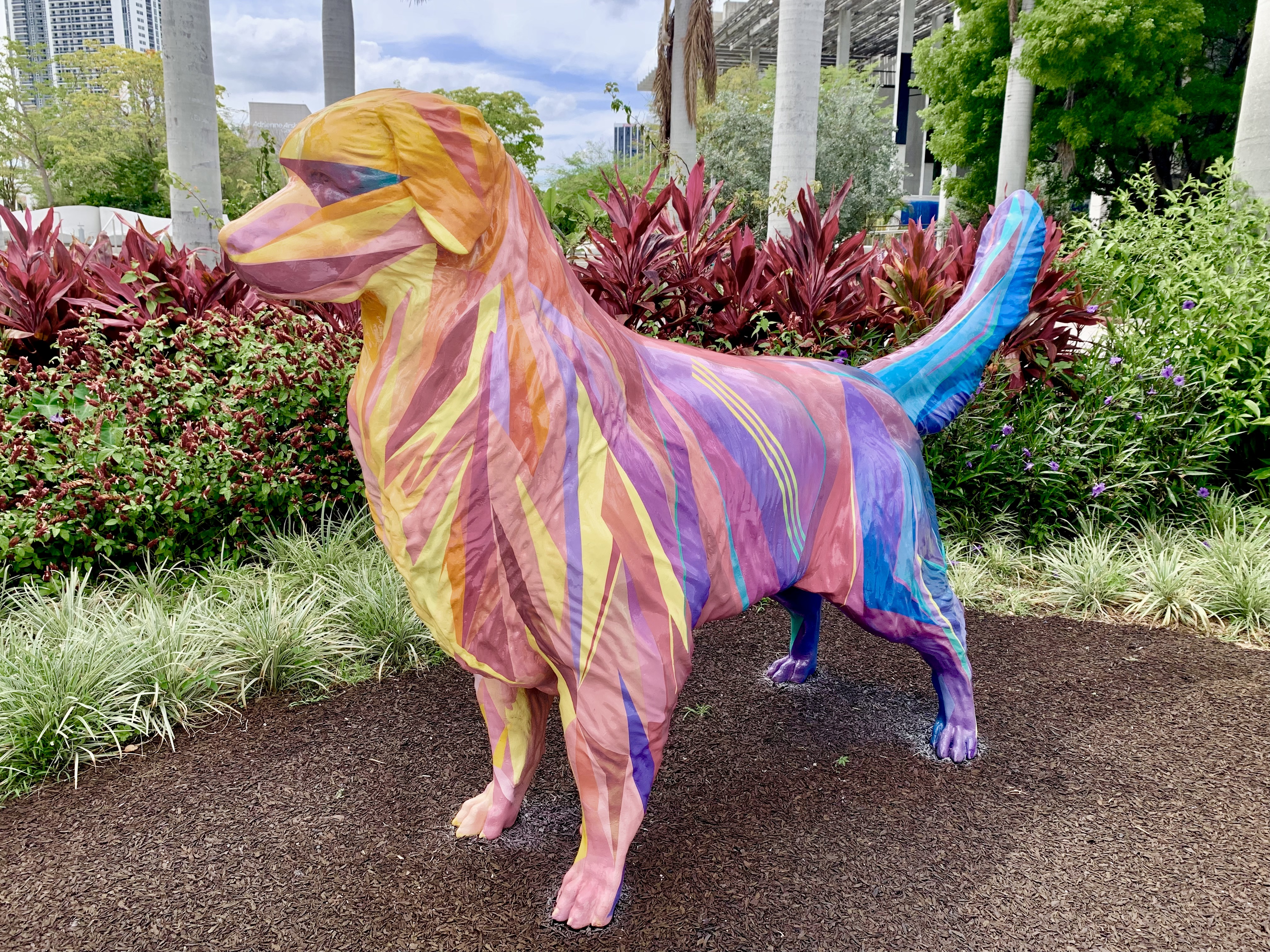
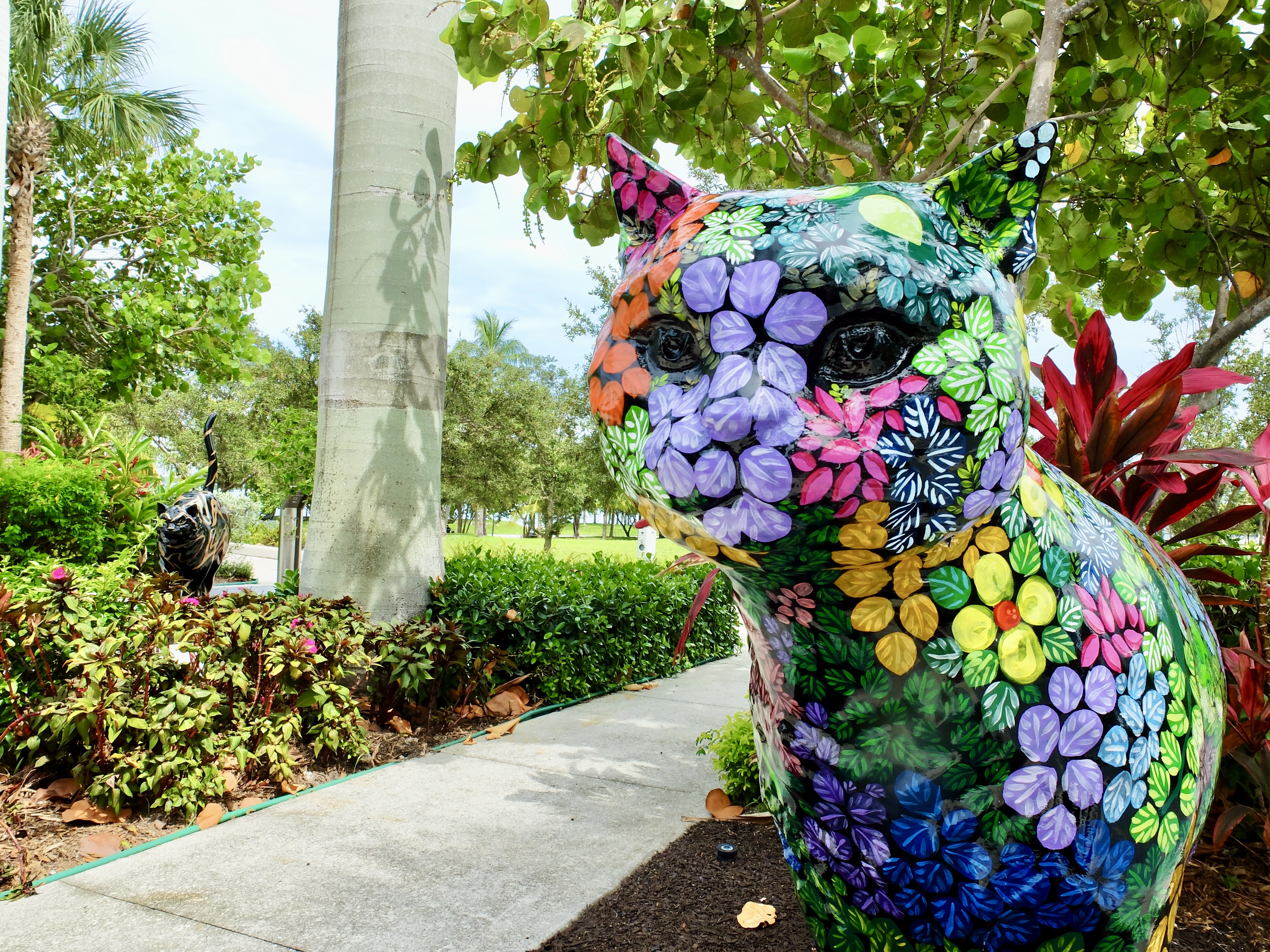
You can only spend so much time indoors in Miami before nature starts calling your name. We found the perfect art/nature compromise just outside the Pérez Museum: The Dogs & Cats Walkway. Opened February 11, 2023 (just two days before my birthday!), this free outdoor art installation features 52 oversized aluminum sculptures (half of cats and half of dogs) painted by local artists.
The one-acre garden consists of perennial flowers, hibiscus, palm trees, and other South Florida native plants. The walkway was built to portray the role that pets play in our lives and to that end, QR codes are mounted at every sculpture so visitors can scan each piece to learn more about the animal’s breed and watch a short video introducing the artist and the inspiration behind each design.
Below you’ll see Sexitana, a Singapura painted by Florencia Clement. Next, a Rottweiler named Lucas painted by Gadu. Then there’s Buddy, a Golden Retriever painted by Esteban “Saester” Cruces. Next is Sky Blue, a Little Havana street cat painted by Dania Sierra. Finally, Zape, a Cali River cat also painted by Gadu.


Miami also proved to be a great location for some mini day-trips to the Everglades National Park (which is also a UNESCO World Heritage Site AND International Biosphere Reserve). As the largest subtropical wilderness in the US, the park includes six different habitats: Marine & estuarine, mangroves, freshwater marsh, cypress, pine rockland, and tropical hardwood hammocks.
Our first trip was an hour SW and took us to the Anhinga Trail and Gumbo-Limbo Trail (just over 1.2 miles combined). Half of the path was paved, while the other half consisted of a curved wooden bridge. We saw birds, turtles, fish, and an alligator, but my favorite animal surprised even me: Grasshoppers. These grasshoppers felt pre-historically large, and some were unusually friendly.
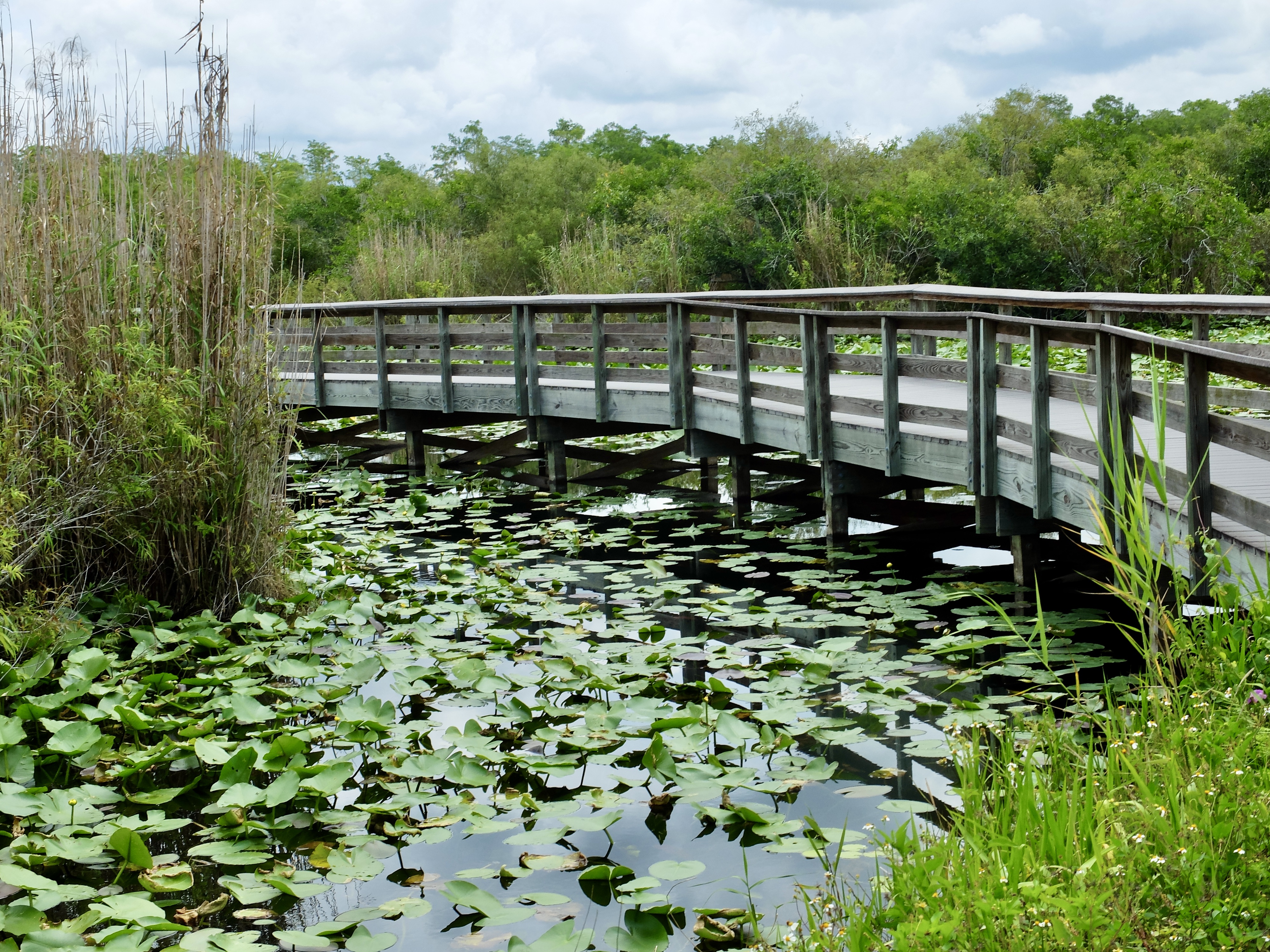

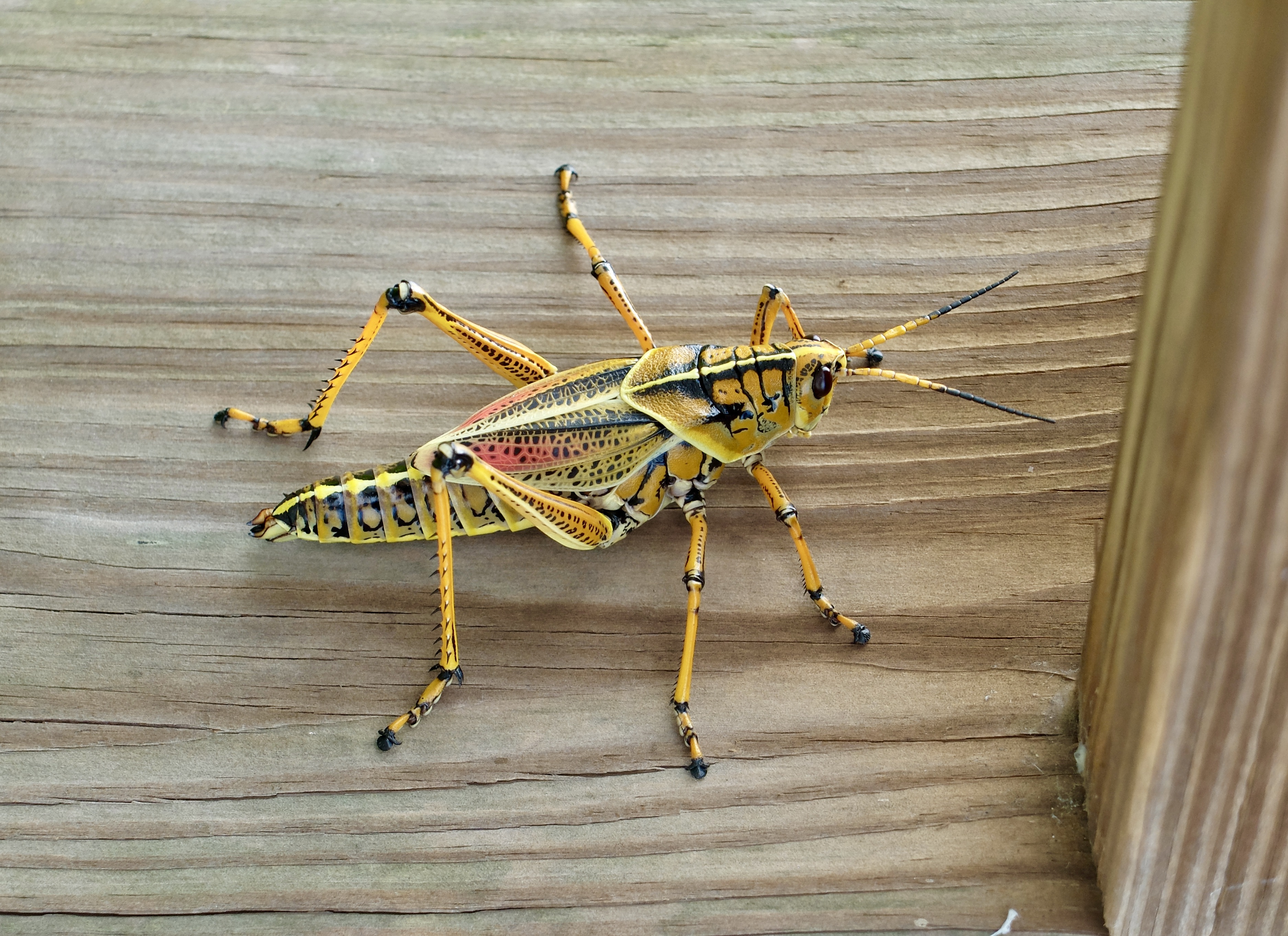
The next day we drove 30 minutes east to Shark Valley. There we opted for a tram tour vs walking or biking for two reasons. 1) I’m not trying to be eaten by an alligator 2) Even at 9:30am it was clear it was going to be an incredibly hot/muggy day.
The tour was great – for two hours a park ranger named Richard took us (and only six others) around the 15-mile trail pointing out wildlife, naming the flora, and preventing us from being eaten! If we had been on bikes, we likely would have missed most of what he showed us.
Some highlights were the Great Egret (photographed below), Great Blue Heron, Snow Egret, Anhinga (Yes! Since we didn’t see any on the previous day’s trail), and an American Crocodile – one of only a few in the park. What we saw the most of, however, were alligators. Including the one below, who had just finished an early lunch of turtle and was uninterested in returning to the water while it was digesting.
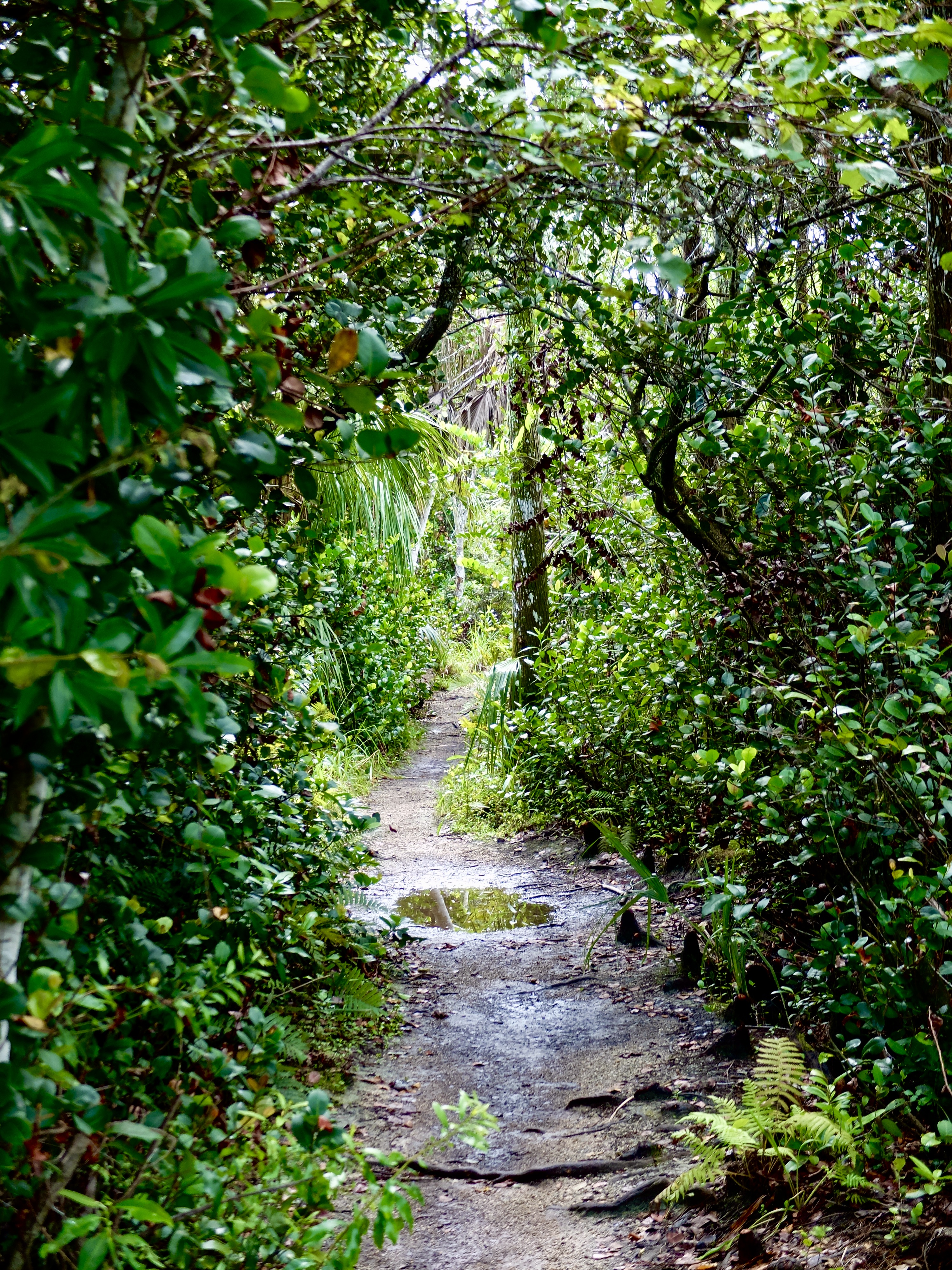
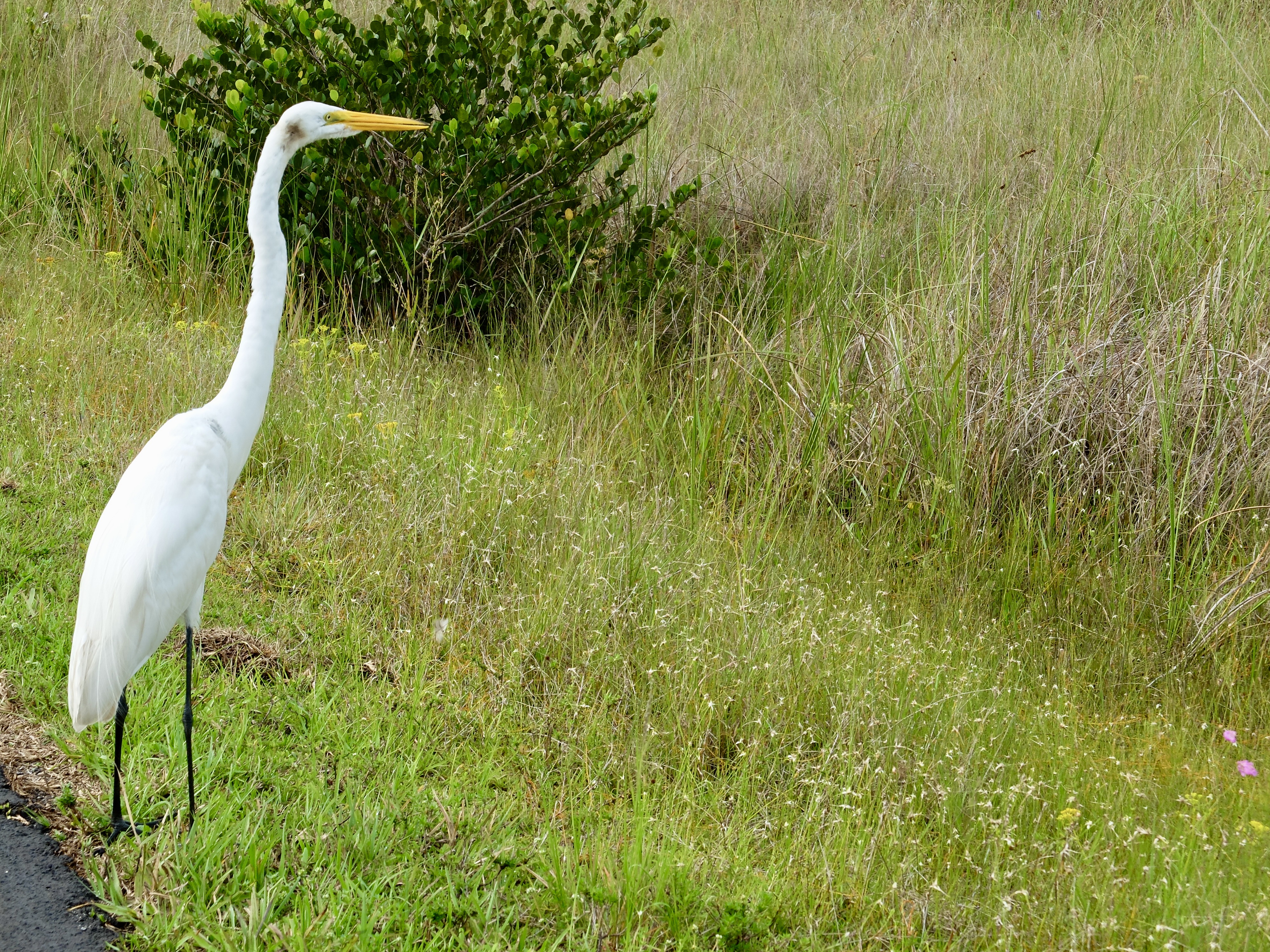

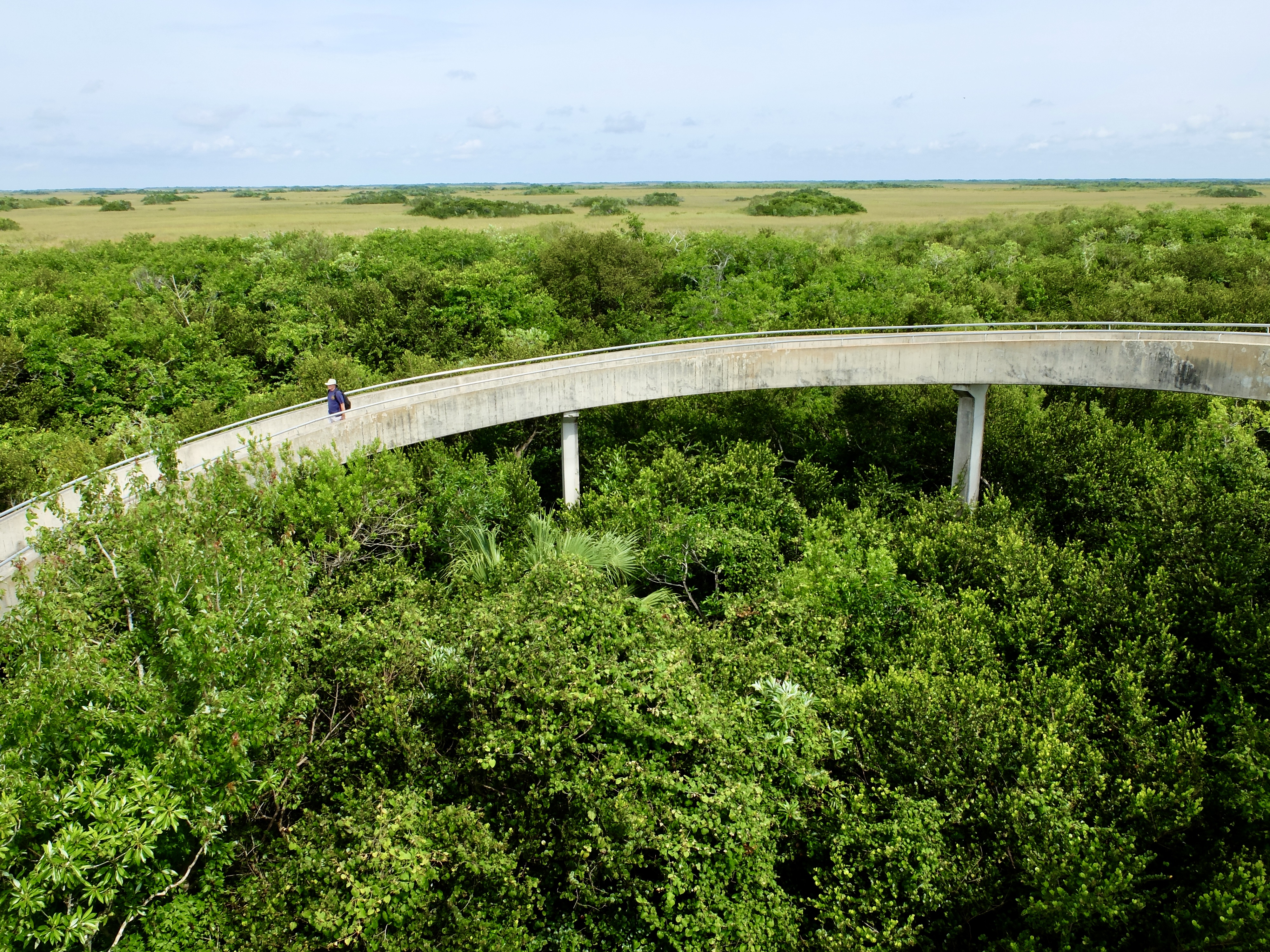
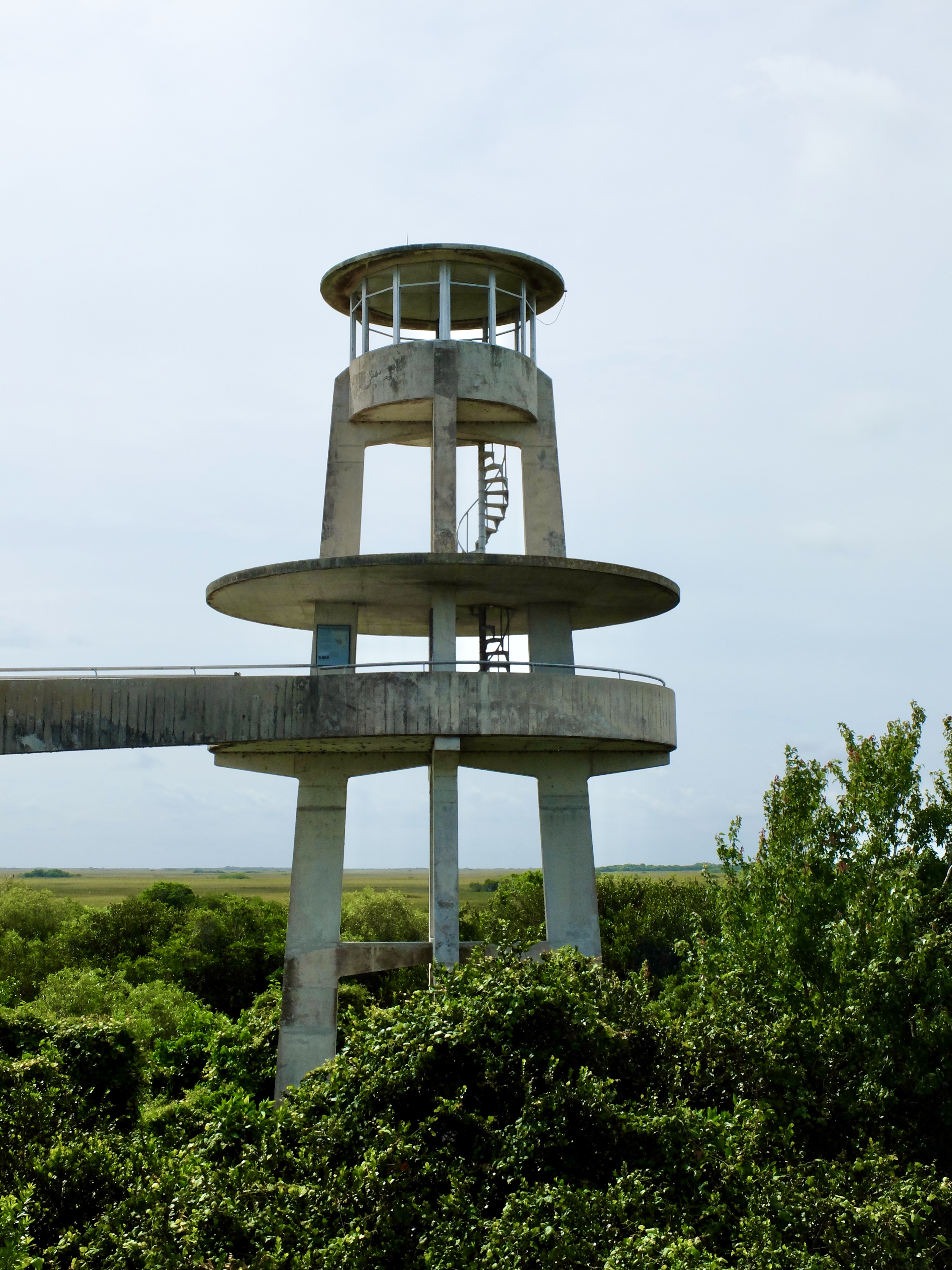
Midway on the trail is the Shark Valley Observation Tower, which is the highest accessible point in Everglades National Park. It has an awesome futuristic/apocalypse vibe that provides 20-mile panoramic views of the park. Made of concrete, the walk up is hot, but views and breeze from the top are worth it.
The tower overlooks a small lake that dozens of alligators used to live in, however, the ranger told us that with water levels in the park rising (intentionally due to some bridge constructions throughout the state), many of the gators have spread out throughout the park.

We had an absolutely fantastic time exploring the area in and around Miami. We left feeling much the way we felt when we left New Orleans last summer – we loved the city and would be happy returning to visit, but couldn’t picture it as a potential future home for us. Which means, as much as we loved Miami, Birmingham still holds our Number 1 spot for favorite American city.
 Abroad With Ashley