Memphis was stop one on our summer road trip and it was definitely a great choice. When planning this trip, we knew we wanted to hit as many major southern cities as we could, return to Birmingham (we’d fallen in love the previous summer), and make it up to Minnesota by mid-July. With that in mind, we came up with our itinerary:
-Memphis
-Nashville
-Birmingham
-Atlanta
-Savannah
-Charleston
-Greensboro
-Asheville
-Louisville
-Chicago
-Minneapolis
After just a brutally long drive a few weeks prior from Dallas to Miami for Afro Nation’s Afro Beats Festival, we were stoked to have a short seven hour drive to Memphis. We had a lot that we wanted to see in Memphis, so we started our first night on Beale Street.
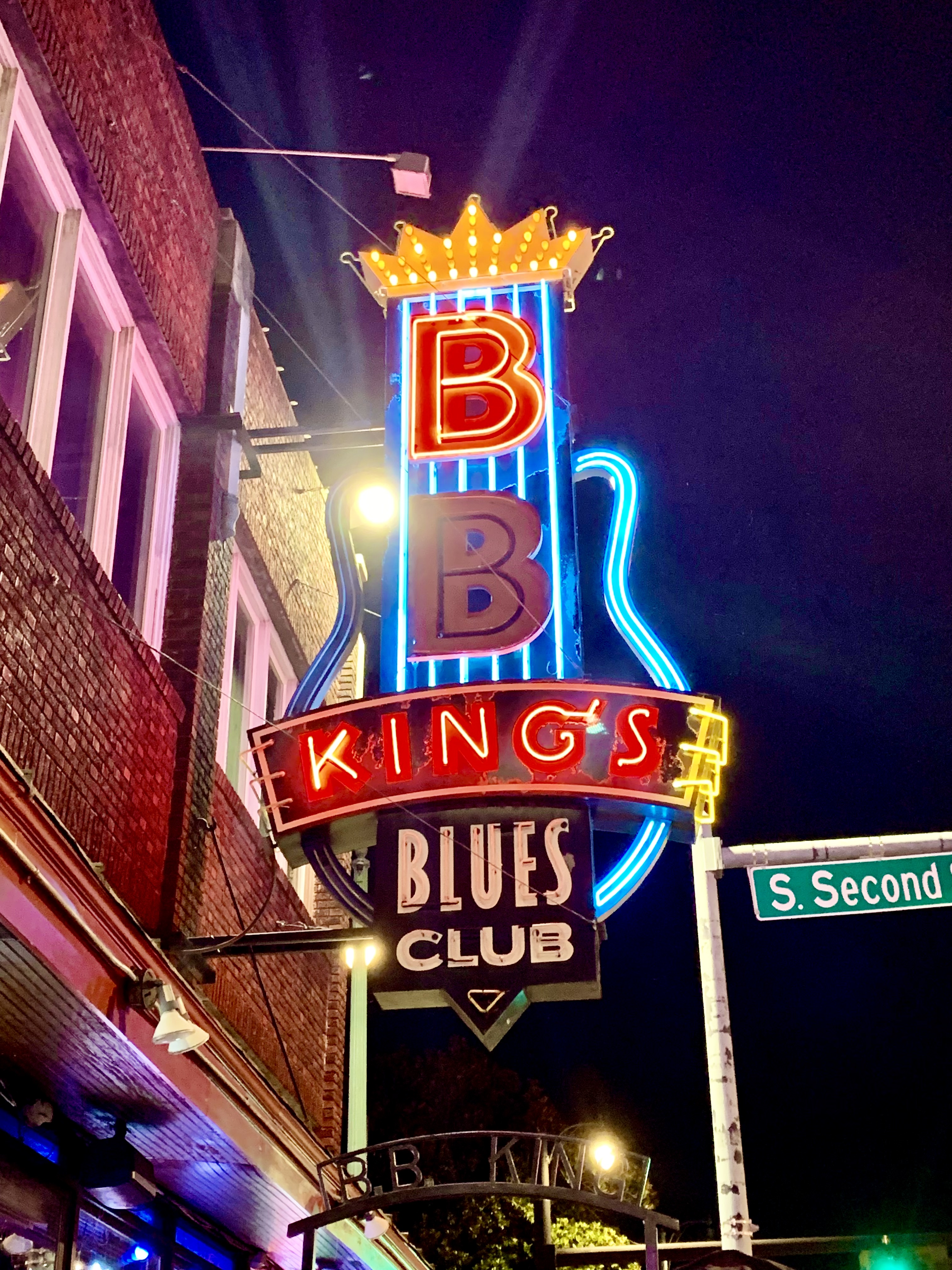
Beale Street is located in downtown Memphis and is filled with blues clubs and restaurants. These days, it’s definitely a tourist attraction, but how can you not go? The street is historic. In 1916, W.C. Handy wrote the song “Beale Street Blues,” and if you read my posts about Mississippi Delta Blues (or if you’re a blues fan yourself), you know what a big deal Handy is. So many great blues players from the Delta – Muddy Waters, Albert King, Memphis Minnie, and B. B. King – found their way to Memphis and played on Beale Street.
We decided to spend the evening in B.B. King’s Blues Club and listen to The Memphis Royals. We got a pro tip later on that if you arrive early, you can eat dinner up in the balcony and it’s a great place to watch the show later that evening. I can’t imagine their menu had a lot on offer for two vegetarians, but we got great seats down on the floor.
The band was great and the atmosphere was super relaxed. At one point, a couple walked up to the stage with a t-shirt and asked the band to sign it in the middle of their set. When it got passed to the saxophonist he exclaimed, “Oh, everybody signin’ the shirt!” All the musicians were great, but the horn section – elderly gentlemen on the sax and trumpet – stole the show.

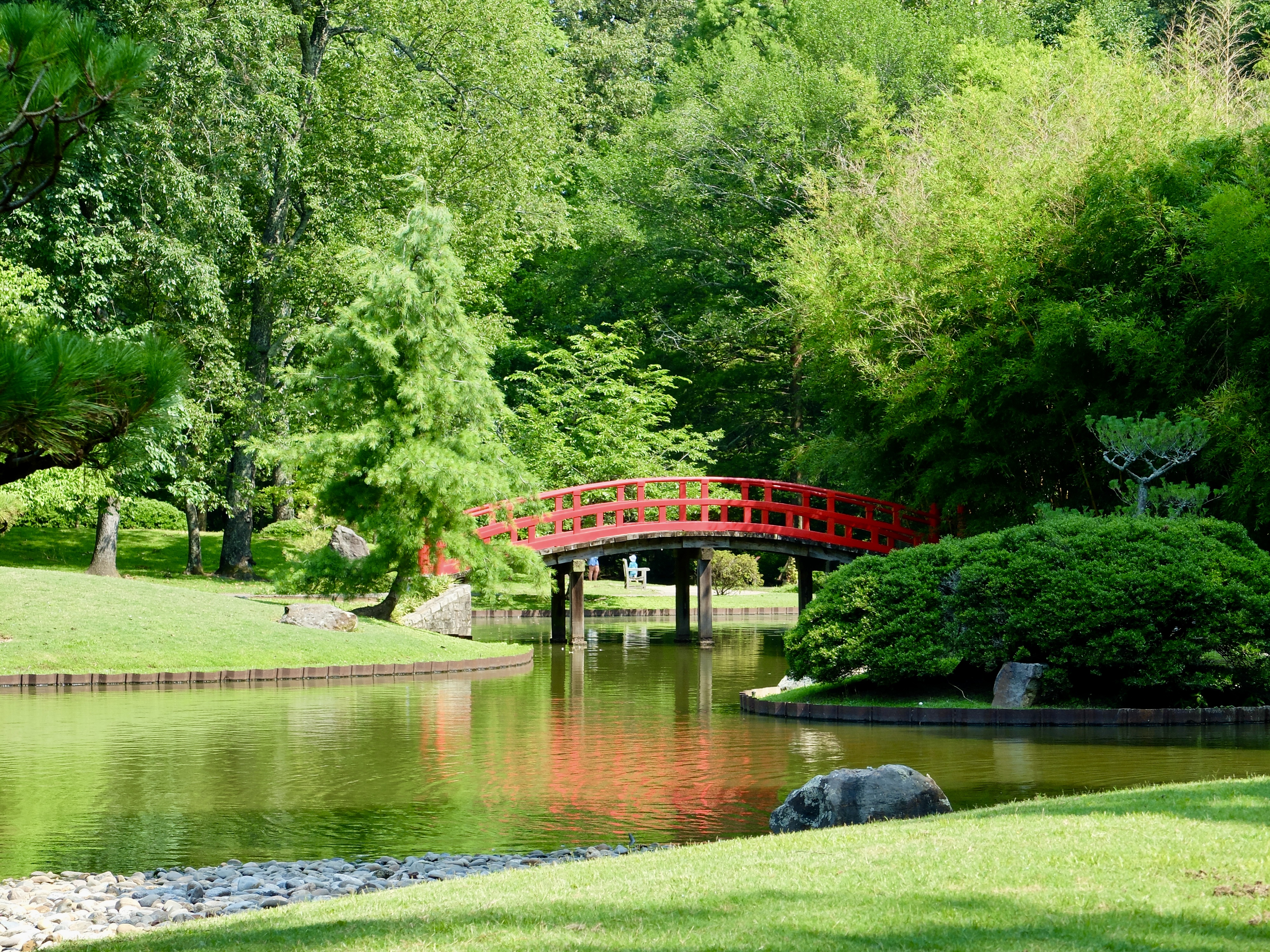
The next morning we were up pretty early to make it to the Memphis Botanic Garden when it opened. We were worried about the heat, but the weather was pretty perfect during our time in Memphis – warm, but not hot, and nowhere near as muggy as Dallas had been.
Some of our favorite spots were the Japanese Garden and Blecken Pavilion (both photographed below), as well as Magnolia Grove and the Herb Garden (there was a lovely collection of lemon balm, strawberry plants, and hops near each other, which I thought would make the perfect sour radler).


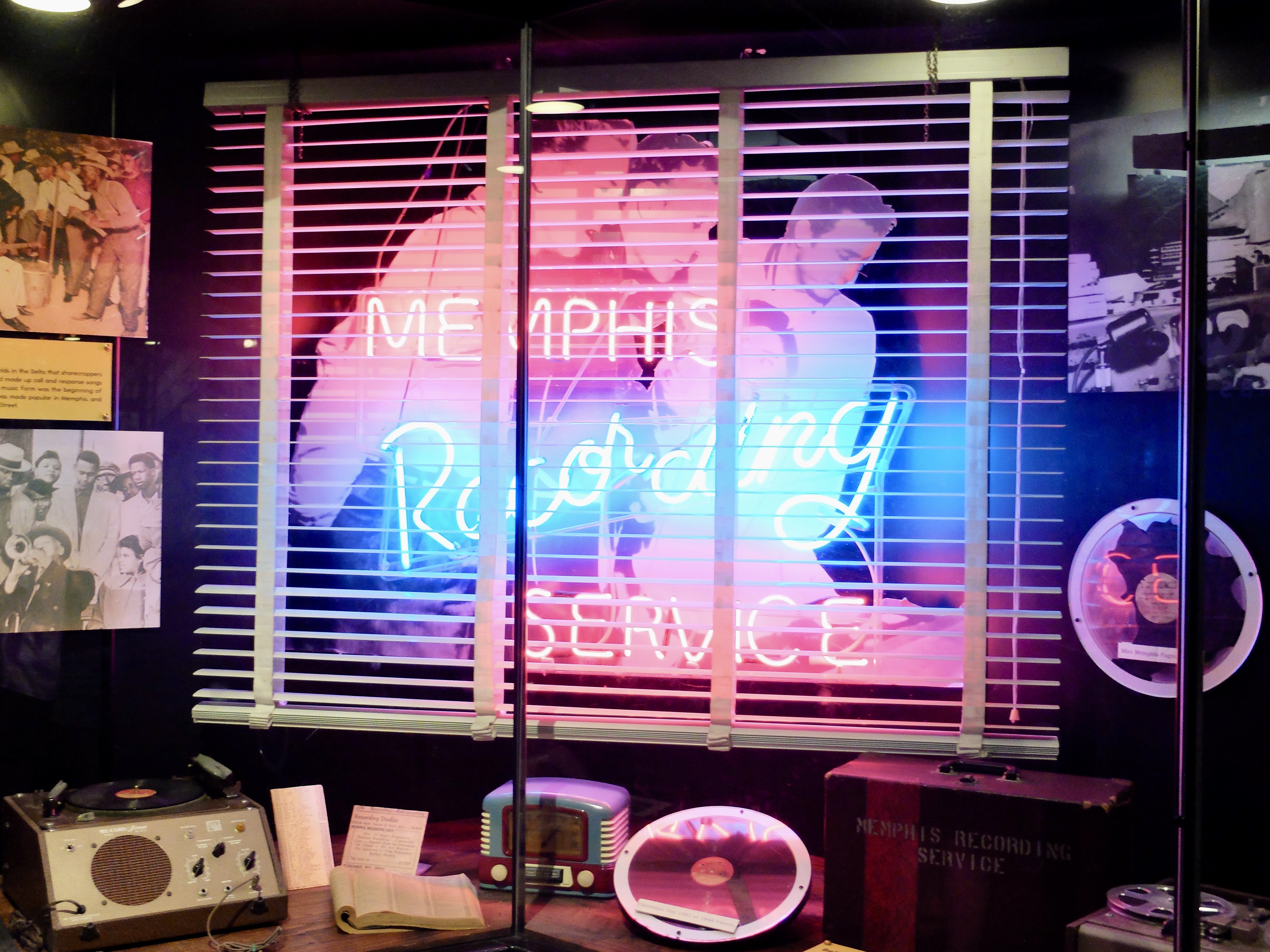
Then it was time for Sun Studio. It opened in 1950 and is considered the birthplace of rock ‘n’ roll, they also recorded the greats in blues, gospel, and country. We arrived 40 minutes before the tour started and got another pro tip – we could spend that time down the street at Edge Motor (where we had planned to go next). They gave us a $4 off coupon and let us know that we could start our tour at Edge, stop it to return to Sun Studio, and then return no problem to finish up if we needed more time. So we did just that.
The tour at Sun Studio was packed. We went at lunchtime on a Friday and apparently so did everyone else. Didn’t matter, our tour guide, Drew, was incredible. He told us about the start of the studio and how the founder, Sam Phillips, would let amateurs record, which is how he discovered so many great artists. The stories out of this studio are insane.
In 1951, Ike Turner’s band (listed as Jackie Brenston and His Delta Cats) accidentally recorded the first rock ‘n’ roll song. They were driving an Oldsmobile Rocket 88 and had the car filled with people, so they strapped the amp to the roof of the car. It fell off, severely damaging it, but they had already paid for the studio time and didn’t have anything else to use. They stuffed the amp with newspaper in an attempt to stop the pieces from rattling around and when they turned it on, the amp produced a distorted sound that everyone approved of. They recorded the song and named it after the car, Rocket 88.
The studio’s first national chart hit was in 1953 with Bear Cat by Rufus Thomas – it was an answer song to Hound Dog by Big Mama Thornton (later famously recorded by Elvis). Unfortunately, the studio was sued for copyright infringement and nearly went bankrupt. That same year, Elvis Presley walked into Sun Studios hoping to make a recording to impress Phillips. Phillips was out at the time, but once Marion Keisker heard him sing, she made the recordings herself – My Happiness and That’s When Your Heartaches Begin. She was such a fan, that she made a copy for Phillips, who was apparently unimpressed. It wasn’t until the following year, when Phillips was in need of a vocalist that Keisker reminded him of Elvis.
Elvis’ audition nearly ended in disaster, the country songs he was asked to sing leaving everyone underwhelmed, until he started messing around with the blues song That’s All Right (Mama) by Arthur Crudup. Finally, Phillips saw Elvis’ potential.
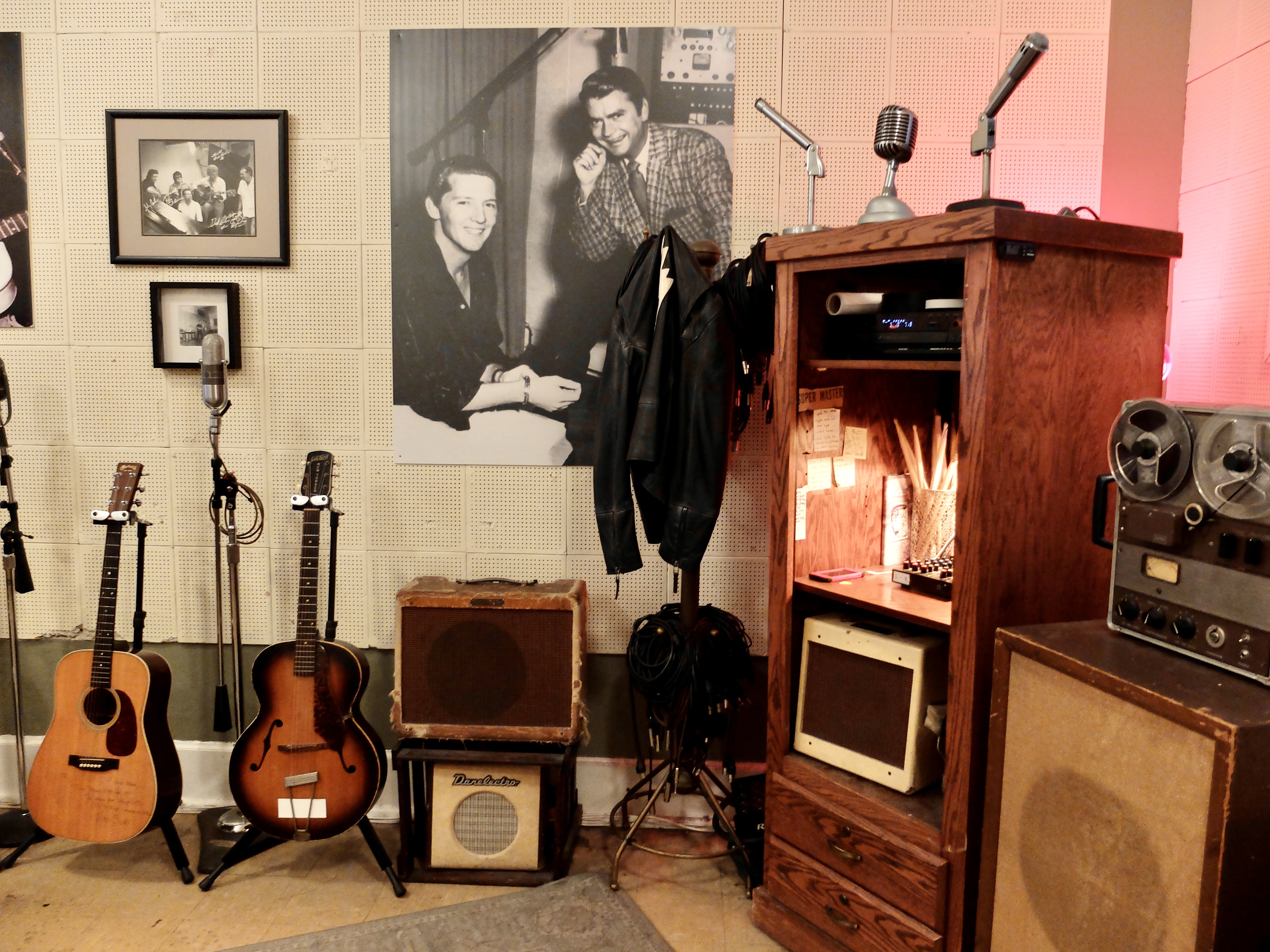
In addition to Ike Turner, Rufus Thomas, and Elvis, other greats, like Johnny Cash, Howlin’ Wolf, B.B. King, Carl Perkins, Jerry Lee Lewis, and so many more recorded at Sun Studio. In fact, the studio is still in use today – musicians can book studio times in the evenings after the tours end. And the actual recording studio looks exactly like it did in the 1950s and 1960s – despite not having been modernized, they make some killer recordings there.

We started at Edge Motor Museum just killing time before the Sun Studio tour. We used our discount and were told we’d get a mini tour of the four cars on the top level before doing a self-guided tour of the cars below. Nearly 30 minutes of chatting later and we had to rush back to Sun Studios.
The guy told us all about the 1913 Ford Model T – still in working condition because the museum believes all of their cars should run. Looking under the hood and hearing about the dangers of starting it up, I 100% know I would not have been an early adopter – I’d have stuck with my horse! But the car was absolutely gorgeous.
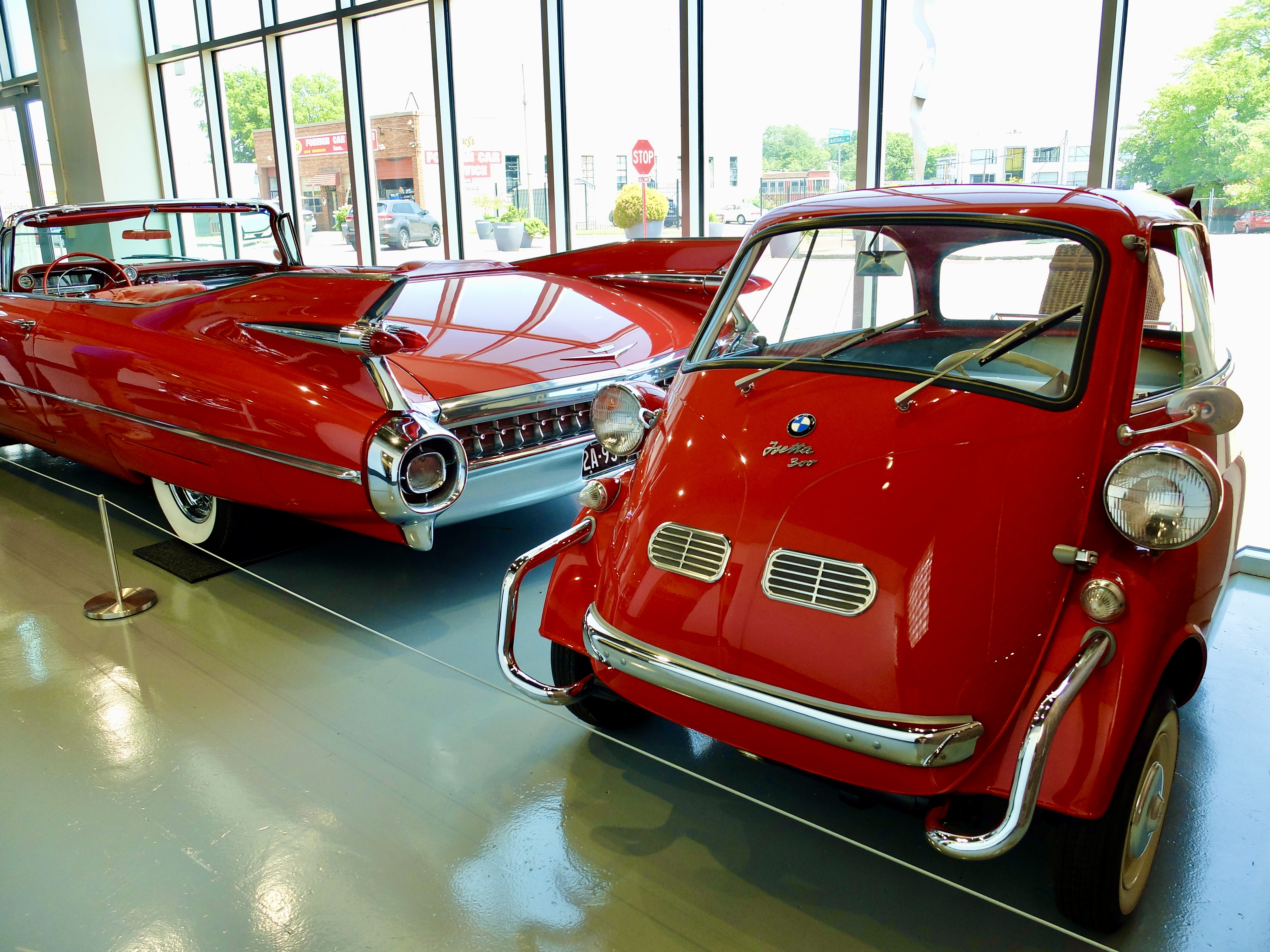
Next up was a comparison of cars in the US and Germany after WWII. On display was a 1959 Cadillac Coupe Deville (with plane jets for tail fins) and a late 50s BMW Isetta 300 (with a fridge for the front door). They were comical when comparing weight, length, and horsepower. Which made sense given the economic differences in each country in the 40s and 50s.
The final car up for a long conversation was none other than an Oldsmobile Rocket 88. After our Sun Studios tour, we came back to Edge Motor to see the rest of the cars on display. I learned some more fun facts, such as the unrelated fact that bikinis were first worn in 1946; as well as the more relevant fact that by the end of the 1950s, one in six Americans were employed either directly or indirectly by the automotive industry.
But my favorite fact connects to my favorite film franchise: The Fast and the Furious. The quarter-mile race exists because new towns were being built on grids and the average block was 660 ft (1/8 mile), with stoplights every two blocks. This provided an obvious start and finish line for drag-racers.
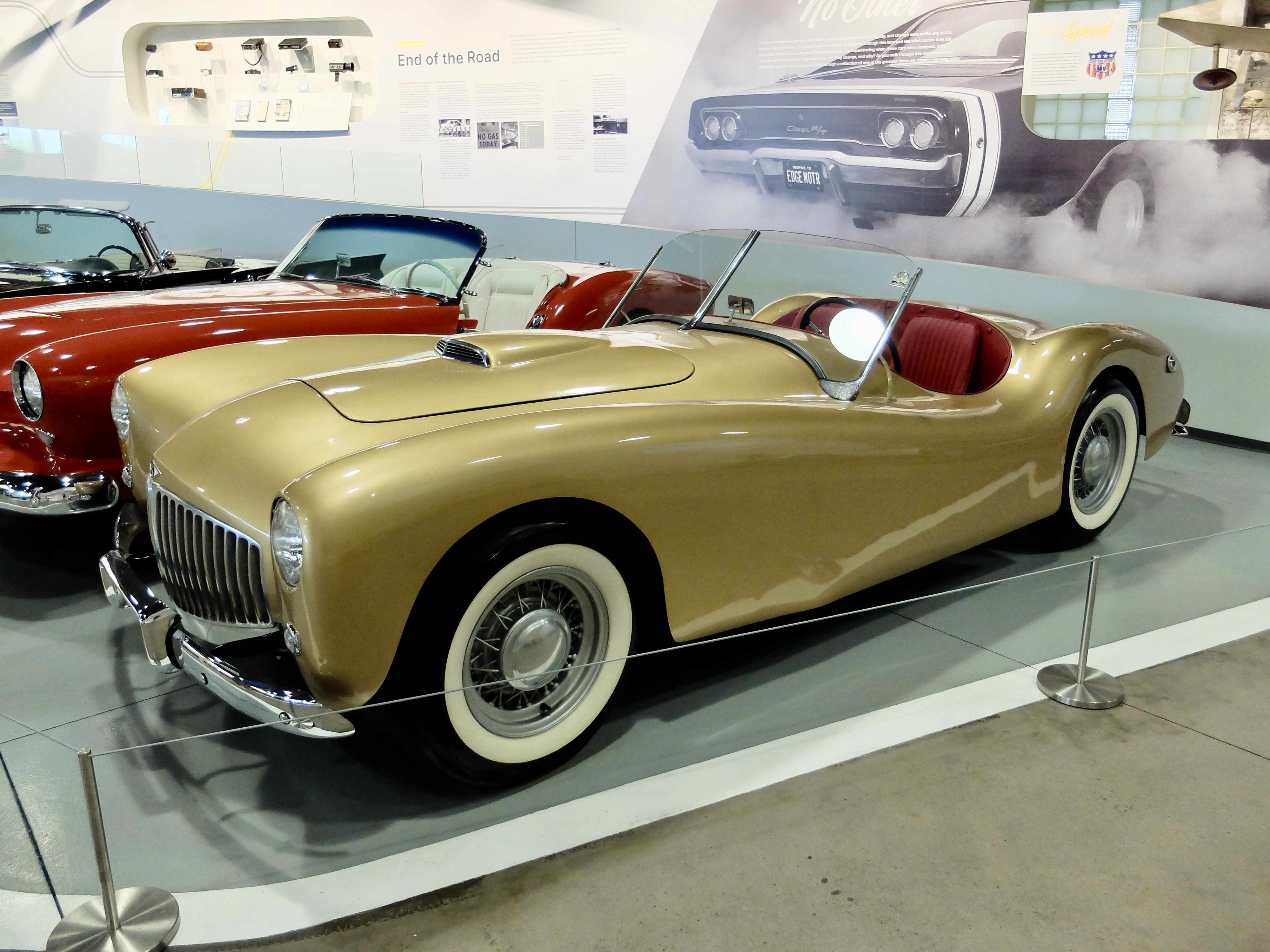
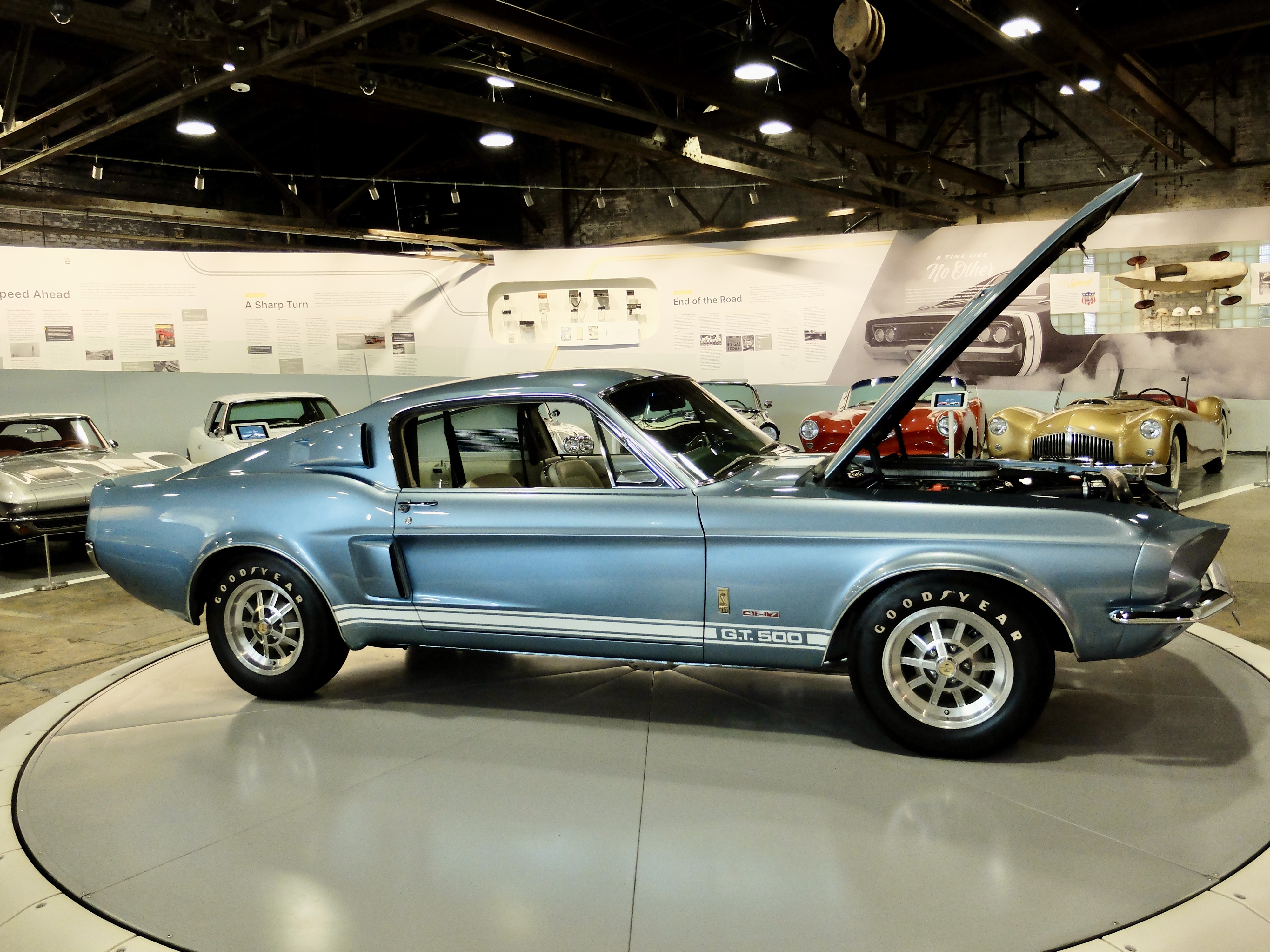
Cars on display included the 1970 Ford Mustang BOSS 302, 1969 Chevrolet Corvette Stingray, 1967 Shelby GT500, 1957 Ford Thunderbird, and the 1951 Glasspar G2 – the original fiberglass car (with no door on the driver’s side!). I’m not big into cars, but this museum was such a great experience.

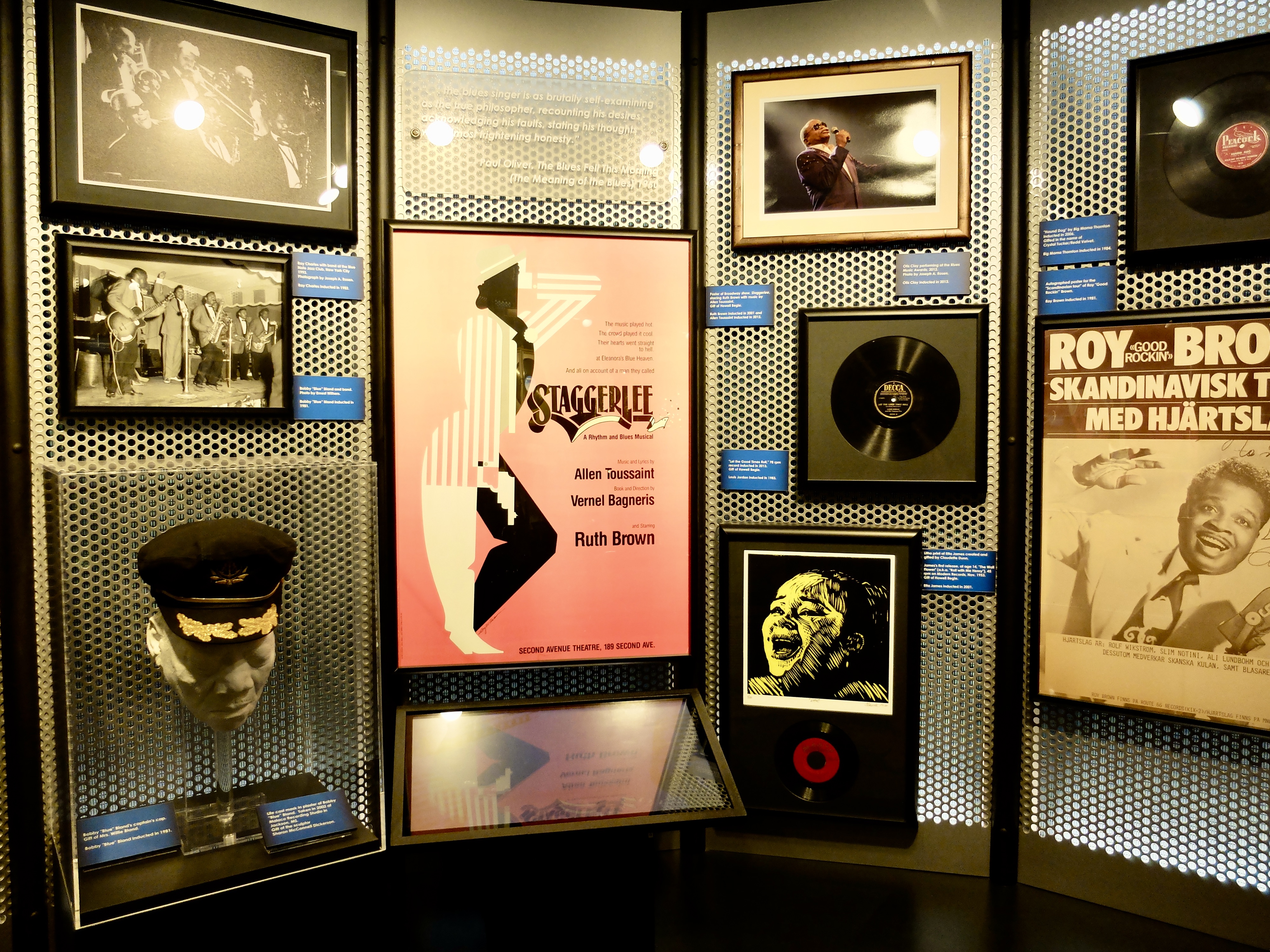
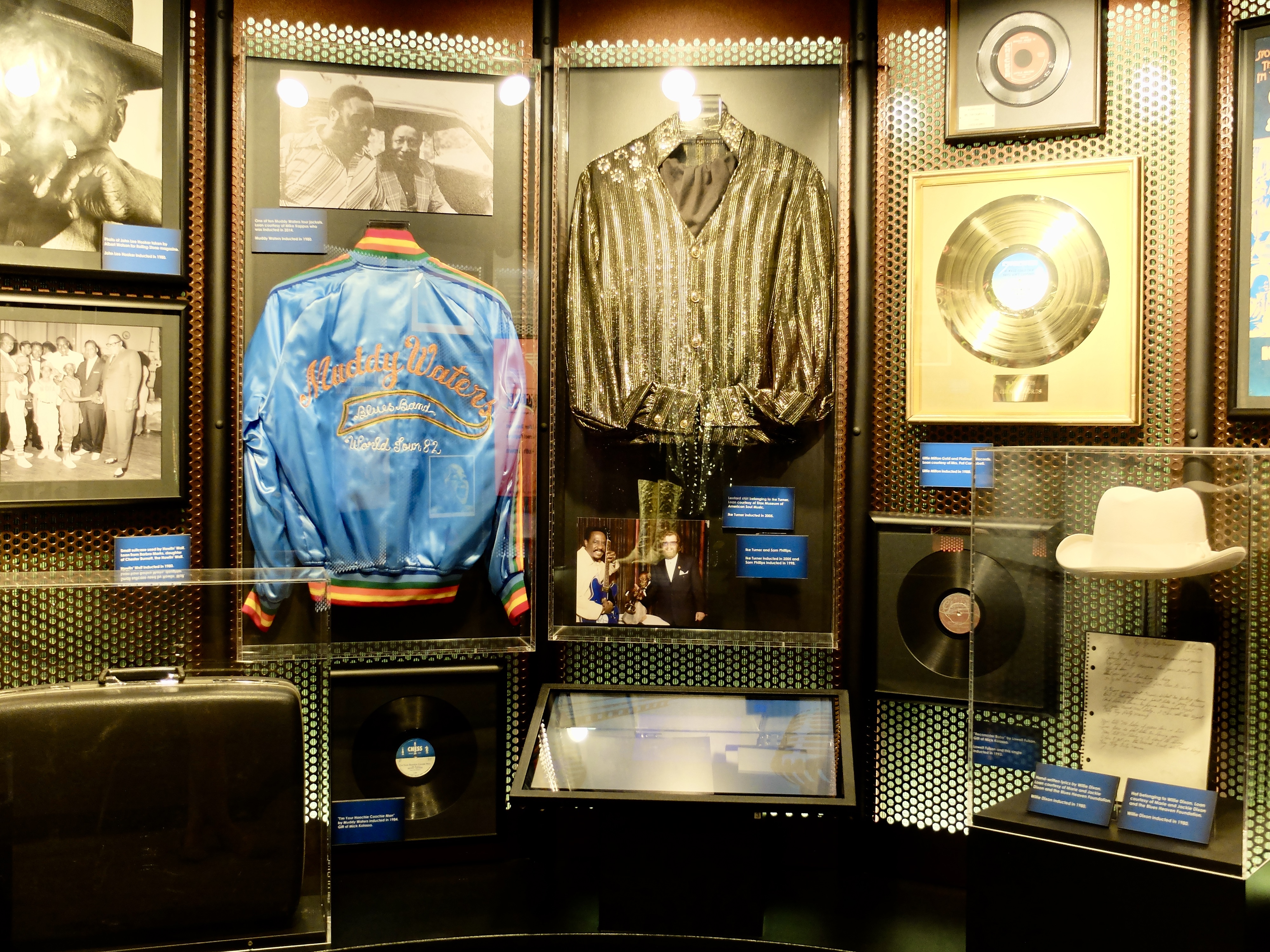
We still had two more museums on the docket for that afternoon and the first was the Blues Hall of Fame. We figured this stop would likely take us about 30 minutes, giving us plenty of time at the Lorraine Hotel just down the hill. We were wrong. We spent nearly two hours inside the Blues Hall of Fame – most of it was chatting away with one of the guides.
He walked us down the stairs to the start of the exhibit, planning on giving us a little bit of history, when we mentioned our road trip. One thing led to another and we now have a bunch of recommendations when we head to Charleston in a few weeks because his daughter lives there. We finally walked into the exhibit, but instead of a quick overview, we got into a full-blown discussion, comparing what we’d learned about blues in Mississippi with what was happening in Memphis with the blues. One of our first fun facts of the tour: Bessie Coleman’s first gold record was written by none-other-than W.C. Handy. We literally can’t escape this man’s legacy.
He took us through each gallery, pointing out Big Mama Thornton’s Hound Dog record, Muddy Waters’ tour jacket, Stevie Ray Vaughan’s Japanese Happi Coat, and Albert Collins’ Texas-themed leather jacket. Along the way, we paused and listened to various blues songs and we walked away with a list of modern blues artists to check out. He then encouraged us to return to Beale Street that night to listen to the house band at Alfred’s.
After that, we made our way to the National Civil Rights Museum at the Lorraine Hotel – we had gotten it into our heads that it was mostly a memorial for Martin Luther King, Jr. but it is in fact a Smithsonian-affiliated Civil Rights museum. With only an hour left until they closed, we asked if we had time to do the museum justice and they recommended we come back the next day to have more time – I’m so glad we did, because we spent nearly three hours there!
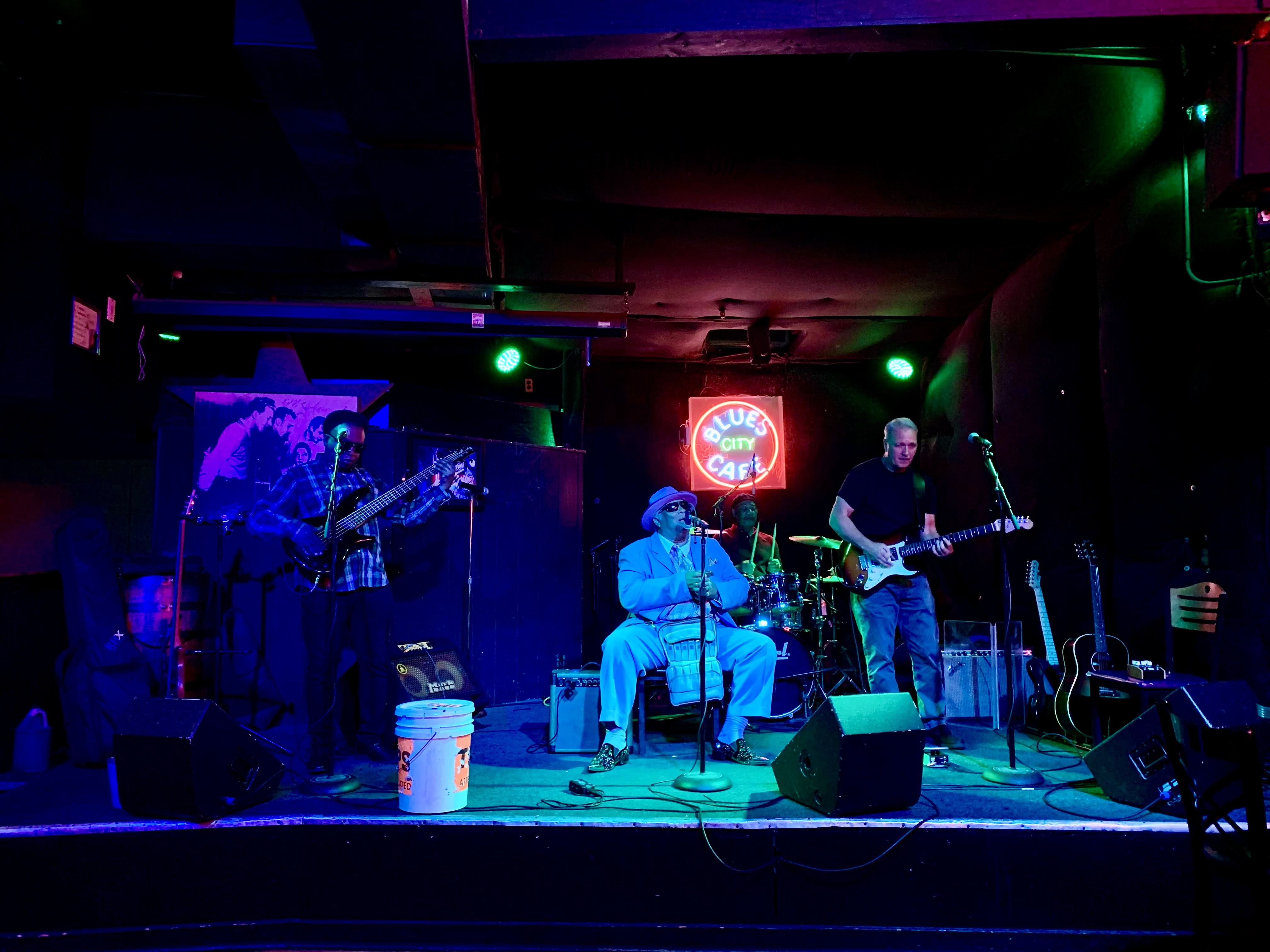
That night we did indeed make our way back to Beale Street. We arrived about an hour before the band went on at Alfred’s, so we made our way to another staple of Memphis, the Blues City Cafe’s Band Box. We didn’t quite know how it worked, but they were kind enough to walk us through the cafe and back to where the music was being played. I never caught the name of the band, but they were enjoyable, the atmosphere was chill, and the beer was cheap – a great Memphis combination. When they finished their set, we headed over to Alfred’s.
Whereas B.B. King’s Blues Club and Blues City Cafe were packed, Alfred’s was a ghost town. We paid for our drinks, picked our seats, and settled in for some more live music. The band was Elmo and the Shades and they were great – better than at the Cafe, not quite to the same level as the Club. It always surprises me when we go out to places like this – which spots will be packed and which will be empty. A few more people trickled in during that first set, but at no point were we crowded. After an hour we decided to head back to the hotel since we had one more busy day left in Memphis.



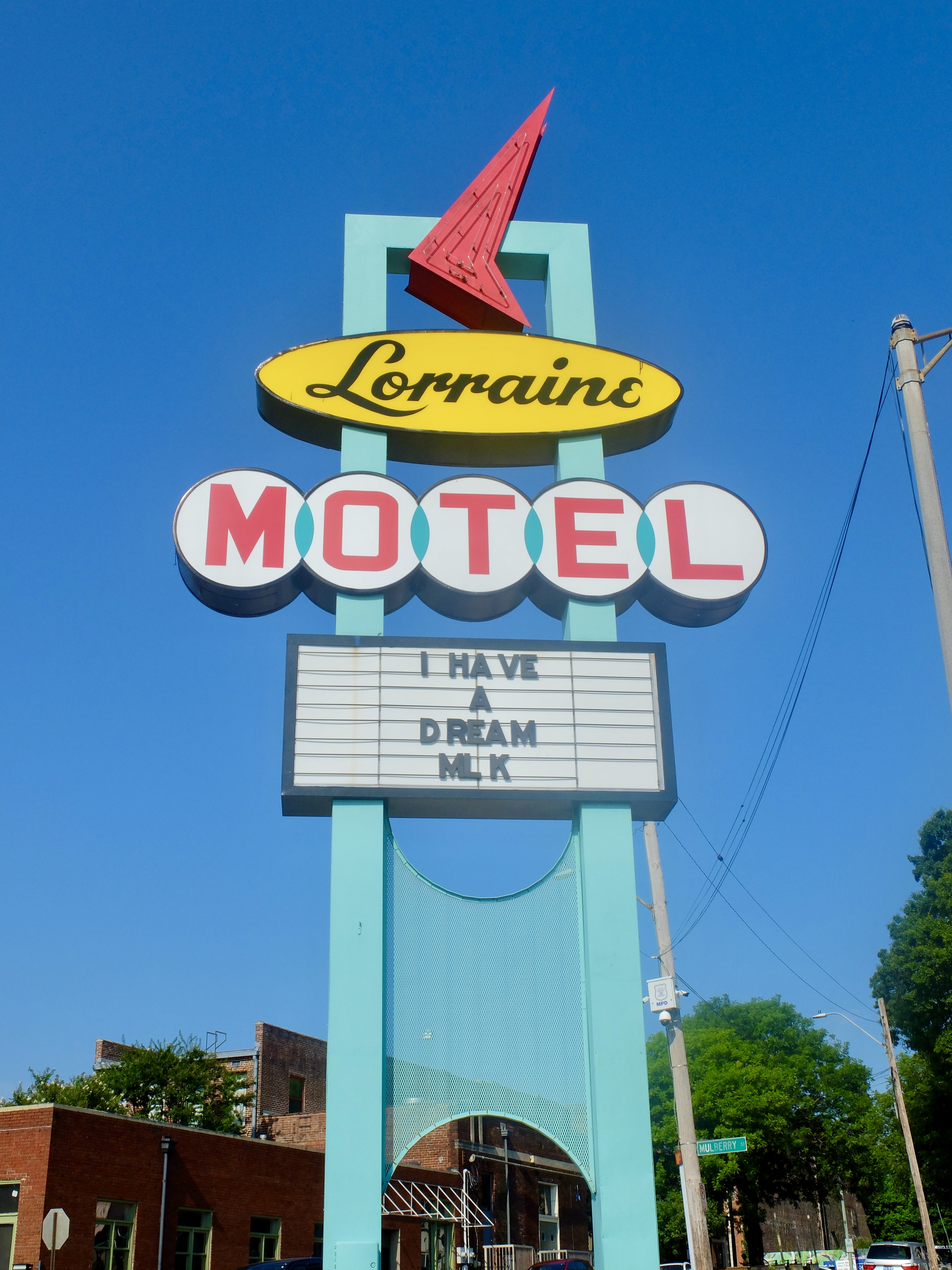
We showed up to the National Civil Rights Museum at the Lorraine Hotel just as they were opening. We waited in line for a few minutes before making our way into the museum. We’ve been to a number of Civil Right’s museums over the last two years and the comprehensiveness of this museum was on par with The Legacy Museum: From Enslavement to Mass Incarceration, which I view as one of the best museums I’ve ever been to.
For the most part, the museum went in chronological order (from early slavery in the US to Martin Luther King Jr.’s assassination), each gallery focused on a location and major historical moments in the Civil Rights Movement. We’d learned about a lot of the sections individually, at smaller museums/historical sites, but it was incredible to see all of the information so thoughtfully curated in one place.
Below, I’ve broken it up by gallery and also listed related museums & sites if you wanted to do a deep dive into the topic.
A Culture of Resistance: Slavery 1619-1861
-We were lucky enough to live in Ghana for three years and during that time we visited Cape Coast Castle & Elmina Castle to see the Doors of No Return, where slaves were taken from Western Africa. Next week, we’ll head to Charleston, SC to see Old Slave Mart Museum. At one point during slavery, as many as 35-40% of enslaved people entered the United States through Charleston and it is considered the last surviving slave auction gallery in South Carolina.
The Rise of Jim Crow 1896-1954
–The National Memorial for Peace and Justice in Montgomery, AL does an incredible job of putting names and stories to the horrifying statics. The Equal Justice Initiative has documented nearly 6,500 lynchings of Black people by white mobs across the US between 1865-1950.
Separate is Not Equal: Brown V. Board of Education 1954
-The first stop we made on this road trip was to Little Rock Central High School where the Little Rock Nine were only able to make it into the recently desegregated school with the aide of federal troops. The craziest part of the story is that the following year, the city’s high schools were closed to prevent further desegregation.
The Year They Walked: Montgomery Bus Boycott 1955-1956
-The Rosa Parks Museum in Montgomery, AL is one of the weaker museums on this list, but it does a good job of putting the boycott into perspective with what’s happening in Montgomery during the time. I was really impressed with the Birmingham Civil Rights Institute‘s gallery about this – they made sure to highlight the other Black women who refused to give up their seats, including Aurelia Browder, Claudette Colvin, Susie McDonald, and Mary Louise Smith.
Standing Up by Sitting Down 1960
-We’re looking forward to heading to Greensboro, NC in a few weeks and visiting the International Civil Rights Center & Museum. But the National Civil Rights Museum did an incredible job in this gallery explaining how each city’s sit-in furthered progress for everyone: Greensboro, NC; Rock Hill, SC; Nashville, TN; Baltimore, MD; Washington DC; and Atlanta, GA. On day one in Greensboro, there were 4 protestors. That number became 29 on day 2, 63 on day 3, 300 on day 5, and 1,400+ by day 6.
We Are Prepared to Die: Freedom Rides 1961
-We thought the Freedom Rides Museum in Montgomery, AL was amazing and we drove past Parchman Prison in Sunflower County, MS where many of the freedom riders were jailed. Something I hadn’t previously known: There were two freedom rides. The buses were attacked in Anniston and Birmingham, AL. President JFK’s solution, since he heard they were trying to get to New Orleans, was simply to charter a flight for them. That’s when the Nashville Student Movement took up the ride. They were eventually arrested in Jackson, Mississippi (with Kennedy’s approval), even though they’d broken no laws.
We Who Believe in Freedom: Organizing in Mississippi 1945-1963
-The Mississippi Civil Rights Museum in Jackson, MS was incredibly informative and open about what happened in Mississippi.
Ain’t Gonna Let Nobody Turn Me ‘Round: Albany Movement 1961-1963
-This was a story I hadn’t heard before – it was the first mass movement in the modern civil rights era to have as its goal the desegregation of an entire community.
The Children Shall Lead Them: Birmingham 1963
-The Birmingham Civil Rights Institute was a wealth of information; first about Birmingham, then about Alabama, and finally, tying it in to what was happening in the nation at the time. But the gallery in the National Civil Rights Museum was especially difficult to walk through. Birmingham was nicknamed Bombingham because there were 50+ racially motivated bombings in the city from 1947-1965 – there were zero convictions at the time (the men involved in the 16th Street Baptist Church bombing that killed 4 little girls were eventually sentenced to prison, some decades later). I also didn’t know how controversial the Children’s Crusade was at the time. As a teacher, I’m with A. G. Gaston who said it was too dangerous, but I can’t help but admit that Rev. James Bevel was correct – the nation was appalled when Bull Connor ordered firemen to turn high-powered water hoses on the children. By Monday, May 6, 1963 around 2,500 demonstrators had been arrested – the Kennedy administration was forced to get involved.
For Jobs and Freedom: The March on Washington 1963
-Although I can’t pinpoint a singular museum that covers this, nearly all mention it and you can always go to the Lincoln Memorial in DC and listen to the I Have a Dream speech.
Is This America? Mississippi Summer Project 1964
-The Fannie Lou Hammer Memorial in Ruleville, MS was a powerful reminder of how hard the fight was in Mississippi. So many people identified with her famous phrase, “I’m sick and tired of being sick and tired.”
How Long? Not Long: Selma Voting Rights Campaign 1965
-There are a plethora of great museums on this topic, including the Lowndes Interpretive Center in White Hall, AL and the Selma Interpretive Center & Edmund Pettus Bridge in Selma, AL.
A Triumph for Democracy: The Voting Rights Act of 1965
-Signed into law by President Lyndon B. Johnson, it was designed to enforce the voting rights guaranteed by the Fourteenth and Fifteenth Amendments to the US Constitution. The act sought to secure the right to vote for minorities throughout the country. What I didn’t know is that it’s been amended multiple times to expand its protections.
Say It Loud: Black Pride 1968-1975
-The National Civil Rights Museum tied the Black Pride movement in the civil rights struggle and explains it as a continuation of the Civil Rights Movement rather than a radical new movement.
I Am a Man: Memphis Sanitation Strike 1968
–I Am A Man Plaza in Memphis, TN. I knew that Martin Luther King, Jr was assassinated in Memphis, but I didn’t know the story behind it. The museum did a fabulous job of explaining what brought MLK to town. On February 1, 1968, two sanitation workers, Echol Cole and Robert Walker, were crushed in the rear of a garbage truck. A few weeks later, sanitation workers went on strike, asking for a decent living wage and safe working conditions. Memphis’ Black community took up the cause and Dr. King joined the strikers to march.
King’s Last Hours (Rooms 306 & 307)
-Three hours after arriving, we finally made it to what we had thought would be the bulk of the museum. On April 3, Martin Luther King, Jr. gave his I’ve Been to the Mountaintop speech. The next day, at 6:01pm, he was fatally shot by James Earl Ray as he stood on the Lorraine Motel’s second-floor balcony. The museum ends shortly after you view rooms 306 and 307, where MLK had been staying, as well as others from the Civil Rights Movement.
There are a few museums I didn’t know quite where to place in connection to the above topics. The Civil Rights Memorial in Montgomery, AL is a powerful reminder of the men and women who gave their lives to achieve equality for all. The Civil Rights Movement is not the only story about Black people in the US and the National Museum of African American History & Culture in Washington DC gives a much wider lens.
And there are two more museums on our list later on this summer: The National Center for Civil and Human Rights in Atlanta, GA and the International African American Museum in Charleston, SC (which officially opened June 27, 2023!).

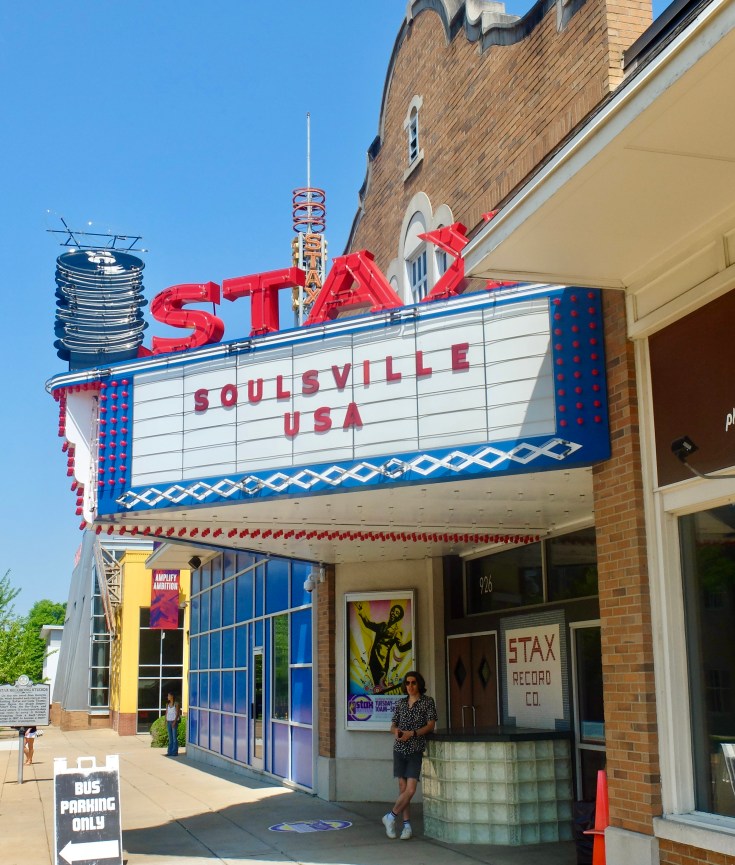
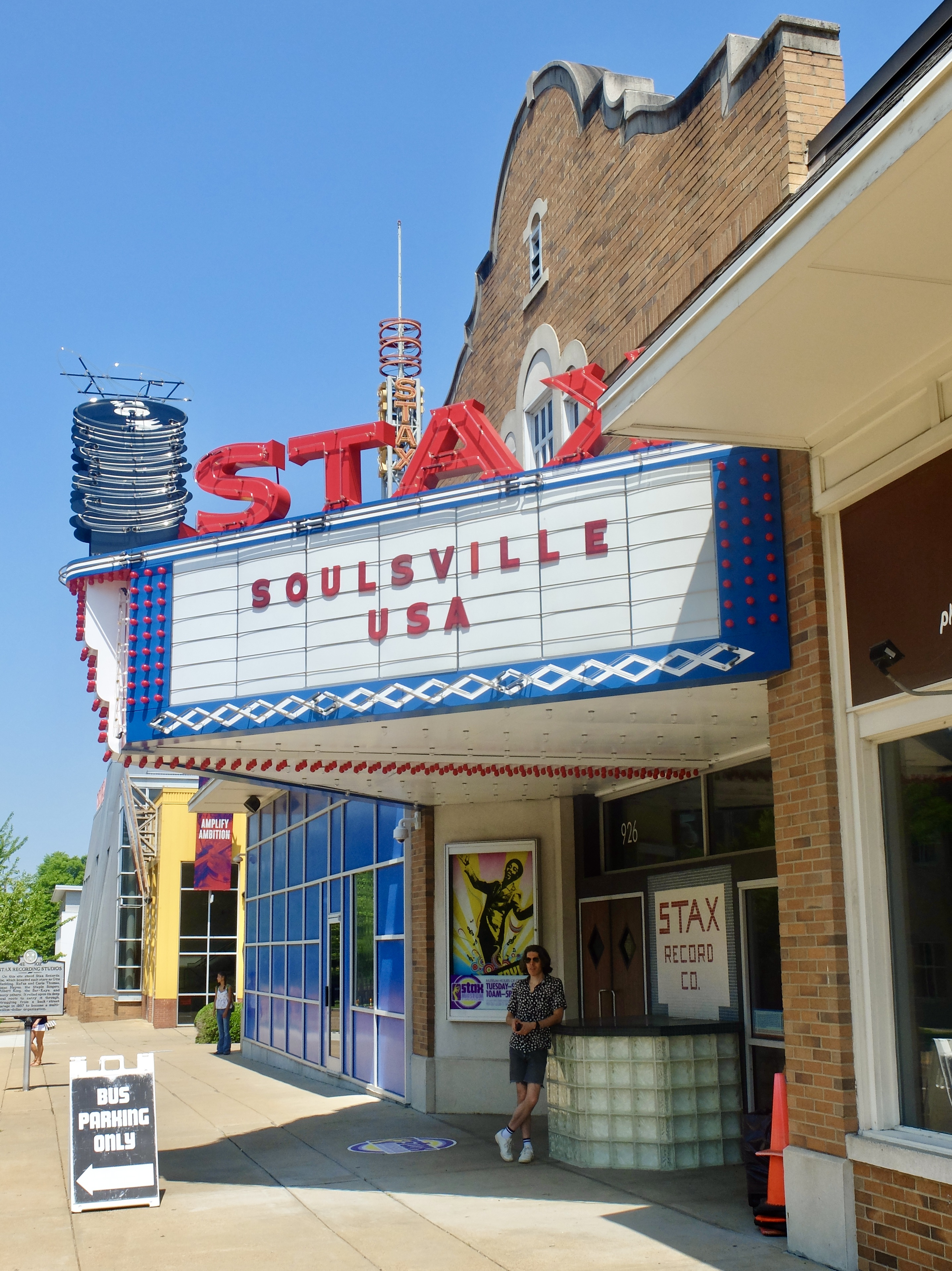
It was at this point I couldn’t believe there was still more to do in Memphis! But since we’d gone and visited Sun Studio, it felt only right to visit STAX as well. STAX was a recording studio that opened in 1957 (seven years after Sun Studio) under the name Satellite Records. Founder Jim Stewart had shit equipment that produced low quality records. His sister, Estelle Axton, mortgaged her house to buy an Ampex 350 console recorder for the studio and in 1960 the company was renamed STAX using the first two letters in their last names – the recording studio was also moved from Brunswick, TN to a former movie theater in Memphis.
They made the recording studio themselves, putting a control room where the screen had been and leaving the floor’s slant – it was a cheap way to deaden the sound and control the room’s acoustics. Their first single, a duet between Rufus and Carla Thomas called Cause I Love You, became a local hit and sold 40,000 regionally. The studio was able to sign a distribution deal with Atlantic Records because of it.
Over the next seven years, they recorded legendary artists like Otis Redding, Eddie Floyd, Mar-Keys, Booker T. & the MGs, as well as Sam and Dave. We heard a lot of music during our time in Memphis, but no song will remind me of the city as much as Eddie Floyd’s Knock on Wood.
But in 1967 Atlantic Records was sold to Warner Bros. and not only did STAX lose Sam and Dave, they also lost nearly all the songs they had recorded. In 1969, Estelle left the company and Al Bell became vice president – and started what became known as the Soul Explosion.
Rufus Thomas had a comeback with Do the Funky Chicken (do you know he also had a song called Do the Funky Penguin???) and other hits were recorded by Isaac Hayes, Marvin Gaye, the Staple Singers, Jean Knight, and the Dramatics. In all, 30 singles and 27 albums were recorded in eight months. However, the studio started to feel less like a community and more like an office.
Disaster struck again and STAX’s distribution deal with CBS collapsed in 1972, which meant that, while the label had songs, they had no way to get them to consumers. Unable to sell records, STAX fell deep into debt. They were forced into involuntary bankruptcy in 1975.
The building was razed in 1989 and a historical marker was dedicated in 1991. A group of community leaders, philanthropists and former STAX employees formed the Soulsville Foundation and opened the STAX Museum of American Soul Music in 2003 – the first and only museum dedicated to telling the story of soul music. They also opened the STAX Music Academy and the Soulsville Charter School.
We learned so much in the museum, but didn’t walk away with quite as many fun stories as at Sun Studio – STAX was definitely the better “museum,” but we loved that our Sun Studio ticket came with a tour guide.


At this point we were EXHAUSTED. Memphis had been a blast, but we were beat. We made our way to Crosstown Brewing Company. The beers were average (I was already anticipating our return to TrimTab Brewing Co. in Birmingham in a few days), but the atmosphere was relaxed and Global Café down the street had some killer African peanut soup.
Many people we had talked to had encouraged us to hurry through Memphis so that we could make our way to Nashville, but I’m so glad we didn’t listen. We LOVED Memphis – I was excited to be back in Birmingham soon to see how the cities compare, but for now, I’d list Memphis in the company of Miami and New Orleans – incredible cities that we’d love to go back to.
 Abroad With Ashley