
Our love of Birmingham started last summer on a lark. We were returning to the US after living abroad for six years and needed to buy some cars. After months of searching, Chandler settled on a 2023 Mazda Miata, saying that if this ended up being the last time we live in the US, he wanted to own a roadster at least once in his life.
Well, it turns out that Miata owners have an annual meet-up and last summer’s happened to take place in Birmingham. After just a few days in the city, we were in love – and already talking about when to go back. So, when we started planning this summer’s road trip, we knew that we’d have to stop in Birmingham – in fact, the only place we’re staying longer this summer is in Minnesota, since that’s where my family is, and we’ll be bouncing around the state to visit everyone.
This time, we didn’t have a big event to focus our time around. In fact, we had a pretty leisurely route planned from Nashville to Birmingham, stopping in both Muscle Shoals and Huntsville.
While in Memphis a few days prior, we visited both Sun Studio and STAX Museum of American Soul Music and decided we needed more music history in our lives. So we woke up fairly early and made our way to FAME Recording Studio. Before our visit, we had started watching the 2014 Muscle Shoals documentary to brush up on the history of the place and what made the music out of the region so unique. FAME wouldn’t be our only stop of the morning – we’d also head to Muscle Shoals Sound Studio as well.
We arrived at FAME just as their first tour of the day was starting. It’s not possible to wander around the studio on your own, so you have to join a tour. At $20/person, the price was a bit steep, but our tour guide was a wealth of knowledge (even if we were both quite a few years older than he was!). The rest of our group consisted of a handful of lovely retired folks and one British musician around our age.
The studio was founded in 1959 by Rick Hall. After his first hit, Arthur Alexander’s You Better Move On, he moved the recording studio to where it stands today. The first hit out of the new location was Steal Away by Jimmy Hughes and the Muscle Shoals sound was born. We started the tour in Studio B, which was built in 1967, before moving to Studio A, built in 1962.
It is truly incredible the number of hits that have come out of this studio – all with that quintessential Tennessee River sound. In the beginning, it was Etta James, Clarence Carter, Wilson Pickett, Aretha Franklin (who had previously been a failing artist at Colombia Records!), and Otis Redding. During this time, the backing band for the studio was known as the Swampers and consisted of David Hood, Jimmy Johnson, Roger Hawkins (one of the best drummers of all time), and Barry Beckett.
In 1969, the Swampers left the studio to create Muscle Shoals Sound Studio, but FAME continued to make hit music – in fact, Billboard Magazine named Rick Hall the World’s Producer of the Year for 1971. Artists to later record at the studio included Tim McGraw, Reba McEntire, the Chicks, George Strait, Martina McBride, Travis Tritt, Sara Evans, Billy Ray Cyrus, Alabama, and Kenny Chesney – so most of the 90s country music I grew up listening to.
In recent years, they produced hits for Jason Isbell, Band of Horses, Grace Potter, and Demi Lovato.


Meanwhile, the Swampers were creating hits of their own at Muscle Shoals Sound Studio. At the time, the studio was unique because it was the only recording studio owned and operated by the session musicians. Their first release was Cher’s debut solo album, titled 3614 Jackson Highway in 1969. The album cover features a photo of the building, with the title of the album superimposed over the facade, which inspired the now iconic 3614 Jackson Highway sign.
The album was a flop – in fact, the first few out of the studio were. But they finally found success with Take A Letter, Maria by R.B. Greaves. The same week they recorded that song, they were also hosting the Rolling Stones (who only had a tourism visa) and recorded Brown Sugar, Wild Horses, and a cover of You Gotta Move.
After that, they worked with artists like Lynyrd Skynyrd, Bob Dylan, Duane Allman, Paul Simon, Art Garfunkel, Bob Seger, the Staples Singers, Rod Stewart, Willie Nelson, and Cat Stevens – in fact, if you listen to Lynyrd Skynryd’s Sweet Home Alabama, you’ll hear them referenced: “Now Muscle Shoals has got the Swampers.” But my favorites lines are:
In Birmingham, they love the governor (boo, boo, boo!)
Now we all did what we could do
Now Watergate does not bother me, uh-uh
Does your conscience bother you? Tell the truth
Which I feel is a pretty sick 1974 burn to both George Wallace and Richard Nixon. In 1978, the studio moved to a new location and the original building was turned into an audio retailer and, later, an appliance repair shop. Both owners kept it pretty much as is and in the 90s, the building was abandoned. In 2009, the Black Keys recorded their album Brothers in the studio – after being told the studio was in working condition (it wasn’t!). In 2013, the studio was purchased by the Muscle Shoals Music Foundation and turned into a museum (they now record at this location again too).
Between 1969 and 1979, they produced 312 records and 72% charted – Motown was the only studio with more hits.

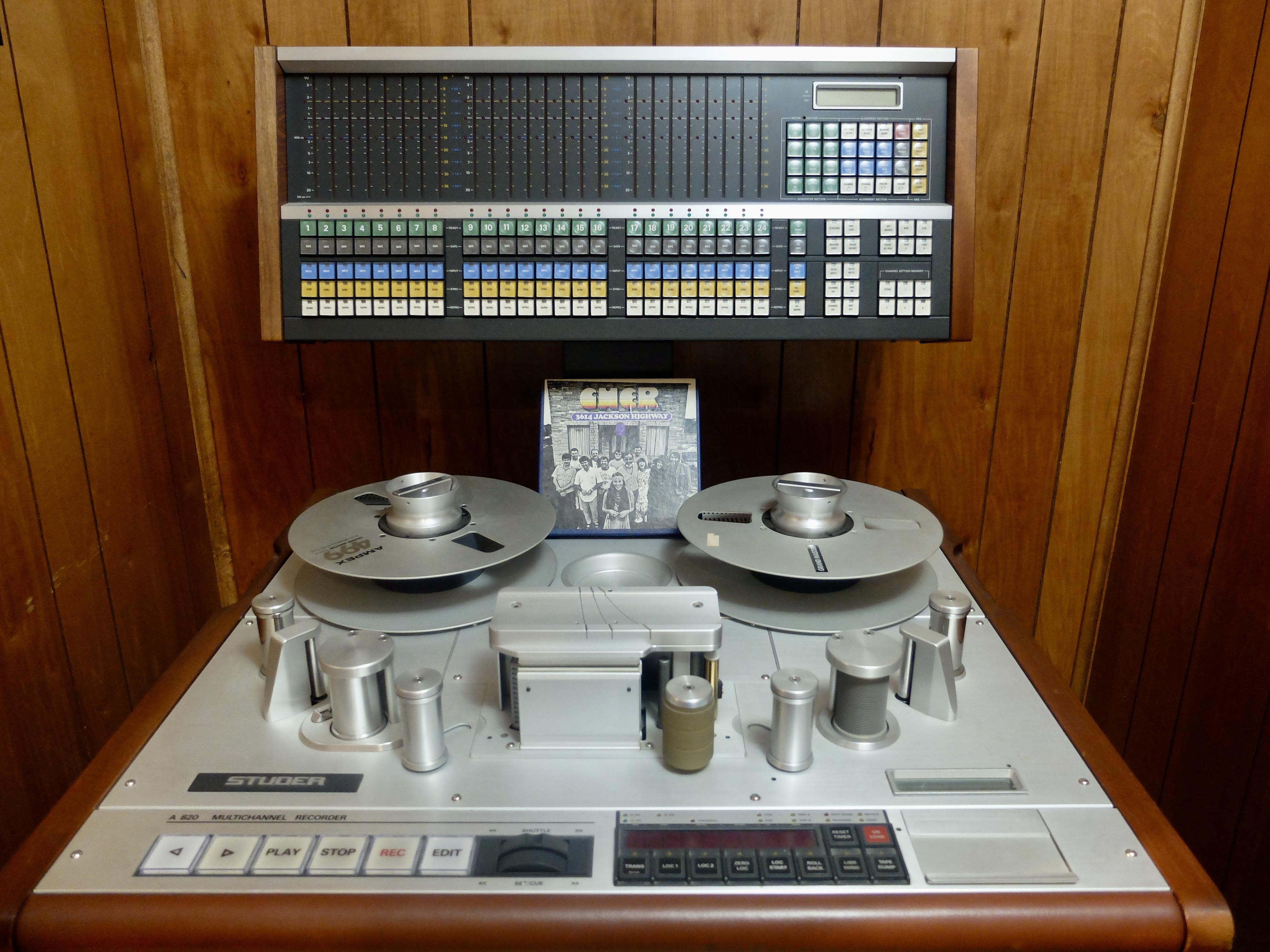
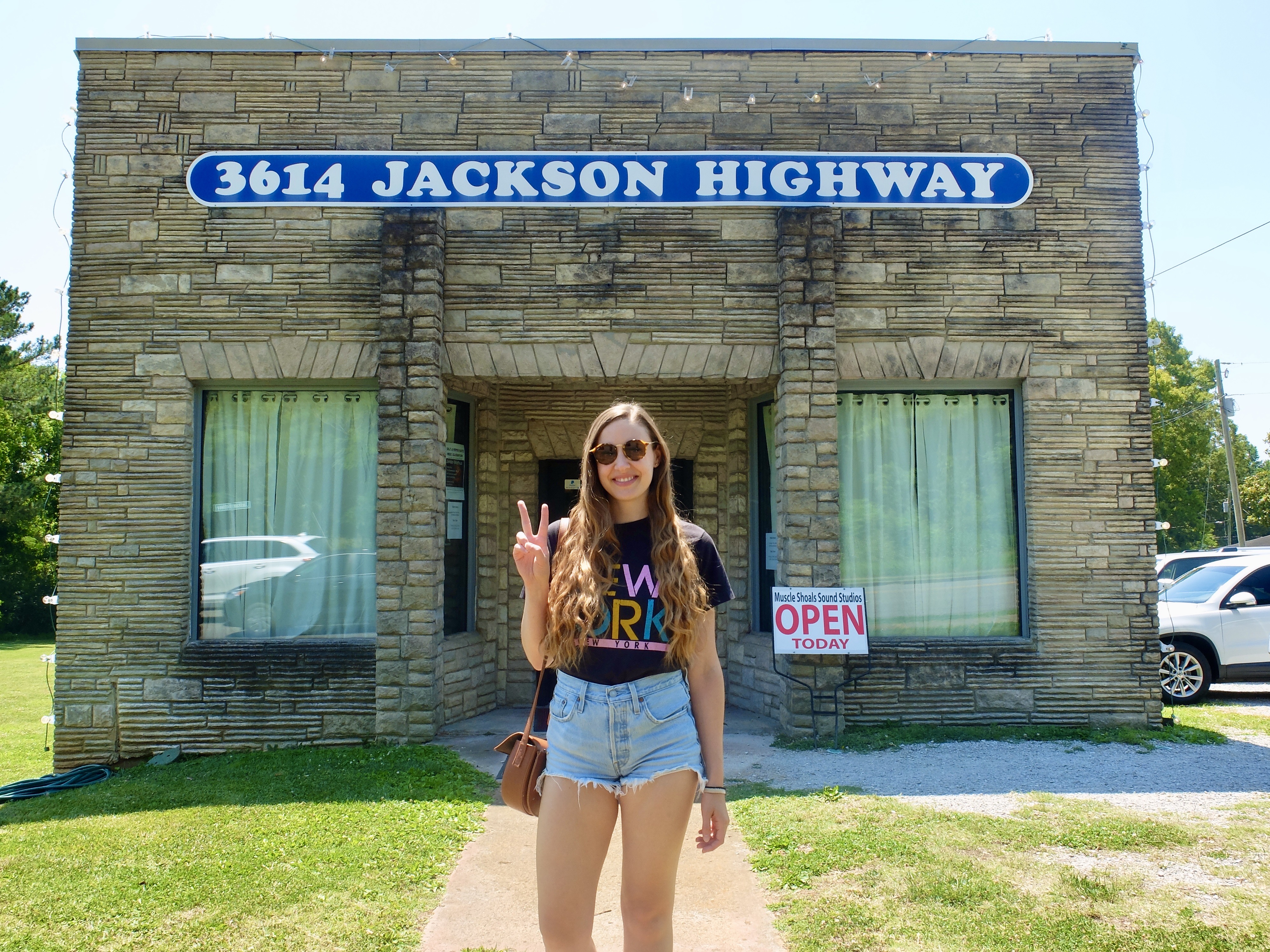
While we loved both tours, the second one (also $20/person!) was definitely superior – it was given by a man who had been around to see it all and he had so many amazing first-hand stories to share.
From there, we made our way to Hunstville, Alabama. It’s going to sound silly, but originally, we were only going so that I could shop at the Trash Panda Emporium – to buy gear for the only sports team I truly love, the Rocket City Trash Pandas (a minor league baseball team). Photos will follow later on of me in my swag, but while in Tennessee, a number of people had also encouraged us to visit the US Space & Rocket Center.
Home to Space Camp, the center is huge – at the time we went, Google Maps said people typically spend 2-3 hours there. We spent 3.5 hours and would have been there longer, except they were closing! There are a ton of activities you can pay more to do – like underwater astronaut training, a multi-axis trainer, and hypership, as well as films at the Planetarium. We were plenty busy with just the museum aspects!
There’s way too much to try and recount, but some highlights from the center include exhibits like Space Craze with pop culture memorabilia, what life is like on the International Space Station, the history of Huntsville and how the Saturn V was created, and the Apollo 16 Command Module that flew to the moon and back.
At first, it seemed like they were going to gloss over the fact that we brought over Nazis to help us win the Space Race, but a sizeable section was dedicated to Dr. Werhner von Braun. Before becoming the director of the Marshall Space Flight Center and chief architect of the Saturn V, he was a member of the Nazi Party and Allgemeine SS, as well as the leading figure in the development of rocket technology in Nazi Germany. Following the war, he was secretly moved to the United States, along with 1,600 other German scientists, engineers, and technicians.
I was impressed with the amount of science and history (Chandler loved the exhibit detailing the mechanics of the rocket engines) that was crammed into the center.
The first four photos below are from NASA – the Jet Propulsion Laboratory’s Exoplanet Travel Bureau’s Visions of the Future poster series. All of which can be downloaded for free at their website.


After we picked up the Trash Panda gear, it was time for the main event: Birmingham itself.
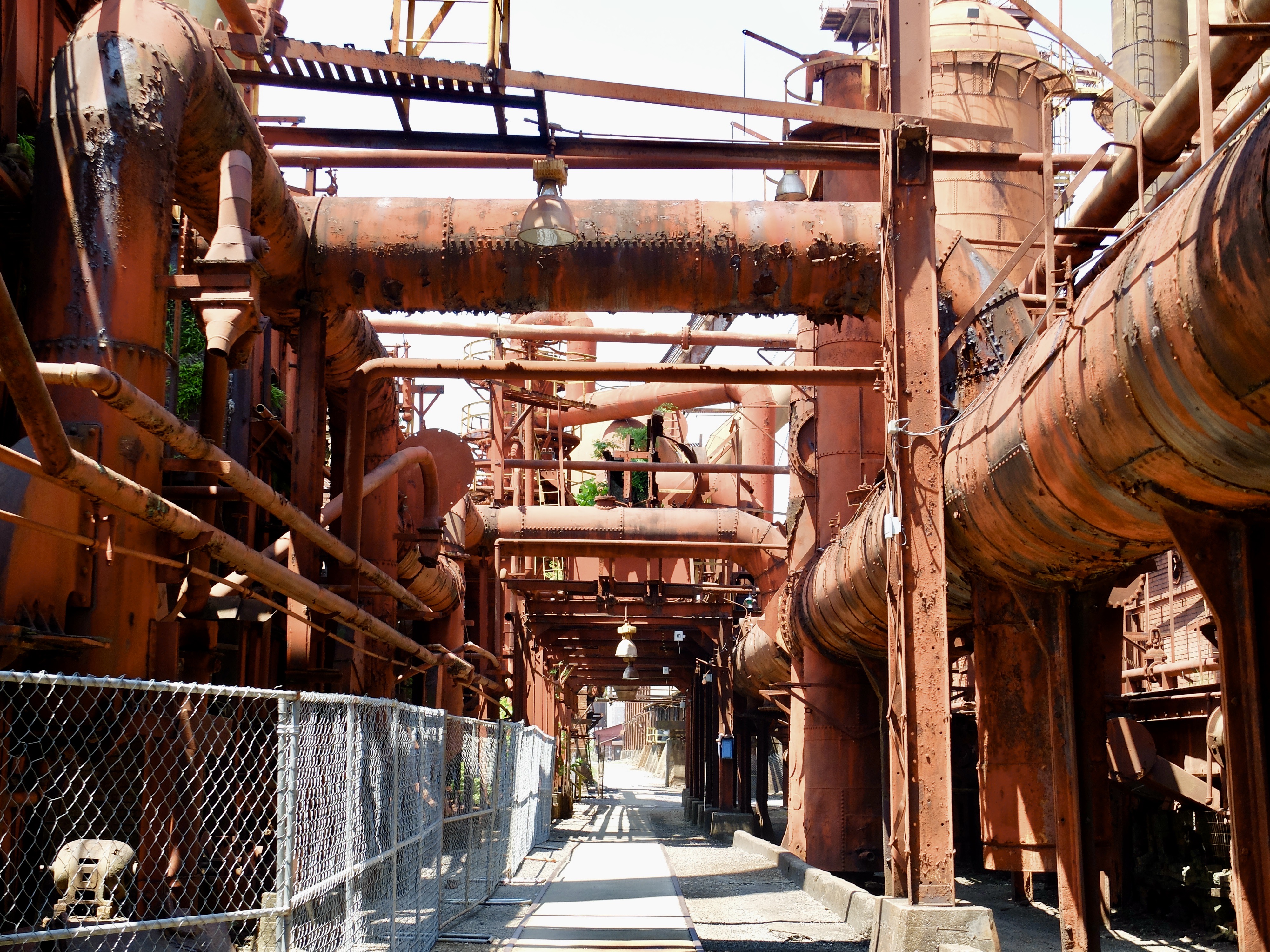
Our first activity in Birmingham was the Sloss Furnaces. It was closed the last time we were there, so this time we got to visit it in all its glory. It was opened in the 1880s as the second blast furnace in Birmingham and after their fist year of operations, they had sold 24,000 tons of iron. Fun fact, blast furnaces require a tremendous amount of air – about two tons for every ton of iron produced.
Nothing from the original structure still stands today; the oldest buildings and equipment are from 1902. Ironmaking was the quintessential Birmingham industry – iron ore, limestone, and coal were available in abundance. In fact, James Powell, an early Birmingham promoter, coined the community’s nickname by referring to “this magic little city of ours.”
However, not everything at the furnaces was “magical” – the work was fairly dangerous and the workers were segregated by skin color. In fact, the Equal Justice Initiative has a memorial on the site in remembrance of two Black men who were killed: Tom Redmond on June 17, 1890 and Jake McKenzie on March 22, 1897.
The furnaces were closed in June 1970. The property was donated to the Alabama State Fair for possible development as a museum. Instead it was scheduled to be demolished, but local preservationists formed the Sloss Furnace Association to lobby for preservation of the site. The Sloss Furnaces site became a National Historic Landmark in 1981 and opened to the public in 1983.


That afternoon, we made our way to the Negro Southern League Museum. We were going to see the Birmingham Barons later that evening and so it seemed only right to learn more about the Birmingham Black Barons.
We had learned that Birmingham was founded in 1871 with the goal of being an industrial city. New jobs were created almost overnight and by 1880 people of color comprised more than half of Birmingham’s workforce.
As the iron companies grew, baseball became a major source of entertainment for workers and their families. Before long, all the companies had both a white and Black company baseball team.
In 1920, both the Negro National League and the Negro Southern League were born. Neither league survived the Great Depression and in 1933 a new Negro National League was born, followed by the Negro American League in 1936.
The Birmingham Black Barons were one of the first eight teams of the Negro Southern League. Several members of the Black Barons during the 1920s had careers that led to their induction into the National Baseball Hall of Fame, including pitcher Bill Foster, Leroy “Satchel” Paige, and George “Mules” Suttles. Paige is considered by many to be the best pitcher in baseball history. Suttles hit 127 known home runs in Negro League competition, a number that may make him the League’s all-time home run king.
In 1947, Jackie Robinson became the first Black player to sign with a Major League Baseball team – the Brooklyn Dodgers. But that didn’t end segregated teams in Alabama. In fact, in 1950, the city of Birmingham passed an ordinance that made it illegal for people of different races to play cards, dice, dominoes, checkers, baseball, softball, basketball, or similar games together.
When the Birmingham Barons finally integrated in 1964, they were the first professional sports team in the state of Alabama to do so. The success of baseball’s integration led to the gradual decline of the Birmingham Black Barons. Over the next few years, their crowds grew increasingly smaller as they lost their most famous players. The 1962 season appears to have been their last.
At the beginning of our self-guided tour, we ran into a guide who gave us the backstory on vintage baseball teams – both the rules and how the teams are still operating today. Near the end of our tour, we ran into Frank and spent the next 30 minutes chatting baseball – what to love about it, what to hate about it, and why the museum strives to have a positive tone. He also talked about the Hairston family, a three-generation big-league family, and what Hairston had to go through to pave the way for his sons and grandsons to play ball.
The museum ended with photos and information about Mammy “Peanut” Johnson, Connie Morgan, and Marcenia “Toni” Stone – the three women to play in the Negro Leagues. Toni Stone is credited as being the first woman to play baseball in the Negro American League and she began her career in St. Paul, Minnesota!


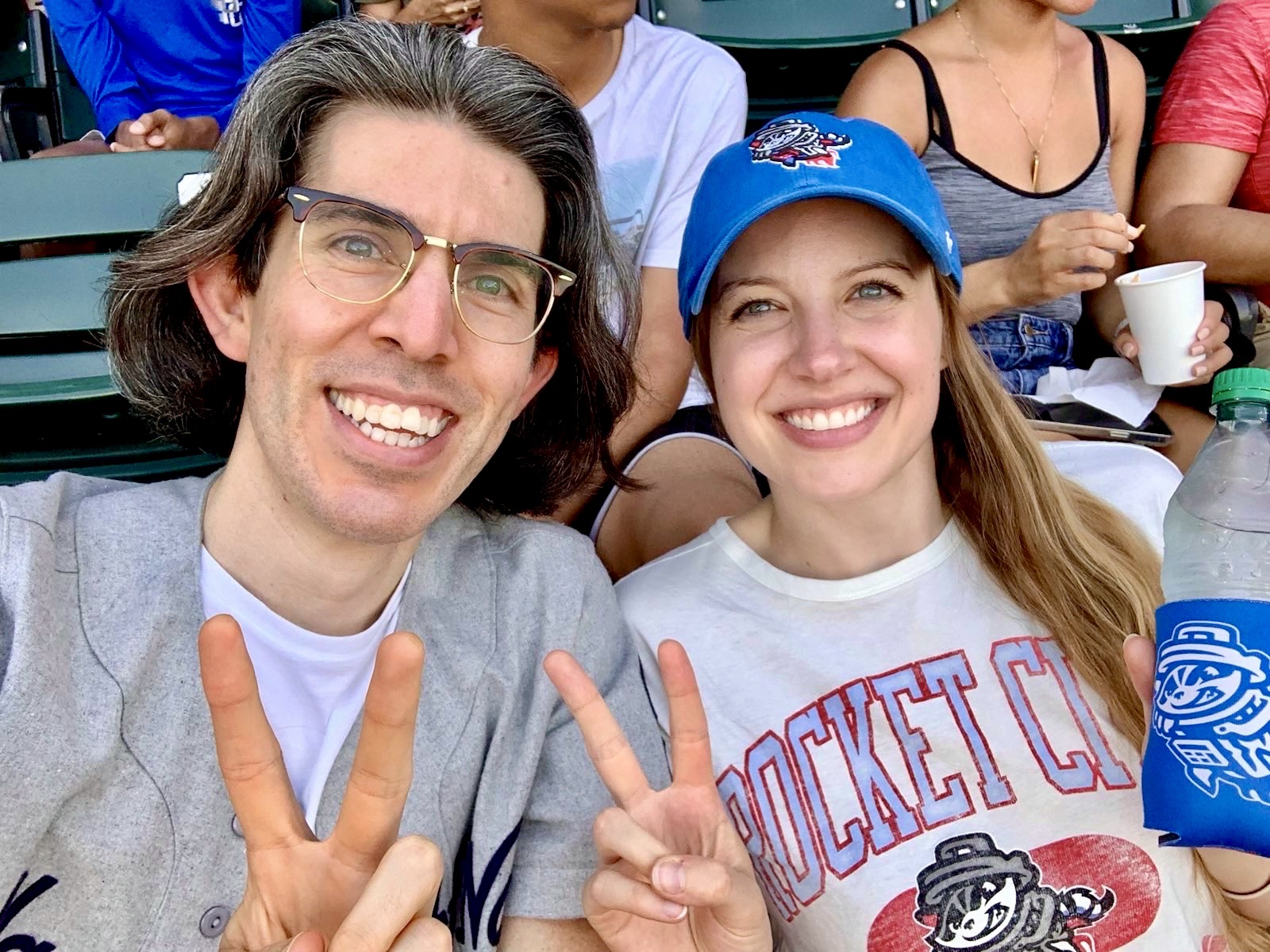
That night we went to Regions Field to watch the Birmingham Barons play the Rocket City Trash Pandas. I know you’re supposed to root for the home team, but as you know, my favorite minor league baseball team is the Trash Pandas – as you can see from my sweet swag below.

Because we didn’t have enough baseball in our lives, we visited Rickwood Field the following morning. Rickwood is the oldest professional ballpark in the US. It was built in 1910 for the Birmingham Barons and was also home to the Birmingham Black Barons.
The stadium is open most weekdays for self-guided tours and we found ourselves wandering all over. The photo of the field was taken from the gazebo pressbox located on the roof. Some of the chairs definitely look like they came with the place! But possibly my favorite part of the stadium are the vintage signs around the edges of the outfield – they’re like stepping back in time.
Rickwood Field still hosts nearly 200 games per year, even though the Birmingham Barons moved to the Hoover Metropolitan Stadium in 1988. After wandering through the stadium, we chatted with some of the people who run it on a day-to-day basis. They told us the stadium can still hold 10,800 (though I can’t imagine where they’d all park!). But the best pro-tip had nothing to do with baseball whatsoever – they said anyone who visits Birmingham has to try kikipooh juice. Apparently only sold at wings restaurants, they recommended Wings Plus.
We drove over the next day and ordered a small drink – supposedly it’s a mixture of fruit punch, sweet tea, and lemonade. It was awful, but definitely felt like a local experience.


We were continuing our thread of Birmingham history as we made our way to the A.G. Gaston Motel. Chandler had looked it up months ago and while the place has quite a story, it was run down and closed. Which is why we were so surprised to be greeted by National Park rangers when we arrived – the motel is now a Civil Rights Monument and we had happened to arrive on opening day!
We walked around the courtyard of the motel (the rooms have yet to be restored) and into the small museum. There we learned more about A.G. Gaston – born in 1892, the grandson of an enslaved person, he became an entrepreneur whose net worth was estimated to be more than $130 million at the time of his death in 1996.
He opened the motel in 1954 to provide first-class lodging and dining in Birmingham to Black travelers. Leaders from the Southern Christian Leadership Conference (SCLC) took up residence in the motel from April through May of 1963. When Martin Luther King, Jr. was arrested and wrote Letter from Birmingham Jail, it was A.G. Gaston who posted his bail.
Gaston, however, disapproved of many of the SCLC’s tactics and argued strongly against sending children to protest in what is now known as the Children’s Crusade. The young marchers were met with violent aggression at the hands of Birmingham police under orders of Public Safety Commissioner Bull Connor. Images of young nonviolent demonstrators blasted by fire hoses, clubbed by police, and attacked by police dogs were broadcast around the world. While local jails began to fill with hundreds of young protestors, the images galvanized public opinion and the broader fight for civil rights.
For his role in the Civil Rights Movement, Gaston had both his motel and home bombed. In 1982 Gaston converted the motel into housing for the elderly, which functioned until 1996. The property sat vacant until 2015 when it was purchased by the City of Birmingham to be incorporated into the Birmingham Civil Rights Historic District.
In 1968, Gaston published his autobiography, Green Power, and unveiled his “Ten Rules for Success,” including:
I. Save a part of all you earn. Money doesn’t spoil. It keeps.
IV. Never borrow anything that, if forced to it, you can’t pay.
VI. Don’t have so much pride. Wear the same suit for a year or two.
VII. Find a need and fulfill it. Successful businesses are founded on the needs of people.


After the motel, we walked through the rest of the Civil Rights Historic District, through Kelly Ingram Park, past the 16th Street Baptist Church (where a racially motivated explosion in 1963 killed Addie Mae Collins, Denise McNair, Carole Robertson, and Cynthia Wesley), and into the Birmingham Civil Rights Institute.
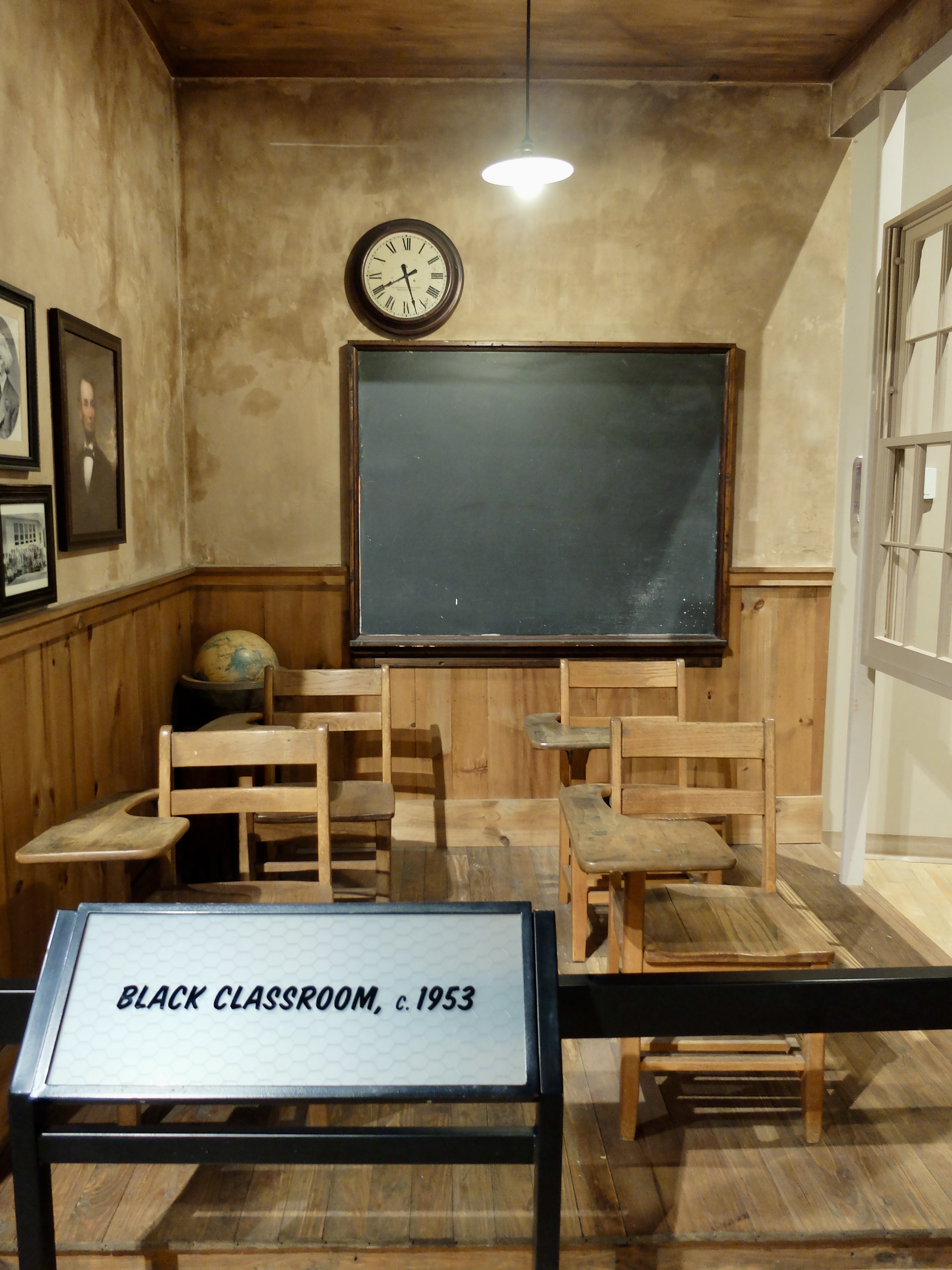
This is a Smithsonian affiliated museum and was a great companion piece to the Mississippi Civil Rights Museum in Jackson. Despite learning about the founding and history of Birmingham, it never really sunk in that Birmingham was founded after the civil war and post slavery. The museum was filled with well-done recreations using authentic pieces to put what was happening in Birmingham (and Alabama) in context with what was happening at a national level.
Birmingham’s Jim Crow laws were passed in the 1920s to segregate the city. Zoning laws defined communities as “colored” or “white.” Hospitals housed Black patients in segregated basement wards and until 1954, not a single Black physician had hospital privileges.
When people of color spoke out for justice, they were met with fierce resistance. From the late 1940s to the mid 1960s, 50+ “unsolved,” racially directed bombings led to the unofficial name “Bombingham.”
The museum did a great job including the other women who made the Montgomery Bus Boycott so successful, like Aurelia Browder, Claudette Colvin, Susie McDonald, and Mary Louise Smith who were all plaintiffs in the Browder v. Gayle case. It also highlighted others who supported the movement, like the 1,600 Alabama State University students who protested after the Alabama governor expelled 9 students in 1960 for participating in the lunch counter sit-ins.


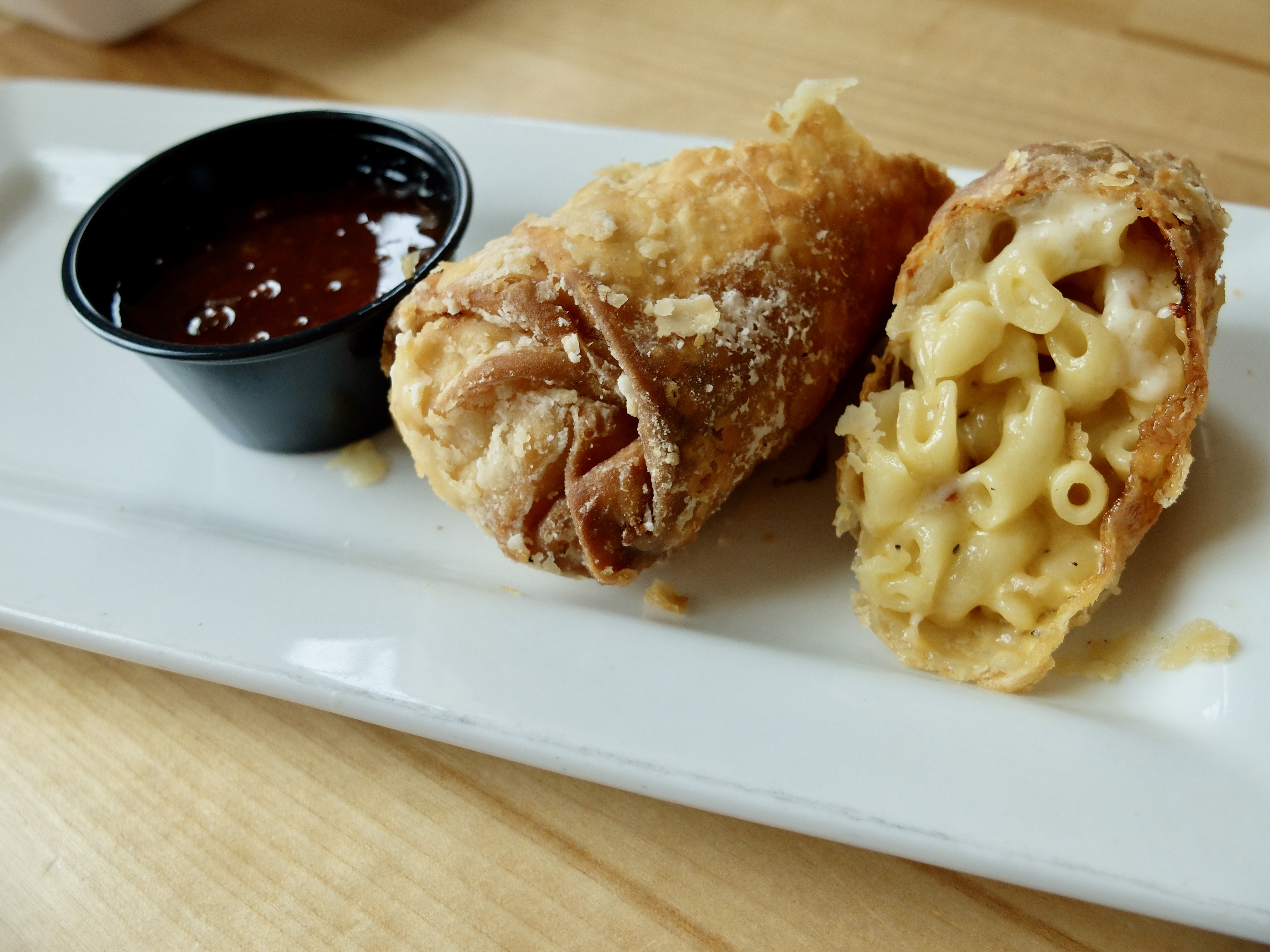
We had really been on the move since arriving in Alabama, so that afternoon we went to MELT for some mac ‘n’ cheese egg rolls (even better than they sound!) and sour beers at my favorite brewery, TrimTab.
We played some board games, chatted with some Birmingham transplants, and sampled every sour on the menu.


The next morning we were up and at ’em to hike in Red Mountain Park. Initially, I had mapped out a route for us at Ruffner Mountain, but at the time, their trails didn’t open until 9am and we were under an extreme heat advisory and wanted an earlier start time. Red Mountain’s trails opened at 7am.
We started on the Eureka Mines Trail at Frankfurt Dr Parking, which connects to the BMRR South Trail, then the Shook Trail, which leads to Grace’s Gap Overlook. AllTrails ranks this as the best hike near Birmingham, but I have to admit, I was pretty underwhelmed. I did get to see my first live armadillo – all the ones I’ve seen in Texas have been run over – but overall, I wish we’d been able to hike Ruffner instead. At the time of writing this post, I see that Ruffner has updated their hours to begin at 7am as well and I wish that had happened just a few weeks earlier!
The hike lasted just a few hours since the weather was so hot, so we made our way back to TrimTab. They were releasing two specialty beers that afternoon and I couldn’t wait to try Peach Rings and Aloha Now.

Now, as we travel through the rest of the south, I’m trying to drink my extra Peach Rings slowly – and not judge other cities too harshly as I compare them to Birmingham. It still feels like a perfect city.
 Abroad With Ashley