
Hot take, but Atlanta reminded me a lot of Dallas. Both are minority-majority cities that seem hyper focused on business. While in Birmingham, a business owner lamented to us that both Coca-Cola and Delta found their homes in Atlanta after expressing initial interest in Birmingham.
What that means for us, as visitors, is that it’s hard to get the vibe of a city like that. Chandler likes to joke that Dallas’ culture is corporate – and we felt that in Atlanta as well.
Our first stop in Atlanta was dinner at a local legend – Slutty Vegan. Founded in 2018 by Pinky Cole, her goal was to introduce vegan food to people who had never considered it (in fact, Cole estimates that three-quarters of Slutty Vegan’s customers are meat-eaters). Now, she also said part of what drove her was her community’s high numbers with hypertension, cholesterol, and obesity – which is a little ironic since there are significantly healthier options in the vegan community than these burgers!
But, her marketing tactics worked. She got started making the burgers in her apartment and selling them on Instagram. Next up was a food truck and finally some storefront. Five years later, there are 10 Slutty Vegans in the US – six throughout Georgia, two in NYC, one in Birmingham, and even one in Dallas.
The plant-based patties are typically Impossible Burgers, but we ordered ours with Beyond Meat (just a preference we have). Specialty “slut sauce” is added, as well as the toppings. Chandler went for a Super Slut that came with guacamole and jalapeños, while I opted for the Dancehall Queen with sweet jerk plantains. Burgers also come with Slutty Fries that are dusted with “slut dust.”
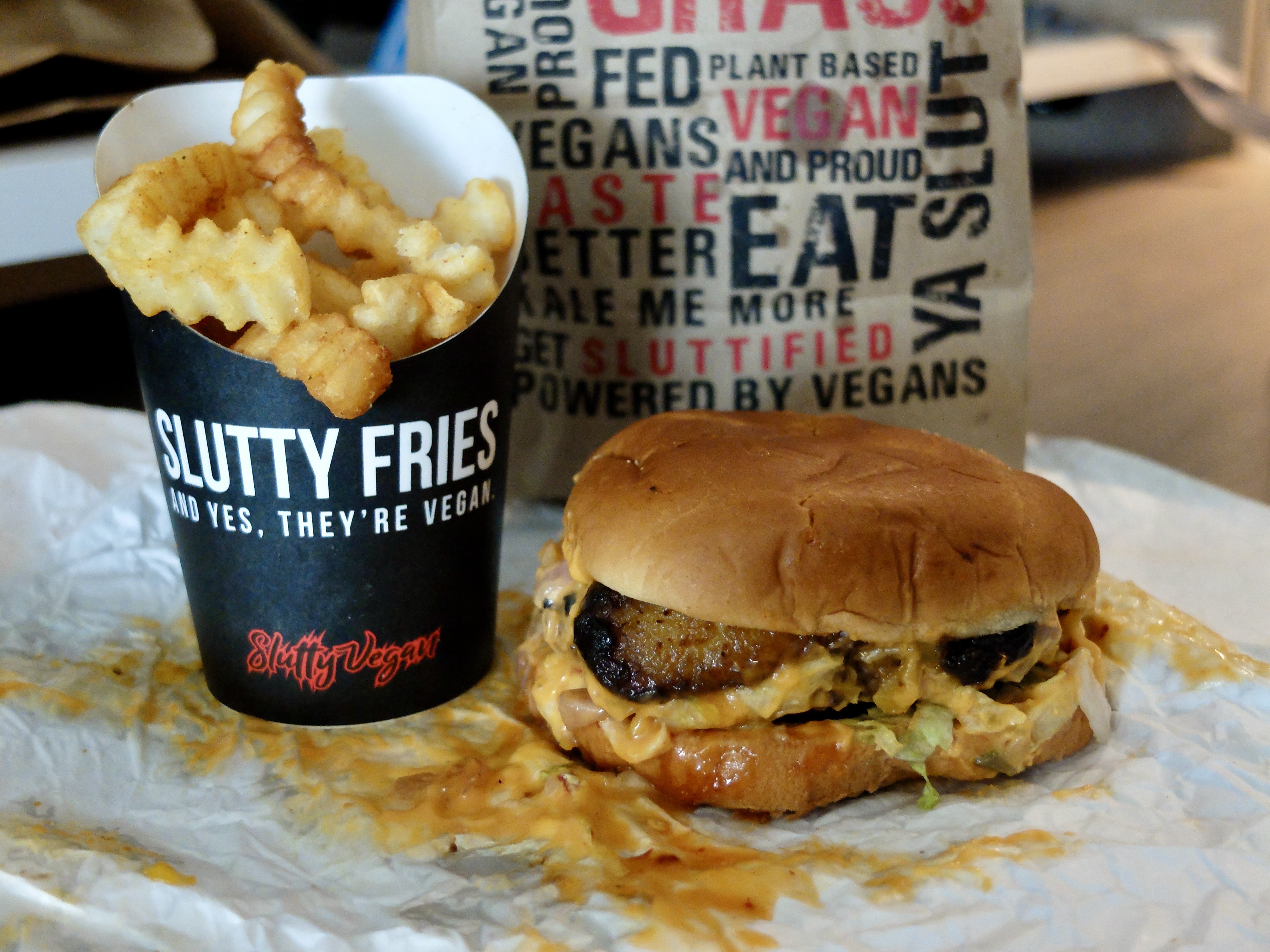
They really lean into their hype, but the burgers were good. In fact, Slutty Vegan was the only good meal we had in Atlanta! That’s probably the biggest contrast between Dallas and Atlanta – we love Dallas for it’s healthy and international cuisine options and we definitely found Atlanta lacking in that market.
The next stop was another Atlanta institution, the World of Coca-Cola – billed as an attraction, museum, and venue, it’s listed on Tripadvisor as the 4th best thing to do in Atlanta with only the Georgia Aquarium surpassing it in visitors.
The museum begins with a room filled with signs and other Coke paraphernalia (the oldest dating back to 1896) and included a quick orientation with some fun facts. Then everyone heads into a theater for a short film about how Coke makes everyone’s special moments that much more memorable (another great marketing strategy). After that, you’re led into the heart of the operation. On the bottom floor there’s an exhibit about the history of Coca-Cola and the “vault of the secret formula.” The top floor is home to Scent Discovery (sort of like Jeopardy for your nose!), a 3-D theater, and the Taste It experience (where you can taste Coca-Cola products from around the world).
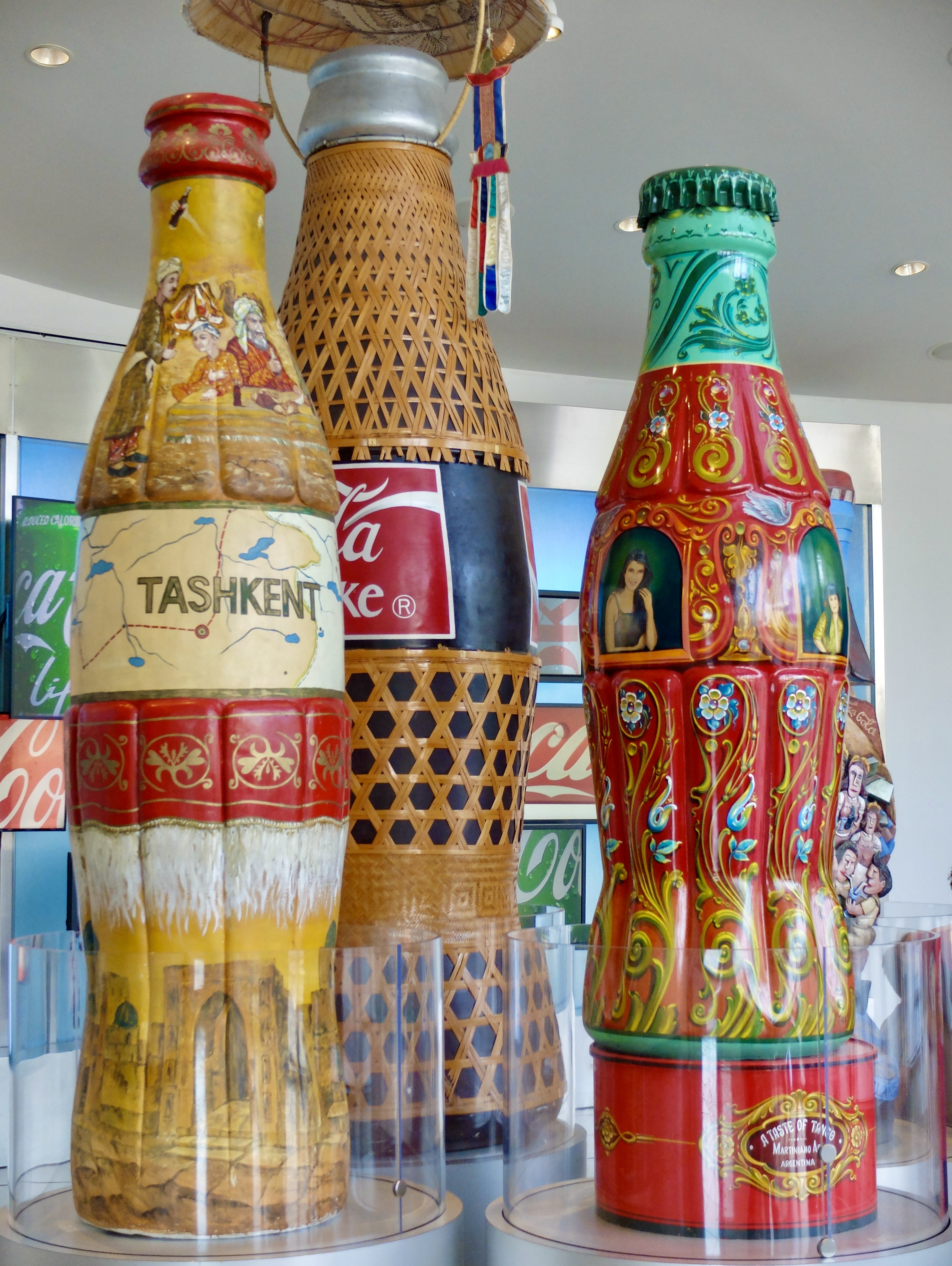
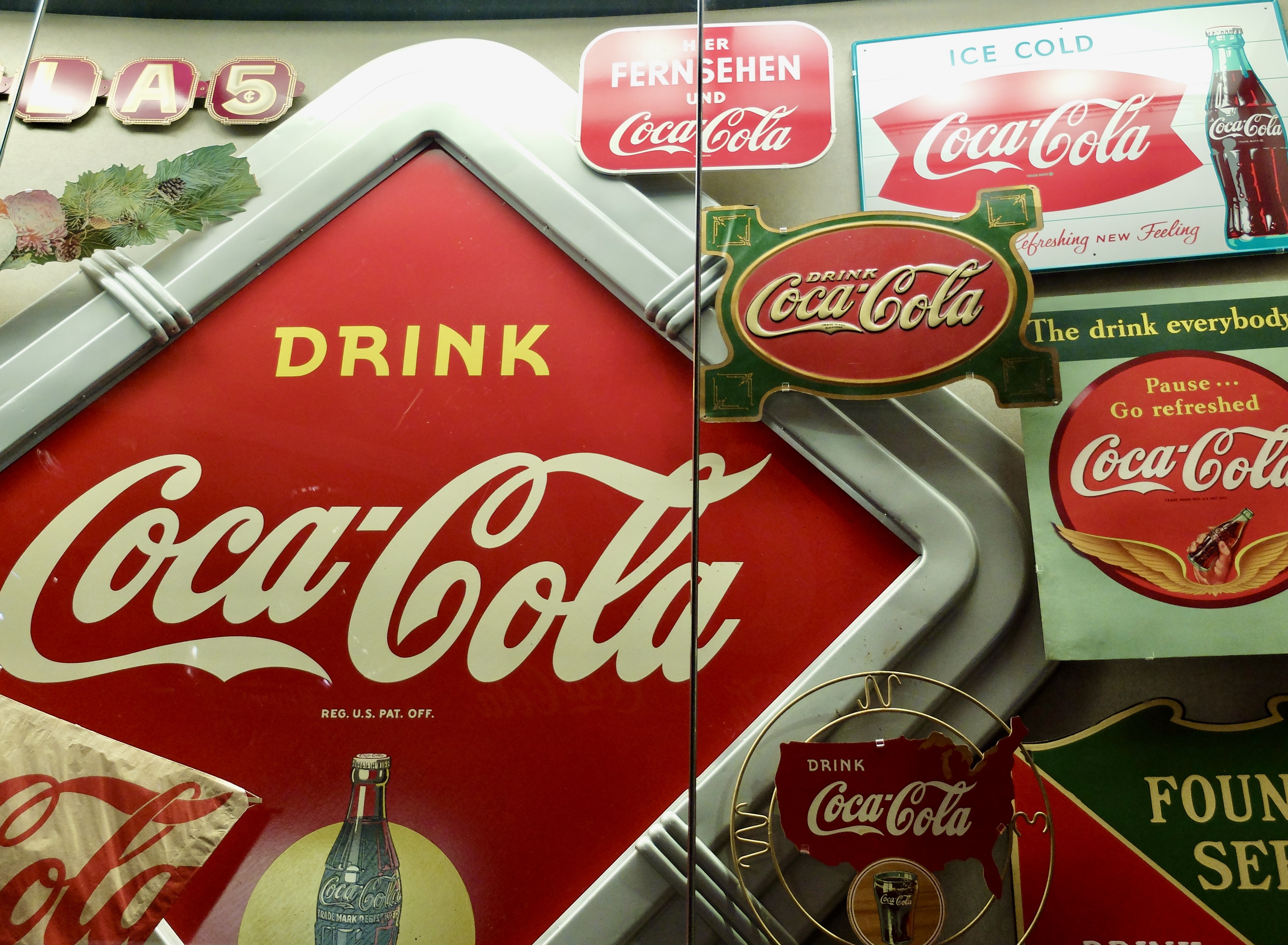
I have to admit, the history exhibit was my favorite. Not only is it filled with information about Coke’s origins, there are more than 1,000 original artifacts on display. I learned that less than one mile from the museum was Jacobs’ Pharmacy, where on May 8, 1886 soda fountain customers enjoyed their first taste of a “revolutionary” new drink: Coca-Cola.
Coca-Cola was created by pharmacist John S. Pemberton. That first year, he sold about nine drinks per day for five cents a glass. Only two years later, he sold the “formula” to Asa G. Candler for $2,300. In 1899, Candler was convinced to sell the bottling rights, which allowed people to drink Coke in their homes, and in 1915 they created the iconic bottle that set Coke apart from all its imitators.
In 1906, Coca-Cola went international, setting up operations in Cuba, Canada, and Panama – today 70% of their revenue comes from operations outside the US. By 1919, Candler’s family had made quite a profit and they sold Coca-Cola to Ernest Woodruff for $25 million.
The biggest controversy mentioned in the museum took place on April 23, 1985 – it was the day that Coca-Cola announced it was changing its beloved formula. Dubbed “new” Coke, it was immediately met with a firestorm of complaints. People created protest signs, wrote tribute songs, and emptied store shelves of the remaining cases of “old” Coke. Exactly 79 days after the new version had been introduced, the company announced the return of the original formula, now titled Coca-Cola Classic.
They conveniently left out other controversies like the use of coca leaf (the source of cocaine) in the beginning (Pemberton had been trying to create a beverage that could work as a painkiller or stimulant) and the fact that they continued to do business with Nazi Germany until the US entered WWII. In fact, Fanta was created in Germany after Coca-Cola stopped sending the flavoring over – it kept the German subsidiary afloat and it’s creator, Max Keith, was hailed as a hero by the Americans back in Atlanta for keeping the company alive. He was later given command of Coca-Cola Europe.
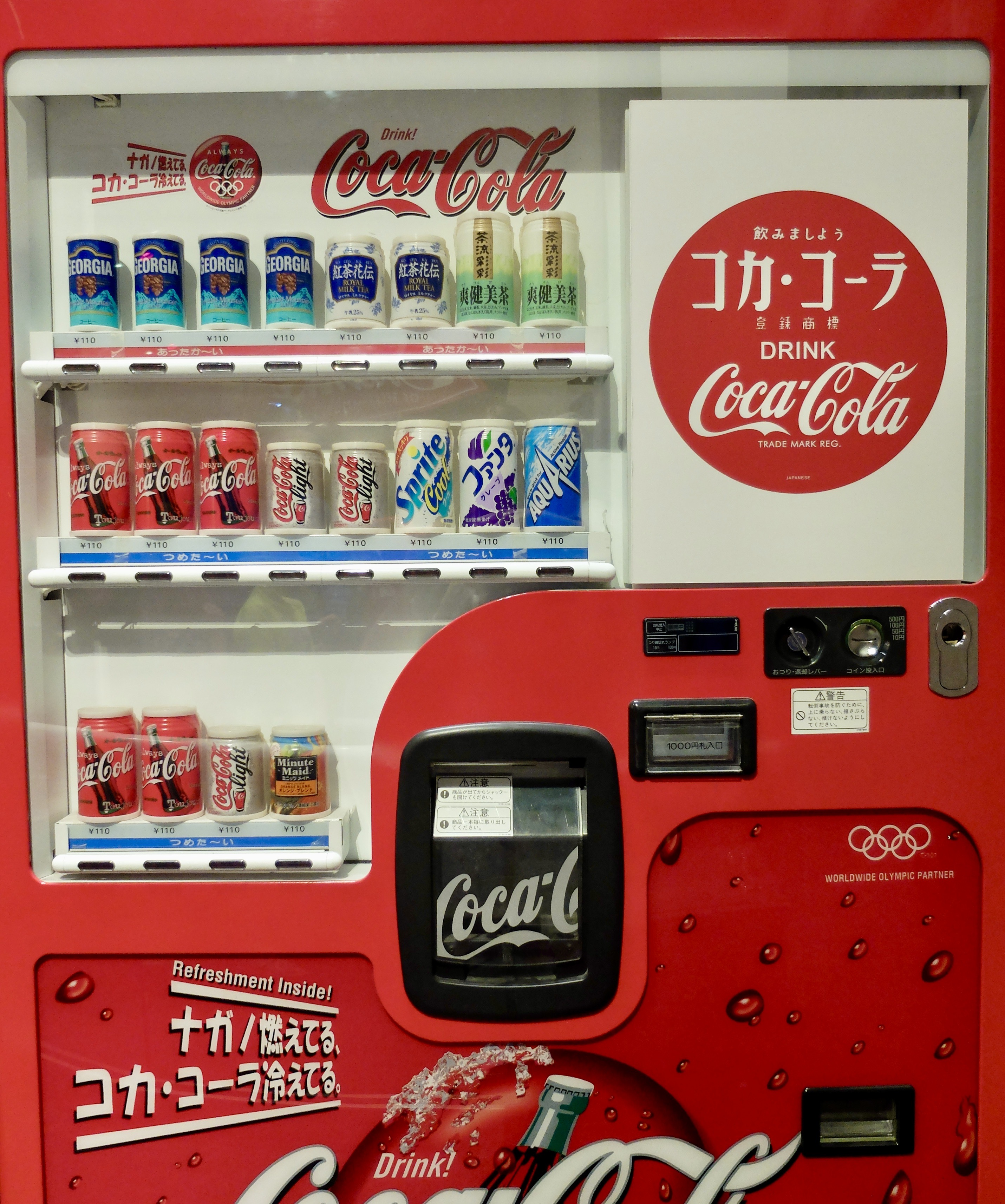
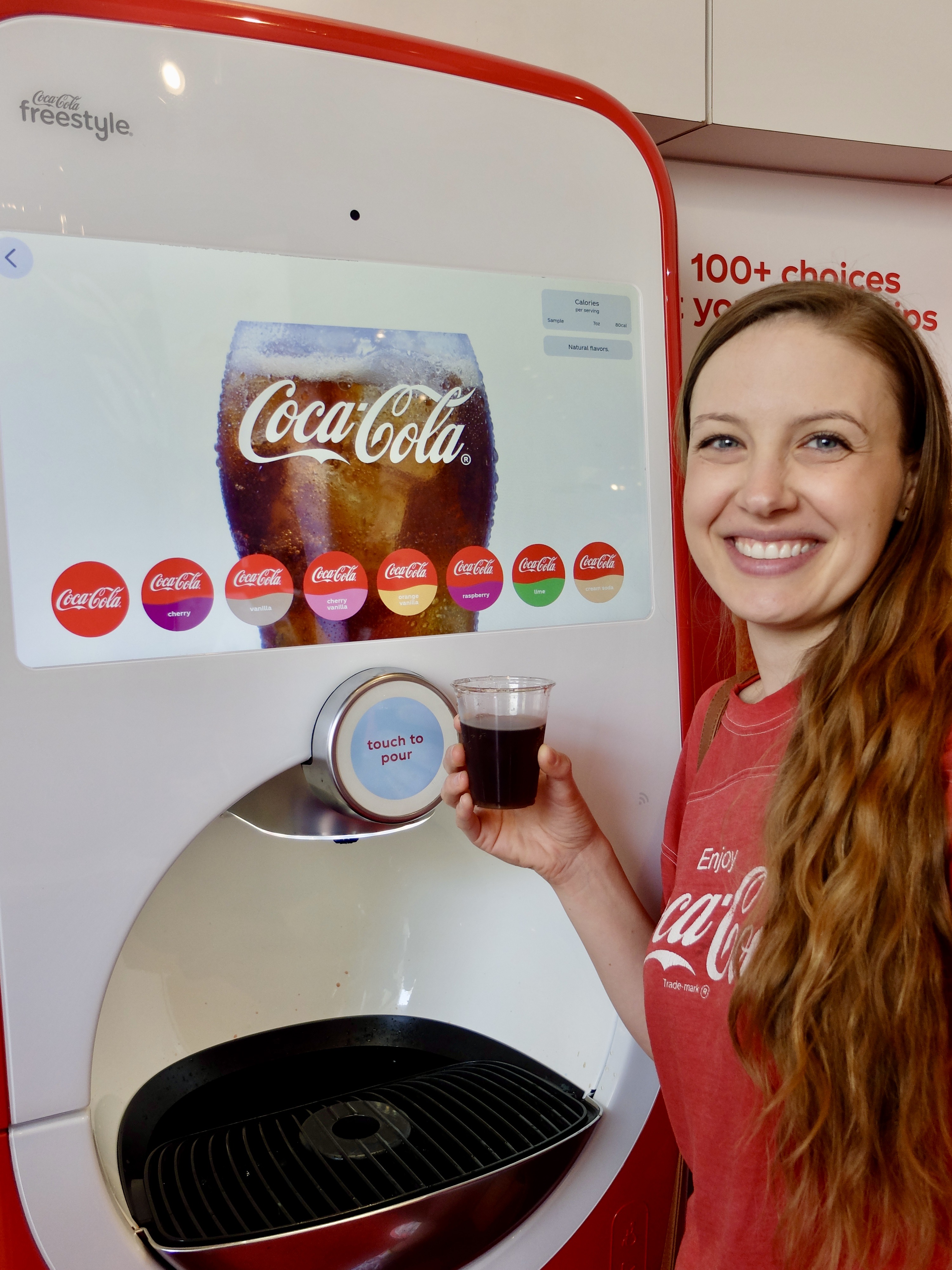
The sampling room was also quite memorable. I grew up a Mountain Dew fan, but stopped drinking it after I linked the caffeine to my migraines. As an adult, I’ll drink the occasional Coke to ward off incoming migraines, but I tend to steer clear of soda. That said, I couldn’t help but taste a few. My favorites tended to be refreshing, as opposed to sweet and included Sprite Cucumber (Romania), Minute Maid Joy Apple Lychee (Korea), and Royal Watermelon (Philippines). Zimbabwe had the worst beverage, though I can’t remember its name anymore.
Afterward, we went to lunch at a place that shall remain nameless because we wouldn’t quite recommend it. We Ubered over because parking in Atlanta can be a nightmare and the garage we were in was $20 for the day. When we got back, we headed over to the National Center for Civil and Human Rights.
The main floor’s exhibit was laid out pretty much how you would expect it to be. It started with Jim Crow laws, quickly moving to the Brown V. Board of Education decision, before highlighting the boycotts, sit-ins, school integration, and Freedom Riders. It focused on Atlanta’s tagline at the time “the city too busy to hate” – making it clear that money and business were the city’s focus (violent reactions to desegregation were seen as bad for business). The exhibit moved through the March on Washington, the 16th Street Baptist Church bombing and other martyrs of the movement, the march on Selma, wrapping up with Martin Luther King, Jr.’s assassination, and a memorial room.
It wasn’t nearly as expansive as the National Civil Rights Museum at the Lorraine Hotel, but did a great job highlighting the movement. The basement exhibit included papers from the March on Washington and I learned that most of what we quote from the I Have a Dream Speech was ad-libbed. Originally, the speech was titled Normalcy Never Again, but Mahalia Jackson shouted from the crowd and asked Martin Luther King, Jr. to tell everyone about his dream…so he did.
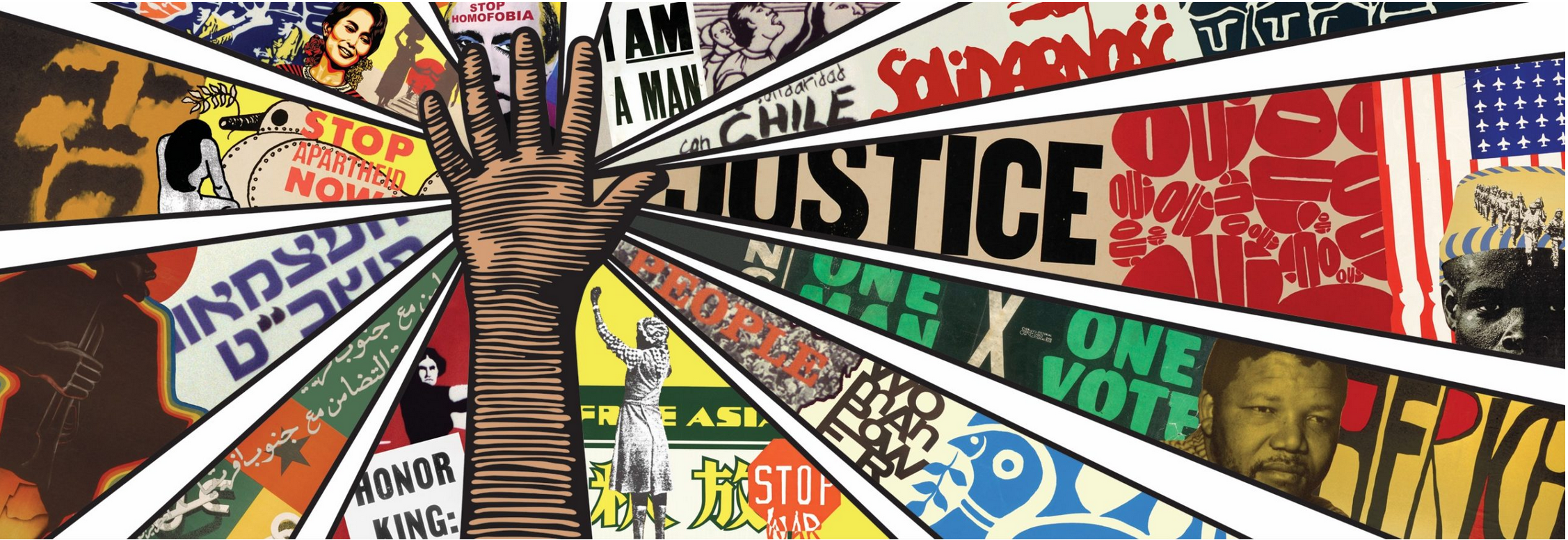
Where the museum really blew me away was the top floor exhibit – Spark of Conviction: The Global Human Rights Movement. Other civil rights museums tried to include international issues, but they mostly focused on how the US movement gave other’s the “courage” to fight back, really marginalizing powerful causes. The National Center for Civil and Human Rights did an excellent job.
There was a display about iconic human rights campaigns around the world since World Word II:
-Portugal [1974]
-Poland [1980]
-Argentina [1985]
-The Philippines [1986]
-China [1989]
-Germany [1989]
-Soviet Union [1990]
-South Africa [1994]
-Bosnia [1998]
-Serbia [2000]
-Ukraine [2004]
-Burma [2007]
-Tibet [2008]
-Iran [2009]
-Egypt [2011]
-Tunisia [2011]
-Cuba [2012]
Another display called out past human rights’ offenders:
-Augusta Pinochet: Chile
-Idi Amin: Uganda
-Pol Pot: Cambodia
-Joseph Stalin: Russia
-Mao Zedong: China
-Adolph Hitler: Germany
As well as current dictators/offenders:
-Ilham Aliyev : Azerbaijan
-Teodoro Obiang Nguema Mbasogo: Equatorial Guinea
-Kim Jong Un – North Korea
-Vladimir Putin: Russia
-Bashar al-Assad: Syria
The museum made it a point to highlight the amazing work being done by civil rights advocates in Argentina, Bahrain, China, the Czech Republic, India, Iran, Mexico, the Philippines, Russia, Rwanda, Saudi Arabia, South Africa, and the United States.
It ended with a reminder to look at our own ethical footprint. If you’ve ever watch NBC’s The Good Place, it kind of felt like that – every choice we make has negative ethical consequences and companies should be held responsible. Some of the worst industries for human right’s violations include flowers, soccer balls, cell phones, clothing, palm oil, and chocolate.
After a full day of museums, we spent the evening at Monday Night Brewing. Recommended by both Thrillist’s The Absolute Best Breweries in Atlanta and Atlantan Magazine’s The 15 Best Breweries to Visit in Atlanta, it seemed a solid choice for sour beers.
The space was large, the ambience relaxed (even if the playlist was terrible), and they had plenty for me to sample, including Dr. Robot #1 (a berry-lemon sour), Dr. Robot #2 (a key lime sour), Mangosaurus (with tequila barrels, mango, tangerine, key lime, & sea salt), and Lemon Lime Funshine (a lemon-lime berliner-style weisse) – my personal favorite!
Afterward we had another meal that we shall not mention and we gave up eating in Atlanta – the rest of our meals would be cooked by us in our hotel room!
Our final morning in Atlanta was spent at the Atlanta Botanical Garden. This is where I show that best-laid plans can still go awry after more than a decade of traveling. Despite the heat, I wanted to go to the gardens to see their Alice in Wonderland exhibit (photos can be seen here). The only problem? It’s a traveling exhibit that was last in Atlanta in 2021 – oops!
The current exhibit? Trolls. I wish I could have appreciated the message and materials – recycling and sustainability – but it was a real let down from what I expected to see. It didn’t help that tickets were $27 per person, one of the most expensive things we’d done on our road trip so far. In fact, we almost didn’t stay – but I’m so glad we did!
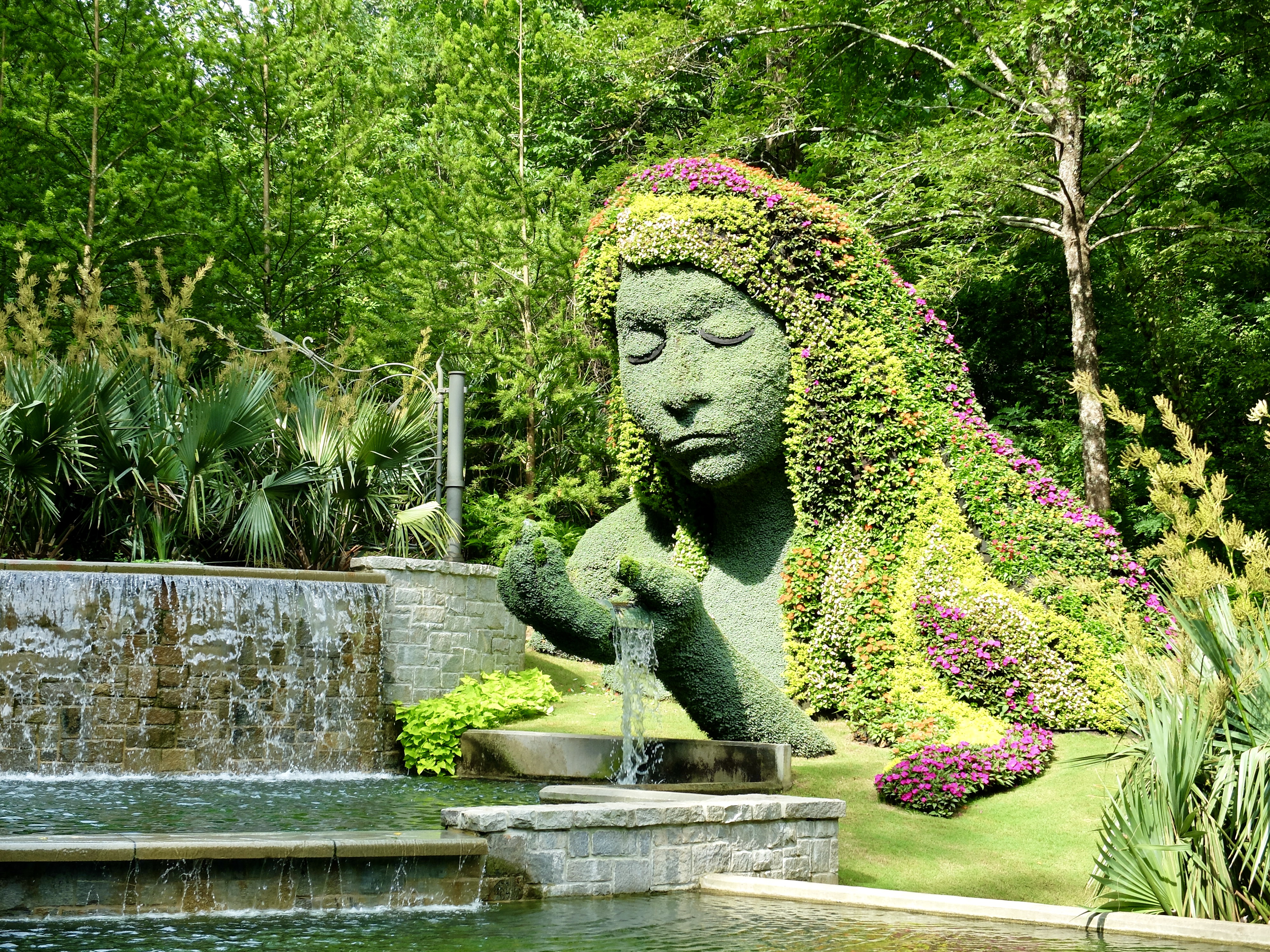
While the trolls were not for me, the Earth Goddess sculpture was divine. It is the feature of the Cascades Garden and is 25 feet tall with 18,000 annuals, though most of the color comes more from foliage and less from blooms.
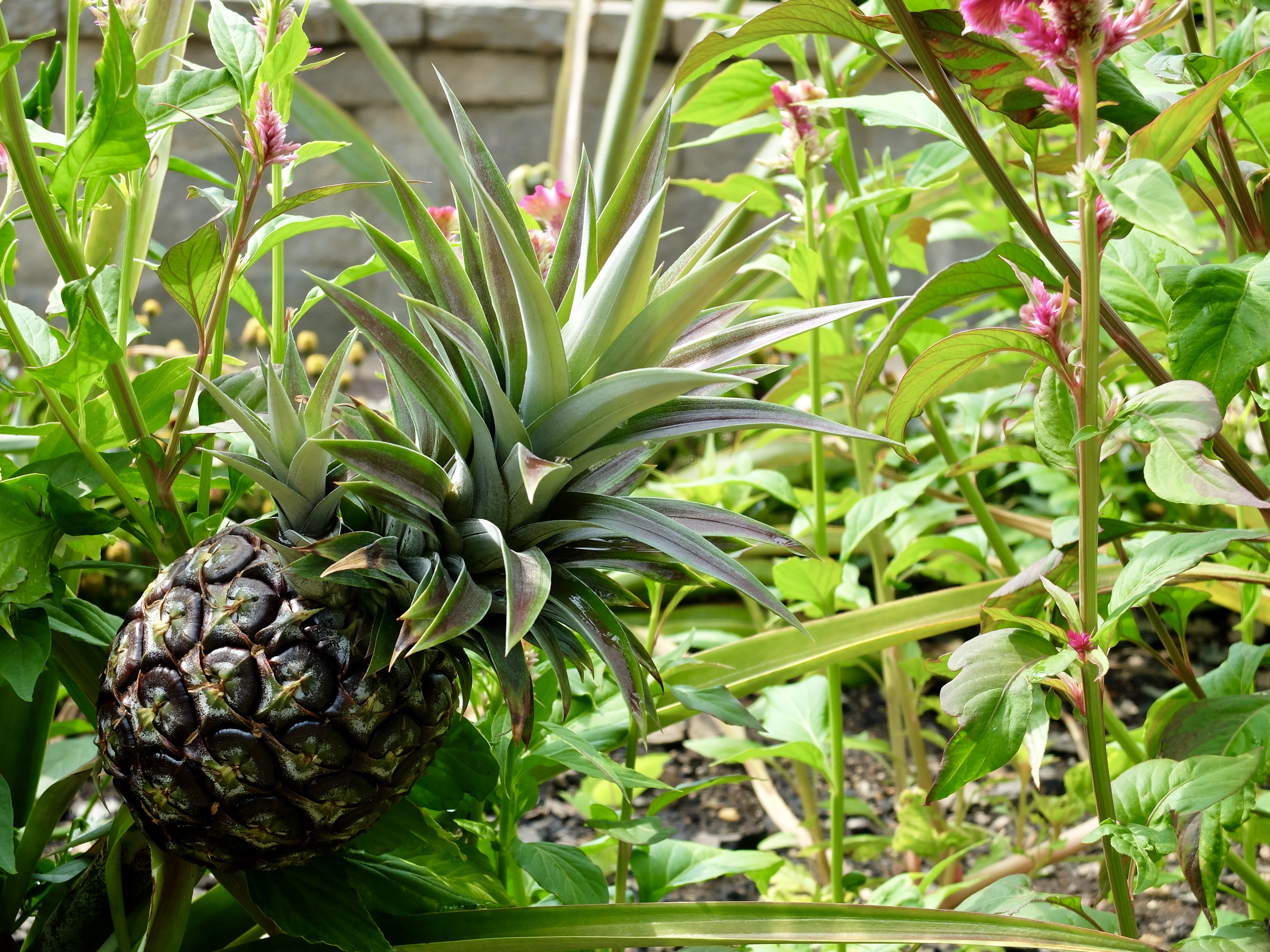
The Canopy Walk (a deciduous forest) was shaded and peaceful. The Rose Garden smelled incredible. The Edible Garden was informative. Did you know that peanuts produce small yellow flowers above ground and fruit below ground? This is different from nuts, which grow on trees. Also, a pineapple plant will produce only one fruit per growing season. It can take up to 2.5 years to produce flowers. Once it flowers, it will be another 6 months before the fruit matures.
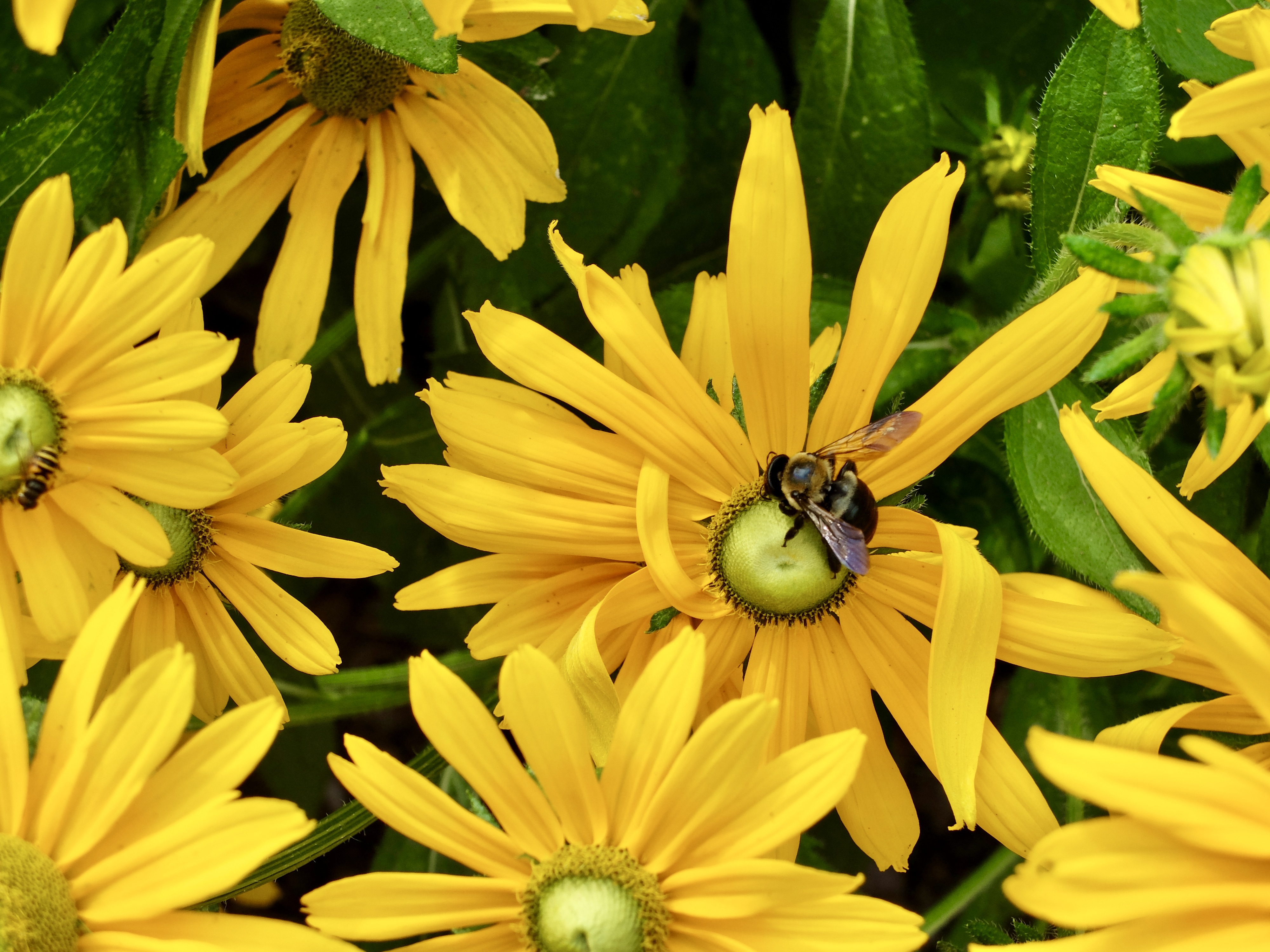

But the REAL learning took place in the Fuqua Orchid Center (which houses the largest collection of orchids in the United States!). I’ve never been a big fan of orchids – they’re pretty enough, but I never understood the craze. I do now.
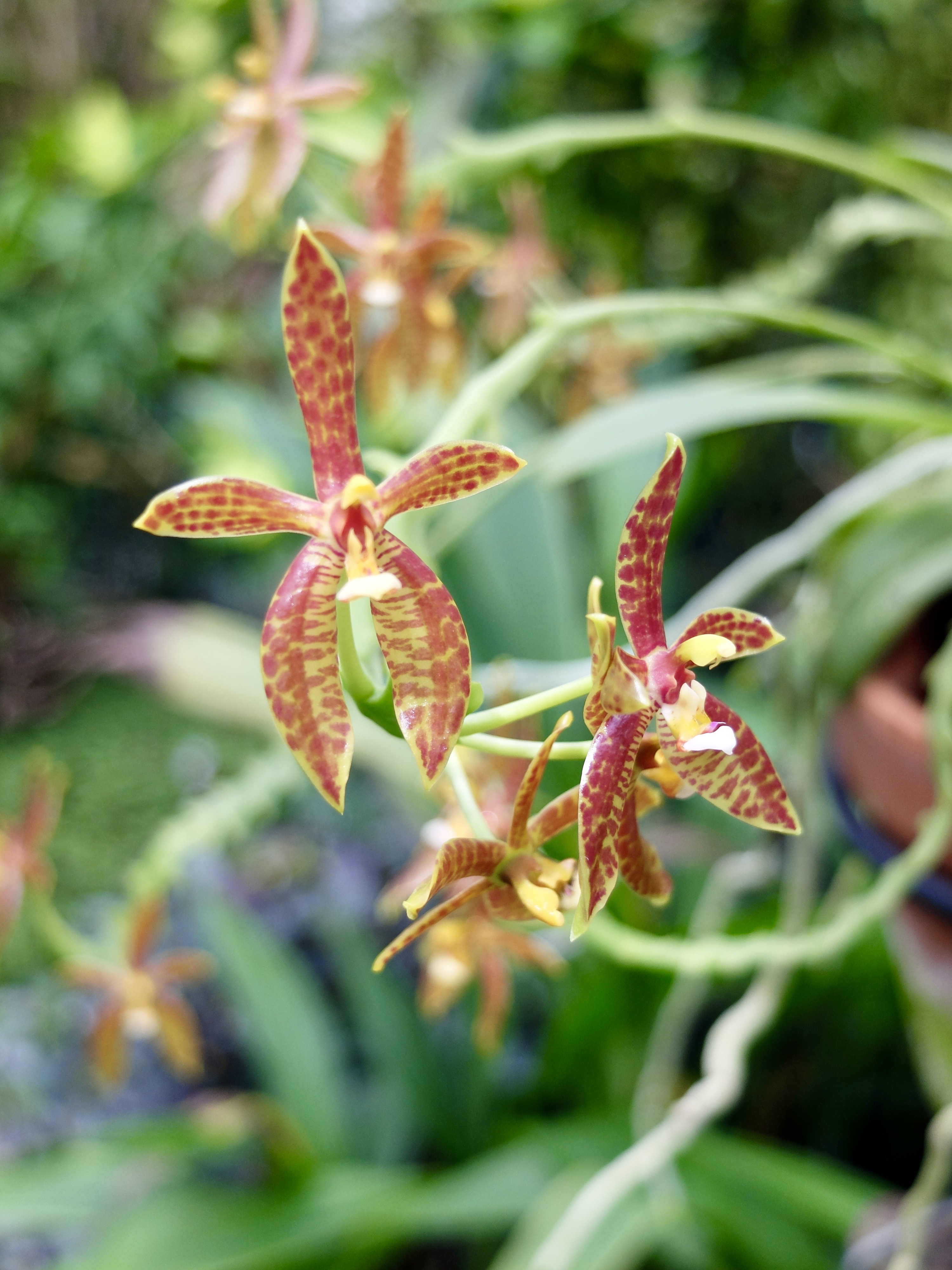
Each orchid has bilateral symmetry and there are over 28,000 species. I could have spent all morning chatting with the gardener caring for the orchids. But hilariously enough, one of my two favorite plants in the orchid center wasn’t an orchid at all – I fell in love with a Bromeliad Bloom. And a Sobralia Fimbriata Orchid as well! Chandler’s favorites were the Oncidium Phymatochilum Orchid and the Phalaenopsis Cornu-Cervi Orchid – two of the smaller species on display.


Our final stop in Atlanta was the Martin Luther King, Jr. National Historical Park. We’ve learned a lot about the Civil Rights Movement over the last year and we love a good National Historical Park, but there wasn’t really anything new for us at this one.
Some historic sites in the park include Martin Luther King, Jr.’s birth home, Ebenezer Baptist Church, Fire Station No. 6, and Dr. & Mrs. King’s tomb. There’s also a visitor center, Peace Plaza, bookstore, and Freedom Hall. I think we spent 30 minutes in total viewing the sites.
Atlanta felt like a pretty mixed bag – with just as many positives as negatives. But just like I wouldn’t tell anyone they HAVE to visit Dallas, I wouldn’t say you have to visit Atlanta either.
We may have been done with Atlanta, but we still had more of Georgia to explore! Our next stops would be Musella and Savannah.
 Abroad With Ashley