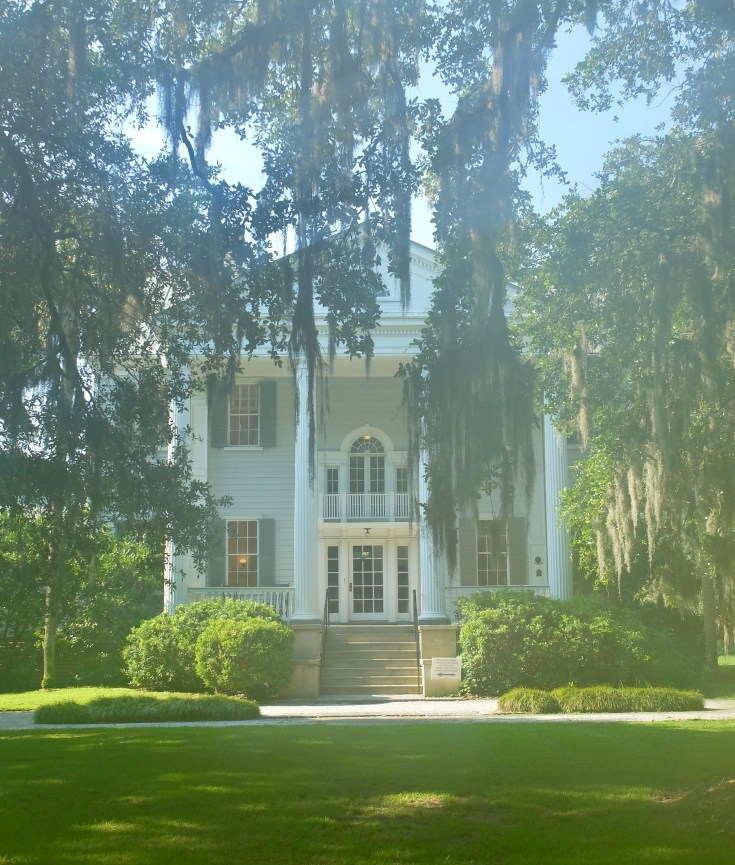
While Savannah had mostly been a place to chill and reset, we once again found ourselves busy upon arrival in Charleston.
Our first stop was the recently opened International African American Museum (IAAM). At the entrance, the African Ancestors Memorial Garden reflects on the significance of Gadsden’s Wharf—the location at which approximately 45% of enslaved Africans entered the United States (South Carolina also had the most active Indigenous slave trade in North America).

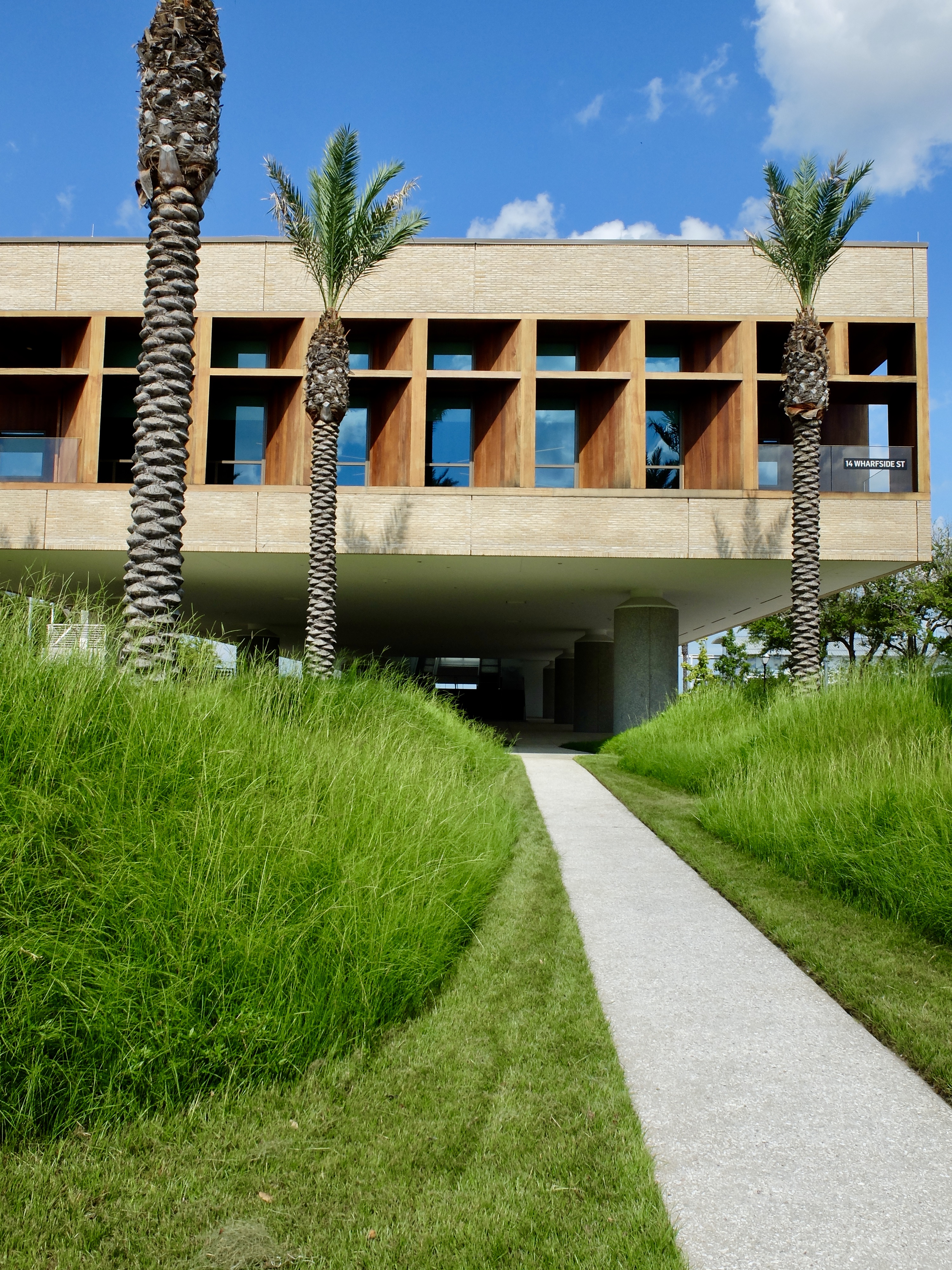
Inside, exhibits are thoughtfully laid out and after going through the Transatlantic Experience gallery and the Orientation Theater, the first half of the museum opens up to you.
In 2020 I watched Taste the Nation with Padma Lakshmi – I’m not a reality television watcher, nor a fan of cooking shows, but this show hit me at just the right time. We had moved to Jordan the previous year and due to the pandemic, we would be remaining in the country over the summer. Along came Taste the Nation, a travel and food documentary show that explores a specific food and culture in different US cities.
Episode four of season one was filmed in Charleston and titled “The Gullah Way.” So when we arrived at IAAM I was most interested in their Gullah Geechee exhibit and it did not disappoint.
The Gullah Geechee people are descendants of Africans who were enslaved on the rice, indigo, and Sea Island cotton plantations of the lower Atlantic coast (North Carolina, South Carolina, Georgia, and Northern Florida). Many came from the rice-growing region of West Africa (and are the reason that Charles Town was British North America’s wealthiest city in the 1700s). Because they were enslaved on isolated island and coastal plantations, a unique culture was created with deep African retentions.
Some of the other exhibits included information that I was already aware of, like African Roots & African Routes, as well as Atlantic Worlds. Whereas other exhibits like Carolina Gold and South Carolina Connections did a great job of focusing on local information. But I likely spent the majority of my time in the second half of the museum in the American Journeys exhibit. This section was incredibly well researched and displayed and blew me away. I was a bit distracted by the films and digital interactive experiences, but I assume there are people out there less interested in all of the reading I did, who were more than happy to focus on the videos. I will say, the films often had no connection to the history on display around them, which was odd.
At the time of our visit, the museum was only nine days old, so I’m going to assume they still have some growing pains to work through. On display in their Special Exhibitions hall was Men of Change. The idea of the exhibit was to honor Black heroes, however, an exhibit that intentionally leaves out women feels a little tone deaf in 2023.
Below: The Gullah Geechee exhibit, Movement #23 by Owusu-Ankomah [Ghana], Jah Defender by Demond Melancon [Louisiana, USA], & Gee’s Bend Quilt by Jemica Williams [Alabama, USA]




We left IAAM and headed to City Market. We arrived right before closing time, so definitely missed some vendors, but still found plenty to see. My favorite stalls (including a local candle maker) were out in the open air, but the air conditioned stalls were appreciated too – and included a unique spread of biscuits from Callie’s Hot Little Biscuit.
Next we wandered over to King Street, the shopping and dining hub in downtown Charleston. There wasn’t much for us over there, but Chandler was craving Middle Eastern food, so we stopped in at Leyla Fine Lebanese Cuisine. I can’t speak too highly about the food – but their cocktail, Traviscus Flower, was a truly exceptional blend of vodka, fresh lemon juice, and hibiscus. And this is important because back when we were in Memphis, our guide at the Blues Hall of Fame had recommend drinks the rooftop bar at Vendue.
We rarely take recommendations at face value, and this was no exception. We independently looked up the venue and it seemed pretty unanimous that this was the best rooftop bar in Charleston. Well, thank god for the drink at Leyla’s because the drink at the Vendue was watered down and the views mediocre. I’m not saying it’s not the best – I’m just saying Charleston is not a city that needs to be seen from above.
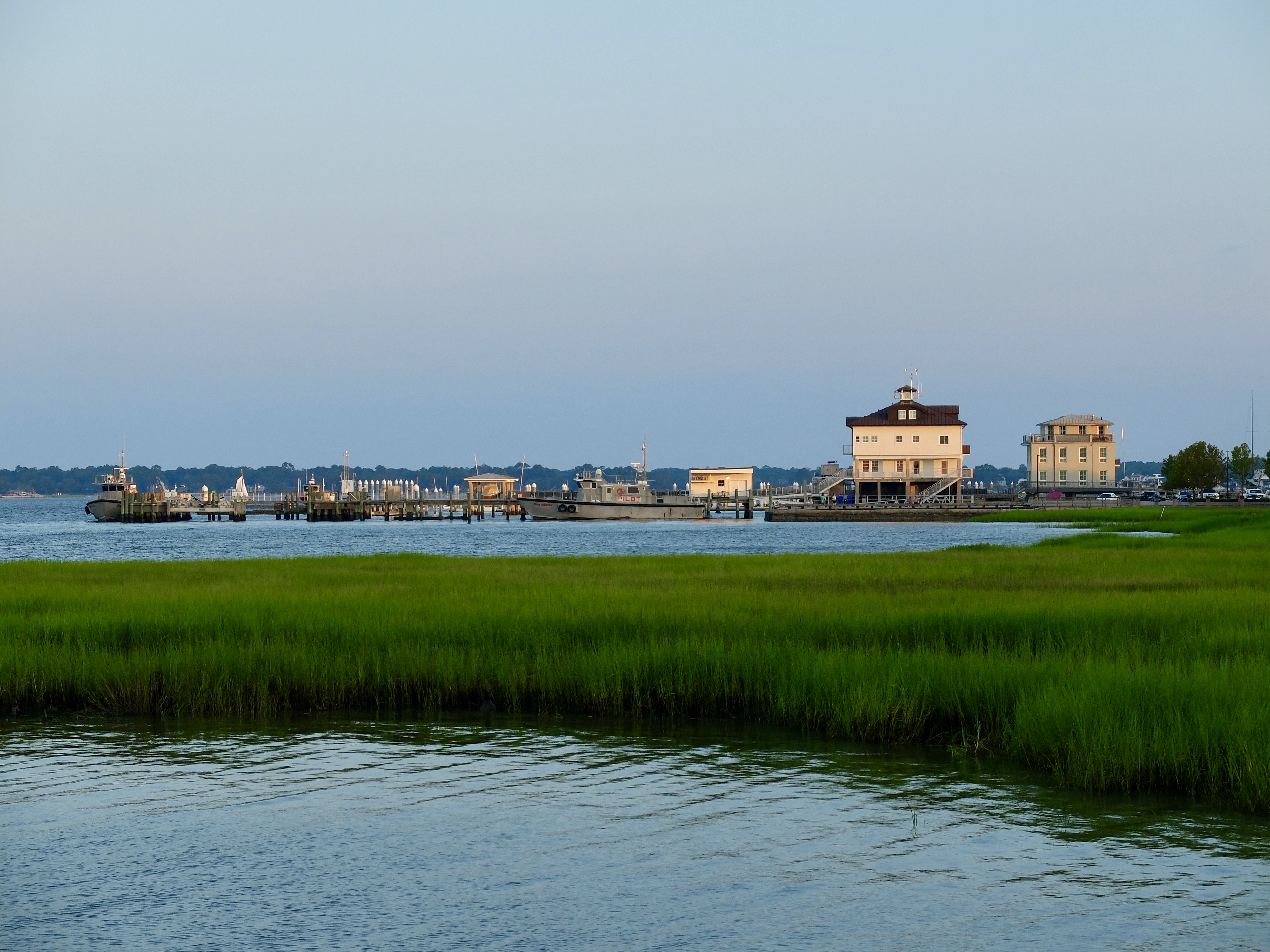
We ended the evening at the Waterfront Park and Rainbow Row. The high temperatures had finally lifted and we were able to enjoy ourselves outside for the first time in days.


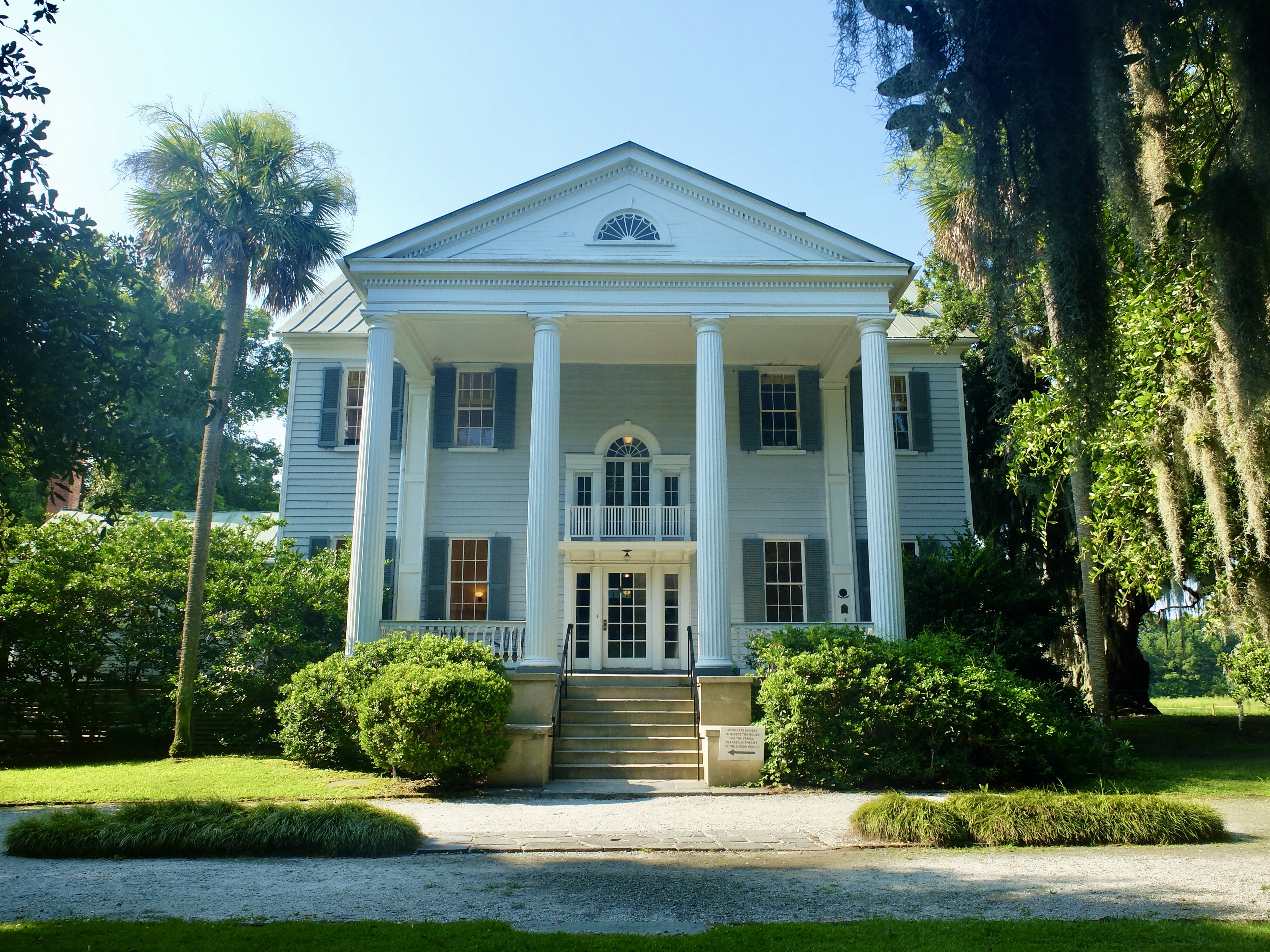
The next morning we made our way to the McLeod Plantation Historic Site. We were interested in a plantation tour, but didn’t want to attend one where weddings or other celebrations are considered appropriate. Charleston City Parks has done a lovely job preserving this site and we had a fantastic tour with Mr. Gardner, a Gullah Geechee descendant himself.
The property was purchased by William Wallace McLeod in 1851. During the Civil War, the plantation was taken over, first by the Confederate Army and later on by the Union Army. McLeod died in 1865 while returning from the war. At this point, the Freedmen’s Bureau started parceling out the land to recently freed men. However, by 1879, William W. McLeod II had regained the plantation with help from the federal government.
Many of those who were disenfranchised remained on or nearby the property as tenant farmers. Major work was done to the house in the 1920s by William E. McLeod to encourage people to come and visit the site. He owned the land until his death 1990 and people continued to live in the tenant homes until that year despite a lack of indoor plumbing and kitchens. One of the homes was turned into a Worship House, common for the Gullah Geechee.
It was a sobering reminder of wealth disparity that exists today, long after the emancipation of enslaved peoples.
The guide also talked about the transition from rice to Sea Island cotton and why slave owners in the area were so dependent on enslaved people from West Africa specifically. He talked about how the isolation of these plantations helped create the Gullah Geechee culture that still exists to this day.

Afterward, we visited the Old Slave Mart Museum. The 1808 ban ended the International Slave Trade and Charleston became a hub for the emerging Domestic Slave Trade. On July 1, 1856, Ryan’s Mart opened as an indoor slave market in response to the city council’s decision to ban selling slaves in the street. Lucinda, a 20 year old woman, was the first enslaved person sold here. There were more than 40 “salesrooms” throughout the city by 1860, but this was the best known.
Despite Charleston’s dark history, many people in the city didn’t own slaves. In fact, only 3% of the white population owned 95% of the enslaved population. In 1860, of the 15 people in the US who owned more than 500 enslaved persons, eight were South Carolinians. But South Carolina also had the second largest population of free Blacks in the lower South. Some bought freedom for their family and friends, but others bought workers for themselves. The last enslaved person to be sold at Ryan’s Mart was in November 1863.
After the Civil War, the site was called “the Old Slave Mart.” For the next 50 years, it became a shoemaker’s shop, tenement housing, and an auto salesroom. In 1938, Miriam Wilson bought it and turned it into an African American museum of local folk culture. It closed in 1987, was purchased by the city of Charleston in 1988, and reopened as it is today in 2006.

With the heat advisory in full effect, our final stop for the day was Annie O Love’s Cafe of Sweet Abundance. A true mouthful of a name that prepares bizarre, but delicious vegan and gluten-free meals and deserts. The Mac Daddy Crispy Chick’n Sammy and Holy Frijoles Batman Quesadilla were definite highlights, as well as the chocolate cookie dough truffle.
The next morning, we arrived at Angel Oak Tree just a few minutes before it opened at 9am. We wanted to beat the heat and I wasn’t sure how many people would be at the site since it was a Saturday. I’m glad we arrived when we did, because I was the first person in the gate and was able to spend a minute by myself (and take some photos) before everyone else arrived. The most memorable visitor walked right up to one of the branches and began stroking it and hugging it for the 30 minutes.
The tree is estimated to be over 400 years old. It is 65 feet tall, with a 31.5 foot circumference. It shades approximately 17,000 square feet. It is said to be the largest tree east of the Mississippi. Because of this, there’s a list of dos and don’ts about interacting with the tree.
Apparently stroking it is fine, but visitors are asked not to climb or sit on it; not to bring blankets, food, drinks, chairs, or tripods into the area; not to practice yoga near the tree; and no pets without a leash. Chandler definitely thought this tree could be viewed in a five minute stop, but I took my time, soaking in the beauty surrounding us.


By this point on our road trip, the weather was truly at its hottest and outdoor activities were absolutely no longer on our list. We spent some time at Edmund’s Oast Brewing Co., where all of their sour beers tasted the same (not bad, but a flight was pretty unnecessary).
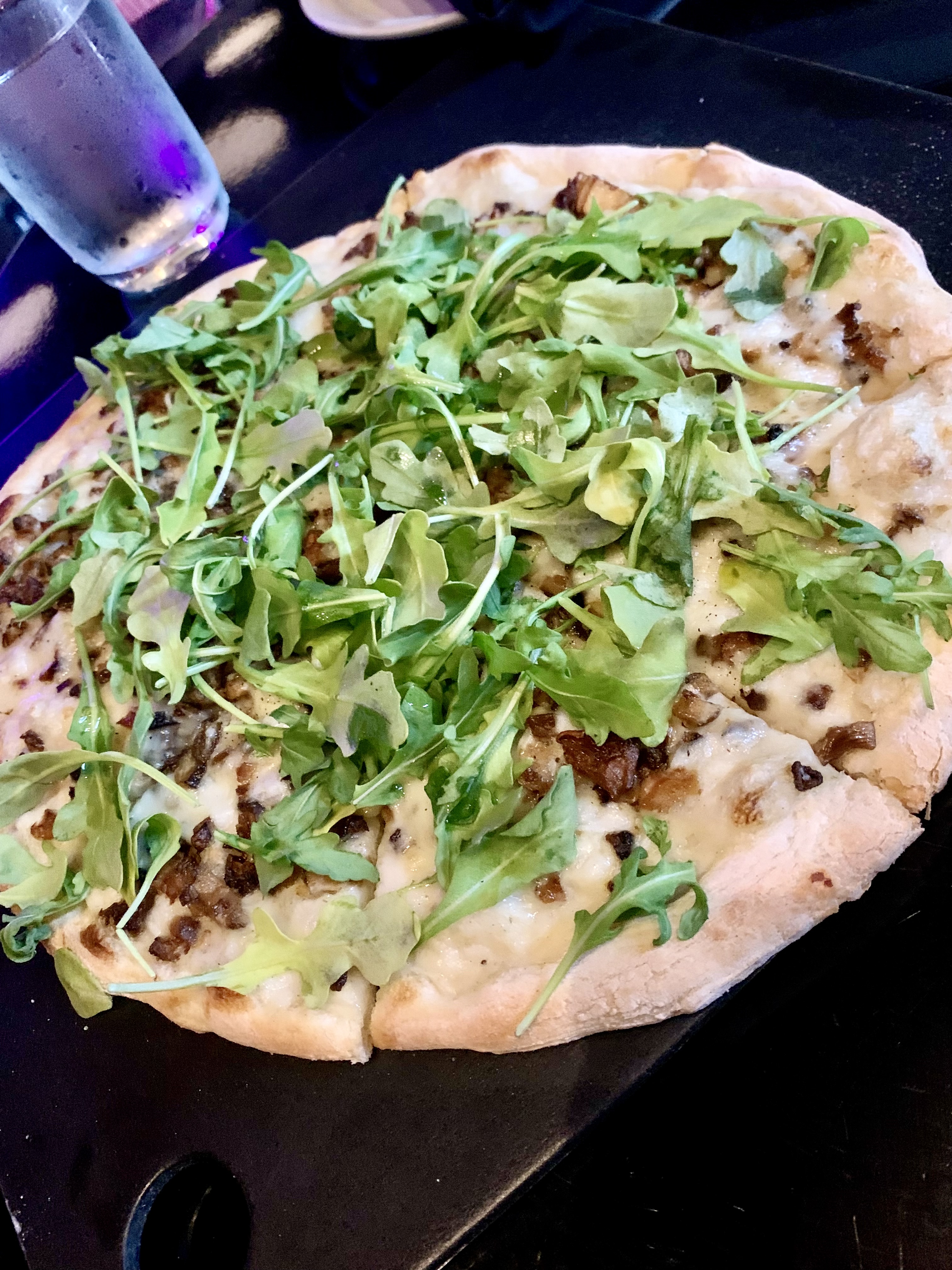
Our last (and best) meal in Charleston was at Neon Tiger. We almost decided not to go, but the menu looked too delicious (right call). Everything is vegan with a focus on fresh, local, and organic. The vibe was sophisticated and fun and unapologetic about the viewpoint that good food doesn’t have to come at the expense of animal rights.
The fromaggio & champignon pizza was incredible (and I’m not typically a fan of vegan pizza) and the scallop scampi was divine. We would have ordered more if we could have fit it in our bodies.


Charleston blew us away with its food scene and its ability to reckon with its dark history. We felt like three days was plenty of time to explore the city and it was exciting knowing that we still had Greensboro and Asheville to look forward to in North Carolina.
 Abroad With Ashley