
The first t-shirt I saw in Boston read, “I will aid and abet abortion.” And all I could think was – we’re not in Texas anymore!
I currently live in a state that has not only banned abortions – with no exceptions for rape or incest – but the “heartbeat bill” also has an added layer with horrific historical parallels.
Instead of going after women who have an abortion, the law targets those who help, i.e. aid and abet, anyone seeking an abortion. Private citizens are encouraged to file a civil lawsuit against doctors and abortion providers, drivers who provide transportation to a clinic, or those who help fund an abortion.
If successful, the law instructs courts to award plaintiffs at least $10,000 in damages from defendants.
And while this law may feel bizarrely of the times, it has its origins in the Fugitive Slave Law of 1850, which heavily fined anyone who helped an enslaved person escape. This is where we’re at in the United States right now. And honestly, I’m horrified.
There is no freedom until you have the power to make decisions for your own body. We don’t have that in Texas anymore.
Which is why it was more than refreshing to spend a few days in Boston, a place where my political views aren’t treated as outliers. A place where I could actually breathe easier.
And we weren’t sure that would be the case in our initial planning. Looking at all of the top things to do in Boston, the list was heavily skewed toward the Revolutionary War and American history – all rather ho-rah-rah.
However, the Equal Justice Initiative has a great chapter on the slave trade in Boston and the National Park Service lists resources to learn more about the tribes that have always called Massachusetts home. So it’s nice to see that there are groups doing the work to reconcile the past with the present.
Our time in Boston actually ended up being pretty chill – we had much less of an itinerary planned than our previous days in NYC. We also had a serious hotel upgrade in Boston. We stayed at the Godfrey Hotel, which not only was in the perfect location, it also had impeccable service. I can’t imagine staying anywhere else in Boston.
Our first day out ended up being the nicest and we took full advantage of it by walking all over the city. We started with a tour at Fenway Park – home of the Boston Red Sox. Baseball season hadn’t officially started (which was fine by me!) – so our tour of the stadium started at 10am and lasted about an hour. There was something for everyone, from baseball lovers to lovers of baseball fans : )
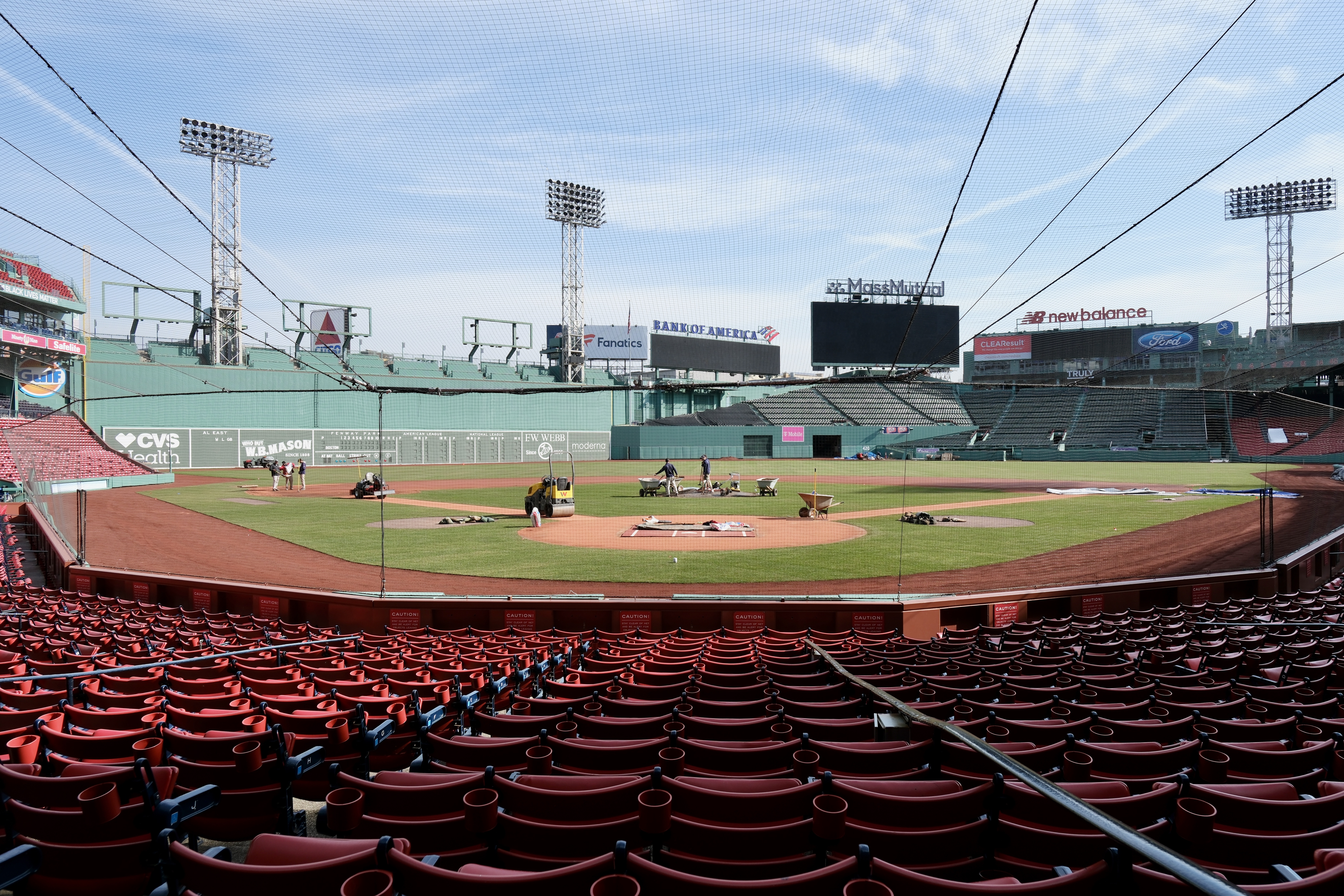


Our tour guides were Dave & Barry and after that hour, my knowledge of Fenway has definitely increased! The park has been open since 1912 and the blue oak seats have been there since 1934 (not exactly the comfiest, but dammit – tradition!). The red seat in the sea of green above is to mark the longest home run in Fenway history – 502 feet, hit by Ted Williams in 1946. Also, Fenway had the first electronic scoreboard in MLB.
What I loved? The Fenway Farm (1 of 5 MLB stadiums to grow food). They harvest 6,000 pounds of food annually and 60% of it is donated.
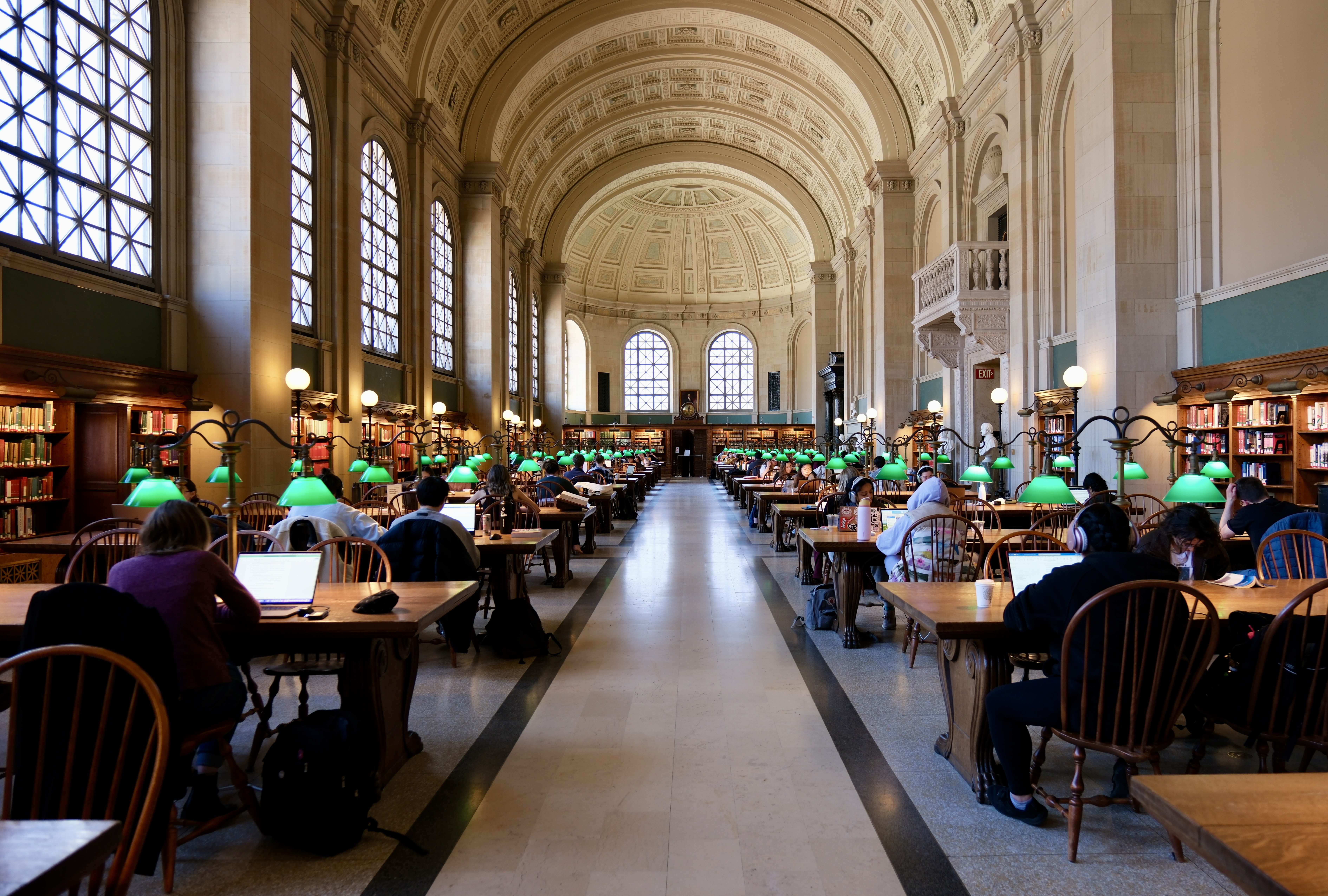
Around 11am we started the rest of the day’s walking tour. We began by making our way to the Central Library. Established in 1848, the Boston Public Library was the first large free municipal library in the United States, the first public library to lend books, the first to have a branch library, and the first to have a children’s room. Also, the Central Library is absolutely stunning.
Located in Copley Square, the Central Library is composed of the McKim Building (opened in 1895) and the Boylston Street Building (opened in 1972). The McKim Building was designed with Paris’ Bibliothèque Sainte-Geneviève as reference. The lobby ceilings are covered in mosaic tile by Italian immigrant craftsmen who were living in Boston’s North End. The staircase hall is formed of yellow Siena marble. Ten times the amount of stone needed was ordered so that the architect could select pieces with ideal patterning and the murals were created by Pierre Puvis de Chavannes, a French painter who designed his panels on Belgian linen in Paris and then shipped them to Boston so that his assistants could adhere the panels to the walls.
The Bates Hall (photographed below), spans the length of the McKim Building and the English oak bookcases and tables have been in use since the building’s opening in 1895. Two other rooms located in the museum are the Abbey Room – originally the Book Delivery Room – covered by Edwin Austin Abbey’s paintings depicting Sir Galahad’s Quest of the Holy Grail and the Sargent Gallery – a vaulted, skylit hall on the third floor – which contains a mural by John Singer Sargent that took 29 years to complete.
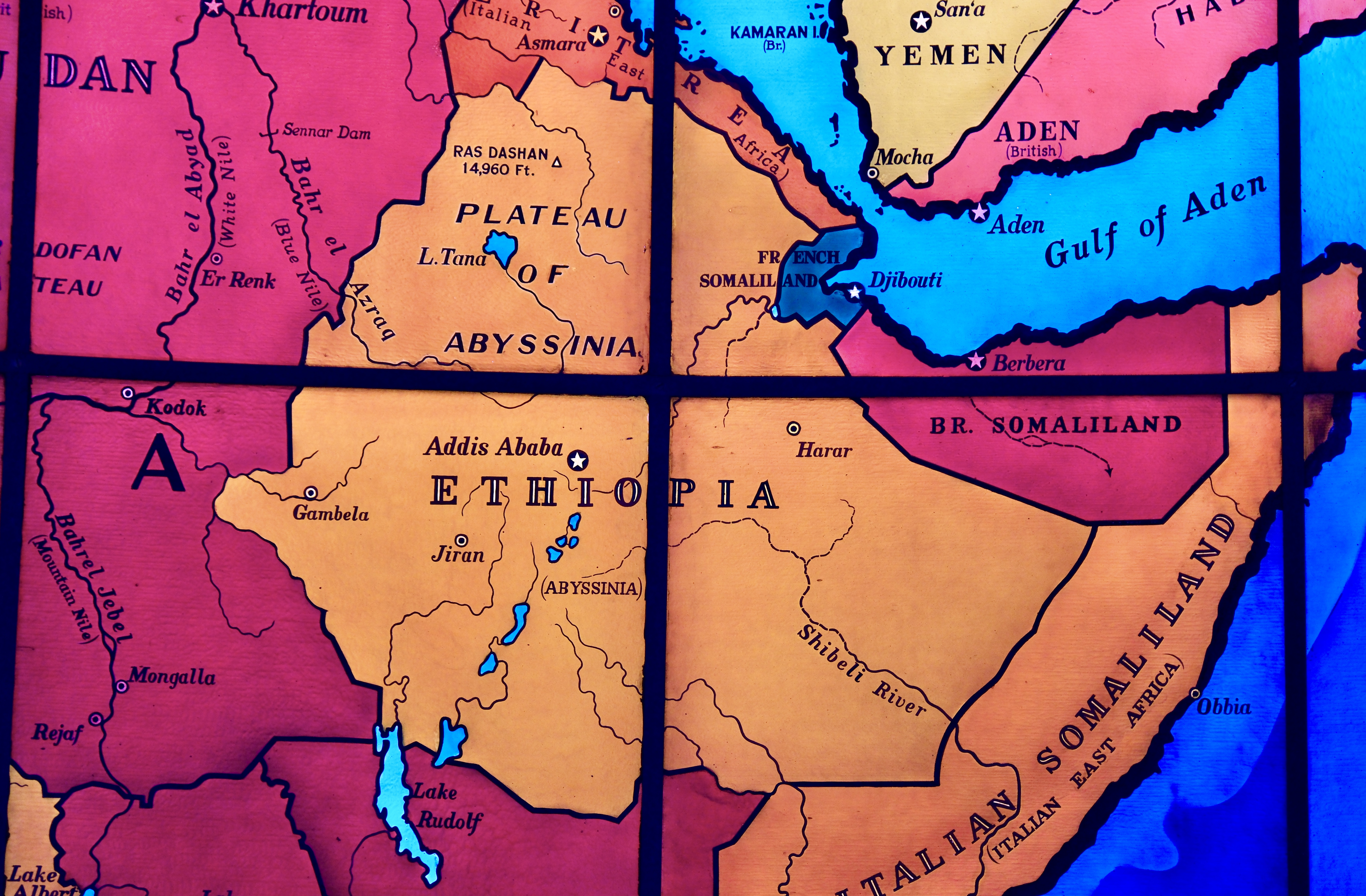
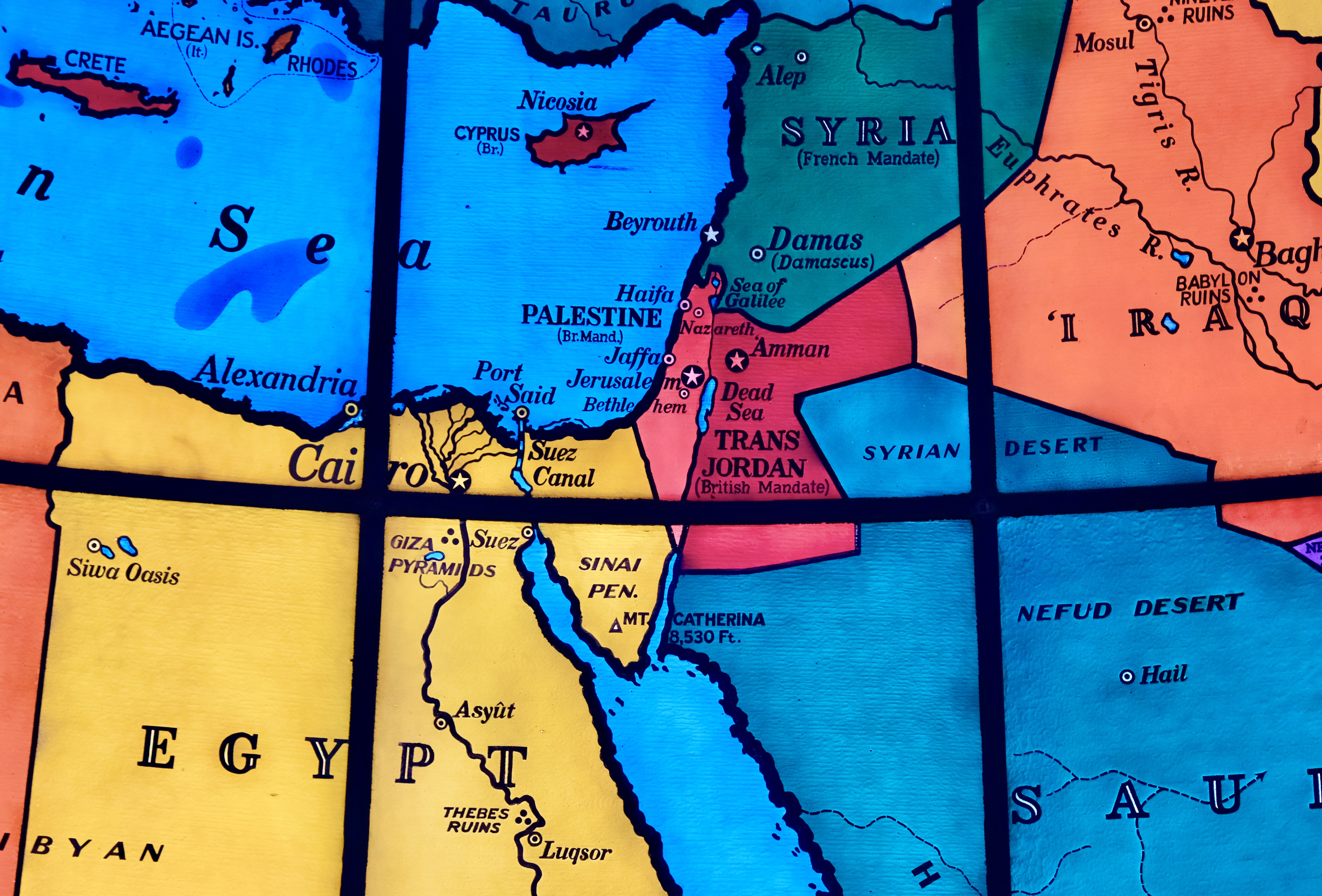
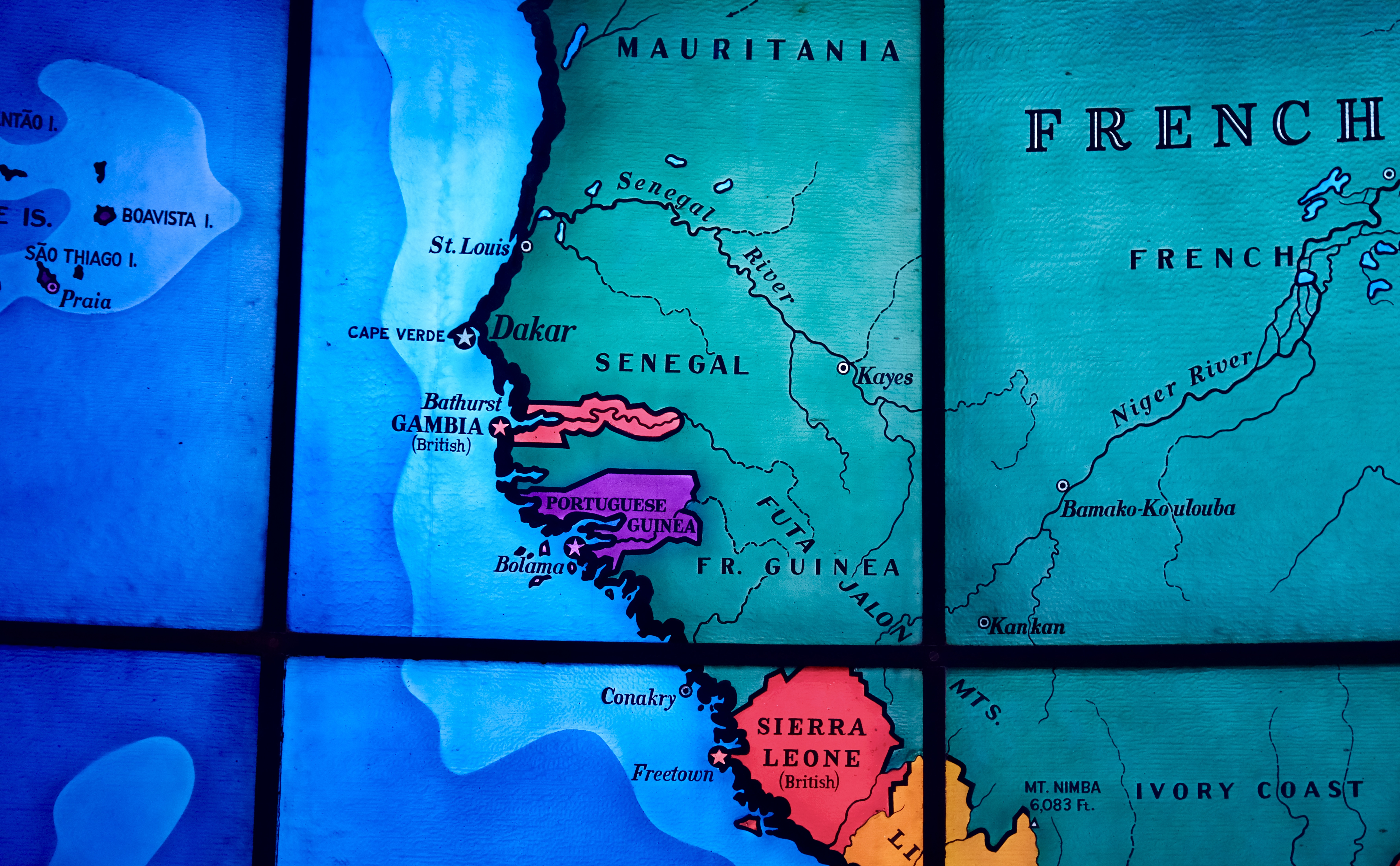
We took a peak in some of the churches nearby, but opted out of paying to visit any of them. We did, however pay to go inside the Christian Science Plaza – or at least to go into their Mapparium Globe (titled How Do You See the World?). Tickets can be purchased in the Welcome Hall, and while I know next to nothing about the Christian Science Monitor (apparently a Pulitzer Prize-winning, international news publication), I’ve been enamored with this globe ever since I saw it on Atlas Obscura.
It’s a three-story-tall, inside-out stained-glass globe that is bisected in the middle by a glass walkway. It was once illuminated with hundreds of lamps, but today it glows with the light of LEDs. Standing in the center of the globe, the relative size and position of the continents are correct. However, the map’s political boundaries are long out-of-date. The Mapparium Globe hasn’t changed since 1935.

I couldn’t stop staring at what the world used to look like. Most of Africa was still dealing with its colonial occupiers, however, Palestine was loud and proud. It’s insane how much the world has changed in less than 100 years. There’s hope for more change yet.
Up until recently, photos weren’t allowed inside the Mapparium, which had me fretting before we arrived about whether or not I’d follow the rules or try to sneak a few mediocre shots with my phone! Luckily, I didn’t have to make that decision and I was able to photograph all of the countries we’ve lived in (and the one we’re moving to!).



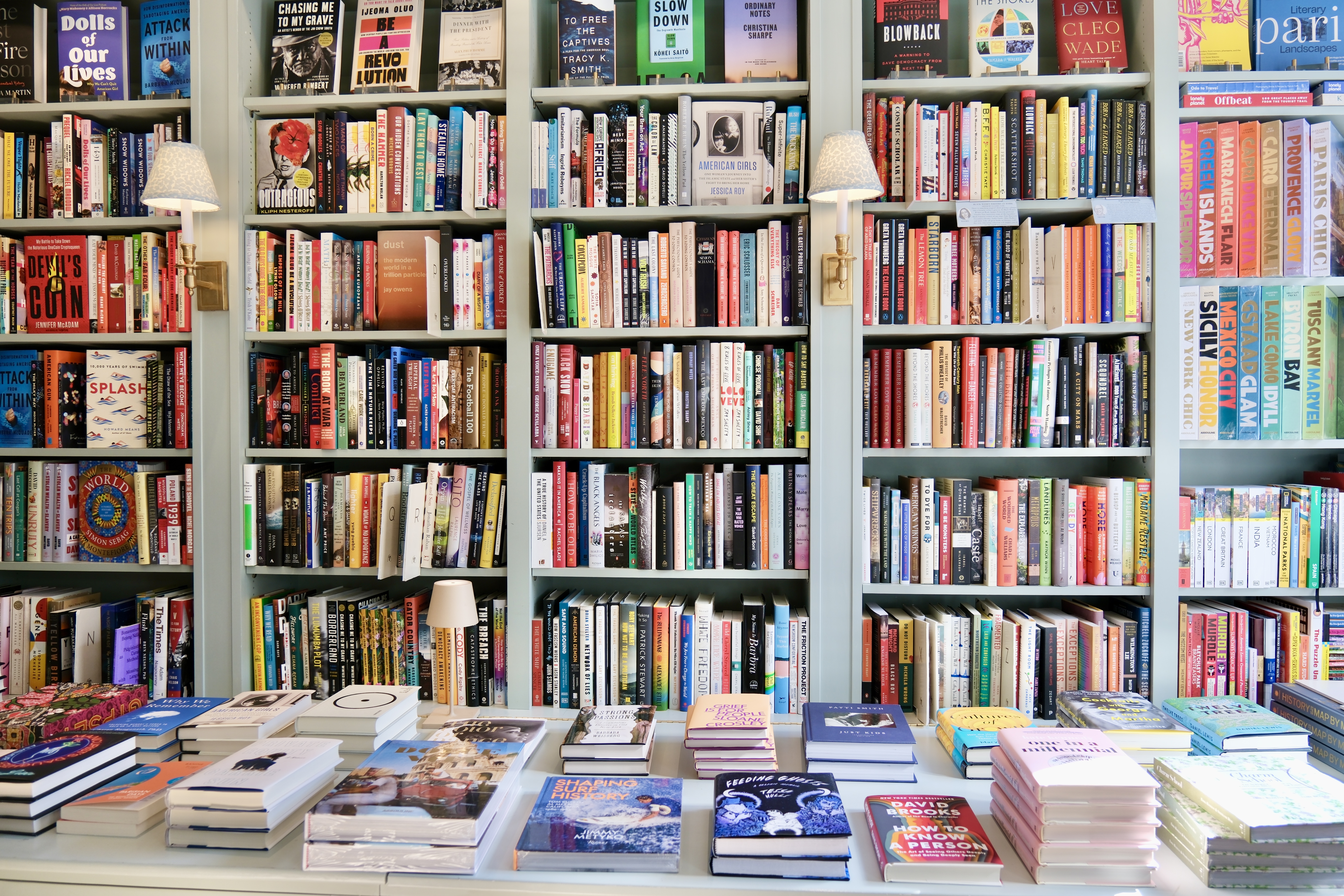
In our wanderings, we wove our way through various neighborhoods, including Beacon Hill. We had gone to three bookstores in New York, but couldn’t help ourselves when we passed by new ones. Beacon Hill Books & Cafe is an adorable multi-story building. They even have an entire nook dedicated to Persephone Books, a publisher based out of London that reprints neglected fiction and non-fiction, mostly by women writers and mostly dating from the mid-twentieth century. I bought their edition of Judith Viorst’s poetry collection, It’s Hard to Be Hip Over Thirty, right before my 30th birthday. Each title has a beautiful gray jacket and a patterned endpaper, along with a matching bookmark.
A few days later, we also popped into Brattle Book Shop – it’s right around the corner from the Godfrey. We had planned on stopping in two more bookstores in Boston, but we decided to forgo them, not knowing if our luggage could take it! But someday in the future, we’d love to visit More Than Words Bookstore, a nonprofit that empowers youth ages 16-24 in foster-care, homeless, out of school, or in the court system to take charge of their lives by taking charge of a business. And a trip back to Boston would also require a stop at the Lucy Parsons Center, an independent, non-profit, radical bookstore and community space.

Next up on the walk was a challenge given to us by our Fenway Park guide, Dave. Boston has (at least) two famous pastry shops – Mike’s Pastry and Modern Pastry – and our job was to decide which one was better. Personally, Dave preferred Mike’s, but his wife said Modern was the way to go.
It didn’t take long to figure out it was a trick question. Mike’s is famous for their cannoli, not really my kind of desert, but their take-away tiramisu was incredible. At Modern, I opted for their truffles and pecan turtles, also not a disappointment!
We decided to wind down our walk with a pass by Cheers – we’d be back another day to pick up some swag – before heading to the night’s restaurant. Chandler had indulged me in New York as we repeatedly ate Italian food and Boston was known for it as well! But as a vegetarian (eating with a vegan) I always have to be careful to look up menus in advance.
I wish I could remember the article I read that broke down restaurants based on if they served authentic Italian food or American Italian food (authentic all the way!), but Delfino was at the top of their list. It was also at the top of mine. In a world where you need a dozen apps to get a restaurant reservation (here’s looking at you, NYC), Delfino only takes reservations by phone. And trust me, you need one! More than one group was turned away when they showed up at the door.
The only problem with Delfino? It doesn’t really feel like it’s in Boston! We had to make the trek to Roslindale, MA, which required riding a metro line to its final stop and then hopping on a bus to take us the rest of the way. The food was worth it and the rides were smooth, but it’s probably the farthest we’ve traveled for a meal without having a car! Anyway, the homemade ravioli was heavenly and I would eat it every week if I could. The next night we traveled nearly as far in the opposite direction (Cambridge) to eat at another tasty authentic Italian restaurant, Guilia (have I mentioned I was in foodie heaven this week?).
The next day saw a turn in the weather. It rained in the morning and sort of misted the rest of the day. It was fine, though, because we planned on spending a few hours at the Museum of Fine Arts. We were bummed to find out that Hallyu! The Korean Wave exhibit wouldn’t be opening for another nine days, but there was plenty of other art to keep us occupied.
Just like I’m always on the search for a Max Ernst sculpture in every museum we go to, I’m also always delighted to find one of Nick Cave‘s Soundsuits and MFABoston gave me a new suit to feast my eyes upon.
They also had a number of indigenous exhibits, albeit in the basement and on the very top floor. Despite having to search for them, I got to enjoy Dyani White Hawk‘s (Sicangu Lakota) Take Care of Them series. She said she was “inspired by the ways that, within our everyday lives, Native women also stand guard, protect, and nurture our well being.”
There was also Julie Buffalohead‘s (Ponca) Tone Deaf. She said, “The piece stems from recent events, specifically the COVID-19 pandemic and the politicization of the epidemic. The two coyote figures exist in a suspended space in which they are mirroring each other; sentient and vulnerable. They are representative of groups that are polarized in the United States, who are validating their own world views inside a narrow vacuum.”
And finally, the last piece I spent time with in the museum, Norval Morrisseau‘s Bear Father, Bear Son. I’ve been obsessed with his work since I first saw him on display at the National Museum of the American Indian in DC. I’m fairly certain he’s my favorite Anishinaabe artist (he’s also known as the grandfather of contemporary Indigenous art in Canada).


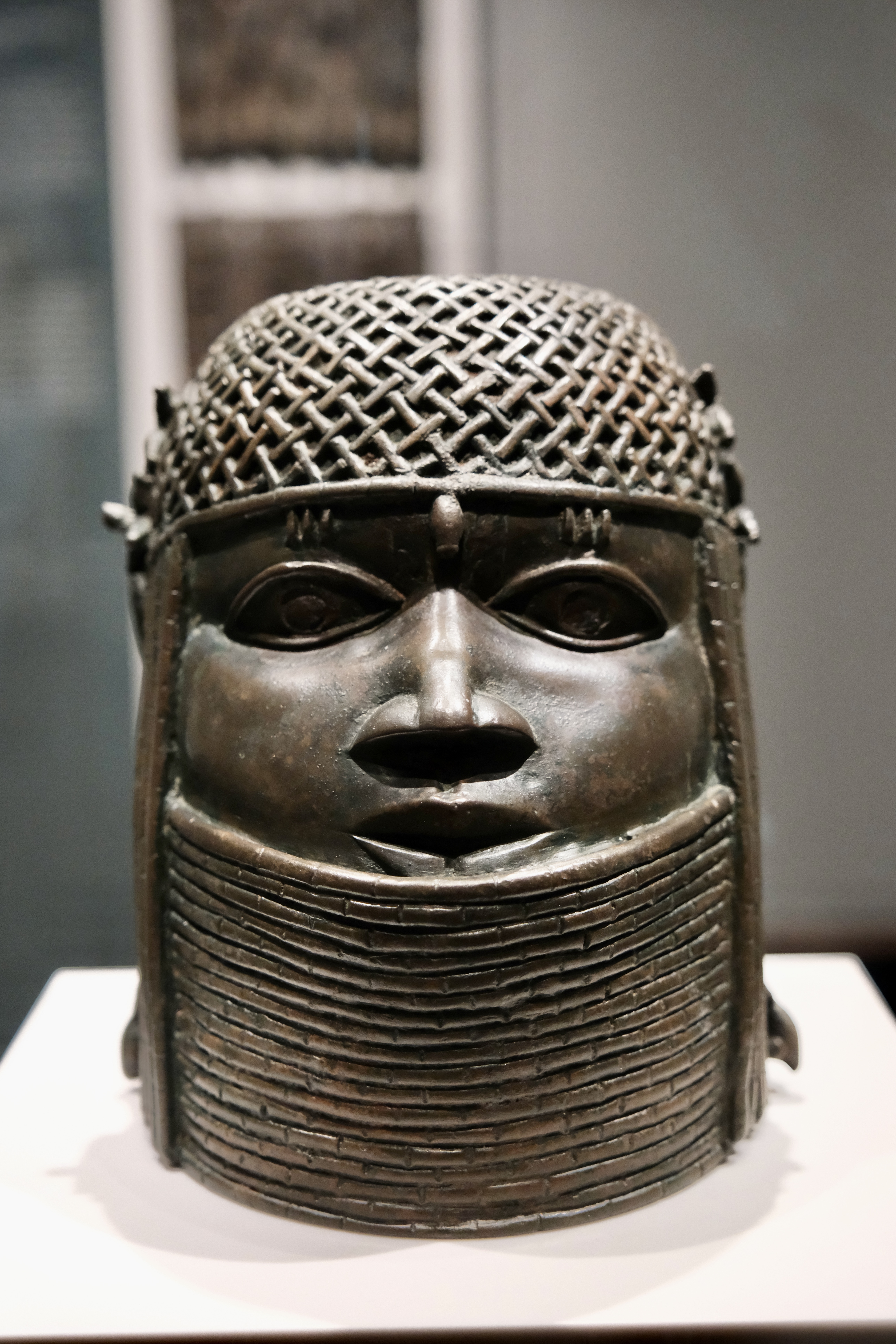
Wandering through the museum, we also came across a Benin bronze (ok, made of a copper alloy) from the 16th century. And one of my favorite exhibits was Dinorá Justice’s The Lay of the Land. She titles her paintings “after” works by 19th-century European men within the Western art historical canon. Her work rejects feminine figures as symbols of colonized territory for the male eye, as imagined by her predecessors. Instead, she uses pattern to make her subjects anonymous and unify them, giving them privacy and placing them in dialogue with their setting. Photographed below is Portrait 51, after Delacroix’s “Women of Algiers.”

Justice’s work (and having it on display) is so important because in 2022, the Burns Halperin Report found that between 2008 and 2020, just 11% of US museum acquisitions were of work by woman artists and that art by women accounts for 3.3% of global auction sales. The numbers for Black American women are significantly lower.
After the museum we went out for a drink at the Bell in Hand – apparently the oldest tavern in the US. They claim their first pour was in 1795 (and the prices definitely show that they’ve kept up with inflation ever since!). But we were some of the lucky ones who found a seat (did I mention it was St. Patrick’s Day weekend?), so we enjoyed ourselves.
It also got us thinking about making more St. Patty’s Day plans and we decided to check out an Irish pub called the Burren the following night for some live music.
Our final full day in Boston continued with poor weather, which made it perfect for watching the film Poor Things. Chandler and I had been on the fence about seeing it, but decided to go when we saw that it had returned to theaters after Emma Stone won the Oscar for best actress. At the end of the film, Chandler complained that the only “poor things” were the theater goers! To say he hated the film might be an understatement. I enjoyed it (enough), but it did make us wish the times had been swapped and we could have seen the documentary film Bad River instead.
Bad River was written and directed by Mary Mazzio and narrated by Indigenous activist & model Quannah ChasingHorse and actor Edward Norton. The film chronicles the Wisconsin-based Bad River Band and its ongoing fight for sovereignty, culminating in their current battle to save Lake Superior, the largest freshwater source in America. It’s not currently playing at any of the theaters around us, but I’m keeping an eye out for it!
Instead, we’re driving to Tulsa, OK this weekend to attend Circle Cinema‘s Native Spotlight Series, “Visions for the Future.” Two short films ᏗᏂᏠᎯ ᎤᏪᏯ (Meet Me at the Creek) and Walking Two Worlds will screen before a Q&A with Quannah ChasingHorse, Loren Waters, and Rebecca Jim, moderated by Reservation Dogs (one of my favorite recent TV shows) creator and director Sterlin Harjo.
But back to our time in Boston! After the film, we had a quick lunch at Cocobeet and let me just tell you – those are some of the best smoothies and smoothie bowls I have had in a LONG time (so good, in fact, that we went back for lunch before our flight the next day!).
All that was left was our final St. Patty’s Day activity at the Burren. Also out of Boston – it was starting to feel like we were seeing the area around Boston more than the city itself – the Irish pub is located in Somerville, MA, an easy subway ride away. And it was on our way to or from there that I learned the fun fact that Boston is home to the first subway in the US, running since 1897.

We discovered more like-minded people on the subway with us. A couple sitting across from us struck up a conversation because of Chandler’s Peace Corps patch on his jean jacket. It turns out they were also a Peace Corps couple, having met in Senegal. Perfect timing, since that’s where we’re moving this summer, so we got some insider tips from them (even if they didn’t spend much time in Dakar – just like we didn’t spend much time in Addis while living in Ethiopia!). We get more excited about our move every time we meet someone who’s been there.
We arrived at the pub with plenty of sunlight left in the sky and I’m glad we did! There was a line outside the door a couple of buildings down and it probably took about 30 minutes for us to get inside and then another 30 minutes to get seated (the line had grown exponentially by the time we were leaving).
The mood was festive and the prices significantly more reasonable as we listened to a fairly mediocre band play a handful of Irish jigs before switching to rock. But I’m so glad we came. St. Patrick’s Day is a big deal in Boston and it was fun to celebrate with everyone.
Due to their limited holiday menu, I got to eat a vegetarian shepherd’s pie, but Chandler wasn’t able to order the vegan Guinness stew. Guess we’ll just have to go back to Ireland for that! But I have to say, despite only spending three short days in Boston, I absolutely loved the city (even in the cold!). It’s definitely a city I’d return to. In fact, I think it might round out my top 3 cities that I’ve visited in the US: Birmingham, Miami, and Boston.
We have Tulsa this weekend and a few more cities in the SW this summer, but I’m not sure anything’s going to shake up that list!
 Abroad With Ashley