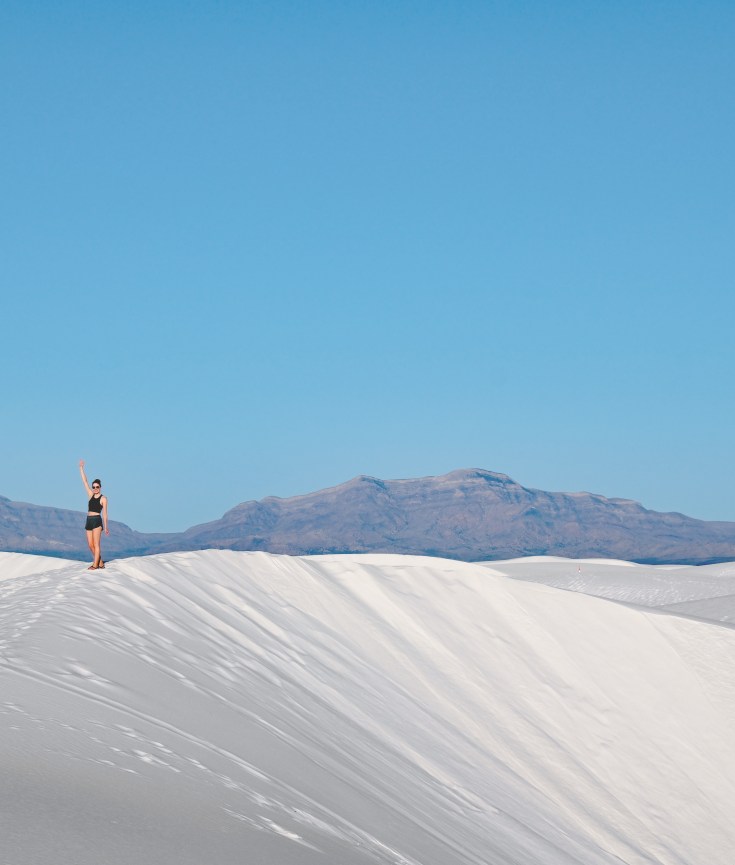
The day after we went to Carlsbad Caverns we were already in Las Cruces and headed out to White Sands National Park. I realized I skimped on the historical details in my last post, so I figured I’d sprinkle them in here.
Carlsbad Caverns have been a national park since 1930 and they were a national monument as far back as 1923. The funny part about the story, nobody believed Jim White, the guy who was obsessed with exploring the caves. It wasn’t until 1915, when he brought a photographer with him, that people finally believed that the caves existed.
And Guadalupe Mountains National Park covers the same mountain range as Carlsbad Caverns. It became a national park in 1972.
I’ve been obsessed with sand dunes ever since we visited the desert outside of Abu Dhabi in 2022. Those beautiful sands are a stunning reddish-orange color due to the presence of iron oxide in the sand. White Sands, however, is made up of gypsum sand. The area has been a national monument since 1933 and only became a national park in 2019. Terrifying fact: the park is completely surrounded by the White Sands Missile Range and closes multiple times a week for missile testing. NPS even has a page on their website to share this information.
Luckily, the morning we were headed to the park was missile free! So our only decision was which trail to hike. AllTrails only lists six hikes, so it didn’t take long for us to decide on the Alkali Flat Trail. At 4.4 miles, it’s the longest hike in the park, but we didn’t need to hike the whole thing, I was just looking for photos of rolling white sands.
We headed out early to beat the heat (right call!) and arrived at the park at 6:55am. White Sands is one of the few parks on our trip that doesn’t open until 7:00am, so we waited at the gate for a few minutes with three other cars. Once inside, two of the cars opted for the Backcountry Trail and one joined us at Alkali Flat. It ended up being a family who was there for a family photo shoot – they seemed so sweet and we could hear them on the first dunes for the first thirty minutes of our hike.

It didn’t take long, however, for us to find some privacy out in the dunes. You could probably hike for hours and only see a handful of other hikers, even though White Sands gets an average of 600,000 visitors each year.
We followed the trail markers – Alkali Flat Trail is marked by red trail markers with a diamond symbol. We saw numerous signs that said if you can’t find the next marker, turn back. A few dunes in, it was easy to see why. At first we thought the mountains would provide an easy geographical location, but you could definitely lose your way in the dunes! Luckily, the trail markers were easy to spot for the entirety of our hike.

Even though we started our hike just after 7:00am, you could still see the moon and I loved the contrasting white sands with the beautiful blue sky and the barely there moon. If Chandler hadn’t been with me, I probably could have taken photographs all day.


That said, I’m incredibly grateful for my trail partner! Chandler is not a fan of the great outdoors, but he has been absolutely amazing on this road trip. Early mornings, positive attitudes, and navigation skills! I wouldn’t want to be out here with anyone else.
The further out we hiked, the more I tried to explore with my shots. I’ve only had my Fujifilm X-T5 since January, so I’m still learning the features. On more than one occasion, we stopped to ask ChatGPT what the best settings for a shot might be! I looked for desert flowers and even tried shooting directly into the sun. It was fun to find out exactly what my camera could do with the incredible surroundings we were in.
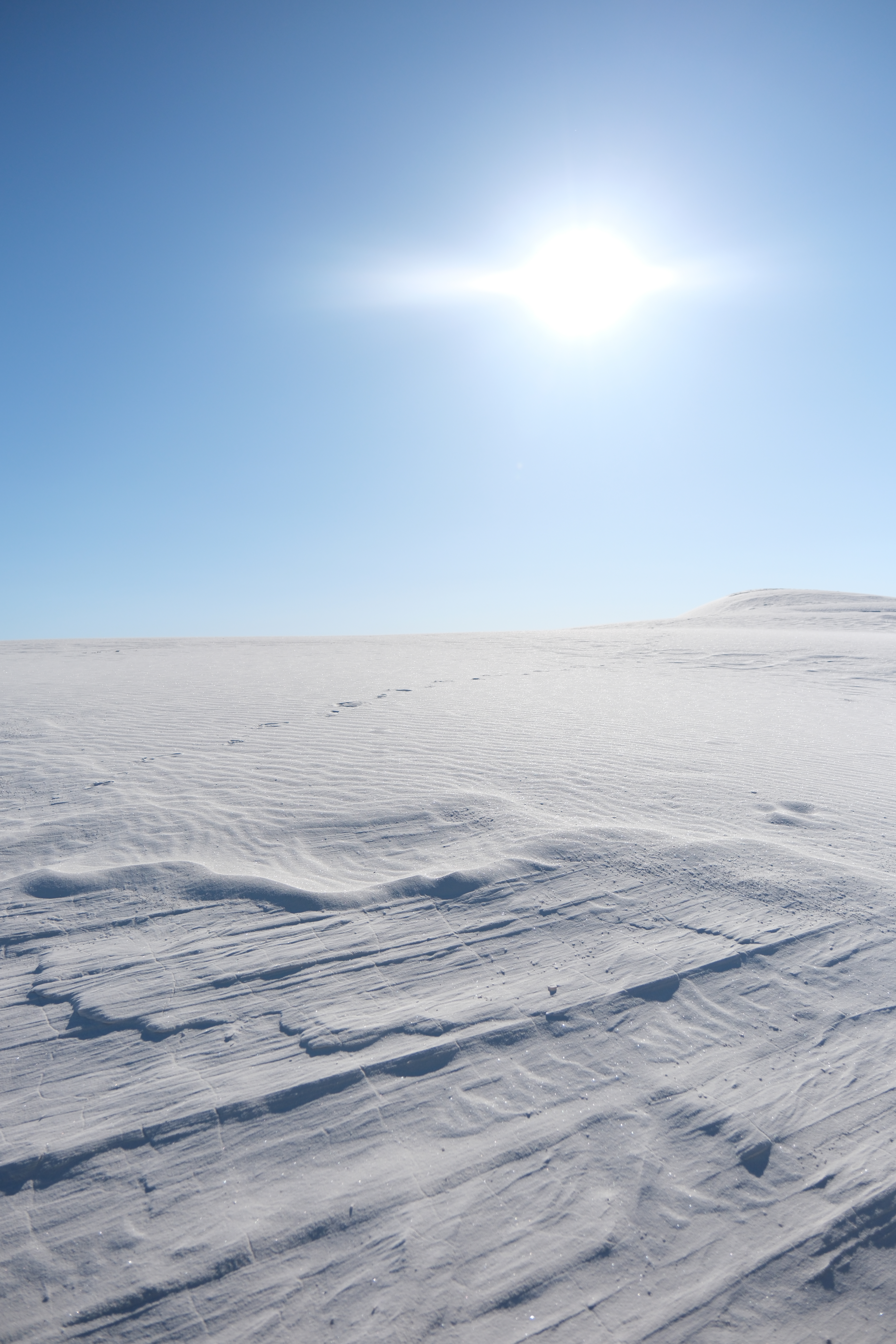

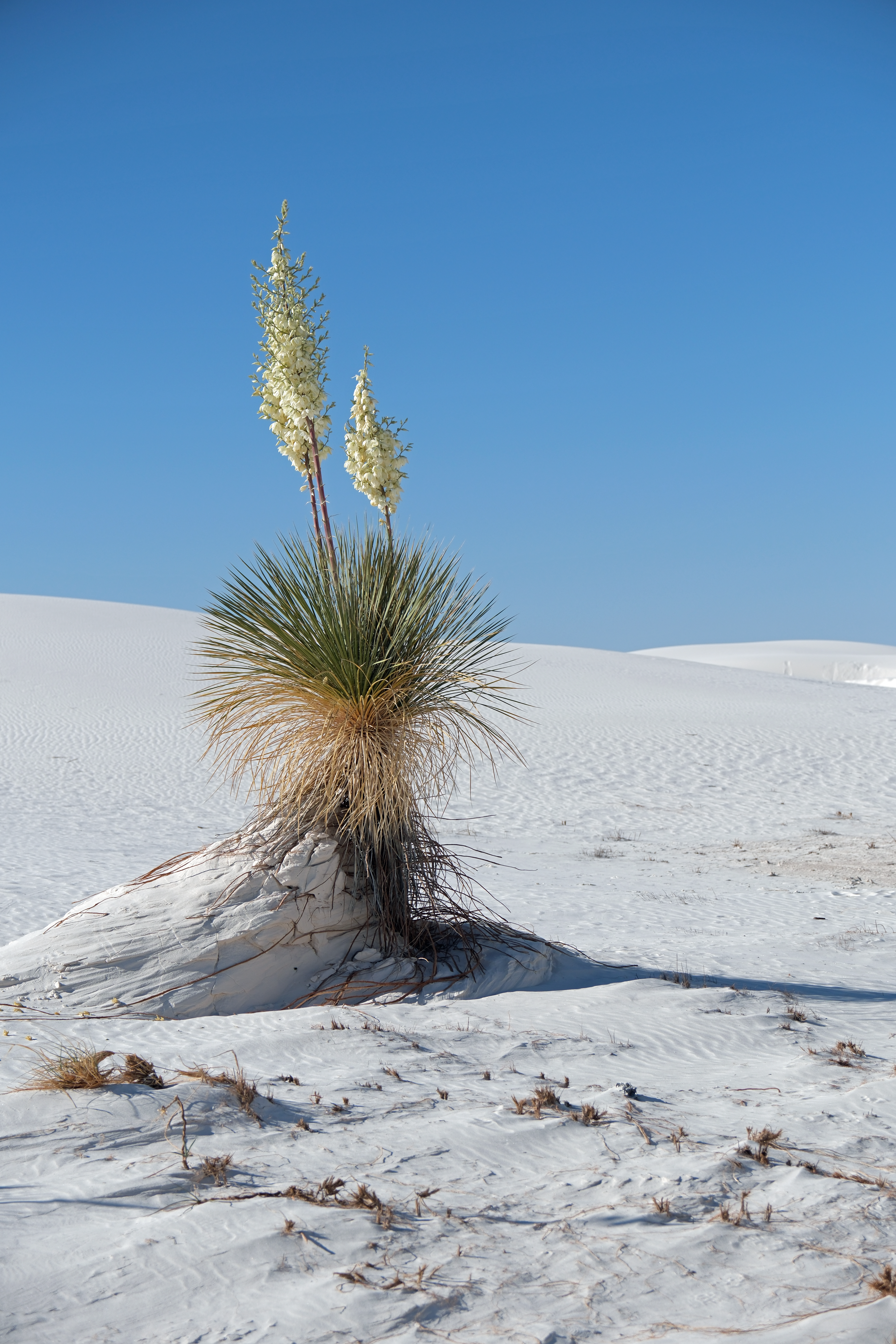
Another fun thing to shoot? The yucca plants! They were mostly near the road, so we doubled back to find some before the end of our hike. One thing that surprised us – how little wind there was! When we were last in sand dunes, footprints didn’t last long due to the high winds, but in White Sands we could see footprints in the sand from the day(s) prior. We could even see details like who went barefoot and who kept their hiking shoes on!
We opted to wear our “adventure” sandals, which was 100% the right call. We each bought a pair of Bedrock Sandals years ago because of their minimalism and ethics and have loved using them ever since. The sand was even cold while we were walking on it – and apparently the properties of gypsum sand make that true all day long!
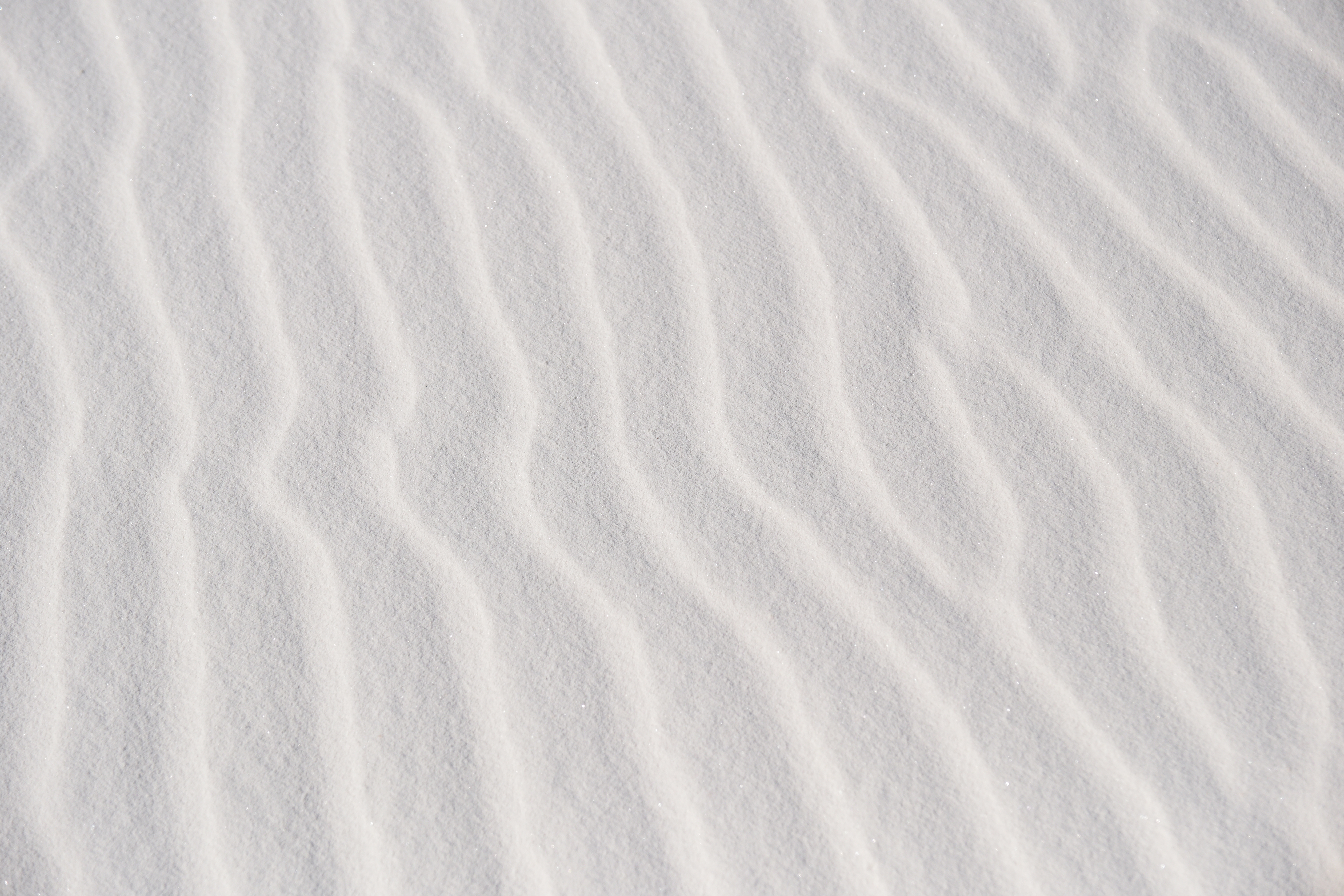
As much as I hated to leave, I eventually had to admit that I had gotten great shots of White Sands National Park. The lighting would only be getting worse and honestly, we could tell it was going to be a hot day!

Even though this national park was at the beginning of our summer road trip, I could easily see it remaining one of my favorites. As we left, we drove past families sledding down the hills and having a wonderful time. I could definitely see myself coming back here.

You might think this was the end of our day, but in reality, it was only beginning! After a quick breakfast at the amazing cafe Grounded (we’d had dinner there the night before too!), we headed back to our hotel to pack up. We’d opted to stay at Hotel Encanto (their pool was chilly, but the setting was heavenly) and felt relaxed.

Which was a good thing, because we still had quite the drive day ahead of us! We were headed to Santa Fe, but had a detour to see NRAO’s Very Large Array. This pit stop had Chandler’s name written all over it.
The Very Large Array is a three hour drive from Las Cruces and when we arrived there was only one other car in the parking lot. In fact, we weren’t even 100% sure it was open, but we purchased our tickets at the kiosk and set out to explore.
We started with the indoor signs and videos (narrated by Jodi Foster, of course). This site was used in the filming of Contact and can also be seen in Independence Day, 2010: The Year We Make Contact, Armageddon, and Terminator Salvation.
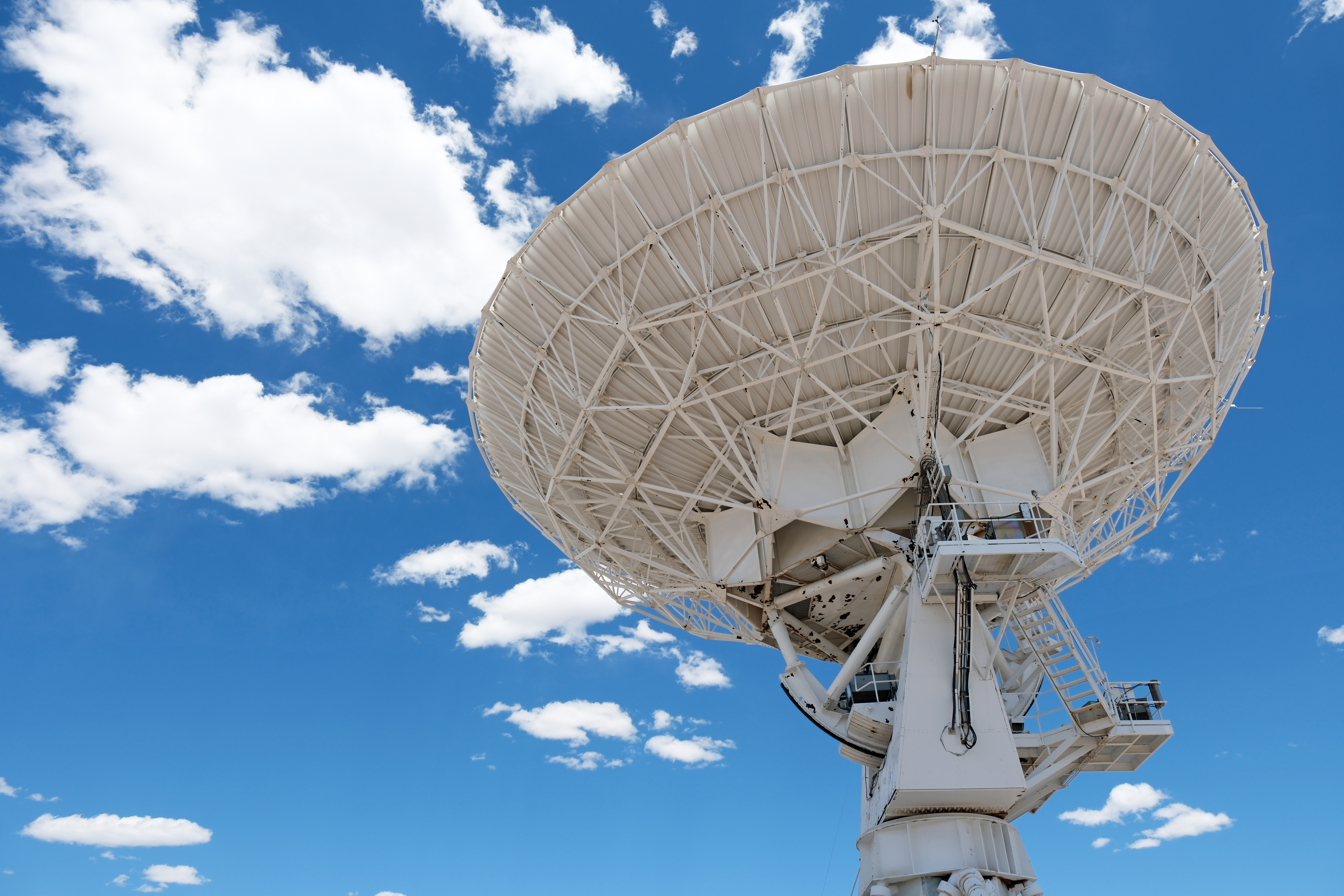
The VLA is an astronomical radio observatory. It consists of 27 large dish antennas, each 82 feet across and 94 feet tall. They are arranged in a Y-shaped configuration and can be moved along railway tracks to form a compact array or an extended array – we happened to view an extended array configuration.
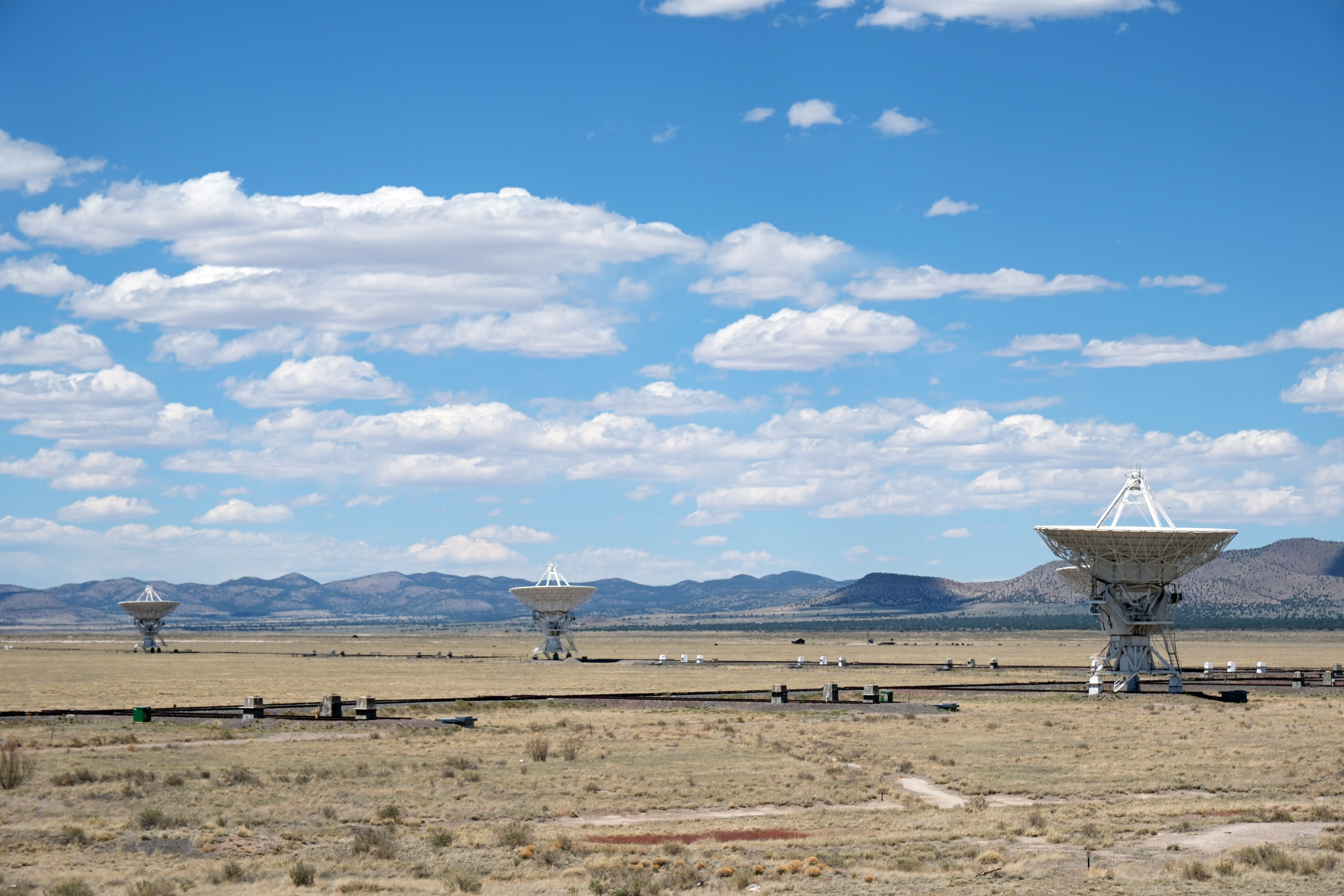
The VLA is used by astronomers to observe a wide range of astronomical phenomena, including galaxies, black holes, supernova remnants, stars, and the sun. It operates across a broad range of frequencies in the radio spectrum, allowing scientists to study the universe in ways that are not possible with optical telescopes.
It opened in 1980, but instead of letting the technology go to waste, an expansion project was completed in 2012. Over the course of a decade, all of the electronics inside the antennas were replaced, while the structures and railway tracks remained the same.
When we arrived, the radio telescopes were being reconfigured. They were slowly changing position from facing sideways, to facing directly upright. It was an incredibly cool transition to watch,

This may have been a stop for Chandler (not only is Contact one of his favorite films, but he is definitely a fan of all things space related!), but I couldn’t believe how much I learned too. Yes, it helps that the radio telescopes were incredibly fun to photograph (I couldn’t believe how big they are!), but the contributions these machines have made to our understanding of the universe is astounding.
Between White Sands and the Very Large Array, we’d had another fabulous day on our road trip!
 Abroad With Ashley