
After spending a day in Albuquerque, we were excited to see what was up in Santa Fe. The cities are just over 60 miles apart and I was curious how that compared to Dallas and Fort Worth (30 miles apart). While DFW feels like one massive city, the two downtowns have pretty distinct personalities. However, Santa Fe and Albuquerque don’t feel connected at all.
For a fun fact: Santa Fe claims to be the oldest capital city in the US. It was established in 1610 as the capital of the Spanish province of Nuevo México. This predates any other state capital in the US (Boston, for instance, was established as a city – and capital – in 1630).
While there was only one museum in Albuquerque that caught our eye (Indian Pueblo Cultural Center), there were four in Santa Fe we wanted to visit:
-Georgia O’Keeffe Museum
-Institute of American Indian Arts Museum of Contemporary Native Arts (IAIA MoCNA)
-Museum of International Folk Art
-Museum of Indian Arts & Culture
We decided to visit two each day so we wouldn’t get museumed-out right away!
I’ve always enjoyed Georgia O’Keeffe’s work and when we went to Crystal Bridges Museum of American Art in January we saw her piece Jimson Weed/White Flower No. 1, which is the most expensive painting by a woman artist ever sold (for $44 million). But I can’t say that I knew a lot about her outside of her flower paintings. Apparently, I had barely scratched the surface.
The Georgia O’Keeffe Museum definitely filled in my knowledge gaps – I learned about her start in watercolors, her horrific husband, and her love of New Mexico. The most humorous story that I read was that the company Dole paid to fly her to Hawaii for a three-week vacation so that she could paint a pineapple for them. She didn’t. She was finally pressured into it long after she’d returned to New York. I can’t tell if that’s a boss move or just horribly unreliable.
The museum was smaller than we’d expected and didn’t really hit for us. Yes, it was informative, but the pieces on display weren’t much of what she’s known for – we appreciated the continuum, but thought the price was quite a bit higher than necessary. Tickets to NYC’s Metropolitan Museum of Art only cost $30 (compared to $22 here) and we spent seven hours there (compared to maybe an hour here).
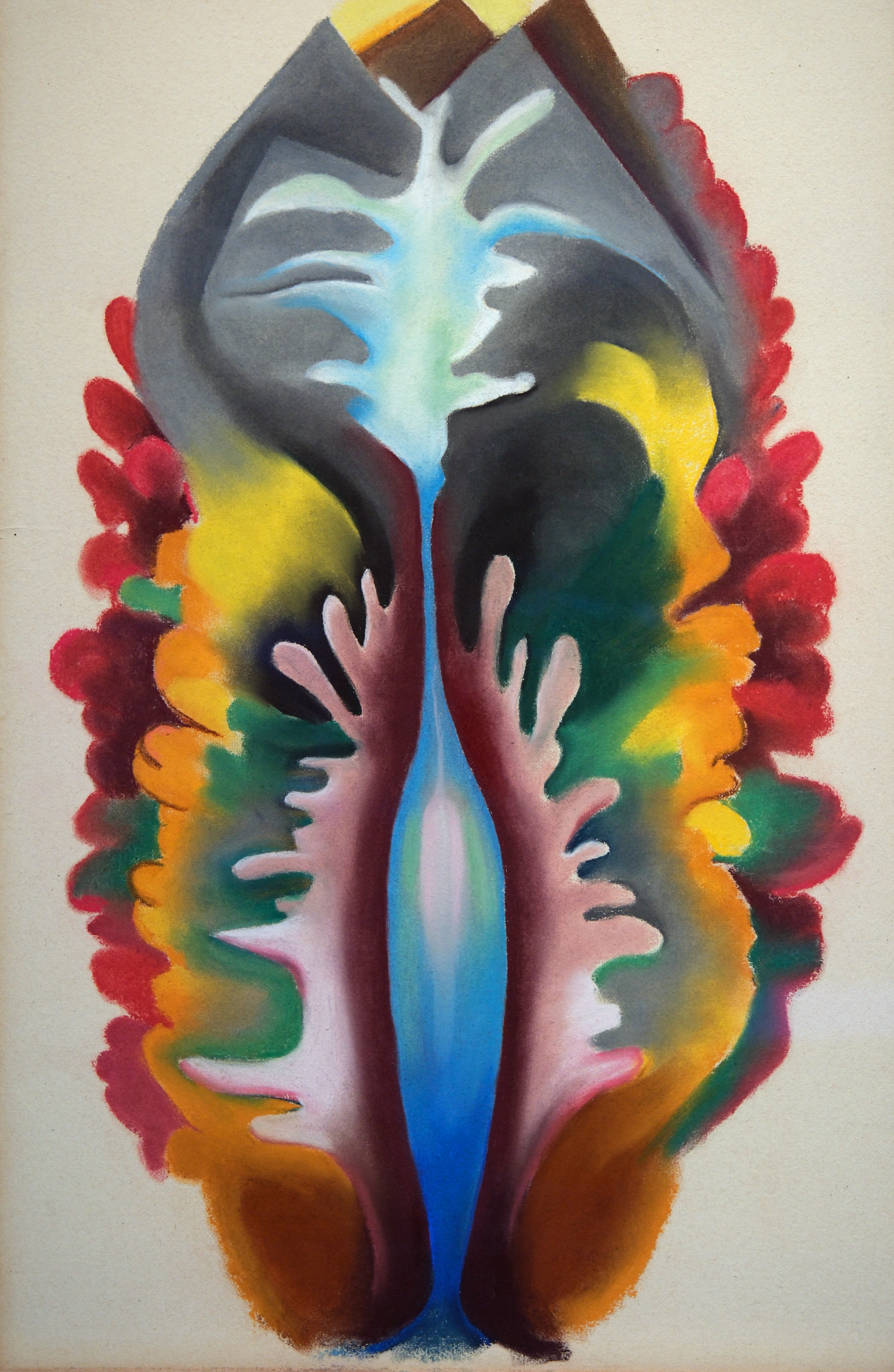
One piece that did catch my eye was an early pastel titled Abstraction, Seaweed and Water.
After leaving the museum behind us, we decided to explore Santa Fe’s downtown before our next museum of the day. Compared to Albuquerque’s Old Town, Santa Fe’s downtown is huge – with a lot more on offer. We decided to just start wandering into stores.
Somehow, we started with Andrea Fisher Fine Pottery – which led us into a discussion about whether you need to buy the work of the original artist or whether their descendants’ work will do. We’d had a similar discussion in Monte Albán, Mexico when visiting Jacobo & María Ángeles’ alebrije studio in 2021.
You can buy pottery by Maria Martinez for $4-$6K, but an incredibly similar piece by her grandson and his wife, Marvin & Frances Martinez, only sets you back $600-$800. Chandler and I both like the glossy and matte black pots, typically from Santa Clara, although the Martinezes are from the San Ildefonso tribe. I really like the avanyu designs (a water guardian represented as a horned serpent) and Chandler really likes the feather motifs.
So, yes, we were seriously discussing whether we were going to randomly start buying expensive Pueblo pottery (we’d been seeing a lot of Maria’s work in museums over the last year and couldn’t decide if that meant we should own some). I was also really getting into the detailed geometric designs on some of the seed pots.
We decided not to make any rash decisions and check out some other shops first. After that, we walked in and out of some really touristy, not at all authentic, shops until we lucked out in Bahti Indian Arts. There, we came across artist Randy Brokeshoulder (Hopi) painting a katsina doll. These “dolls” are made from the root of a cottonwood tree (a lot less fragile than pottery!).
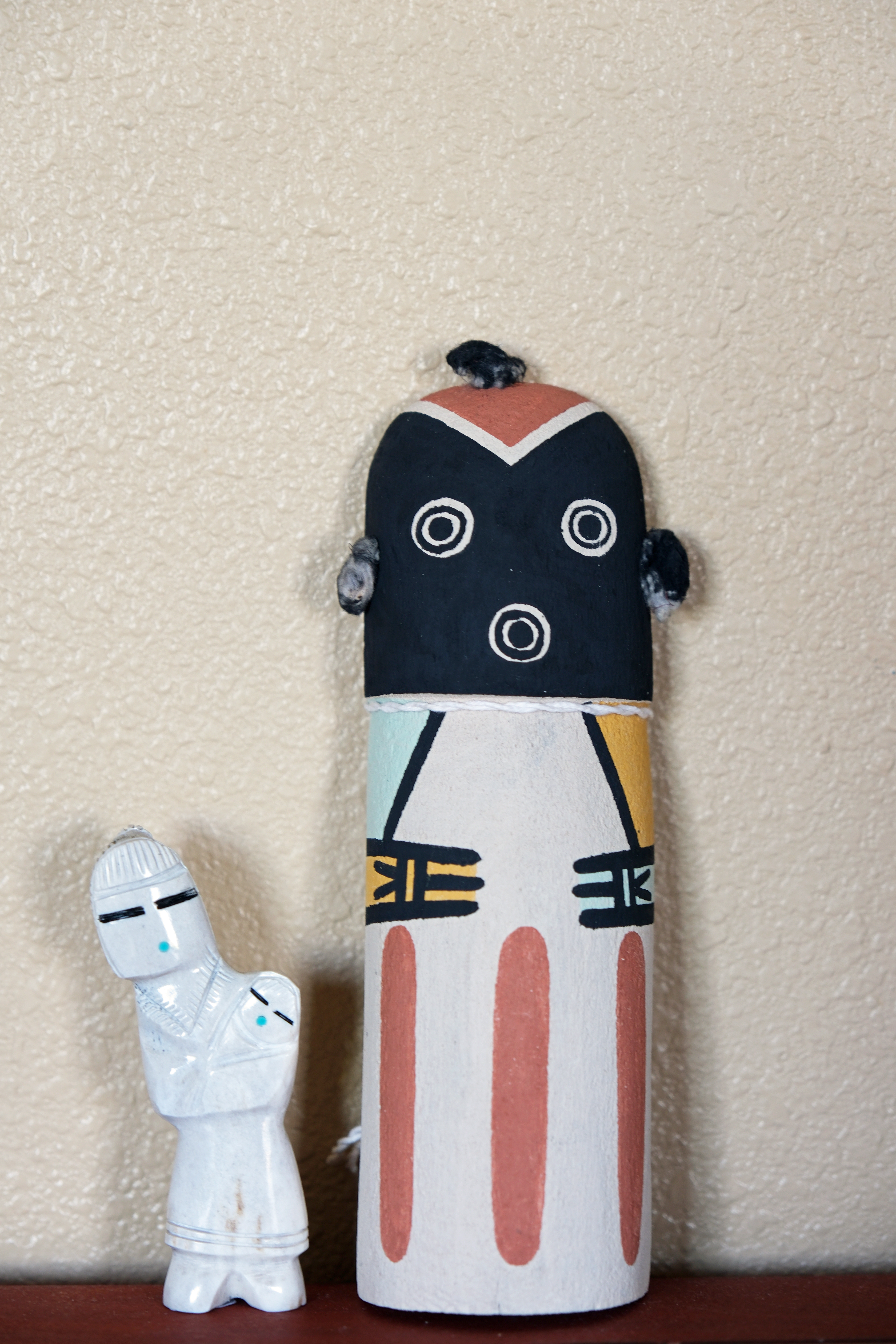
I was mesmerized by the wall of dolls behind him until my eyes landed on Wikchina. Wikchina (or GreasyHand) is a runner katsina. Brokeshoulder told us that this katsina is important because some Hopi farmers tended fields more than 20 miles from their villages and also because running is part of the Hopi rain-bringing ritual. Something about the katsina doll felt right and it became our first purchase of the day (pictured below with double circles for its eyes and mouth).
Brokeshoulder also gave us a map of downtown Santa Fe that he’d highlighted to share authentic and/or Native-owned shops in the area. We were stoked to find Andrea Fisher Fine Pottery highlighted on it!


We decided to weave our way through the streets, stopping in at all of highlighted shops instead of randomly entering stores like we had earlier. All told, we visited:
–Rainbow Man: Art gallery filled with antique and contemporary Native arts
–Sunwest on the Plaza: Gift shop – We bought an adorable Cinco de Mayo gato figurine
–Shiprock Santa Fe: Native gallery – Way out of our price range, but the solo rug above (incredible) is from there
–Malouf on the Plaza: Native jewelry, rugs, and more – top photo is of their rugs. I’d be so tempted if I knew what our space in Dakar looked like!
–Sun Country Traders: Native gift shop
–Keshi The Zuni Connection: Zuni arts & crafts
After Bahti Indian Arts, Keshi was our favorite stop. They specialize in Zuni fetishes, which they clarify are actually called animal helpers. You’re free to browse the shop and touch the figurines since the Zuni believe that the helpers choose you as much as you choose them.
I walked around the space and kept coming back to a Corn Mother (pictured above with my katsina doll). Carved from shed elk/deer antlers, the Corn Mother holds her baby. This piece was created by artist Robert Michael Weahkee (Zuni). Corn is called “the mother” and Zuni people often carry cornmeal or corn pollen with them – it is used in prayers and ceremonies as an affirmation of the connection between Earth and all life. When I told them I was a teacher, they said it was a fitting helper for me.
Walking through the store was like walking through a museum. We learned about the different helpers and their purposes: mountain lion for setting good examples and boundaries; wolf for teaching and loyalty; rabbit for the acknowledgement of our fears; bear (the most prevalent) for healing, protection, strength, journeying, mothering, hunting, & gathering, and so many more.
Plus, my purchase helps support the Zuni Artist Resource Team (ZART), a nonprofit of the Keshi Foundation (TKF) that advocates for Zuni artists. They provide tools, training, education, and methodology that allow Zuni artists to present their artwork on an equal footing with other high-quality vendors. I was feeling pretty good about my spending and less like I needed to start a pottery addiction.
Our second museum for the day was IAIA MoCNA – they claim to be the country’s only museum for exhibiting, collecting, and interpreting the most progressive work of contemporary Native artists. When we went they had five exhibits showing.
I love seeing what’s being created by Native artists now, as opposed to only seeing pottery, weaving, and beadwork from unidentified artists in the past. The art spans from 1962 to the present. Their Arctic Vertigo exhibit by Inuk Silis Høegh contributes to the revival of Greenland’s spirit of independence from Danish colonialism and reflects the country’s new identity.
In Womb of the Earth Brazilian Indigenous female artists from the Amazon and Atlantic Rainforest illustrate threats to their life, culture, and homeland through deforestation, illegal mining, agriculture and infrastructure developments, violations of cultural rights, and lack of access to justice.
One of the pieces of jewelry that caught my eye in The Stories We Carry was actually made by Jessie Ryker-Crawford, an artist from White Earth, my family’s reservation.
The museum was quick but fantastic. There was even an outdoor space with a fabulous mural of the three sisters: Corn, squash, and beans.
At the end of the day we met up with an old friend from Peace Corps. We hadn’t seen Shayna since we were all in Ethiopia together. She lives in Santa Fe and we met at Nuckolls Brewing Co. to catch up. My sour beer was legit and the pretzel delicious, but really, what made the evening great was getting to reminisce about Peace Corps and the people in it.
We talked about what we’ve all been up to in the last decade (this summer is our ten year anniversary of the end of our service!) and got a chance to meet Shayna’s family. We don’t often get to visit with people on our vacations, so we felt lucky for the reunion.
The next day got off to a late start – we were sleeping in, working out, and having leisurely breakfasts (a routine we wouldn’t get to keep once we got back to the national parks). But just before lunch we made our way to Canyon Road.
I didn’t know what to expect from Canyon Road, but after driving through I could tell you it wasn’t for us. Despite having more than 100 galleries, boutiques, and restaurants in a half mile, it was clear that we were not their clientele. We did stop in a vintage shop and a Native clothing store. But while we’re happy to pay for quality, the prices we encountered seemed more than a little inflated. It didn’t take long for us to head to the day’s museums.
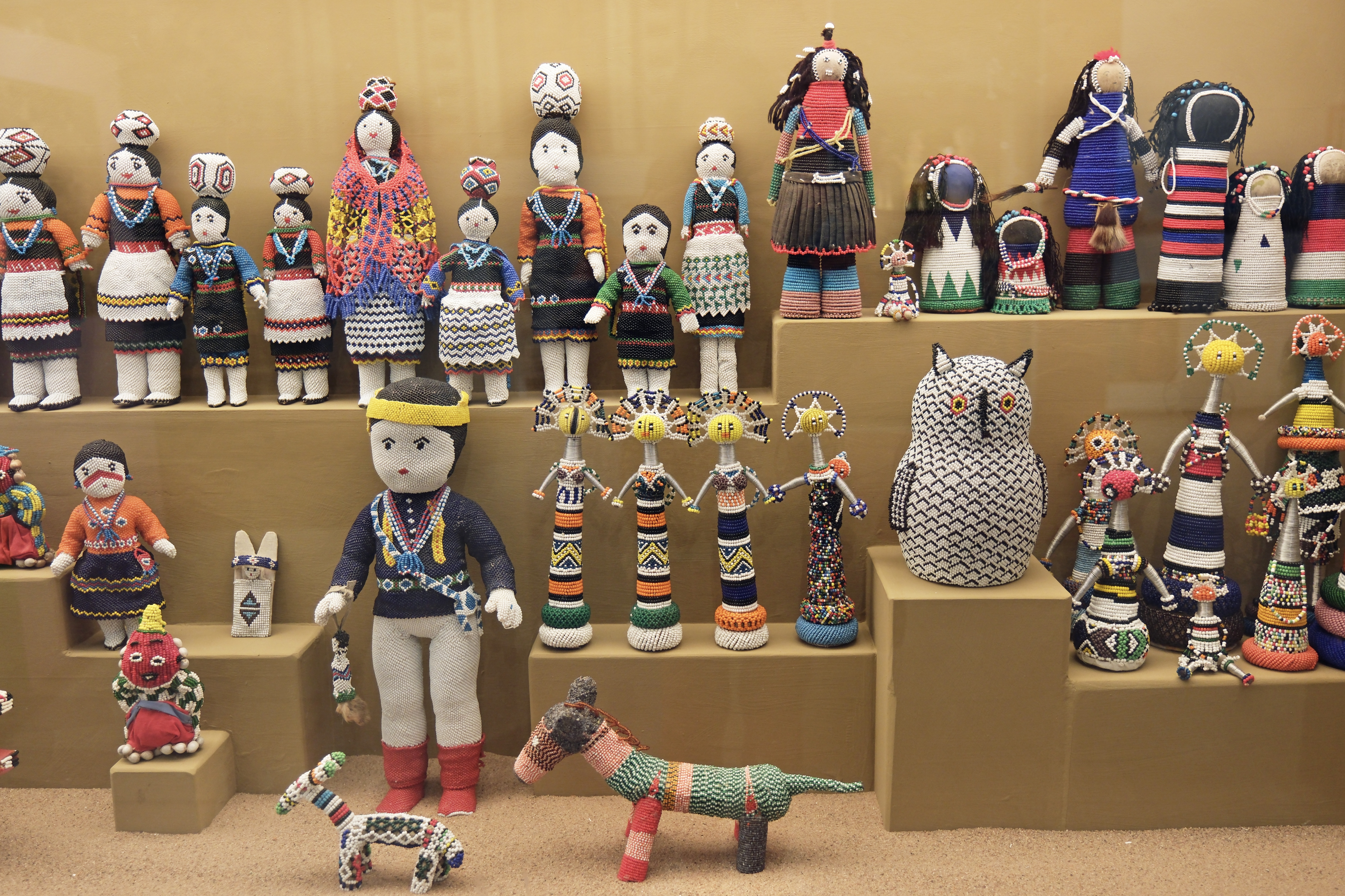
After looking up descriptions of both museums, we decided to start with the Museum of International Folk Art. We’re suckers for toy museums, so we were fascinated by their exhibit Multiple Visions: A Common Bond. While not a gallery of toys, Alexander Girard collected and organized over 10,000 objects – ranging from dolls to puppets to clay figurines to fabric.
It’s pure insanity. They didn’t even try to put up descriptive text, which is half the charm. More than 100 countries and six continents are represented, so Chandler and I just tried to guess where everything came from. It was magical.

We thought this museum would take longer, but a number of their galleries were closed. The other two that were open were La Cartonería Mexicana: The Mexican Art of Paper & Paste and Staff Picks: Favorites from the Collection.
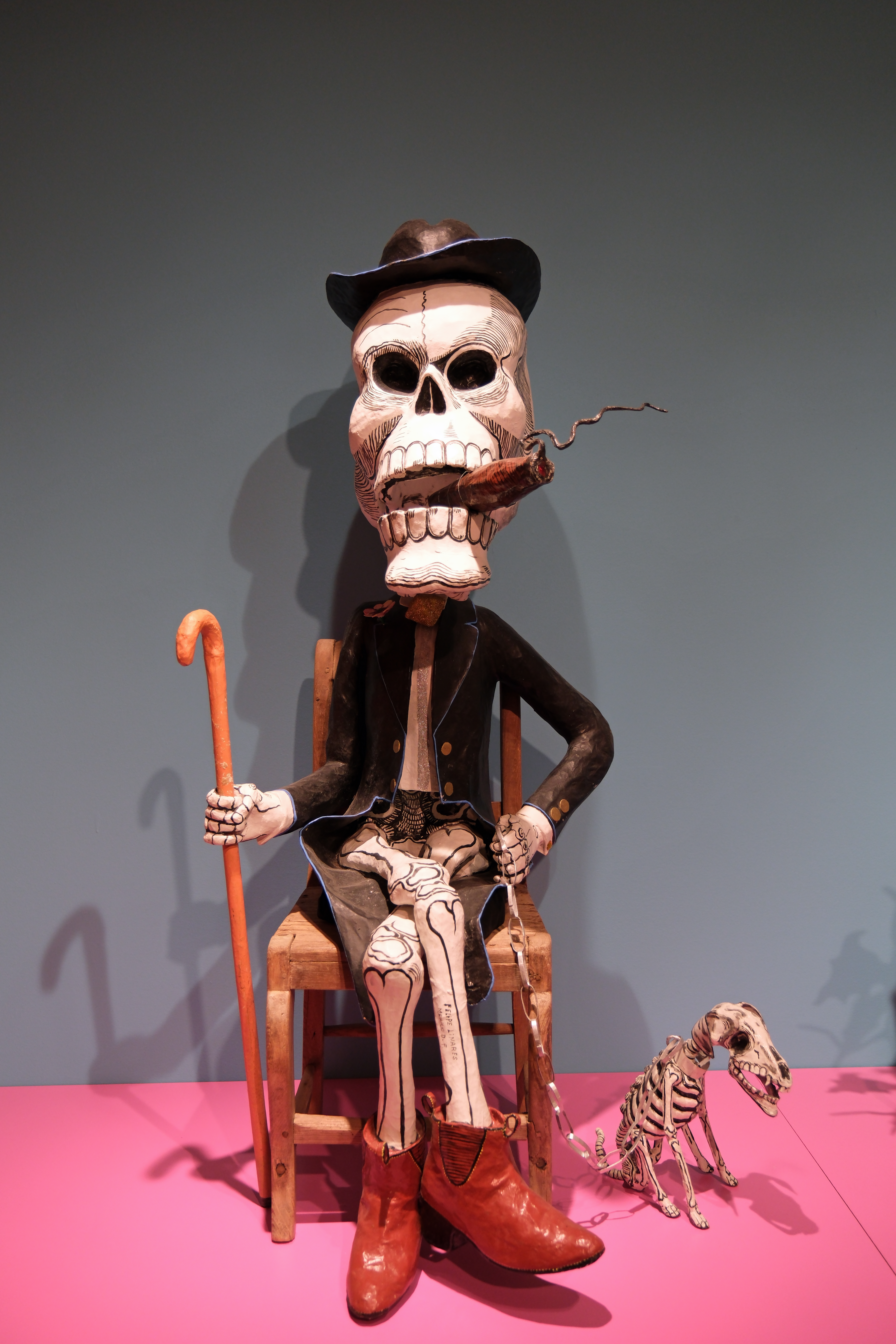
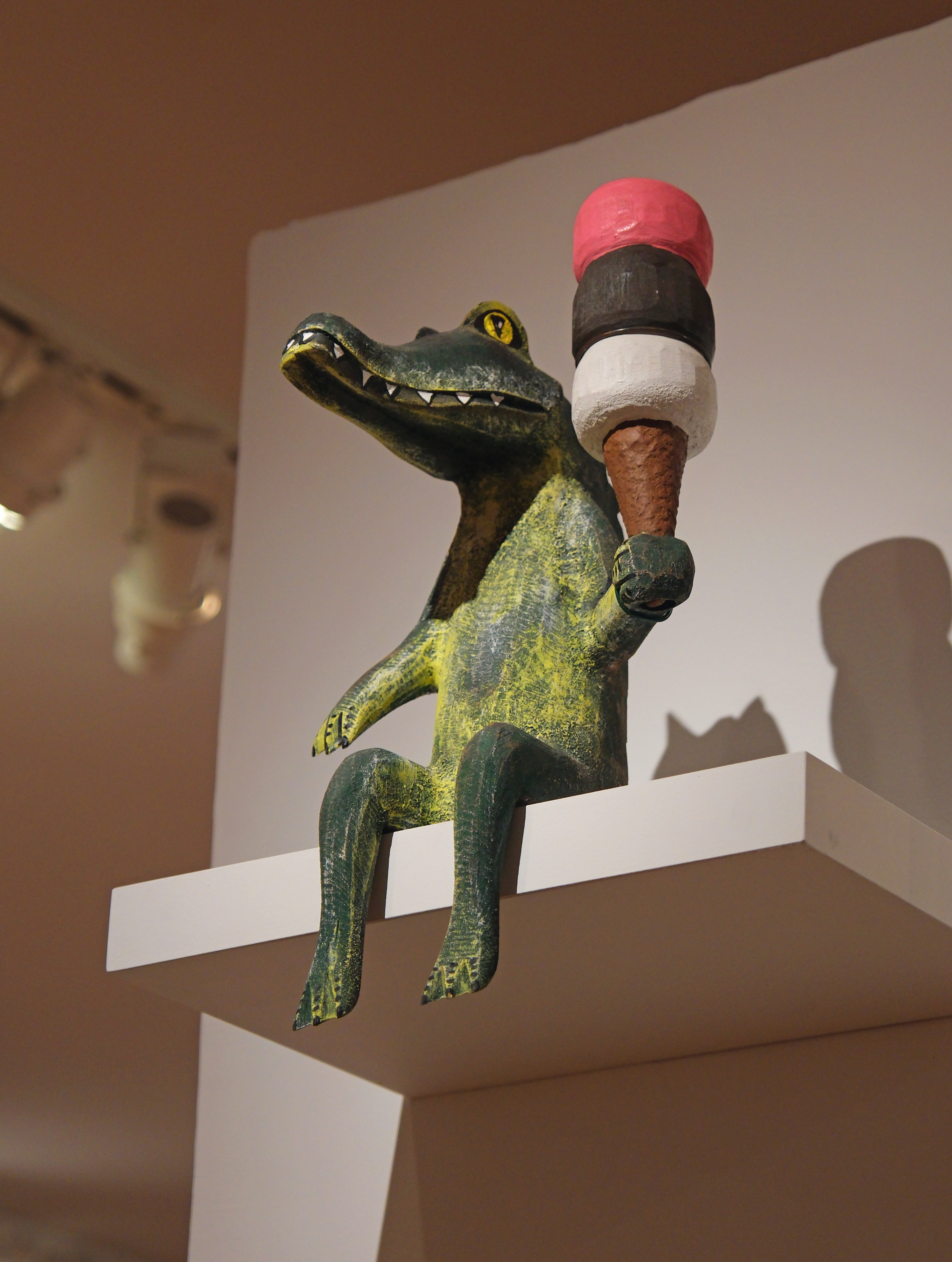
The Mexican folk art exhibit included piñatas, dolls, Day of the Dead skeletons, and (my favorite) alebrijes. And the staff picks were almost as random as the 10,000 objects exhibit. But I was tickled by the inclusion of Alligator with ice cream cone by Joe Ortega. I feel like you could return to this museum time and time again and still see new things even if the exhibits never changed.
Our final museum in Santa Fe was the Museum of Indian Arts & Culture. This museum was also quicker than anticipated, but we got off to such a sweet start. The admissions clerk asked if we were military or if we qualified for any of their discounts. Chandler joked that we’re just teachers.
Originally, tickets here cost $12/person. But he told us he’d been such a horrible student and he felt bad for everything he put his teachers through that he’d only charge us $6 total. It was a very kind gesture and a reminder of why we love teaching. He told us that in middle school he had an incredibly profane Metallica t-shirt that he loved to wear to school because it made all of his teachers mad. It was a hilarious interaction.
Their main exhibit, Here, Now and Always, features more than 600 objects. Its purpose is to express a fundamental truth about the essence of Native communities in the Southwest. The late Zuni scholar and former MIAC curator of ethnology, Edmund J. Ladd, said, “I am here. I am here, now. I have been here, always.”
My favorite piece from the exhibit was Father Sky, Mother Earth by Tony Abeyta (Navajo).
They also had an exhibit called Horizons: Weaving Between the Lines with Diné Textiles that was visually stunning, telling stories through photography and weaving. As well as an exhibit dedicated to the different pottery styles of each Pueblo. It was at this point that Chandler and I finally agreed that, interesting as it is, we have no room in our life for a pottery collection!
The final bit of the museum exists outside, which is were I found Tammy Garcia’s (Santa Clara) sculpture Andrea. It turns out the museums of Santa Fe were unique enough to keep us interested all the way through!
That would have been it for us that day, had Shayna not recommended Kakawa Chocolate House. Kakawa is an Olmec word, meaning cacao or chocolate. Their passion is authentic and historic chocolates elixirs and damn do they do them well!
I started with their hot chocolate tasting tray, sampling their Zapoteca elixir (100% chocolate with no sweetening), as well as my more preferred 1790s Jeffersonian elixir (70% chocolate, organic evaporated cane juice, nutmeg, vanilla), and others. Then I moved on to their truffles and caramels, before ending my shopping spree with a life-changing chocolate malt. I’m telling you, everything they touch turns to gold!
Previously, the most money I’d ever spent on chocolate was at a vegan chocolate shop in NYC called Confectionery! – I won’t tell you how much I spent, but I will tell you I surpassed it at Kakawa Chocolate House. Shayna really did us a solid in recommending this spot!
We really felt like we maximized our time in Santa Fe. While neither Santa Fe nor Albuquerque broke into my top three American cities, we had a great time in each (but are glad we chose to stay in Santa Fe).
Elahkwa (thank you in Zuni) for reading!
 Abroad With Ashley