
While our time in Monument Valley didn’t require a guide (we got one to keep our Mini Cooper off of some low-quality roads!), anyone who wants to enter Antelope Canyon does need a guide.
There are two different ways you can enter the canyon – Upper Antelope Canyon (Tsé bighánílíní) and Lower Antelope Canyon (Hazdistazí). My first thought? Why not do both? Answer: These tours are not free! With tickets over $100/person, we decided I’d have to pick only one.
So I looked into it and here are the major differences:
-Accessibility: The Upper Canyon is more accessible because it is located at ground level, whereas the Lower Canyon requires visitors to descend several flights of stairs to enter and then navigate narrow passageways and ladders within the canyon
-Crowds: Due to its ease of access and famous light beams, Upper Canyon tends to be more crowded, whereas Lower Canyon is often a more relaxed experience
-Photographic Opportunities: Upper Canyon is renowned for its light beams, especially during summer months when the sun is directly overhead. Light beams are less common in Lower Canyon, but the unique shapes and textures of the walls provide stunning photographic opportunities
-Tours: Tours of Upper Canyon tend to be slightly (15-30 min) shorter than Lower Canyon
With that information, my choice was easy: I like avoiding crowds, descending into the canyon sounded fun, I’m not wild about light beams, and I prefer having more time. Lower Antelope Canyon for the win!
Upper Canyon has five tour companies to choose from, while Lower Canyon has only two. After reading a few reviews, we settled on Dixie’s Lower Antelope Canyon Tours. Turns out it really doesn’t matter – the other option was Ken’s Tours and Ken & Dixie are siblings. They used to run tours together, but separated at some point and likely run their tours the same way.
We were told that we needed to arrive 45 minutes before our scheduled tour – absolutely unnecessary. The check-in process took less than a minute and then we’d have had a 44-minute wait. However, since we were so early, we got to hop on an earlier tour.
They split everyone into groups of 15 and give each group to a tour guide. Ours was Sedrick. He used to be a photography guide in the Upper Antelope Canyon, but opted for a (slight) change of scenery. It did mean he was super helpful for everyone with their iPhones – he helped them change their settings to optimize their images, while the two of us chatted about camera settings for my Fujifilm X-T5.
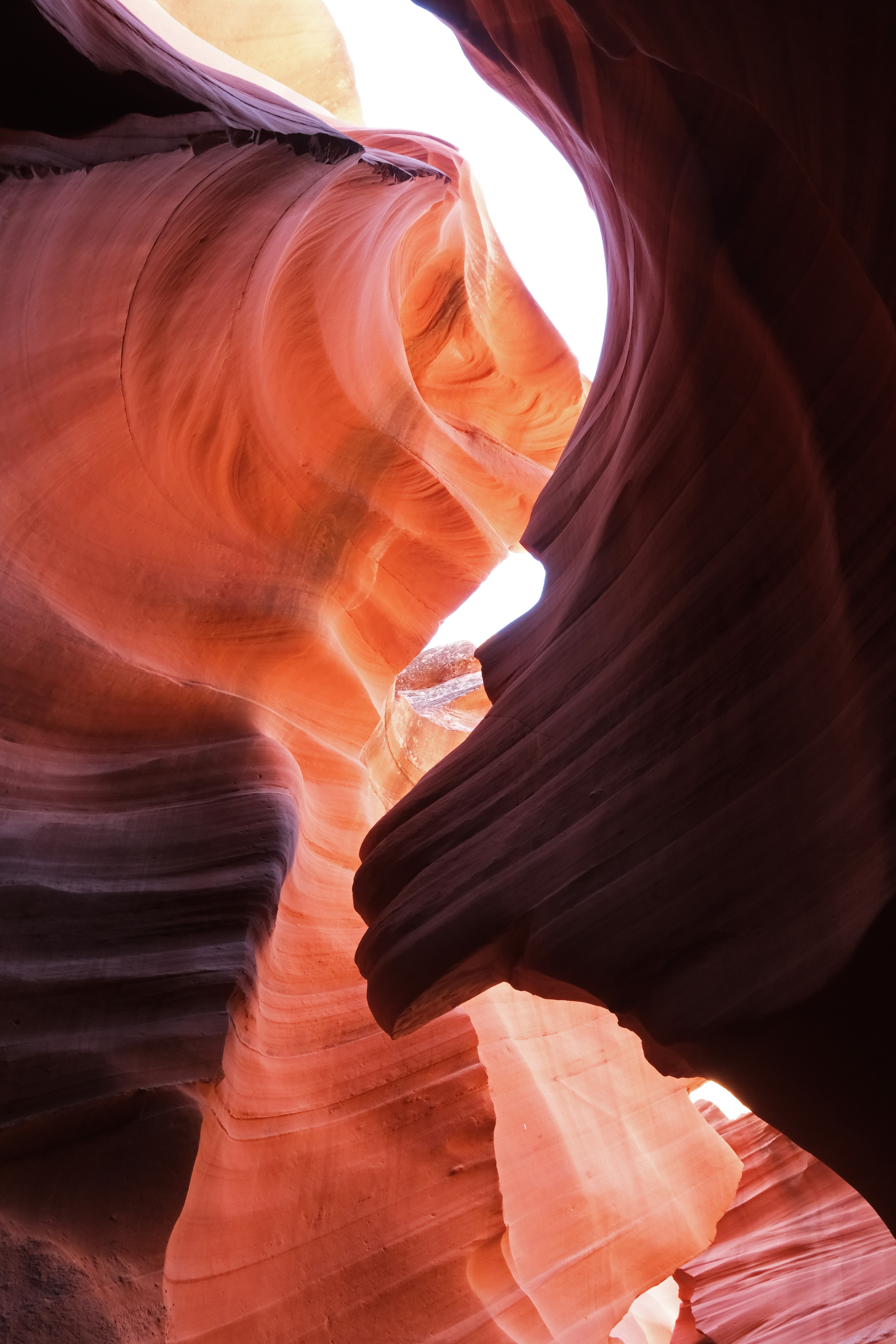
Honestly, I can’t say a lot about his skills as a guide, because I was constantly letting myself fall to the back of the group to take photos without my fellow groupmates in them. Not that that was always necessary, I was taking photos at all angles – up, down, and all around. The canyon is absolutely stunning.
If you asked Chandler, he’d say he wasn’t sure what the big deal was – we’d already visited the Siq at Petra in Jordan. But for me, Lower Antelope Canyon was more like if the Siq was a blanket that you then wrapped around you. Everything was much closer in the canyon, making angles and colors that much more mesmerizing.

Antelope Canyon was formed over thousands of years by the erosive forces of flash flooding and wind, which carved out the intricate and smooth walls of the canyons. The process began with water flowing through the sandstone, slowly eroding the rock and creating the deep, narrow passageways that are seen today. Seasonal rainstorms, particularly during monsoon season, contribute to the continuous reshaping of the canyon’s walls.

Long before the canyon was developed as tourist destination, it was discovered and used by the Diné (Navajo) people. The canyon served as a place for spiritual reflection and a source of inspiration due to its natural beauty and tranquility.
The Navajo name for Upper Antelope Canyon is Tsé bighánílíní, which means the place where water runs through rocks. The Lower Antelope Canyon name is Hazdistazí, which means spiral rock arches.
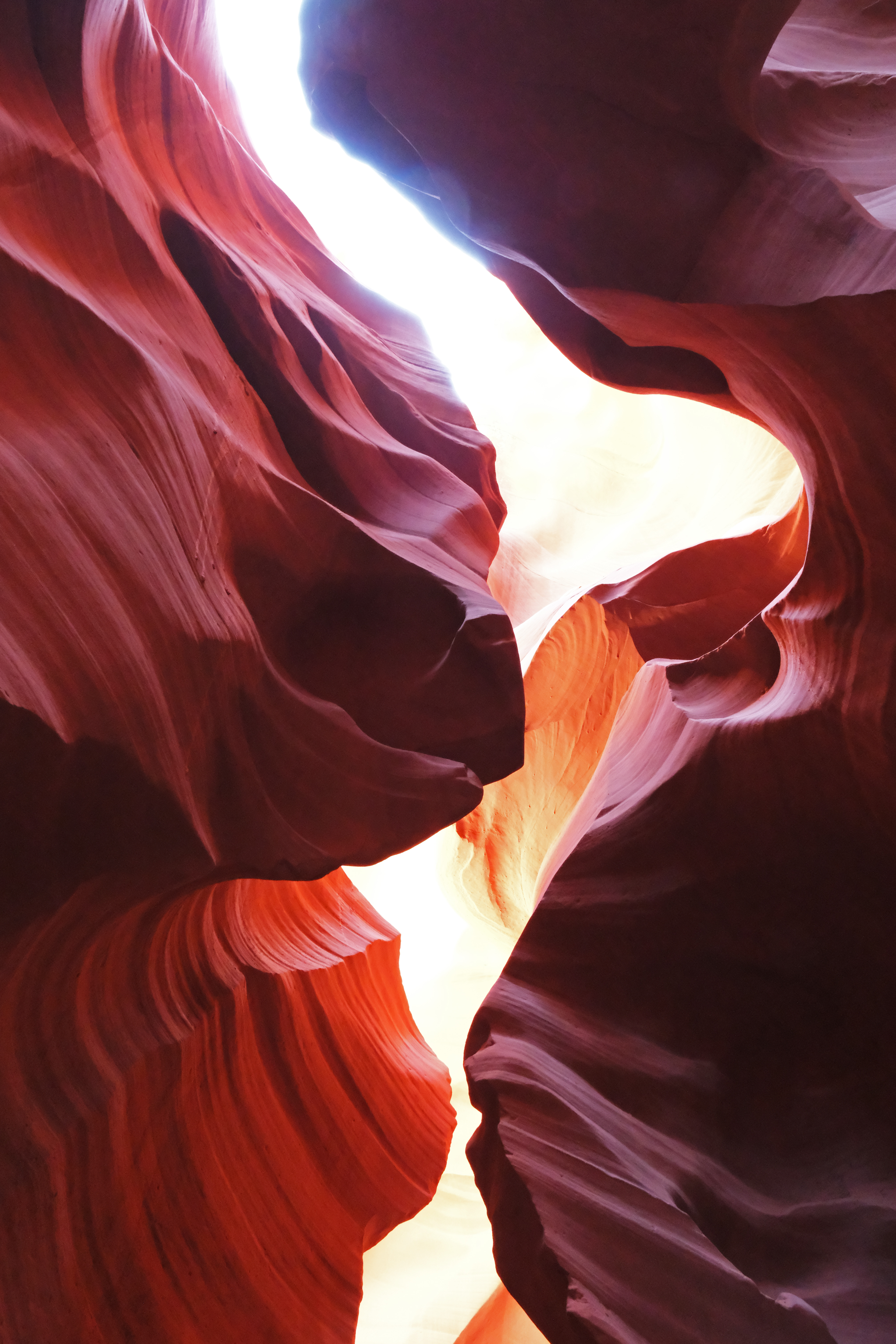
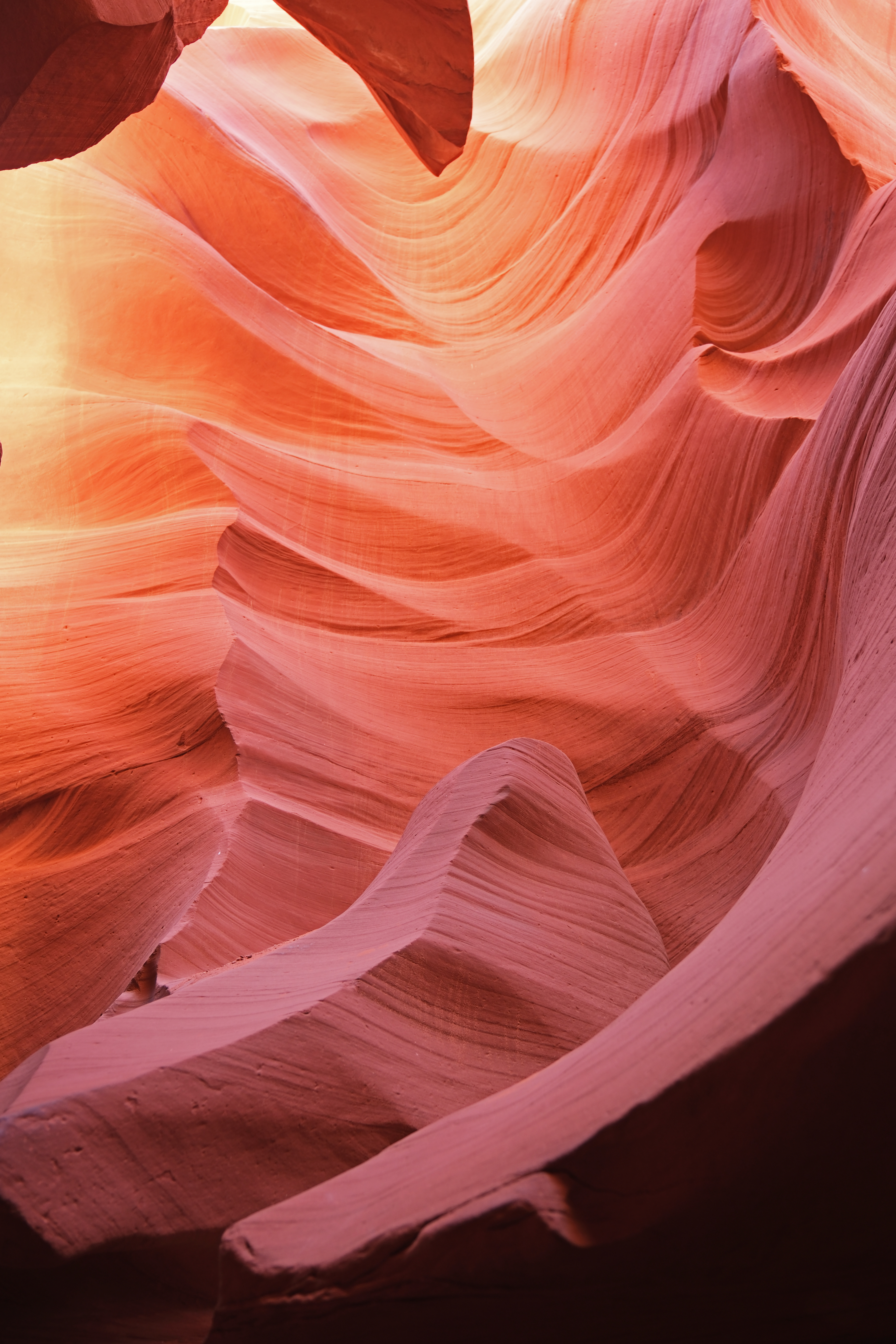
I will say, the whole operation ran like a well-oiled machine. New groups entering the canyon every five minutes meant we were constantly on the move. And yet, we were able to squeeze 90 minutes out of our 400-meter (1,312-foot) tour. I could have stayed all morning, but clearly that wasn’t allowed!
In addition to making photography suggestions, Sedrick made sure to photograph everyone as much as they wanted – Chandler and I were happy with one of our early shots, whereas some families had dozens of photos taken of themselves. To each their own! This isn’t something many of us experience often.

We began ascending to leave the canyon and right near the final ladder we discovered what so many choose to visit the Upper Canyon for – a light beam. Interesting enough, but I was glad we’d chosen the Lower Canyon – it was absolutely perfect.
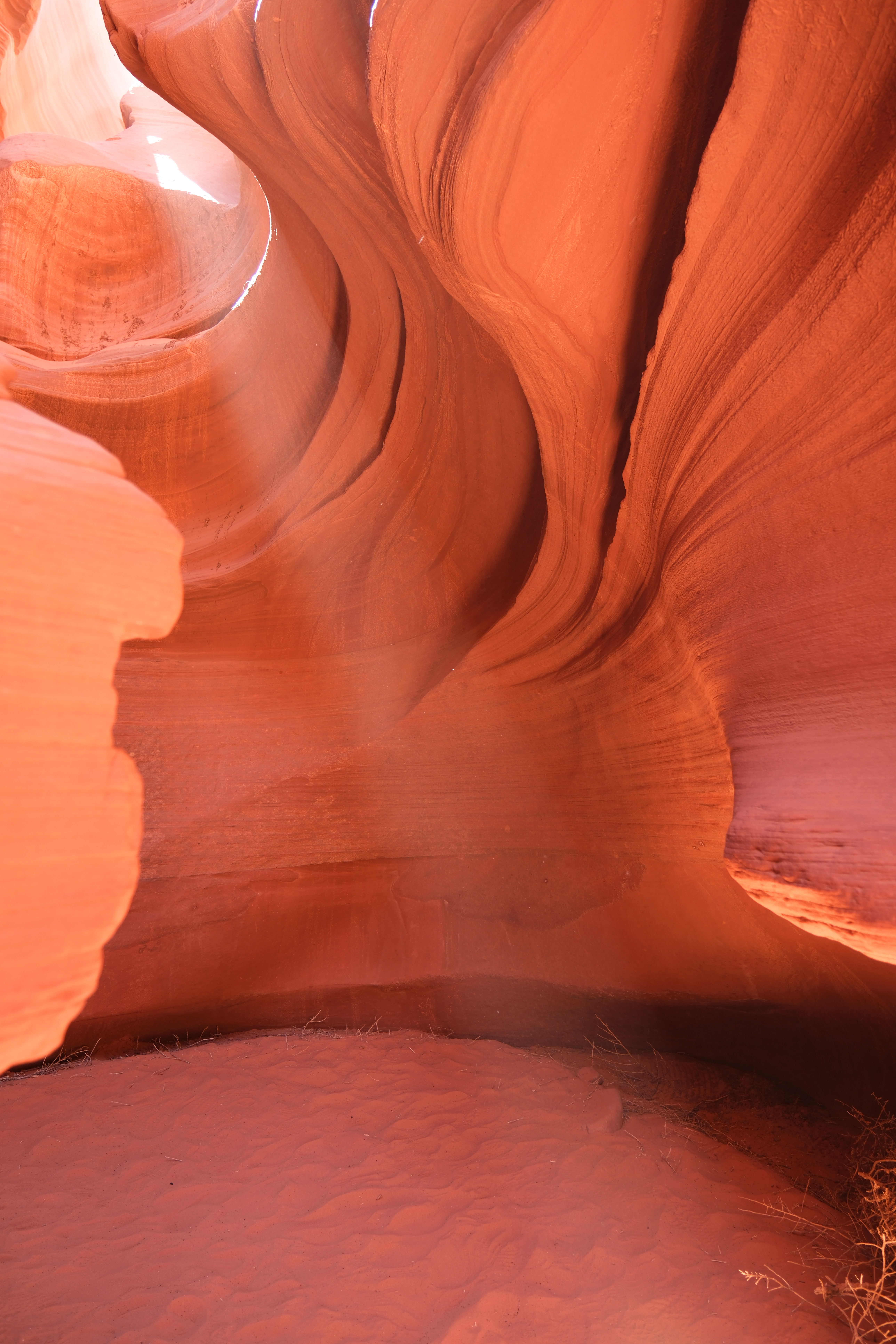
Because we’d started our tour early, we were out of the canyon before 11am, which was actually quite ideal for us! Page, Arizona was experiencing a heat dome during our time there and we were plenty happy to be heading out early. Despite the heat, the temp in the canyon had been perfect, but we had one more stop that day.
Knowing the heat would be rising, we had decided to visit Horseshoe Bend before making our way to Antelope Canyon. The problem? When we arrived at 7am, the canyon was (obviously) covered in shadows that made it difficult to see (ok, and photograph). So I had decided, damn the heat, we were going back after our Antelope Canyon tour.

We hated having to pay to park twice (even though the canyon is in a National Recreation Area, the parking lot is in the city of Page), but the views late morning were absolutely worth the return!
Horseshoe Bend is considered a landmark of the Glen Canyon National Recreation Area, but only nine miles downstream is where Grand Canyon National Park begins. However, that wasn’t going to be our next stop! Before heading south to the Grand Canyon, we had plans to visit Bryce Canyon National Park and Zion National Park.
 Abroad With Ashley