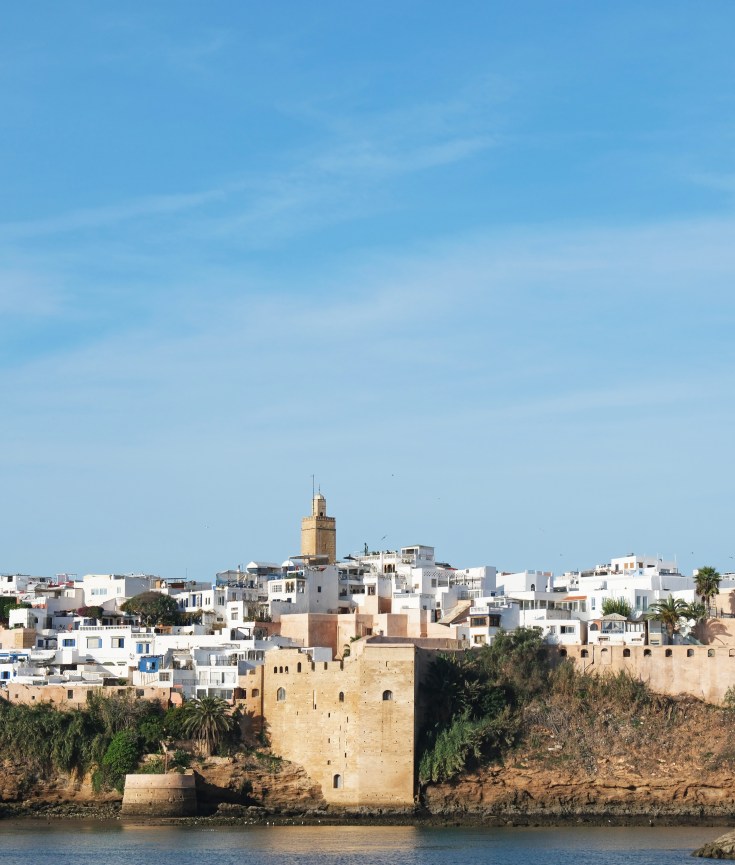
We’d spent the previous two weeks exploring cities in Morocco, trying to decide on our favorite one. In the end, it wasn’t even close. Rabat, Morocco’s capital, was hands-down our favorite stop.
Funny enough, we didn’t actually stay in Rabat, our hotel was in Salé, on the right bank of the Bou Regreg River, opposite Rabat. However, the two cities are connected by a tramway and I’d say the location only added an additional five minutes to our Careem rides – the Dubai response to Uber.
Plus, we got incredible views of Rabat.

We were staying at the Fairmont La Marina Rabat Salé, and just like the Fairmont in Tangier, we had a mixed experience. The stay started out with some unnecessary difficulties. We had emailed in advance for a pick-up at the train station. We’d been told our request was forwarded to the concierge, but never heard back. I finally called the hotel from the train station and the front desk called a driver. We were told we could pay the driver 200 Moroccan dirhams directly or we could pay the hotel 500 MAD – kind of bizarre.
We later learned the concierge had been out sick and he apologized profusely for the mix-up – fair enough. Additionally, over our three nights there we had not one, but two plumbing issues. Instead of moving us to a new room, they had multiple people in our bathroom, working on the problem, when we should have been getting ready for bed.
That said, the decor was lovely, even if the room was much smaller than at the Fairmont in Tangier. And unlike the Fairmont in Tangier, this one had a lovely Greek restaurant on the rooftop. It was also in an absolutely fabulous location. Of course, we spent the majority of our time in Rabat itself, but we did spend a morning wandering around Salé as well.
Salé has a population of close to a million people. It was founded in the 11th century and became a haven for pirates in the 17th century when it was an independent republic. We walked along the river, stopping in some of the open storefronts (though many sat empty), before making our way to the walls of their medina. Not quite as grand as Rabat’s (and very local), but we had a lovely walk.
We woke up relatively early one morning so that we could be some of the first at the Mausoleum of Mohammed V and the Hassan Tower. There are a collection of sites within Rabat that make the city a UNESCO World Heritage Site and these are both considered historic monuments.
The Hassan Tower was constructed around 1195 CE under Sultan Yacoub El Mansour of the Almohad Dynasty. It was intended to be the largest mosque in the world, but the project was abandoned after the sultan’s death in 1199, leaving the minaret incomplete at 44 meters – half of its planned height.

The red sandstone tower stands amidst a sea of columns, marking the mosque’s intended layout. Its design reflects a blend of Muslim and Moorish architectural styles.
It was a beautiful area. But while it started out as quiet and reflective, by the time we were leaving, there were families running around playing hide and seek behind the columns and it was clear things would only continue to liven up.


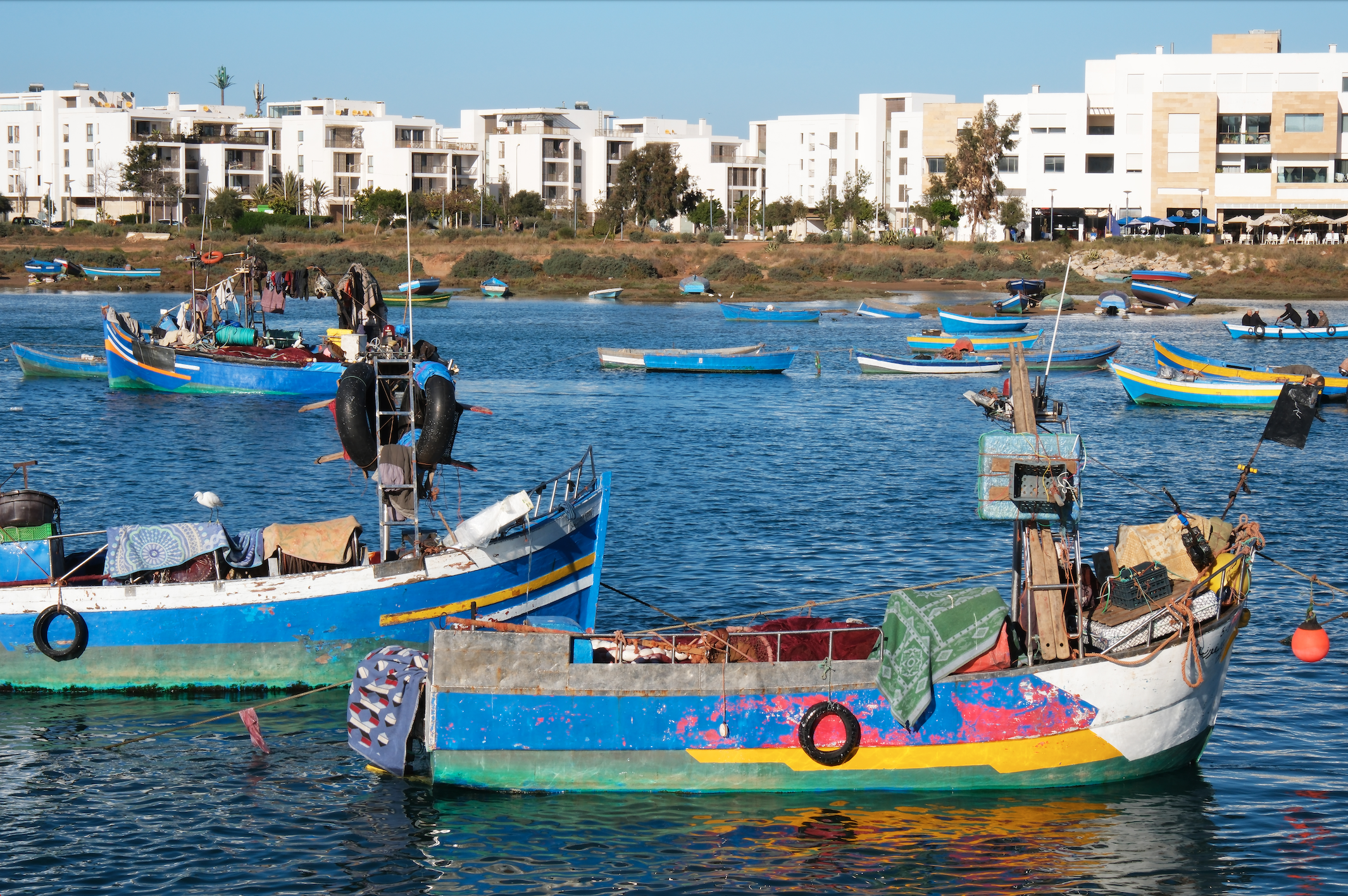
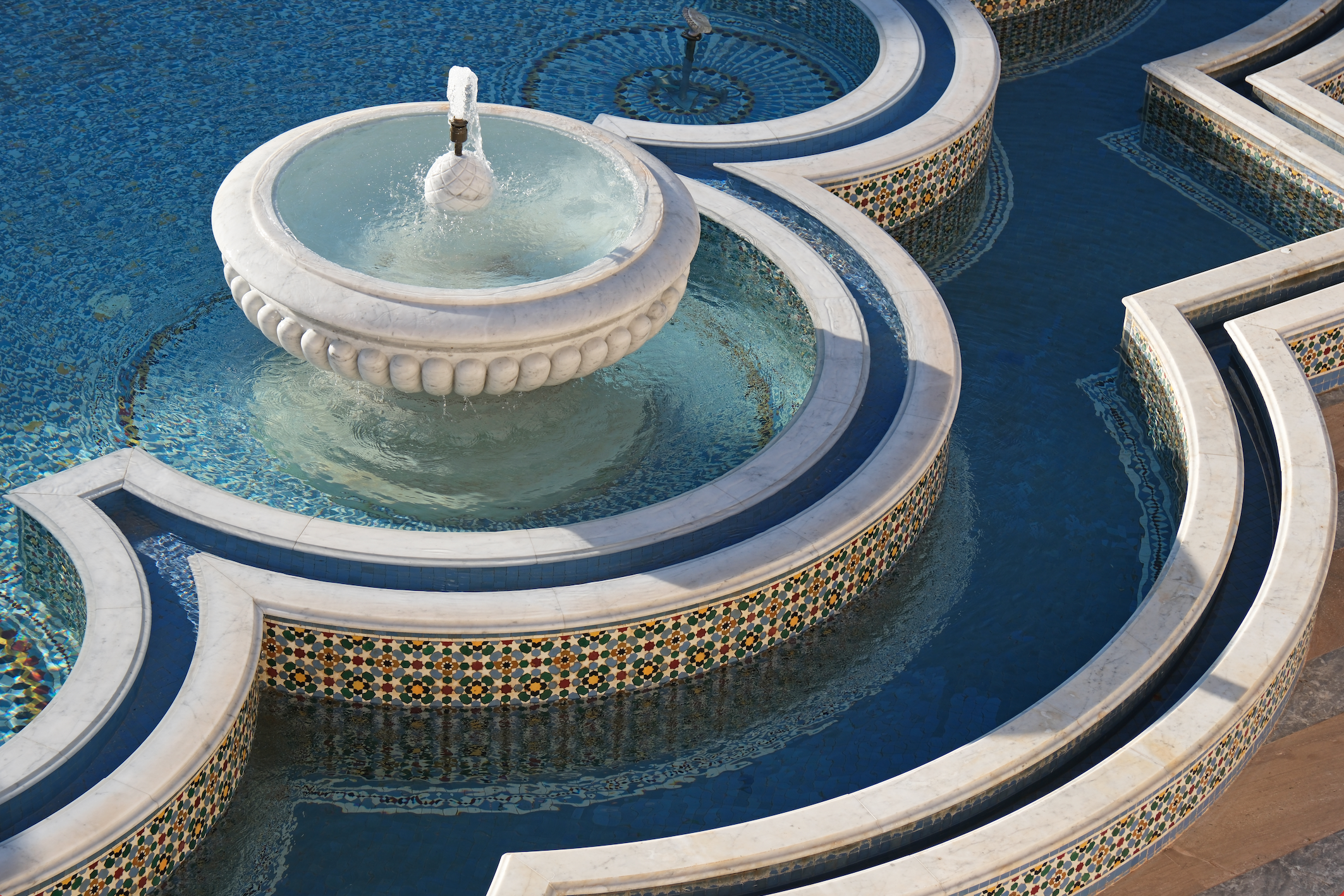
There were also a number of pools and fountains throughout the area. Wherever we went in Rabat, it seemed we were never too far away from some form of water.
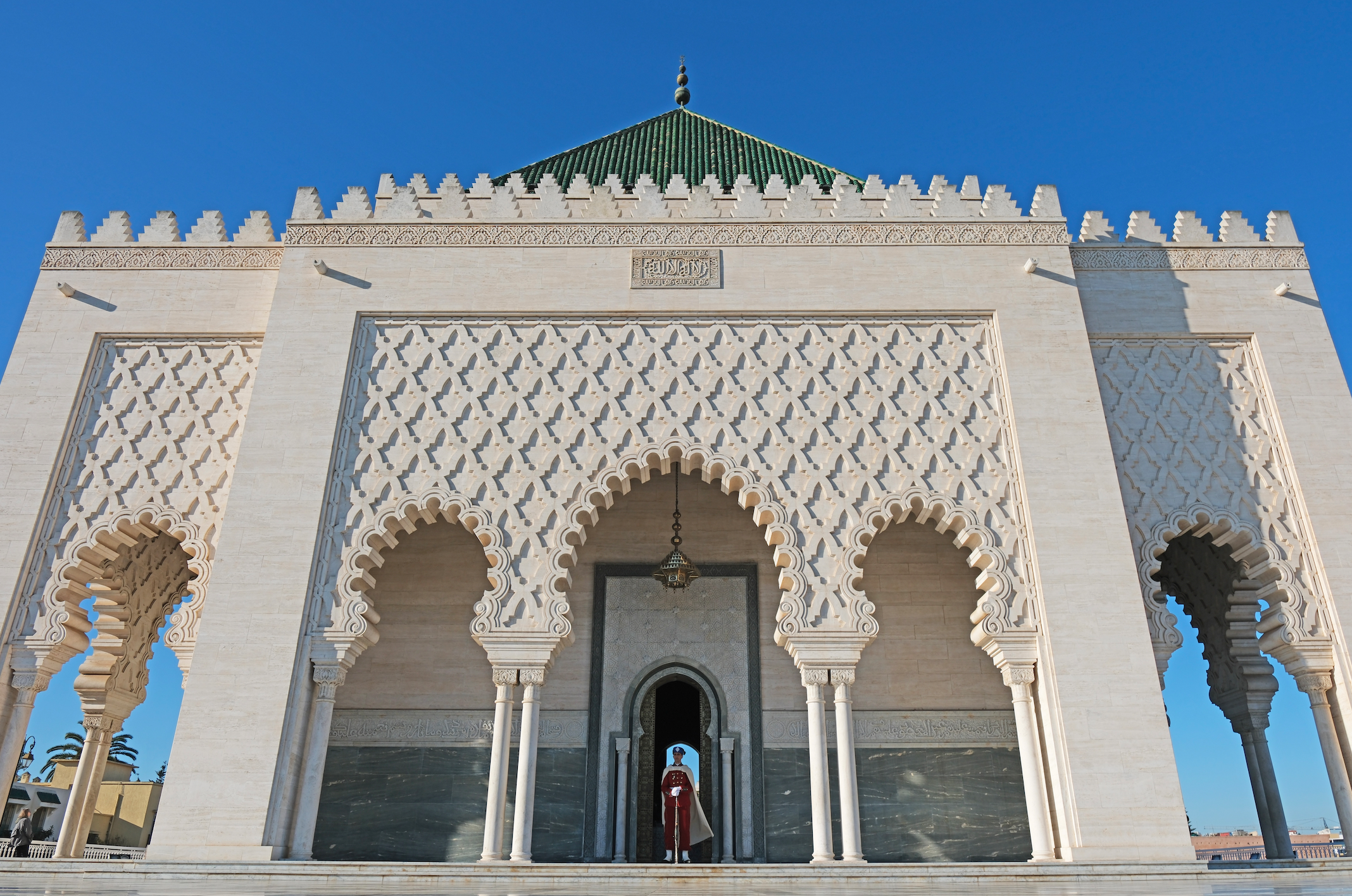
Right next to the Hassan Tower sits the Mausoleum of Mohammed V. It was commissioned by King Hassan II to honor his father, King Mohammed V – the leader who guided Morocco to independence. And the mausoleum also houses the tombs of his sons, King Hassan II and Prince Moulay Abdellah.
The mausoleum was completed in 1971. Its exterior showcases white Italian marble topped with a green-tiled roof, symbolizing Islam. Inside you’ll find intricate mosaics, carved plaster, and a grand dome beneath which lies the white onyx sarcophagus of Mohammed V. The continuous presence of the Royal Gard adds to the site’s solemn atmosphere.

From there, we continued our walk to the Mohammed VI Museum of Modern & Contemporary Art. This museum ended up being a lot of fun – instead of having a number of unrelated pieces of art, it had three exhibitions.
The first was dedicated to the CoBrA art movement – an experimental, free-spirited collective that rejected rigid academic traditions in favor of raw, expressive creativity. Founded in 1948 by artists from Copenhagen, Brussels, and Amsterdam (hence the name), CoBrA was all about spontaneity, vibrant color, and an almost childlike sense of artistic freedom.
The exhibit walked us through the movement’s history, featuring works from its key figures – Asger Jorn, Constant, Christian Dotremont, and others – each piece reflecting CoBrA’s energetic, untamed spirit. While I found the whole display fascinating, the one piece that truly resonated with me was Red Mask by Egill Jacobsen, a Danish painter whose bold use of form and color stood out even among such an expressive collection.

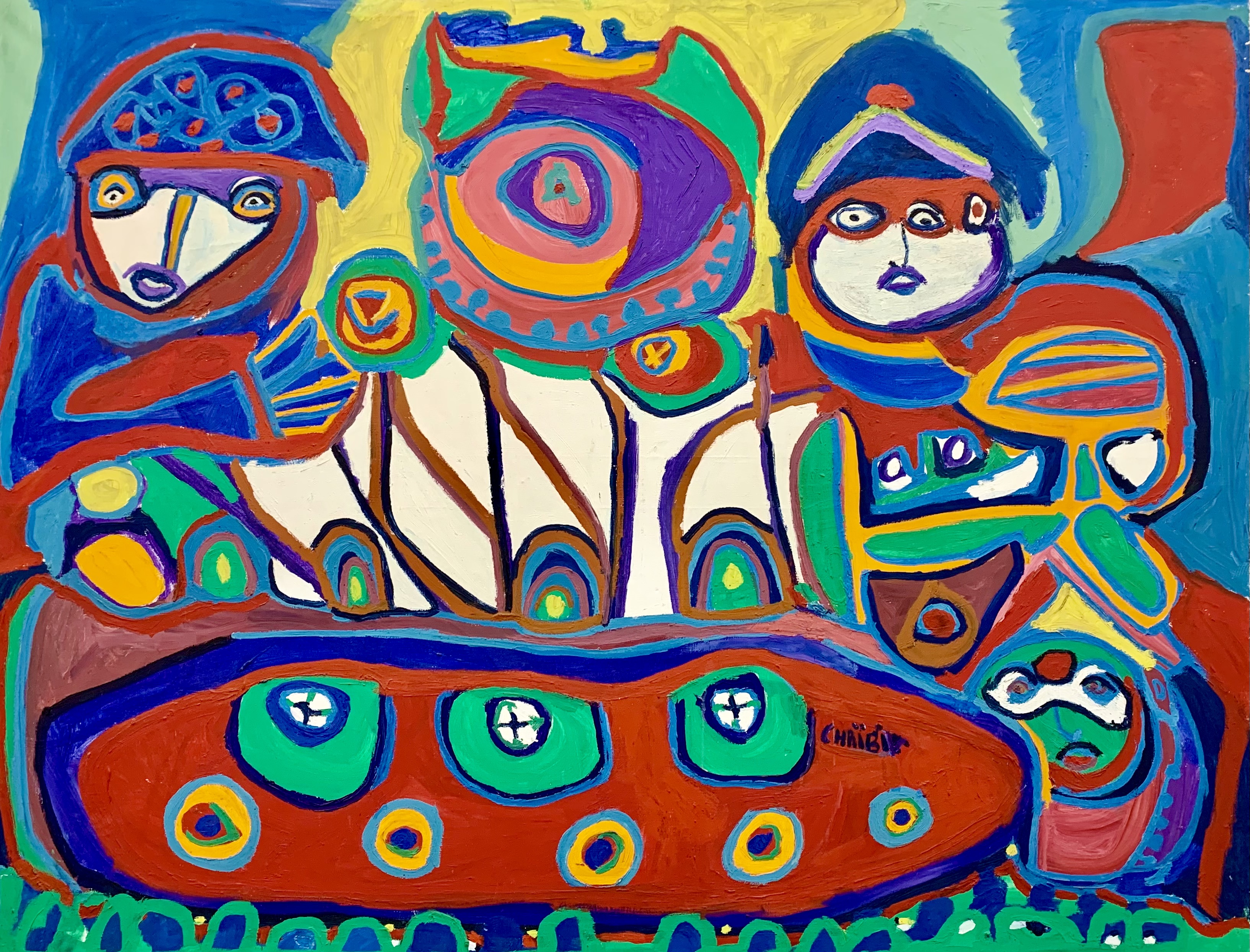
If the CoBrA movement embraced raw, instinctive creativity, then Chaïbia Talal’s work was a kindred spirit – though deeply rooted in Morocco. The second exhibition centered on Talal, a self-taught artist who first picked up a paintbrush in the early 1960s. She created vibrant, almost dreamlike paintings that reflected the symbols and traditions of her rural upbringing.
Though she emerged as a painter long after CoBrA, the exhibit highlighted their shared embrace of bold color, intuitive composition, and uninhibited expression. But while CoBrA was a collective, Talal carved her own space in the art world, gaining international recognition by the mid-1960s and becoming one of Morocco’s most celebrated artists.
Two of my favorite pieces were The Fishermen and The Twins.

The final exhibition we saw featured the work of Barthélémy Toguo, a Cameroonian artist whose practice merges art with social action. Though best known for founding Bandjoun Station – an art center and residency in Cameroon that blends artistic creation with community-driven projects – his time in Morocco deeply influenced his work.
During his residency, Toguo engaged with Moroccan artistic traditions, incorporating elements of local craft into his ceramics, textiles, and paintings. His surreal compositions, often dominated by fluid blues and greens, merge human, animal, and plant forms in ways that feel both dreamlike and symbolic. My favorite of his pieces were Rêverie Marine II, Protecting the Ocean, and Rêverie Marine IV.


After spending a couple of hours in the museum, we were ready to stretch our legs with a walk. One thing we loved about Rabat is how walkable the city is. We made our way to the Kasbah des Oudayas, passing through the Andalusian Gardens before stepping inside the kasbah itself. Unlike the lively markets of Marrakesh or Tangier, the atmosphere here was calm – there were a few stalls and shops, but nothing particularly different from what we’d already seen.
After browsing briefly, we continued to the overlook, where we stood at the edge of the kasbah, taking in the view of the Bou Regreg River meeting the Atlantic Ocean, with Salé just across the way.
From there, we walked back through the kasbah to its entrance, where we had the option of heading into the Medina. Instead, we decided to follow the road along the river, passing the Hassan Tower and Mausoleum on our way toward Chellah.
It was one of those afternoons where the city felt relaxed and open, with a pace that invited wandering. But even in its stillness, Rabat was clearly evolving. We passed vast open spaces where young trees had recently been planted, part of the city’s long-term transformation ahead of hosting major tournaments like the 2025 Africa Cup of Nations and the 2030 FIFA World Cup. With new green spaces emerging and waterfront paths stretching ahead, Rabat felt like a city investing in its future, while still holding on to its quiet charm.
We arrived at Chellah about an hour before sunset.

Chellah, like the kasbah, is also considered part of the city’s UNESCO World Heritage Site. The fortress was established around 40 CE when the Romans founded the city of Sala Colonia. The forum and triumphal arch are still visible today. However, in the 13th century, the Marinid rulers transformed Chellah into a royal necropolis, constructing mosques, mausoleums, and other significant structures.
Today, visitors to Chellah can wander amidst ancient Roman ruins intertwined with medieval Islamic architecture. The site’s serene gardens, frequented by nesting storks, offer a peaceful retreat. It’s a stunning fusion of history and nature and provides a unique glimpse into Rabat’s rich cultural tapestry.
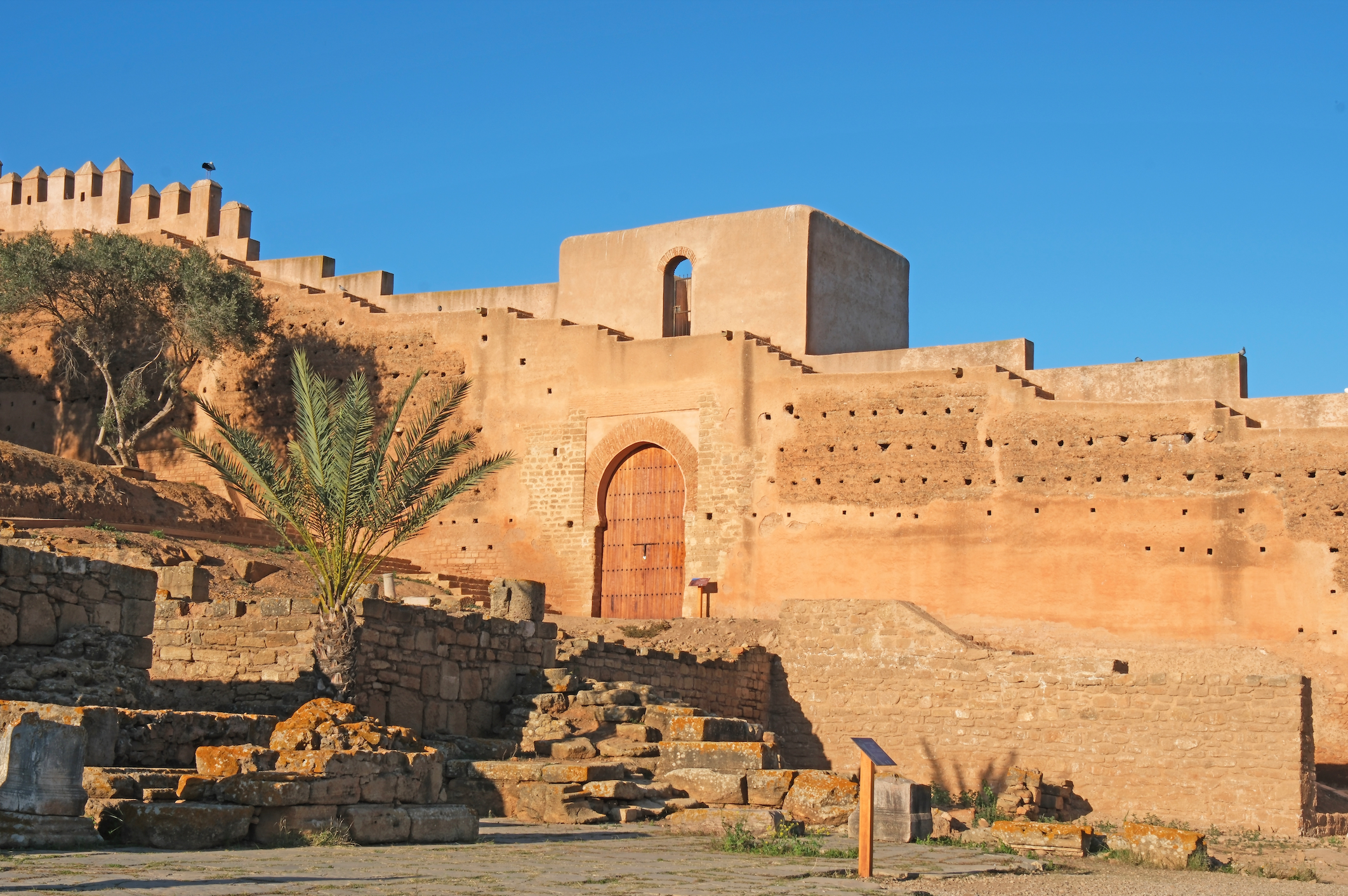
After Marrakesh, Rabat was my favorite city to photograph. Between its red sandstone walls, riverfront views, and the modern touches of its museum district, it offered an incredible blend of ancient and contemporary influences. The food scene was just as varied.
My favorite meal was at Boho Café – mostly because I’m a sucker for brunch! We enjoyed homemade bagels, avocado toast, a smoothie bowl, and fresh juices. I just saw that they’re currently closed for renovations, so hopefully they reopen soon! We also had some great Indian food at Clay Oven Rabat (though, unfortunately, I later got food poisoning at their sister restaurant in Casablanca). We ventured out a ways to get here because it’s located in the Hay Riad neighborhood, but the area reminded us so much of Amman’s Abdali Boulevard that we had a blast.
Not every meal was a hit, though. Sufra, which specializes in Middle Eastern cuisine, was a letdown – some of the dishes felt uninspired, and the ingredients didn’t seem especially fresh. On a brighter note, we had a lovely experience at Le Deck at the Fairmont. The vegetarian orzo was unique and their signature cocktails were a lot of fun – like the Hesperides Garden, a refreshing blend of gin infused with citrus fruits, bergamot juice, lime juice, elderflower, and soda. Plus, the weather was perfect, so it was a lovely location to just relax and enjoy the fresh breeze off the water below.
Looking back, Rabat was our favorite of the five cities we visited in Morocco. It was beautiful, easy to navigate, and full of character. There was plenty to see, but the city never felt overwhelming. Whether we were walking along the river, exploring historic sites, or just soaking in the atmosphere, everything about Rabat felt effortless in the best way.
 Abroad With Ashley