
There’s a certain kind of trip you don’t wish on your worst enemy. One where nothing goes right, where nobody know how to do their job, and where even the basic act of getting from Point A to Point B becomes an endurance test. Tunisia was that trip for us.
But, we did walk away with some incredibly unique experiences:
-Want to sleep on a red-eye flight? Too bad! We’ll keep the lights on and serve foul-smelling meat trays at 1am.
-Need to cancel a flight? No worries! We’ll cancel half of it and let you figure out the rest.
-Hotel phone not working? No problem! Just stand in the lobby for hours while Expedia debates calling your personal phone number instead.
Ok, let’s turn the snark down a few notches and start at the beginning.
We moved to Senegal in August and learned that the Dakar airport is notoriously difficult to get to. What should be a simple 45-minute drive often takes two to three hours and has even taken one of our colleagues over four. Which means if you following the golden rule of arriving at the airport three hours before an international flight, you have to leave your home six hours before your flight takes off.
Because of that fact, we’ve been trying to stick to as many direct flights as possible to cut down on travel time. It also means we’ve been taking some pretty questionable airlines. Our first mistake was booking a flight on Tunisair. We could have flown Air France up to Paris and back down to Tunis, but we wanted to save time.
Only I’m not really sure that we did. Our Tunisair flight took off late and wasn’t quite as direct as we initially thought. Instead, we had an hour-long stopover in Guinea, which was a complete disaster. First off, our seatmate wanted to jump over us to get in the line of people waiting to disembark the plane. Only there was nowhere for him to stand, so he would have been in my lap during the wait. We literally had to block him with our bodies until I was able to stand up and let him through.
Then the flight was delayed from leaving because a significant portion of people getting on the plane didn’t know how assigned seats work. They kept having to get up and reshuffle when someone had the audacity to want to sit in their selected seat.
Things finally quieted down and we were back in the air. I was ready to catch some shut eye, since we were creeping up on midnight. Instead, Tunisair thought that would be a fantastic time to serve a meal. I stayed awake long enough to get some water (which they hadn’t served on the first leg of the flight), before trying to fall asleep surrounded by the wretched smell coming from the “food” trays – surprise, surprise, there were no vegetarian options.
We finally landed in Tunis at 6am, with an unfortunately long wait ahead of us. Our next flight was to Tozeur, but it wouldn’t be leaving for eight hours. We had a breakfast of pb&j sandwiches and mealy apples before going to see when we would be able to check into our flight.
After searching the airport for the teeny-tiny domestic flight check-in counters, we were told with zero apology that our flight to Tozeur had been cancelled. And that our return flight on Thursday would be four hours delayed. When we asked why we would possibly need a return flight from a location we couldn’t get to, we were met with blank stares.
Thus began my six-hour phone saga. I started with our resort in Tozeur. The Anantara Sahara Tozeur Resort was charging us $50 for a ride from the Tozeur airport to the resort. But for $300, they would pick you up from the Tunis airport. Problem was, all of their drivers were already booked. They ever so “helpfully” offered to send a driver to come get us in Tunis the following week (this exchange took over an hour since our first call got cut off, then we had to buy a local SIM card, and finally, we had to wait until 8am when their concierge arrived).
Next up was a call to our hotel in Tunis. We weren’t supposed to check in for five more days, but since we were stuck in Tunis, we figured we’d find out if we could switch the days. The woman at the front desk of the Mövenpick du Lac Tunis was slightly more helpful – we learned that since we’d booked through our Chase credit card, the room had officially been purchased though Expedia. The hotel had open rooms, so they were willing to move the reservation, but the request had to come from Expedia.
Which meant call three was to Chase. This time, we had two requests. First, that our Saturday return flight be changed to Tuesday (we didn’t need to spend six nights in Tunis and we weren’t interested in coming up with new activities to do in Tunisia). Second, that they update the Mövenpick hotel reservation. I was told both requests could be accommodated with no issue.
We waited one hour, then another, for confirmation. It turns out that Chase had explained the issue to Expedia, but Expedia was having an unusually difficult time getting anyone from Mövenpick on the phone. We tried ourselves and kept getting rerouted by machine, never speaking to an actual person. We decided to simply sort things out in person.
After a quick, but overpriced taxi ride, we finally made it to our hotel. Things were starting to look up, right?
Wrong.
The woman I spoke to over the phone was nowhere to be found and instead I got not one, but two incredibly unhelpful men. They told me that they would need to speak to an Expedia representative by phone and yet every time I spoke to Chase, they relayed the fact that Expedia couldn’t get through. The hotel refused to consider using email for confirmation of the change. An hour later, Mövenpick admitted they might be having a problem with their phone line. Chase offered to have Expedia call my cell phone, which I could then hand over to the front desk, but Expedia didn’t consider that proper. Fair enough.
Instead, we waited another hour. When I walked back to the front desk for what must have been the dozenth time, I was finally told that Expedia had in fact gotten through, but the hotel manager had rejected the request to change the dates. Even though they had open rooms. And we were at the hotel. And our flight had been cancelled.
I was told we would be welcome to book additional nights, but we would still be expected to pay for our previous booking. We walked the fuck out.
Chase did succeed in moving our return flight from Saturday to Tuesday, so we just had to find somewhere to stay for two nights. Our other top choice in Tunis had been The Residence. We made our reservation online and then took a Bolt over – the Estonian response to Uber (much more affordable than the taxi).
We stepped into the Residence and it was like night and day.
New travel experience:
-Want to check into a hotel last minute? It’s actually ok! At the Residence, they’ll upgrade your room and hand you tea like civilized human beings.
When we went to check-in, they asked if we’d just made the reservation. When we explained our cancelled flight, they apologized for the inconvenience and sat us outside on their absolutely stunning veranda while they made up the room.
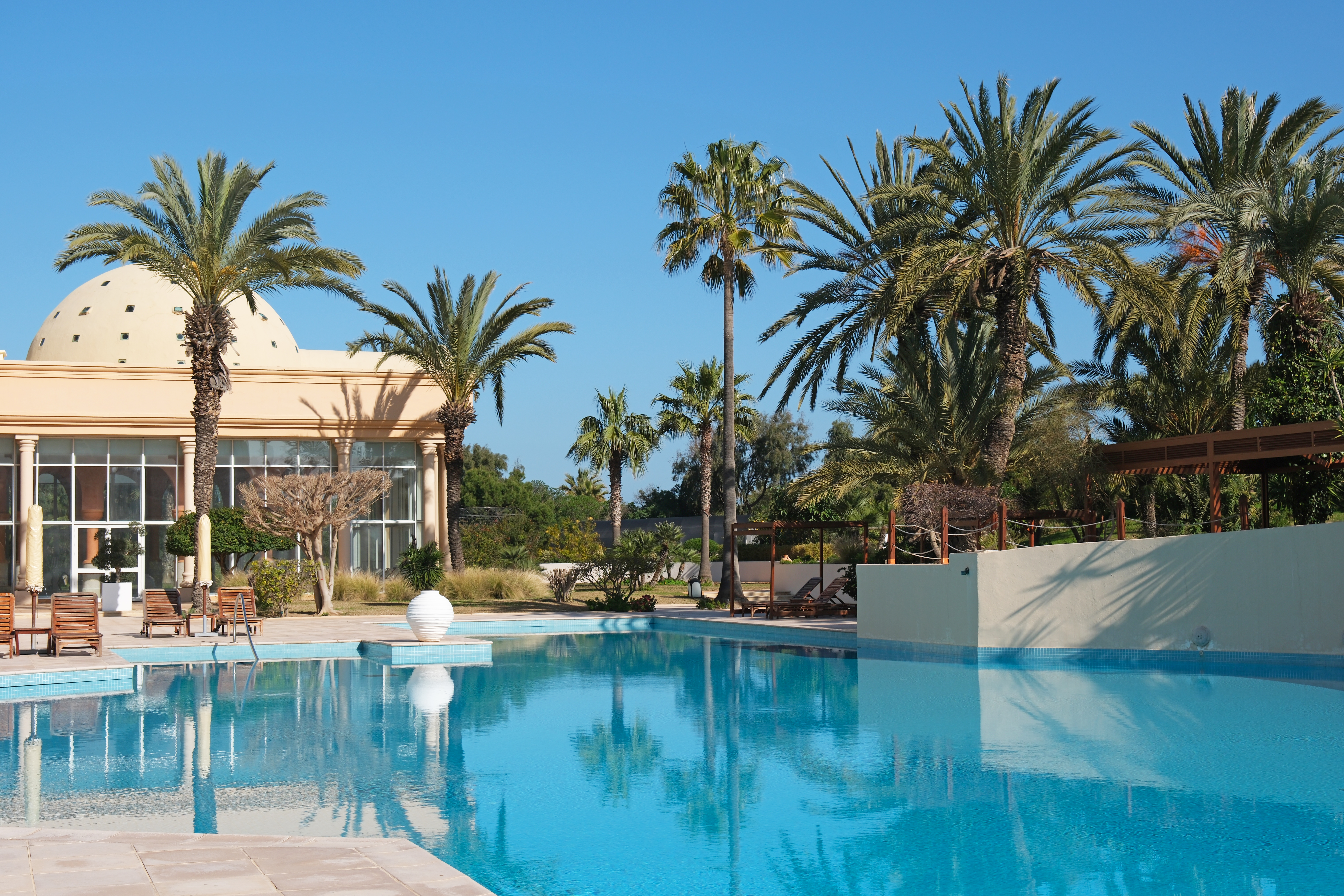
After bringing us refreshments, they explained that they had upgraded our room since our day had been so horrific (they didn’t know the half of it), and I nearly kissed the woman.
We ate a late lunch at L’Olivier, the hotel’s Mediterranean restaurant, swam in the heated indoor saltwater pool, and ordered room service for dinner – we felt like we’d been let down enough for one day and didn’t want to leave our only positive experience in Tunisia.

The next day, however, we decided to venture into the city. We had a list of sites to see, since we’d always planned on exploring Tunis, albeit later in the week.
Our first stop was Carthage. Once one of the most powerful cities in the ancient Mediterranean, it was founded by Phoenician settlers from Tyre (modern-day Lebanon) around 814 BCE. Over time, it grew into a dominant maritime and trading power, controlling areas in North Africa, Spain, and parts of the Mediterranean.
The Carthaginian Empire was most famously led by Hannibal, who nearly defeated Rome during the Second Punic War from 218-201 BCE. However, Rome ultimately destroyed Carthage in 146 BCE, razing the city and later rebuilding it as a Roman colony.
Under Roman rule, Carthage became a prosperous city once again, featuring grand architecture, aqueducts, and large public spaces. It remained an important urban center well into the Byzantine period before eventually declining. Today, its ruins are a UNESCO World Heritage site.
We decided to start at the Carthage Museum, which happened to be closed, but for 12 Tunisian Dinars ($3.75 USD), we got access to nine other sites. The museum site also includes panoramic views of Carthage, making it an enjoyable place to map out our stops. It is also the location of Brysa Hill. The heart of ancient Carthage, Byrsa Hill was the citadel and administrative center of the city. It featured temples, palaces, and fortifications.

We meandered our way down to the water front to take a look at the Punic Ports before heading back to visit the Antonine Baths. There wasn’t a lot to see on our walk, but it felt so good to just be out, stretching our legs. We’d been living through Harmattan in Dakar since December (with a respite in Morocco) and were so happy to trade in the dusty winds for clean, fresh air.
If I’m being honest, we didn’t spend a lot of time at the baths. We seemed to have arrived on field trip day and there were large groups of school children exploring the site. Built in the 2nd century CE, these were among the largest baths in the Roman Empire, second only to the ones in Rome. But we weren’t in teacher mode that day.
Our final stop in Carthage was the Roman Theater. A cultural and artistic venue, the theater was where plays, musical performances, and orations took place. The theater is still in use today, so while a few aspects of it are original, most of the structure has been restored.

There were other sites we overlooked, some intentionally, others less so. Near the museum is the St. Louis Cathedral (Acropolium), and while I was able to photograph it below, it has been closed to the public for some time.
We also missed the amphitheater because I don’t think either one of us realized that it was a separate site from the Roman Theater. The amphitheater was constructed in the 1st century CE and could accommodate up to 35,000 spectators. It was designed for events like gladiatorial combats, chariot races, and animal fights. Today it mostly lays in ruins.

If your goal is to hit all ten sites, it might be worth it to hire a guide for the day. However, that was never our intention – there were other parts of Tunis that we still wanted to see. With a quick stop at The Club Burger for lunch (turns out their veggie burger is really an egg sandwich with vegetables), we were on our way to Sidi Bou Saïd.
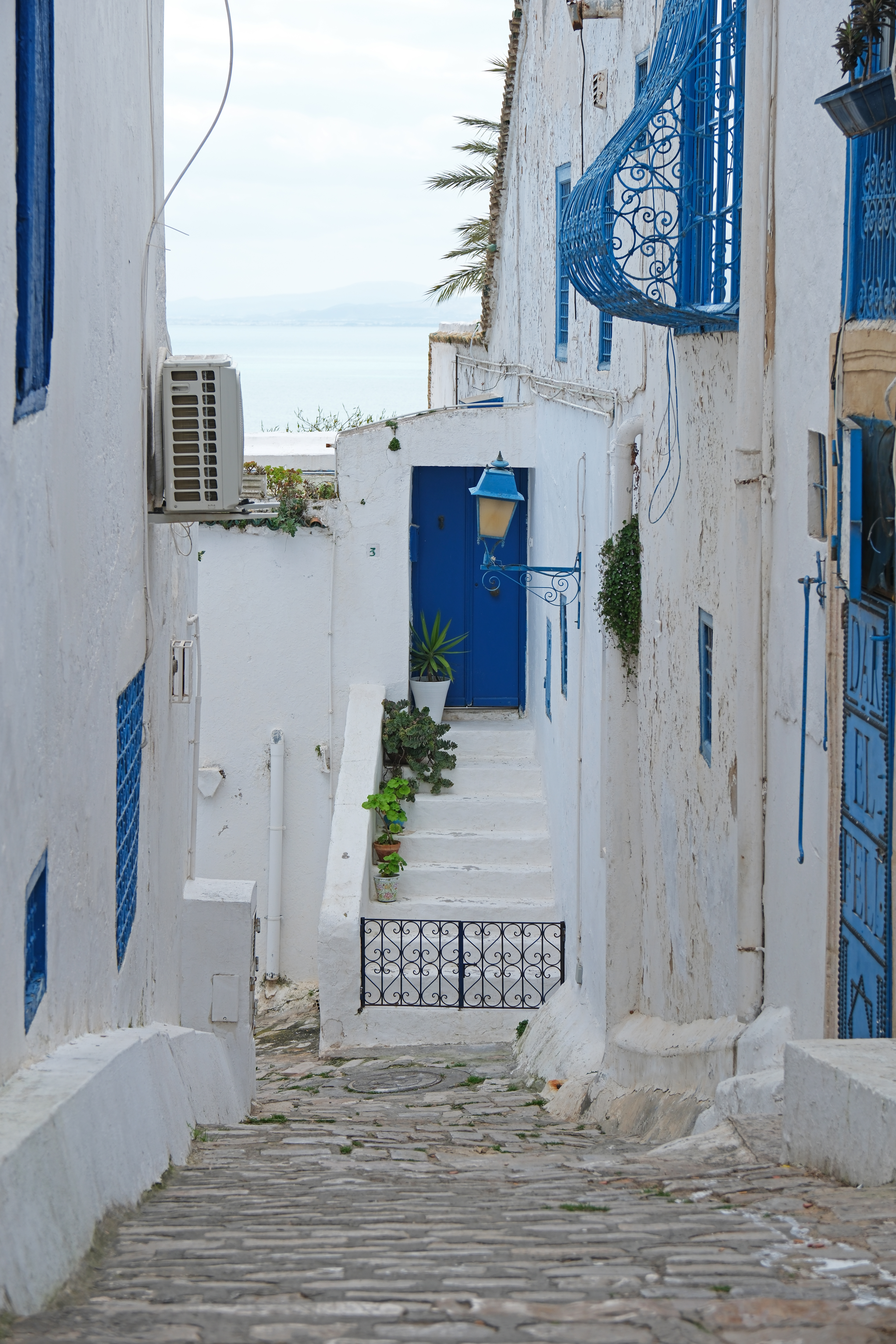
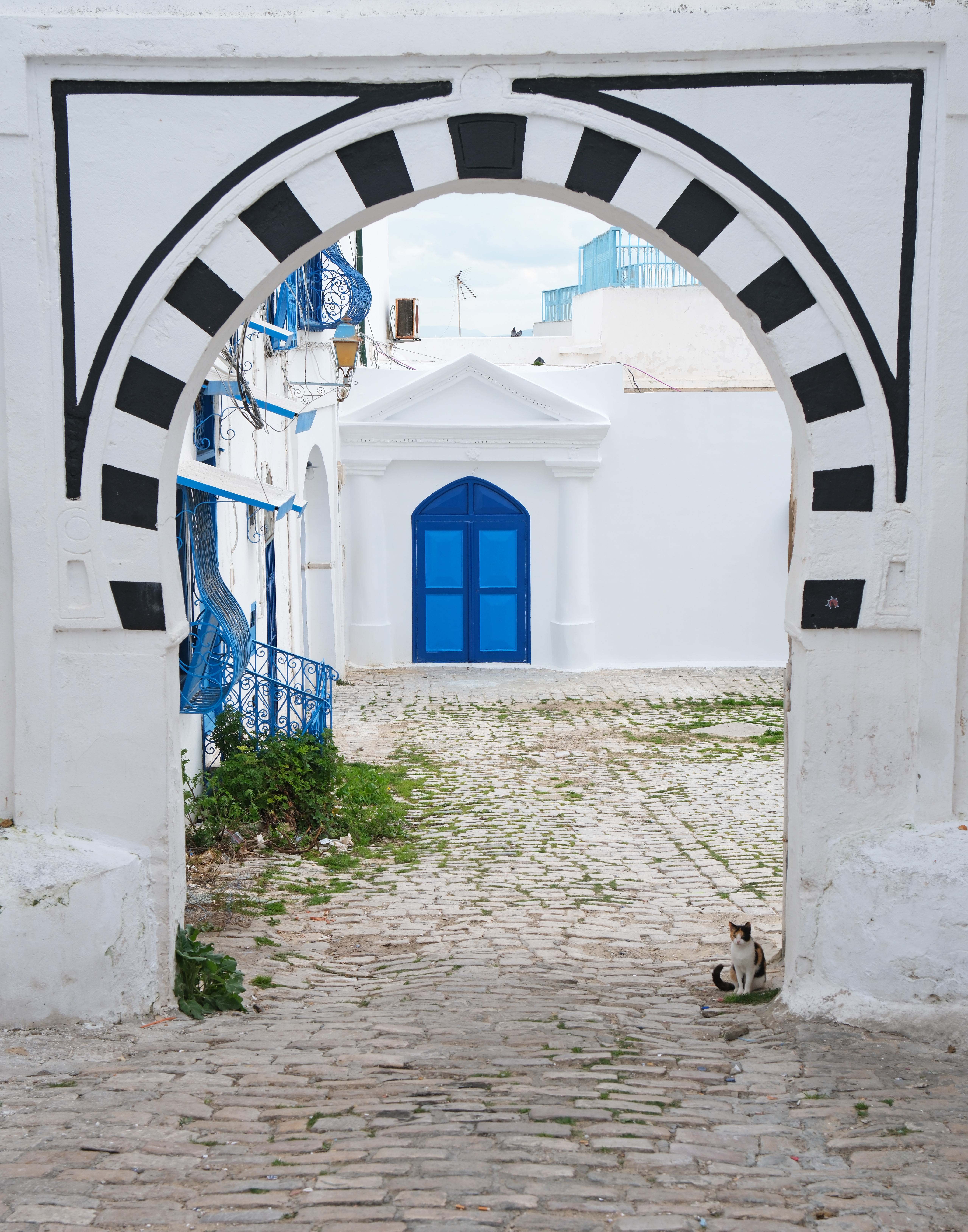
Sidi Bou Saïd is a picturesque hilltop town overlooking the Mediterranean, just outside of Tunis. It is famous for its white-washed buildings with blue doors and window frames, cobbled streets, and stunning sea views. The town has distinct Andalusian and Ottoman influences.
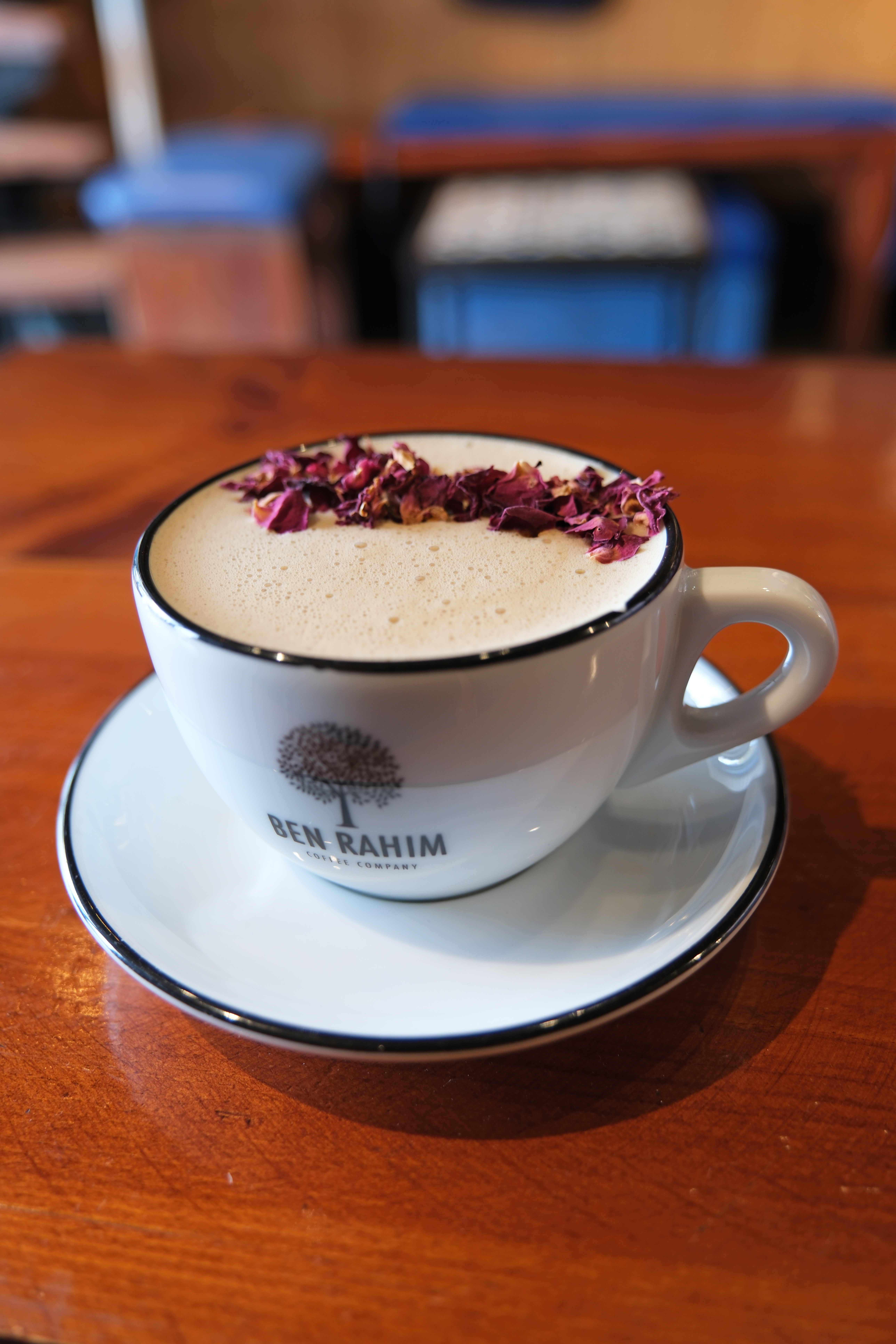
But before we wandered too far into the city, we found an incredible café to stop in and warm ourselves. It wasn’t exactly cold out, but the wind gusts could be chilly and lunch had been outside. We hadn’t planned on the stop, but Ben Rahim Coffee Company looked so inviting. I had become obsessed with espresso shots mixed with pistachio cream in Sicily, so when I saw that they had a pistachio latte on the menu, I was in heaven. Especially when they sprinkled dried rose petals on top.
Chandler ordered a cezve coffee, which is apparently what they’re known for. This traditional preparation involves slowly simmering finely ground coffee in a small, long-handled pot, creating a thick, flavorful cup with a velvety texture. The process is steeped in history, adding to the cafe’s warm and inviting atmosphere, making it a memorable stop for us. The have three rules for cezve – no sugar, no milk, and no spoons.
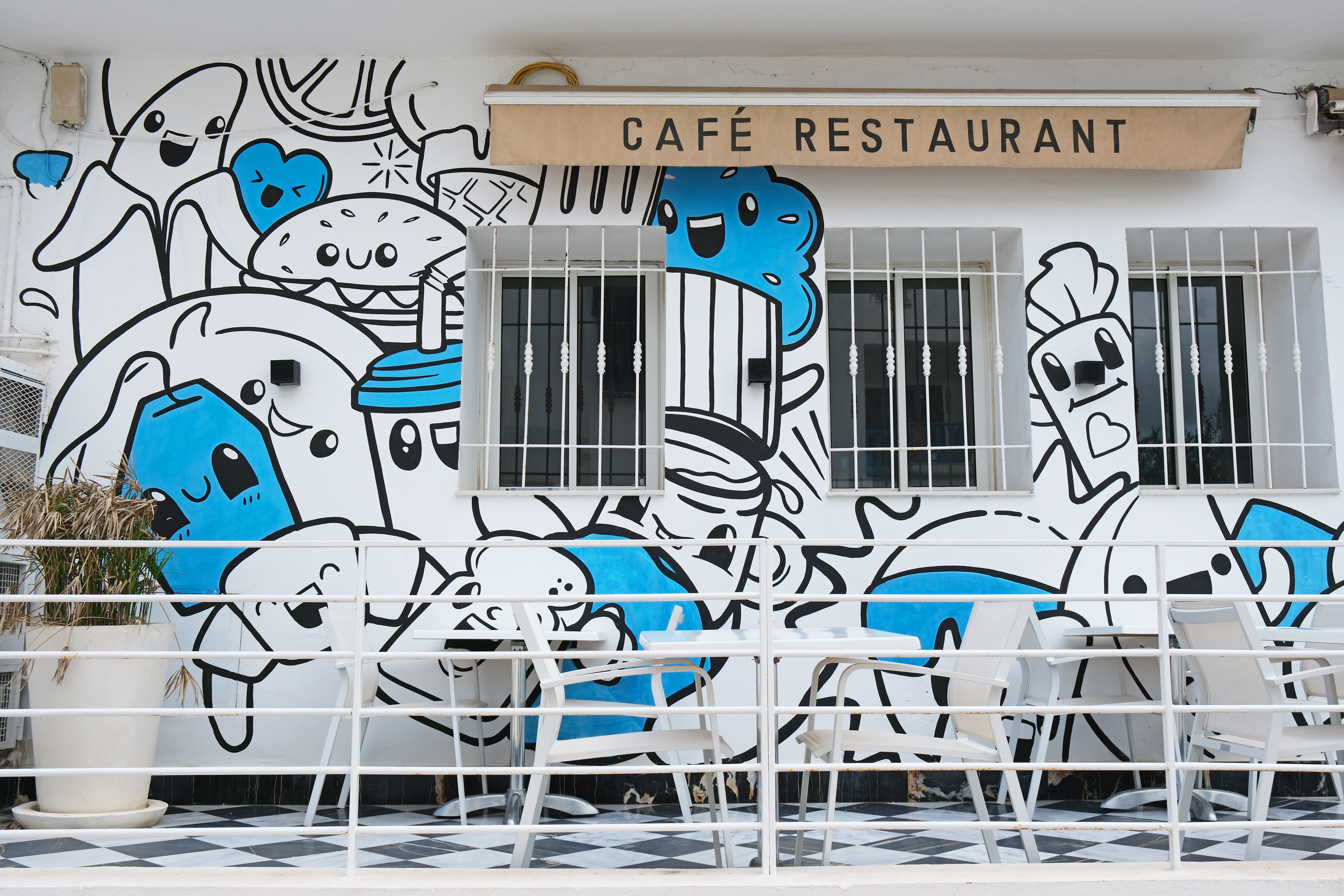
Nearby were other cafes and restaurants that were also in the city’s blue & white theme, like Little Tam, which had the truly adorable street art pictured below.
After our coffee, we made our way up Rue Habib Thameur. The main pedestrian street showcases a never ending supply of blue doors and window frames and is full of artisanal shops selling ceramics, carpets, and local crafts. Our favorite was the Renaissance Concept Store.

The farther we walked, the more picturesque the town became. Originally a religious site, the town was named after Abu Said al-Baji, a 13th-century Sufi saint who settled there.
However, in the 1920s, French painter Baron Rodolphe d’Erlanger helped establish the town’s famous blue and white color scheme, preserving its unique aesthetic.
I have to be honest, when we’d been in Morocco, I’d been a bit disappointed that we hadn’t visited Chefchaouen. Often referred to as the Blue City of Morocco, it is renowned for its striking blue-painted buildings and narrow, winding streets.
However, our day trip to Aït Benhaddou from Marrakesh had been so underwhelming that we’d been reluctant to go on another excursion. Typically, the drive only takes around two hours from Tangier, however, our hotel (and Google Maps) put the trip at over three hours while we were there and so we decided to avoid yet another day filled with transportation. The icing on the cake was when we couldn’t find a restaurant with a more exciting option than vegetable tangine or vegetable couscous.
But, of course, I’d had FOMO ever since, so Sidi Bou Saïd more than scratched that itch – and the fact that it was just a short Bolt ride away was amazing!
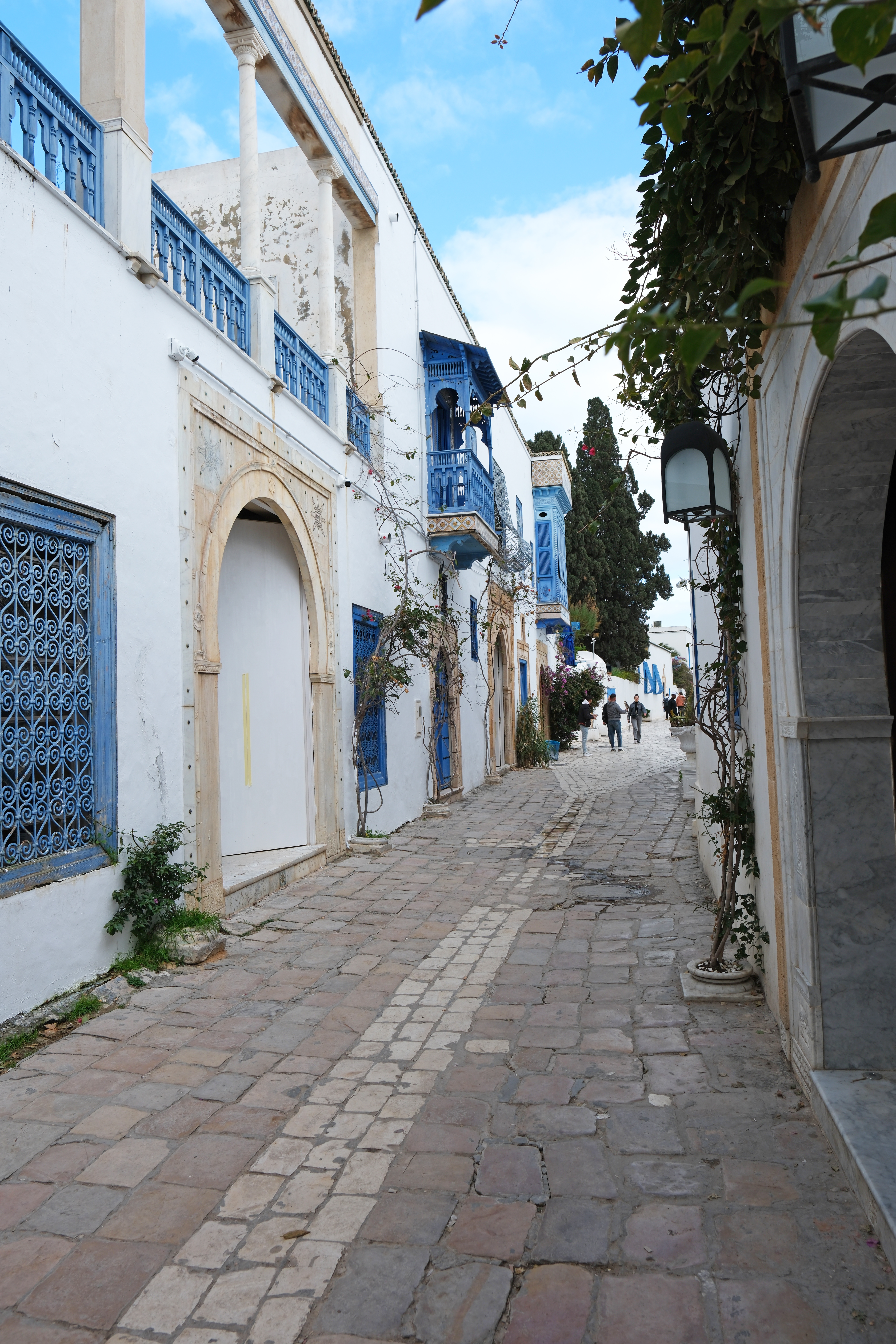
The town has a quiet, leisurely vibe, perfect for strolling, people watching, and soaking in the scenery – pretty much the opposite of our experiences in Morocco!
And the narrow streets are at a slight incline because the edge of the town is perched above the sea, offering some of the best Mediterranean views in Tunisia.

We made it to the the overlook and looked out at the Sidi Bou Saïd Marina down below. It was one of the busier spots we visited and could have benefited from a few benches, but the water below was absolutely stunning. I understand why someone would prefer coming in the summer to be able to jump right in!

As we made our way back to the hotel, I have to admit that I was so grateful that despite our disastrous start in Tunisia, we’d decided to stay a few days in Tunis before hopping on a return flight to Dakar.
I wouldn’t tell anyone that they need to fly to Tunisia to visit Carthage, but our afternoon in Sidi Bou Saïd had been downright perfect.
That evening, we opted to stay at the hotel and explore the menu at their Chinese restaurant, Li Bai. They had a page of vegetarian options, and I’m pretty sure we ordered every single one of them. It was incredible.
The next morning, as I sat by the pool at the Residence, sipping lemonade in blissful silence, I reflected on why we had come to Tunisia in the first place. It didn’t matter anymore. The trip we had planned didn’t happen, but at least we had this: Two days of peace before we ran, full speed, for the airport.
Spoiler alert: We could have left at a jog. Our flight back to Dakar was delayed by two hours and our car service wasn’t ready for us when we finally arrived, delaying our return home by nearly three hours. I would say, here’s hoping our trip to Milan in April goes better – but I already know it will.
 Abroad With Ashley