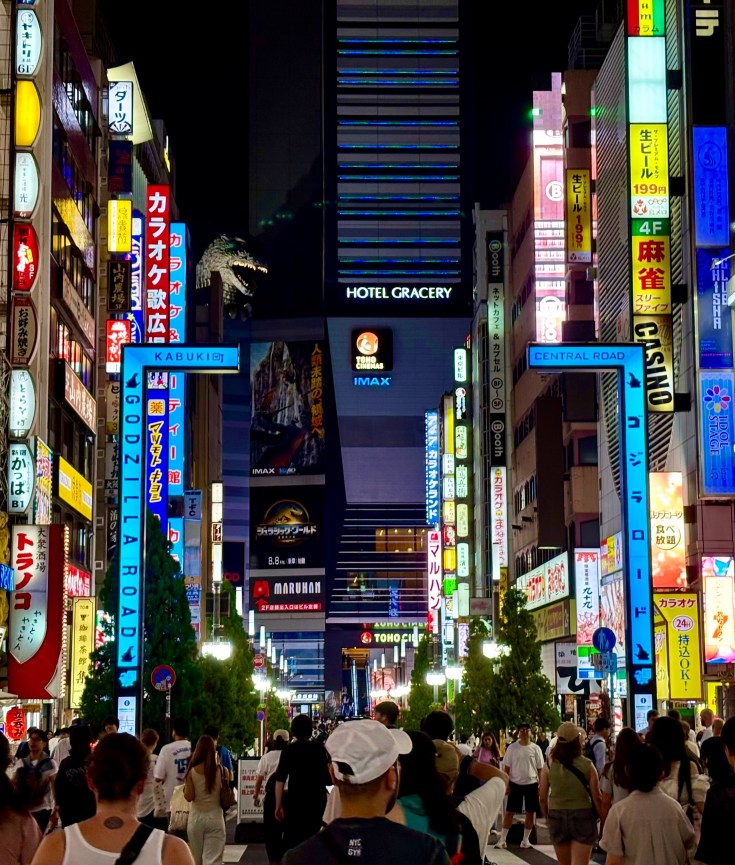
Modern Tokyo feels like the city at full volume – glowing billboards, glass towers, and streets that buzz long after midnight. Walking through these neighborhoods, the energy shifts block to block – from polished storefronts to crowded alleys – and there’s always another corner pulling you forward.
In Ginza, Tokyo’s luxury shopping district, flagship stores and high-end boutiques sit alongside polished department stores and striking modern architecture. Shibuya is pure energy, from the famous scramble crossing to its multi-story fashion hubs and food stalls. Harajuku brings its own personality, with Takeshita Street’s colorful style and Omotesando’s sleek design. Daikanyama slows the pace with tree-lined streets, boutique shopping, and a more curated feel. And in Shinjuku, the neon glow gives way to side streets packed with tiny bars, the looming Godzilla head watching over Kabukicho, and the city’s famous 3D cat.
Now, I don’t want to give you the wrong impression. Modern Tokyo isn’t all polished storefronts and high fashion. Even in Ginza, the heart of Tokyo luxury, there’s a playful side.

Take Ginza Six, for example – with flagship stores like Dior, Saint Laurent, and Valentino, it looks like a shrine to high fashion. But woven into all that glam is Big Cat Bang, Kenji Yanobe’s art installation. Giant astronaut cats float through the atrium like a miniature galaxy surrounding a nine-meter spaceship. It’s the perfect kind of whimsical spectacle that shouldn’t belong, yet feels right at home.


From there, timekeeping takes center stage and Seiko House sits at the crossroads – an art-deco landmark that’s been telling the time for nearly a century. Nearby is the the Seiko Museum, as well as the Seiko automaton clock, which opens every hour (10am-10pm), to reveal miniature musicians performing a tune.

For a quieter kind of delight, we ducked into Ginza Itoya – a 12-floor stationary paradise. We kept it practical here (notebooks for me, pencils for Chandler), but it’s dangerously easy to lose track of time.
And speaking of practical: Japan really does have a fix for everything. When our suitcases arrived at the airport with broken wheels, the Mister Minit kiosks could have replaced them, if our model allowed it. Since that wasn’t the case, we upgraded at Ginza’s Proteca store with some incredible made-in-Japan luggage.
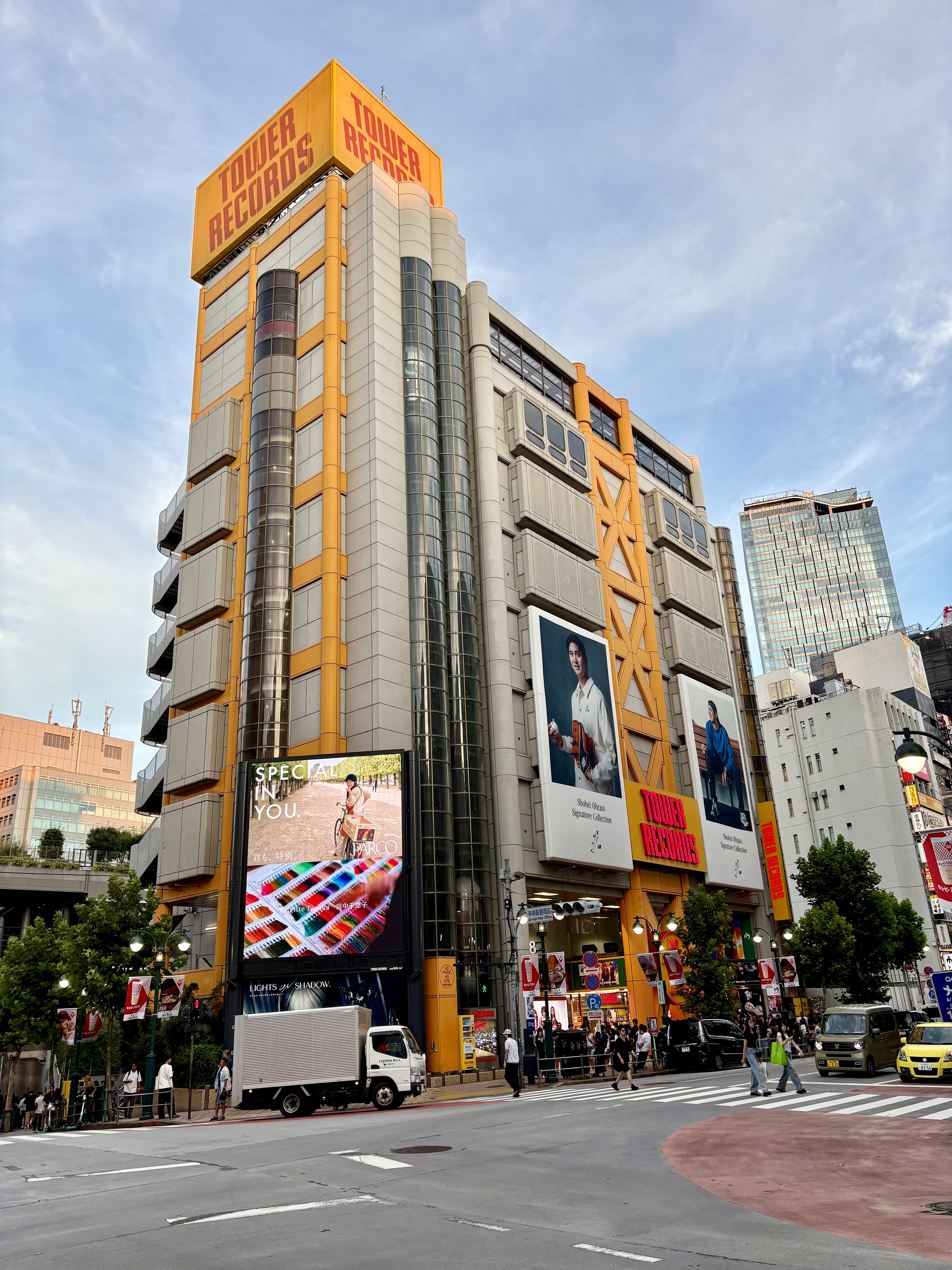
Ginza might have been nearby, but Shibuya was the neighborhood that kept pulling us back. We went several times, not because it was convenient, but because there was always more to see. Shibuya felt like Tokyo at its most energetic – bright, crowded, and packed with everything from anime megastores to tiny vintage clothing shops. It’s also home to the ten-story Tower Records, a surprising survivor in an age where music stores have vanished elsewhere. Far from being a relic, the building pulses with life – every floor stacked with CDs, vinyl, books, and even space for live shows. We lingered there longer than expected. I finished my Ado collection by picking up her most recent album and Chandler deepened his City Pop collection.

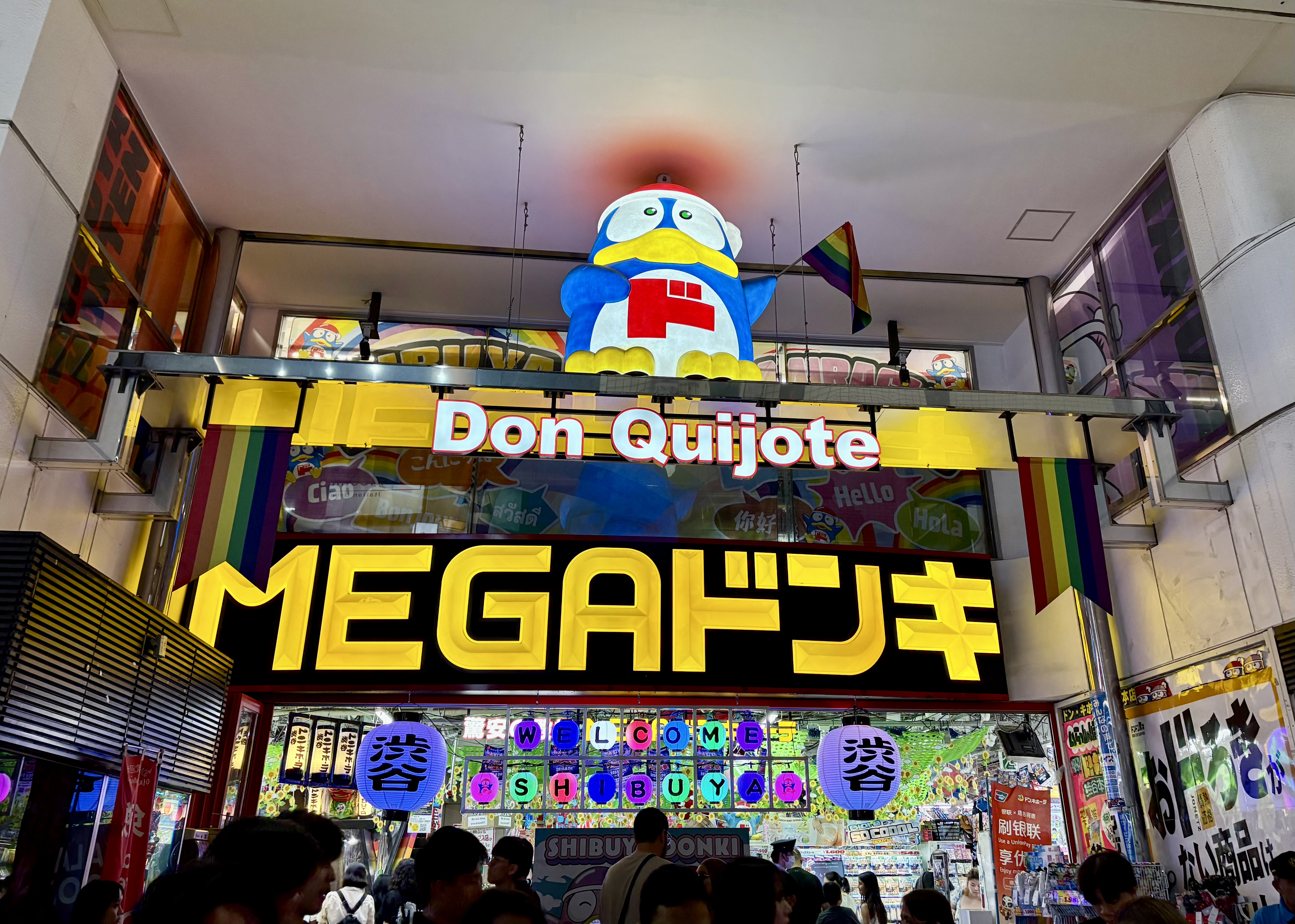
When night fell, Shibuya shifted gears. Friday gave us two quintessential experiences. First was the Mega Don Quijote, an overwhelming maze of floors stacked with snacks, toys, cosmetics, and everything in between. We spent over $100 on KitKats alone, which still makes us laugh – flavors from matcha to momiji to sake, all stacked in gift boxes. Later, we crossed Shibuya Scramble. The crossing was jammed with people, but what surprised us most was how calm it felt: No chaos, no shoving, just a flow of hundreds of bodies moving quietly across the street.

On another visit we wandered past Shibuya Stream, climbing the colorful Tie-Dye Kids staircase with its flashing neon lights. We hadn’t even planned to be there – we were chasing down some card shops – but that’s what Shibuya does best. Each time we returned, we found ourselves pulled into something unexpected, and suddenly, the list we thought we were working through had changed again. It was never frustrating; it was exactly why we kept coming back.


One morning, we made our way into Harajuku, starting with the famous Takeshita Street. I was surprised by how compact and subdued it felt. Thanks to Gwen Stefani, I had expected a riot of wild outfits and over-the-top energy, but instead the street was more restrained – and at first, a little underwhelming.
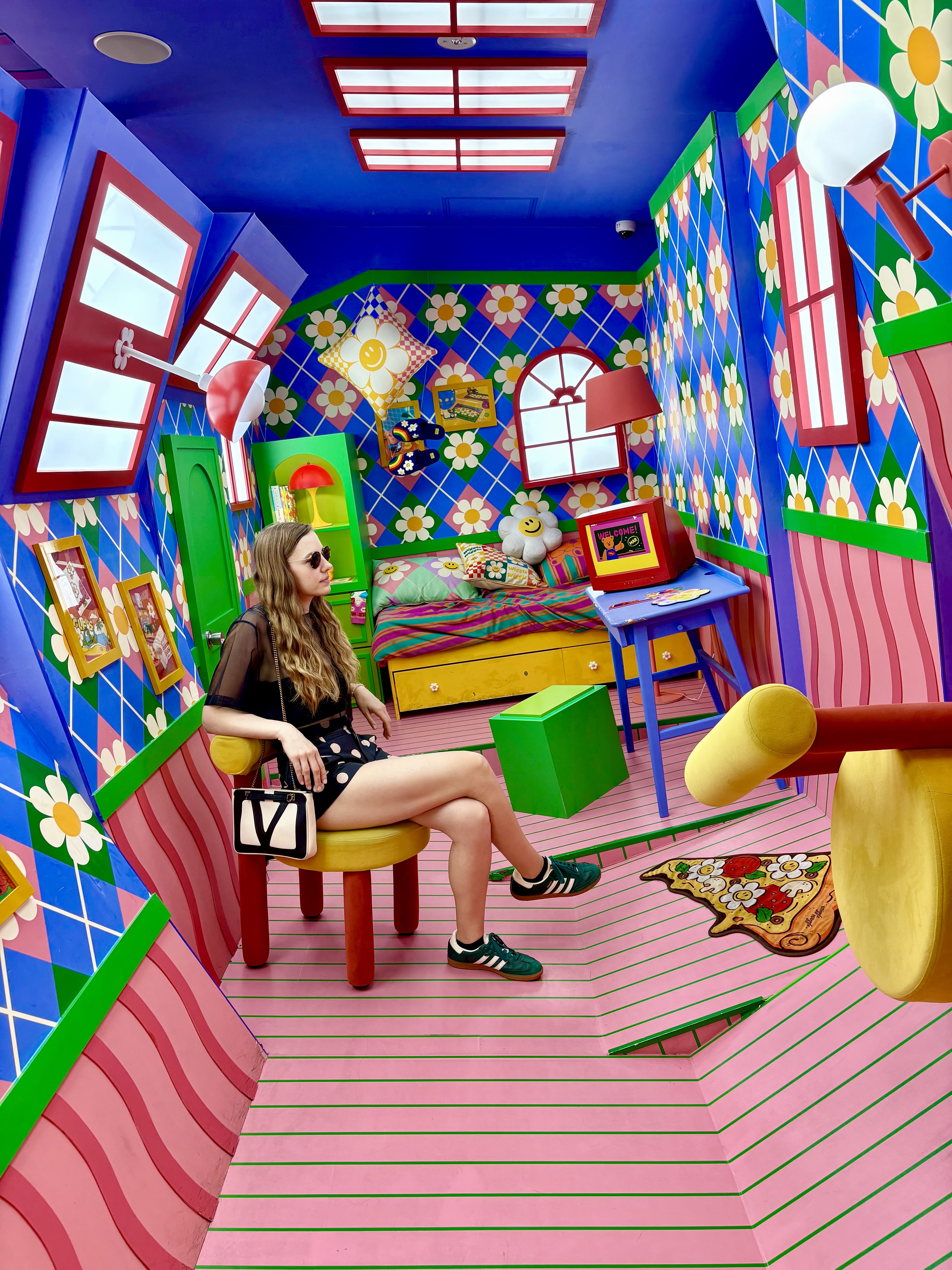
It wasn’t until we reached the far end that things turned around. We ducked into Wiggle Wiggle, a store that’s as much a photo backdrop as it is a shop. Bright colors, oversized props, playful displays – it was impossible not to love it. We picked up a few things just because the whole experience was so fun, and of course we took plenty of photos, since that’s half the point of being there.


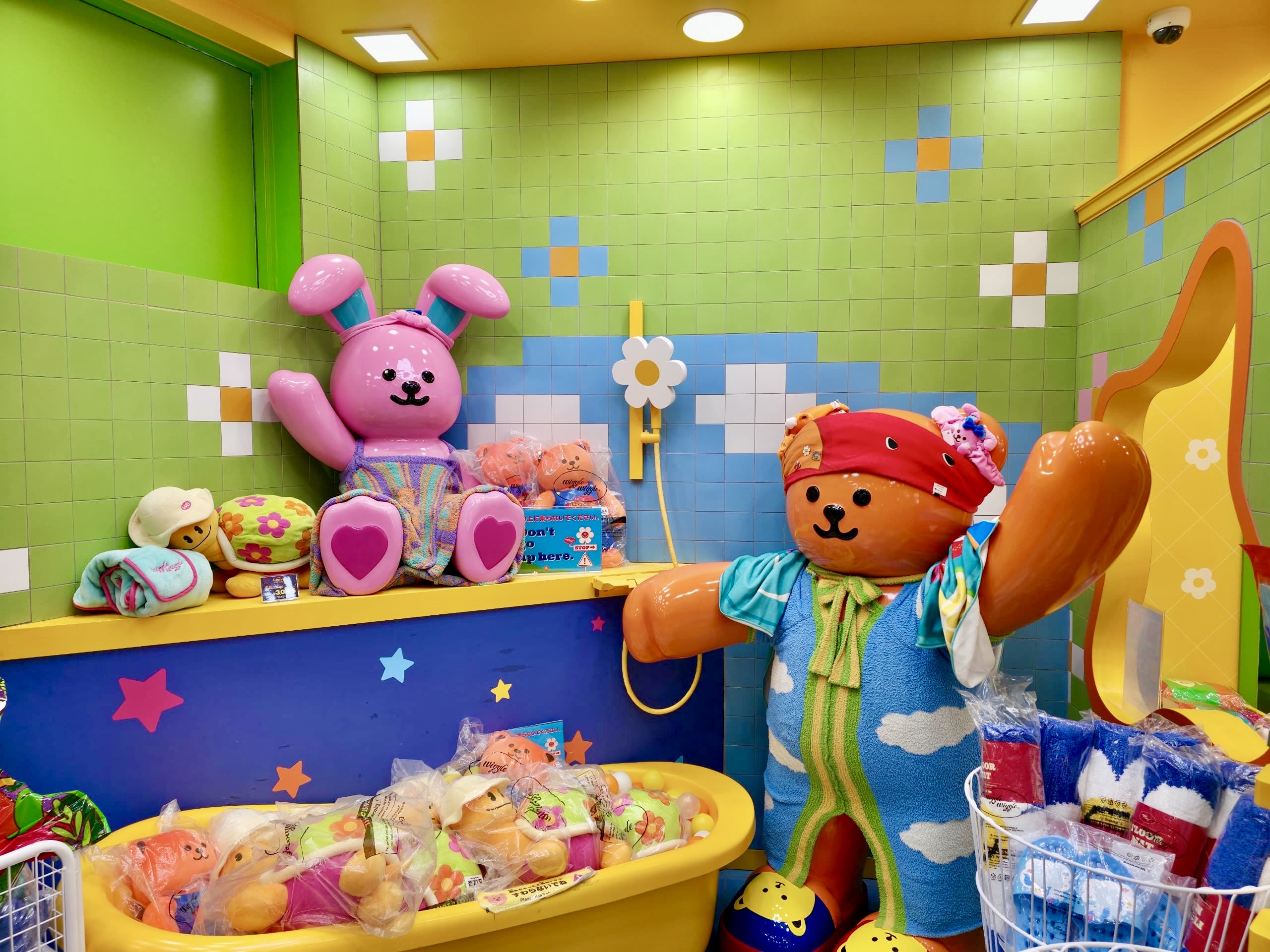
Around the same area, we also found a tiny vintage shop up a couple of flights of stairs. It was small, quiet, and full of carefully selected pieces – pretty much the opposite of Wiggle Wiggle. My best find of the day was an oversized Blackpink t-shirt featuring Lisa, which I’m still obsessed with. It was one of those lucky discoveries that makes climbing a few flights of stairs worth it.
From there we wandered into Omotesando, which had a very different vibe. High-end storefronts line the main avenue, but tucked among them are some of the most unique shops we visited anywhere in Japan. The standout was Solakzade, a vintage eyewear boutique that Chandler had pinned ages ago. We walked in thinking we’d browse, only to find out it worked by appointment. Instead of turning us away, the owner invited us to stay.
What followed was one of the most memorable afternoons of our trip: Three hours of talking about teaching abroad, trying on hand-selected frames from their collection of thousands, and laughing our way through styles from the 60s, 70s, and 80s. Chandler walked out with incredible vintage glasses and sunglasses, and I found a pair of Yves Saint Laurent sunglasses from the 80s with a rather bold choice of lens color (at least for me!). It felt more like being welcomed into a community than making a purchase – and it turned Omotesando into one of our favorite corners in Tokyo.
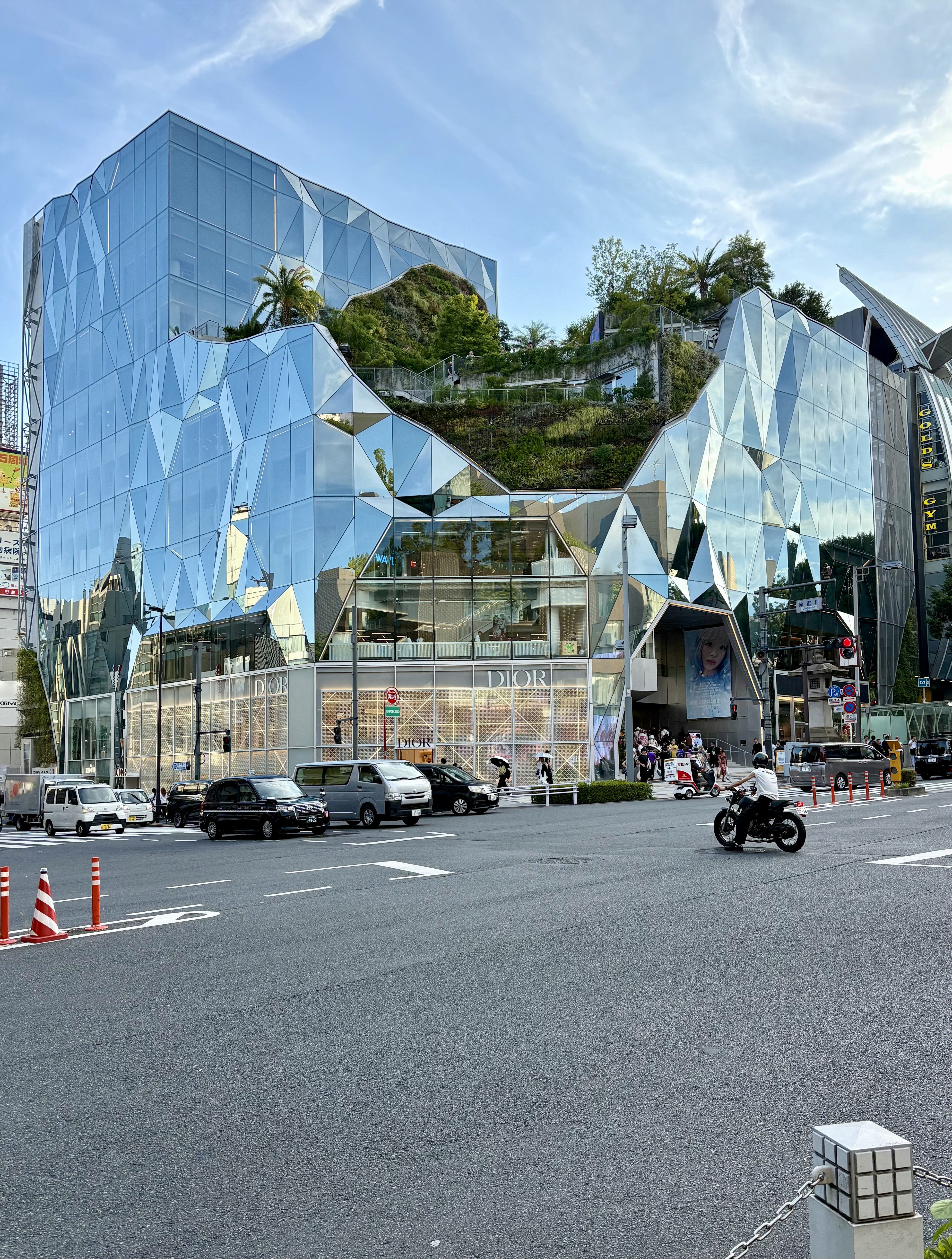

Unlike Harajuku, I walked into Daikanyama with zero expectations – and perhaps that’s why it stood out so much. It was one of the few neighborhoods in Tokyo where we didn’t feel pressed in by crowds – unlike when we were at temples like Asakusa or surrounded by neon in Shibuya. Daikanyama, by contrast, felt like it had room to breathe.
We wandered through a mix of shops: Some vintage finds, some modern boutiques, and a handful of recognizable labels like APC. Nothing overblown or flashy – just a low-key, stylish energy that fit the neighborhood perfectly. We ducked into a record store that carried some truly unique, spot-on t-shirts, and we later grabbed a couple of brownies before meandering through the side streets.
It wasn’t dramatic, and maybe that’s what made it so memorable. At the very beginning of our trip, before I had a sense of how intense Tokyo could feel, Daikanyama was this pocket of calm. It was slower, friendlier, and gave us a rare chance to simply stroll without an agenda. It stands out precisely because it was different from everywhere else we went. I would be very tempted to pick this neighborhood to stay in during our next visit to Tokyo.
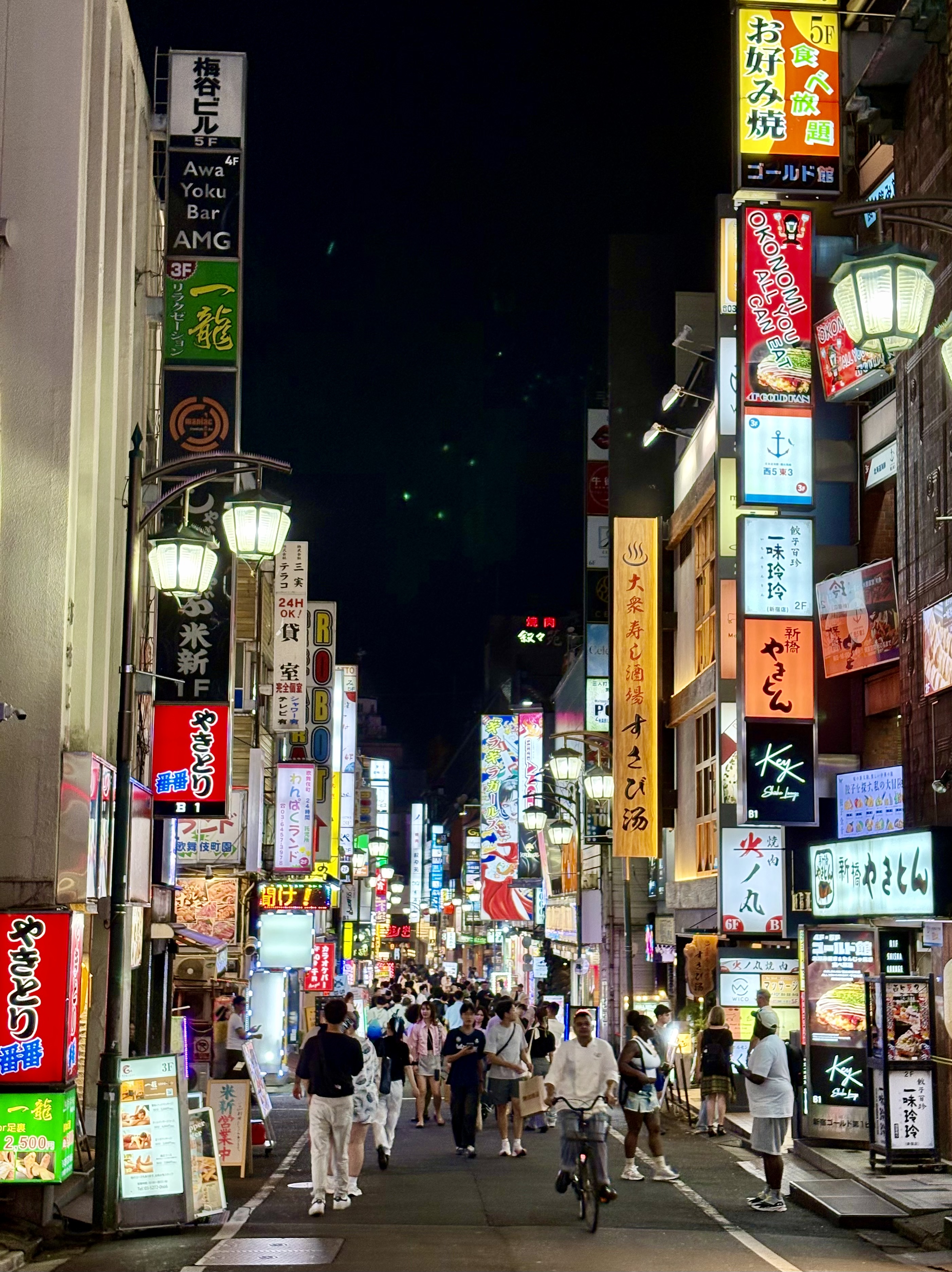
One of our nights in Tokyo was spent wandering Shinjuku’s back alleys – the narrow streets packed with tiny bars and izakayas that looked exactly how Chandler had described they would after he watched Netflix’s show Midnight Diner. We strolled in darkness, with surprisingly few tourists, peeking at lanterns, neon signs, and listening to the quiet hum of conversations seeping through sliding doors.
One thing to note is that this neighborhood almost exclusively trades in cash and by this point in our trip we were pretty much out of it.
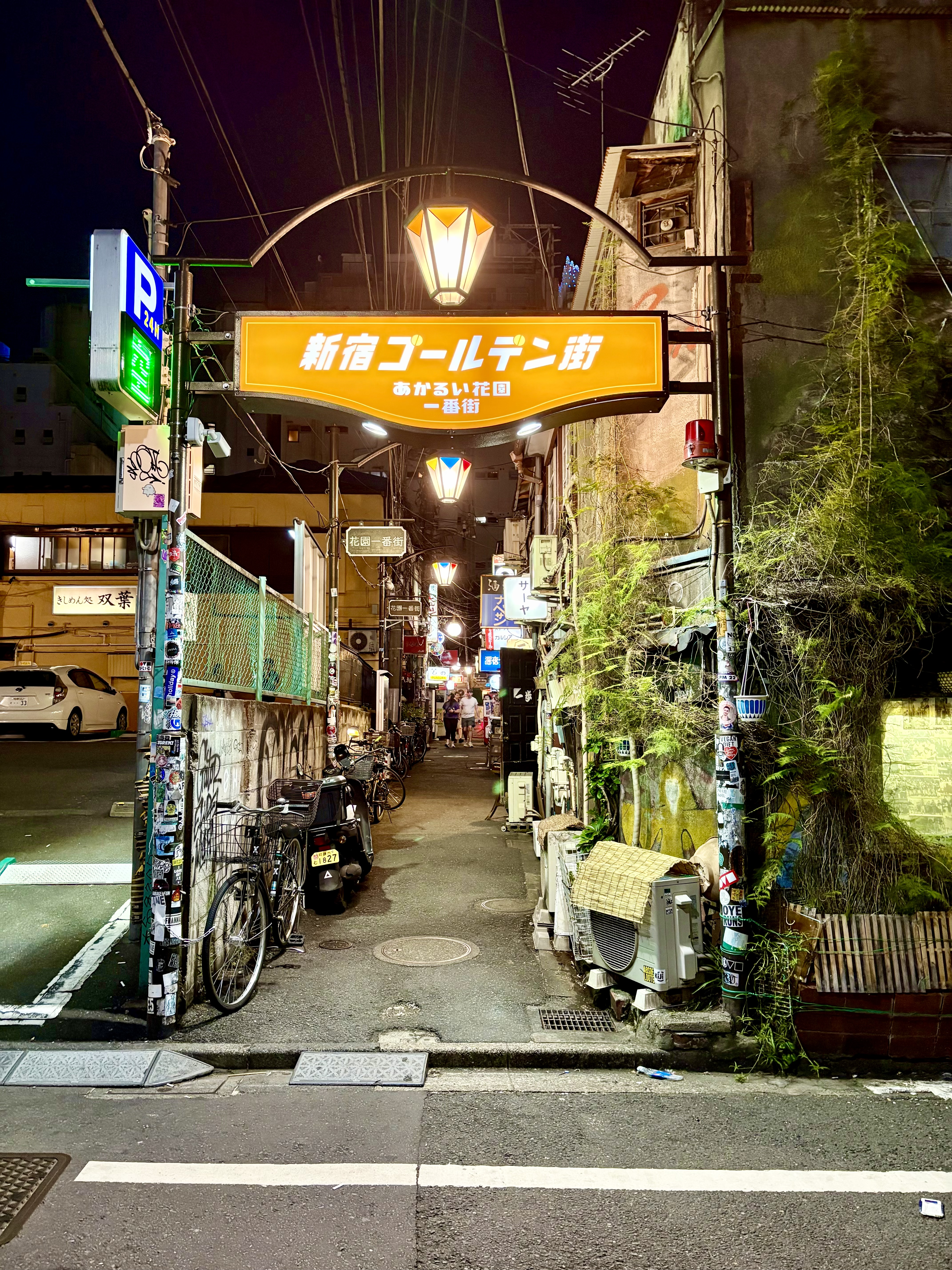
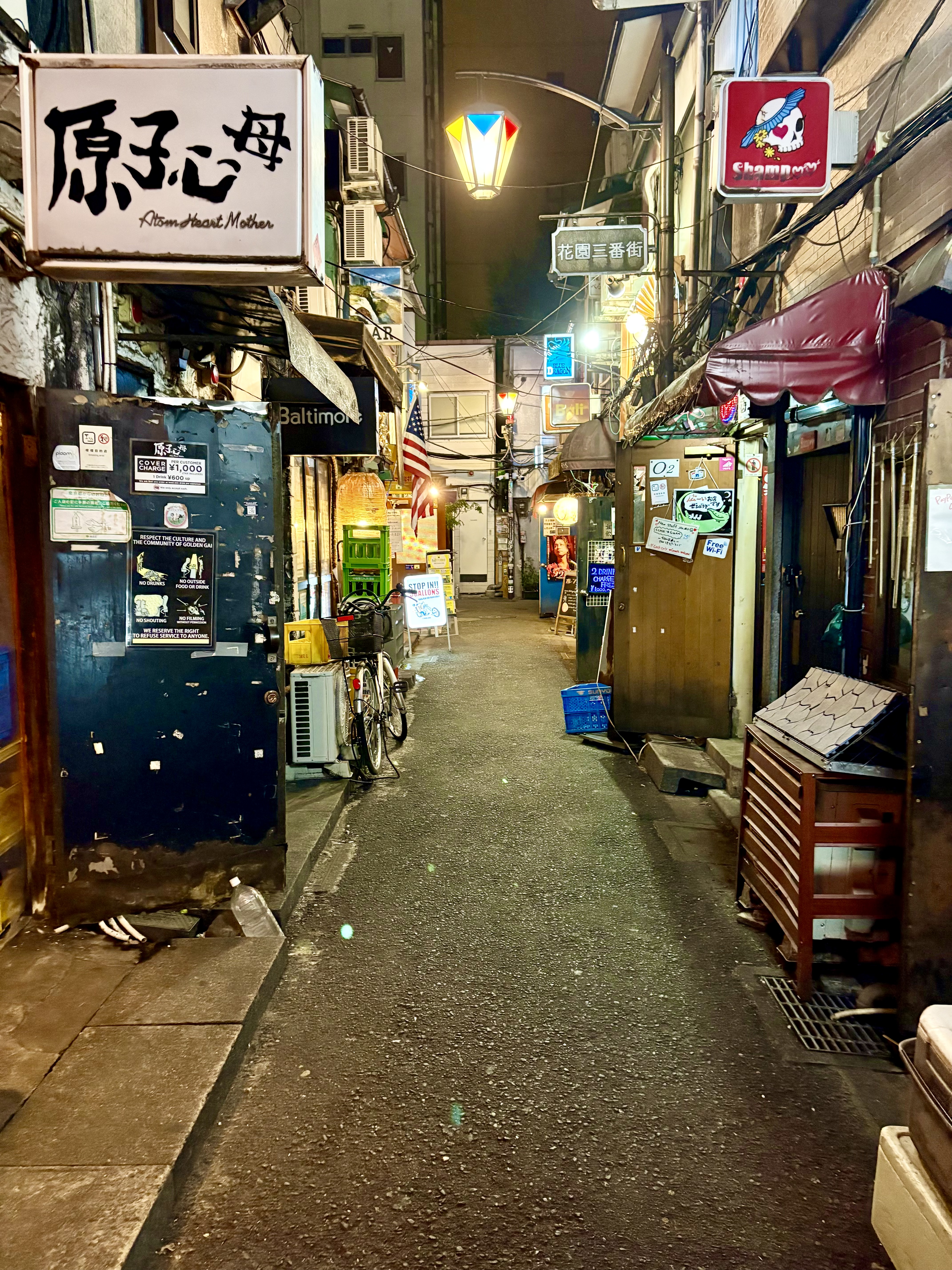
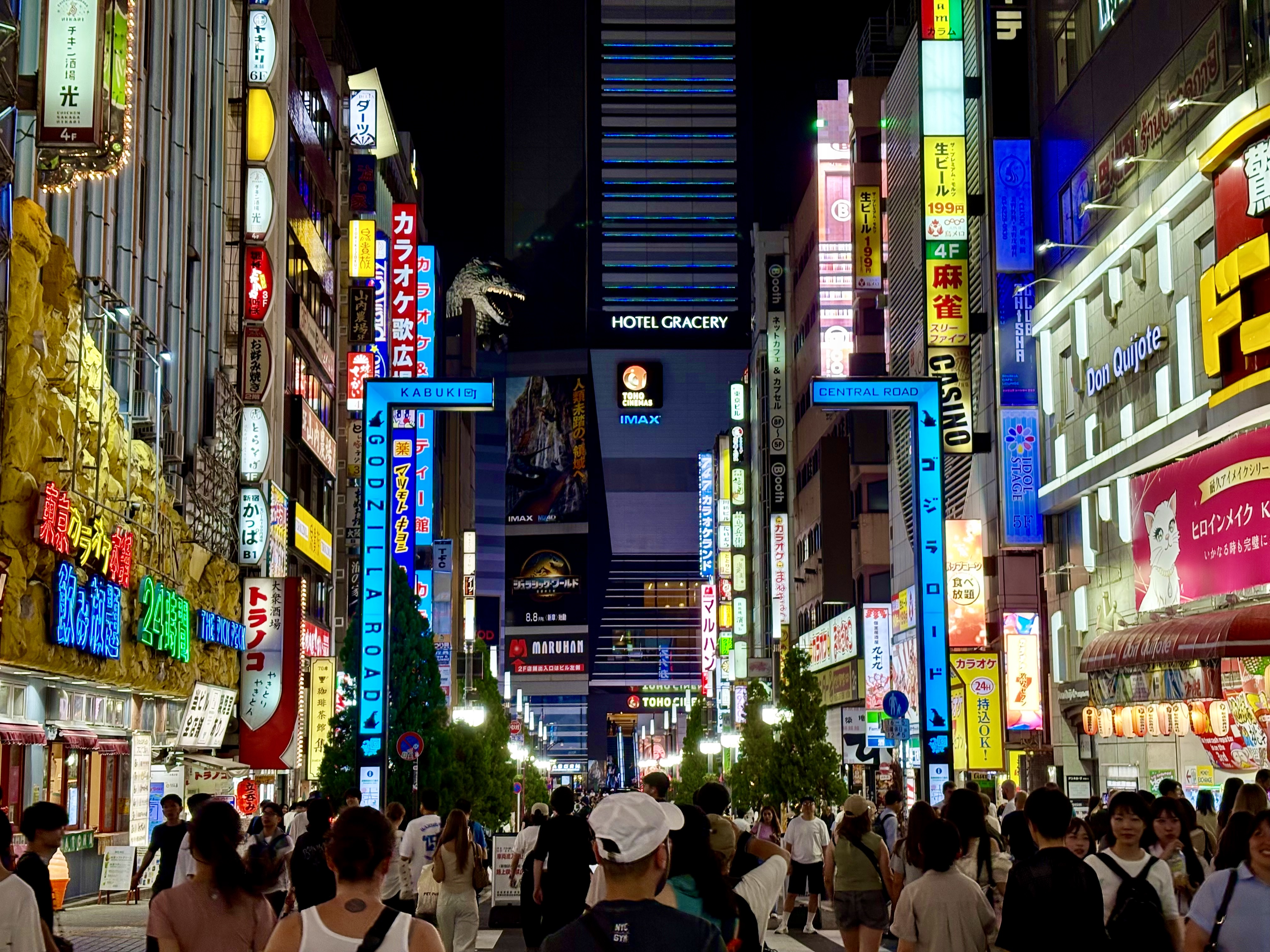
Eventually we wound our way to Godzilla Road where, you guessed it, you can see Godzilla’s head peaking over Hotel Gracery. Now, Chandler has collected every Godzilla film ever made – 38 in total – and for better or worse, I’ve watched them all with him. Some are spectacular (here’s looking at you Godzilla Minus One), whereas I truly wish I could scrub All Monsters Attack (or Godzilla’s Revenge in English) out of my brain. It’s not so much my obsession as it is his, but loving him meant learning to love Godzilla too.
Just around the corner, we stood before the famous 3D Cat display, neon flickering in its looped animation, while the streets buzzed around us. It felt like yet another moment in what had become a summer of Japanese cat connections – from the Maneki Neko shrines to the cat-themed gashapon to the Doraemon statues we stumbled across.
And now, here was a giant, digital cat, towering above Shinjuku and batting its paws at the sky. It was whimsical, ridiculous, and – like so much of Tokyo – completely irresistible.

One of our final Tokyo memories was of the Tokyo Skytree. We ended up there one night for the Sumidagawa Fireworks Festival. The Pokémon Center Skytree Town and a Studio Ghibli shop are tucked into the mall at the base, but the real surprise was standing among the crowds, watching fireworks ripple across the skyline while the tower glowed above us.
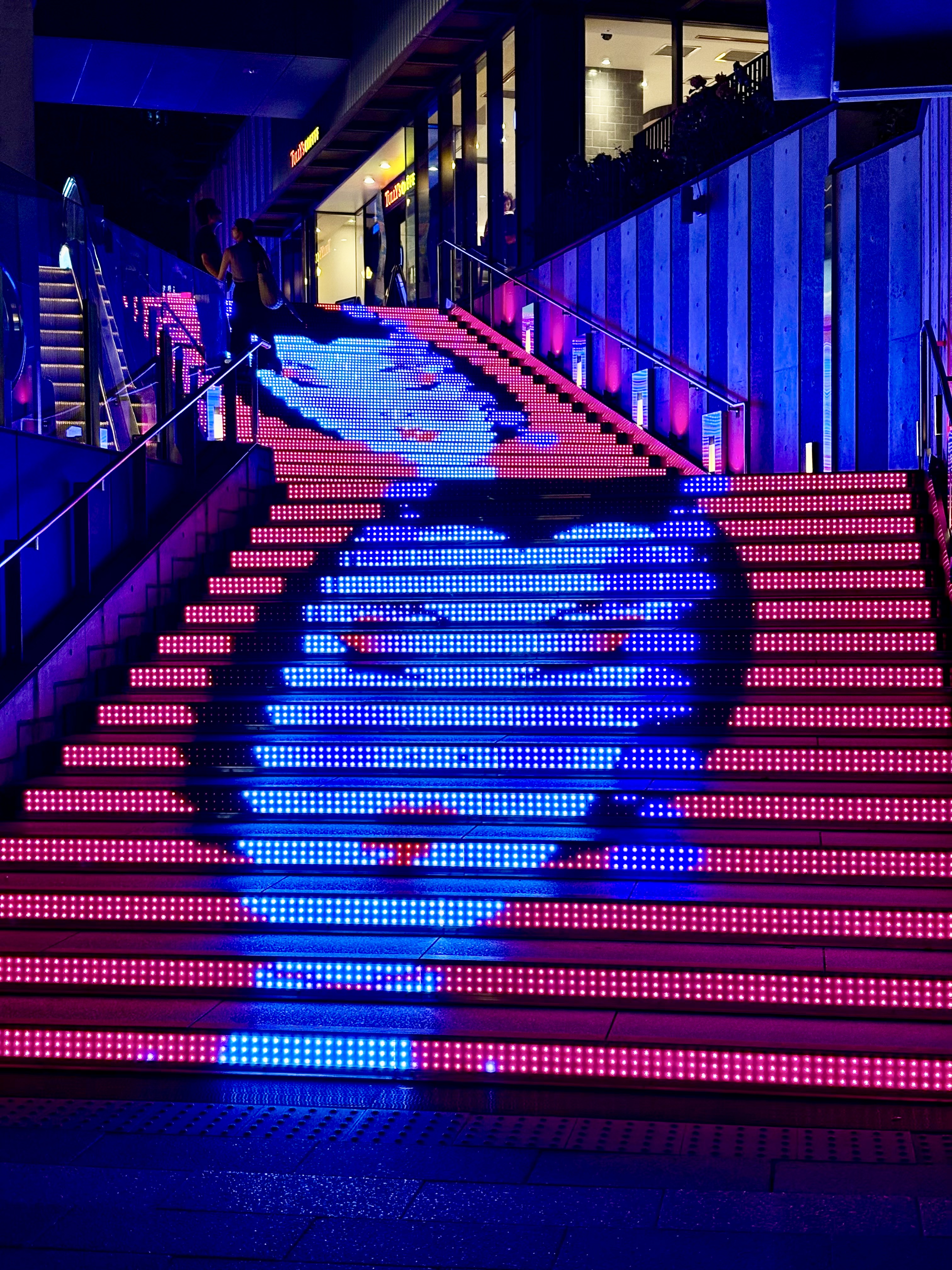
As we wandered out, we passed a set of digital steps where the images shifted and changed in dazzling color. I couldn’t resist snapping one last photo there – it was the perfect way to cap off our time in modern Tokyo.

 Abroad With Ashley