I wish that I could say my favorite protest story was about a great sign I saw or a specific example of our community coming together. Instead, it was a story told to me by my sister. She witnessed a truly spectacular moment between a mother and her son.
The son was chanting “ICE out,” while his mom joined in with “Fuck ICE.” After numerous exchanges, the boy finally begged his mom to switch lines – the request making it clear that this was not a household comfortable with children cursing.
The mom reluctantly agreed and after she shouted “ICE out,” he broke into a huge grin as he joined in the chant with, “Fuck ICE.” I wish I’d been there to see it. Because, sometimes, only a curse will do.
That said, Chandler and I never expected to be in Minnesota this winter at all. We’d been preparing to meet up with my sister in Italy – we had our flights, trains, and hotels all booked before we found out that we’d need to head to Minnesota first.
It turns out that we’d been bitten by infected sand flies in May and try as we might, we’d run out of treatment options in Senegal. If we wanted to live parasite free, we’d have to visit our friends at the Mayo Clinic. We arrived, hoping for a quick solution, and we ended up spending the next nine weeks in Minnesota.
Most of that time was spent with my wonderful Grandmother who graciously took us in. But Minnesota was also forced to put up with an unwanted house guest: US Immigration and Customs Enforcement aka ICE.
That first week, I have to admit, we were so wrapped up in our doctors’ appointments to notice the change, but pretty soon it became unavoidable. ICE agents were racially and ethnically profiling people, making warrantless stops and arrests, harassing people at schools, hospitals, and community centers, using excessive force. It became clear that civil rights were being violated and there was no transparency or accountability for agents.
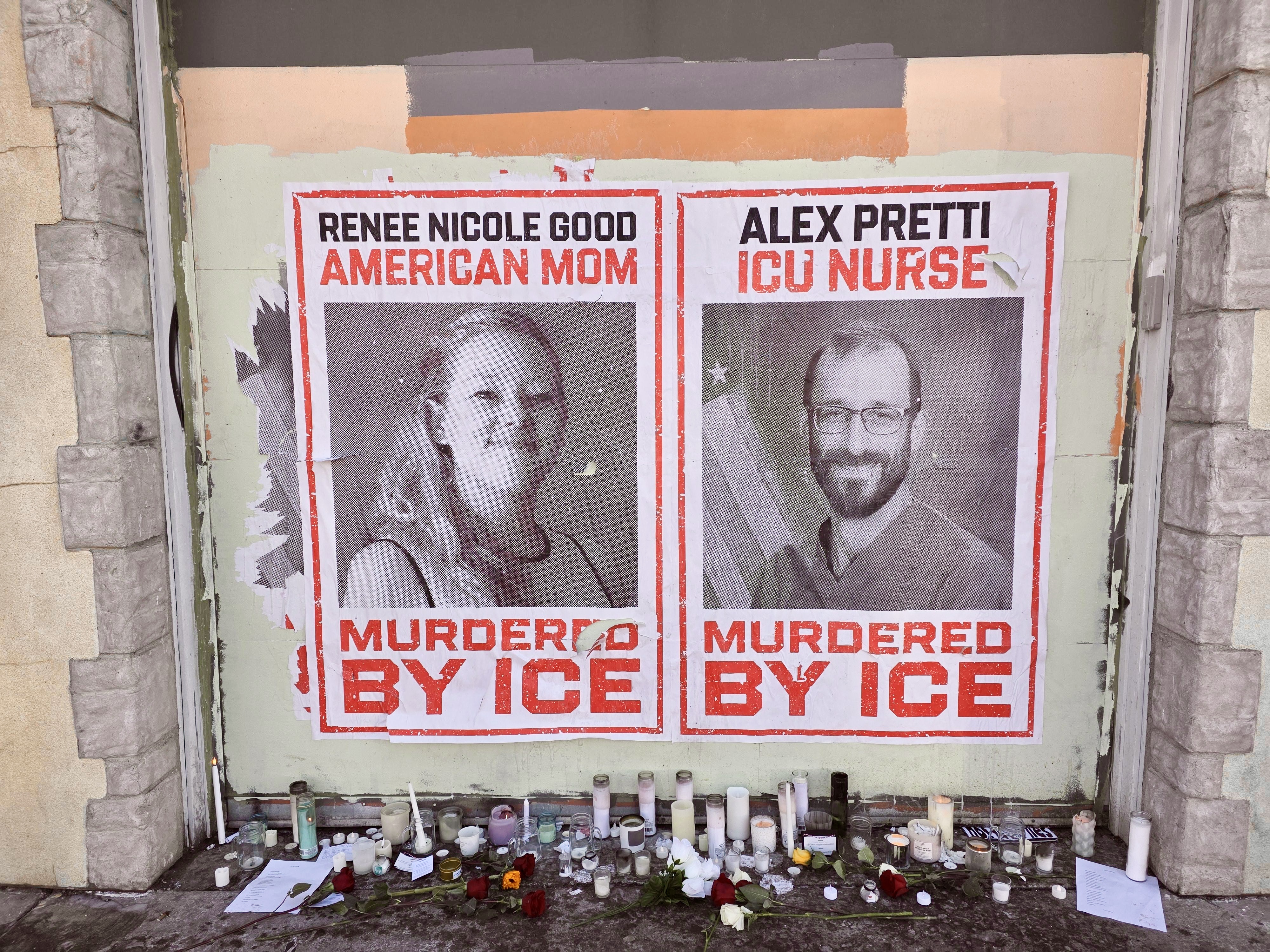
And then they killed Renée Good.
Trump claimed that Good was obstructing and resisting. J.D. Vance claimed that agent’s actions were self-defense. Kristi Noem claimed Good was a domestic terrorist.
Minnesotans knew that an ICE agent had just gunned down a woman in her car. A poet who had recently moved to Minneapolis with her wife and son.
And then, 17 days later, they murdered another American citizen on the streets of Minneapolis. This time an ICU nurse who was simply helping a woman who had been assaulted. Instead, the White House claimed he was a violent threat and a “would-be assassin,” which numerous bystander videos discredited.
But does it really matter that Good and Pretti were American citizens? One of my favorite lines from these last few weeks was written by @itstheheyman and it simply says:
“First they came for my neighbor and I was like fuck you leave my neighbor alone.”
Because ICE has made it clear they’re not “protecting Americans.” I’d be surprised if you could find many Minnesotans who currently feel safer. Citizens carry around passports (not that ICE cares), children are used as bait, and the elderly are dragged from their homes. It doesn’t really matter where you were born – this isn’t how we treat others.
Five-year-old Liam Conejo Ramos was abducted along with his father, even though they have an active asylum case. They were held in a detention facility in Texas until a federal judge ruled their arrest driven by “daily deportation quotas” and ordered their release. The US Department of Homeland Security is now pursuing removal proceedings. Since they’ve done nothing wrong, this smacks of retaliation.
I could keep going, but it’s not even the headline events that are most damaging. The Star Tribune (much love to our local press!) have reported that Minneapolis businesses are losing $10 million to $20 million in sales each week. And it’s not just happening in Minneapolis – restaurants and small business have been harassed or forced to close down in Rochester, Elk River, Little Falls, and Brainerd (to name a few).
And, of course, Immigrant-owned business have been hit the hardest, with revenue losses estimated between 80% to 100%.
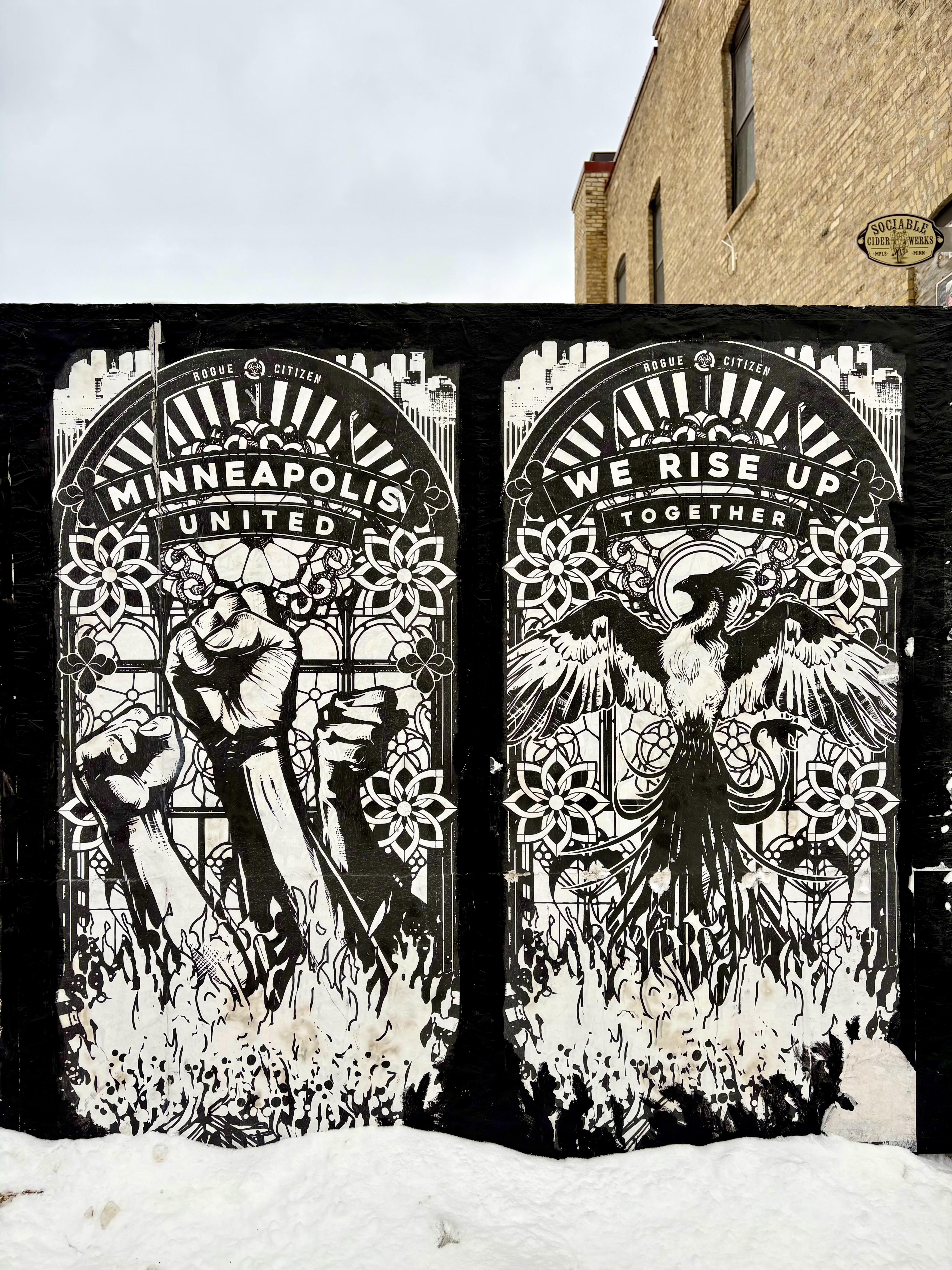
The only bright spot in this whole hellscape has been watching Minnesotans band together. Neighborhood watches take turns standing on street corners and blowing their whistles to alert others of ICE’s presence. Teachers and admin drive students and co-workers to school. Food is being donated and delivered to those afraid to leave their homes.
And then there are the small things: People sharing coffee and donuts and roses and hand warmers and whistles and protest signs. Because Minnesotans are showing up in any and every way that they can. Stories continue to come out: Police officers who are ticketing ICE agents for jaywalking (love some malicious compliance), carpenters who are going around fixing kicked-in doors, so many donation drives (coats, books, etc.) have had to pause due to an abundance of donations.
Chandler and I couldn’t make it to Minneapolis half as often as we’d have liked to (turns out treatment and recovery are hard!), but when we could, we made sure to look for local shops and restaurants.
We’ve always loved the Ethiopian community in Minneapolis, so we went to both Lulu EthioVegan Cuisine and Meseret Ethiopian Restaurant. We had quite the wait at Meseret since half of their staff is gone, but we had a wonderful time chatting with two Ethiopian men – both of whom have lived in Minnesota longer than I have!
We made our way to my favorite restaurant, Owamni – owner Sean Sherman traveled to DC to give Congress a letter from the American food industry demanding ICE withdraw from all cities experiencing violent enforcement actions, as well as full, independent investigations into all civilian deaths involving federal agents.
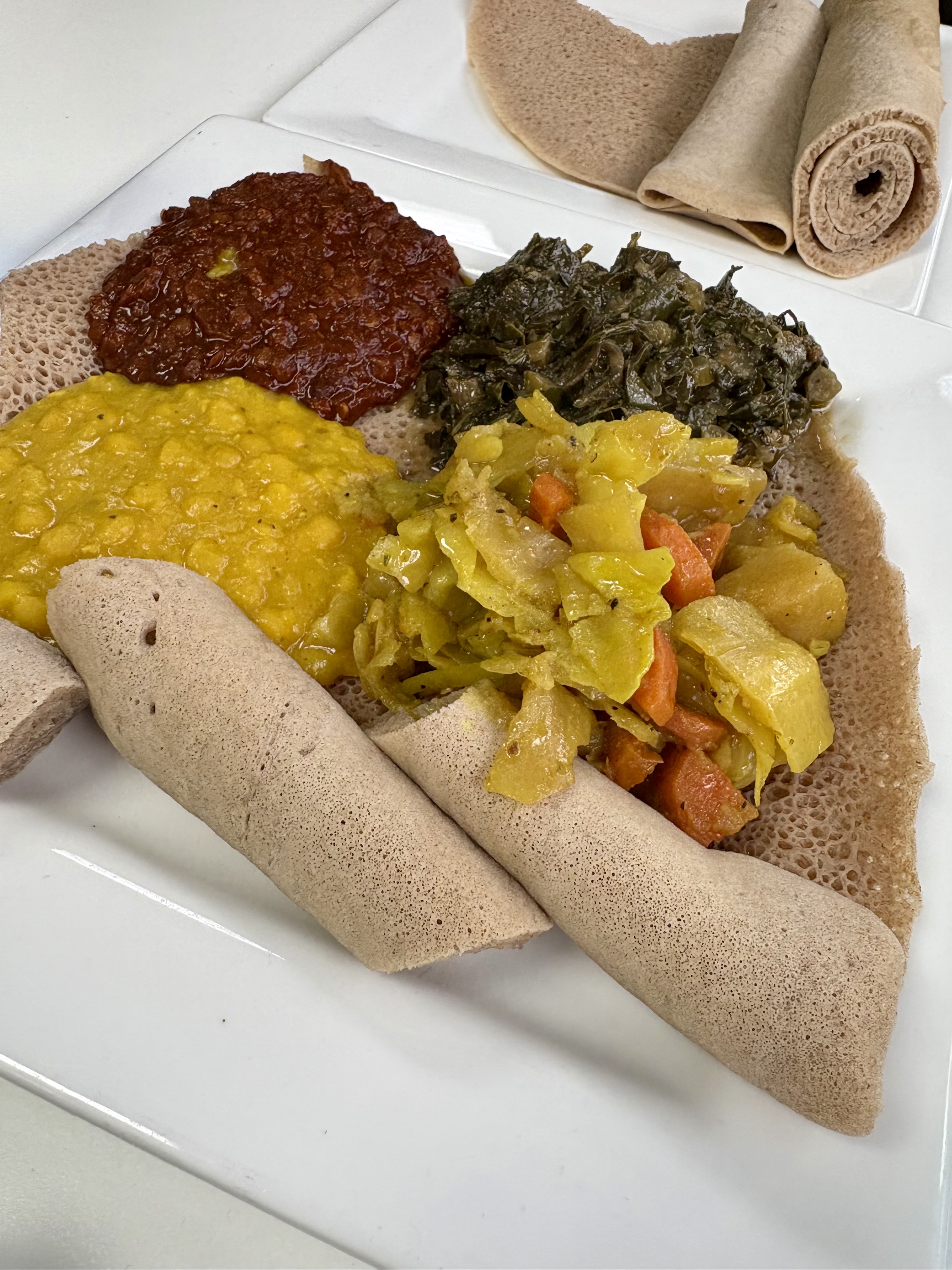
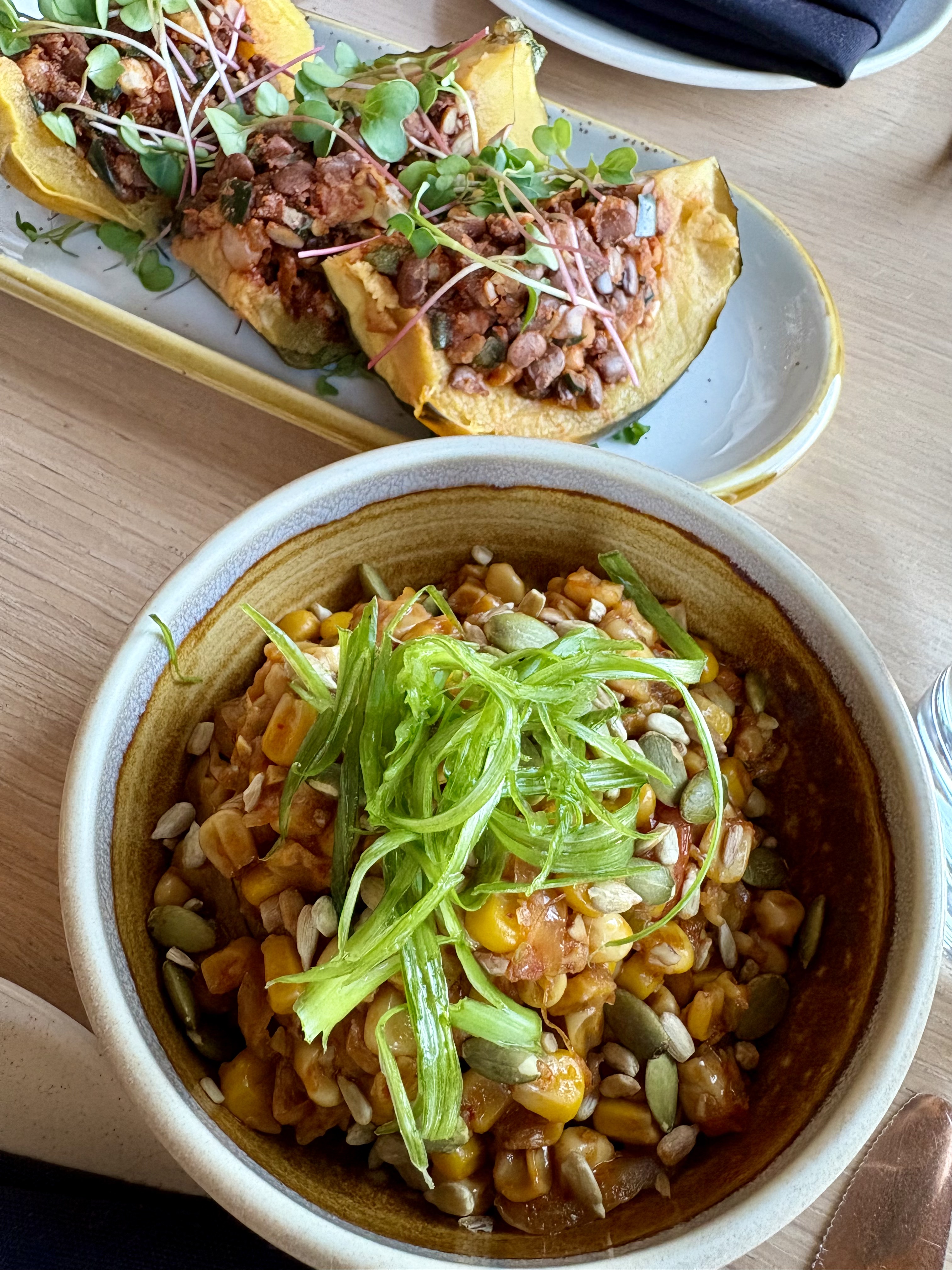
We found some new gems to love like Francis Burger Joint (named after the pig who escaped a Canadian slaughterhouse) and El Cubano (we haven’t had Cuban food this good since we were in Miami)!
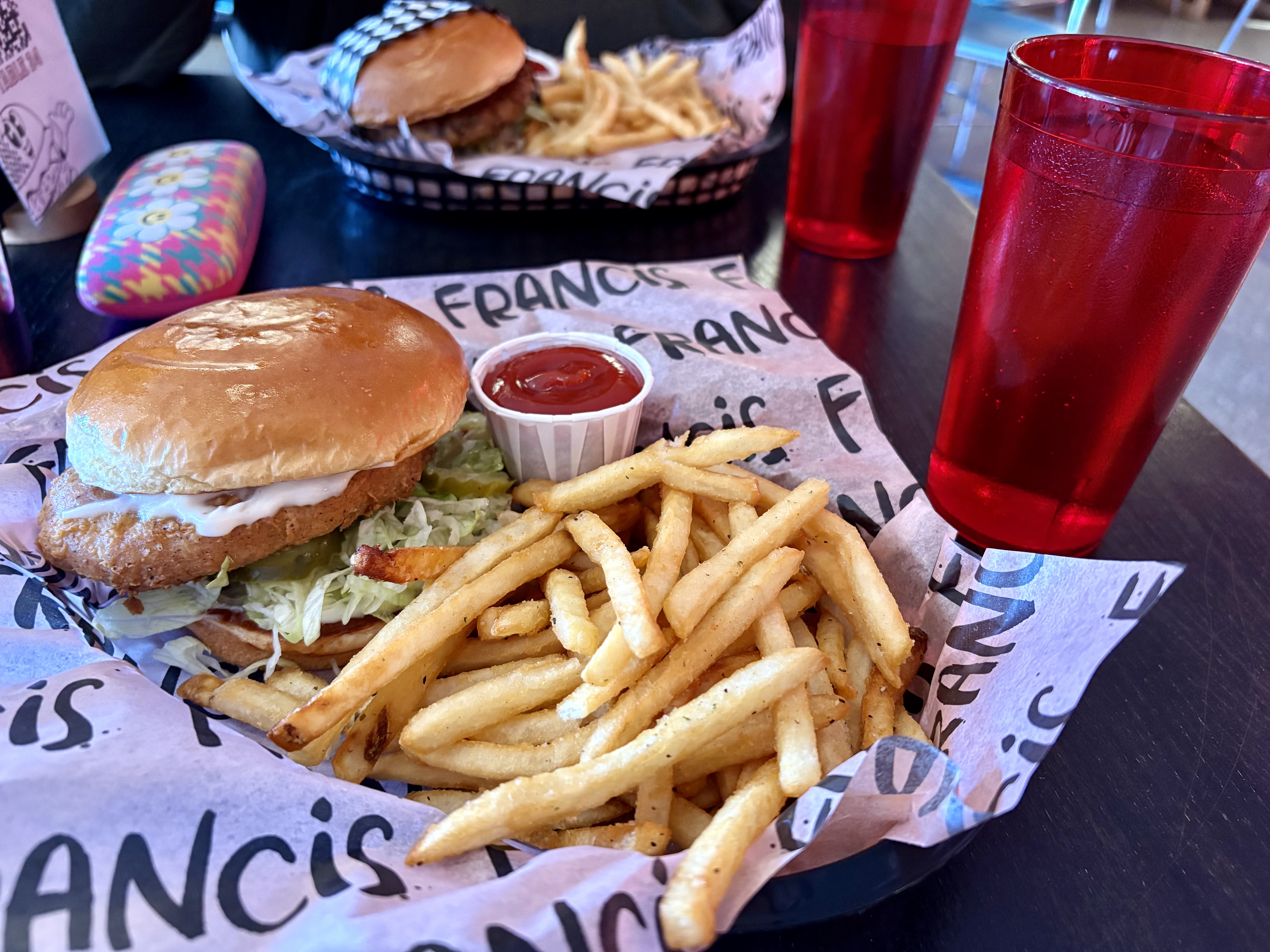
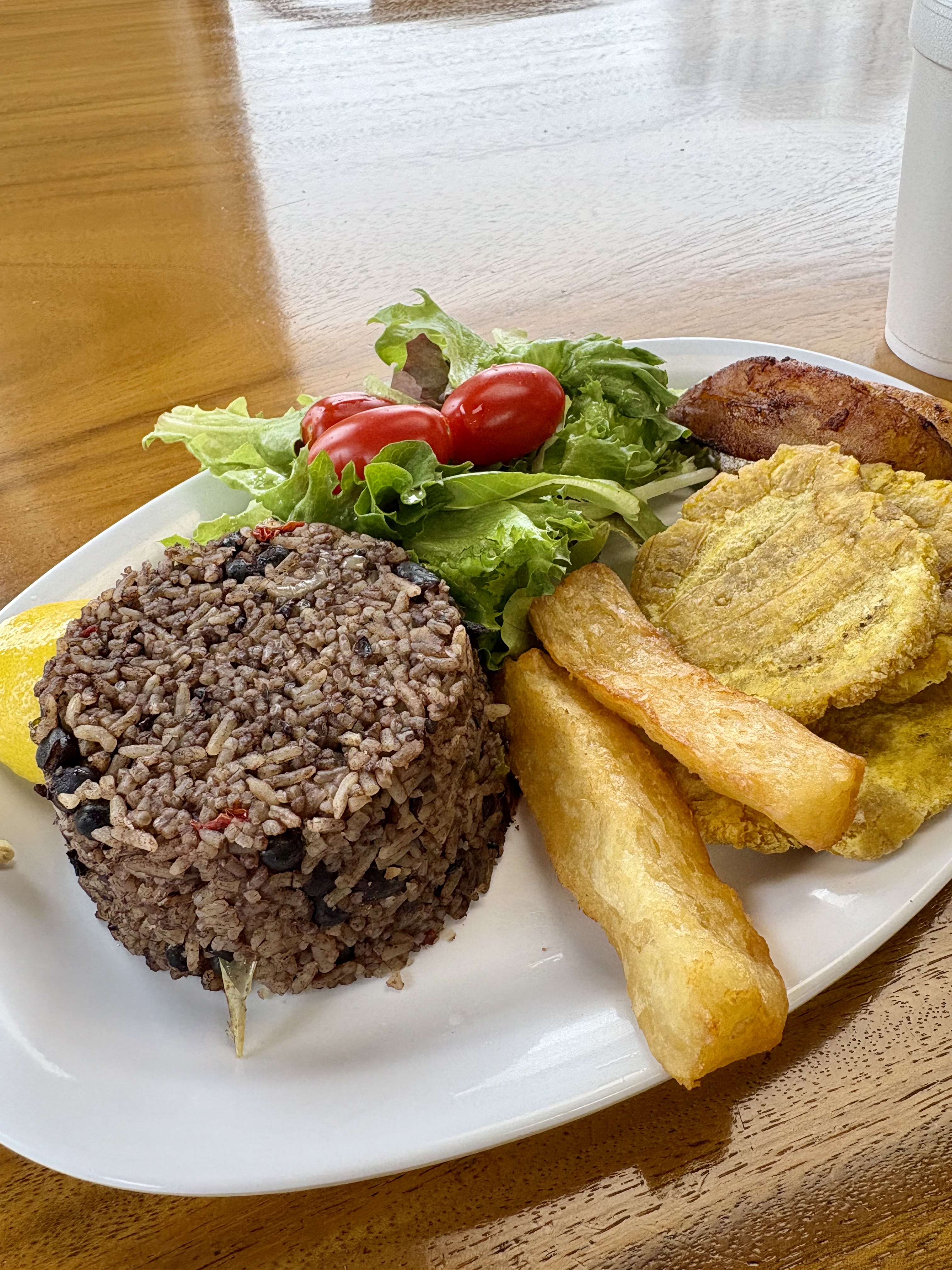
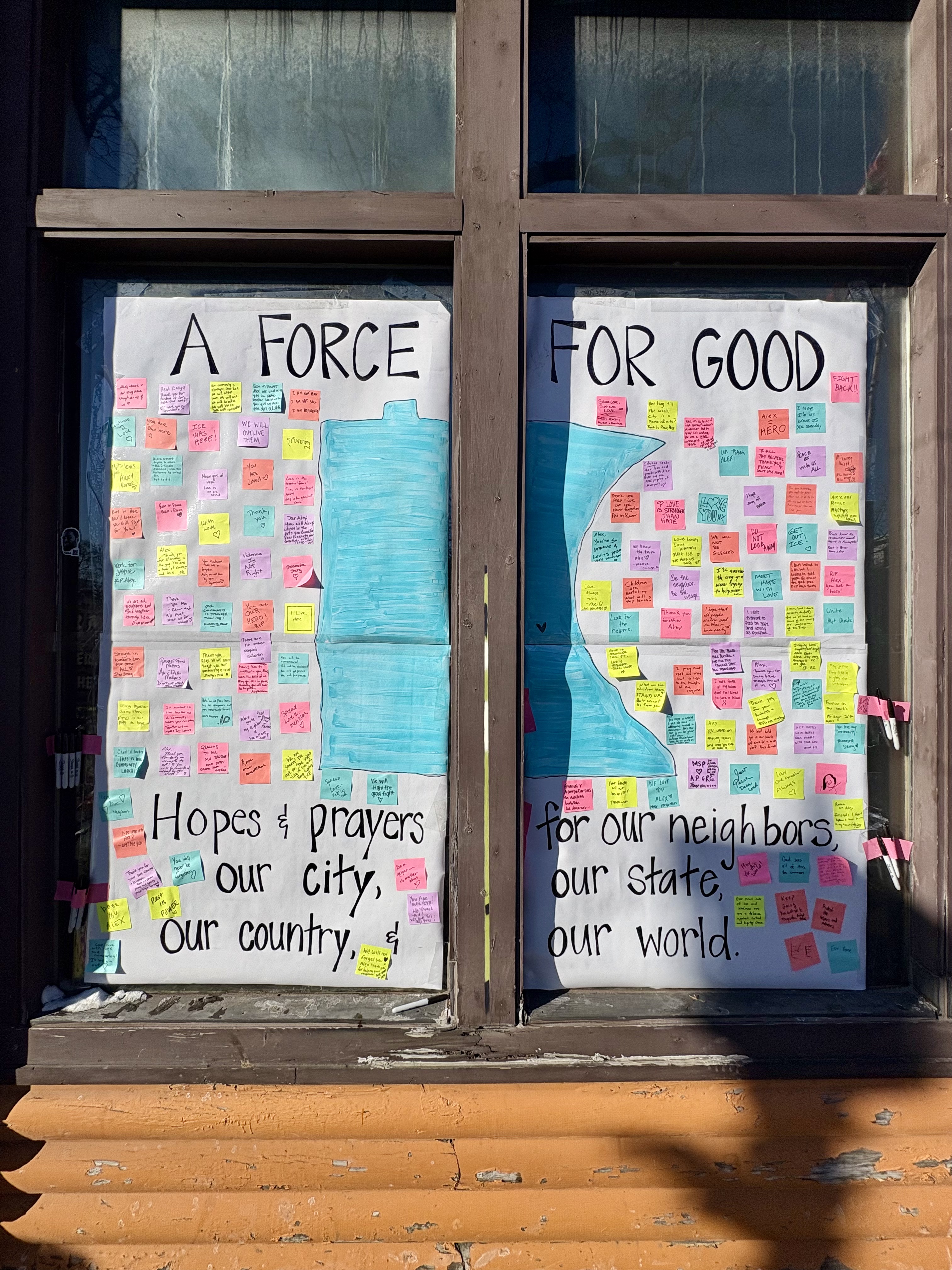
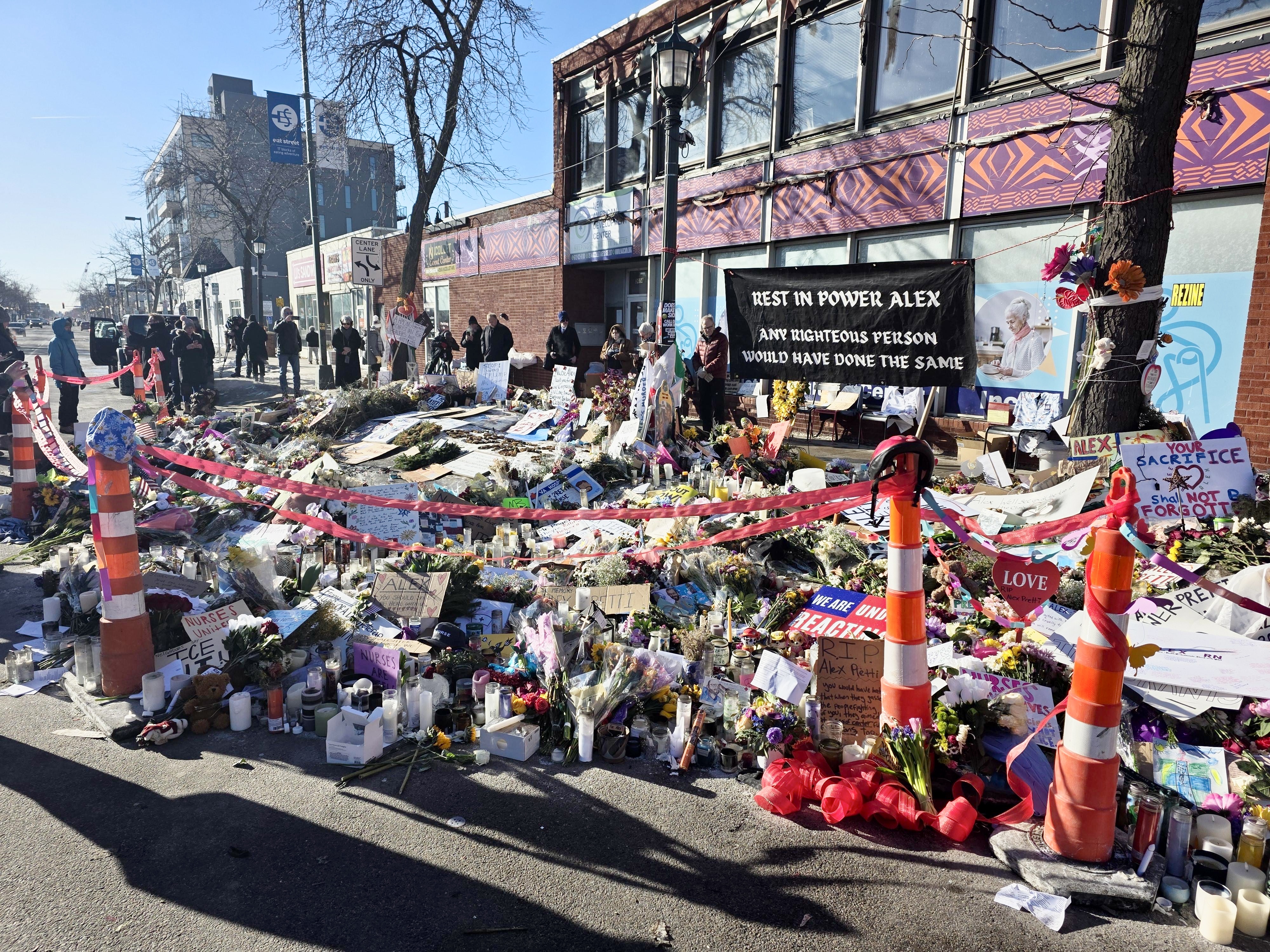
And we observed a community meeting being held in Glam Doll Donuts after we paid our respects to Alex Pretti’s memorial.
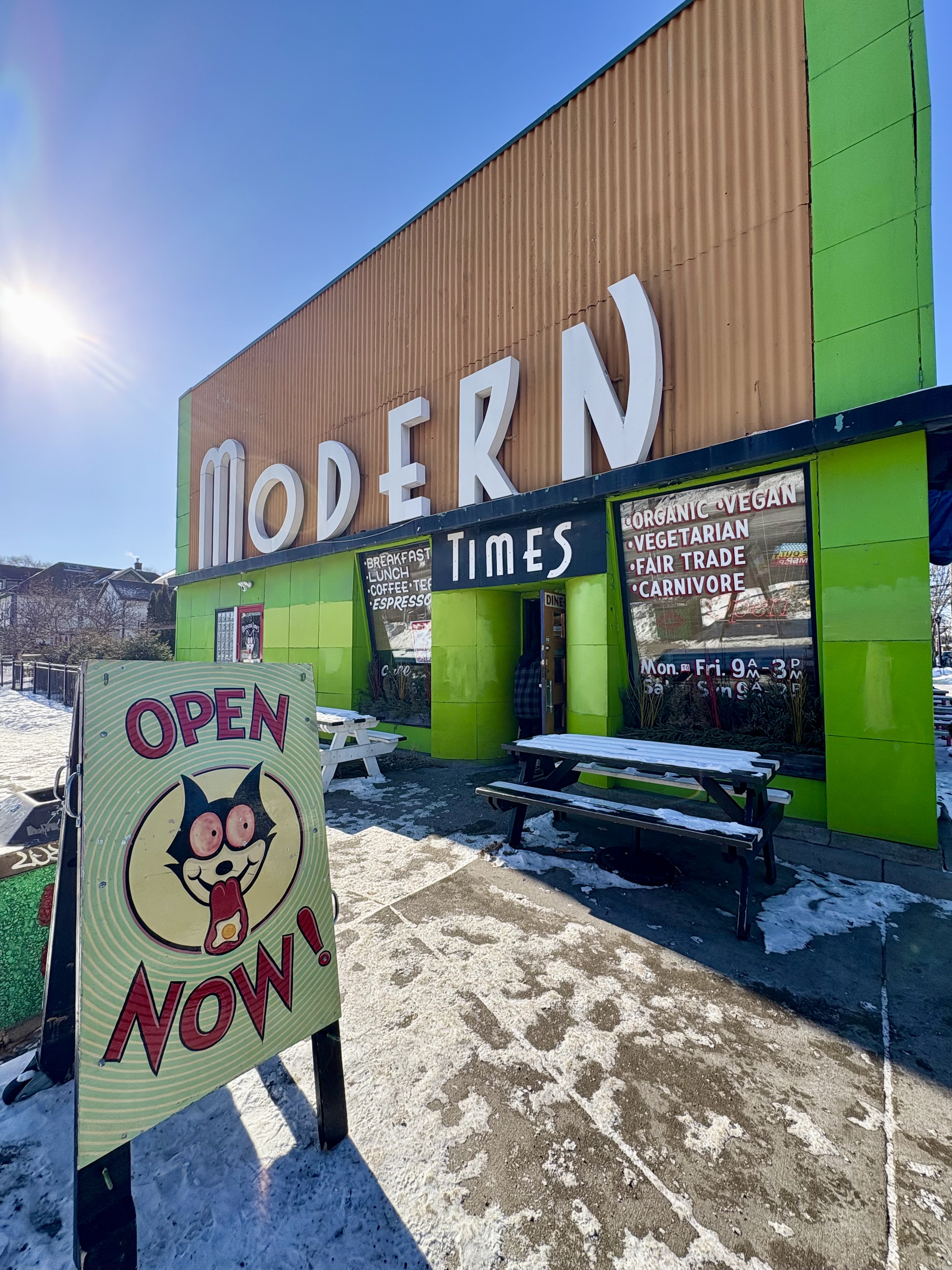
The story of Post Modern Times (formerly known as Modern Times) made its way to Texas and we made a donation in the name of a family member who wanted to support the restaurant that stopped charging customers for their food. Owner Dylan Alverson released a statement on January 26th saying that Modern Times is “done making money for the fascists that occupy our city. We refuse to generate taxes under the guise of a functioning for-profit capitalist business aligned with government strategy.”
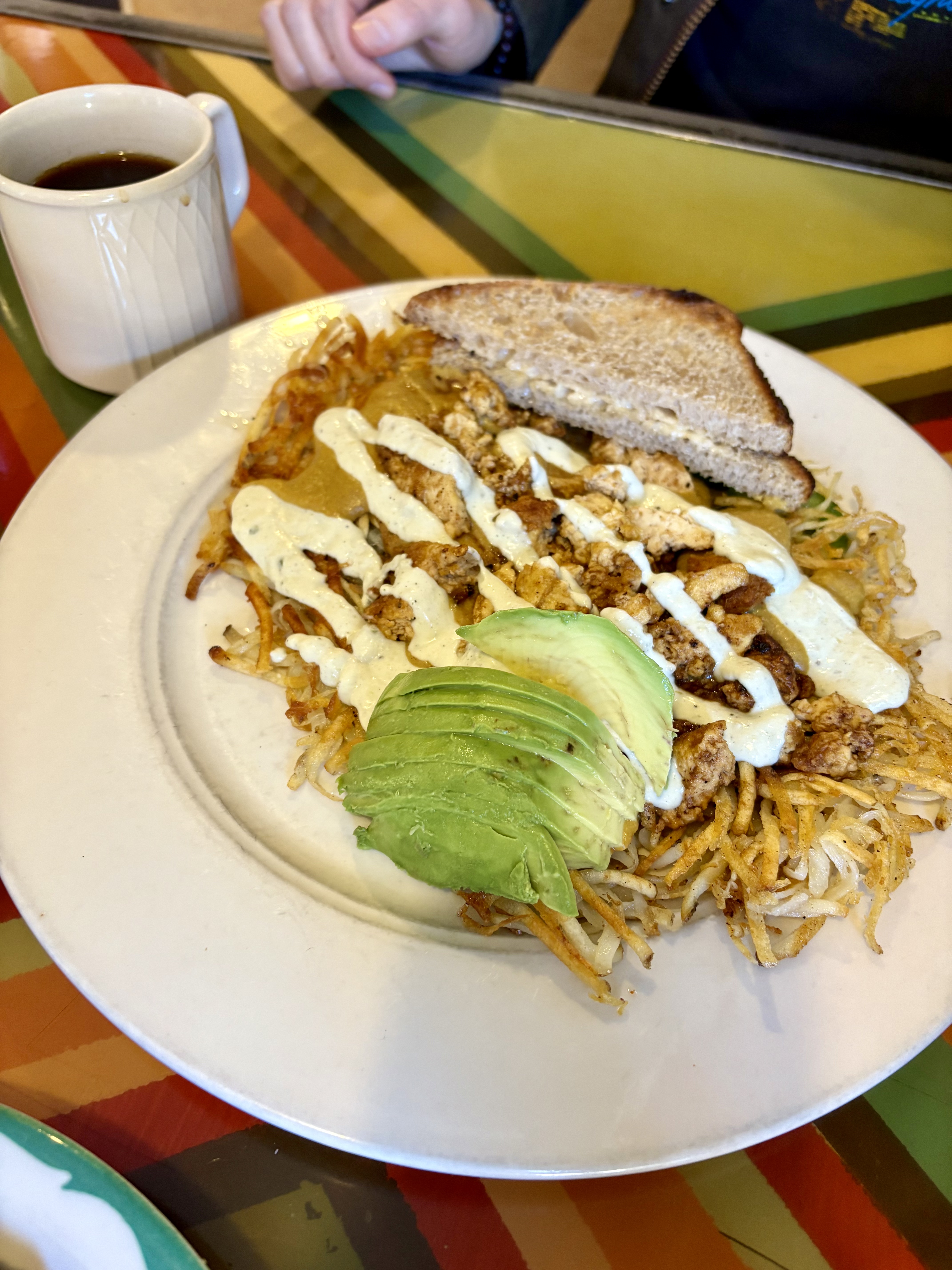
For the remainder of the government occupation, Post Modern Times is a free and donation-based restaurant where everyone but ICE is welcome. All staff are working on a volunteer basis and still making some damn good vegan brunch options!
We did some quirky shopping at neighboring vintage shops Moth Oddities and The Golden Pearl, where I scored a 1950s tuxedo dickie. And Chandler bought some CDs and a classic black Kit-Cat Klock at Electric Fetus.
But, of course, some of my favorite stops were the bookstores. Moon Palace Books, Wild Rumpus, and Birchbark Books & Native Arts. I already love the picture book Bitsy Bat, School Star by Kaz Windness. I can’t wait to dig into Robyn Maynard and Leanne Betasamosake Simposon’s collection of letters in Rehearsals for Living and Andrea Gibson’s poetry collection Pole Dancing to Gospel Hymns. And Chandler is thrilled to have the full collection of Showa: A History of Japan by Shigeru Mizuki.
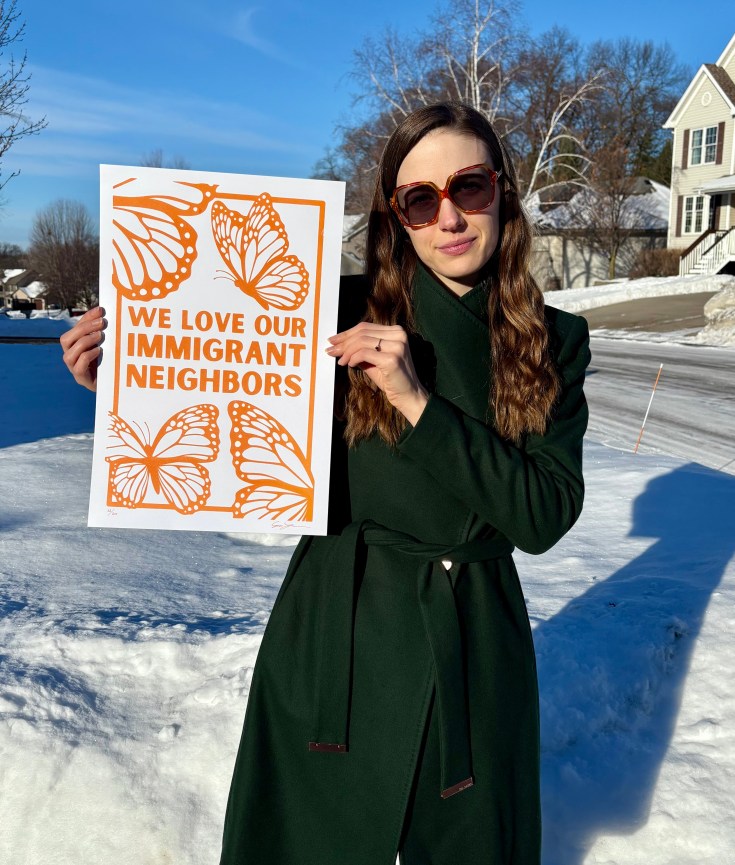
Our most visited shop was Bench Pressed. We returned there time and again – first, to buy Sean Lim‘s “We love our immigrant neighbors” print, then to get some gifts for friends and family, and again to stock up on more protest signs (with donations going to the Community Aid Network MN). On our final visit, they were donating 100% of their profits to rent relief for their neighbors.
The last thing we did in Minneapolis was head to the Walker Art Center to view Dyani White Hawk‘s exhibit Love Language. It’s only up until February 15th, so if you’re in the area, stop by before it’s gone!
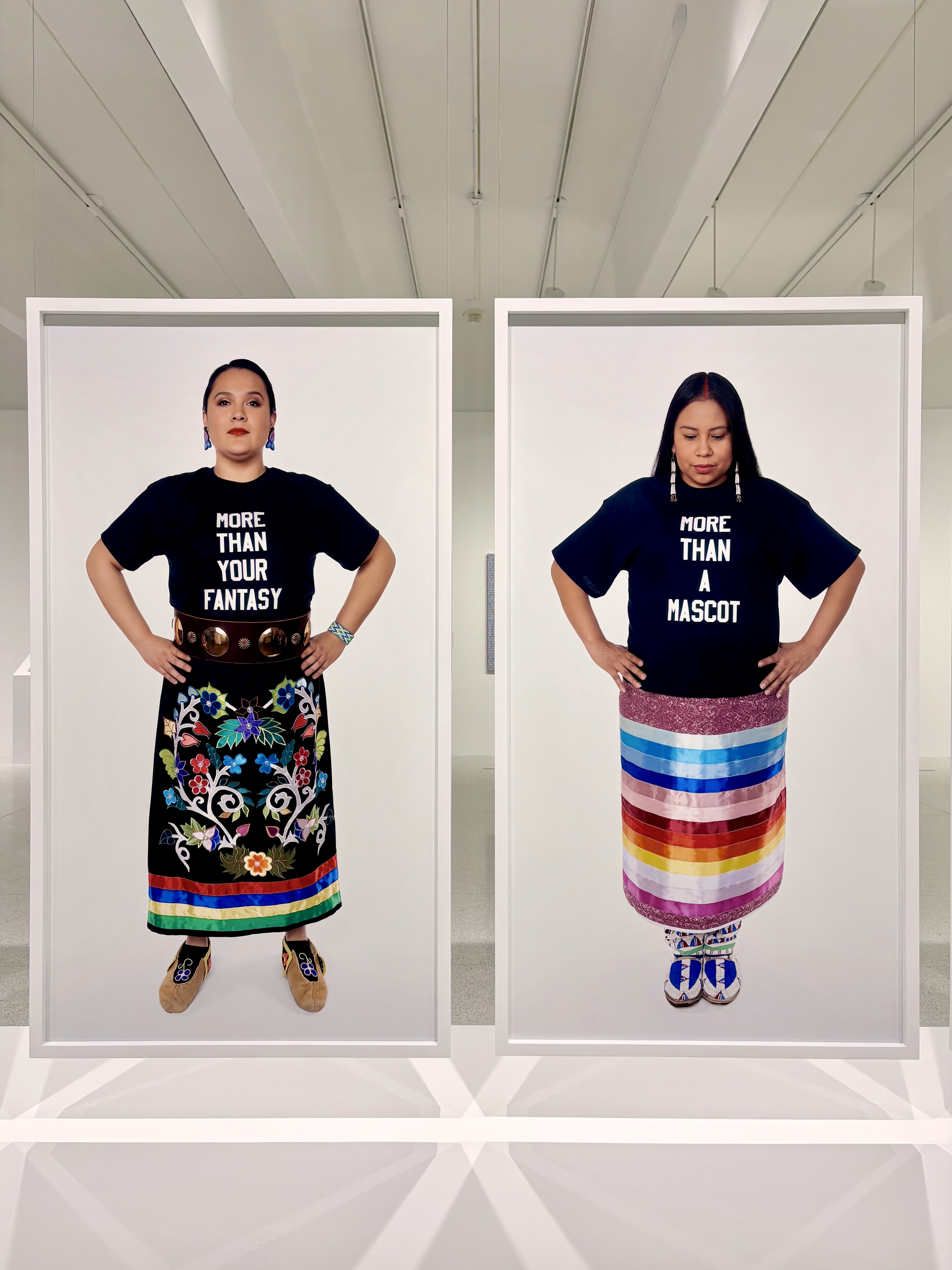
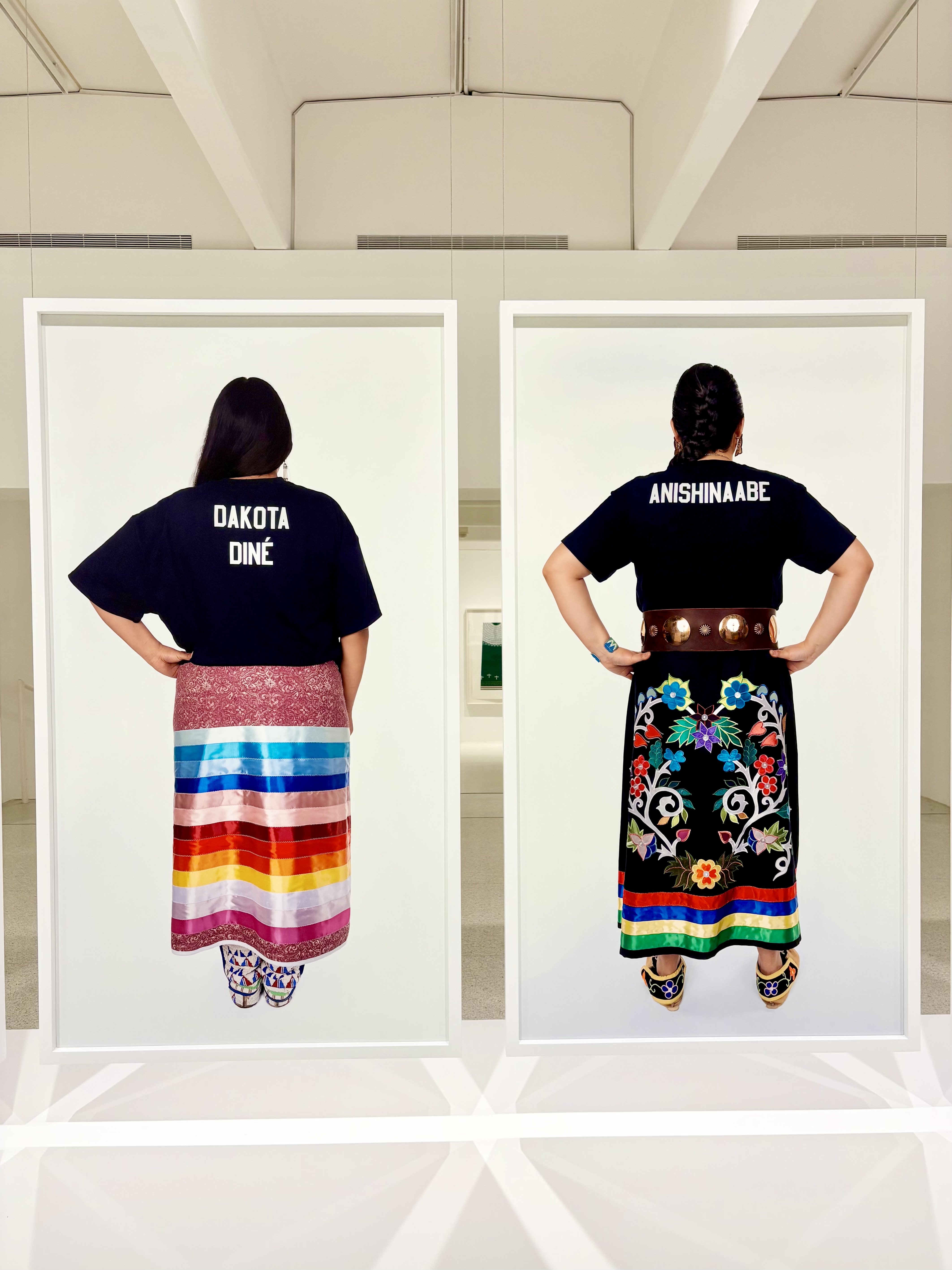
We originally went to see the piece title I Am Your Relative. In it, the “life-size, double-sided portraits that comprise the work present a poignant political statement. The photographs feature a group of Indigenous women, all family and friends of the artist. They wear ribbon skirts from their respective nations and T-shirts designed by White Hawk. The shirts carry a collective text challenging harmful stereotypes and asserting the simple but profound truth declared in the piece’s title.”
The idea behind it is that we as a society can stop the epidemic of Missing and Murdered Indigenous Women simply by being a good relative and caring for one another.
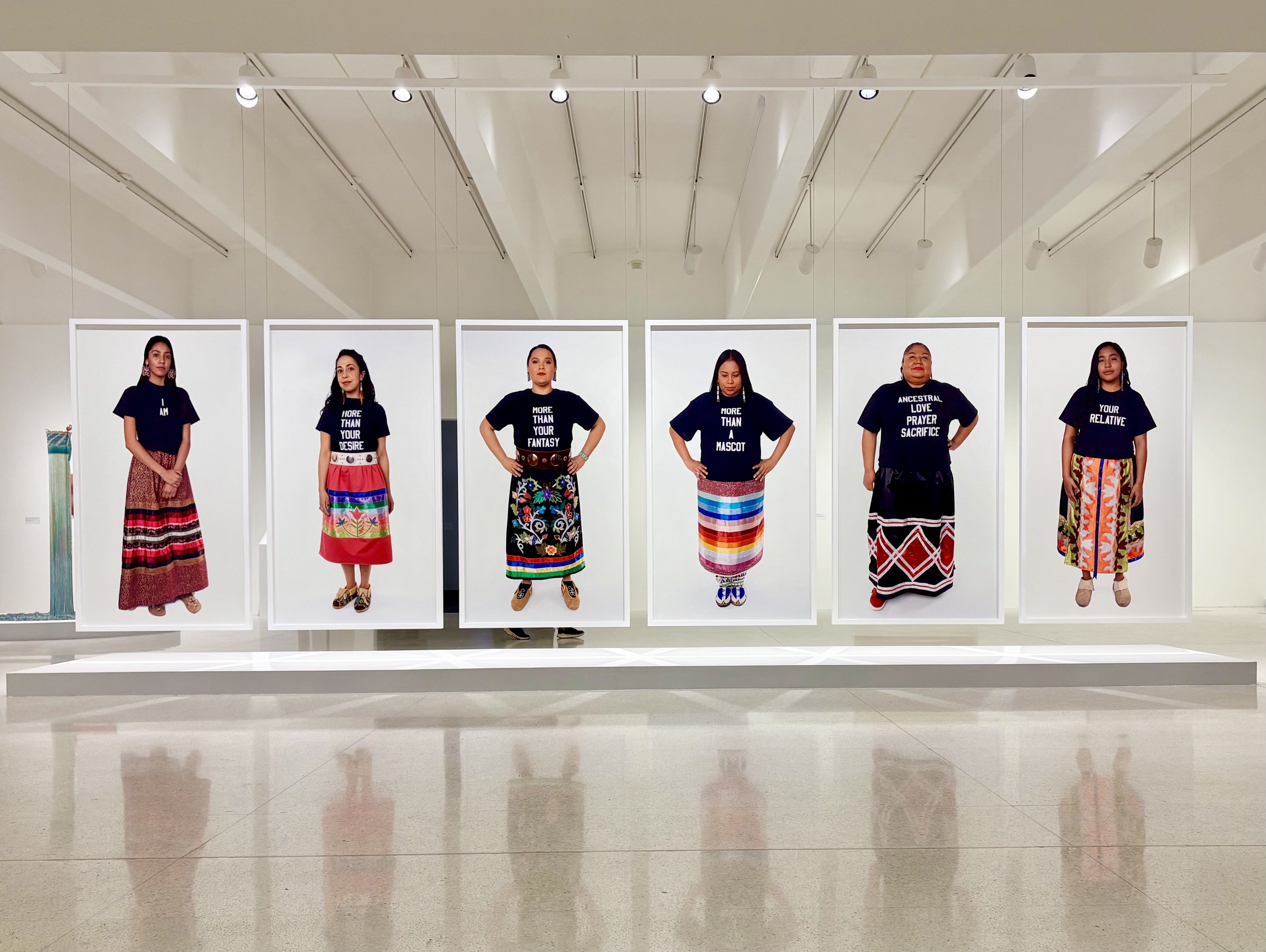
We stayed for well over an hour to look at the rest of her work.
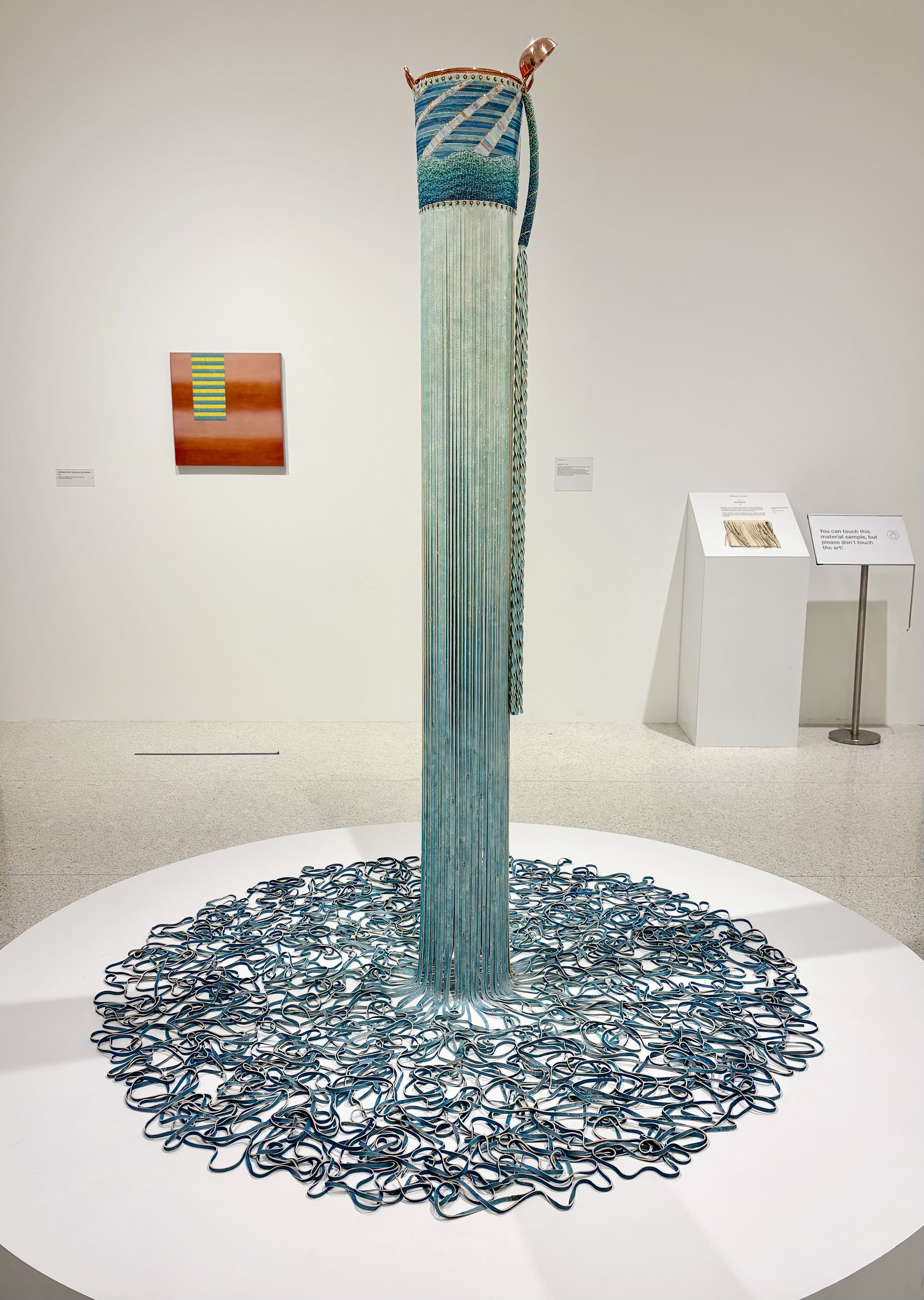
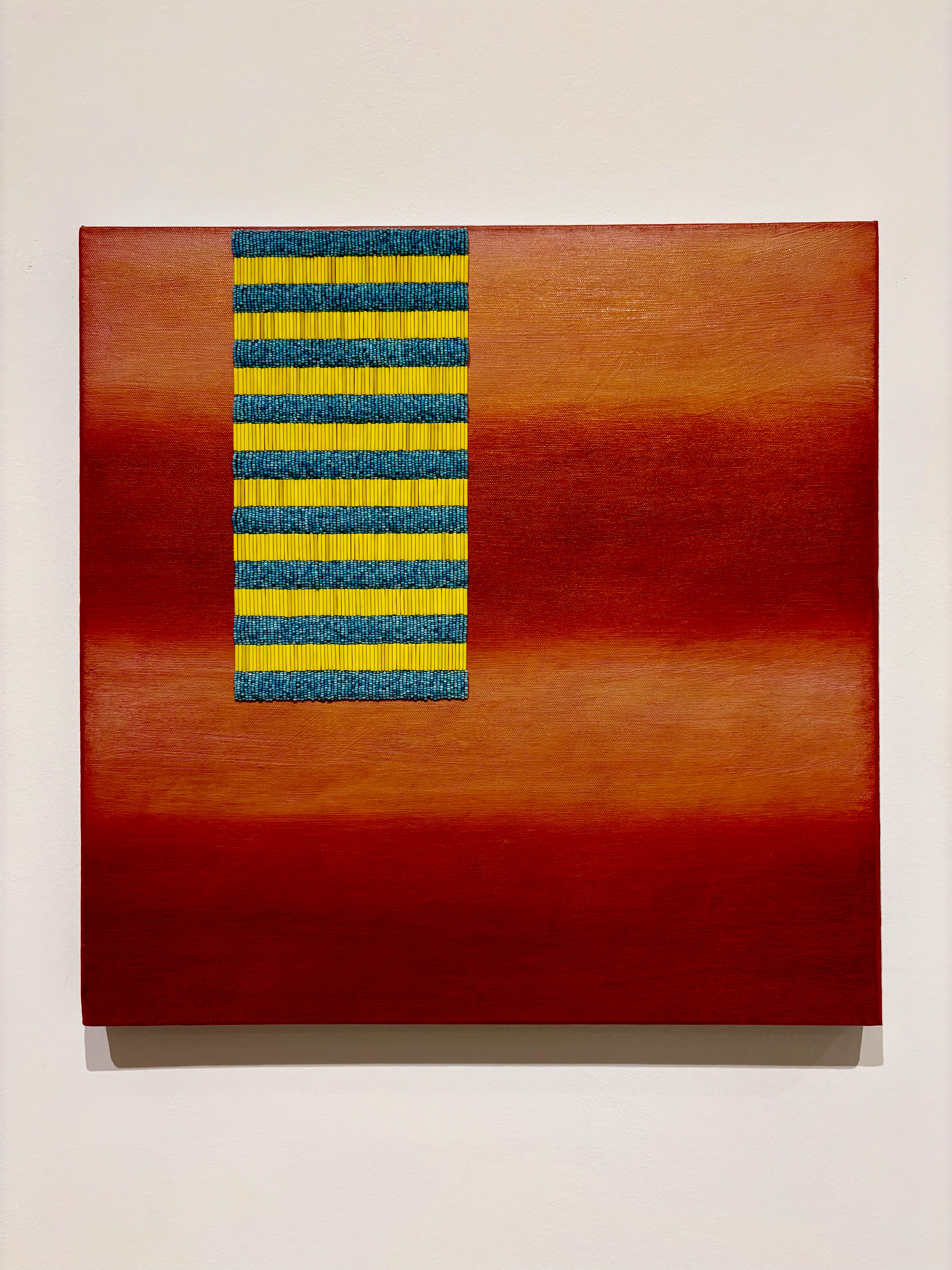
My favorites included her collection of buckskin statues, Carry IV is photographed below. I also loved when White Hawk included beadwork in paintings, like Untitled (Coral, Turquoise, and Yellow).
White Hawk “honors the artists who came before her through her use of ancestral Lakota techniques, materials, and forms…the groundbreaking influence of these artists has often been left out of mainstream histories of Euro-American abstraction, part of a broader erasure of Native presence and settle colonialism’s ongoing impact.”
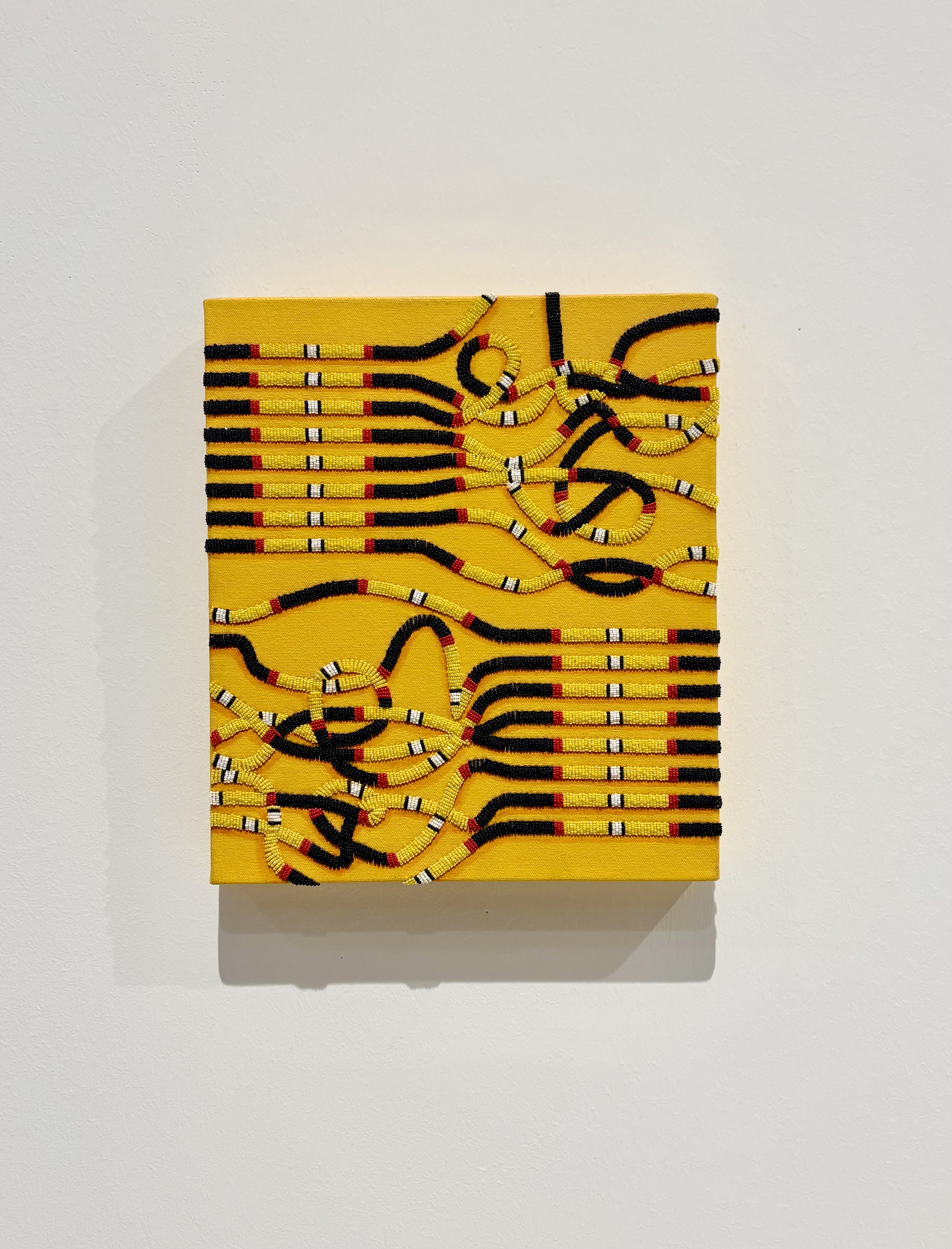
These Roots Run Deep show the paths Indigenous people followed before the European invasion – before genocide, historical trauma, colonization, and assimilation policies. But the squiggly lines eventually straighten out again, when intergenerational trauma is healed, with revitalization and recovery waiting on the other side.
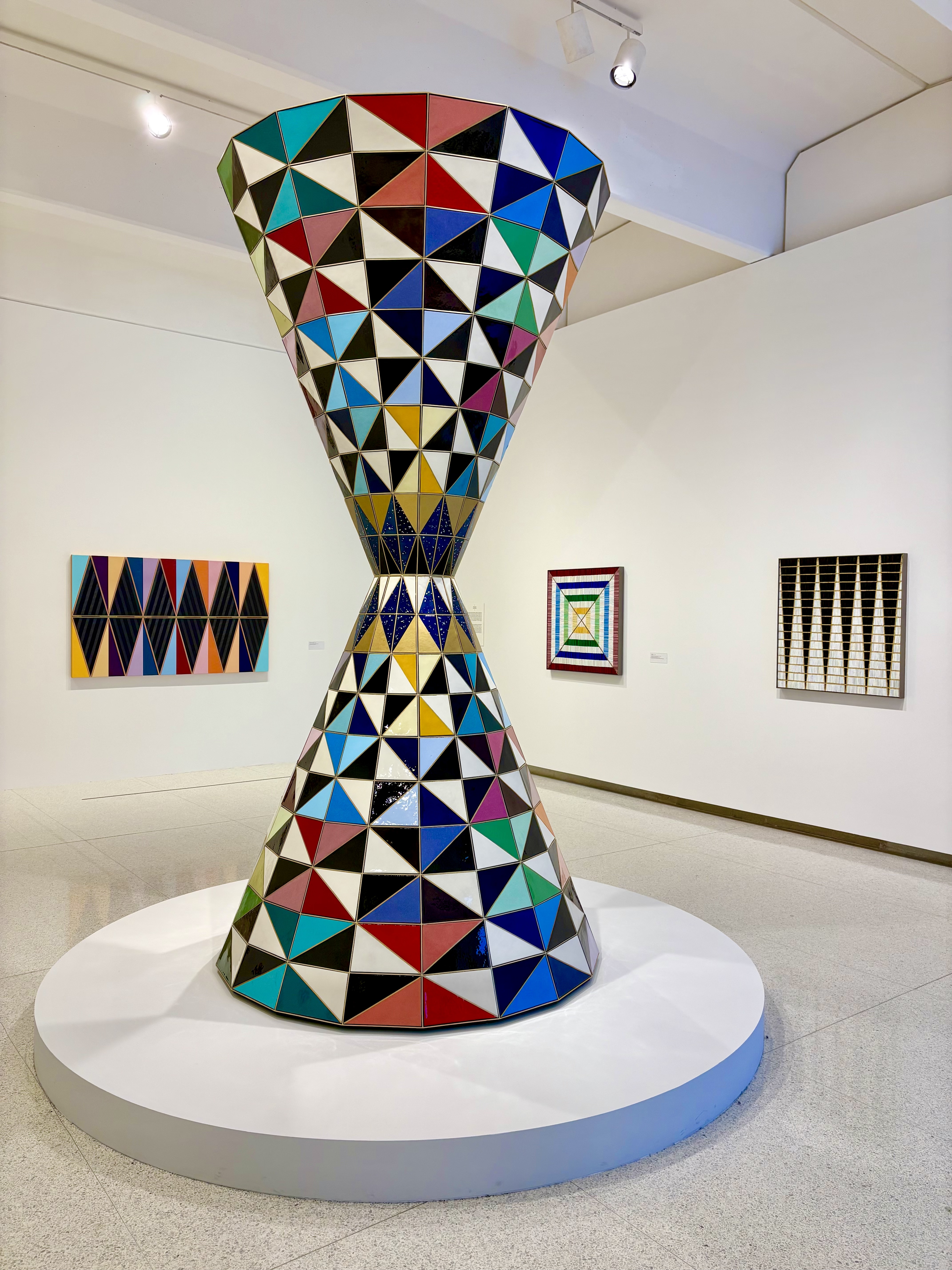
Many of White Hawk’s works incorporate the kapémni, “an important cosmological symbol for Lakota and other Plains nations. It is expressed visually by two triangles, joined at the tips to form an hourglass-like shape…its simple geometry expresses a profound belief and Lakota worldview that affirms the essential relatedness of all life.” The sculpture on the right is titled Infinite We.
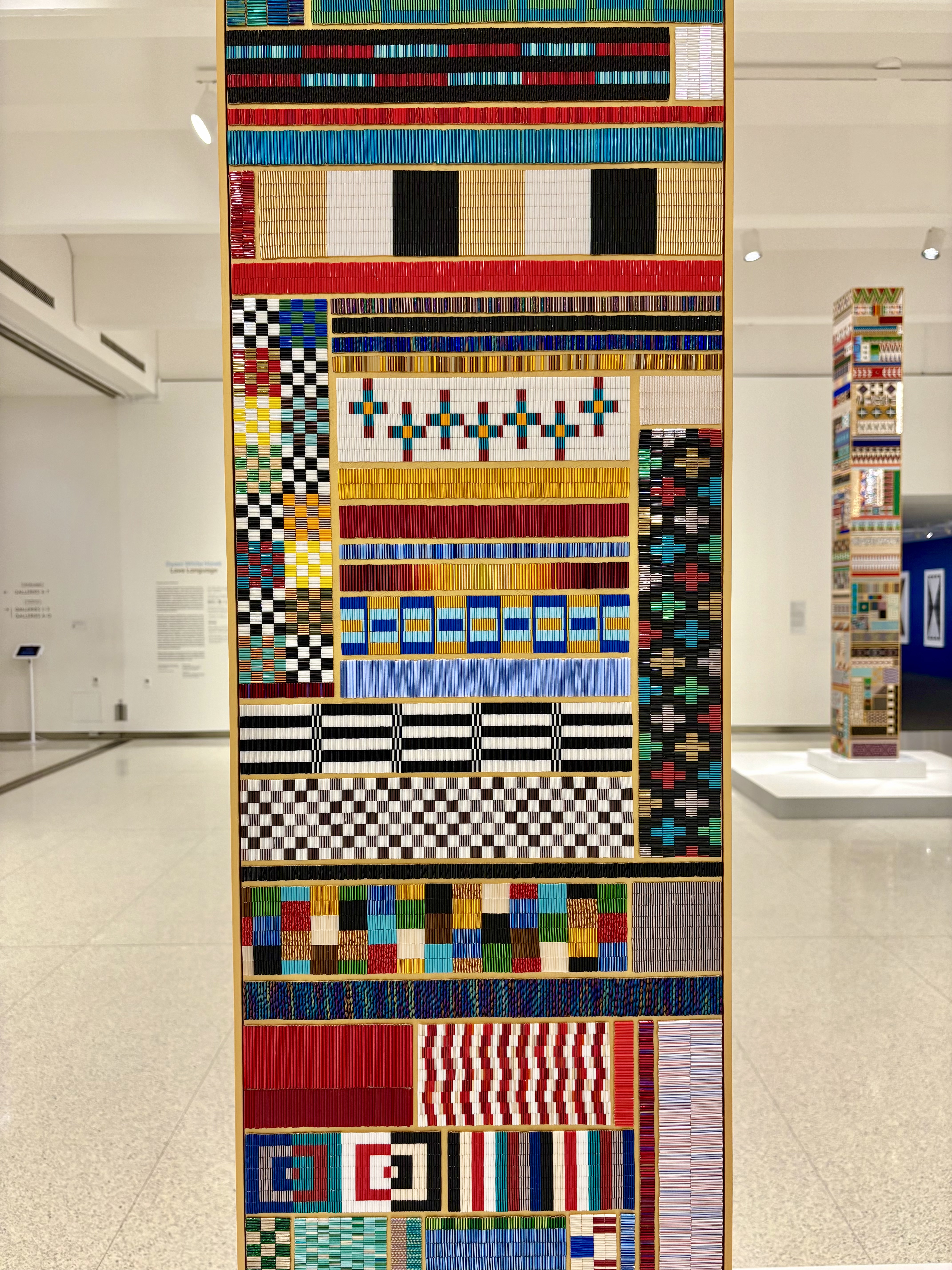
The most intricate pieces in the entire collection are two beaded towers titled Visiting and Visiting II. They pay tribute to the vertical sculptures of George Morrison and Jim Denomie. White Hawk notes that the title “underscores the cultural importance of intentional visiting in Native communities. This practice offers a chance to nurture relationships, honor kinship and community, and to celebrate.”
To make these sculptures, each person on her studio team was invited to shape their own beadwork designs and color combinations. White Hawk then assembled the hundreds of loomed strips across the sculpture in conversation with each other.
The central message of Dyani White Hawk’s work is clear: No one is illegal on stolen land because Mitákuye Oyás’iƞ (We are all related).
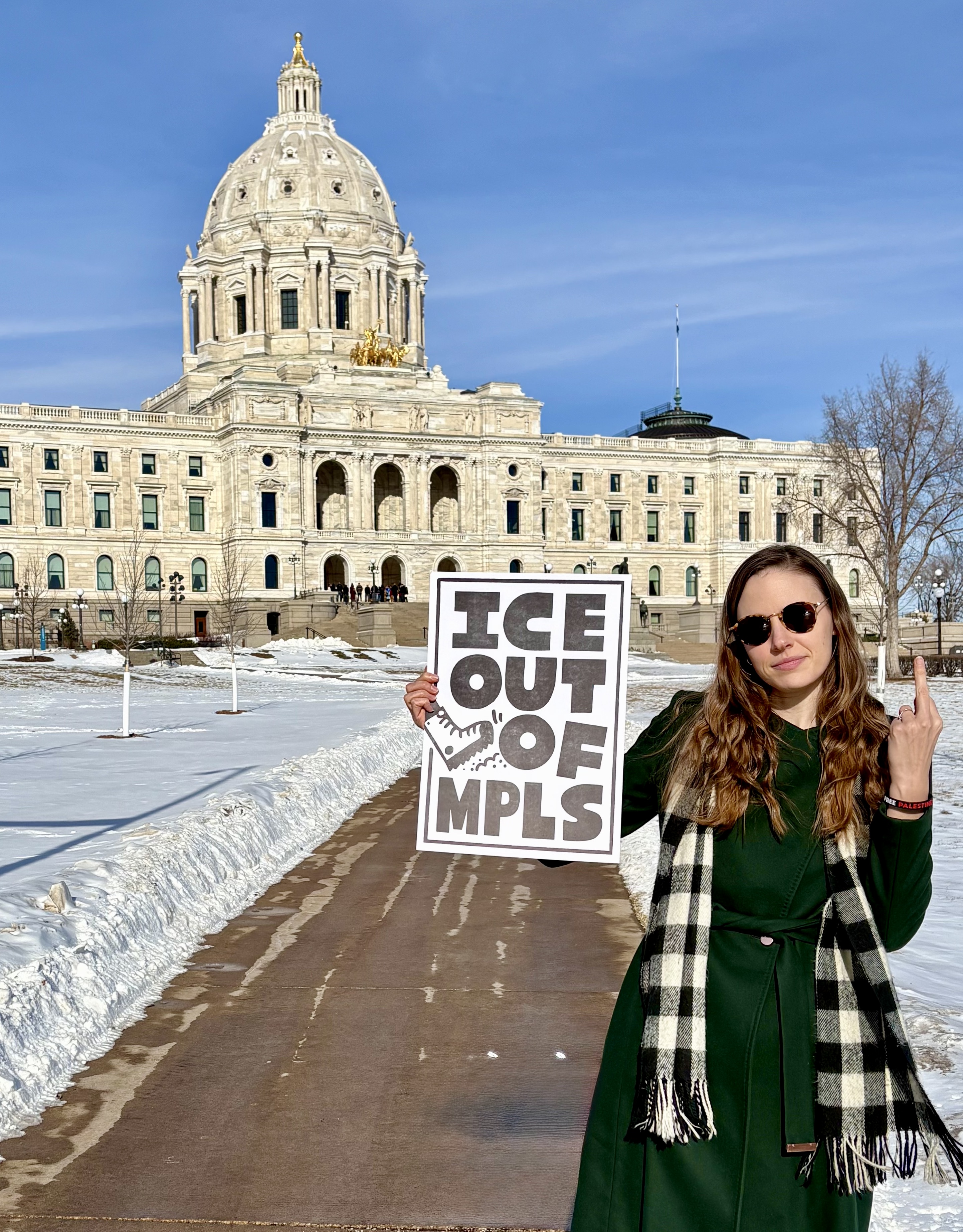
Which means ICE OUT OF MPLS!
 Abroad With Ashley