It’s February now, and I’m writing this much later than I meant to. I don’t usually let posts sit this long, but this has been an unusual season of life, and Japan ended up waiting. I’m not much for New Year’s resolutions, but I should make one to finally finish writing about this trip!
Still, Osaka hasn’t faded the way I worried it might. We arrived after Hiroshima, and one of the first things we did was head to Dōtonbori. In fact, we ended up there more than once – partly because of where it sits and partly because so much seems to orbit around it.
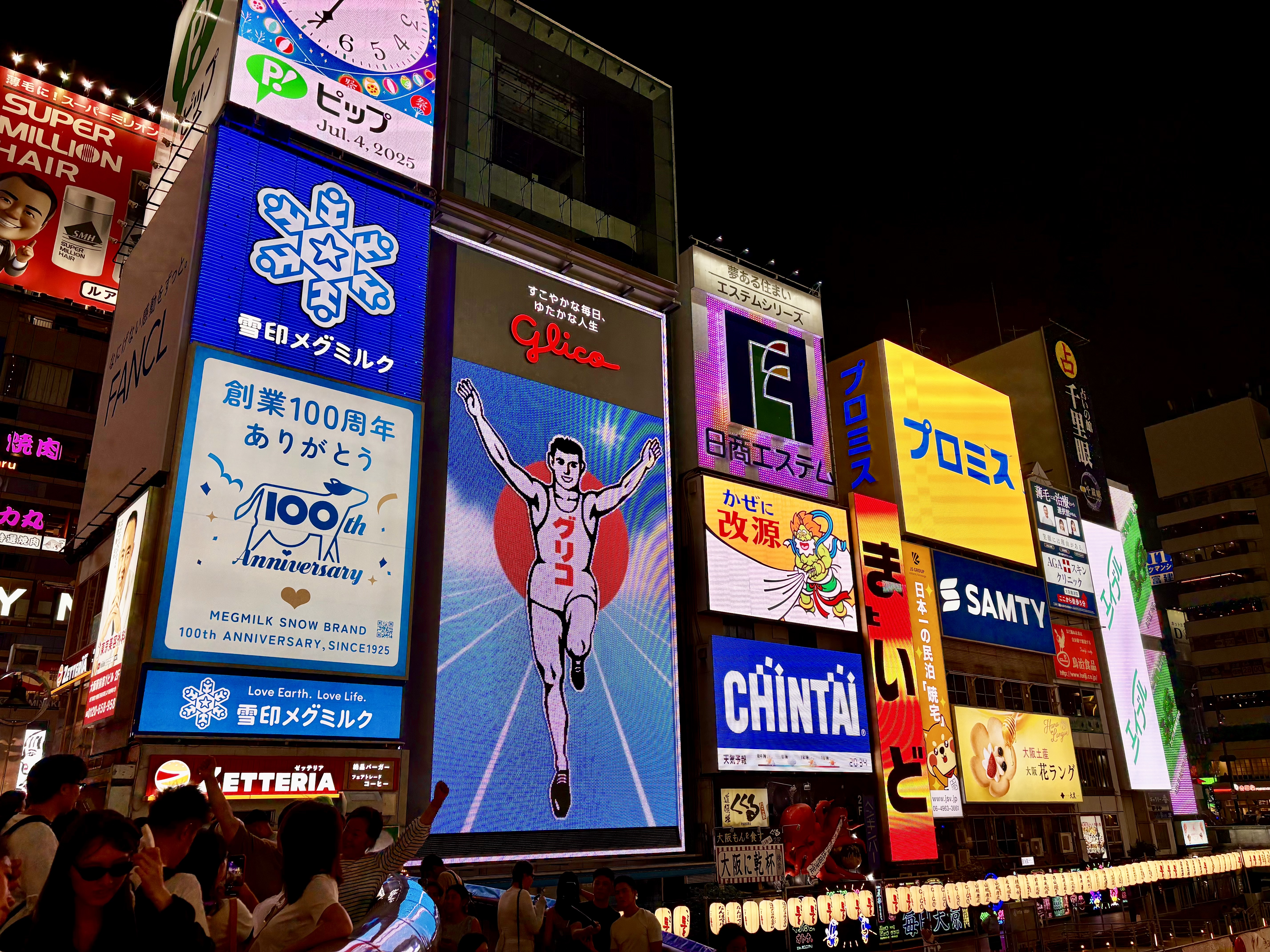
We passed through during the day and again at night, and it felt different each time. The crowds were never really thin, but once the sun sets, the signs take over and the light is reflected in the canal.
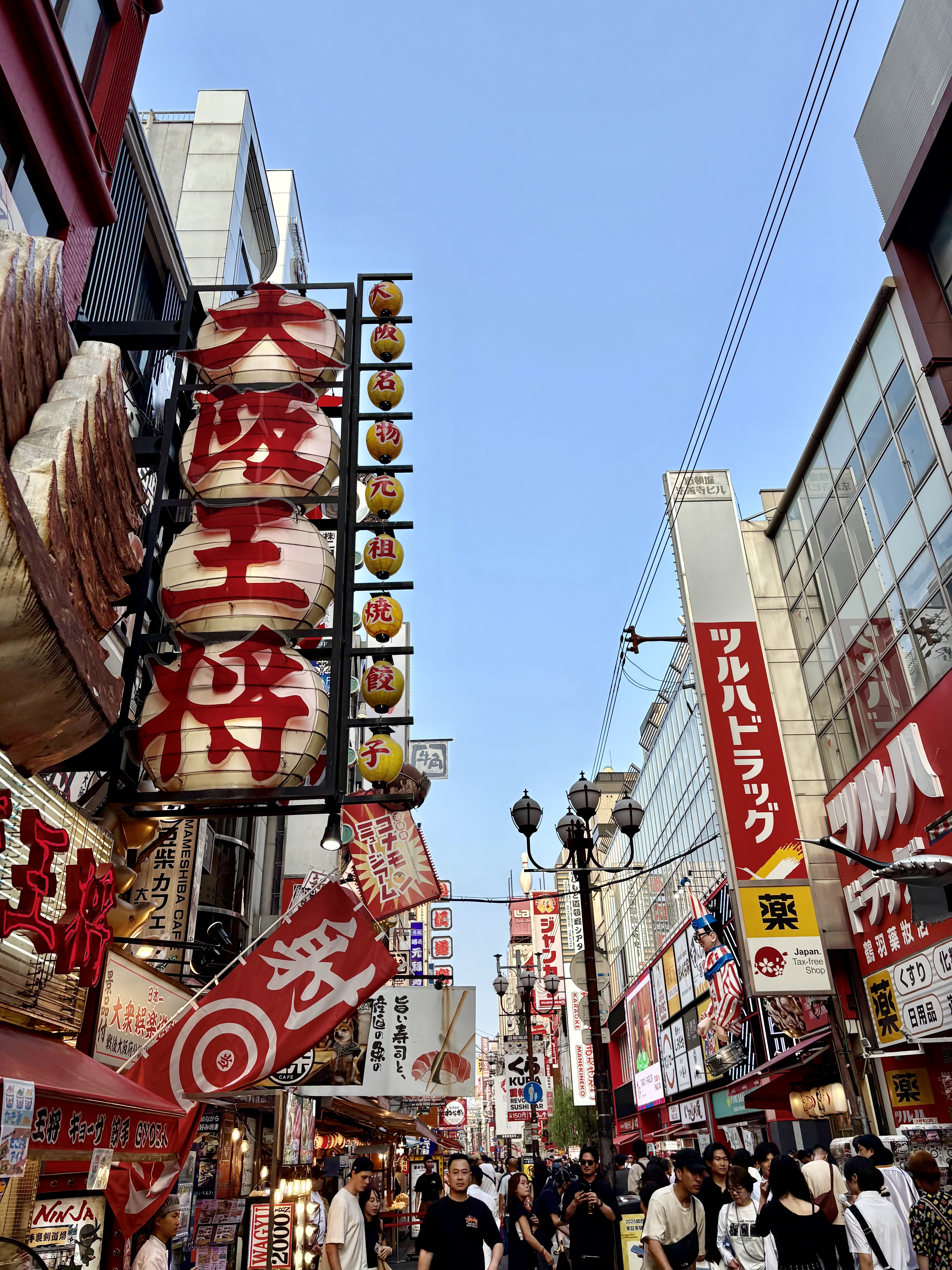
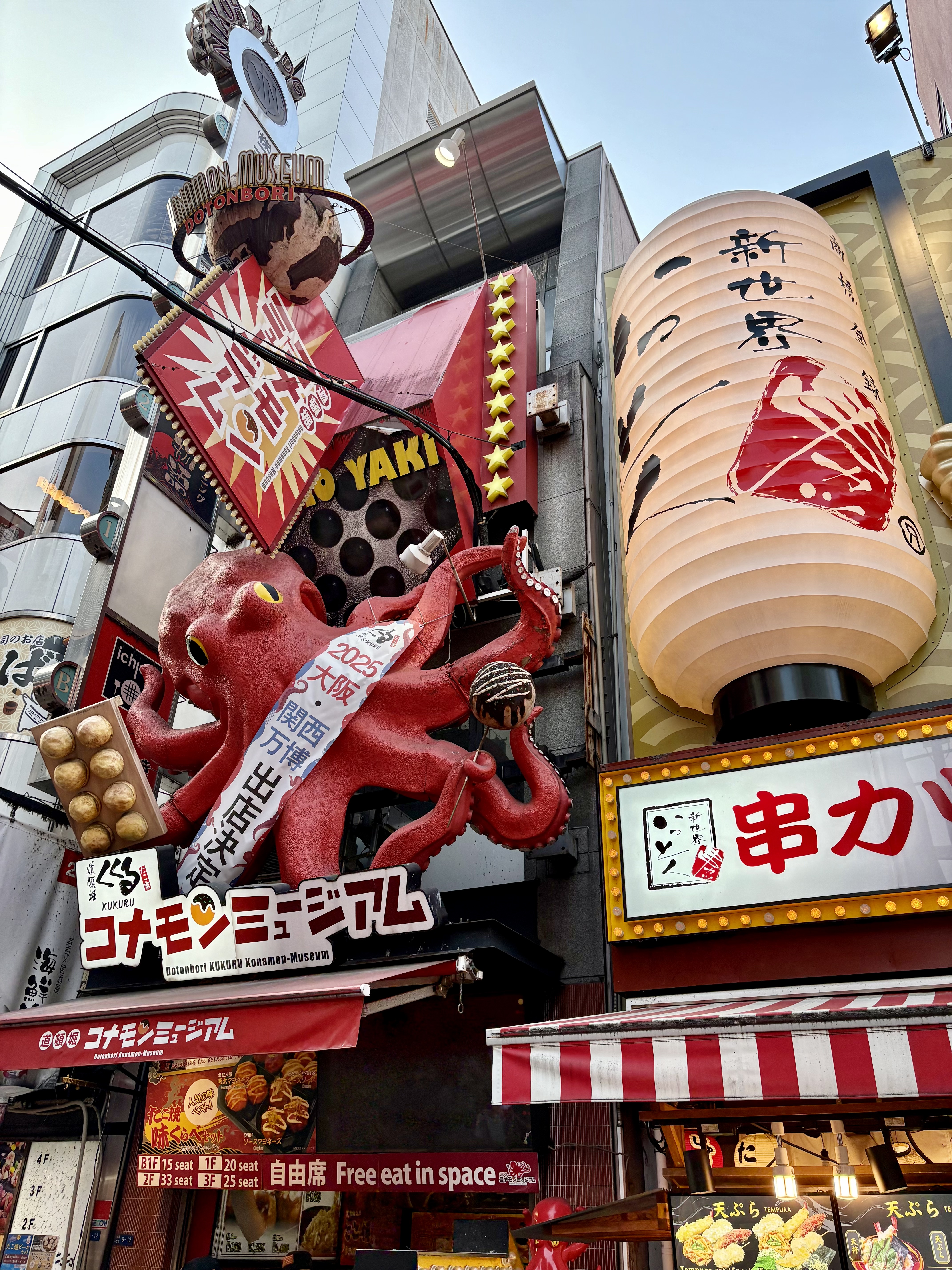
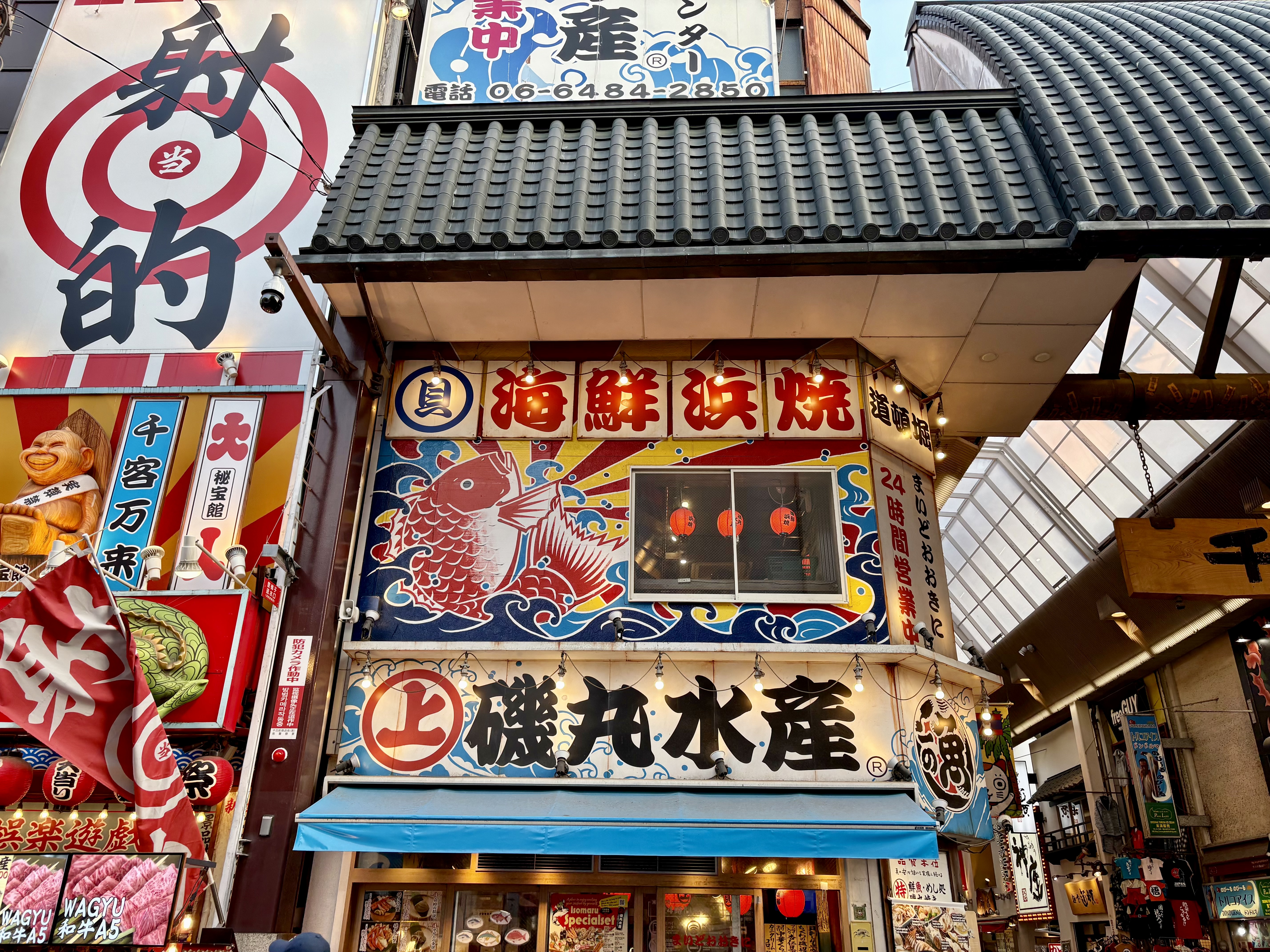
One of the things Osaka is famous for is takoyaki – octopus balls – and Dōtonbori leans all the way into it. Giant octopus signs hang all over the canal, tentacles curling out from buildings, cartoon versions blinking and waving from storefronts. Visually, I loved it. The octopus has always been my favorite sea creature, and the designs are playful and strange in the best way.
At the same time, it was hard not to feel bummed out. The octopus imagery isn’t there because of reverence or affection, but because people are eating them. I’m very aware that the world isn’t vegan, and I don’t expect it to be – but Japan is a country that consistently advertises its meat consumption.
At night, the signs stop competing with each other and start working together, pulling everyone in the same direction. The running man is impossible to miss, especially with the crowd packed tight beneath him. He’s been there in some form since 1935, long enough that he’s stopped feeling like an advertisement and started feeling like a landmark.
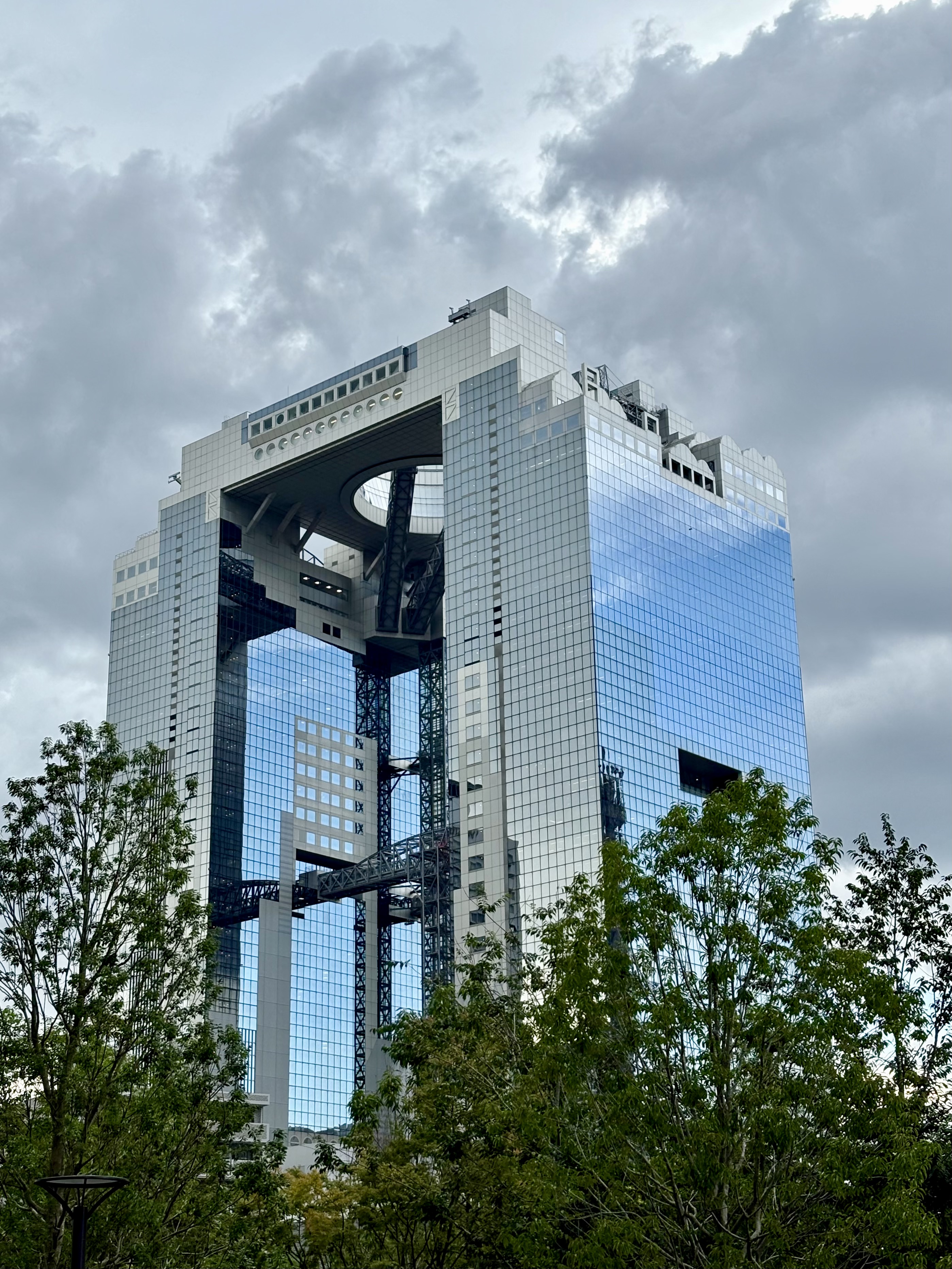
Another Osaka landmark we sought out was the Umeda Sky Building. We went on a day when the weather was turning – we tried to beat the rain and managed to get some beautiful views before the storm arrived. We didn’t make it all the way to the open-air top, but we spent a lot of time inside instead, learning about the building and watching the city change below us.
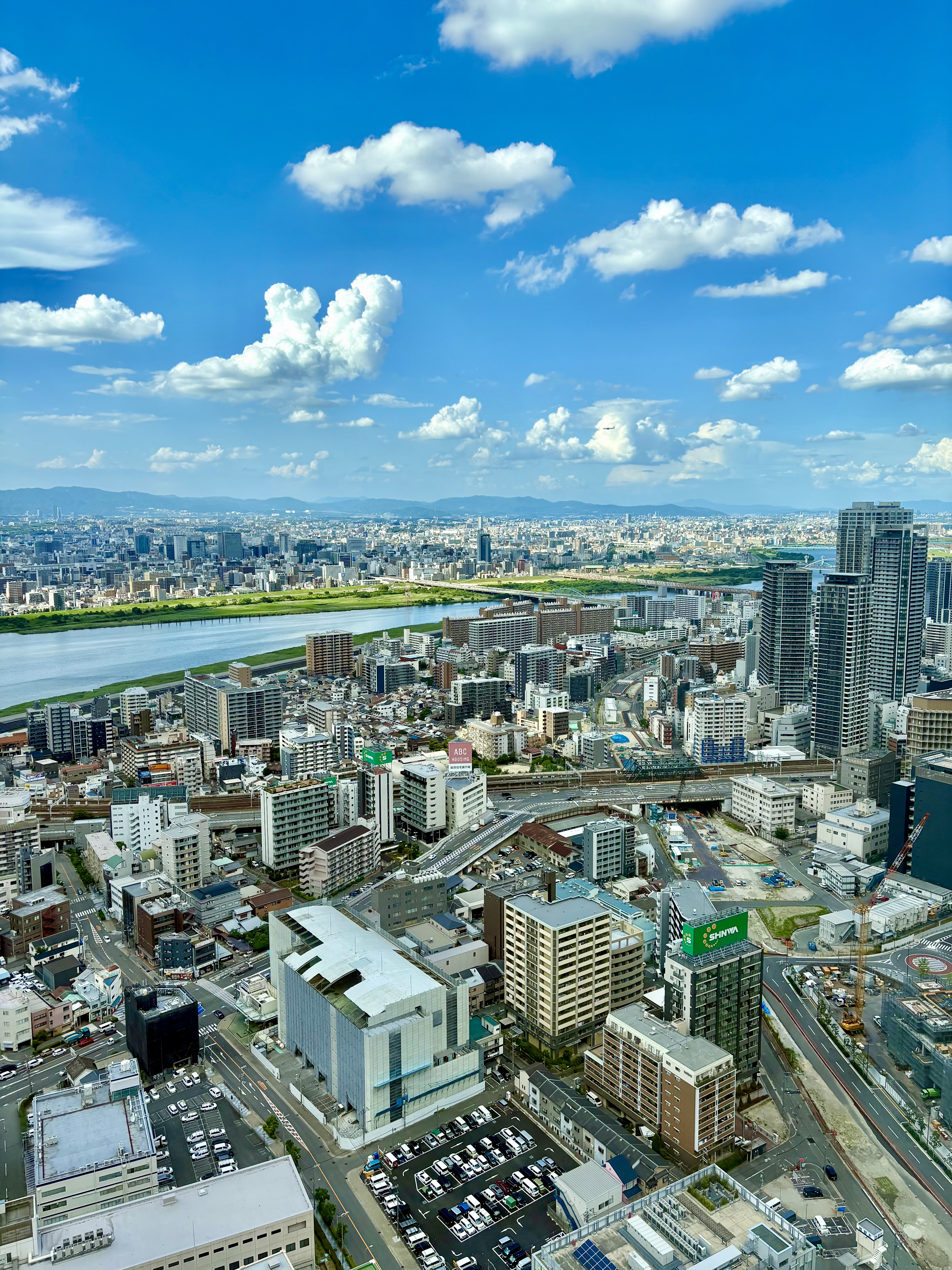
Built in the early 1990s, the two towers are connected at the top by the Floating Garden Observatory. The escalators are suspended between the towers and were intentionally designed to feel slightly surreal. It’s not Osaka’s tallest structure, that award goes to the Abeno Harukas (a mixed-use skyscraper), but it has truly incredible views of the city around it.

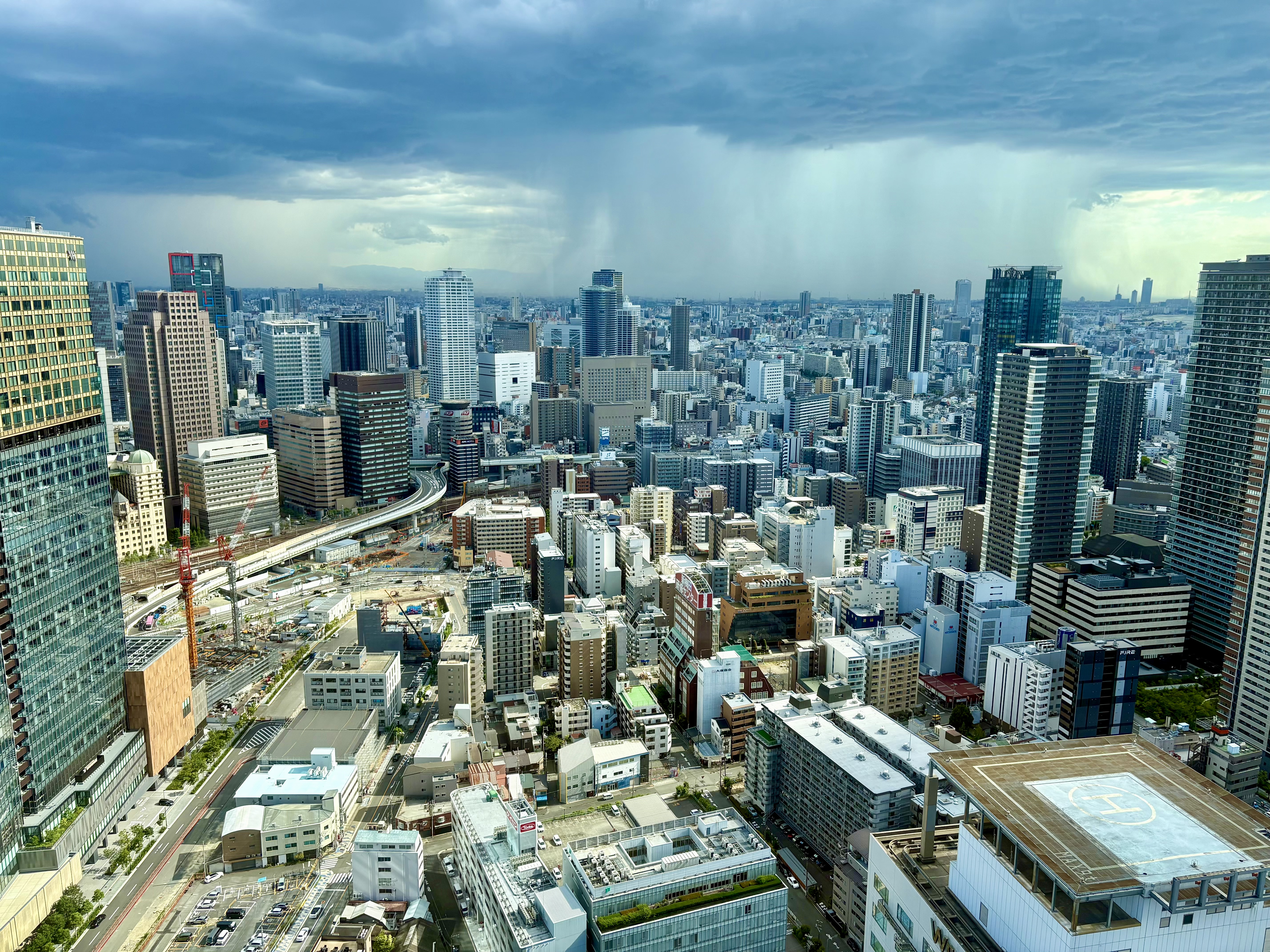
Seeing the storm roll in ended up being the most memorable part. The blue sky disappeared quickly, clouds replacing it almost all at once, and the city changed with it. I’d still love to go back and make it all the way to the top one day, but watching Osaka transform in real time felt like its own kind of vantage point.
There are some places where weather doesn’t matter. One of the places we spent the most time – and had the most unexpected fun – was Daimaru Shinsaibashi. All fifteen floors of it. Japanese department stores really are their own ecosystem, and once you’re inside, the outside world fades away.
Floor by floor, it became a greatest-hits tour of pop culture. A Pokémon Center, perfect since we were determined to visit each of them, a Pokémon Cafe – didn’t know those even existed, a Jump Shop for my One Piece obsession, a Studio Ghibli shop with a Spirited Away photo op that was impossible to resist, a Snoopy store that brought me straight back to my childhood in Minnesota, and, of course, a Godzilla store. Mall culture is very much alive in Japan – nostalgic, curated, and unapologetically joyful.
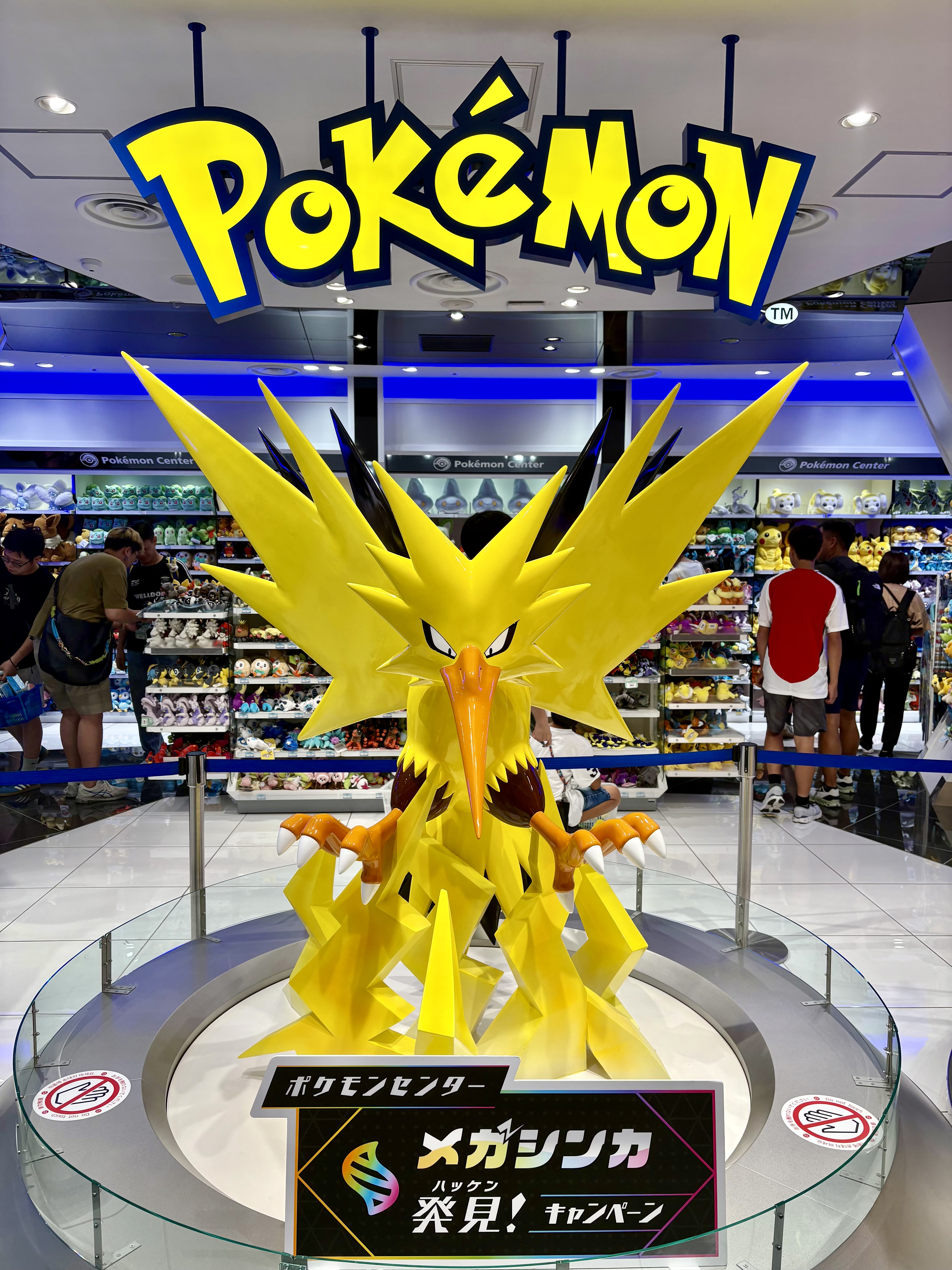
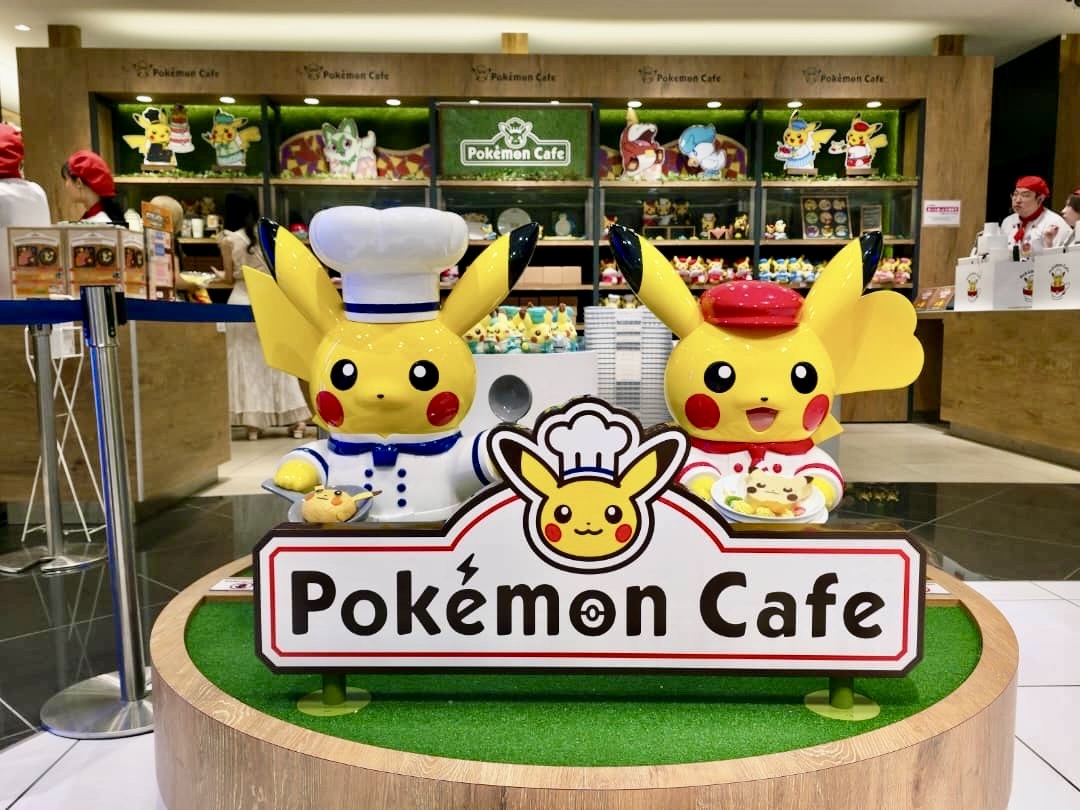
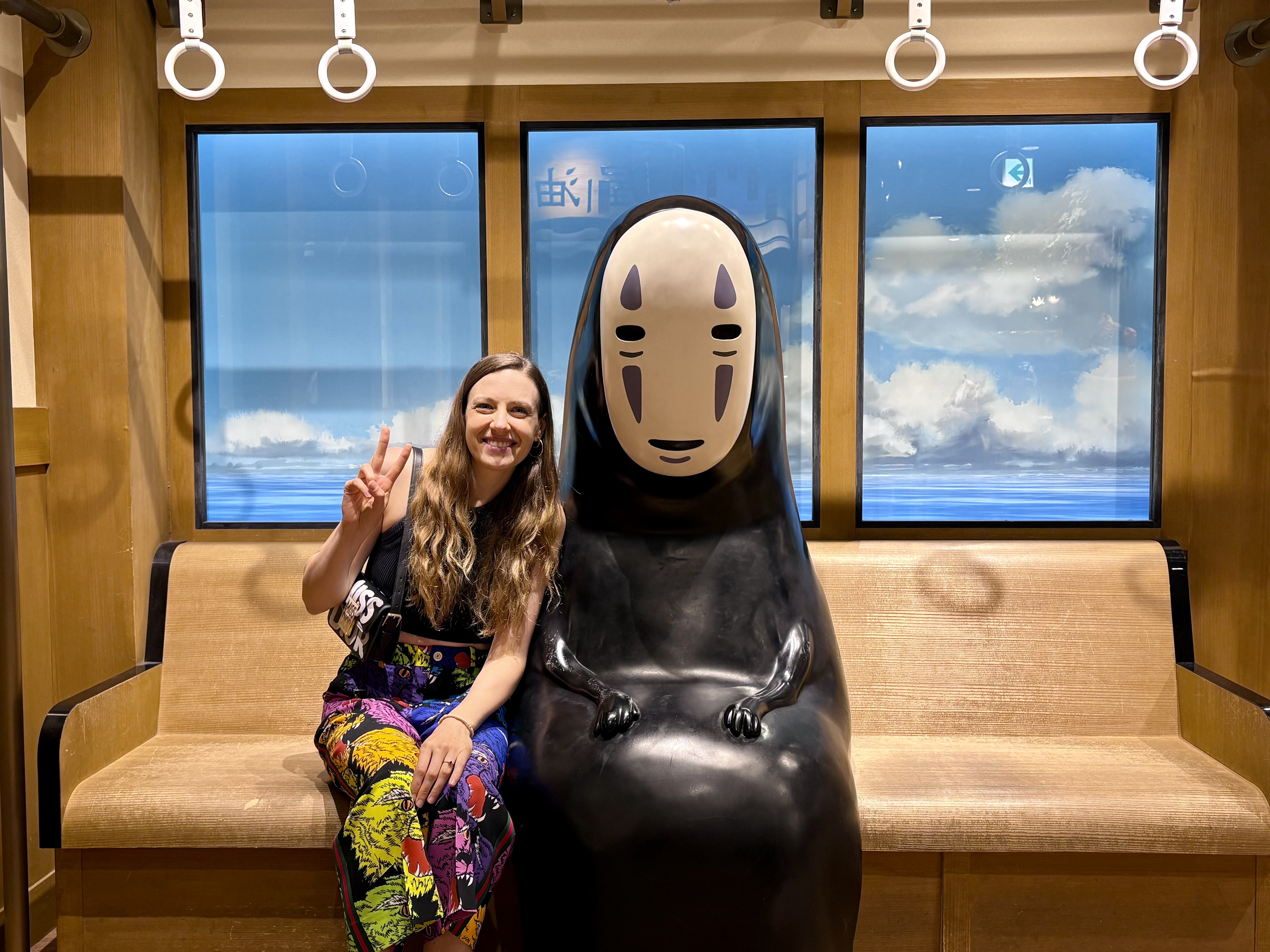
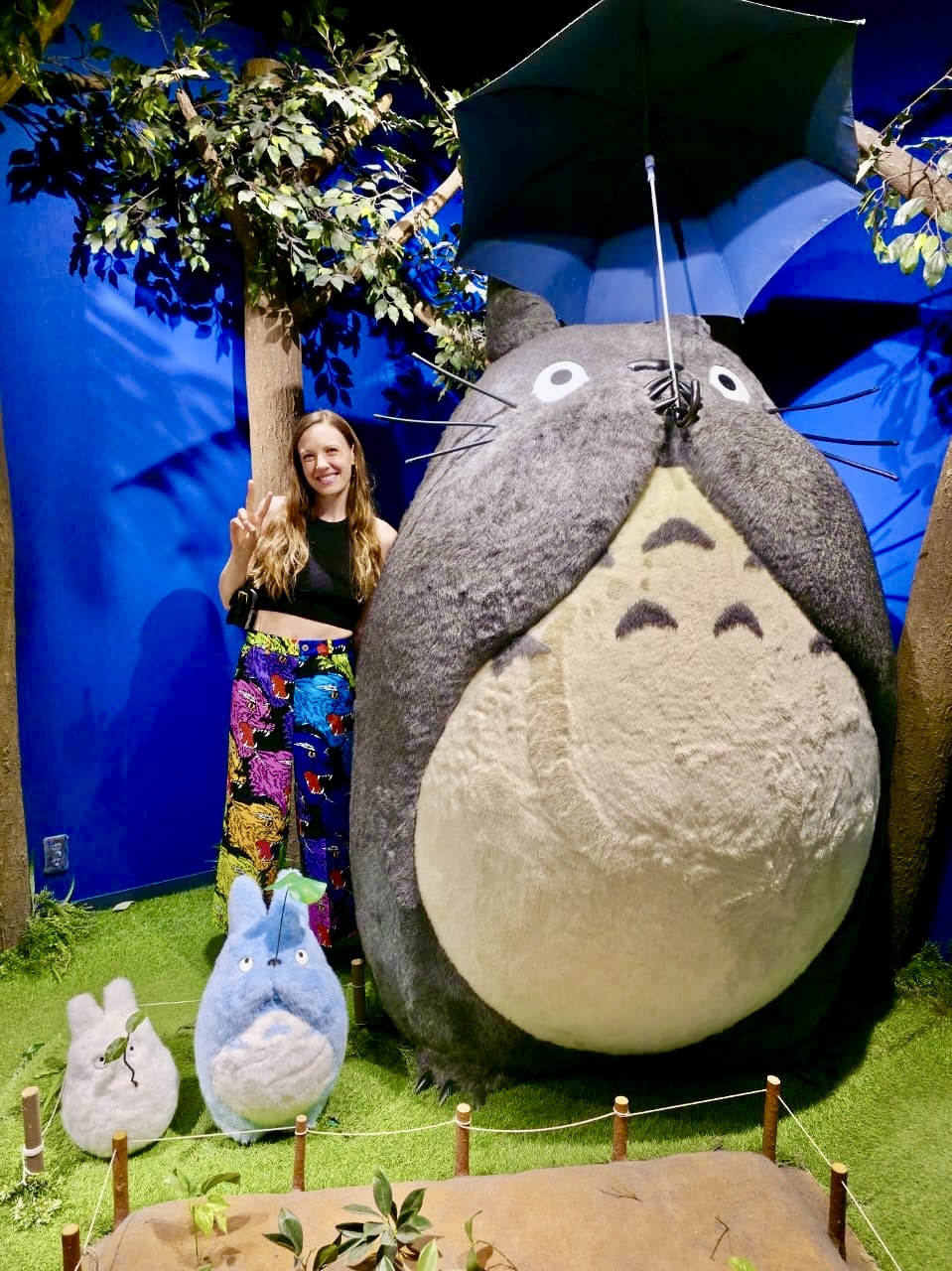
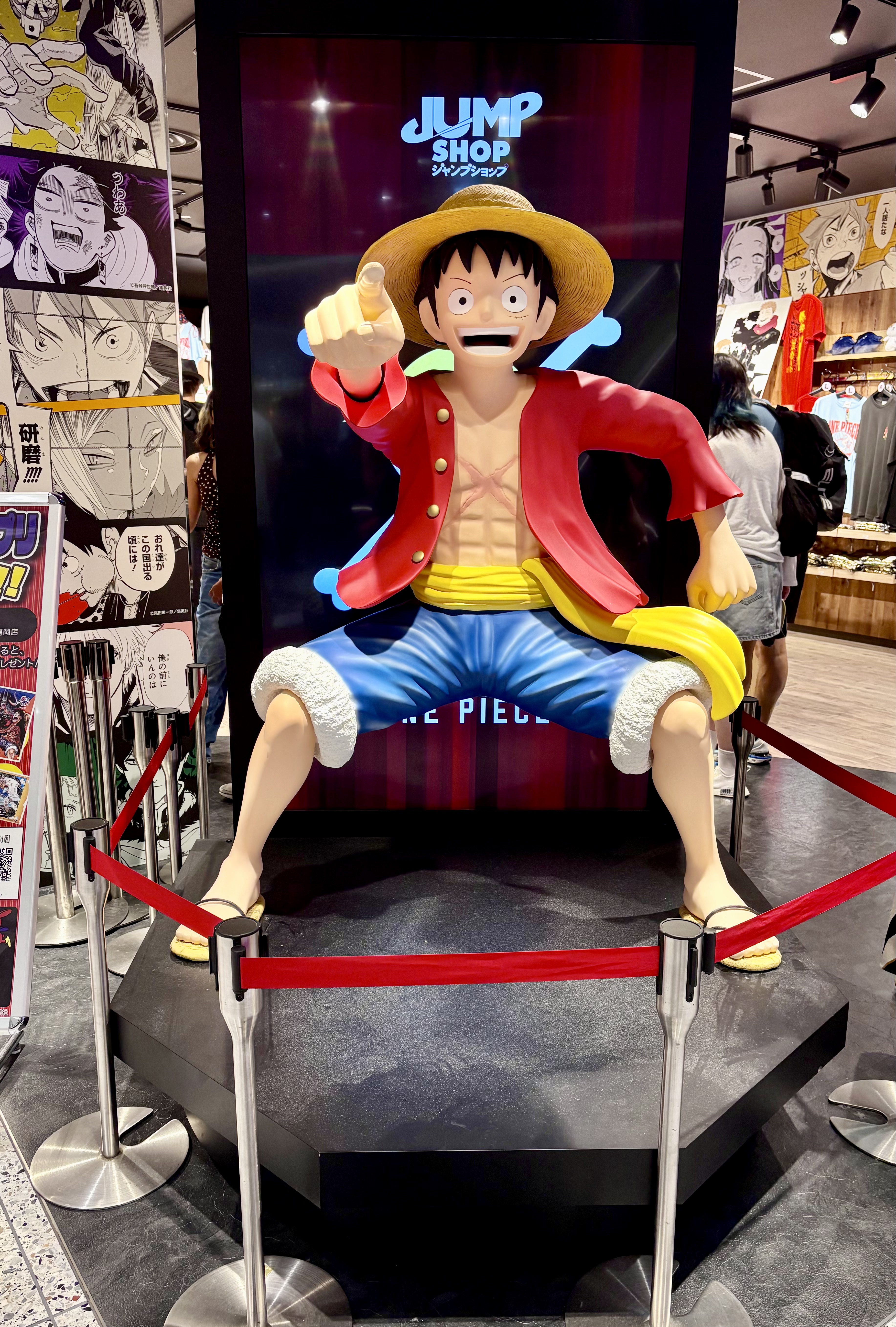

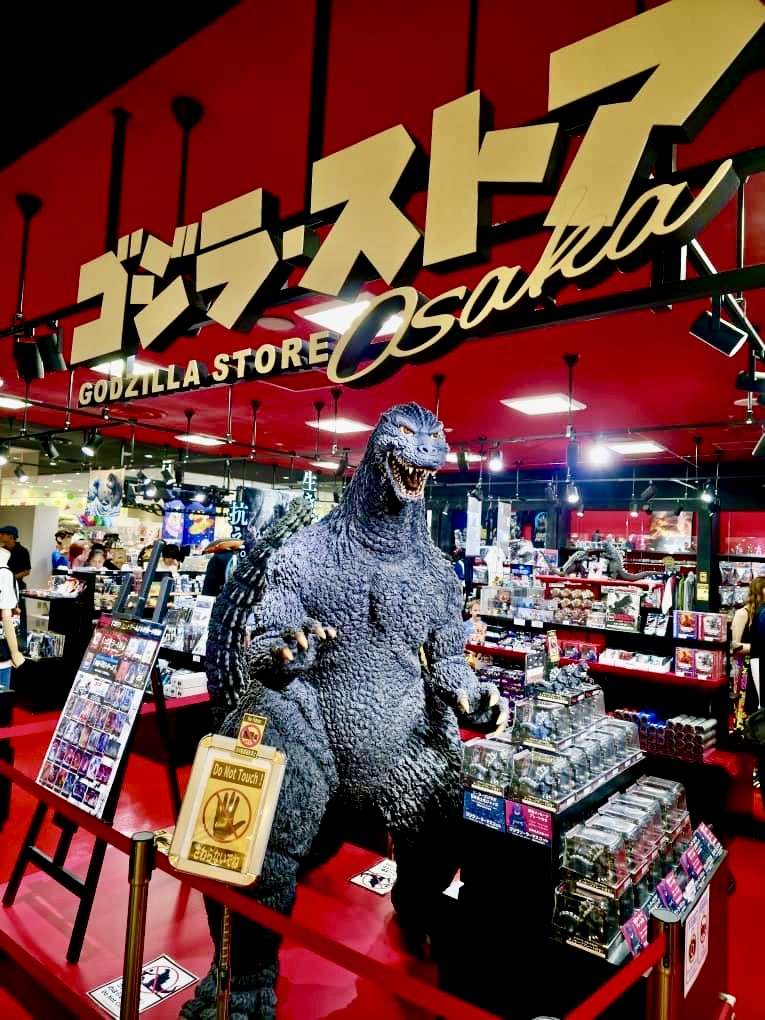
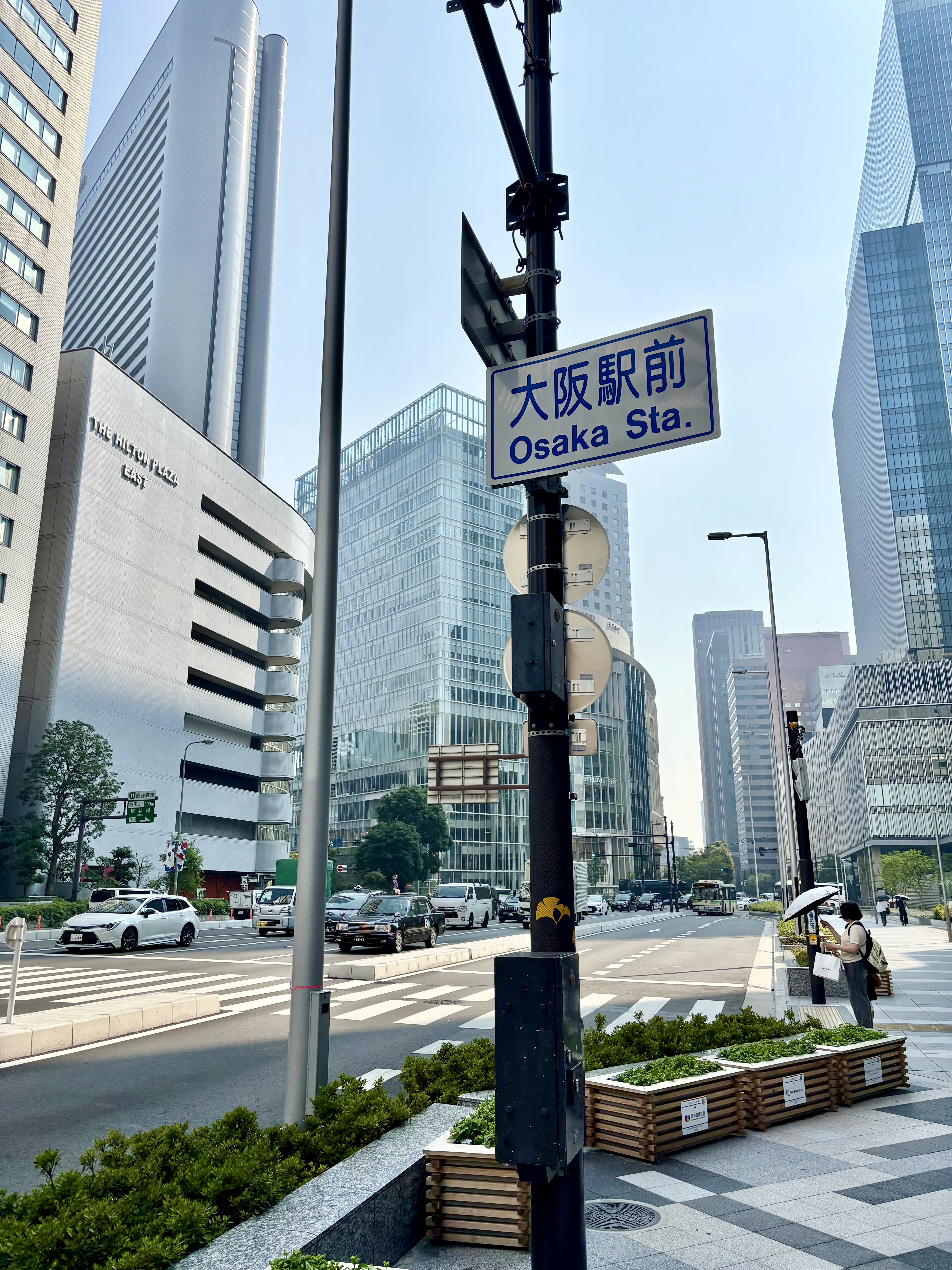
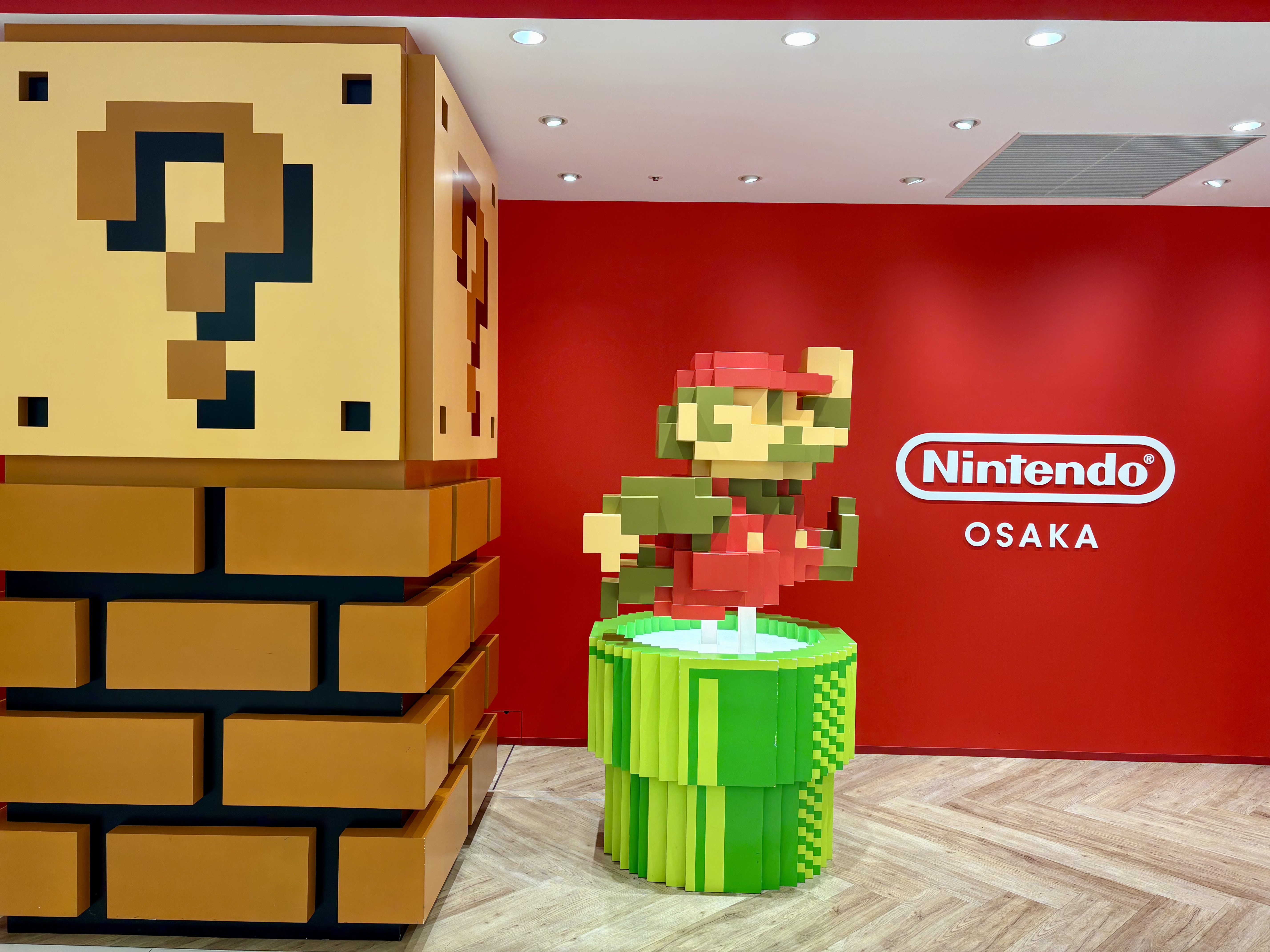
This wasn’t the only mall in Osaka. The Daimaru Umeda sits inside Oksaka Station and also had a fair amount of childhood nostalgia on display. We went for the Nintendo Store, but stayed for more One Piece, Godzilla, and Gundam. It seemed that even Japan’s transit hubs were places where we could happily spend hours of our day.
We also got to “meet” Myaku-Myaku, the official mascot of Expo 2025 Osaka (which I’ll get into more in my next post). What I’ll say is that he was designed to be a shape-shifting life form that is still evolving. And this blue and red blob with multiple eyes is equal parts “adorably weird” and “mildly horrifying.” Very on-brand for Japan.
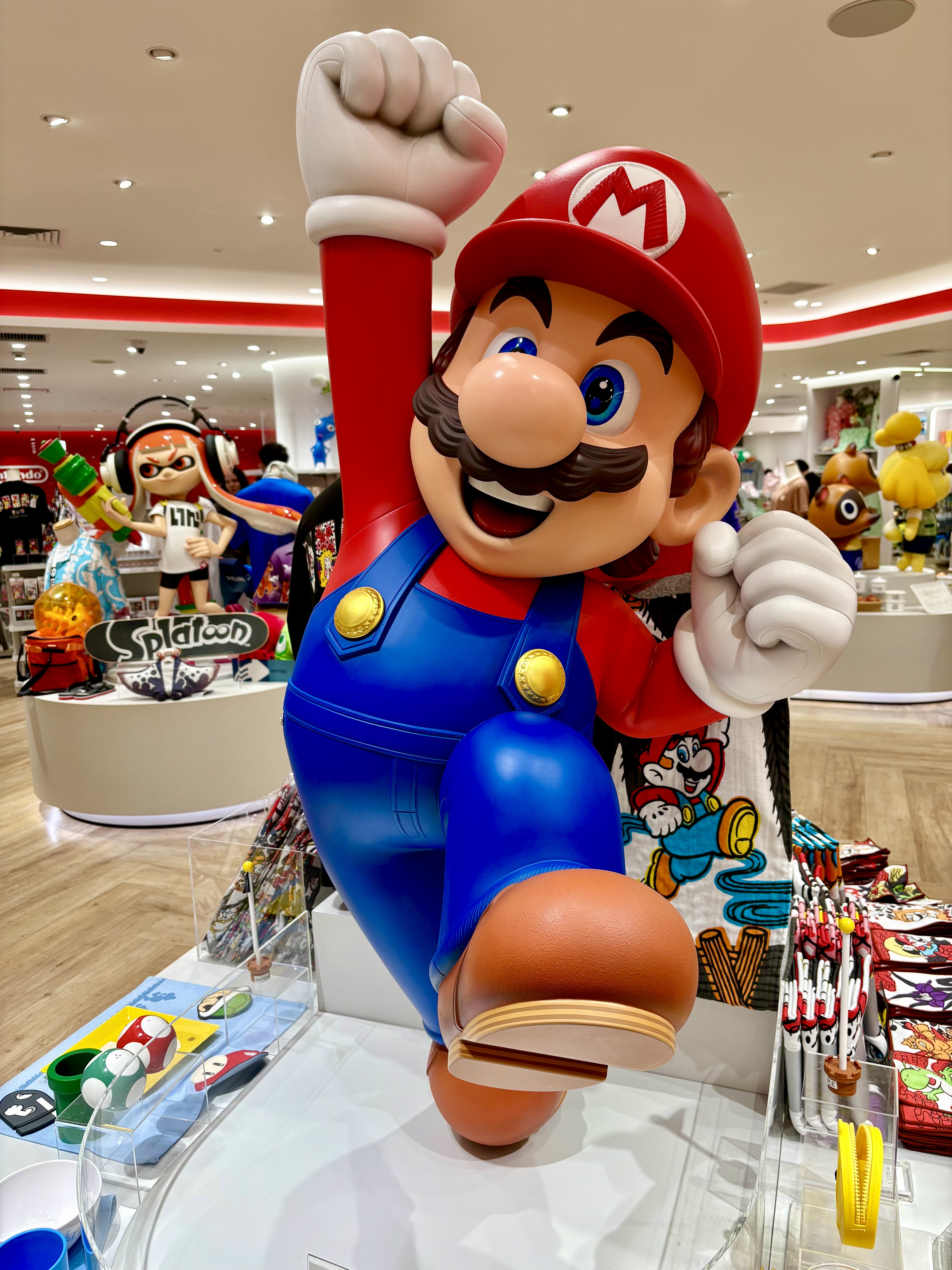
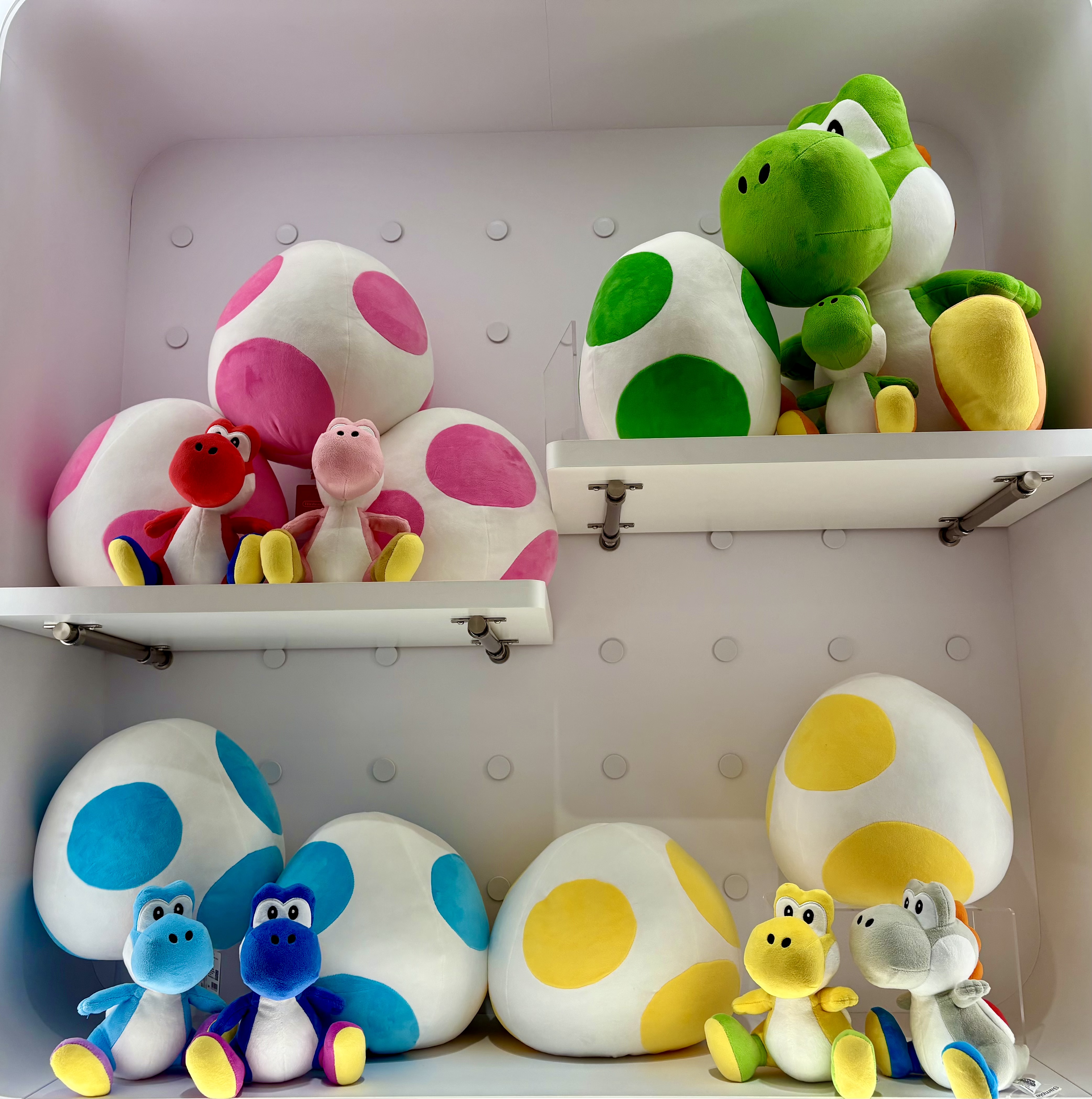
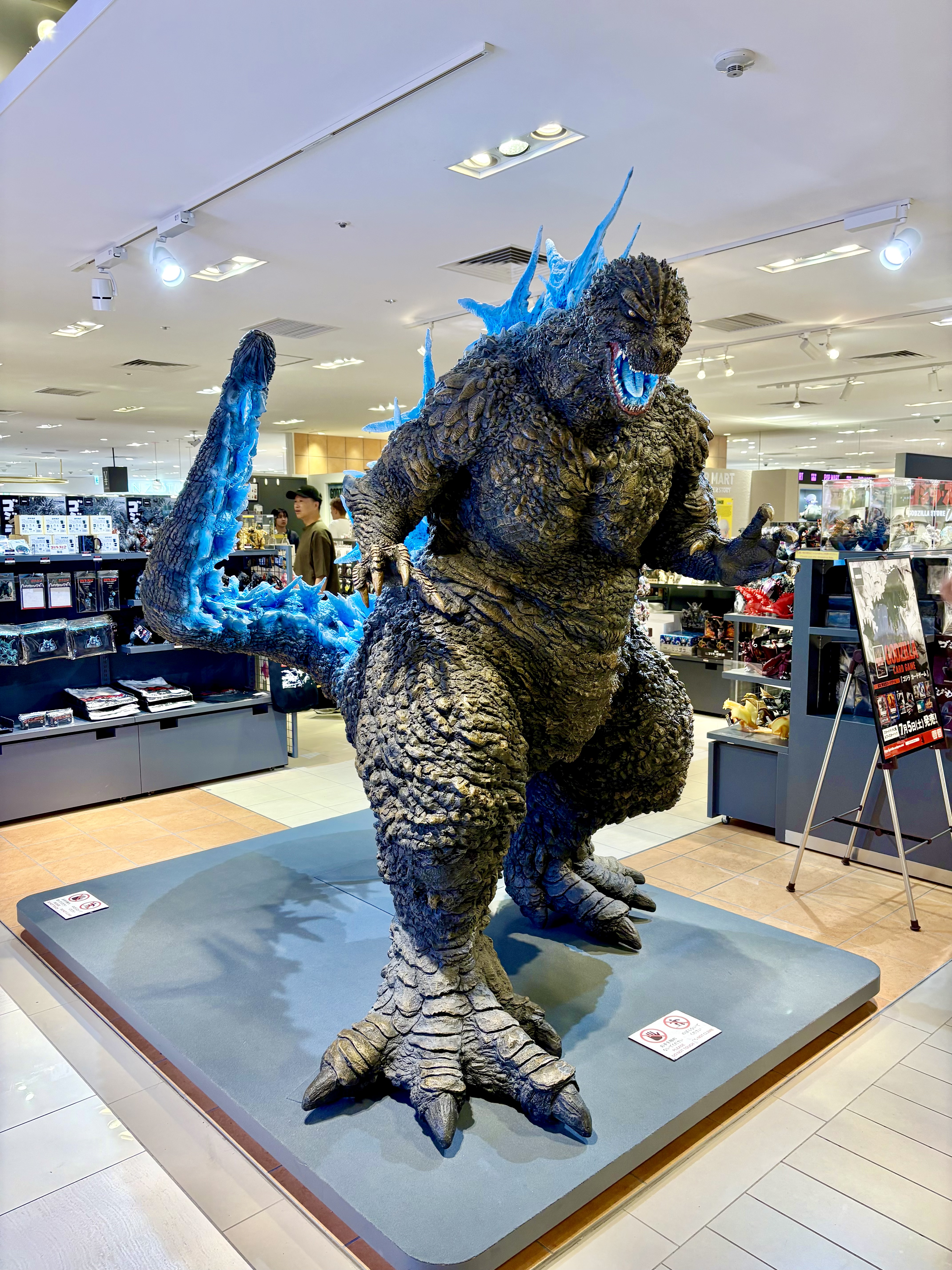
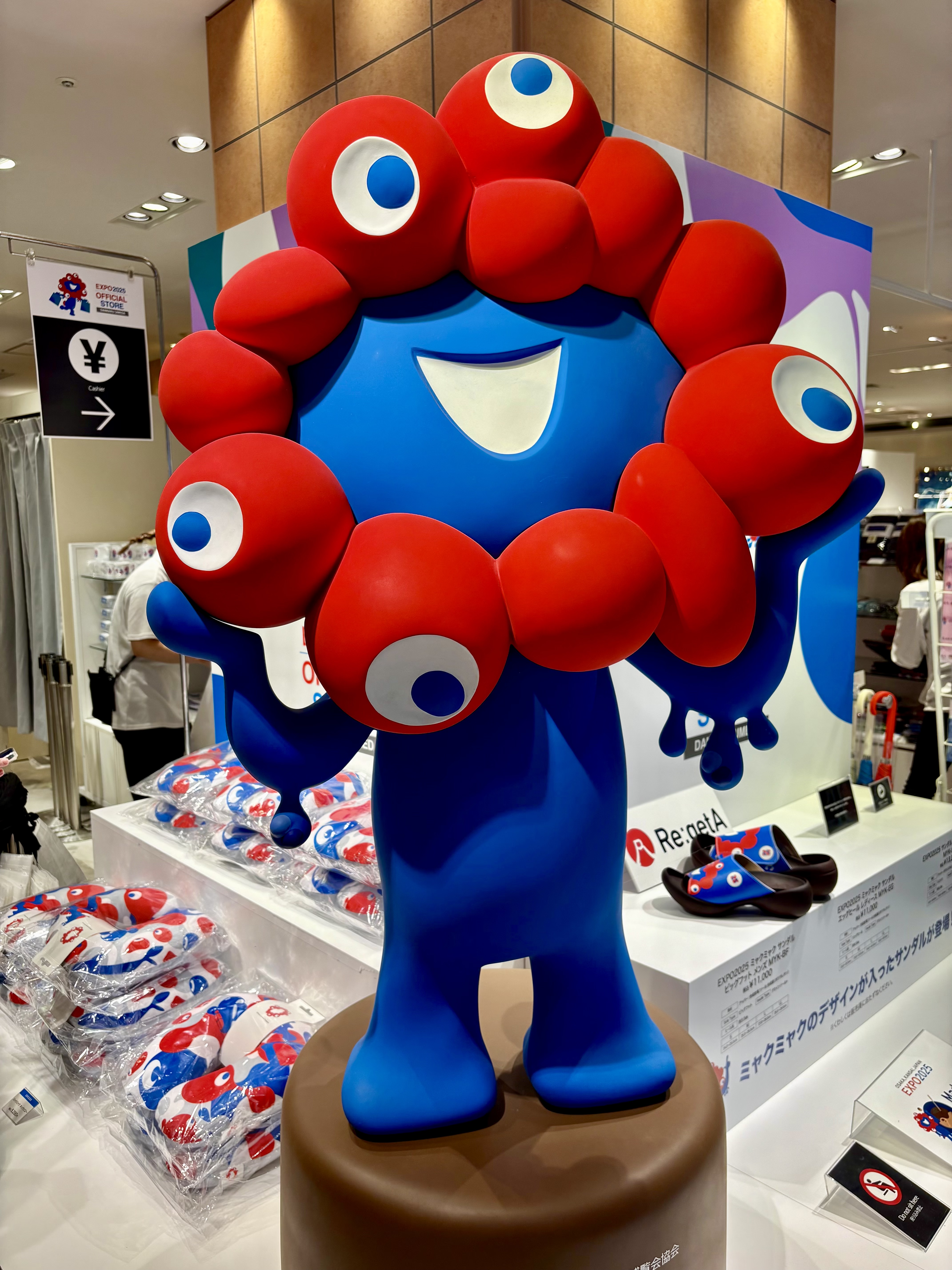
If I’m being honest, Chandler and I loved how seamlessly pop culture was folded into everyday life in Osaka (and the rest of Japan!). You don’t have to seek it out, but of course we did anyway. Which is how we found ourselves away from the multi-story malls and train stations and in Nipponbashi Denden Town.
Denden Town is Osaka’s answer to Tokyo’s Akihabara. It’s a sprawl – narrow streets, stacked shops, shelves you have to dig through. It’s less about presentation and more about discovery. I definitely went on a shopping spree there, finding a lot of the UTA One Piece Cards I was collecting (I finally have all 45!). I think it’s fair to say we spent hours sorting through cards – with my focus on One Piece and Chandler going through the Pokémon cards.
Otaload is the main drag in Denden Town, and we spent a whole day wandering into shops and down side streets.

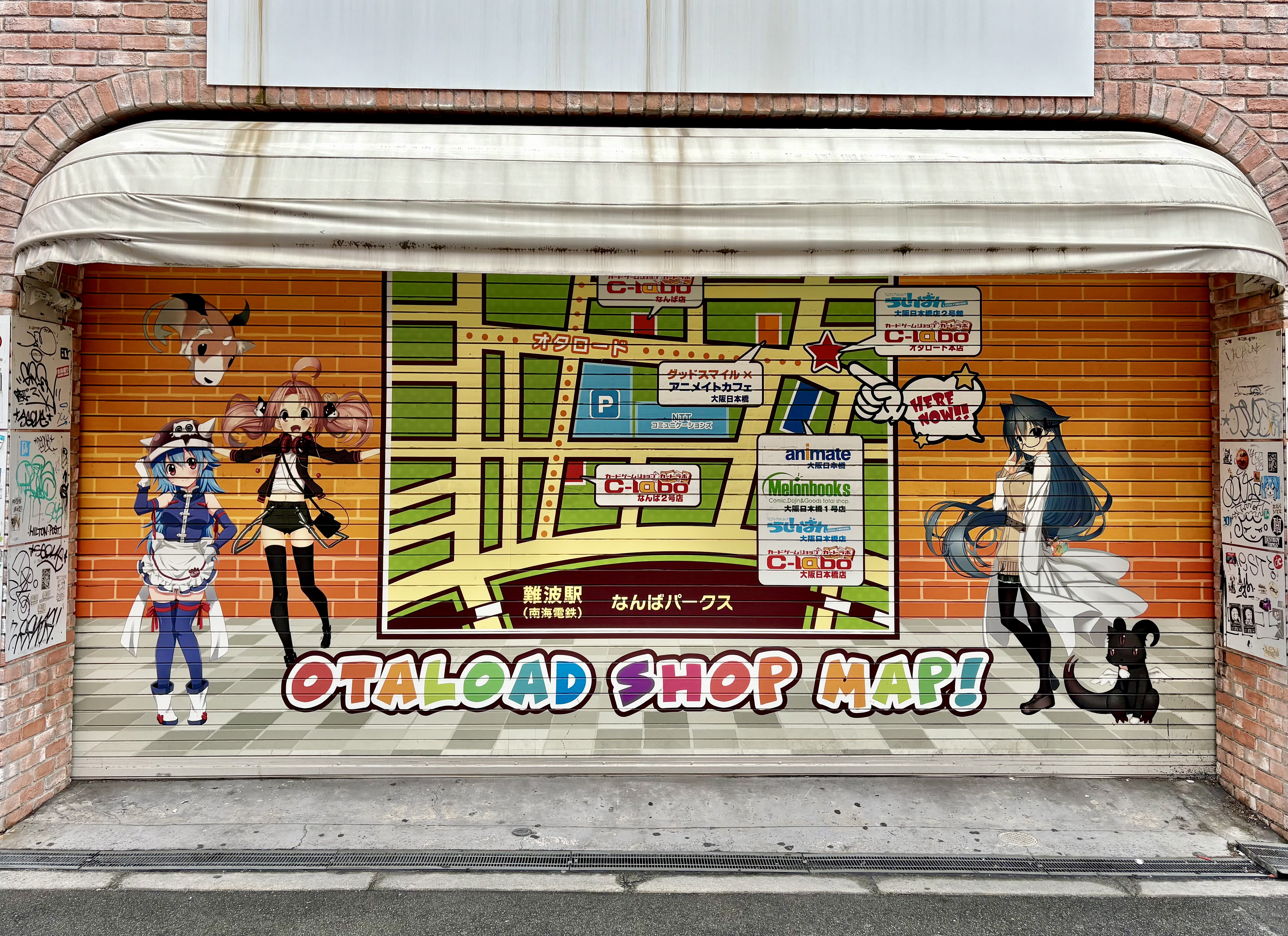
All-in-all, I absolutely loved Osaka’s otaku culture. And we would continue to have fun finding these experiences in each city that we visited.
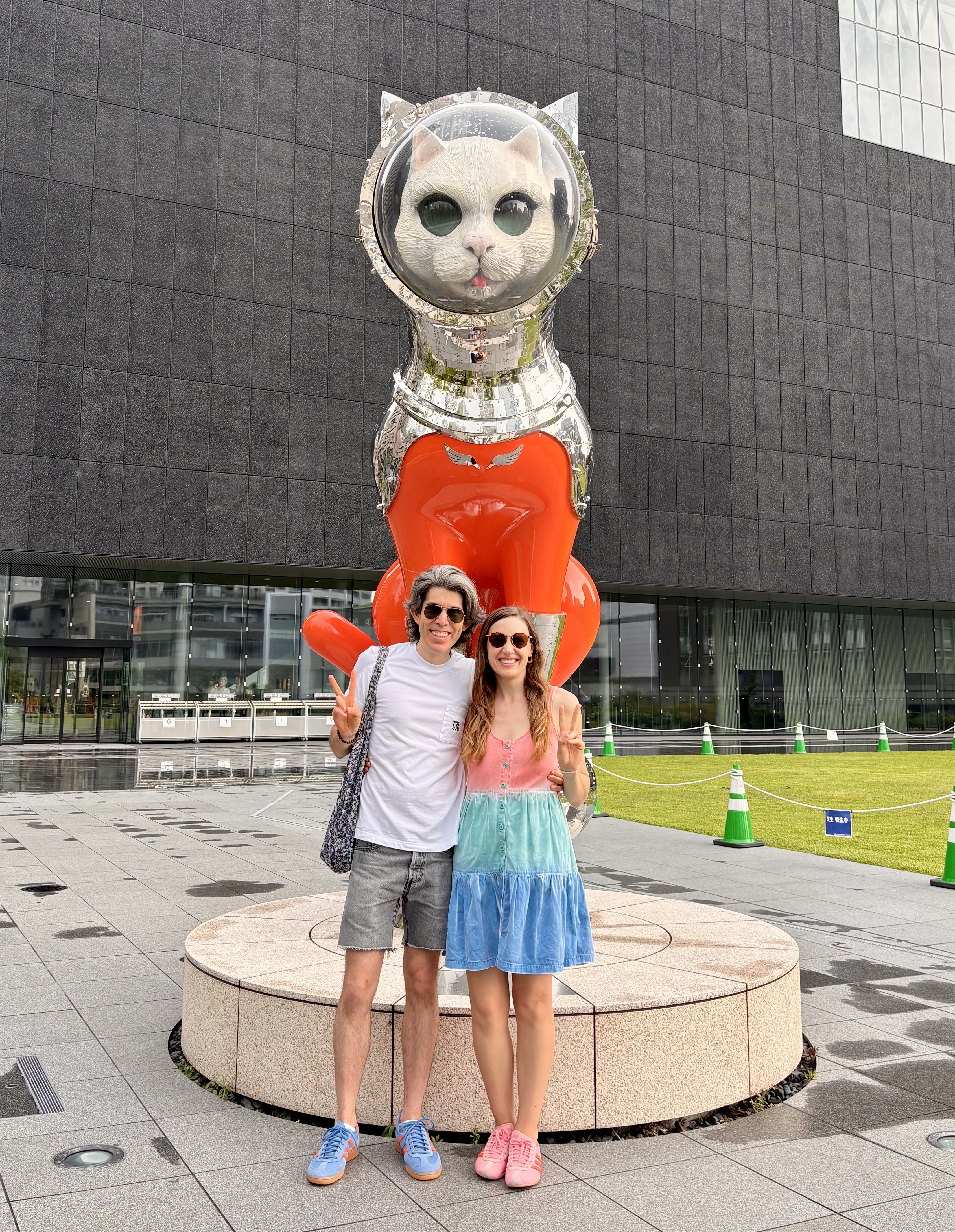
We went all the way to the Nakanoshima Museum of Art – even though we didn’t have time to go inside – because I was not about to miss Kenji Yanobe‘s statue Ship’s Cat. Standing 3.5 meters tall, this orange-and-metal guardian cat watches over the museum entrance. At this point, we hadn’t been to Big Cat Bang in the Ginza Six atrium in Tokyo and we only later found out that there are smaller sculptures in other parts of Osaka and Kyoto!
One thing we did spend a bit of time on was more vintage shopping. We had loved doing this in Fukuoka and Osaka was no different. What had changed, however, was that the designer threads in Osaka were a lot more colorful than what we’d discovered in Fukuoka. We were also noticing a trend and that was that Kindal & Bring had the best collections. We started visiting their stores in each city we went to (just like the Pokémon Centers!).
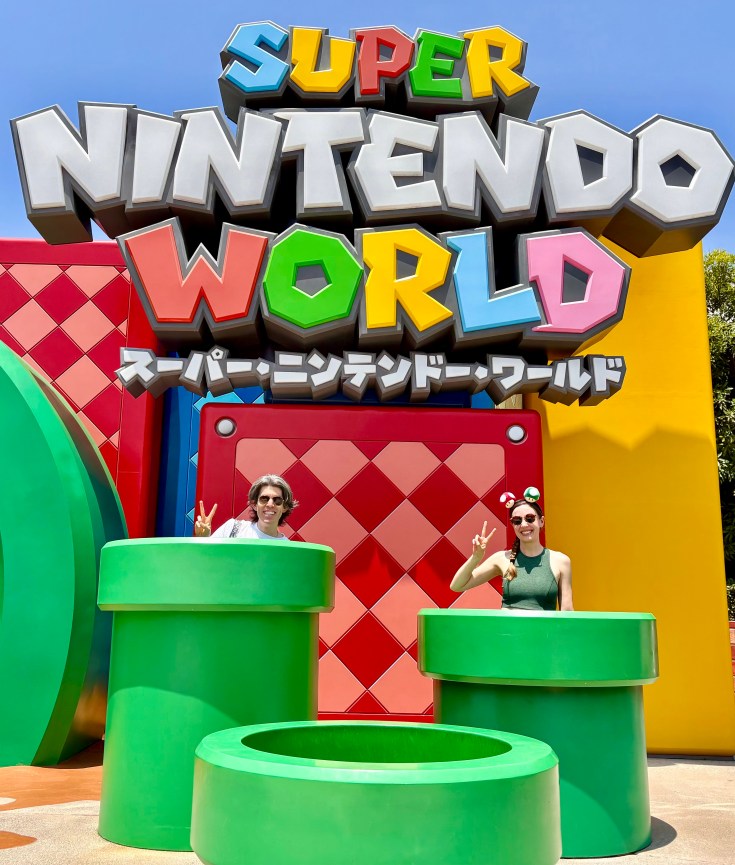
We had an absolute blast during our day at Universal Studios Japan. Chandler and I aren’t typically ones for amusement parks, but we made a huge exception and went to a number of them in Japan. And by a strange stroke of luck, we’d actually been to Universal Studios Hollywood the previous summer. Just like before, Super Nintendo World was our favorite part, and this time, that’s where we headed first.
Chandler was itching for a rematch, because he is the champion of all things video games in our household. However, on the ride, Mario Kart: Bowser’s Challenge, I had beaten him by scoring ten more coins and it haunted him. Now he’d finally get a chance to set the record straight.
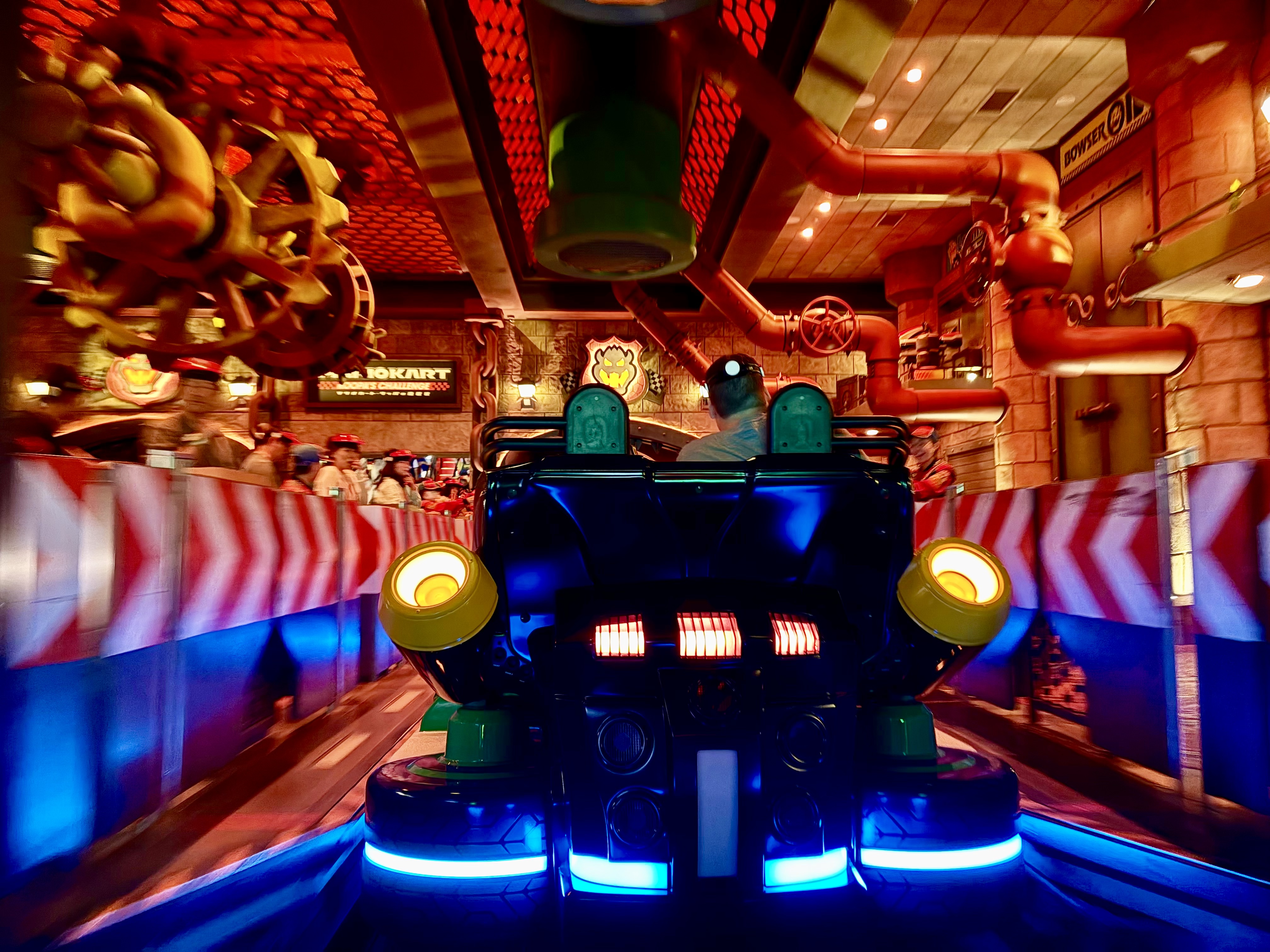
Only that’s not what happened. This time, we got on Mario Kart: Koopa’s Challenge knowing exactly how the ride worked. And it was just as fun! But as we turned that final corner and had our scores announced, I was triumphant once again with 121 coins to Chandler’s 103.
We got caught up in the magic and spent way more time than we realized wandering through the rest of Super Nintendo World. But there was one huge difference between the Japanese theme park and the Hollywood theme park.
In LA, the theme park was packed with kids. Yes, there were adults like us, but the majority definitely had little ones 10 and under with them. In Japan, we were the majority. Yes, there were kids every now and again, but most of us were adults. And we loved it!
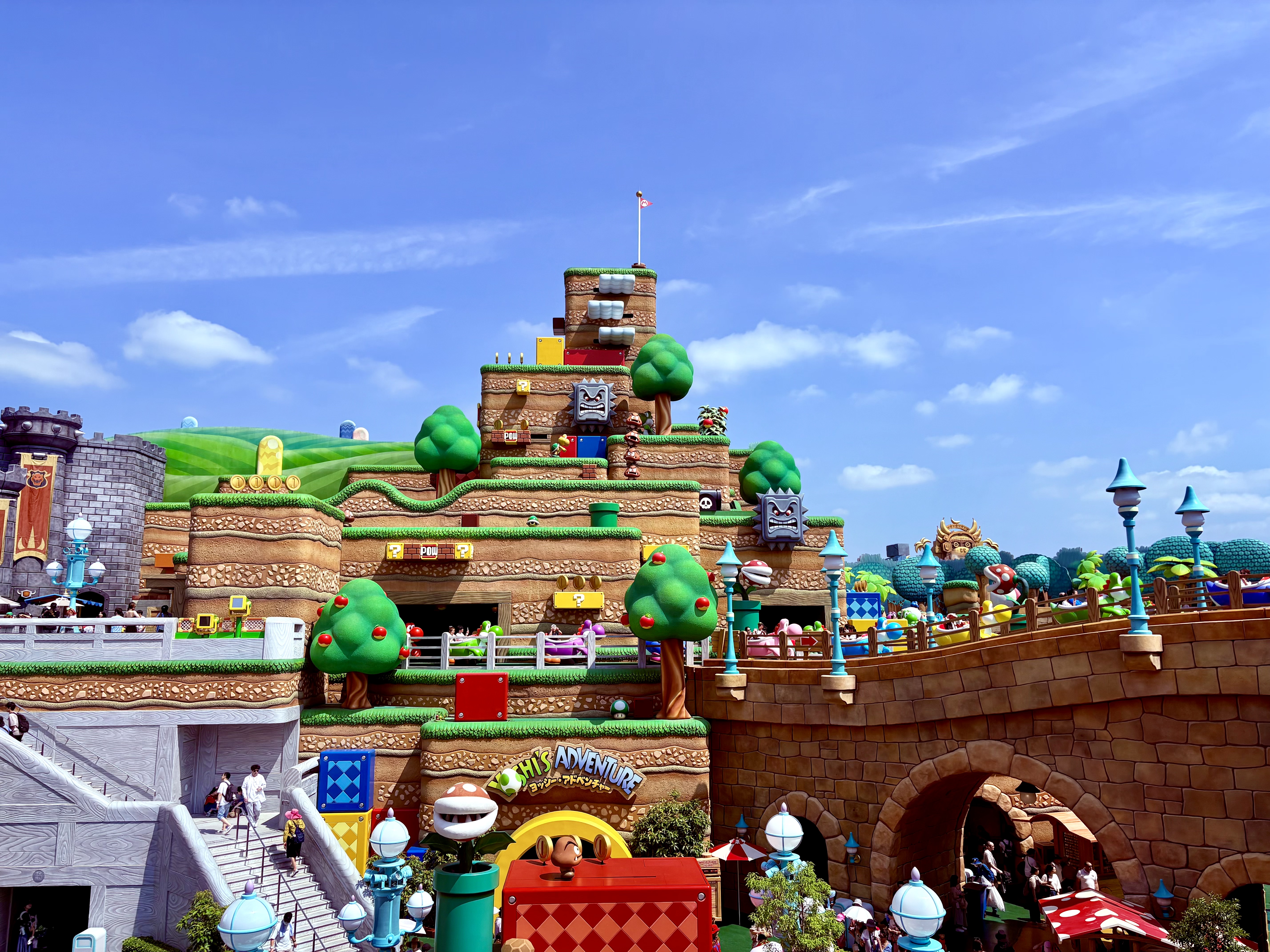
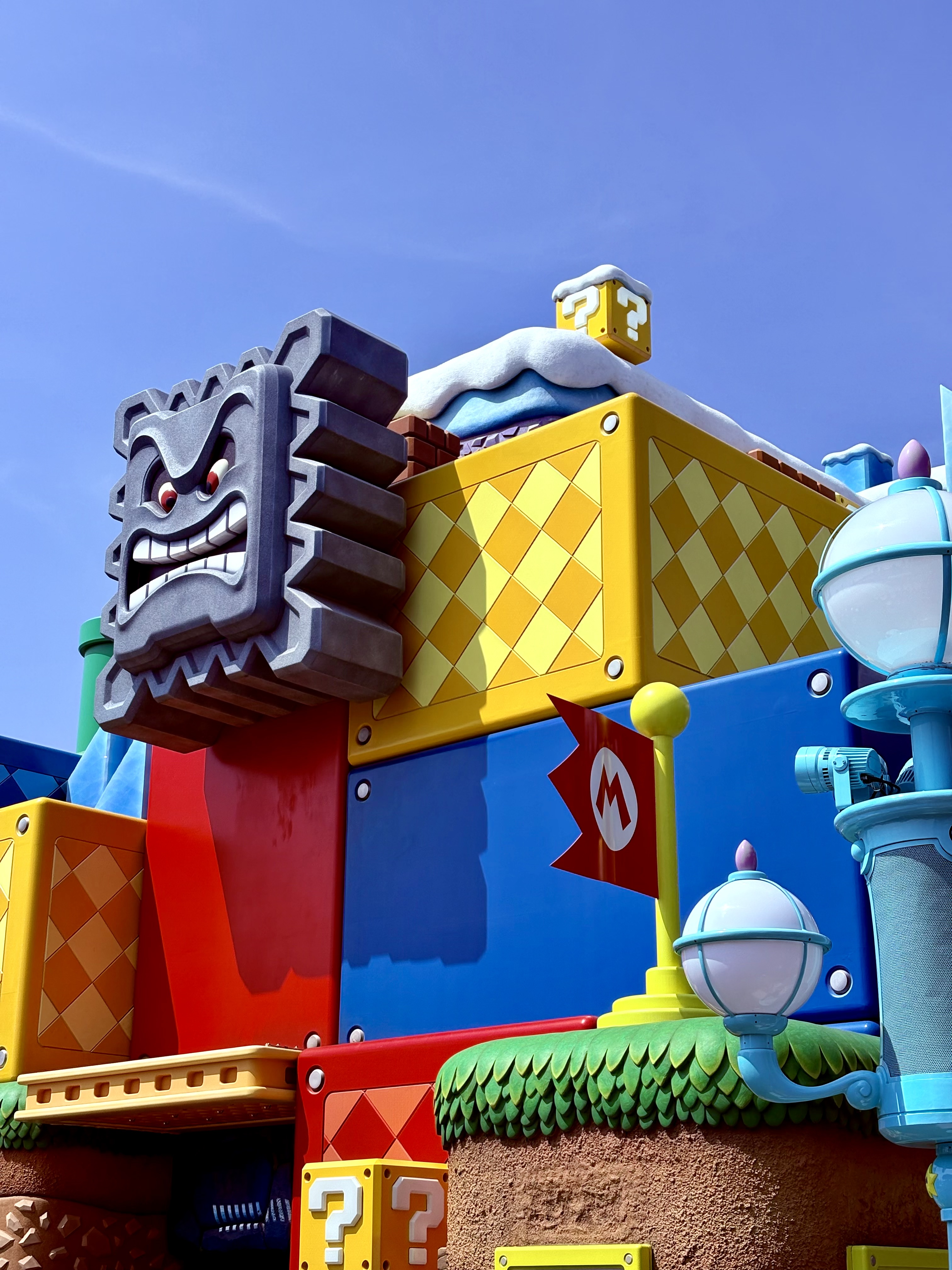
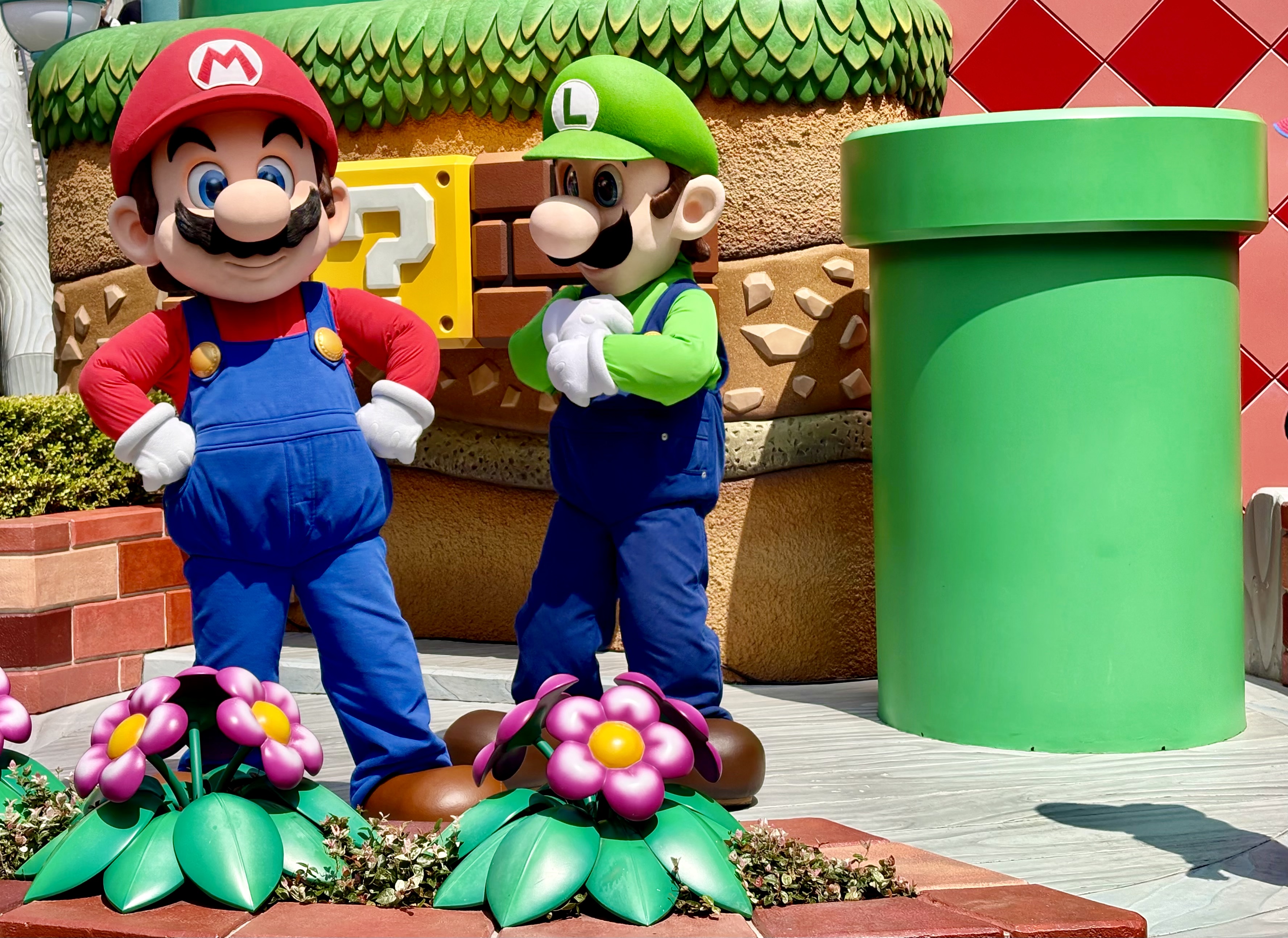
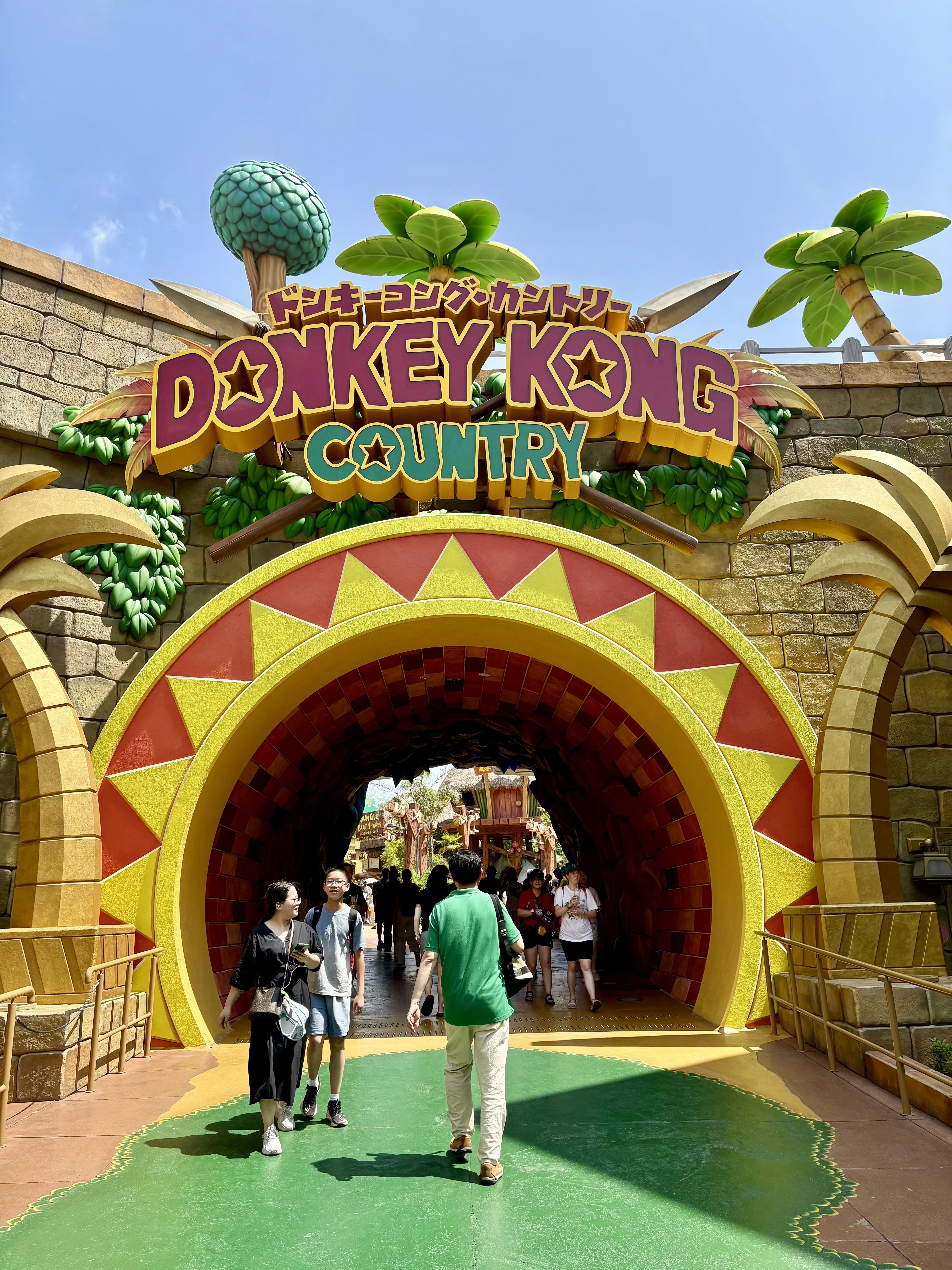
There was one more thing to love about Super Nintendo World – the Japanese theme park included the ride Donkey Kong: Mine Cart Madness.
I’d be lying if I said I didn’t have the Donkey Kong theme song stuck in my head the rest of the day. That’s probably because the ride kept requiring maintenance and we sat in that line even longer than the Mario Kart ride, but it was worth it! Because as iconic as Mario Kart is, I had grown up playing Donkey Kong Country on my Game Boy Advance.
Sitting in the mine cart was as glorious as I’d hoped it be – even if it was more of a traditional ride than a battle royale like Mario Kart.
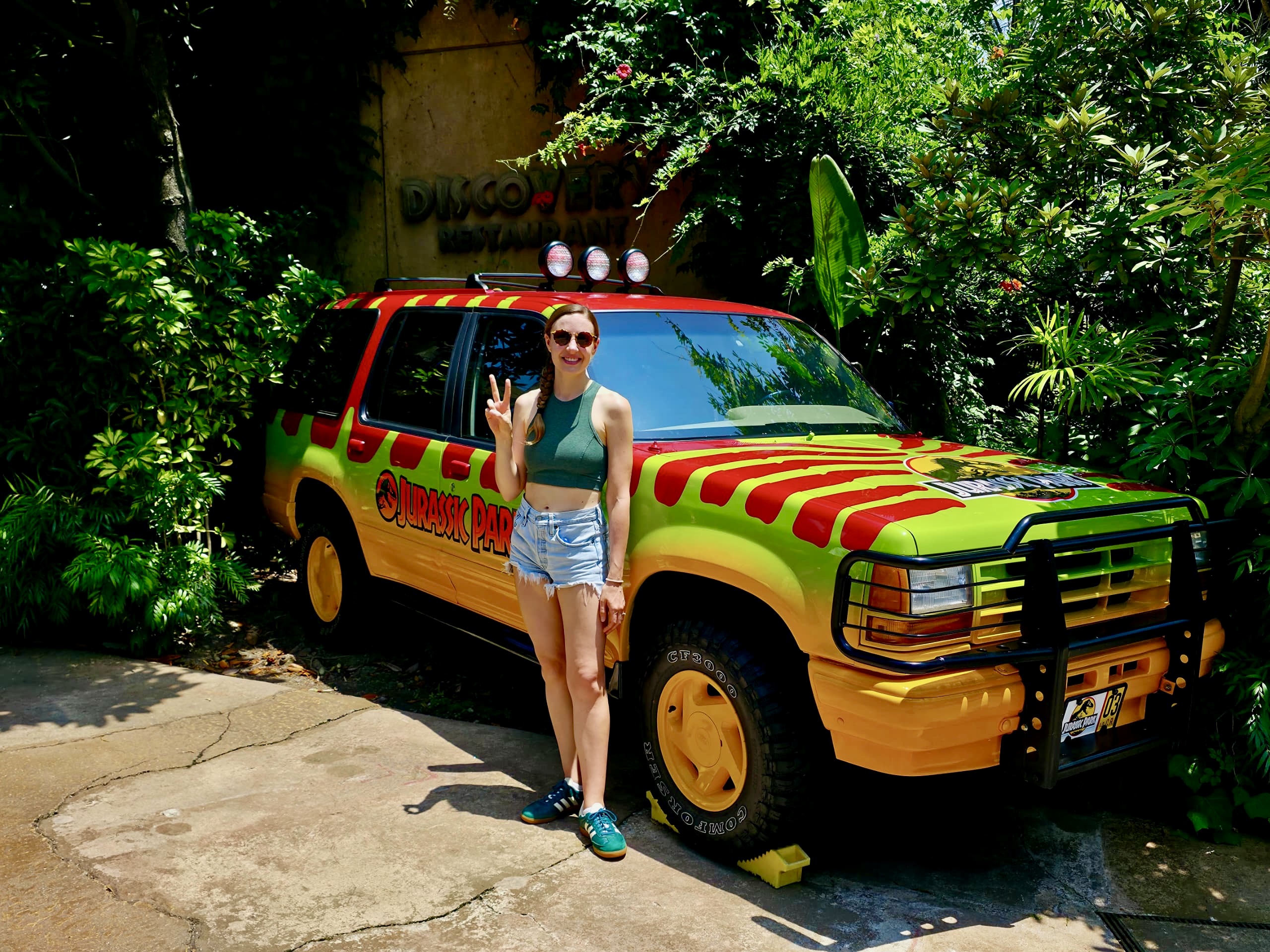
Some of the areas of the park were fairly similar to what we’d seen in Hollywood. We still loved Jurassic Park, even if we continued to avoid the water ride!
But we also got to explore new areas in the park that are special to Japan, like Doraemon 4D Art Adventure: Nobita’s Art World Tales. This experience, while mostly in Japanese, introduced me to the robotic cat from the future and I fell in love with Doraemon. We found stores and statues (mostly in Tokyo) after that and I was absolutely thrilled each time.

I think when we went to Universal Studios Hollywood, we left shortly after lunch. However, I’m pretty sure we stayed the entire day at Universal Studios Japan!
But this wouldn’t be a blog about a city in Japan if I didn’t stop to talk a little about the food. Earlier in this post I mentioned how the food scene in Japan could sometimes be a downer, but if I’m being honest, the vegan scene in Osaka did not disappoint.
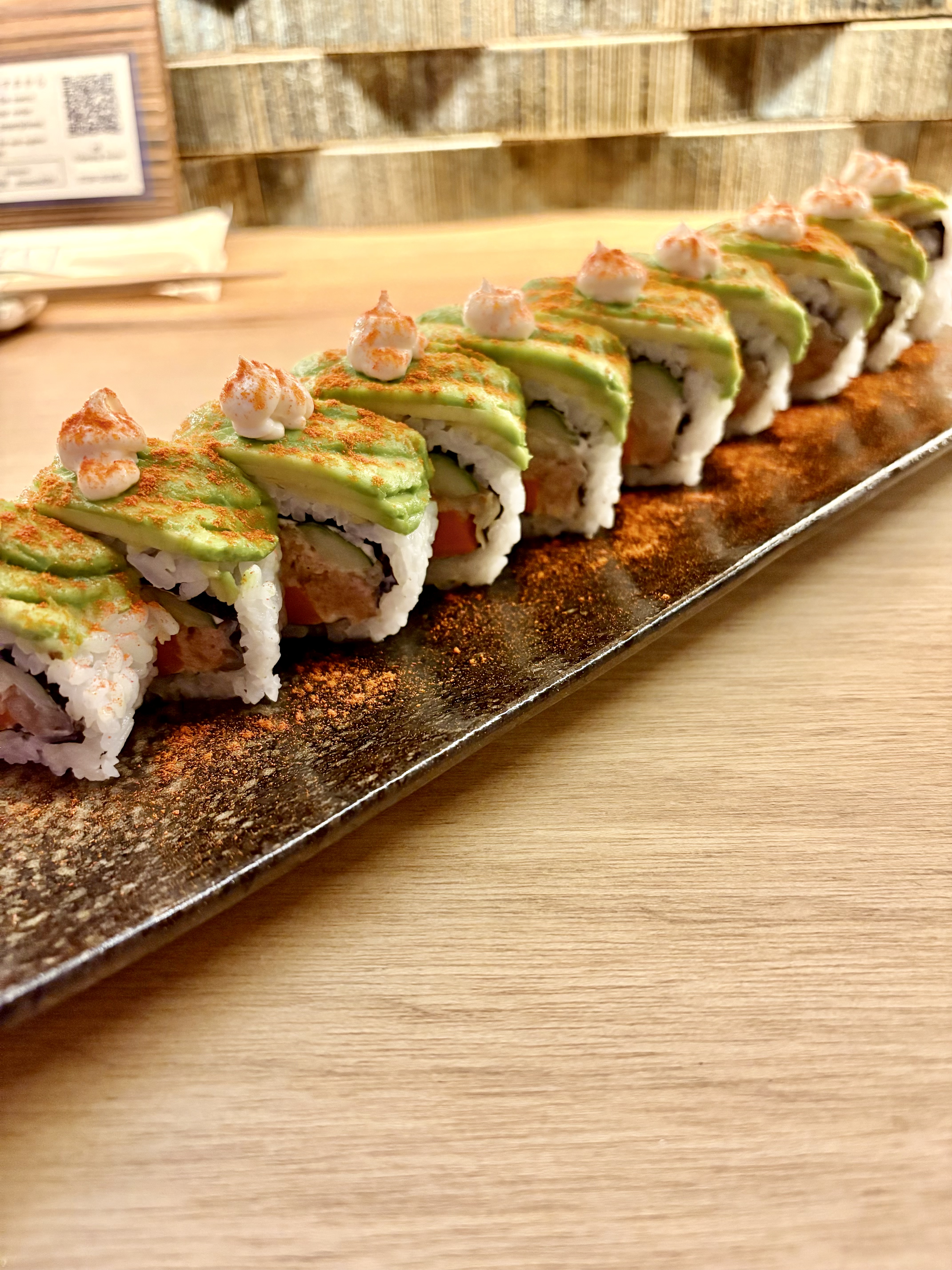
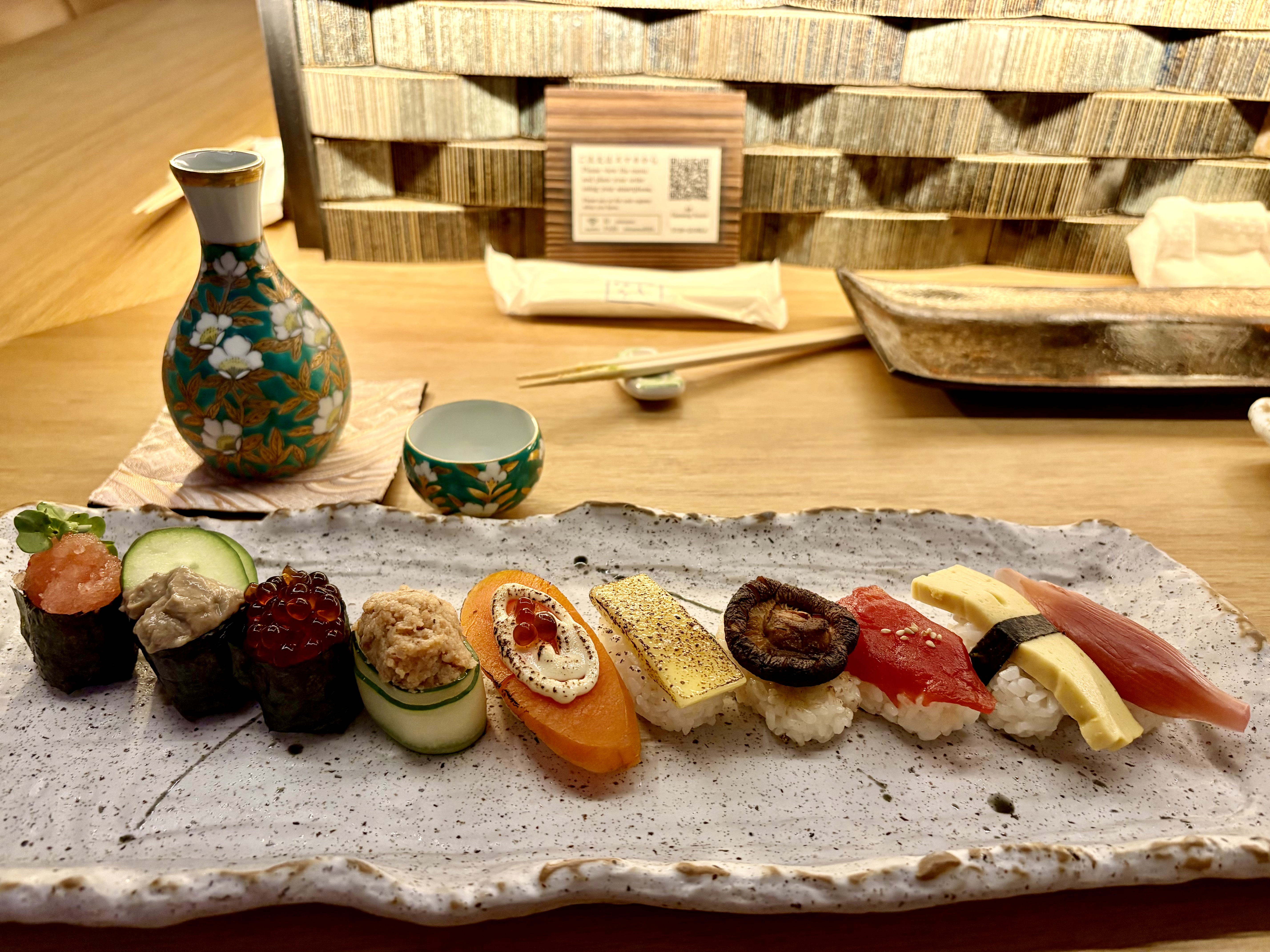
One of our best meals of the summer was at Shojin Sushi Minamo. They had absolutely incredible vegan sushi (photographed below). We stuffed ourselves by ordering sampler platters, where the carrot and salmon roe were the real stars, as well as individual rolls, a cake, and sake. After 34 pieces of sushi, they practically had to roll us out of there. We had every intention of going back another night, but our schedule never lined up with their hours again.
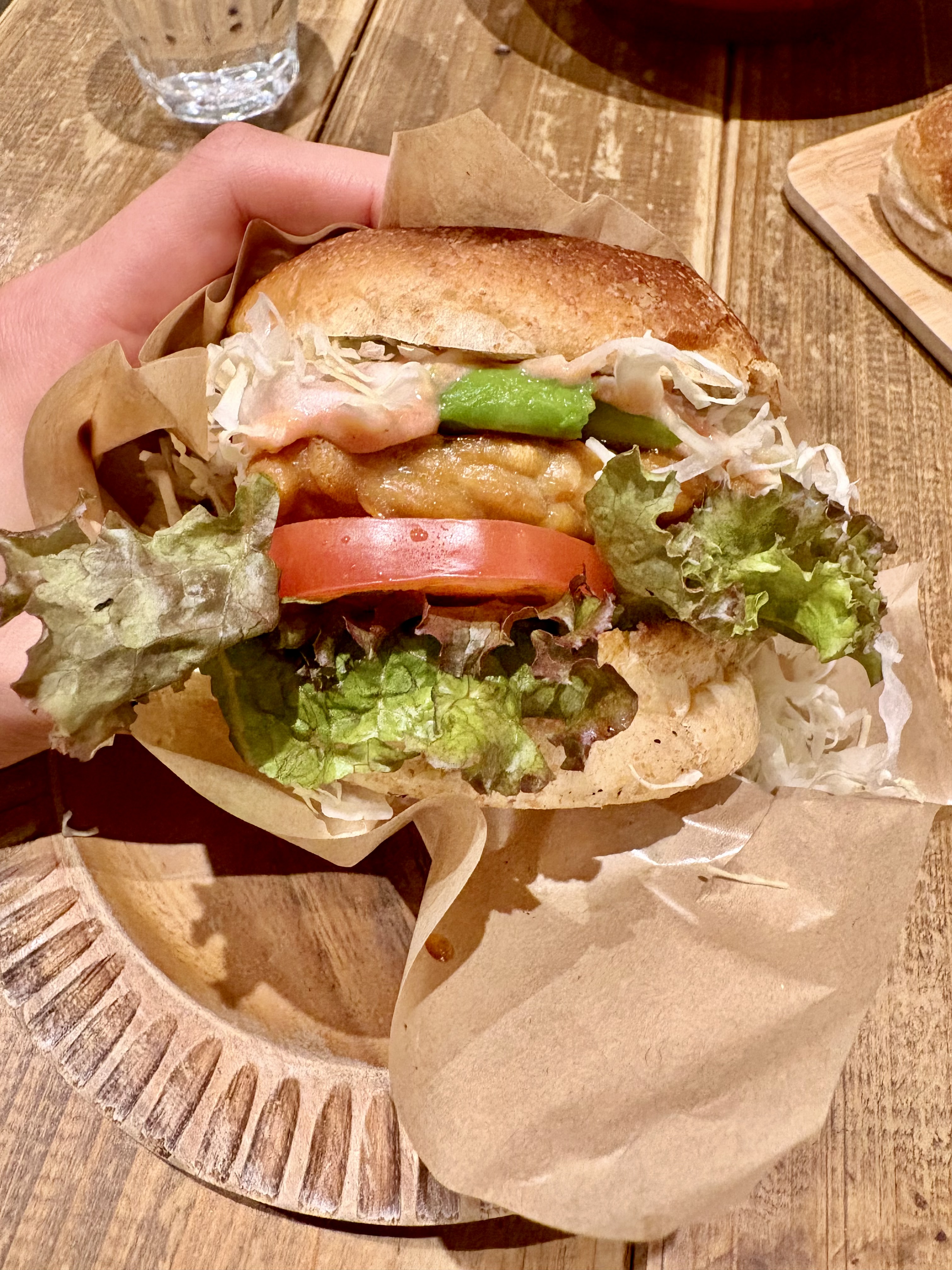
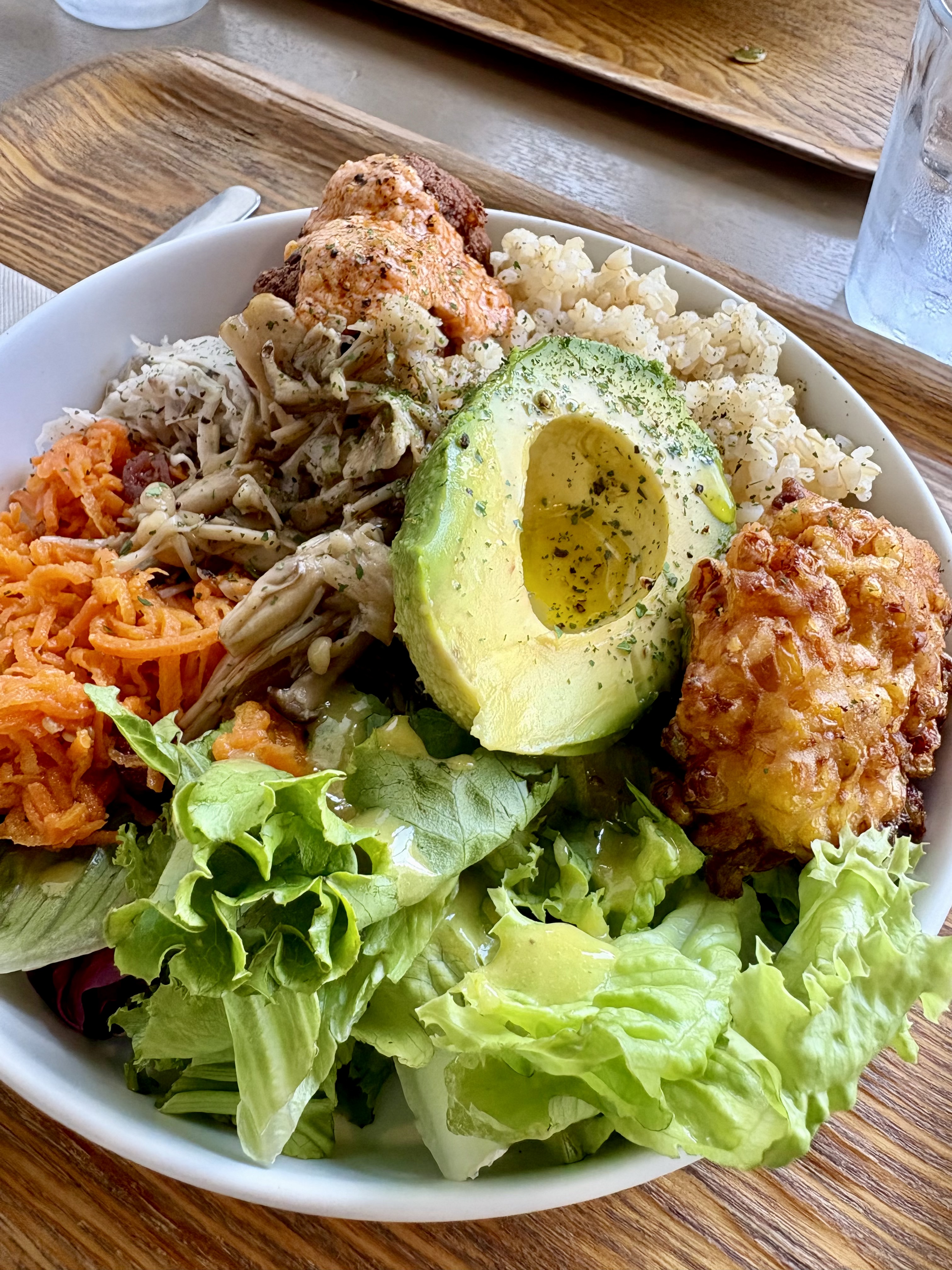
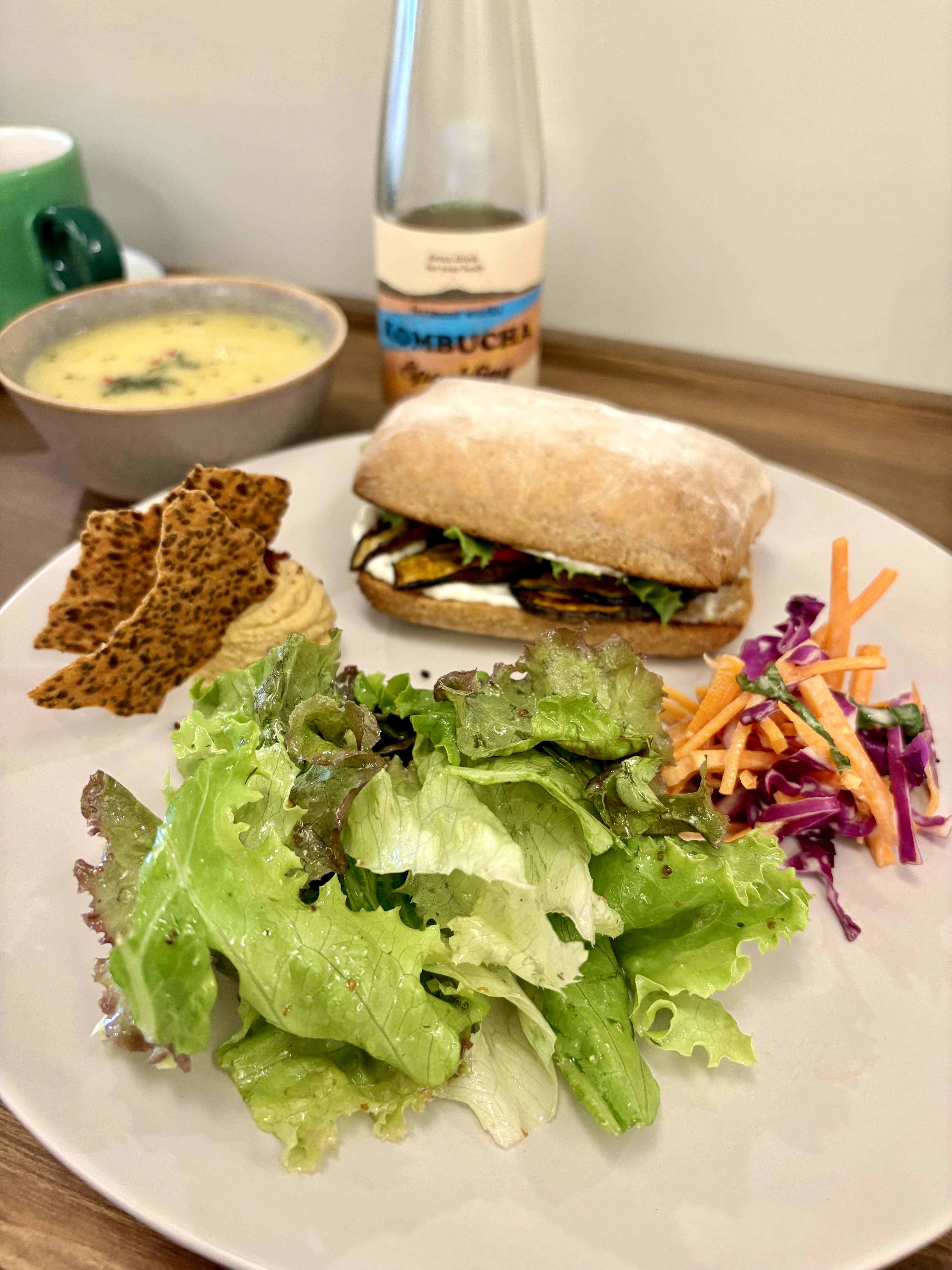
Folk Saka had truly amazing sandwiches (photographed below). Run by a friendly Scottish and American couple, we got to gush about how much the four of us are obsessed with Japan and why they chose to settle in Osaka. Green Earth had humorously terrible ambiance, but the meal was incredible, fresh, and healthy – not always easy to find in Japan!
Our favorite encounter was at Vinoteca Osaka. We went almost by accident. It was around the corner from our hotel and we were feeling lazy after getting back late one evening. We looked it up and saw that the owner was from Puglia and made his own pasta. We were sold. The handmade tagliatelle was so good we came back for pizza the next night.
Osaka was perhaps the most fun we had meeting other foreigners in Japan. The owner of Vinoteca is married to a Japanese woman and has been living in Japan for over a decade – he speaks fluent Japanese with a 100% Italian accent. It was hilarious to see how quiet and reserved he acted with his Japanese guests and how loud and rambunctious he was with us. He said he always has a part to play. But the man served us a bottle of wine from his hometown and saved tiramisu for me our second night, so he was a gem.
Honorable Mentions: Sukhasana Vegan Pizzeria, Paprika Shokudo Vegan, W Holistic Retreat, and Mercy Vegan Factory.
I think it’s easy to see that we had once again found a Japanese city to fall in love with! And the best part of Osaka is that not only is the city amazing, but it’s a great jumping off point for so many fantastic day trips.
From Osaka we visited Himeji Castle, spent the day at a theme park on Awaji Island, explored Kobe, and visited the 2025 Expo. There was something waiting for us every single day in Japan.
 Abroad With Ashley