Osaka might have been our busiest city in Japan after Tokyo. And that’s likely because there was just as much to do around Osaka as there had been to do inside the city itself. Osaka serves as an incredible hub to get to nearby cities like Kobe and Kyoto (though we stayed there a few nights too), as well as lesser known stops like Awaji Island and Himeji.
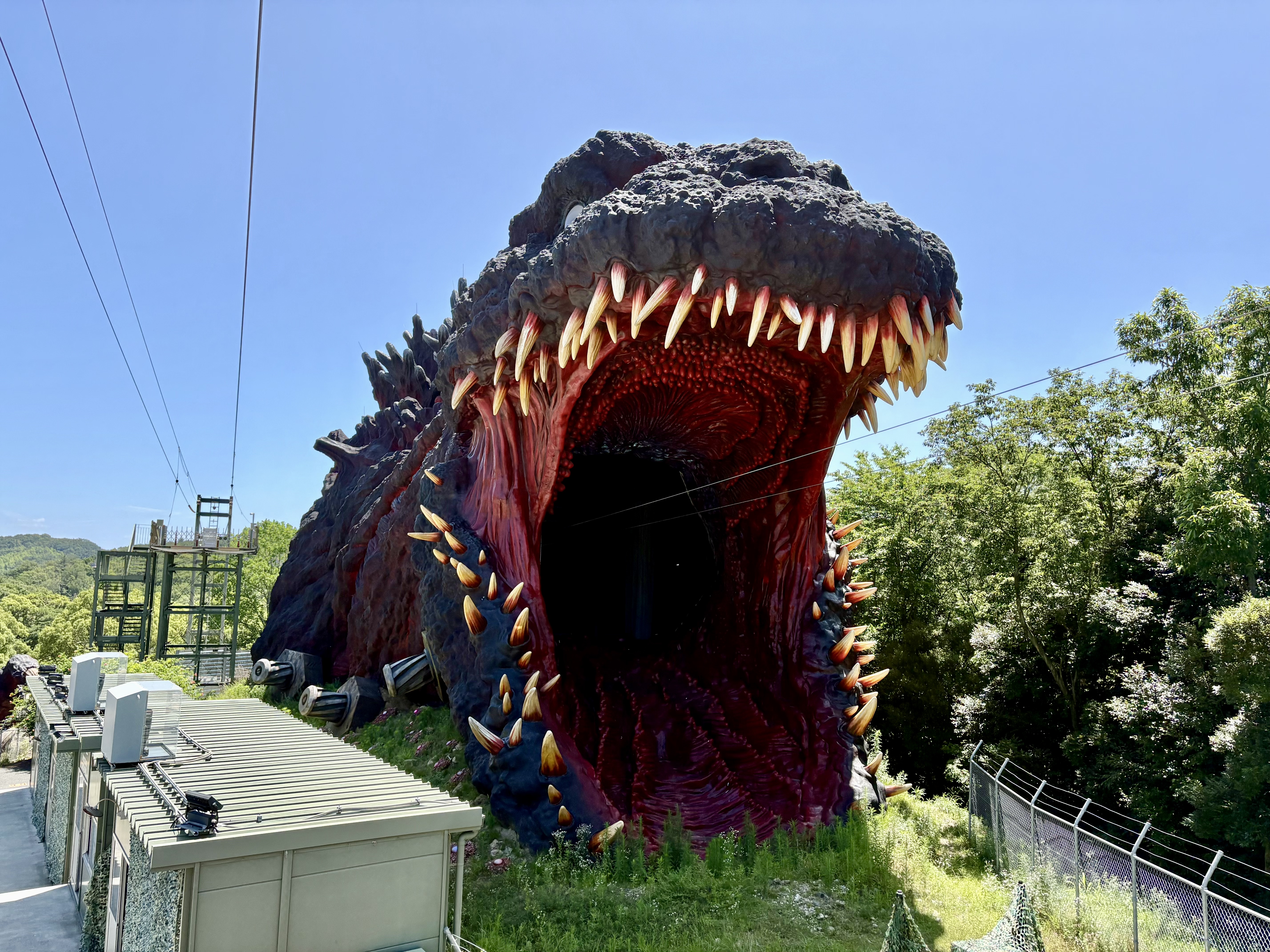
If I had to make a list of things Chandler was most excited to experience in Japan, I wouldn’t know where to start. But I can say that visiting Godzilla Interception Operation Awaji was definitely one of his more unique bucket list items.
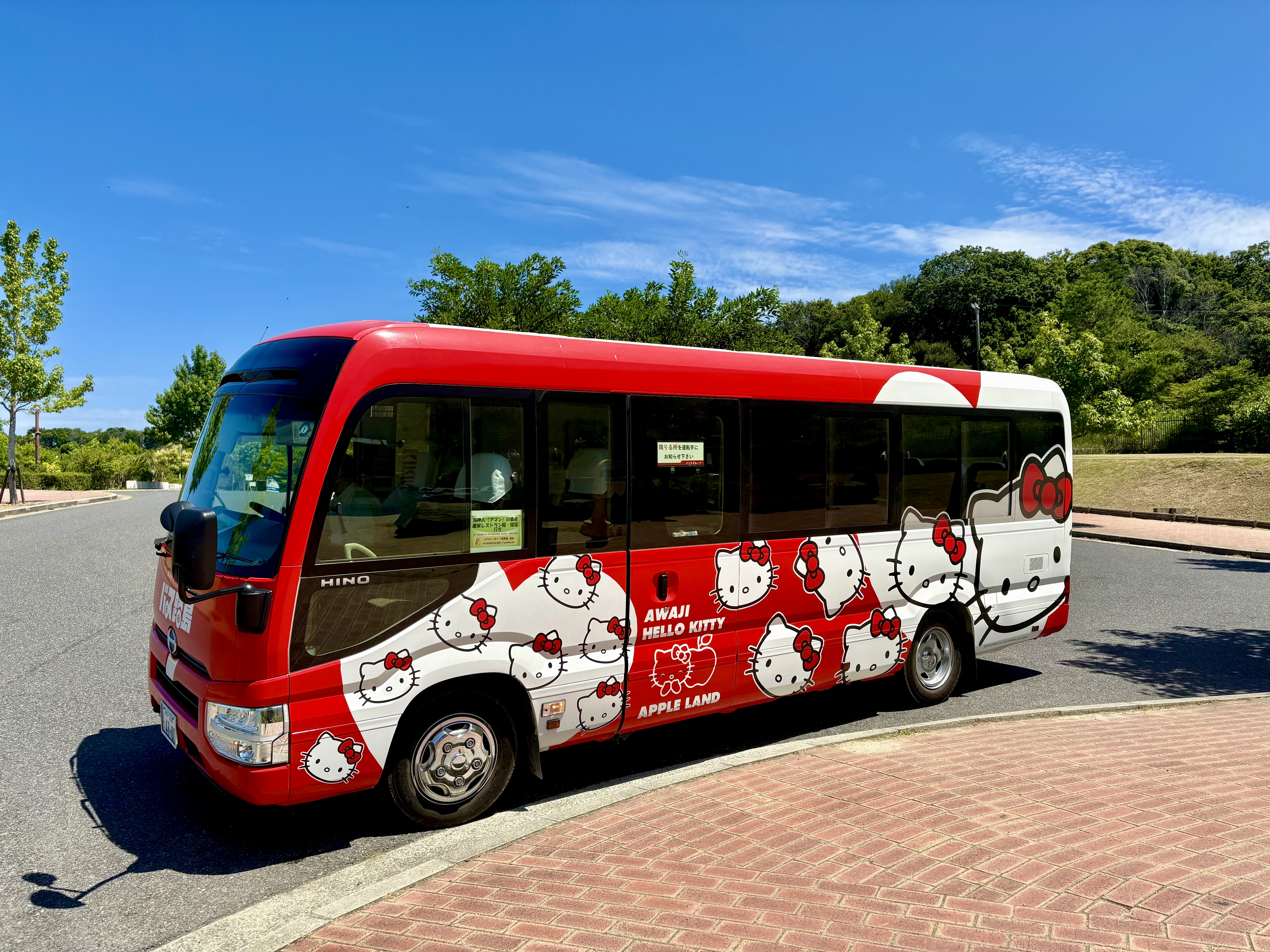
100% transparency, it was not the easiest destination to get to without a car. We took the train from Osaka to JR Maiko Station and then went up an obscene number of escalators to make it to the only slightly labeled bus stop that took us over the Akashi Kaikyo Bridge (which just happens to be the world’s longest suspension bridge). The bus driver emphatically told us when we made it to Nijigen no Mori, the theme park that’s home to Godzilla Interception Operation, however signs were once again limited.
We stumbled around a bit until we discovered the theme park’s bus route and made it to our final destination only because of Chandler’s Japanese language skills. I have to admit, it was a wild process.
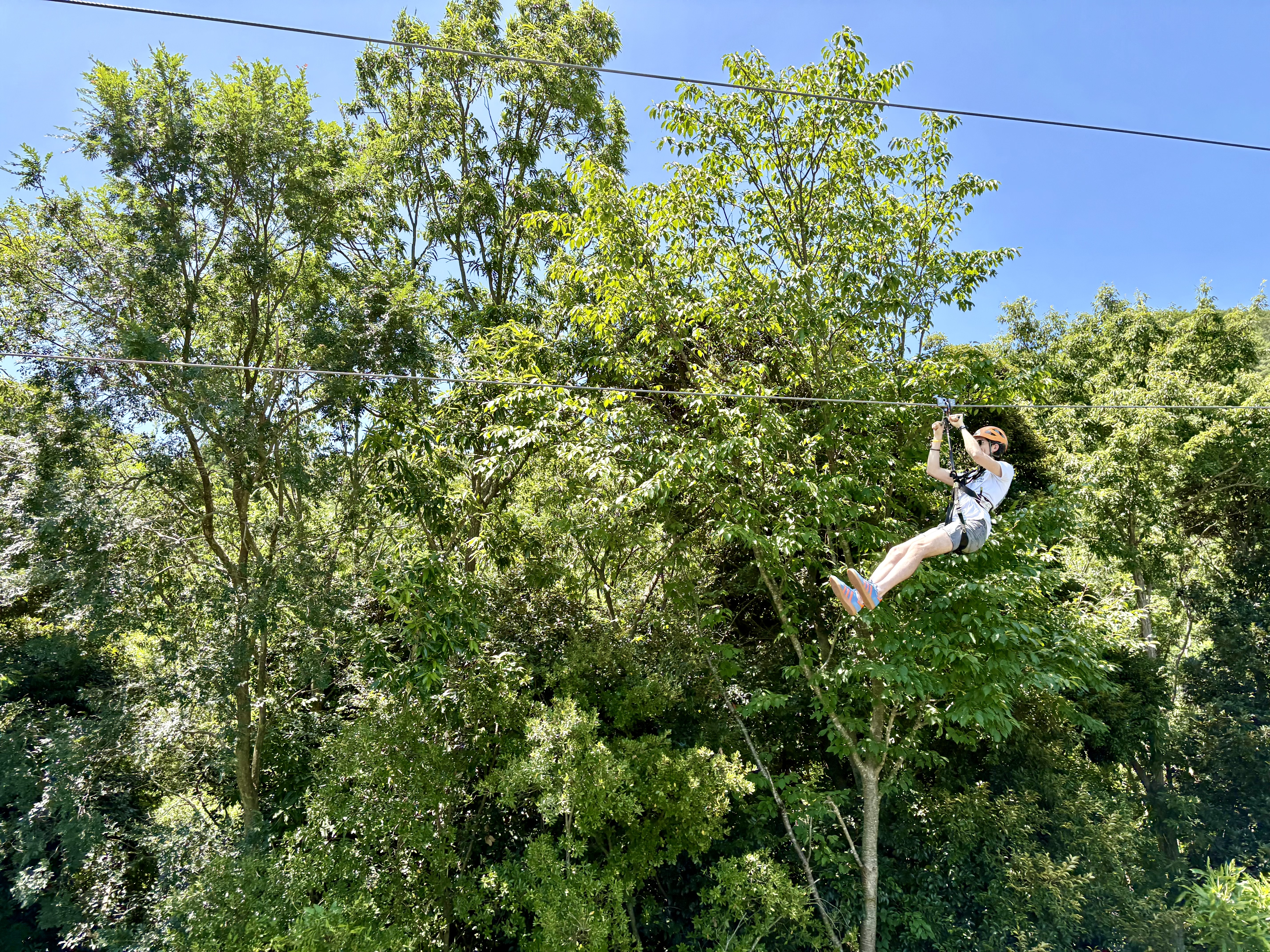
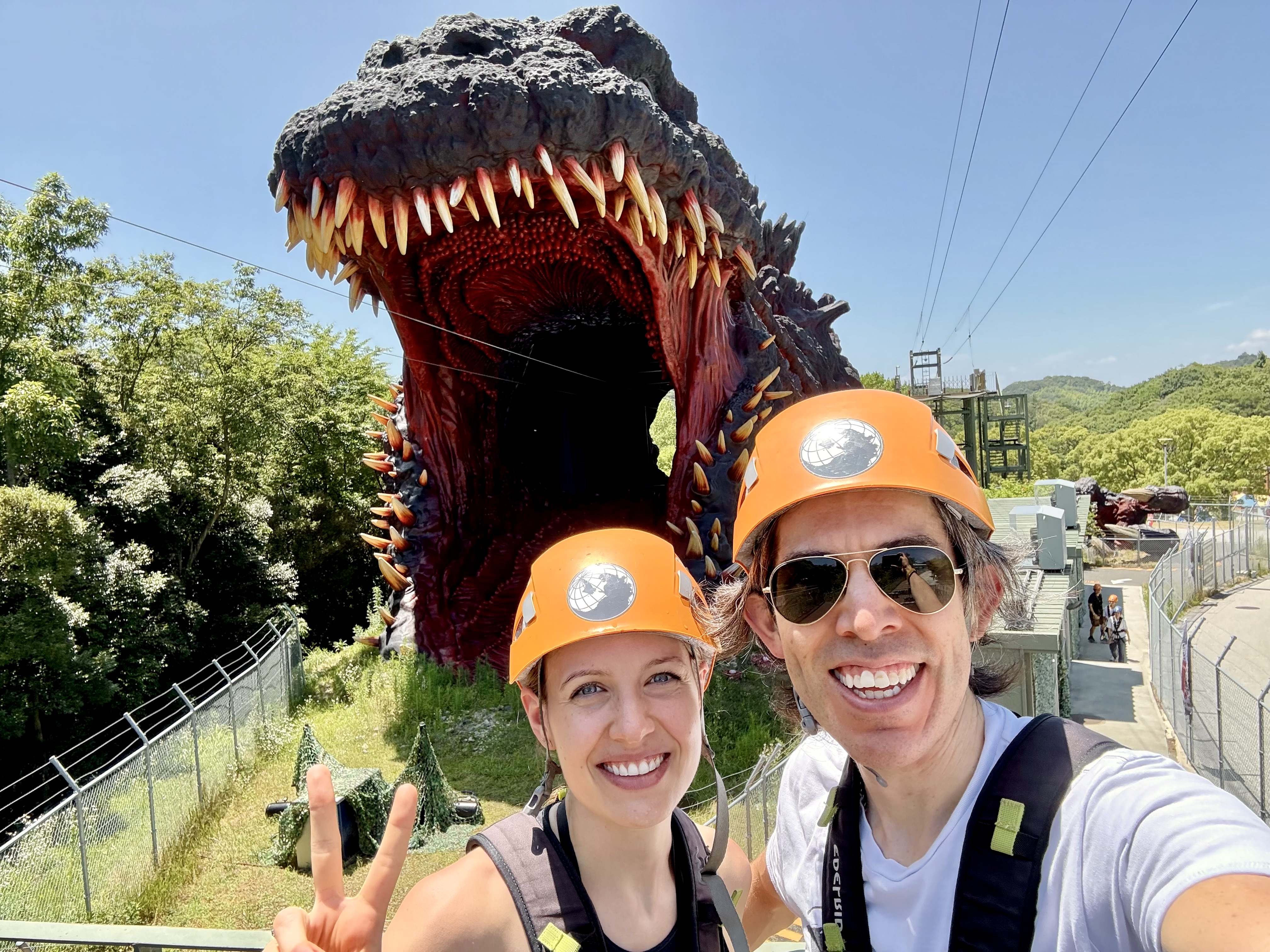
We arrived and eventually figured out how to buy tickets and then experienced the attractions in a very specific order. You start with a bang – zip lining into Godzilla’s mouth.
This is not a typical activity for either of us – we like hiking in National Parks (ok, I do more than Chandler!), but I wouldn’t say we’re particularly “adventurous.” That said, this process was incredibly streamlined, quick, and absurd. Honestly, I loved it.
There were only a handful of others at the park when we arrived and clearly not everyone ran straight for Godzilla – other attractions paid homage to Dragon Quest, Attack on Titan, Naruto, and more. After the zip line, you go to the shooting range – I only slightly understood that aspect of the park.
But honestly, I think Chandler would have gone to the island just to zip line into Godzilla’s mouth.
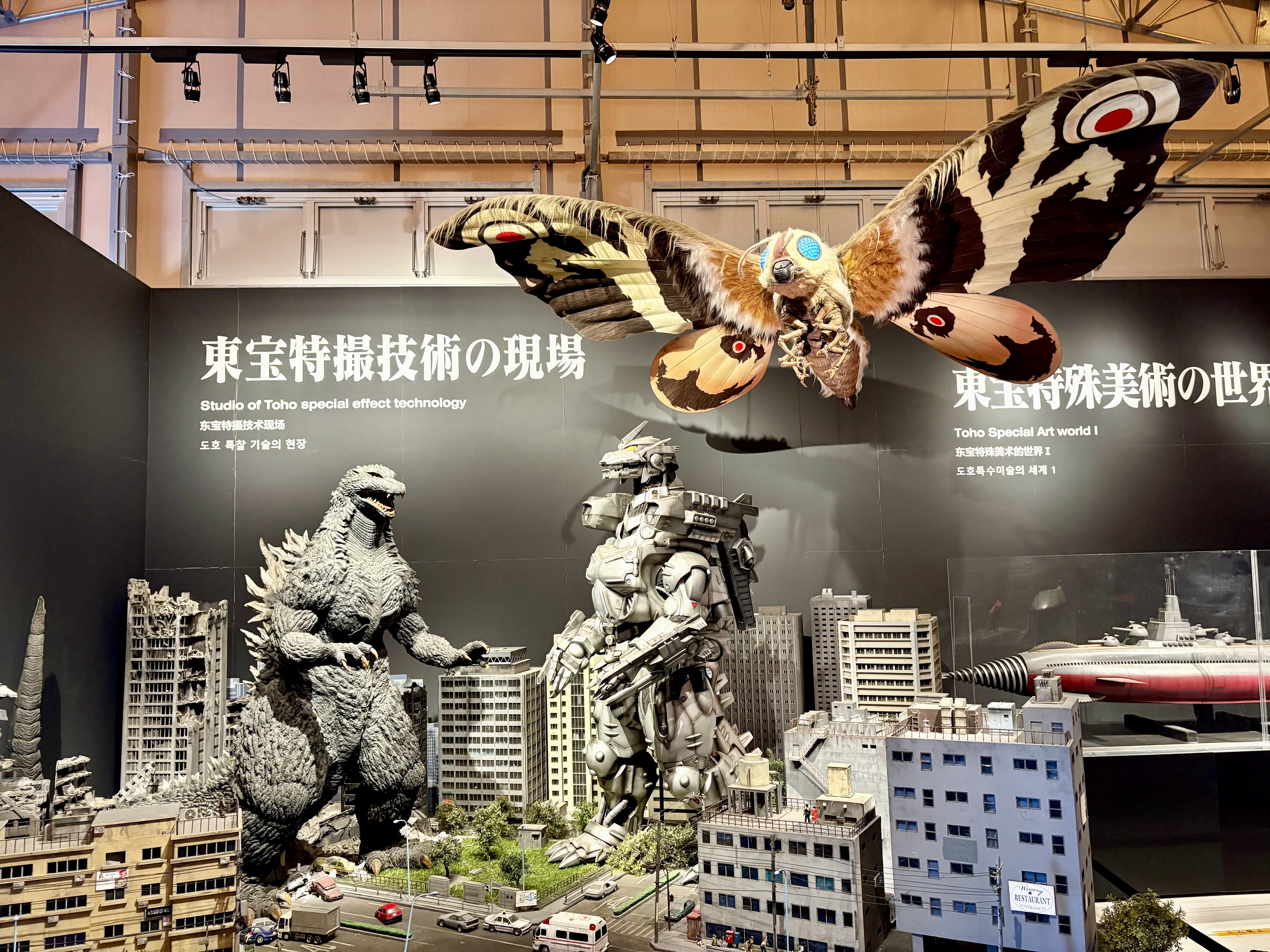
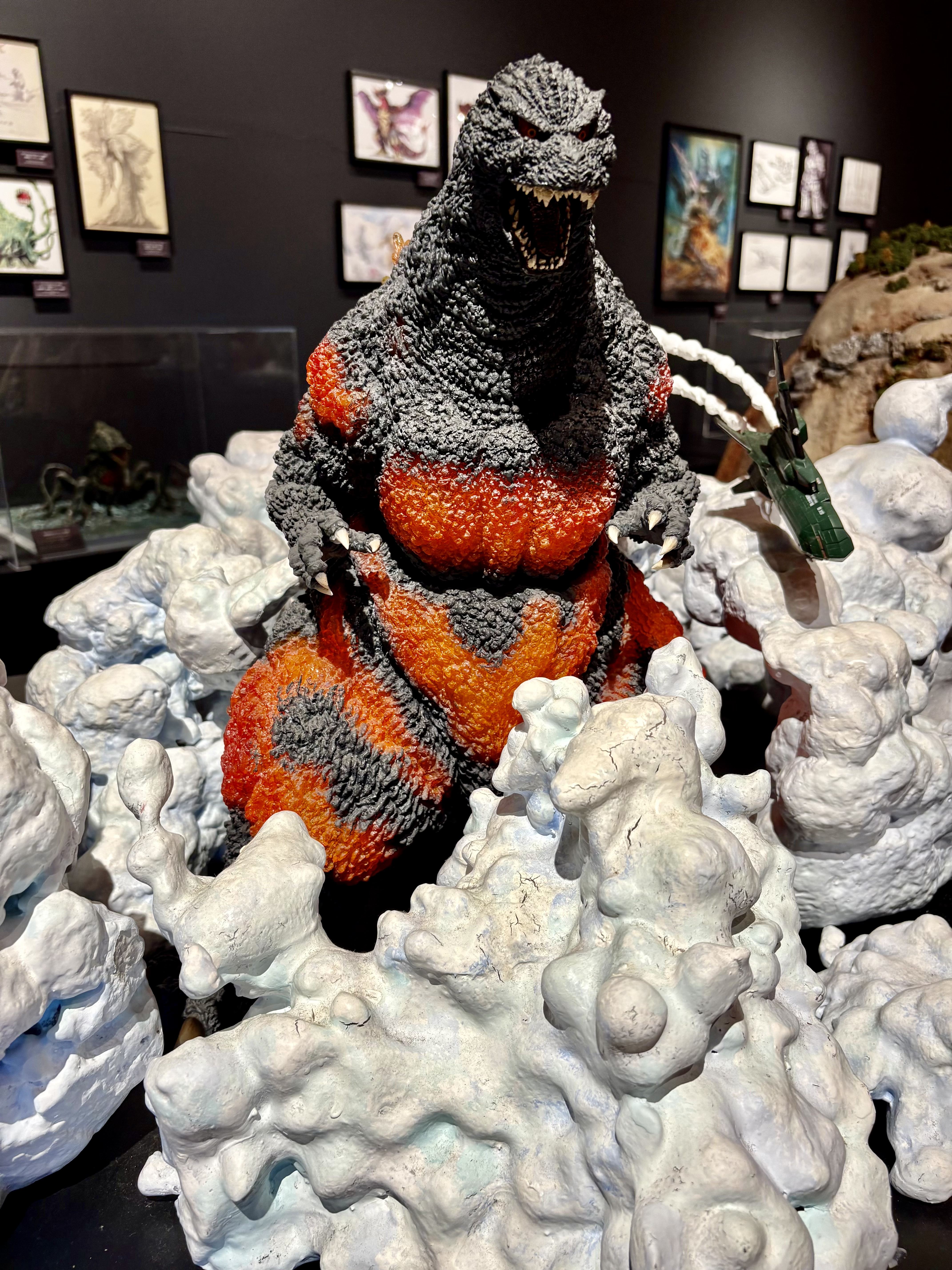
However, the experience didn’t end there. Next up was the museum. There were tons of models (both large and small), as well as plenty of memorabilia. They also had a timeline for those of us who aren’t as up to speed on our Godzilla trivia as Chandler (though I have watched every Godzilla film ever made in Japan or the US!).
Some of my favorite Godzilla characters (other than the king himself, of course) are Mothra and Mechagodzilla (both pictured below). The museum wasn’t particularly long, but it had a surprise at the end.
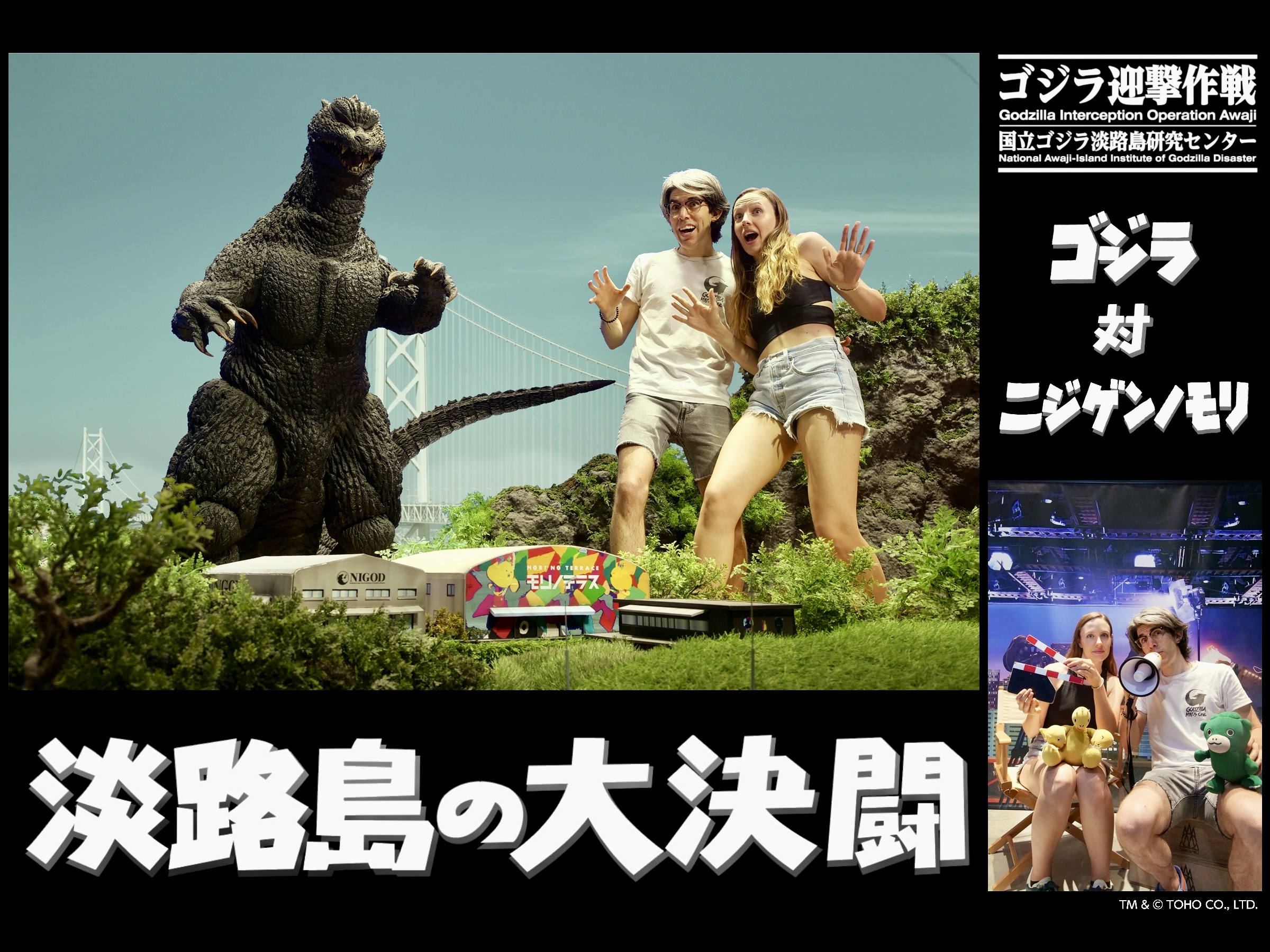
Through a mix of Japanese and English, we learned that you could participate in a photo and film session. I was all for the photo, but I was deeply apprehensive about what the film entailed.
What actually happened is that Chandler and I got on set and “fought” Godzilla with our impressive physical skills and then they put us in a movie trailer battling Godzilla. It absolutely felt like an “only in Japan” moment.
Unfortunately, leaving the park was a bit more complicated than arriving – none of the buses ran during a multi-hour “lunch time.” We didn’t really have it in us to stick around (the day was getting absurdly hot), so we found a taxi driver who knew we were of limited options who drove us out of the park, back over the bridge, and to the JR station. But I have to admit, it was a smoother process!
We also discovered a Hello Kitty-themed facility called Hello Kitty Smile on the western side of the island, so I have no doubt we’ll be returning to Awaji Island one day!
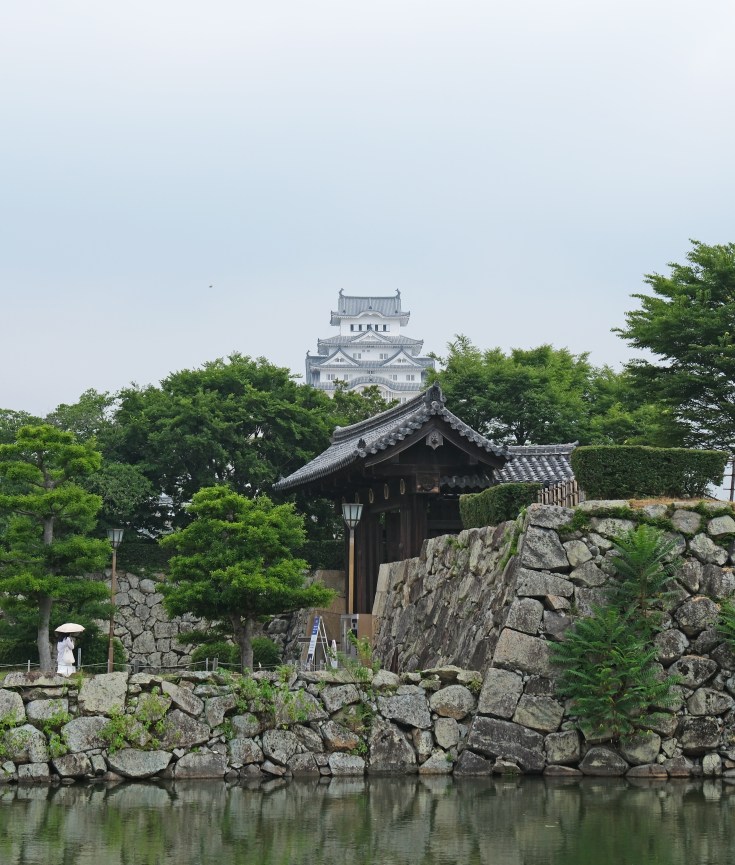
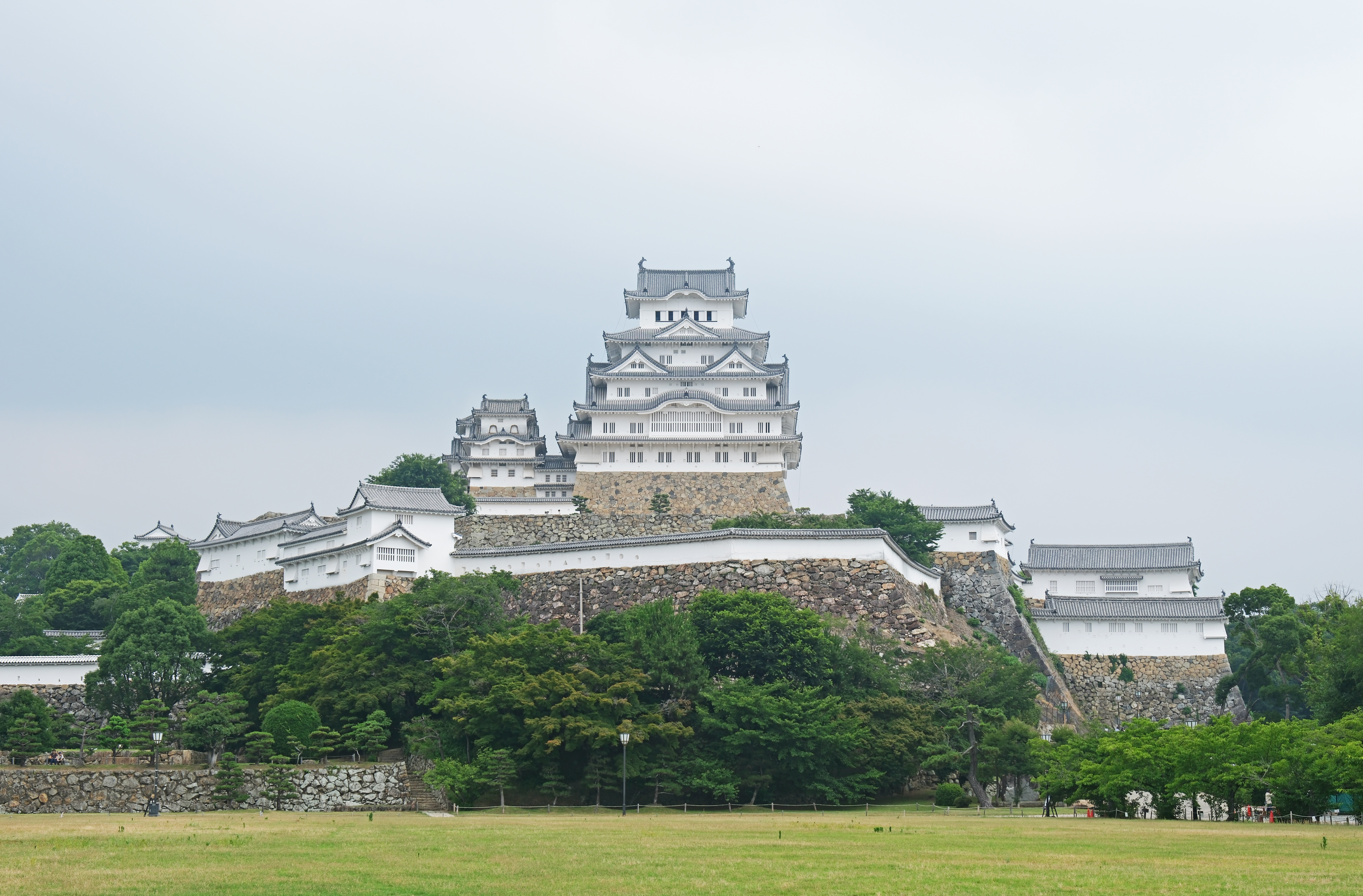
A much simpler trip out of Osaka is to the nearby Himeji Castle. Also known as the White Heron Castle, it is the largest and most visited castle in Japan and was added to UNESCO’s World Heritage list in 1993. It sits in-between Hiroshima and Osaka and it’s a very easy sight to reach on foot or by bus (depending on the weather).
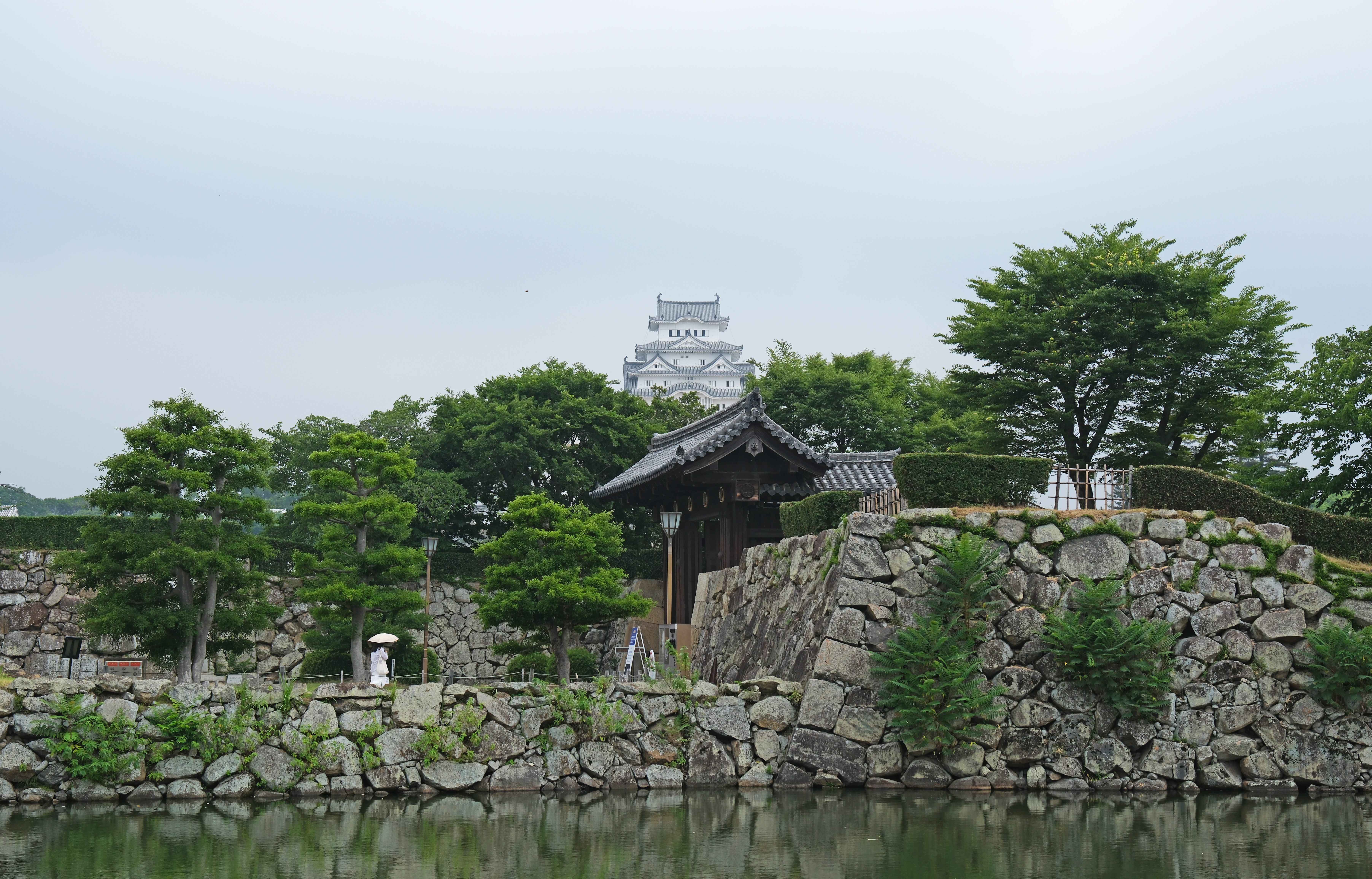
We opted for the short bus ride due to the heat and we stored our luggage at the train station for simplicity. It was absolutely worth the detour!
If I’m being honest, more of our time in Japan leaned toward otaku/anime/modern Japan. So it was always nice to dig into a little history – Himeyama Hill was first fortified in 1333 by Akamatsu Norimura. His son demolished the fort 13 years later to build Himeyama Castle. From 1545 to 1561, it was remodeled into Himeji Castle. That didn’t last long – from 1601-1609 it was completely rebuilt and expanded, adding three moats and turning it into the complex that’s on display today.
The castle was abandoned in 1871 and was later turned into military barracks. It survived World War II bombing and the Great Hanshin Earthquake and is now considered one of Japan’s three premier castles (along with Matsumoto Castle and Kumamoto Castle). I just like how pretty it looks!
We had considered staying a few nights in Kobe, but we really liked the idea of using Osaka as a base for a week since we’d spent just a few nights in Hiroshima and were about to spend a few nights in Kyoto. Sometimes, you don’t want to lug all of your luggage around – even if Japan has an incredible service to do it for you (Yamata Transport).
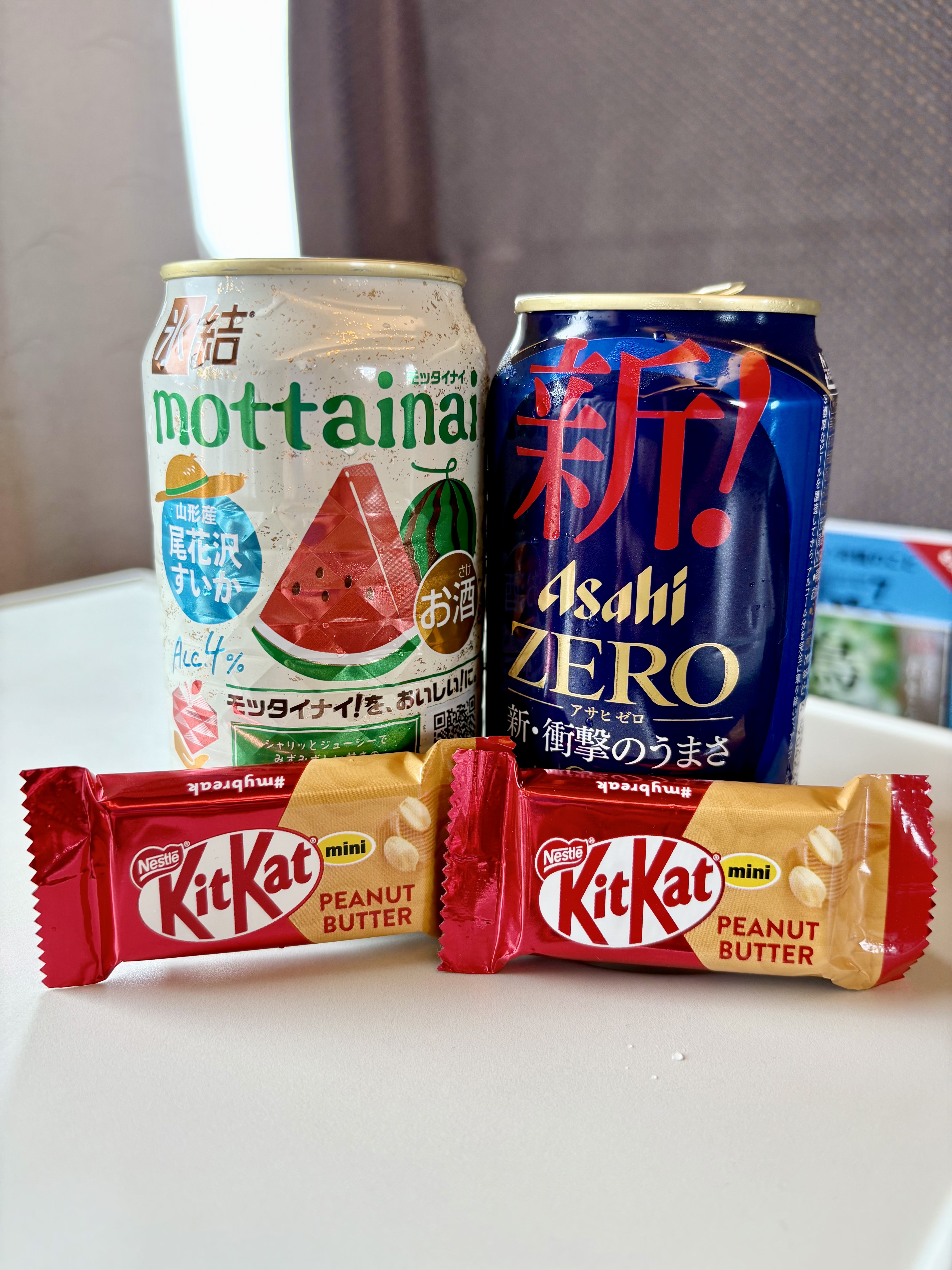
Also, we truly loved hopping on and off the trains in Japan. We’d pick up an NA beer for Chandler and a Watermelon Mottainai for me (I became obsessed – so refreshing!) at a nearby konbini (convenience store) and select a new Japanese Kit-Kat flavor to try.
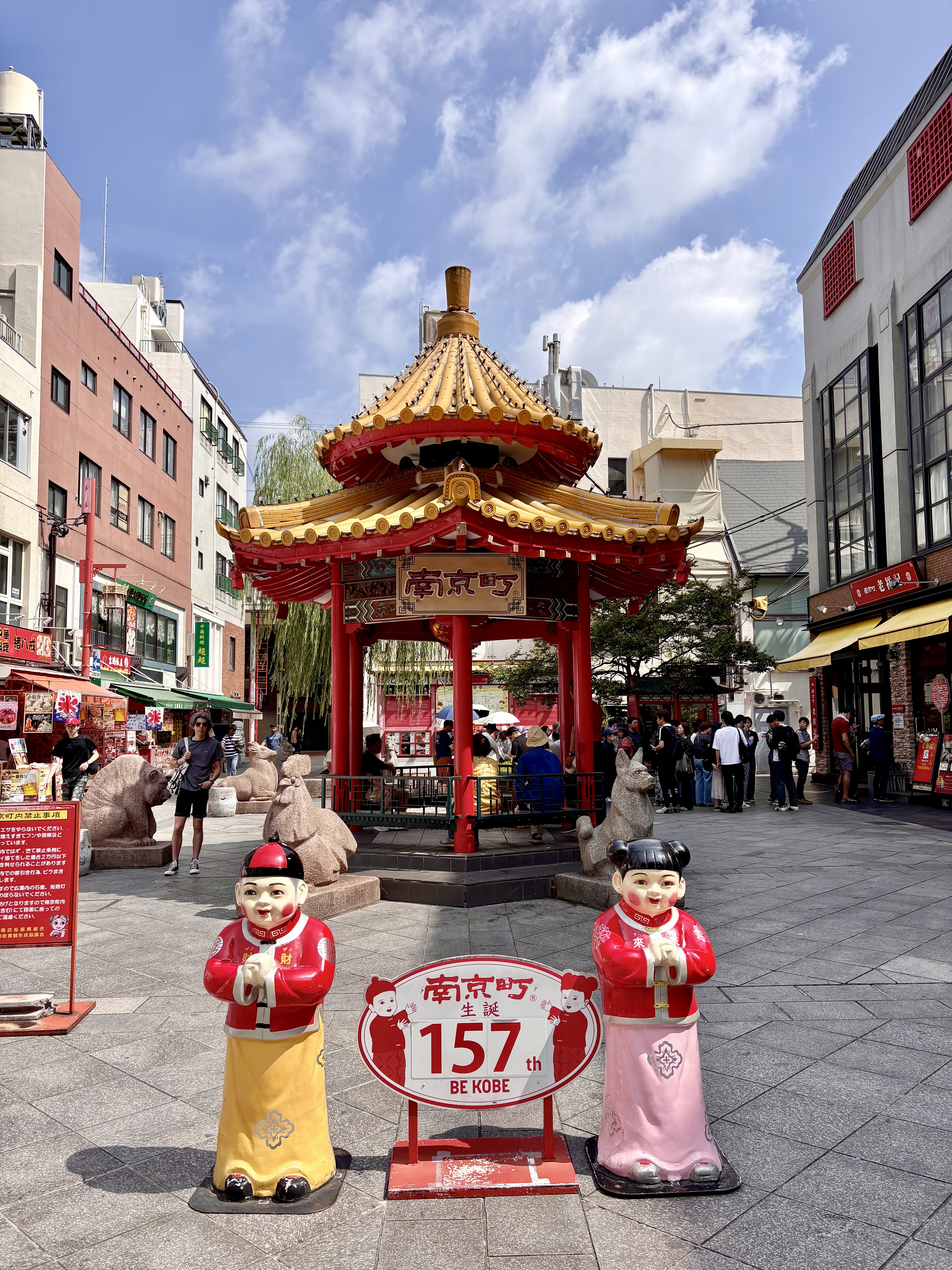
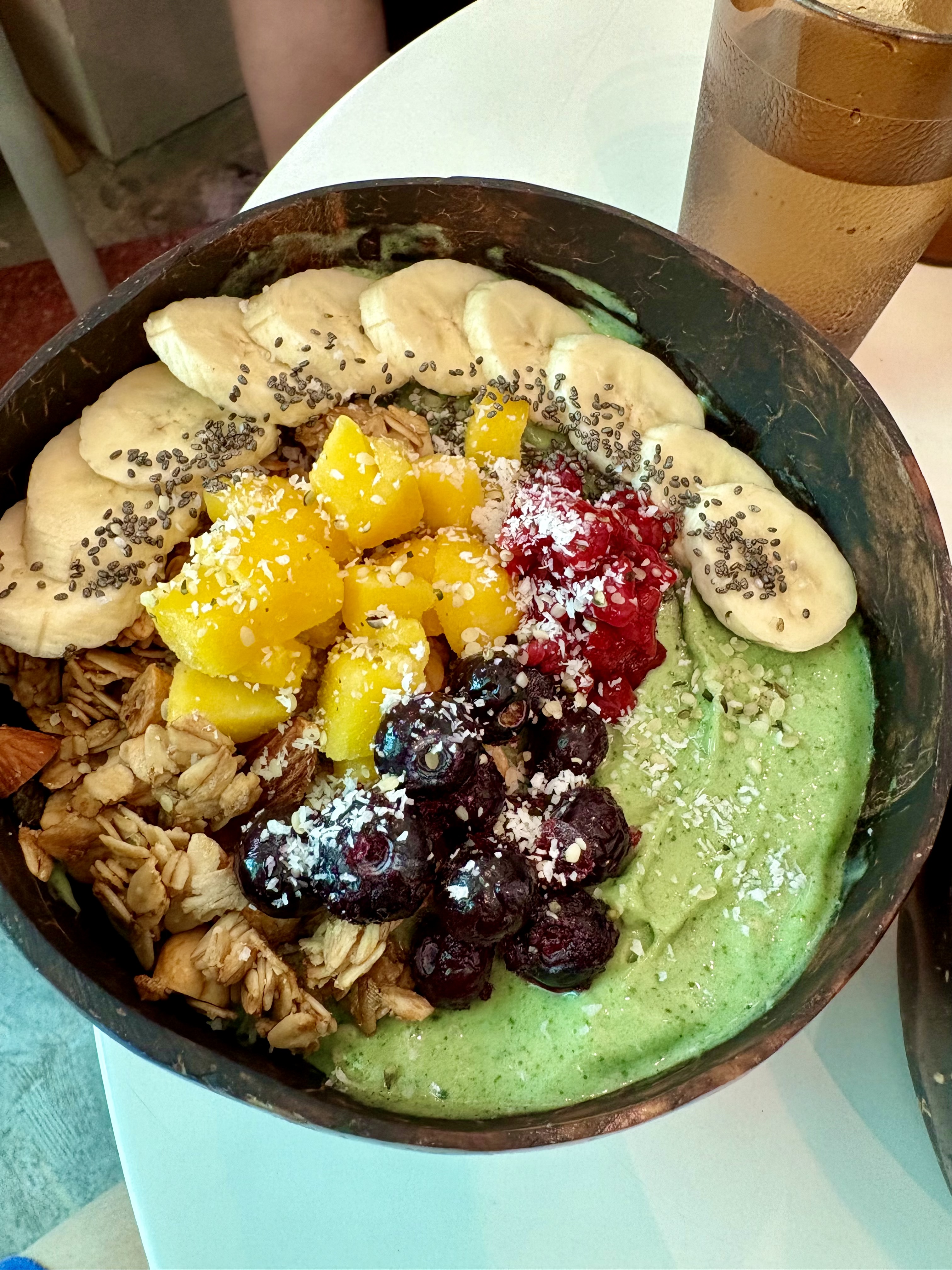
It ended up working out well. In Kobe, we did a bit of Pokémon/One Piece card shopping (now a tradition), ate at Greenery – a delicious plant-based restaurant with smoothie bowls and vegan sammies (I also bought some amazing granola to take with us), and enjoyed the various public pianos in use throughout their subway system.
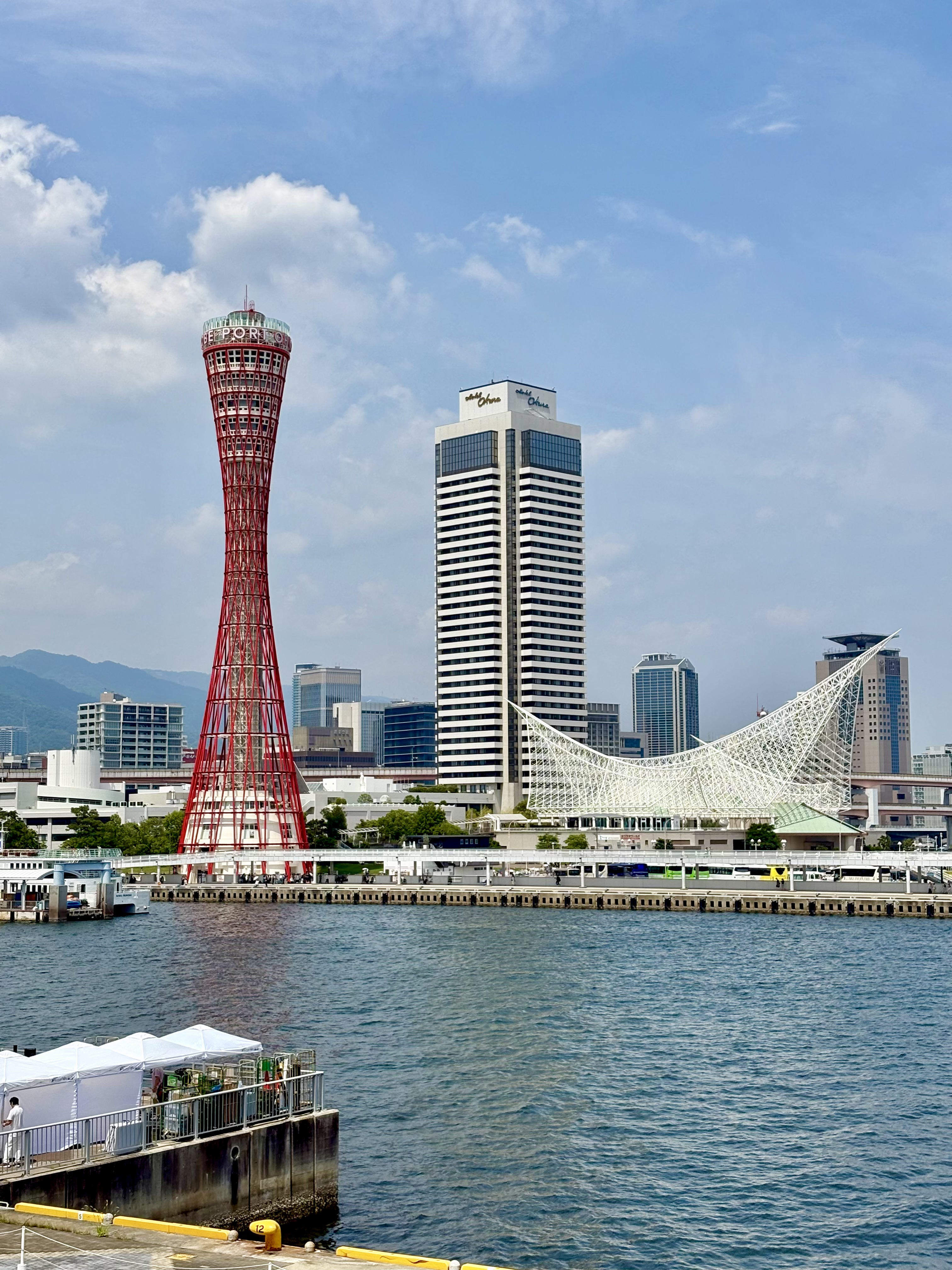
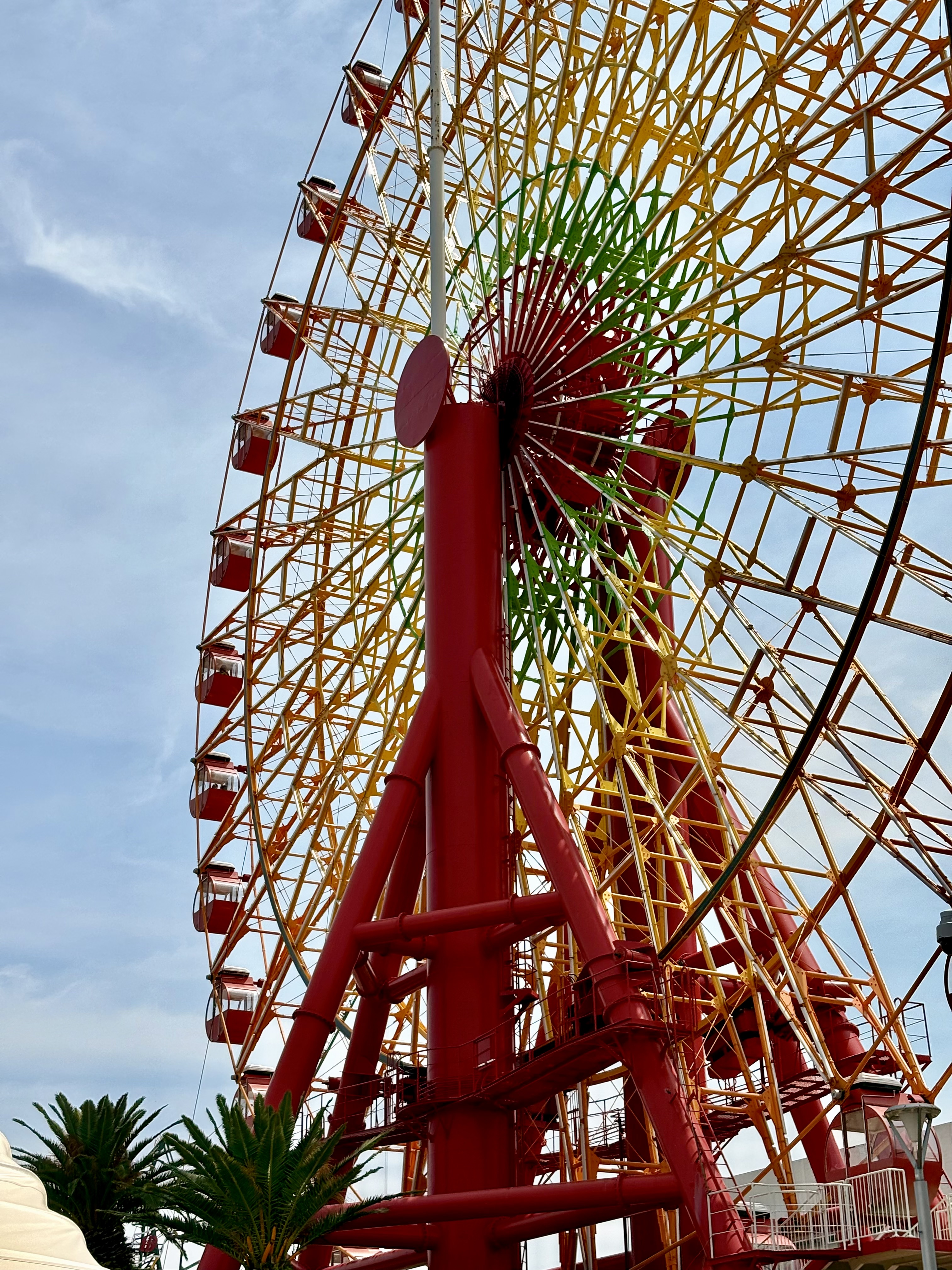
By the end of the day, we had made it to the port where I had some truly terrible matcha ice cream and discovered my favorite Japanese tower – the Kobe Port Tower. There were more kids at the port than I feel like we had experienced in all of Japan combined. Something about the weather and the mini-amusement park had all the families out to enjoy.
After that, we were ready to return to Osaka, Kobe’s big sister.
The last day trip we had was to the Osaka Kansai World Expo.
The very first World Expo – the Great Exhibition – took place in London in 1851. There have been a total of 36 World Expos, with seven taking place in the US (Philadelphia 1876, Chicago 1893, St. Louis 1904, San Francisco 1915, Chicago 1933, New York 1939, and Seattle 1962).
The longest time frame between any two World Expos was 22 years between Osaka 1970 and Seville 1992. The shortest time frame between any two World Expos was one year between Barcelona 1888 and Paris 1889, as well as one year between St. Louis 1904 and Liege 1905 and Milan 1906. Since 2000 they’ve been held every five years. Paris has hosted six World Expos.
We almost went to the 2020 World Expo in Dubai, but changed our minds right as the pandemic was settling in. Osaka Kansai (Japan’s third World Expo) was our first experience.
Since 1928, World Expos have been organized around a theme that “attempts to improve humankind’s knowledge, takes into account human and social aspirations and highlights scientific, technological, economic and social progress.” Essentially, each country sets up a pavilion to show off their latest and greatest innovations. 2025’s theme was “Designing Future Society for Our Lives.”
This may be a hot take, but it was also our least favorite day in Japan.
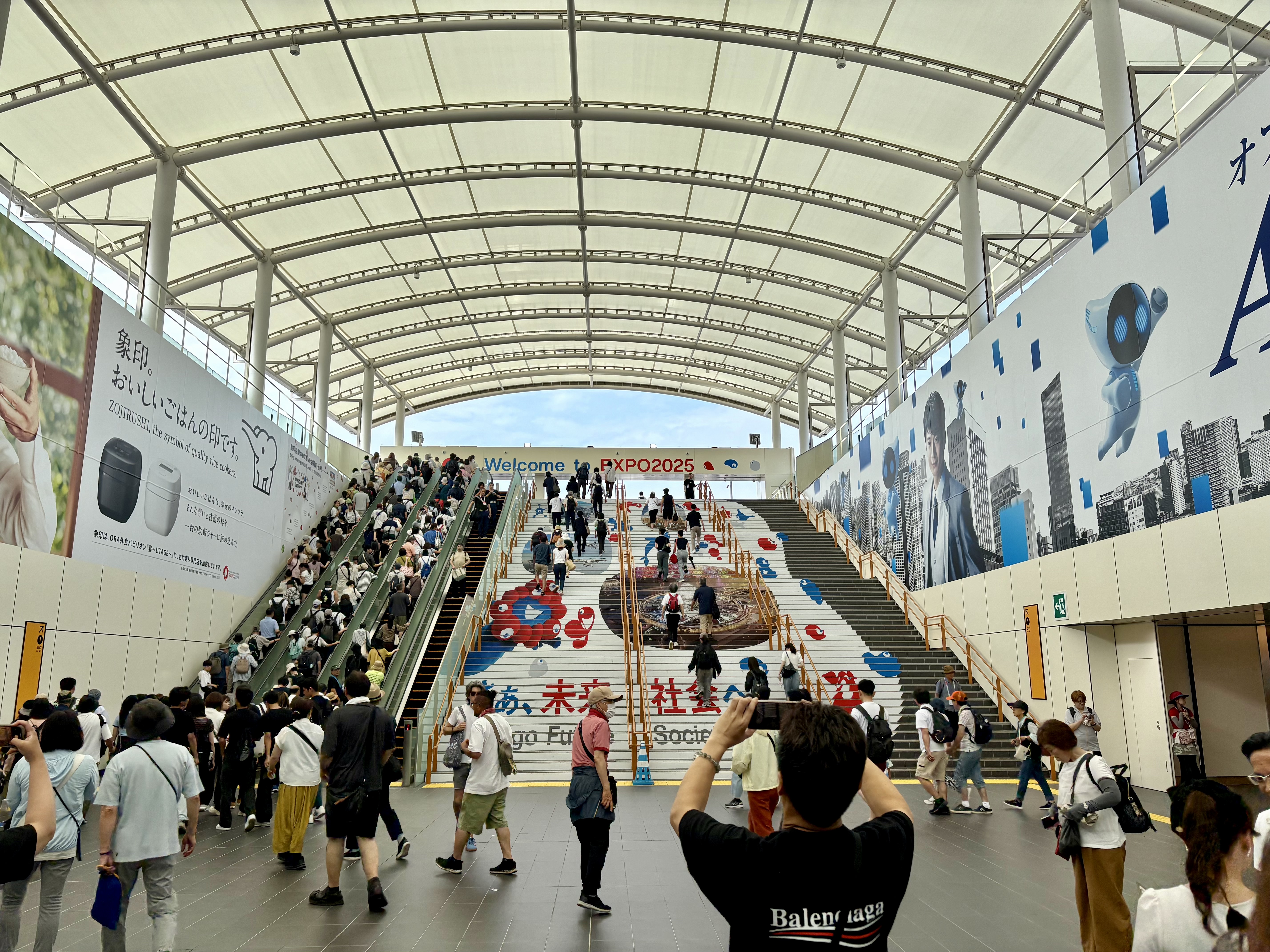
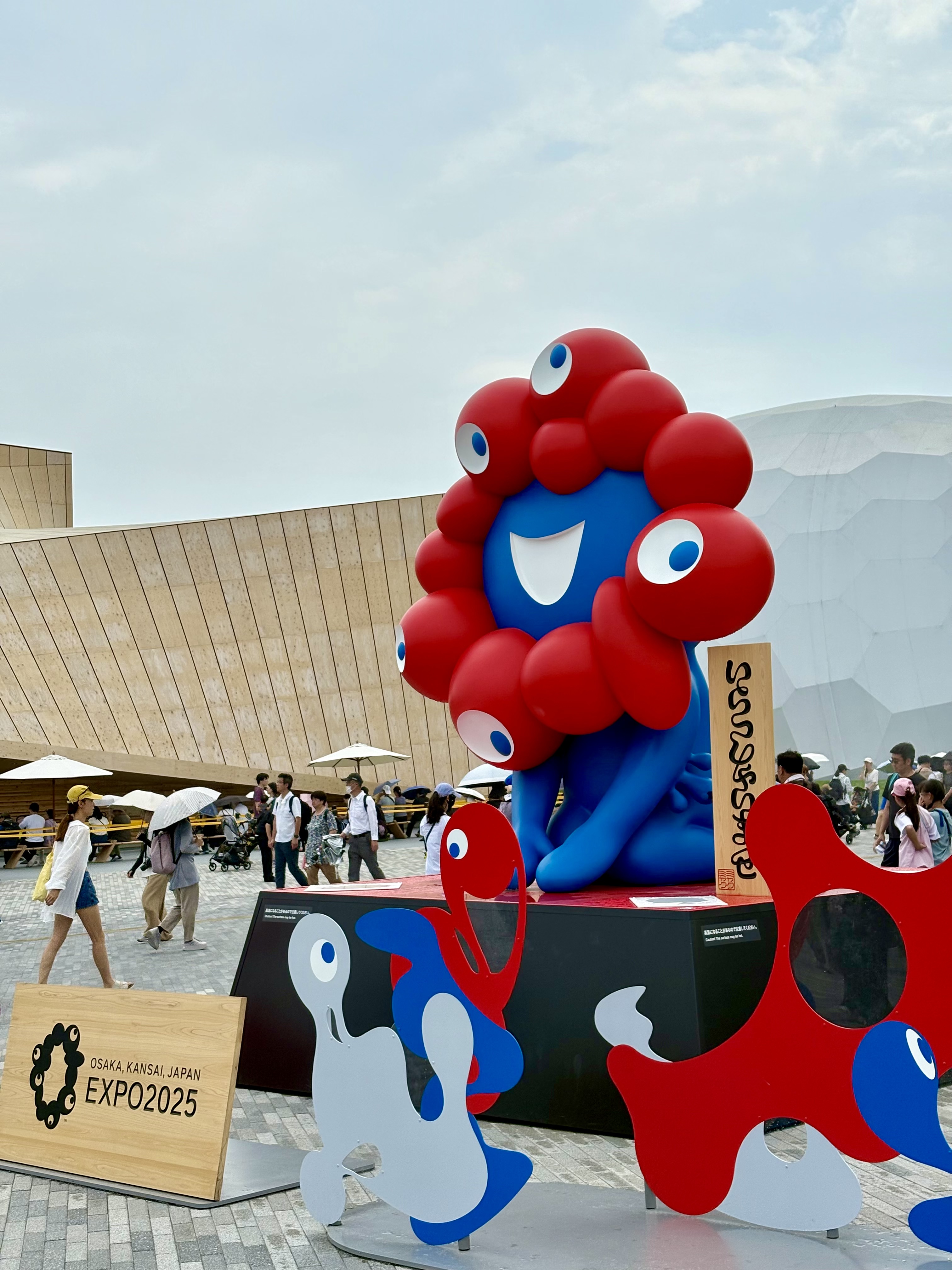
Hear me out – it was also the least “Japanese” day we had during our six-week trip. When we purchased our tickets we were notified that there were incredibly long wait lines at many of the country pavilions – and some could only be enjoyed with a reservation. We entered lotteries to gain entrance to a few of the more interesting ones, only to completely strike out. No worries, we were told, there would be plenty of pavilions that we would still be able to enjoy.
Problem #1: It was viciously hot. If I remember correctly, our tickets were for 10am. We arrived 30-45 minutes early and waited in line, but it wasn’t a single-file Japanese line, instead, it was like a cattle pen. Everyone had umbrellas to protect themselves from the sun (us included), but it made it unbearably hot because there was no airflow. We were dripping sweat within minutes, but even when the gates opened, the line moved so slowly because it was deeply unclear who should go in which line. At one point, a baby was passed overhead because it had passed out and they had to get it to a medic.
We got inside and picked up some swag in an air-conditioned Expo2025 Official Store. After that, we started wandering to see what was available.
Problem #2: The lines. We had naively thought that we’d be in the clear once we got inside the World Expo. However, many of the pavilions had two-to-three-hour waits (and we were the first group inside!). After having just escaped one line, we weren’t too keen to hop in another. There was a little bit of shading, but once again, it was a lot of people hiding underneath their umbrellas.
We made our way to the top of the Grand Ring. Designed for the World Expo, it has a 2-kilometer circumference and is the world’s largest wooden structure. From the top you can see Osaka Bay, as well as the rest of the World Expo. Pictured below is the line for the American Pavilion.
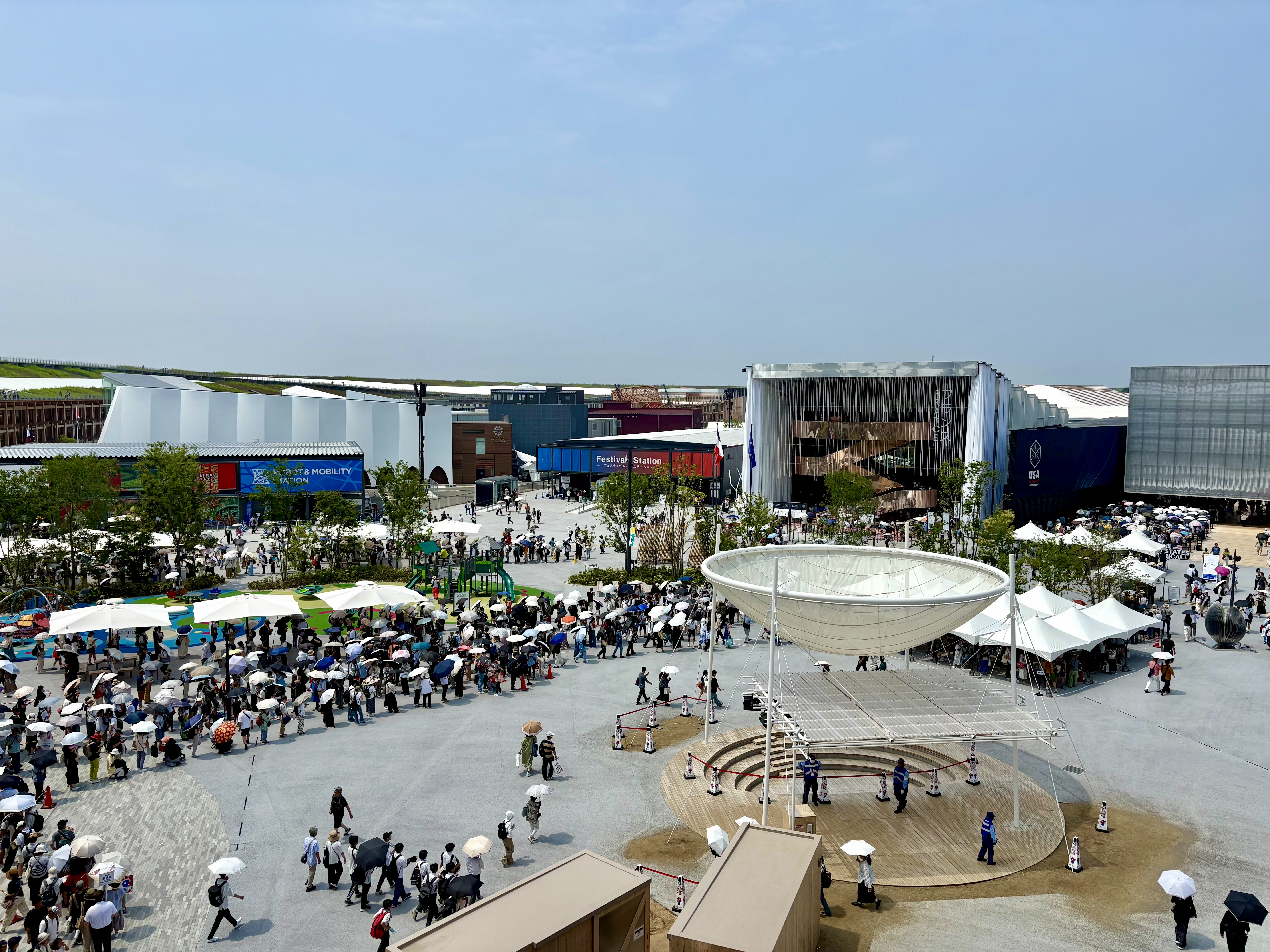
Problem #3: Reservation only. Some of the pavilions were reservation only. If you didn’t win a lotto ticket entry, it didn’t matter how long you waited in line, you were never getting inside.
One such example was the Gundam Pavilion. The closest we got was the massive statue outside (still amazing, but obviously we had hoped for a bit more).
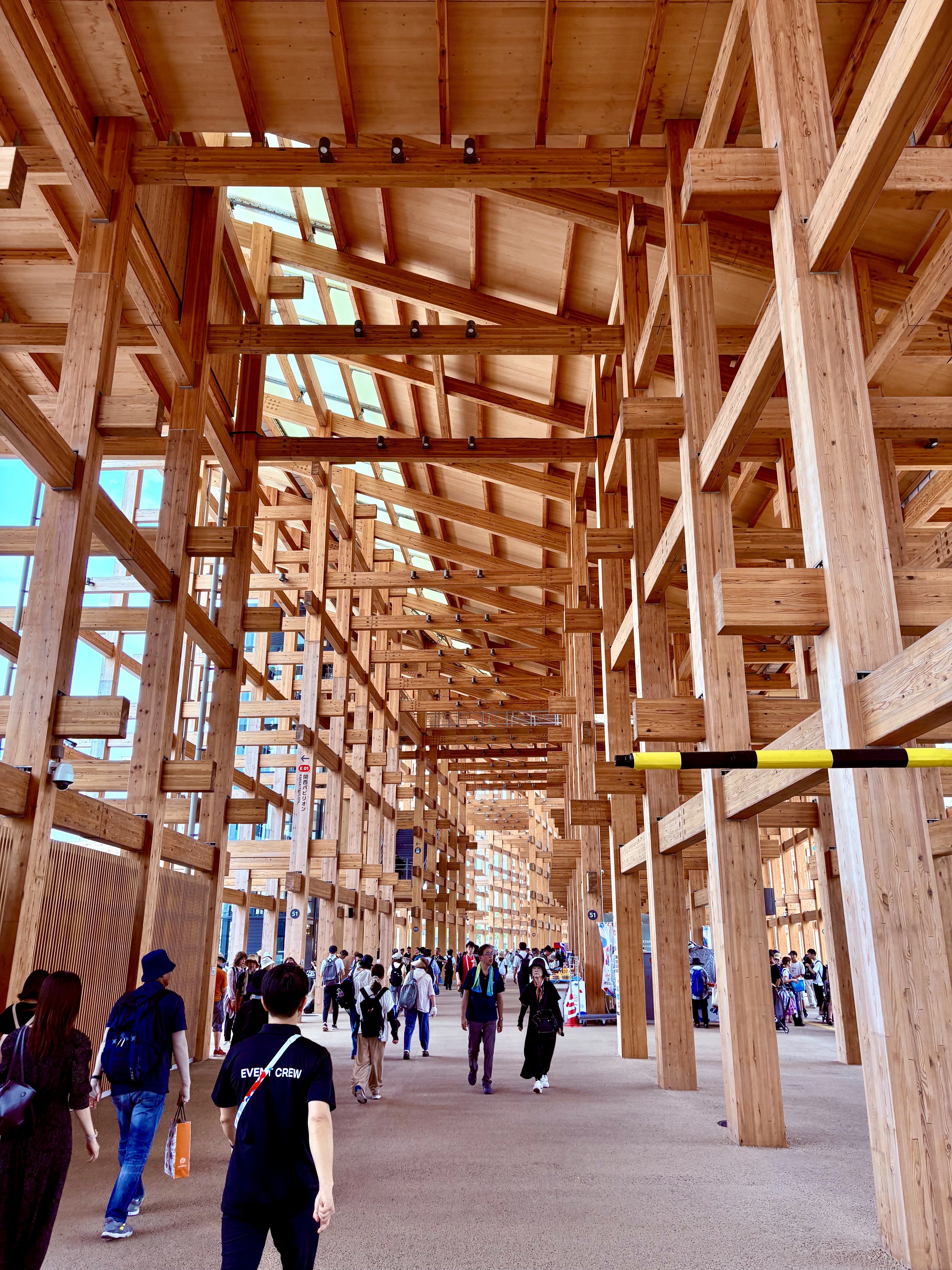
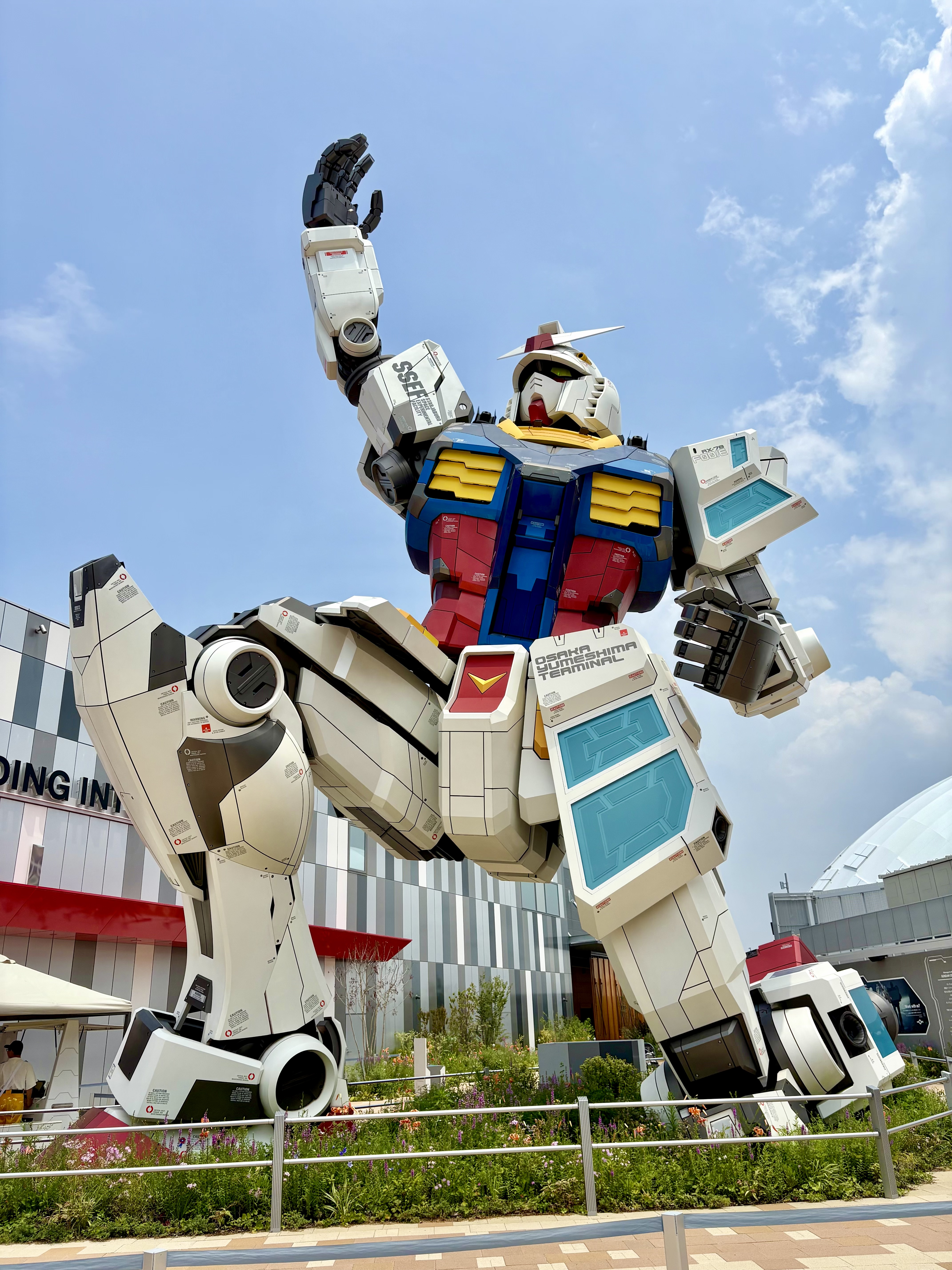
The majority of the single-country pavilions had at least a one-hour wait. A few notable exceptions that we could walk right into were the UAE, Senegal, and Cambodia (to be completely honest, we were shocked that Senegal had paid to have its own pavilion). Plenty of countries had their own pavilion, but some big ones that come to mind are the US, Canada, Germany, France, Italy, Spain, Portugal, Kuwait, Philippines, Singapore, China, Korea, and, of course, Japan.
But we actually spent a lot of our time wandering through the Commons Pavilions. Those pavilions were a collection of smaller countries represented by rooms and while they were busy, you could make your way inside them quite easily.
The first photo below is from the Cambodia Pavilion and the rest came from countries in the Commons Pavilions: Dominican Republic, Jamaica, Pakistan, and St. Kitts and Nevis.
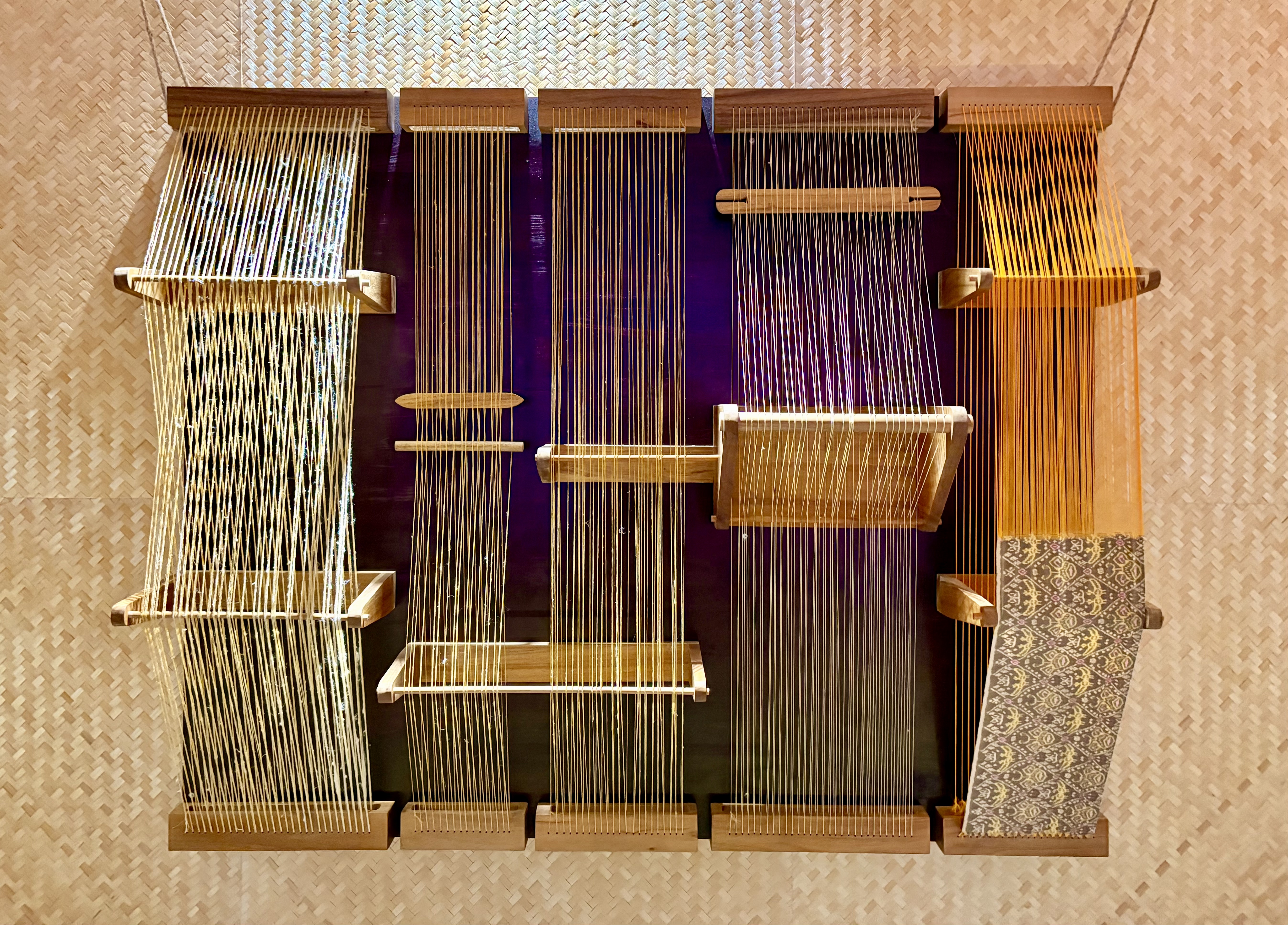
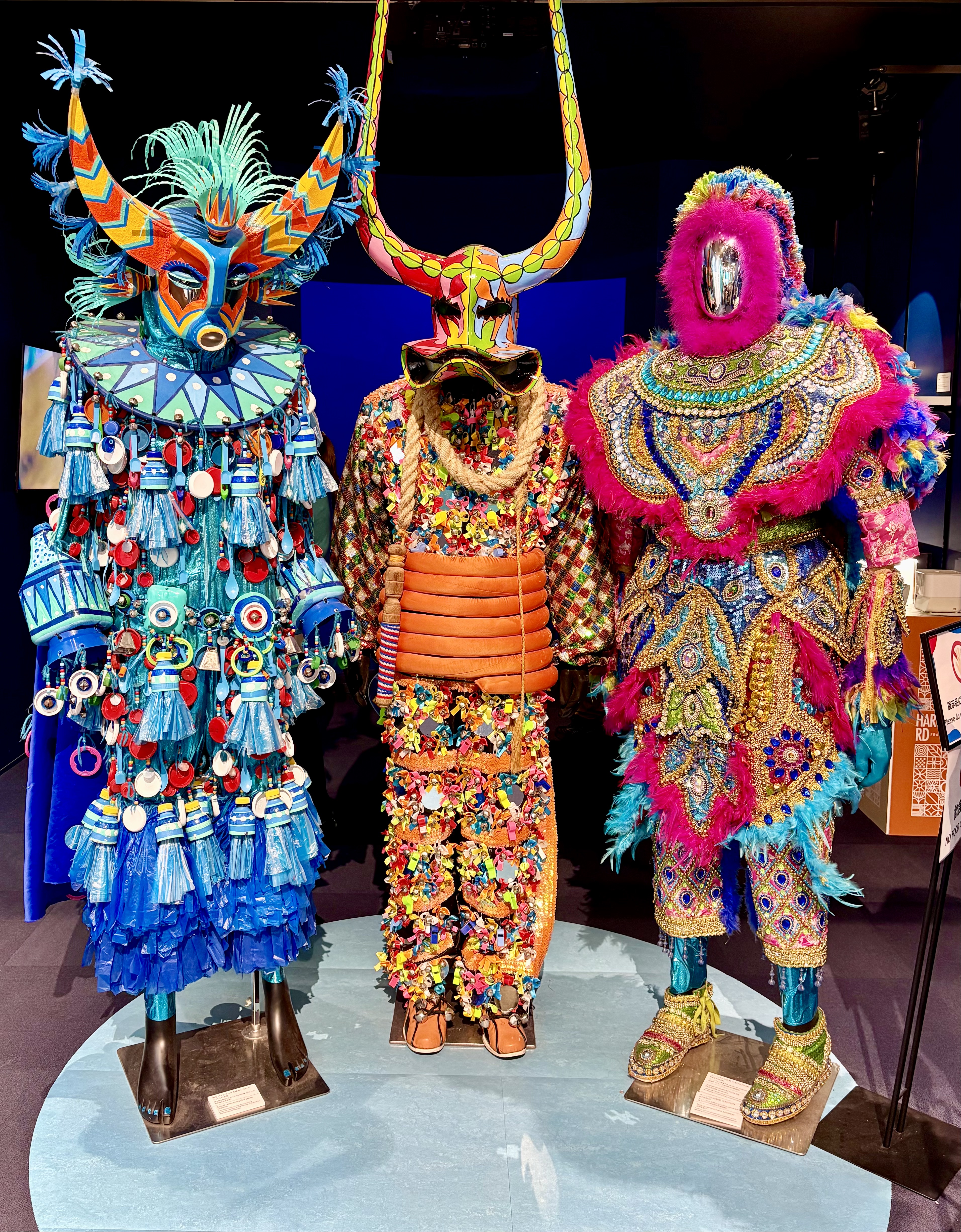

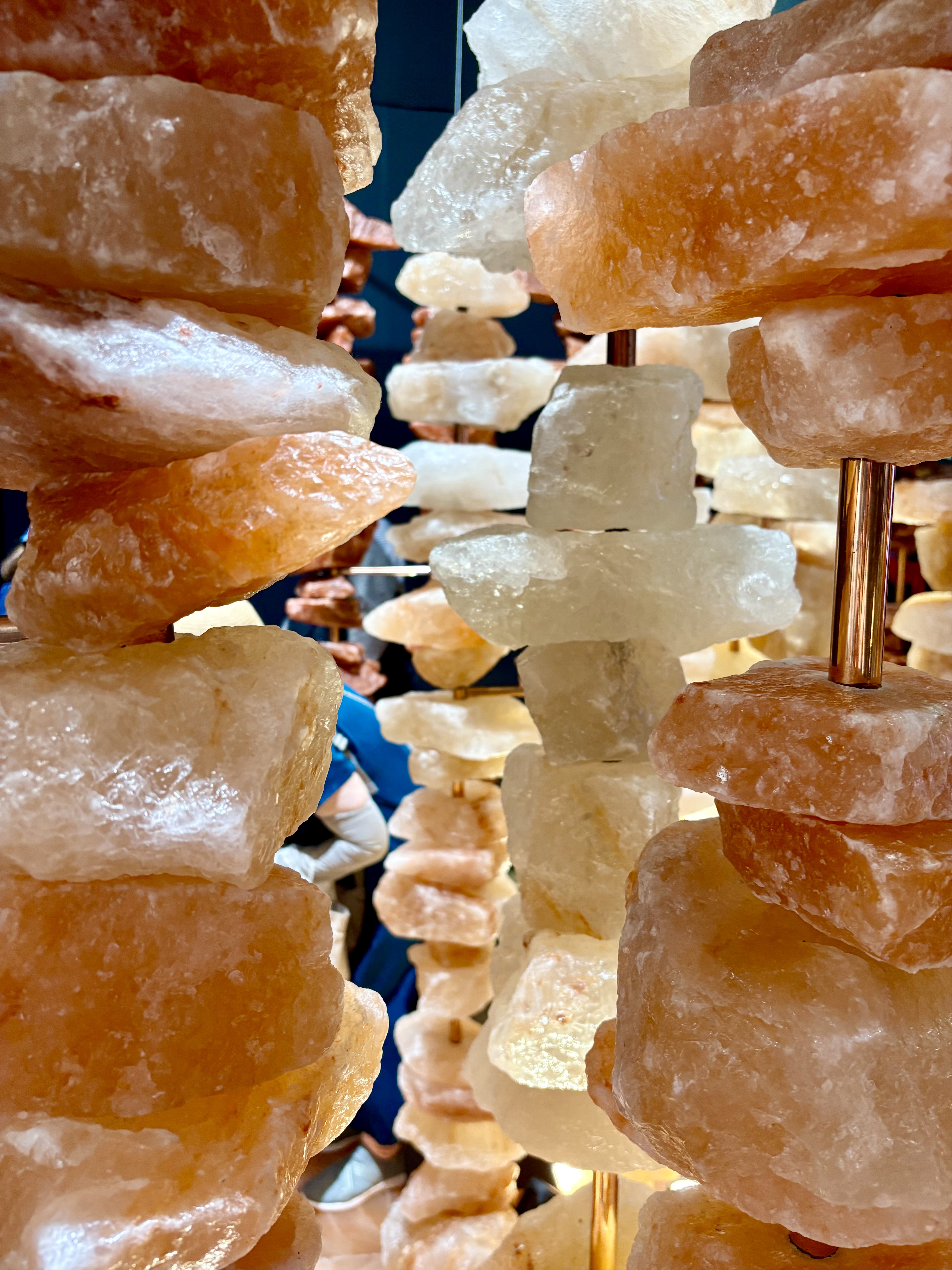
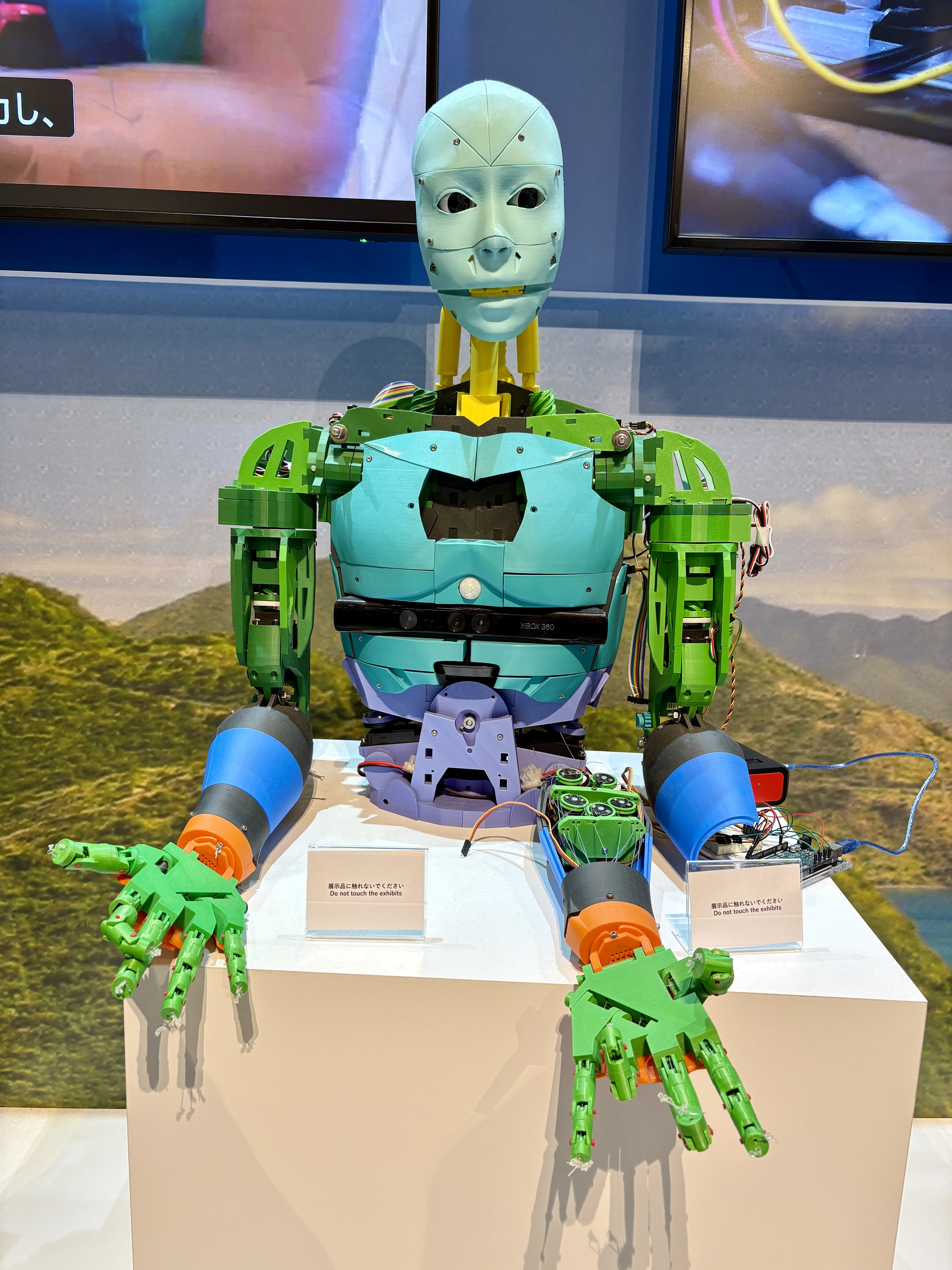
We also spent some time wandering outside. We had to pop in and out due to the heat, but one thing we did was take a walk through the Forest of Tranquility. We also enjoyed the surprising amount of street art and other fun statues/structures.
I could see this as being much more enjoyable in an earlier month when you could spend more time outside!
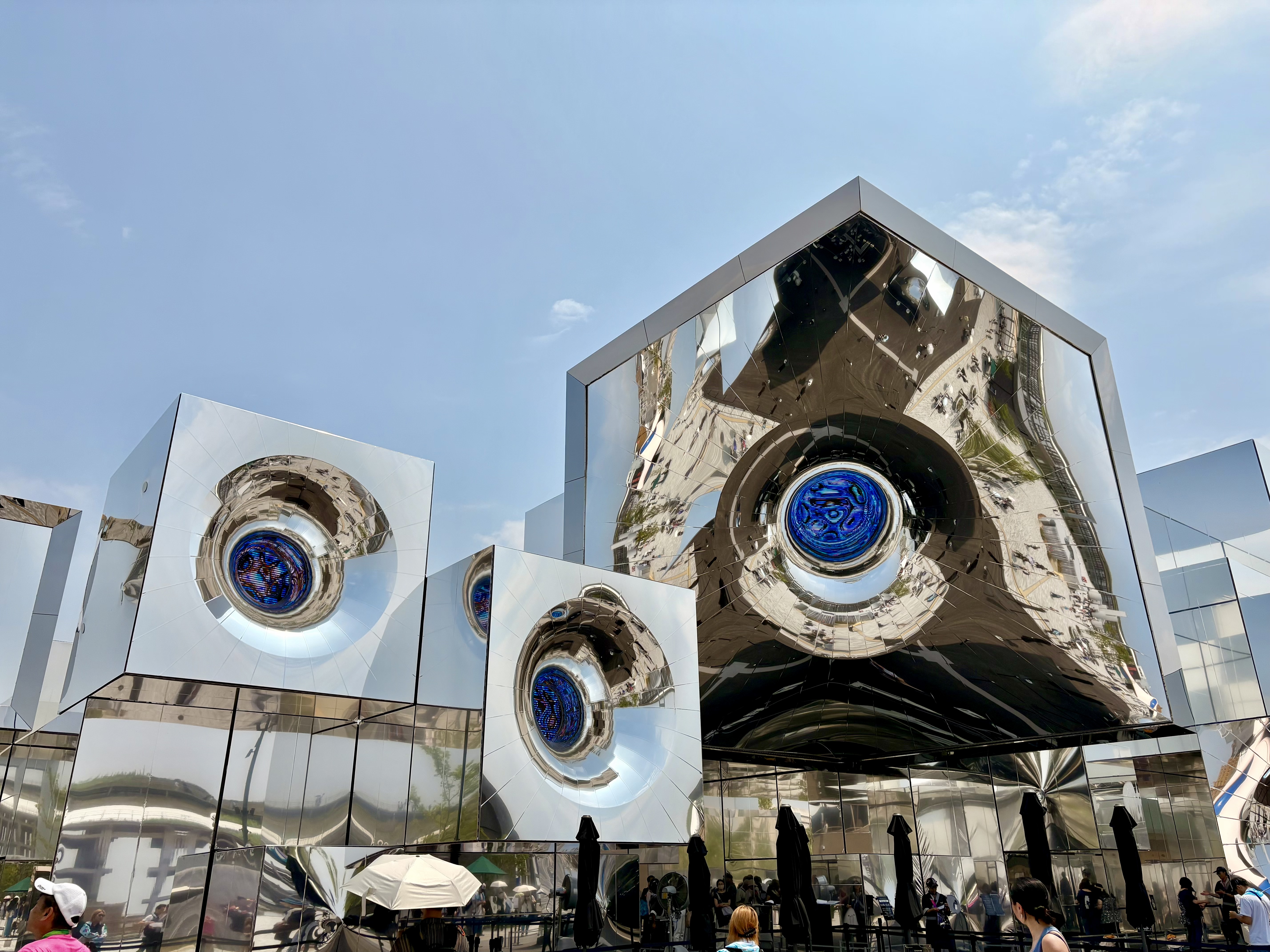
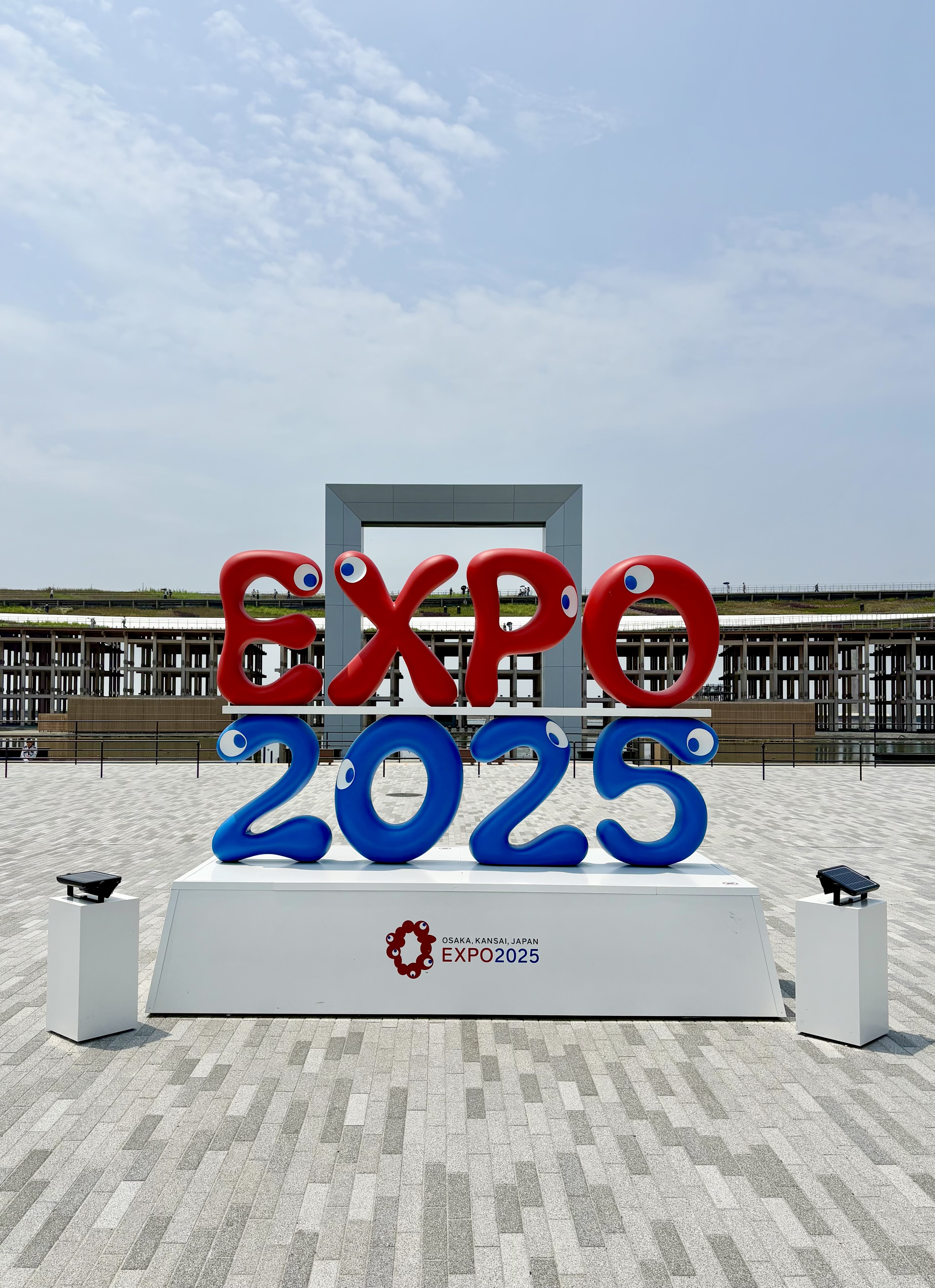
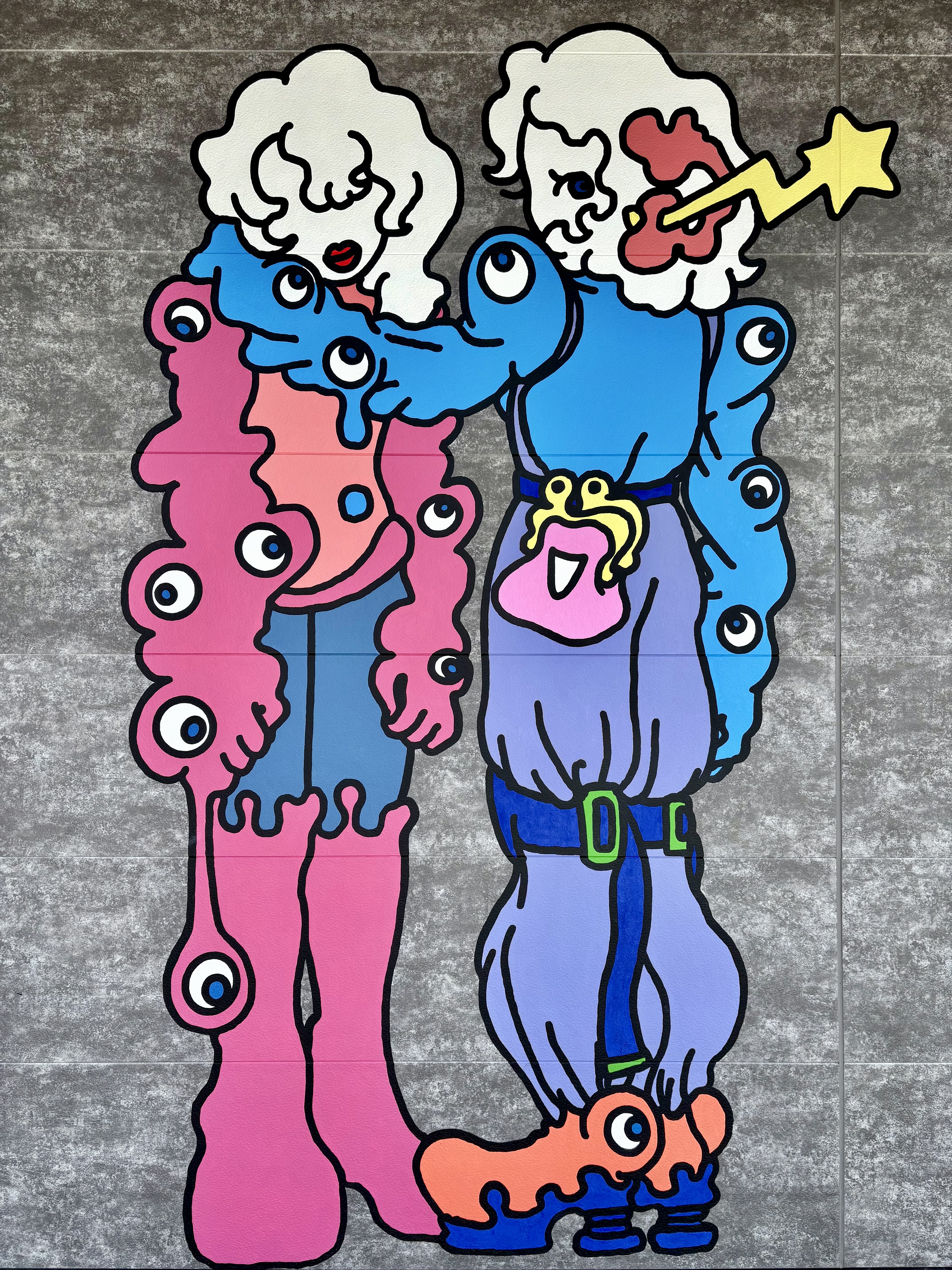
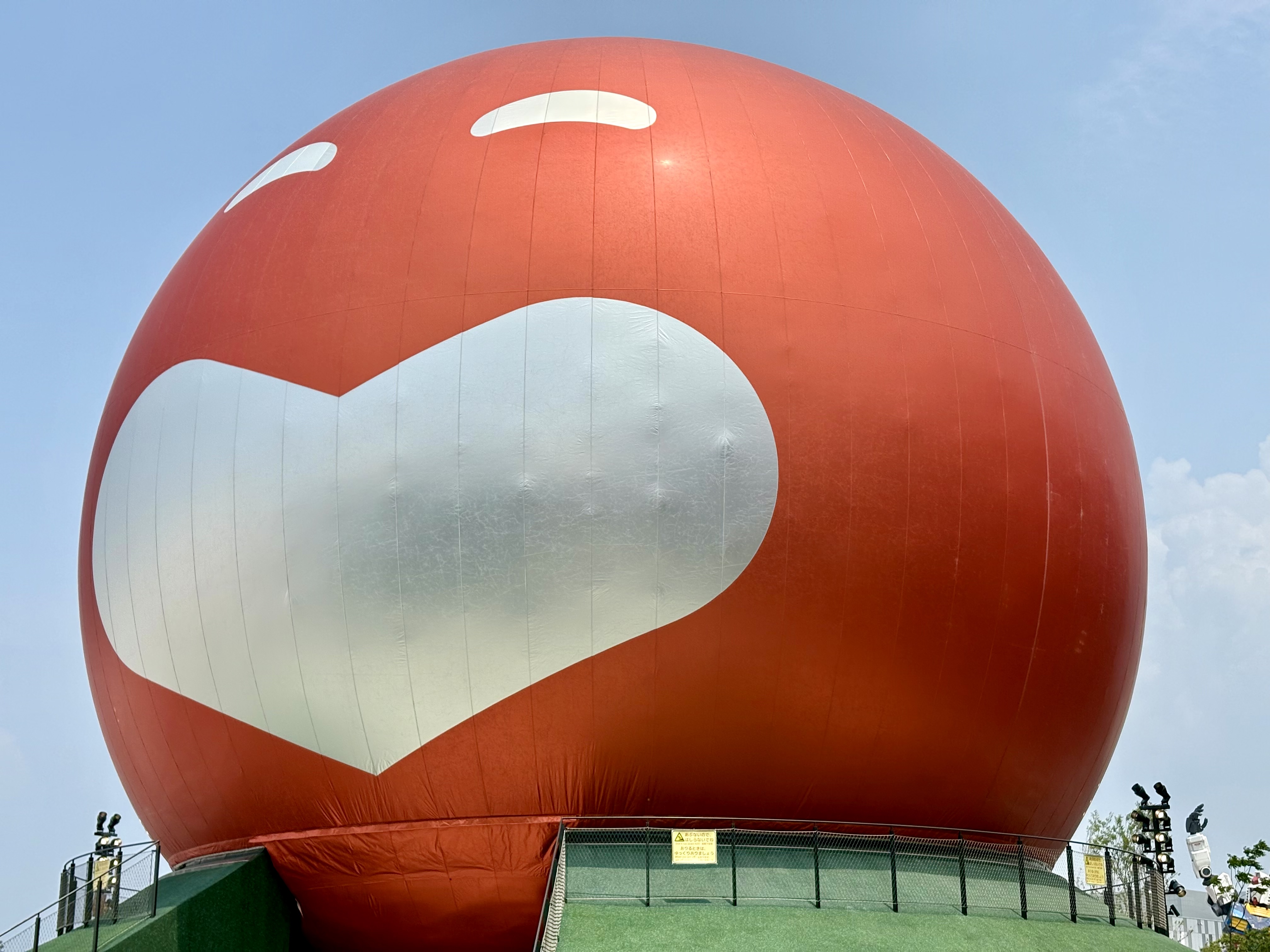
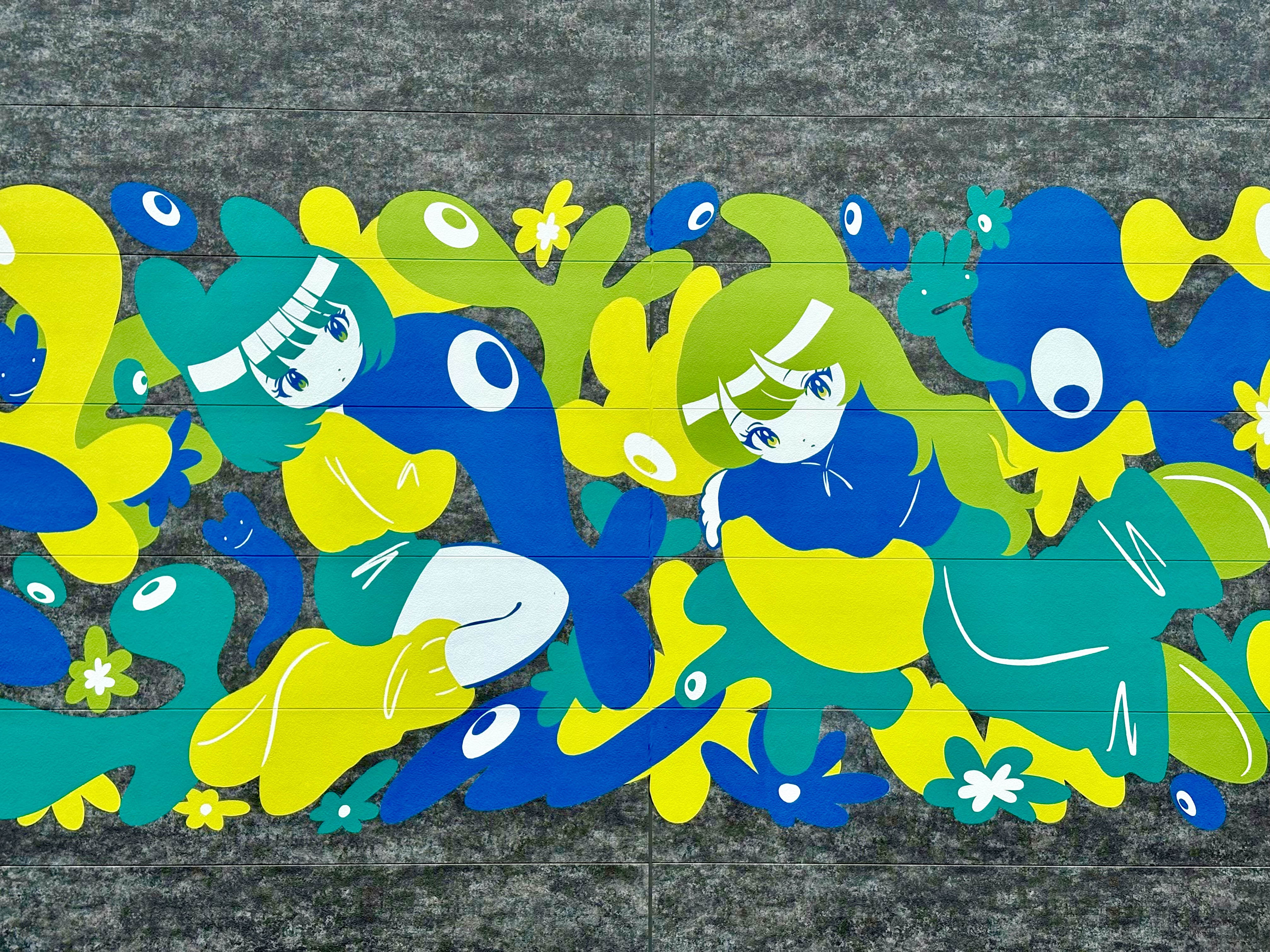
That said, we were in Japan and there simply wasn’t enough Japan around us : )
I can’t imagine not having gone, but it was equal parts stressful and fun – whereas the rest of Japan had been equal parts awesome and fun.
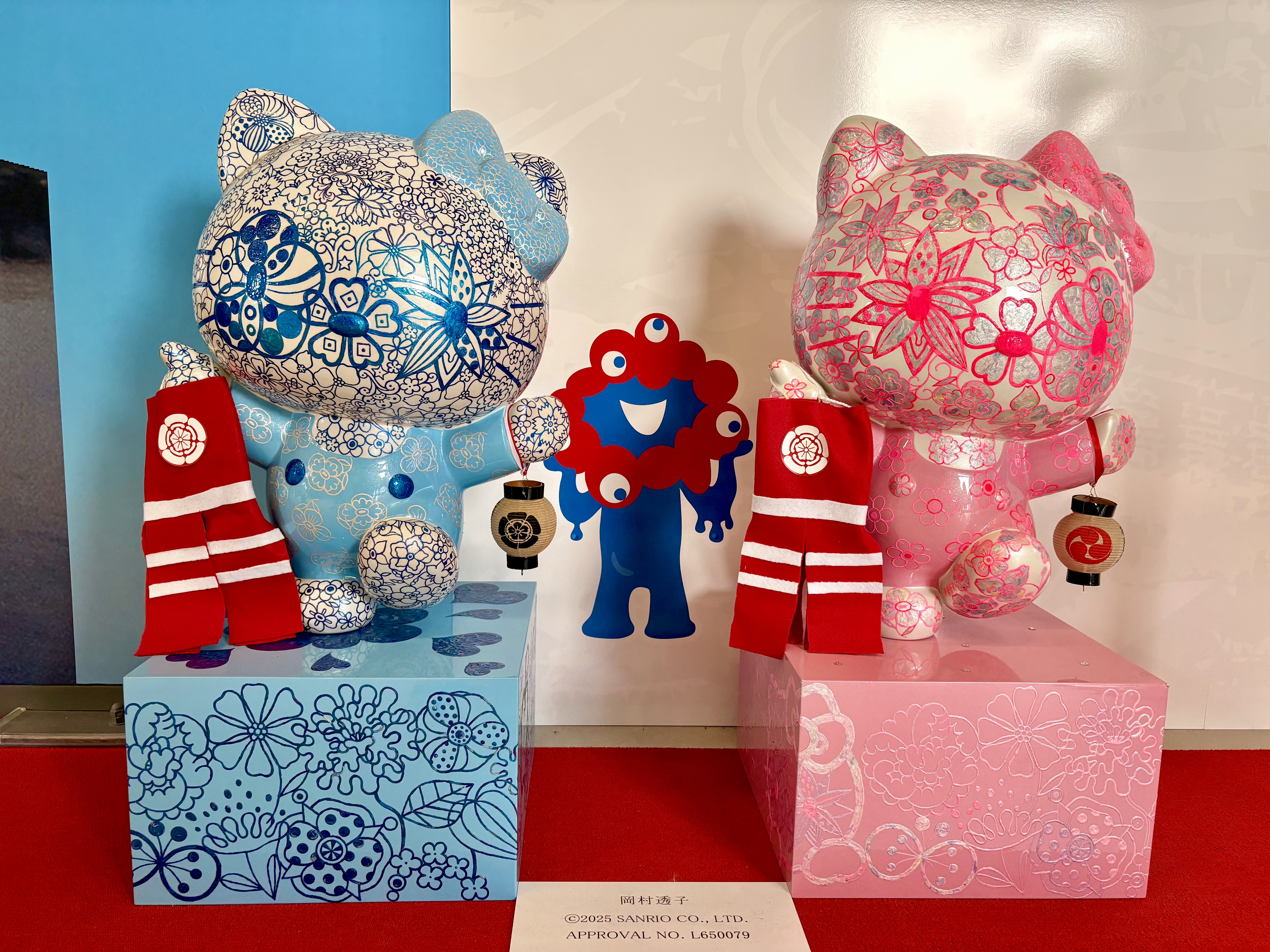
One of the final things we saw was an Art Pavilion and the Sanrio Hello Kitties were absolutely incredible. Because, like I said: We love all things Japan!
 Abroad With Ashley