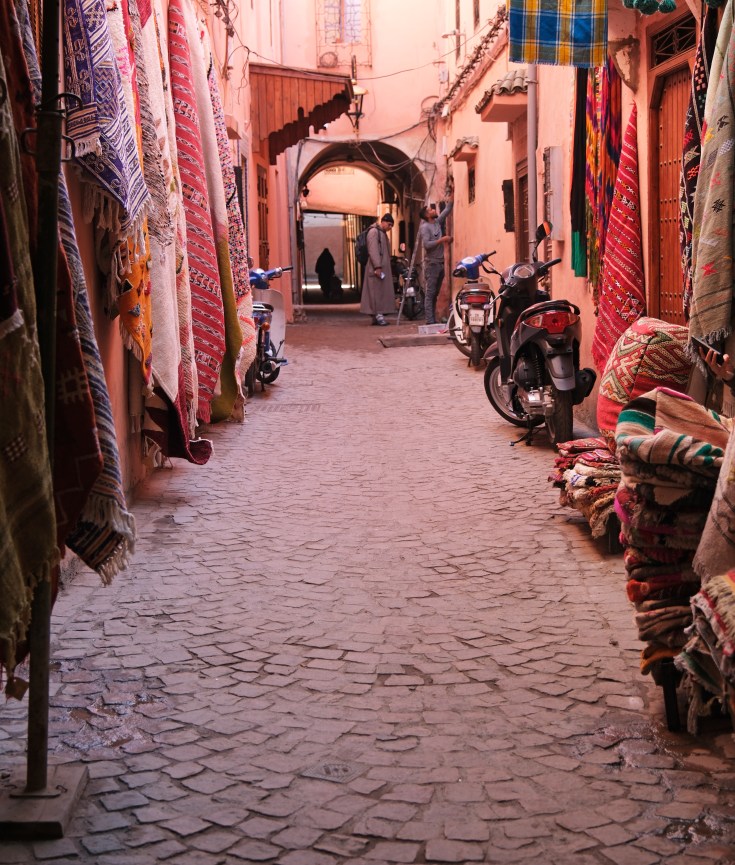
When Winter Break rolled around, we knew it was time for a a change of scenery. Since winter in Senegal is fairly warm, we weren’t willing to take a gamble on Europe’s chilly weather. Southern Africa was tempting, but the endless flight connections ruled it out. Morocco, on the other hand, was a perfect fit – just a three-hour flight away (even if it was at an ungodly hour).
After a summer of hiking through US National Parks, we were ready for a trip focused on cities – places we could explore, eat great vegan food, and immerse ourselves in history and culture.
Marrakesh was our first stop and it came with a reputation: A city of vibrant souks, stunning architecture, and sensory overload that people either love or hate. We weren’t sure which camp we’d fall into, but it felt like the perfect place to kick off our three-week adventure through Morocco’s vibrant cities.
Our first big decision was where to stay. The city offers incredible hotel options, but staying in a traditional riad is often recommended for an authentic experience. Throughout our journey across all five cities, we aimed for a balance between hotels and riads. Luckily, Condé Nast Traveler had the perfect article: The Prettiest Riads in Marrakech (French spelling).
We started our booking process in early November and quickly learned that Morocco is a place people book in advance for the holidays! A number of the riads we were interested in were already fully reserved. Luckily, we managed to score a room at the gorgeous Riad Melhoun & Spa. We even managed to stumble our way into one of their suites!
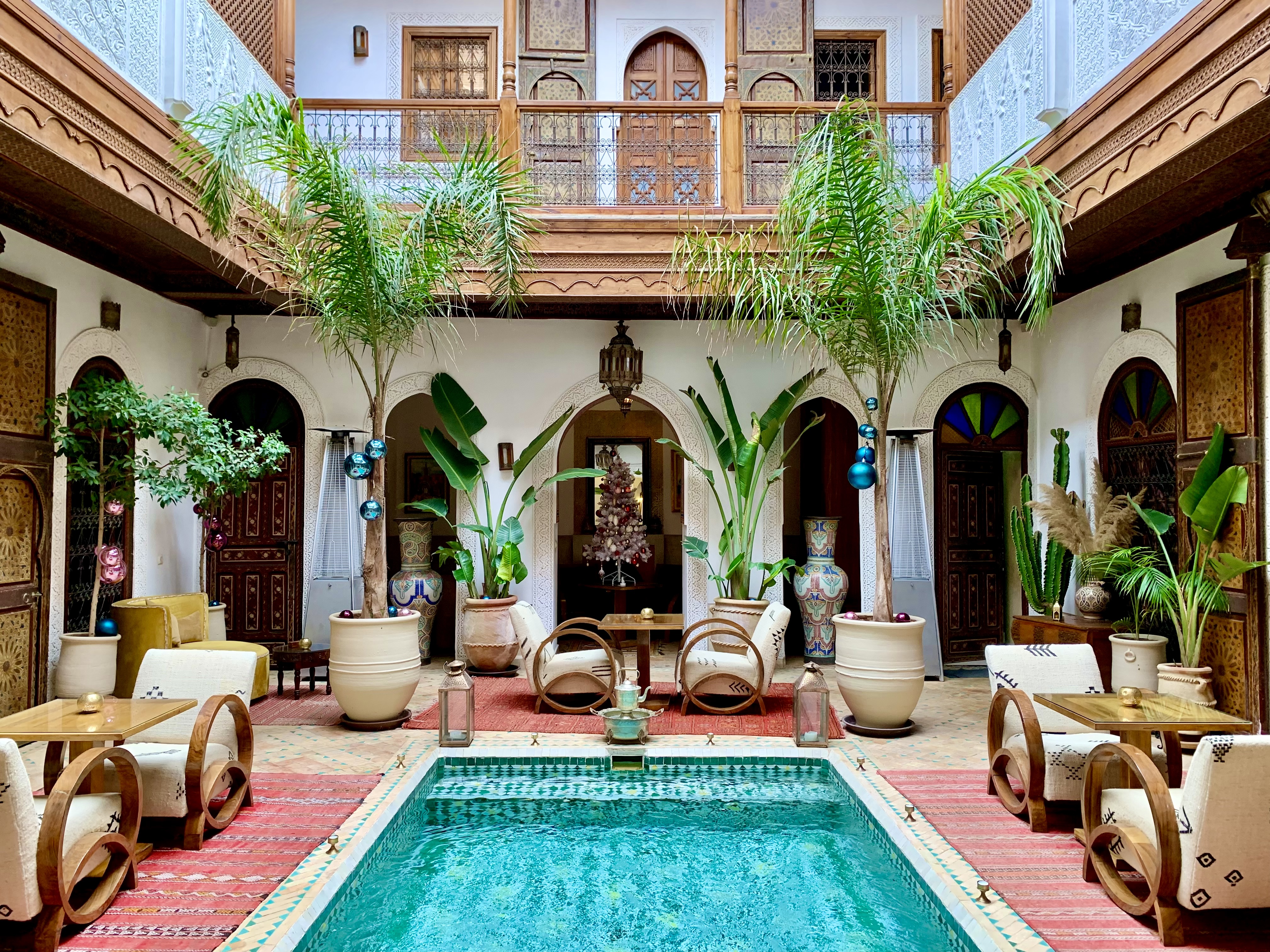
With only eight rooms in total, Riad Melhoun is a perfect example of a traditional Moroccan riad. Built around a central courtyard adorned with intricate tile work and greenery, riads are designed to be tranquil retreats from the chaos of the medina (old town). Their small size fosters a personalized experience, with attentive service and a quiet, intimate atmosphere. Staying somewhere like Riad Melhoun feels more like being a guest in a private home than a visitor at a large hotel, making it an appealing choice for travelers seeking authenticity and charm.
That said, sometimes, it’s nice to have a bit more privacy. In a riad, the open central courtyard can often carry noise and the shared spaces create a forced communal feel. Hotels, on the other hand, provide the chance to retreat completely, with private rooms and optional shared spaces.
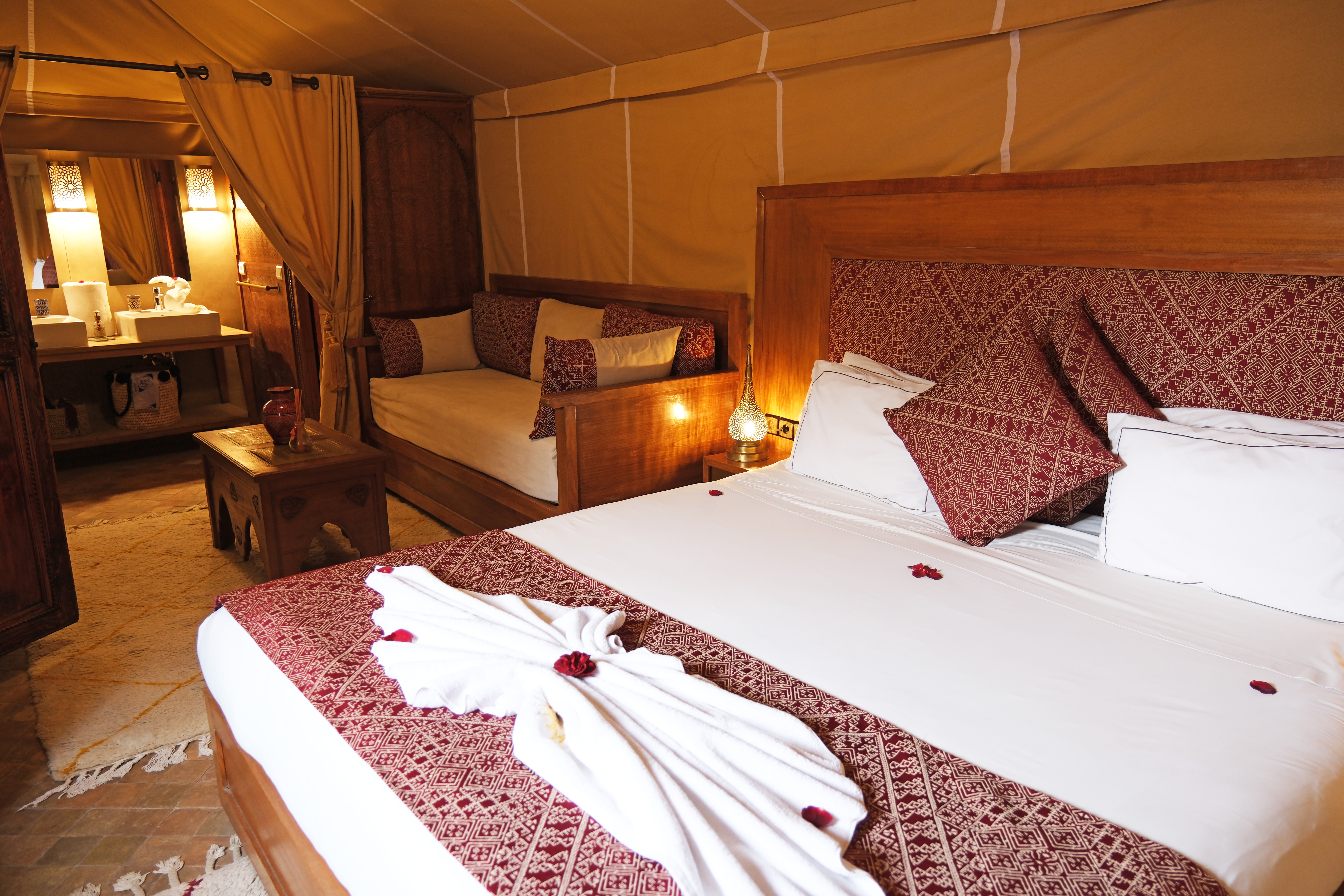
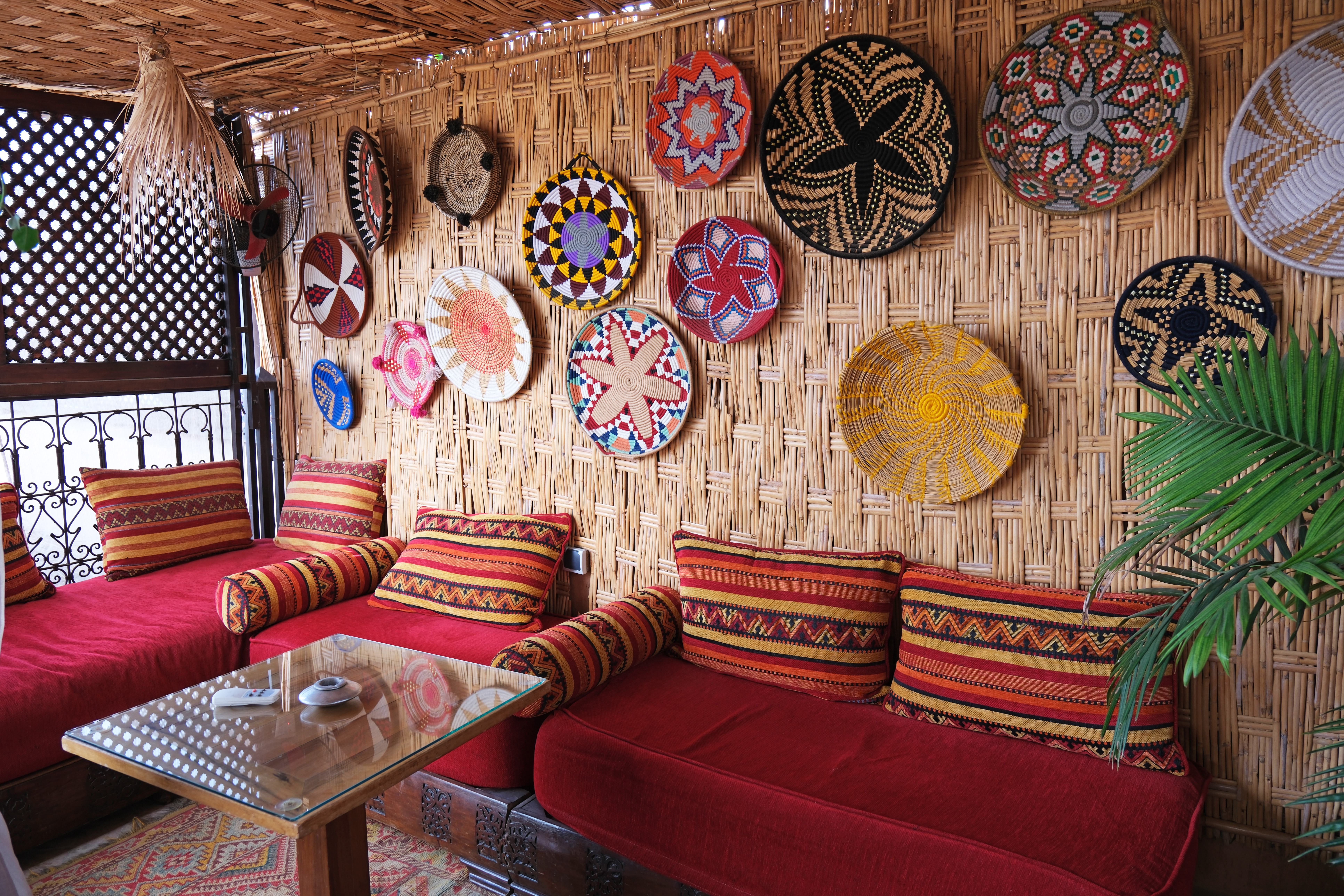
Our room at Riad Melhoun managed to strike the perfect balance, offering the privacy that riads can sometimes lack. Located on the rooftop, it was a spacious Berber-style suite designed to feel like a traditional tent. The size alone made it stand out from the other rooms, but what truly set it apart was its semi-secluded location. Unless other guests ventured up to the rooftop, we often had the space to ourselves. To top it all off, the roof also had a heated pool and colorful seating area that felt like they were just for us.


Plus, the riad had recently taken in this adorable kitten and I may have spent an unreasonable amount of time playing with her outside.
Beyond the calm oasis of Riad Melhoun’s doors lay the bustling medina, the heartbeat of Marrakesh. The medina is the city’s old town, a labyrinth of narrow streets, souks (market stalls), and historic landmarks, all enclosed by ancient walls. It’s a place where life hums with energy, from the calls of the shopkeepers to the vibrant colors of spices and textiles. Stepping out of the tranquility of the riad and into the medina felt like crossing into an entirely different world. One that was not appreciated in equal measure by me and Chandler.
Two of the biggest negatives of the medina were noticeable right away. While cars are not allowed inside (and wouldn’t fit anyway), the motorbikes and motorcycles are a constant presence, zipping through the narrow streets and forcing you to jump out of their way. Adding to the challenge, many streets have overhangs above the shops, which trap the exhaust fumes from the motorbikes, creating pockets of poor air quality.
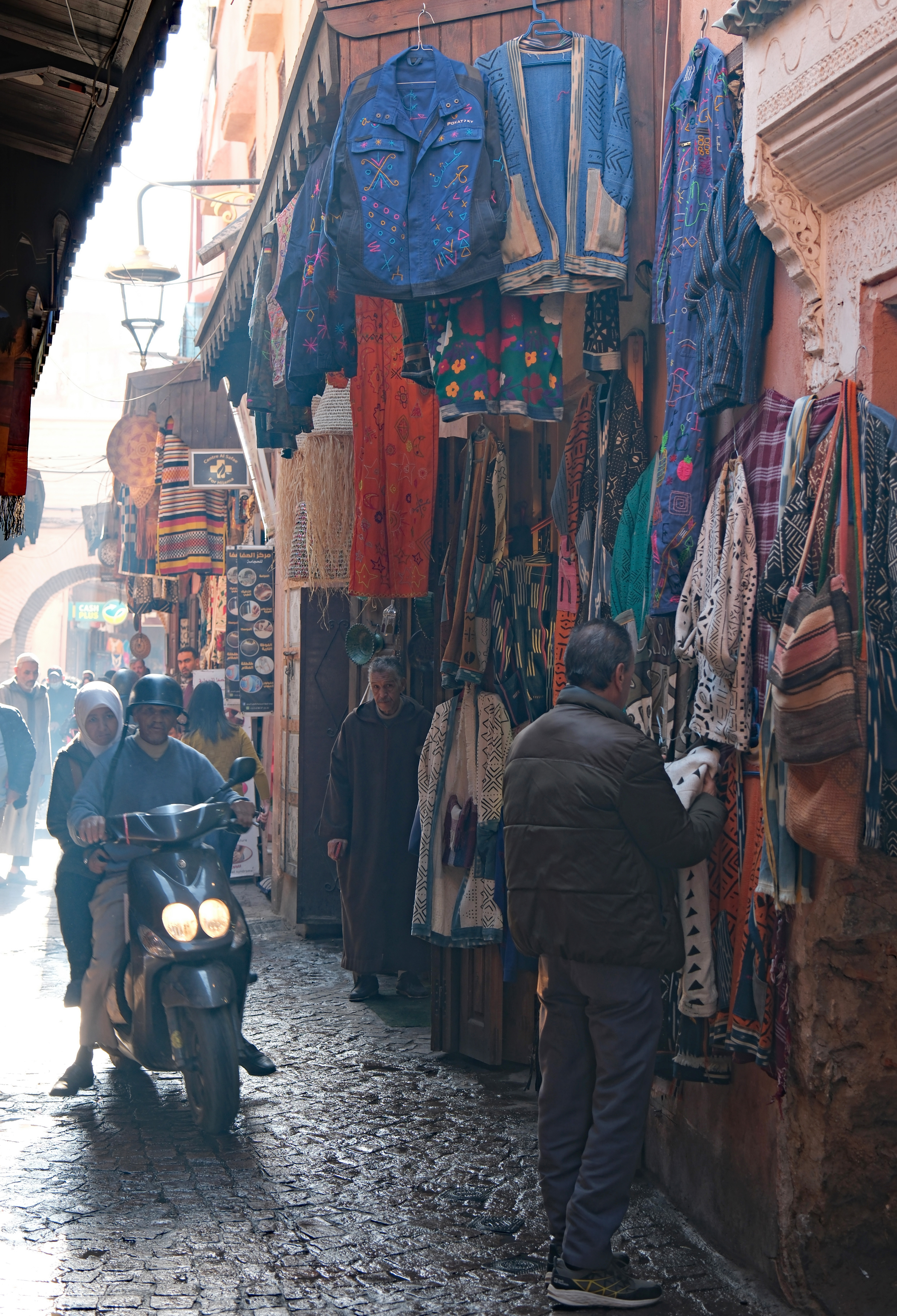
Despite the challenges of the medina, I was able to look past the chaos while photographing it. Having my camera with me felt essential, even if I was constantly worried about it getting jostled. The medina is a photographer’s dream, a kaleidoscope of colors and textures that seems to shift with every turn.
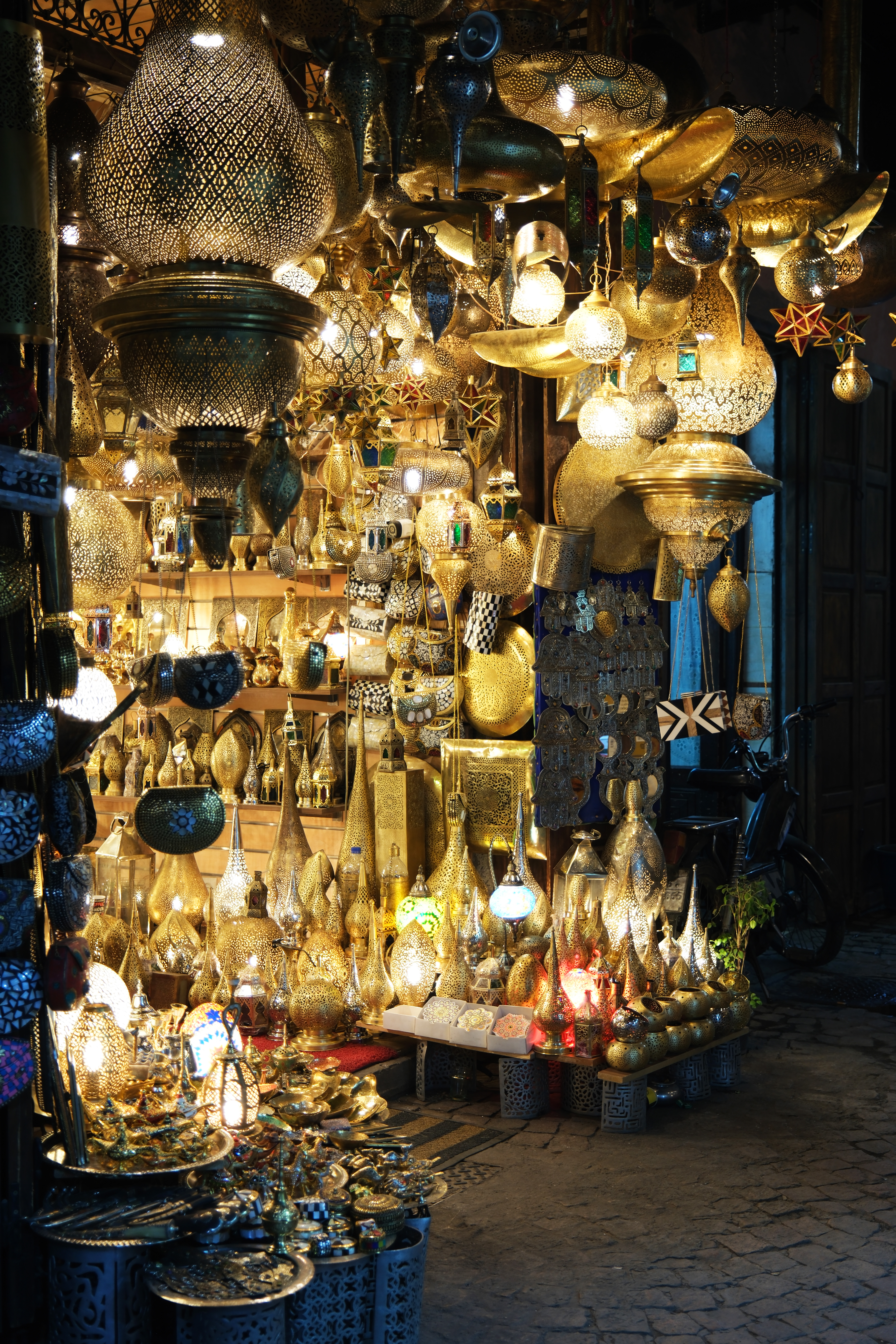
Shops spilled over with vibrant rugs, patterned ceramics, and displays of sparkling lanterns. Stalls were piled high with spices in shades of saffron, crimson, and ochre. The interplay of light and shadow through the narrow alleys gave each shot a dynamic feel. Even the people added to the scene, from shopkeepers arranging their wares to tourists haggling over prices.

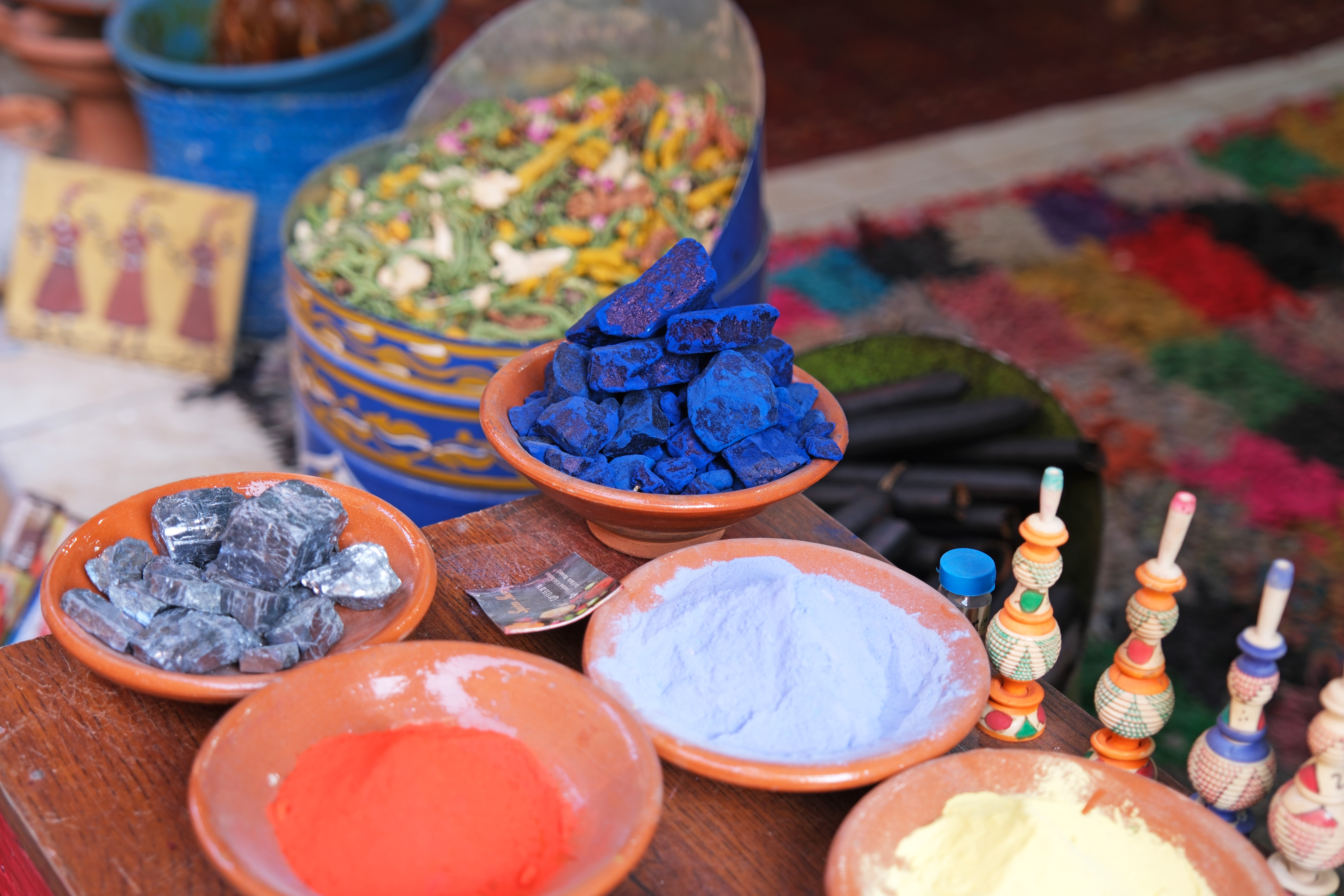


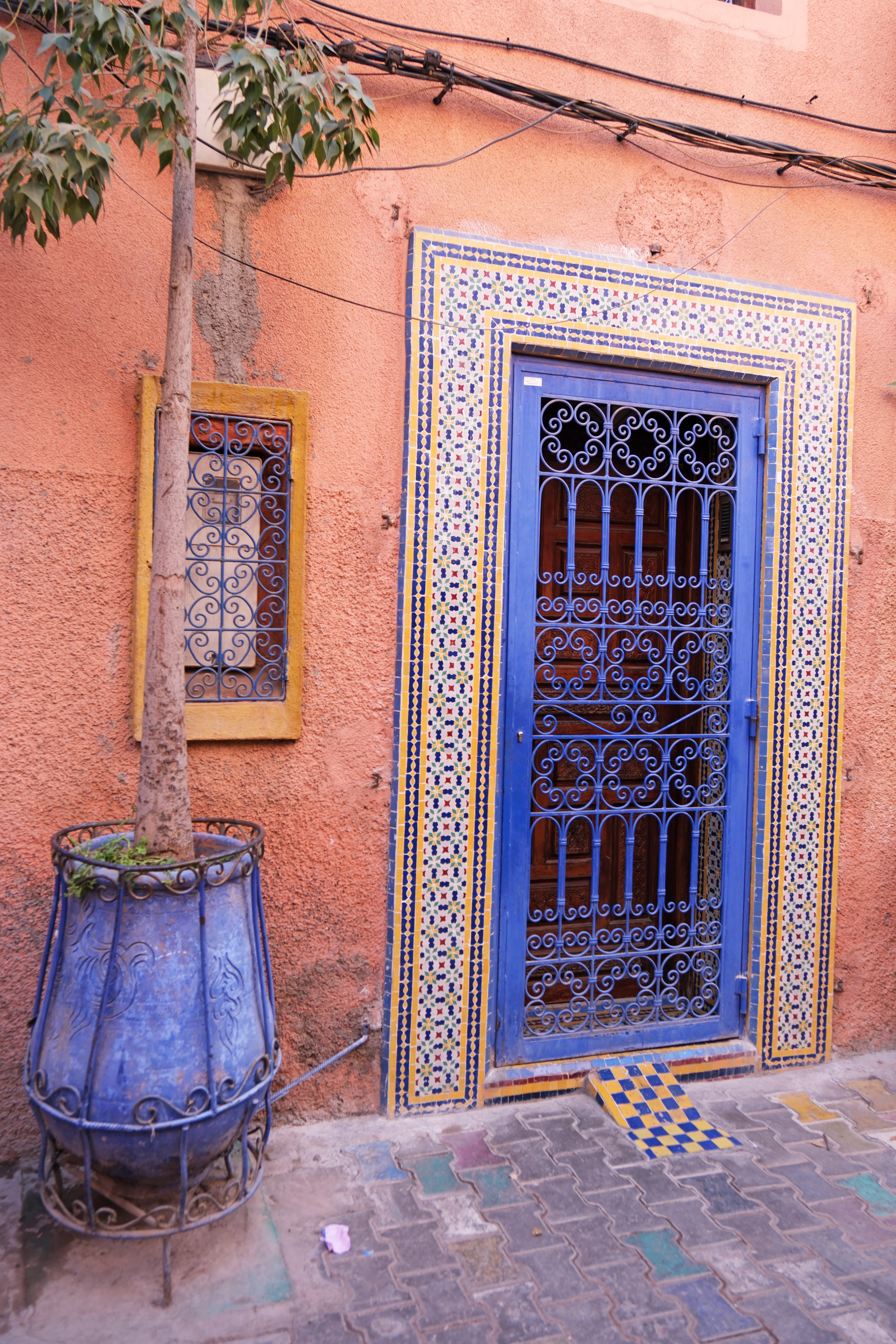
Every corner offered something unique – a set of vividly dyed baskets hanging on a wall, a doorway framed by carved arches, or a hidden rooftop terrace peeking out from above. The medina, though overwhelming in many ways, had a vibrancy that drew me in, making every step an opportunity to capture something extraordinary.

That said, it’s worth noting that many of the items sold in the medina are not authentically made in Morocco. Much of it is imported, often from China. Even when products are local, there can still be ethical concerns. Many items are mass-produced in ways that undercut Berber artisans or fail to provide them with a fair living wage. For authentic goods, there are better options, such as government-run cooperatives or women’s collectives, which ensure items are locally and ethically produced.
Still, even knowing this, the medina’s vibrancy and energy made it a memorable and exciting place to explore through my lens.

With that in mind, we made sure to spend some time shopping and sight-seeing outside of Marrakesh’s medina.
My favorite shop was Hanout Boutique, and luckily for me, one of their stores was within steps of our riad. Famous for their Alexia’s Dress, which left me drowning in fabric, I opted for an adorable crop top with the same cut. They even sent it back to the tailor to make a minor adjustment at no additional cost.
Also part of Marrakesh’s “new” shopping scene:
–Norya Ayron: Known for flamboyant shades and patterns cut into a more feminine and streamlined silhouette than typical kaftans and abayas
–Moro Boutique & Concept Store: A concept store (and hotel) filled with (mostly) Marrakeshi-made clothing, perfumes, and design pieces
–Marrakechi Life: A zero-waste company, reusing remnants in future creations, and dedicated to the preservation of weaving techniques
–Hamimi: A small collection of brass jewellery, leather handbags, and crocheted lampshades
–Beni Rugs: Ethical, made-to-order rugs
A number of these shops are located in Gueliz – Marrakesh’s “Ville Nouvelle.” Gueliz was built by the French in the early 20th century, combining Art Deco villas with wide, leafy boulevards and grand cafes. This neighborhood is also home to the Jardin Majorelle and the Yves Saint Laurent Museum.
We bought combination tickets that allowed entry into the museum and garden, as well as the Berber Museum (housed inside my favorite building in all of Marrakesh). We purchased our tickets when we arrived in Marrakesh, which meant many of the time slots were already sold out, but we ended up appreciating our afternoon time because the weather in Marrakesh was always significantly warmer in the afternoon vs the morning.
The Jardin Majorelle was so much larger than we ever could have anticipated. A lush oasis, it blends vibrant artistry with botanical beauty, and its history is as fascinating as the gardens themselves.
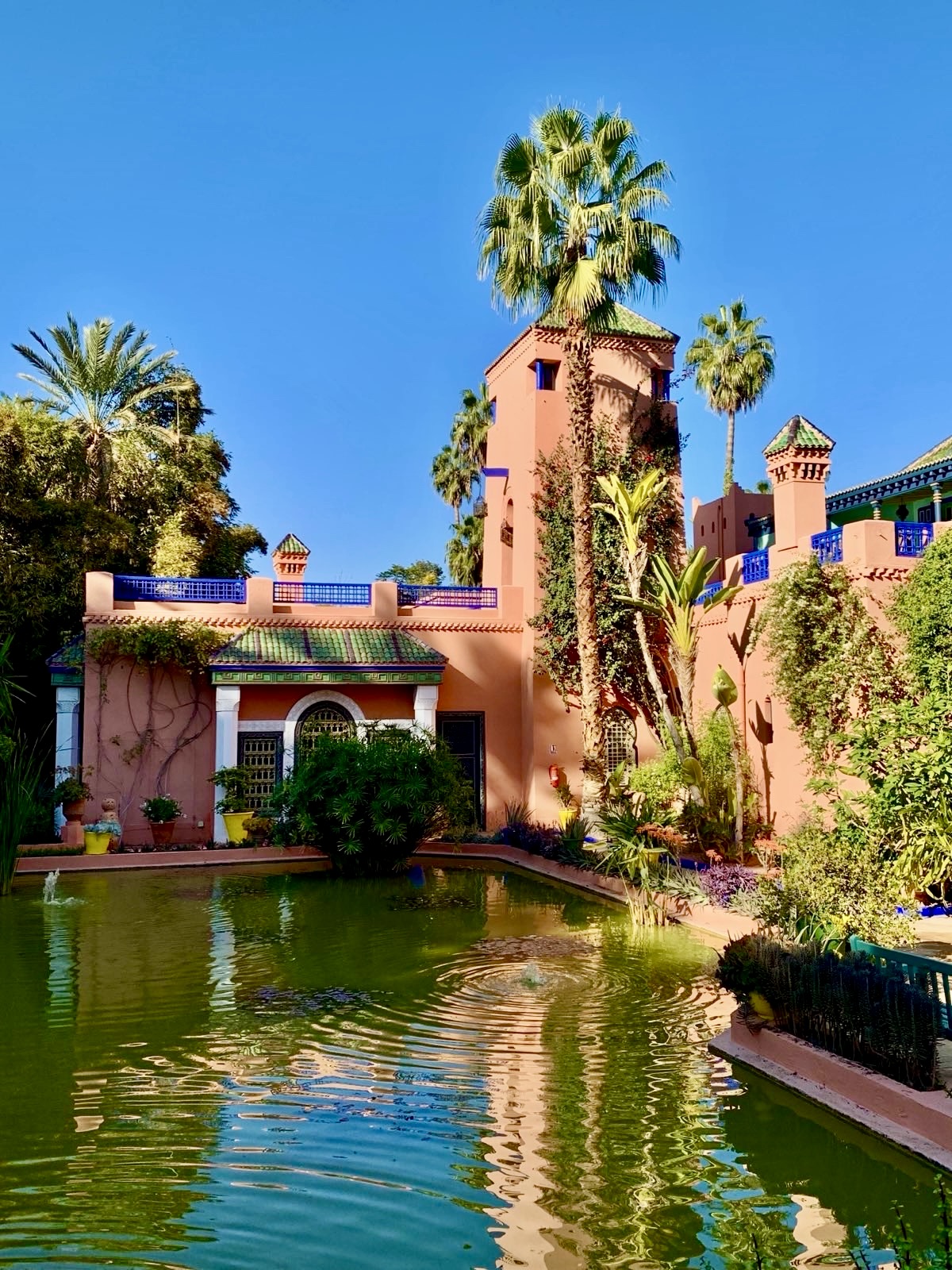


Created by French painter Jacques Majorelle in the 1920s and 1930s, the gardens were his masterpiece, surrounding his cobalt-blue studio. I absolutely love this Art Deco building designed by architect Paul Sinoir.
Majorelle spent decades cultivating the garden, carefully importing plants and trees from around the globe to create a living work of art. The result is a stunning collection of over 300 species, including cacti from the Americas, bamboo from Asia, palms and yuccas from various deserts, and bougainvillea draped in vibrant blooms. These carefully curated plants form a layered tapestry of textures and colors, offering shade, tranquility, and bursts of life against the deep Majorelle Blue walls and water features.
After Majorelle’s death in 1962, the garden fell into disrepair, and the property faced the threat of being demolished to make way for a sprawling apartment complex. In 1980, Yves Saint Laurant and Pierre Bergé purchased the estate, determined to restore it to its former glory. They meticulously revitalized the gardens and buildings, transforming the Blue House into the Berber Museum to celebrate Morocco’s Indigenous culture, while keeping the sand-colored Villa Oasis as their private retreat.
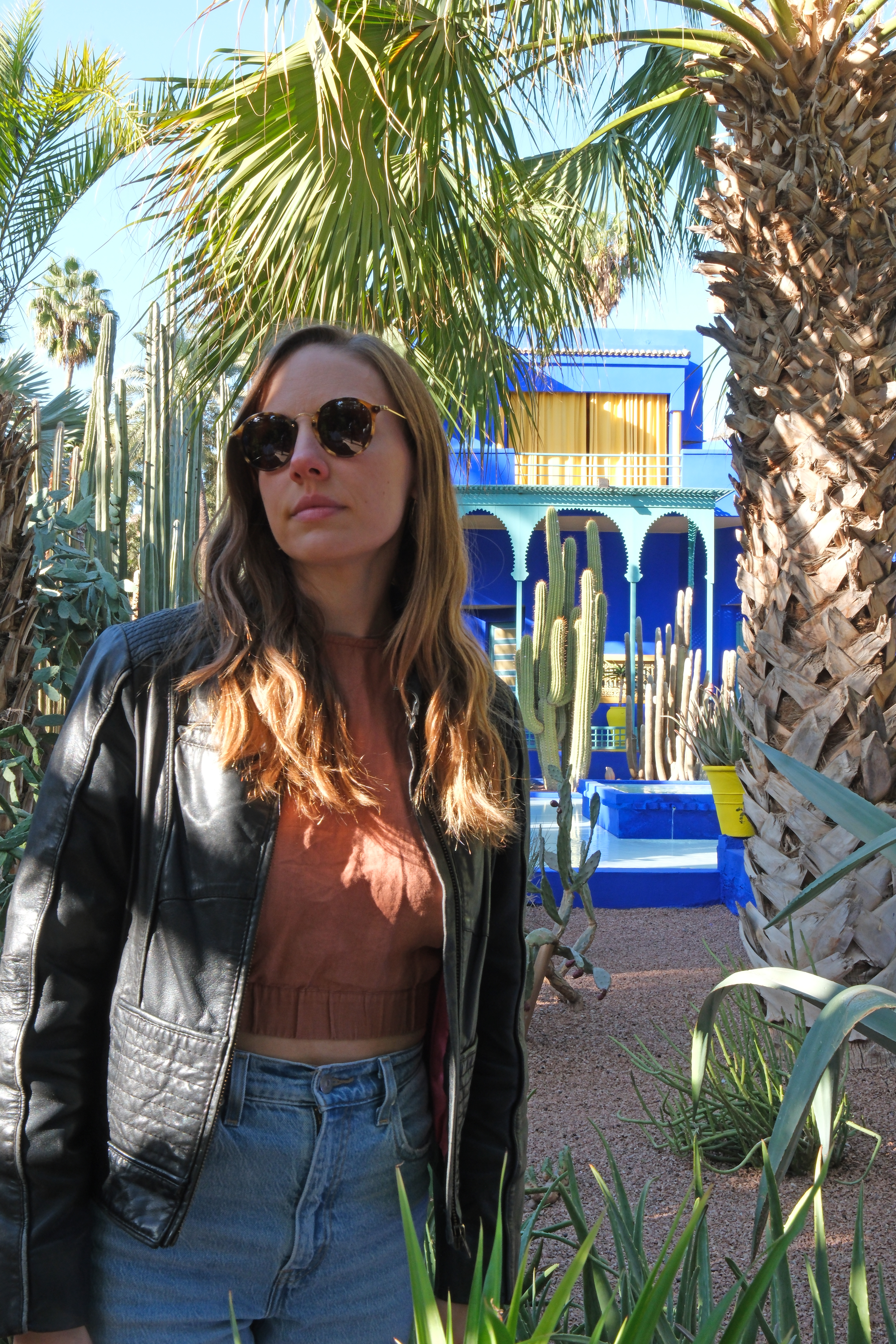

Because our entry time was in the afternoon (and the gardens were so much larger than we had anticipated), we were worried that we wouldn’t have enough time to visit the Yves Saint Laurent Museum if we went to the Berber Museum first (and once we left the gardens, we wouldn’t be allowed re-entry, even with tickets to the museum). So we decided to skip it in order to take our time at the Yves Saint Laurent Museum. That is probably my only regret from our three weeks in Morocco.
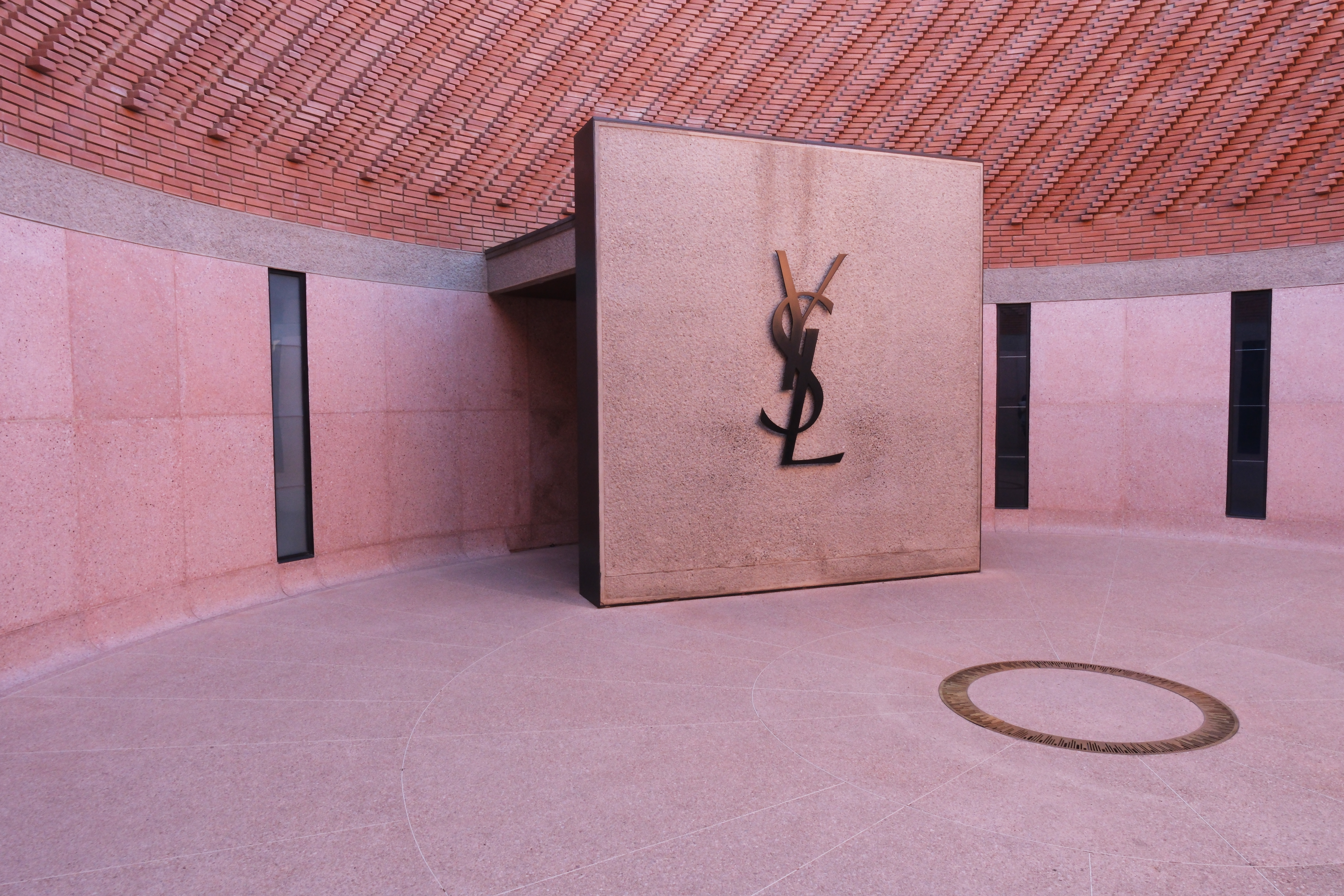
The Yves Saint Laurent Museum felt more like an exhibit than a full museum. While beautifully designed, the space itself was surprisingly small. The permanent exhibit (which was technically not permanent, since it’s already been replaced) was mostly contained to a single room filled with dresses, themed around flowers, and while it was lovely, it didn’t feel expansive or immersive.
There was also a temporary exhibit – Who We Are – which turned out to be a small collection of historical documents, models, and information about the history of the garden. While this may have been interesting to some, I found it underwhelming, especially given the high expectations set by the museum’s reputation.
But we refused to be bummed for long! Since we had made our way outside the medina, we were in a hipper part of the city. Nearby was Barometre Cocktails. It opened in 2016 and claims to be the first restaurant and bar in Marrakesh dedicated to mixology. The cocktail bar is inspired by the speakeasies of the Prohibition era, meaning there were semi-hidden doors, a system of knocks provided by the doorman, and, best of all, excellently crafted drinks.
While it was fantastic to get out of the medina, we still had a few sites to see within it as well. After feeling rushed at the museums, we decided to arrive at the Madrasa Ben Youssef around its opening time. I say “around” because we had a pretty lazy holiday and opted to sleep in just about every day, which I must admit felt pretty luxurious. That said, we were still at the college within 45 minutes of it opening its doors. That ended up being the right call!

The Medrasa Ben Youssef is one of Marrakesh’s most iconic landmarks. It dates back to the 14th century during the reign of the Marinid dynasty. Originally founded by Sultan Abu al-Hassan, the madrasa was later reconstructed and expanded in the 16th century by the Saadian sultan Abdallah al-Ghalib. For centuries, it served as a center for Islamic learning, housing up to 900 students at its peak.
The madrasa is renowned for its stunning Saadian architecture, featuring intricate zelige tilework, carved cedarwood, and stucco detailing that blend geometric and floral patterns with Quranic inscriptions. Its central courtyard is a masterpiece of symmetry and design.


The school operated until the 1960s, when it was closed and eventually preserved as a historic monument. It attracts over 230,000 visitors annually and since we managed to find ourselves there on Christmas Day, it’s likely that there were several thousand visitors on that day alone.
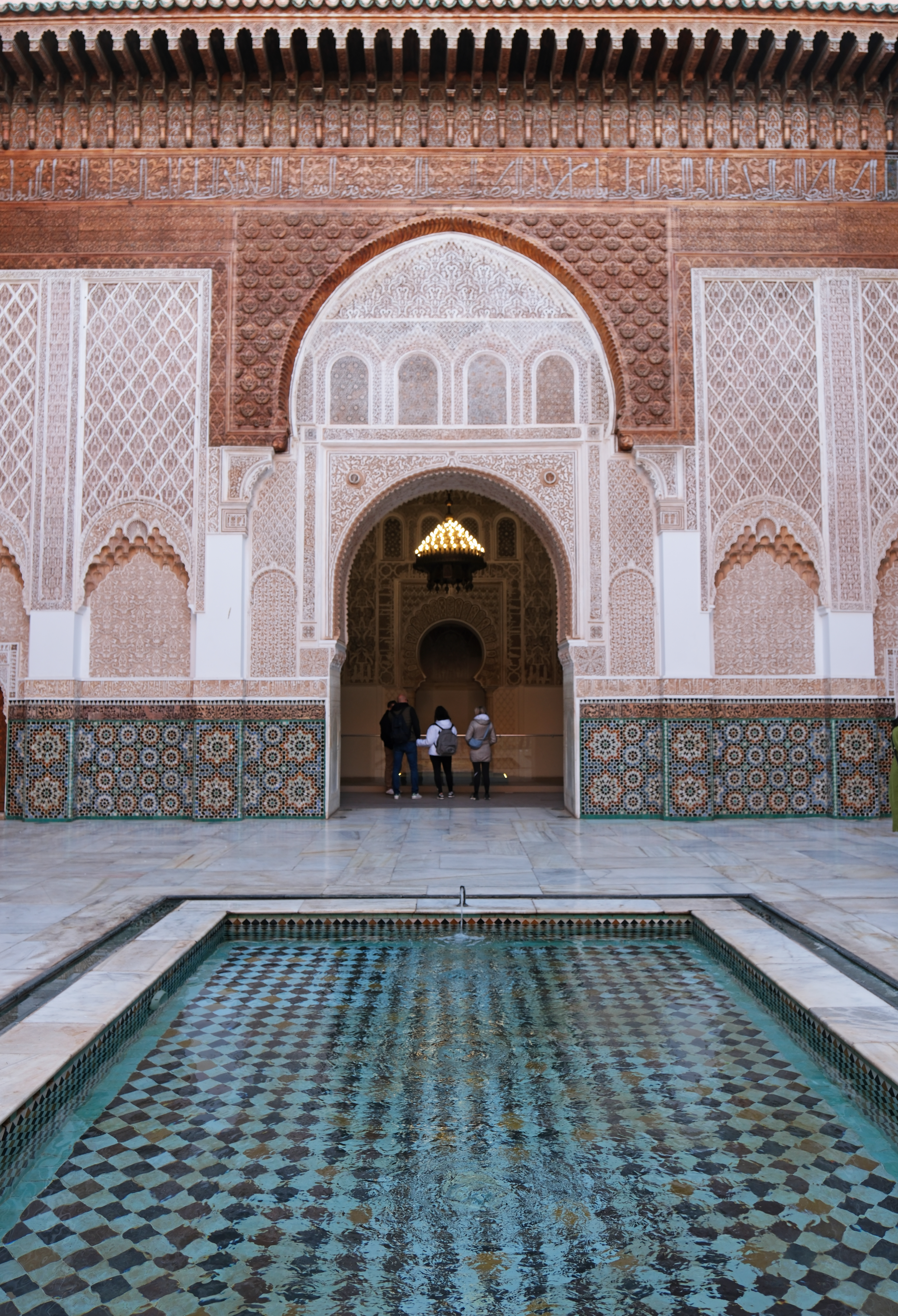
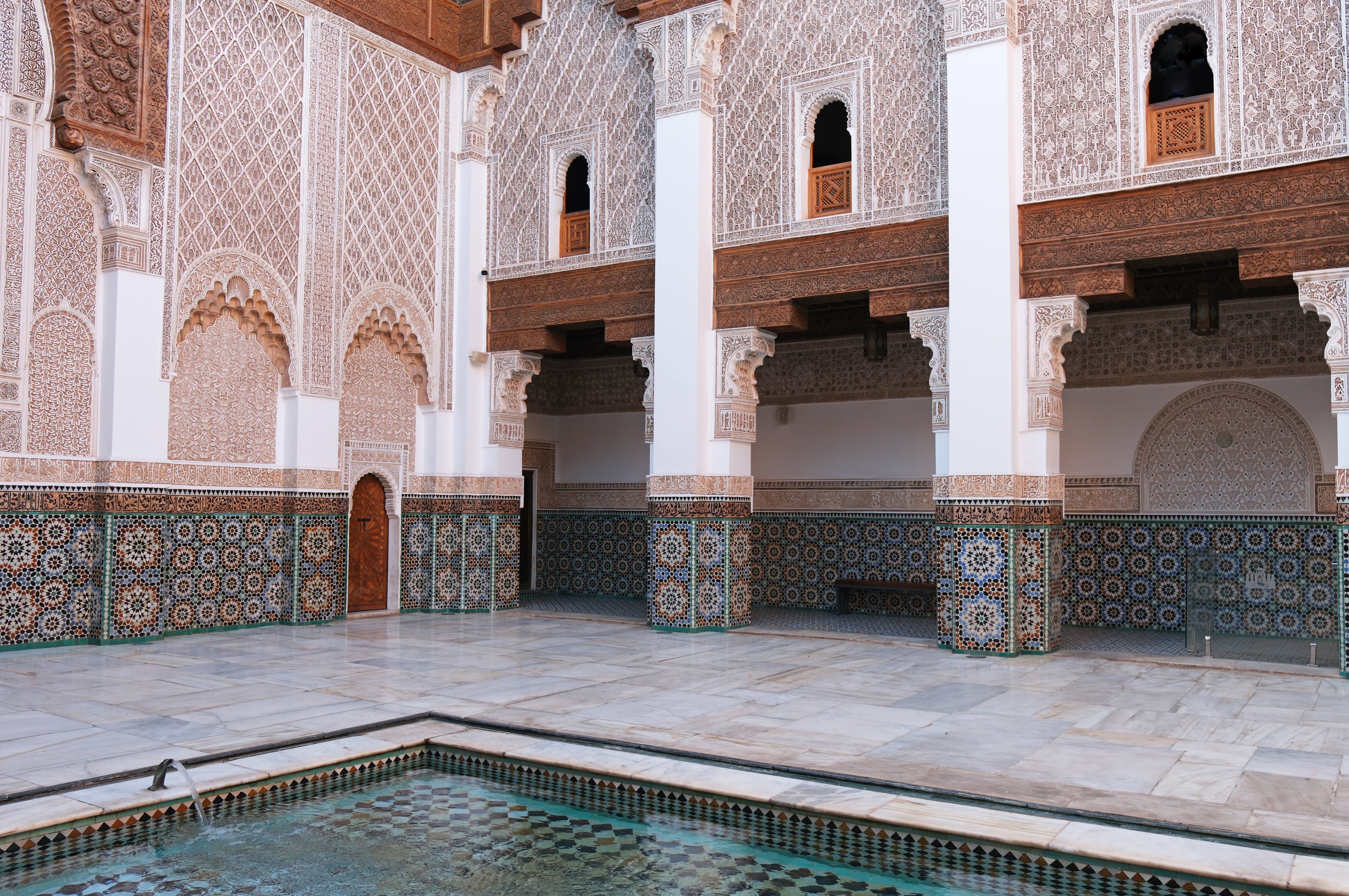

By the time we left, you couldn’t turn around without bumping into someone, which let us know we had definitely overstayed our welcome! By this point, we’d actually had enough of Marrakesh’s medina and we spent the rest of the day relaxing at our riad.
By the end of our time in Marrakesh, the only thing I distinctly disliked was visiting the Jemaa el-Fna Square one evening. We thought the square itself was a UNESCO World Heritage Site and therefore felt a visit was necessary. However, we later learned that while it is inside the medina (all of which is recognized by UNESCO), the square itself isn’t individually listed, like the Koutoubia Mosque, the Marrakesh Kasbah, and the Saadian Tombs are. Which means we really could have saved ourselves the hassle!
The famed square felt chaotic and overwhelming in a way that lacked charm, with smoke from the food stalls clouding the air and a lot of the same offerings repeated over and over. There were meat stands, juice vendors, and henna artists and some of the food stall operators were particularly aggressive, often following us or grabbing our arms to try to pull us in. It wasn’t a casual, fun affair – it felt more like running a gauntlet.
We couldn’t help but compare it to the night market we’d visited in Luang Prabang, Laos, which felt like the complete opposite experience. That market was alive with color and creativity – beautiful lanterns lighting up the stalls, authentic handicrafts made by local artisans, and an abundance of vegan food options that made it easier to linger and explore.
By contrast, Jemaa el-Fna felt repetitive and uninspired, a place we wanted to leave almost as quickly as we’d arrived. While it may be a must-see for some, for us, it was the second experience in Marrakesh that truly fell flat.
However, to get back to our riad, we did end up walking through a lot of the medina at night, and while the square had been hectic, the winding streets were a different story. As we wandered through the calmer alleys, the soft glow of lanterns lit the way, casting a warm, almost magical light over the stalls and shops that were still open.
While Marrakesh had its challenges, one area where the city truly shined was the food. Hands down, it was the best food city we visited in Morocco. The culinary variety and creativity in Marrakesh set it apart, and it become one of the highlights of our time there.
My favorite meal was at Azalai Urban Souk, which is both restaurant & handicraft shop. I had heard amazing things about their lentil risotto (pictured below) and it did not disappoint! Chandler, on the other hand, ordered a truly disastrous meal. I think the restaurant agreed, because I can no longer find it on their menu, but it amounted to an inedible piece of passion-fruit-glazed cabbage with some shredded zucchini underneath. Luckily, they also served incredible fruit juices (which they label “mocktails,” even though there’s no added sugar).
Chandler’s favorite meals came from the Mandala Society. We ate there not once, but twice, because we wanted to try both their brunch and dinner menu. More delicious juice was had and for brunch we feasted on a breakfast burger (shown below and featuring egg yolks with fried cheese – frico – mixed into a patty with hash browns and herbs), smoothie bowl, and mandalavoca vegan aka avocado toast. For dinner we had the bean burger and vegan Buddha bowl. Everything was excellent.
Possibly our most unique meal, Broc the Kasbah had an incredibly fun vibe (see Chandler’s photo below). The menu was on old records and while I enjoyed the veggie burger, Chandler was less than appreciative of the BBQ-like sauce. Also, the fresh bread was fantastic, but the collection of starters we ordered with it were pretty watery and therefore difficult to truly scoop up.
La Famille had the tiniest menu out of any restaurant we went to, but that also made the food incredibly fast. I think we were in and out in just over 40 minutes, which is good, because they absolutely had a waiting list. The restaurant is in a lovely garden and the food was super funky. Most menu items included cheese, but they were able to accommodate Chandler.
Beldi Fushion Kitchen might have been the most “established” restaurant we went to and we later discovered it’s a Moroccan chain. We feasted on juice and smoothies during our time in Morocco and their rainbow smoothie (photographed below) was a standout. Their falafel wraps were a great quick meal before we made our way to the train station.


By the time we left Marrakesh, it was clear that Chandler and I had different opinions of the city (which is rare for us!). By the end of the trip, it would be his second-least favorite city, while being my second-favorite – we just didn’t know that yet!
 Abroad With Ashley