My last post focused on our time in Marrakesh, the first city of our trip through Morocco. I mentioned that Chandler and I had pretty different opinions about it, but one thing we did agree on?
Our day trip to Aït Benhaddou was not worth it.
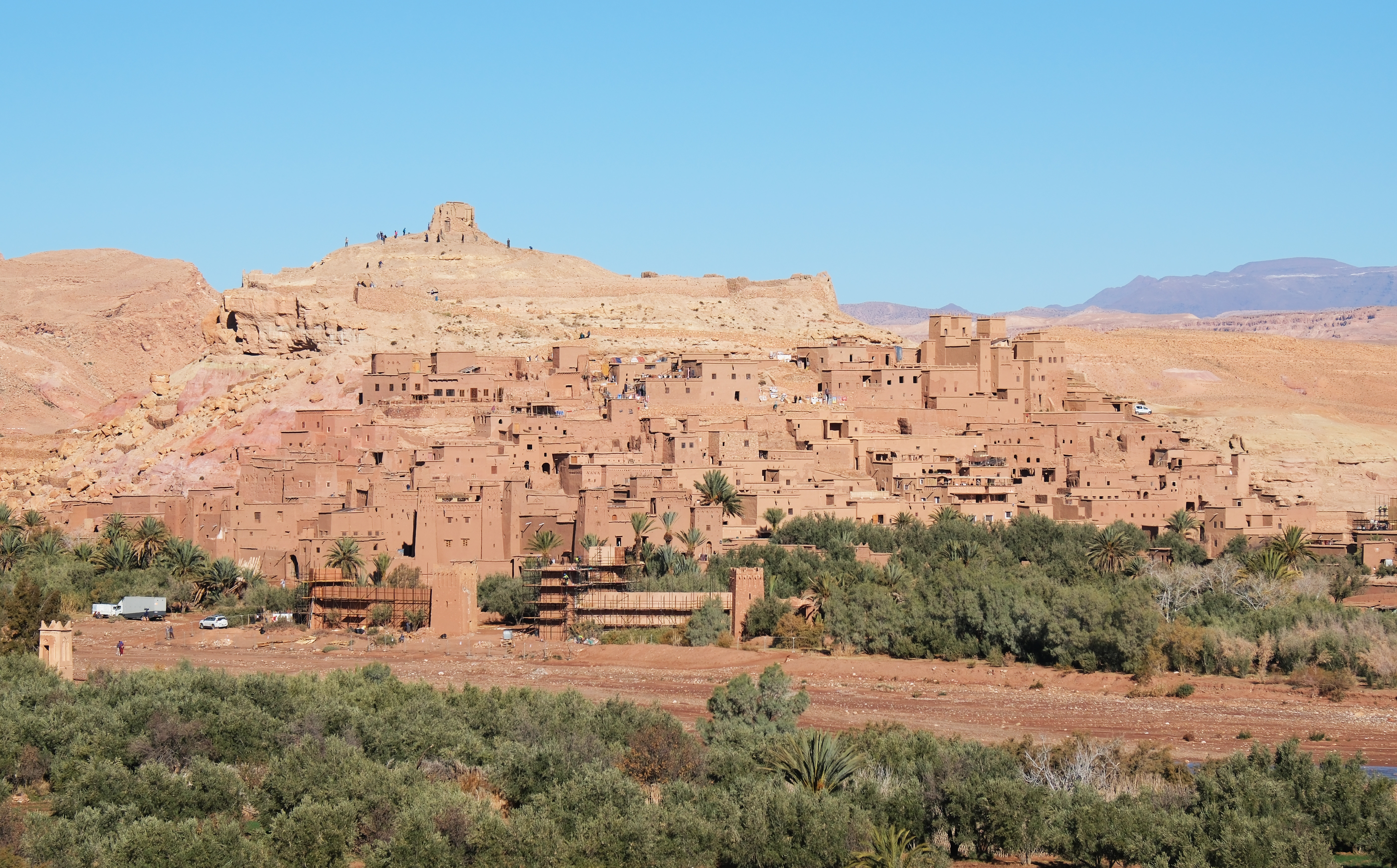
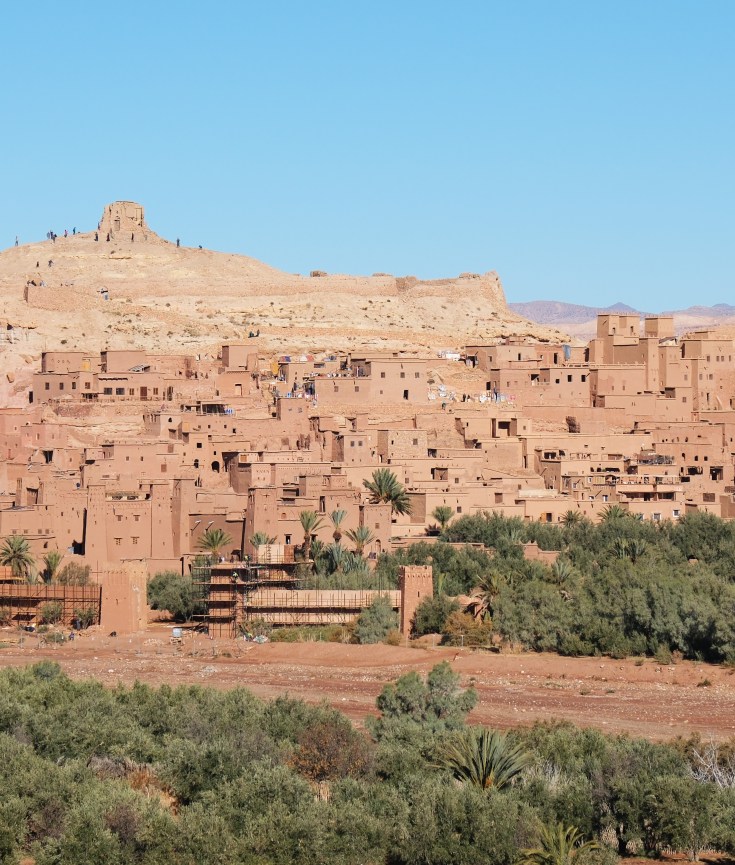
From a distance, Aït Benhaddou rises from the landscape like something out of a legend. Up close, it’s just another market repurposed for tourists. If you were already passing through from the Sahara, it might be a decent stop, but a six-hour, round-trip journey felt excessive for what we actually saw. Maybe we went in with the wrong expectations, but for us, it was one of those “that’s it?” experiences.
Aït Benhaddou is a ksar (fortified village) along the former caravan route that connected Marrakesh to the Sahara. For centuries, it was a key trading post for goods like salt, gold, and spices, but its prominence began to decline around the 16th century.

The entire site is made from mud-brick and earthen clay, a building style designed to withstand the desert climate. Many families once lived here, though today, most of the original inhabitants have moved to modern homes across the river.
The ksar was recognized as a UNESCO World Heritage Site in 1987, ensuring its preservation as an important example of traditional southern Moroccan architecture. While we aren’t on a mission to visit every UNESCO site, it’s rare for us to pass one up when we’re nearby. This had also seemed like an ideal Christmas Eve excursion for us, possibly as memorable as experiencing Petra by night.
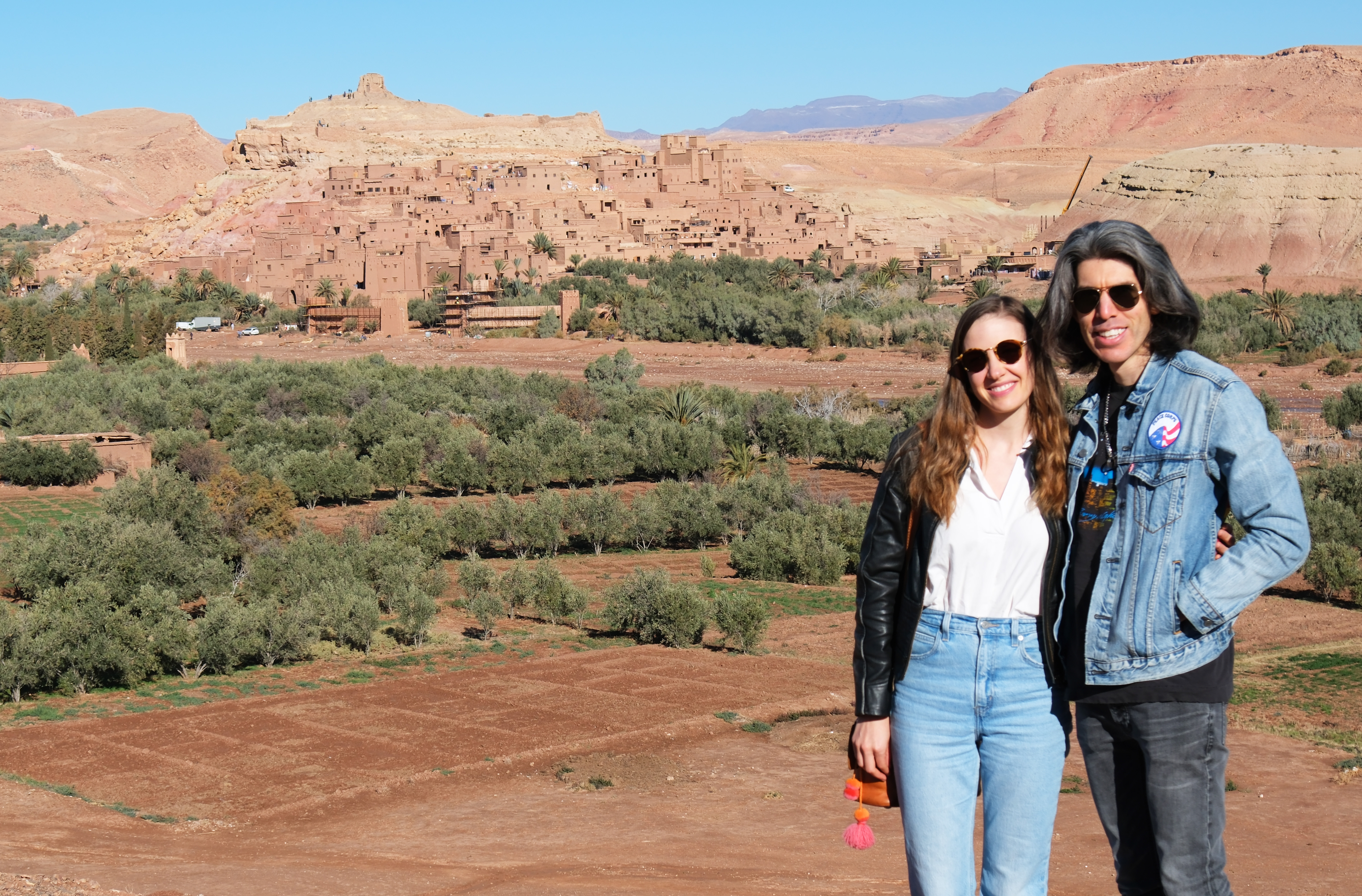
Aït Benhaddou’s dramatic structures have made it a favorite filming location – Gladiator, The Mummy, Game of Thrones, and Prince of Persia all shot scenes here. While we were there, a new set was under construction for an upcoming film.
But once we stepped inside the walls, the whole thing felt more like a tourist trap than a historical site. Photos of past productions were plastered onto buildings, and many of the homes had been turned into souvenir shops. Our driver, Mehedi, made a point to warn us not to buy anything for sale at Aït Benhaddou. He was also the one who told us that most of the products in the Marrakesh markets have been shipped in from China – and the same was true at Aït Benhaddou, they just came with higher price tags.

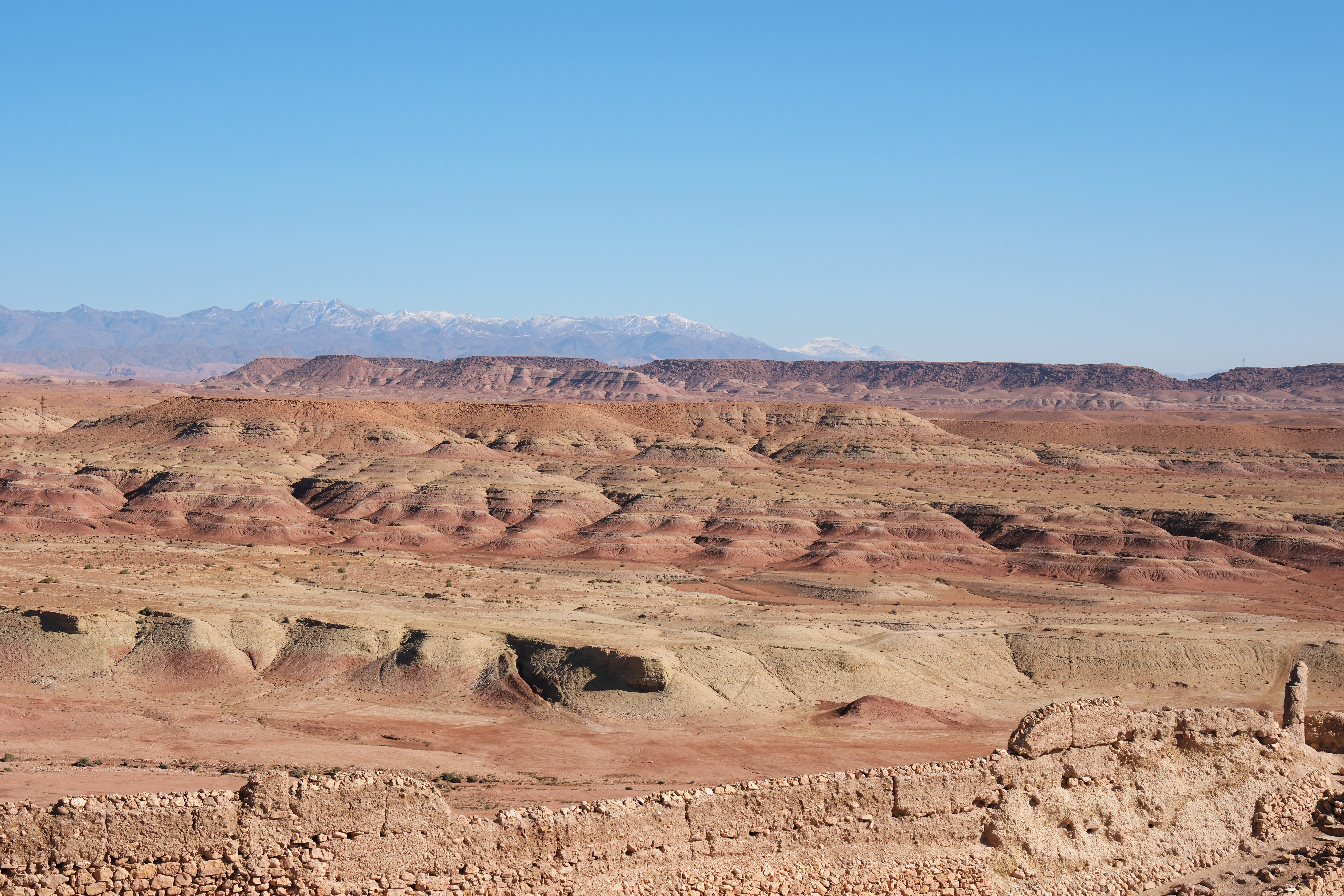
In fact, some of the only real highlights were on the drive to and from Aït Benhaddou when Mehedi stopped at a local rug collective (I learned that I prefer Berber rugs designed by tribes from the Mid-Atlas Mountains) and a shop with a collection of trilobites (extinct marine arthropods from 252 to 521 million years ago). Also, I have to admit, the Atlas Mountains are lovely.

Aït Benhaddou was built for endurance, but today, it’s mostly for show – a hollowed-out shell that exists more as a backdrop than a living place. And lately, I’ve been feeling the same way about American democracy.
The facade is crumbling, revealing just how hollow and fragile the institutions underneath really are. The systems that were supposed to hold everything together are being gutted in real time, and yet, so many people continue to buy into the illusion that everything is fine, that the structure is stronger than ever.
And it’s not just rhetoric – it’s action. Trump has openly threatened mass deportations, not just of undocumented immigrants, but of naturalized citizens. His campaign is laying the groundwork to abolish term limits and consolidate power beyond a second term. He has promised to purge political enemies, using the federal government as a weapon against dissent, whether that means cracking down on pro-Palestinian protestors or promising “retribution” against journalists and political opponents, or threatening corporations that engage in DEI initiatives, painting efforts toward equity and inclusion as “un-American.” The guardrails that were meant to keep American democracy in place aren’t just being ignored – they’re being dismantled, piece by piece.
And maybe that’s the most fitting comparison of all: Aït Benhaddou exists more as a film set than a city, a place known not for its real history, but for the fictional ones projected onto it. Meanwhile, what’s happening in the US feels like something from a Hollywood nightmare – an impossible dystopia written for the screen – except that for millions of people, it’s terrifyingly real, and the stakes couldn’t be higher.
 Abroad With Ashley