
Tokyo was both our introduction to Japan and our farewell – five days at the start, seven at the end. Even with nearly two weeks here, it felt like we’d only skimmed the surface. There are so many different sides to Tokyo that it’s easier to think of it as a collection of neighborhoods, each with its own character and rhythm.
This first post focuses on the city’s more traditional side – the places where we swapped neon lights for temple lanterns, arcades for quiet gardens, and busy intersections for the calm of a tea ceremony. We went to Asakusa, with its famous Sensō-ji Temple and bustling market streets; the Imperial Palace, where the grounds offer gardens, moats, and a glimmer of Japan’s history at the center of the modern city; and we took a short trip to Seiseki-Sakuragaoka for a tea ceremony. It’s just one facet of Tokyo, but it’s one that made us pause and take it in.
Everyone told us to start with Asakusa, so that’s exactly what we did on our first full day in Tokyo. It’s home to Sensō-ji, Tokyo’s oldest and most famous temple. Passing through the Thunder Gate, with its enormous paper lantern, and walking Nakamise-dori with its rows of shops felt like stepping into a living postcard.
The atmosphere is a mix of devotion and performance. We saw couples in yukata and kimono, treating the temple like both a date and a photo shoot. For others, it felt more like a pilgrimage – making offerings, lighting incense, and following traditions that have been carried out here for centuries. The result is an ambience that’s hard to pin down: Part sacred space, part festival, and part tourist attraction.

We even tried our hand at omikuji: Drawing fortunes. I pulled one that basically said things have been fine, but they’re about to get better – which felt perfect since we currently live in Senegal, but will be starting the search for new jobs this fall. Chandler, on the other hand, drew a bad fortune. The custom is to tie those to a wooden rack on the temple grounds, leaving the bad luck behind – and hilariously, that was something on his to-do-in-Japan bucket list. Check.

At times, the crowds made it feel almost like an amusement park – waves of people moving toward the temple, food stalls selling all kinds of treats, and shopkeepers with every kind of traditional trinket imaginable. But in quieter corners – incense drifting through the air, the sound of prayer coins clinking – there were still moments where the history came through, reminding us why people have been coming here for generations.

Just a few minutes’ walk north from Asakusa’s temple bustle stands Imado Shrine, a small, slightly tucked away space known as the birthplace of the maneki-neko – the beckoning cat figure you see in shops and restaurants all over Japan.
Legend has it that an old woman living in poverty once dreamed her cat told her to make its image into a doll. She did, and the figurines – made in Imado-yaki pottery style – became so popular that they brought her good fortune. From that story, the maneki neko spread across Japan. Today the shrine is dotted with cat motifs – figurines, giant statues, and ema (wooden wish plaques) decorated with pairs of beckoning cats, symbolizing not just luck but also matchmaking.
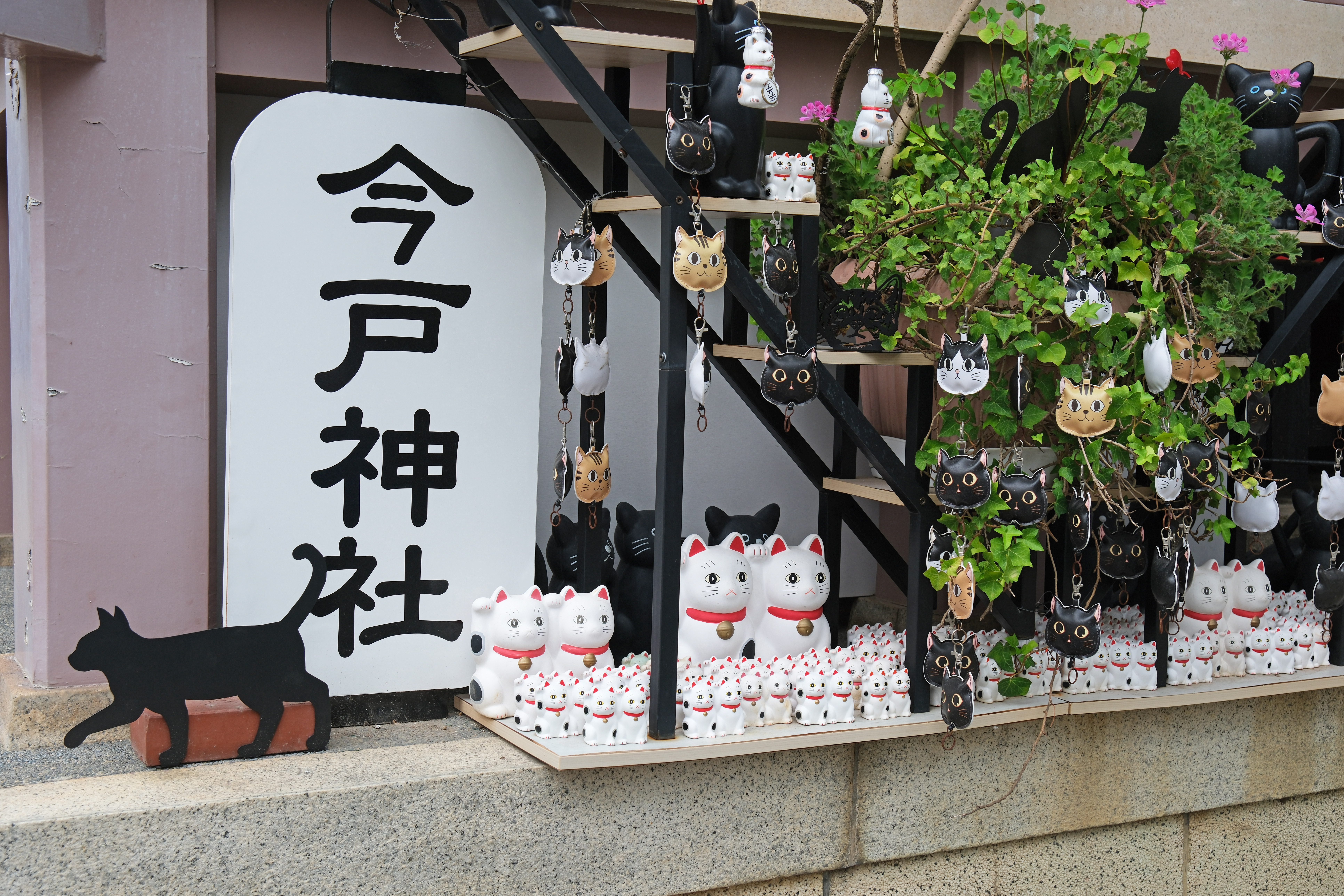
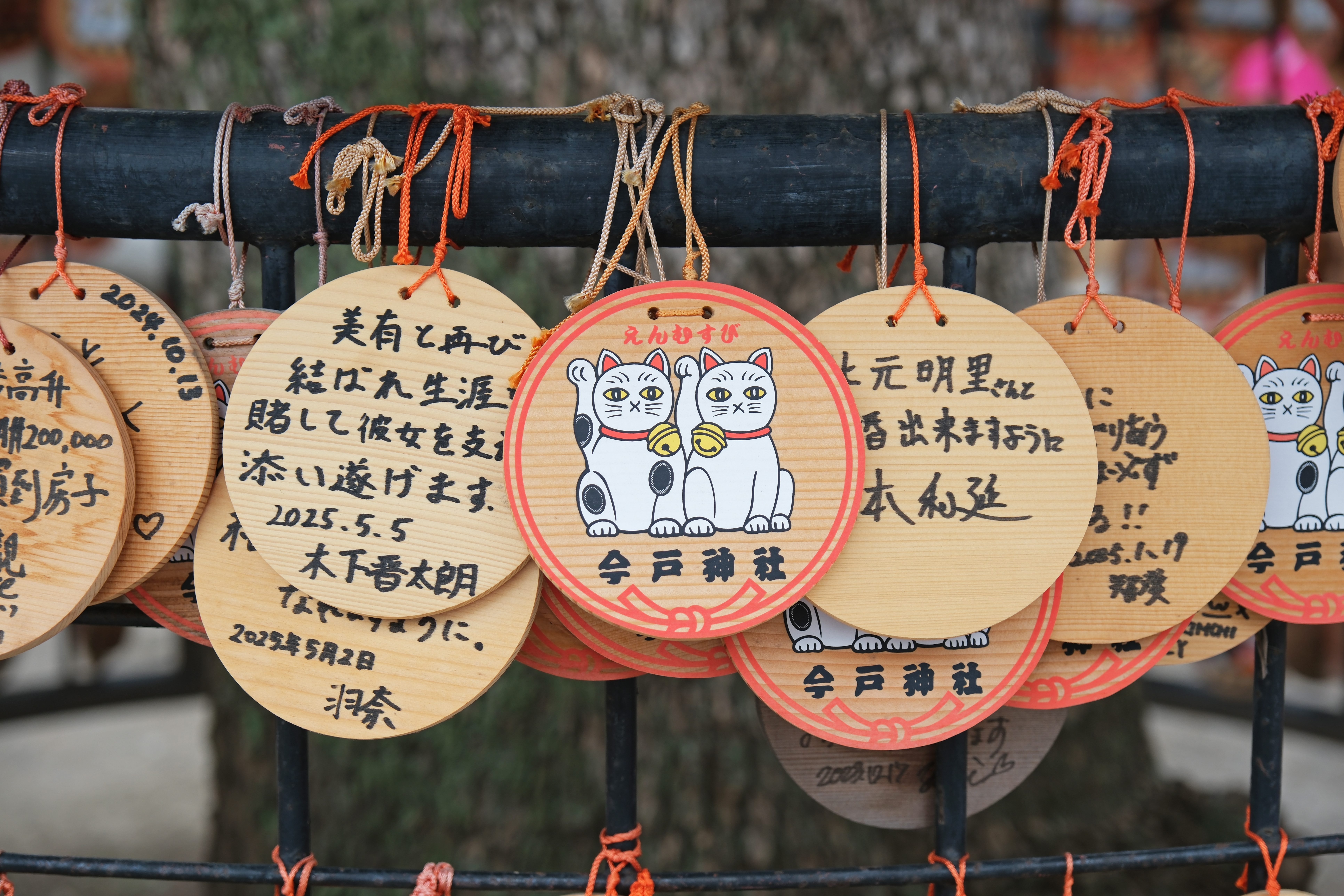
I couldn’t resist buying an ema myself. The custom is to write your wish on it and tie it to the rails at the shrine, but I couldn’t bring myself to leave it behind. Instead, I slipped it into my bag, and now it hangs in our home – a little piece of Tokyo that came with us (the first of many!).
For a cat-obsessed person (and honestly, for a cat-obsessed country), Imado Shrine felt like a perfect stop. Quirky, charming, and very personal.

After leaving Imado Shrine, we couldn’t resist bringing a little more luck home with us. We wandered over to Kappabashi-dori, or Tokyo’s Kitchen Street, lined with shops selling everything from ceramics and pottery to knives and restaurant supplies. Tucked among them is Koide Shoten (also known as Orner Koide), a shop still making maneki neko by hand rather than importing them. We ended up choosing two: A beautifully detailed cat in kimono and a tiny gold one in a more traditional style.
On another day, we set out for the Imperial Palace. What I didn’t realize at the time is that you can’t actually go inside or even all that close. Public access stops at the Nijūbashi Bridge, the double-arched bridge over the moat, so most visits are really about that classic postcard view: Stone walls, water, green trees, and the palace in the distance.

It was a sweltering summer day, so we didn’t linger, but it was still worth the walk. I would’ve loved a closer look, and we did get that at other palaces later in the trip. Even so, the scene was shockingly picturesque – so no complaints there.
One of the most memorable parts of our time in Tokyo wasn’t in the city center at all, but in Seiseki-Sakuragaoka, where our friend Mariko invited us to experience a traditional tea ceremony. She’s been studying under a tea master for nearly twenty years, and as a gesture of hospitality she prepared the full ritual for us in her teacher’s home.
A tea ceremony is less about drinking tea than it is about precision and presence. Every step is deliberate: The way you enter the room, how you place the utensils, how the tea is whisked. Sitting on the tatami mats, with a special calligraphy scroll hanging in the alcove and flowers freshly cut from the garden, it felt like stepping into a different world.
Mariko had even considered our vegan diets and the fact that we’re not big on sweets. Instead of the sugar-heavy confections tea ceremonies are usually paired with, she served treats made from bean paste and natural ingredients. The tea itself was matcha, prepared two ways – a luxurious, high-grade version and an everyday one – so we could compare them side by side. Choosing our bowls was part of the ritual, and watching the matcha whisk into a froth made it feel more like an art form than a drink.
The best surprise came when we were invited to try making it ourselves. Chandler went first, bravely attempting the sequence of movements we’d just watched – though we hadn’t exactly been memorizing them. With the sensei gently correcting step after step, I was laughing too hard to take notes. But when it was my turn, I got to combine his missteps with the original instructions, which made my experience less of a challenge. Chandler struggled to froth his matcha, but I was declared an “expert frother” – a title I’ll happily keep.

What struck me most was how rare this practice is becoming. Mariko explained that fewer young people are drawn to it these days; one woman we met later even admitted her parents had made her study tea ceremony as a child, only for her to quit as soon as she could. Outside of Kyoto, it seems less common for the younger generation to keep it up. That made the experience feel even more special – a glimpse of a tradition that is quietly disappearing.
Mariko’s teacher happened to live in Seiseki-Sakuragaoka, which turned out to be the perfect coincidence. The neighborhood is famous as the inspiration for Studio’s Ghibli’s Whisper of the Heart, my favorite of their films, and being there felt like stepping into the movie frame by frame.

At the top of the hill, the roundabout where Shizuku discovers the antique shop looks just like it does in the film – except that in real life, the shop isn’t there. What you do find is a bakery tucked into the corner, and that bakery is filled with film memorabilia, including signed posters from the voice actors. As we drove through the roundabout, I kept my eyes peeled for Muta the cat.
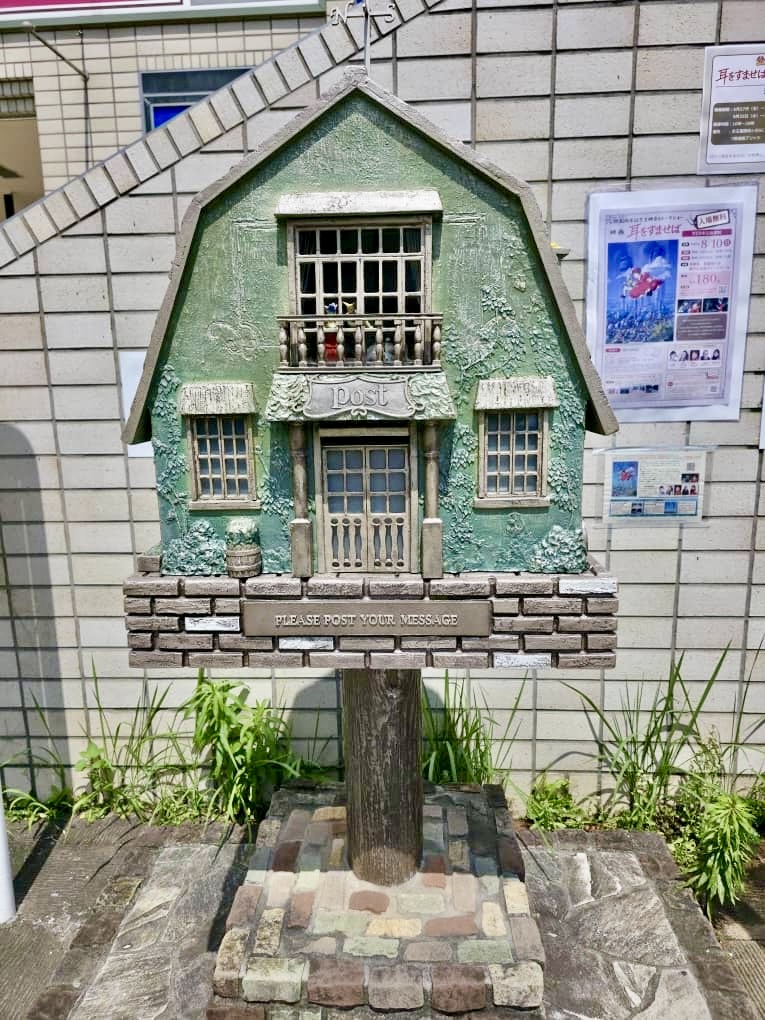
The neighborhood itself feels like the film: Winding hillside roads and steep concrete staircases that cut straight down toward the city below. Even the Tama River that flows through the city is real! You can see how the animators translated the neighborhood into the movie’s backgrounds.


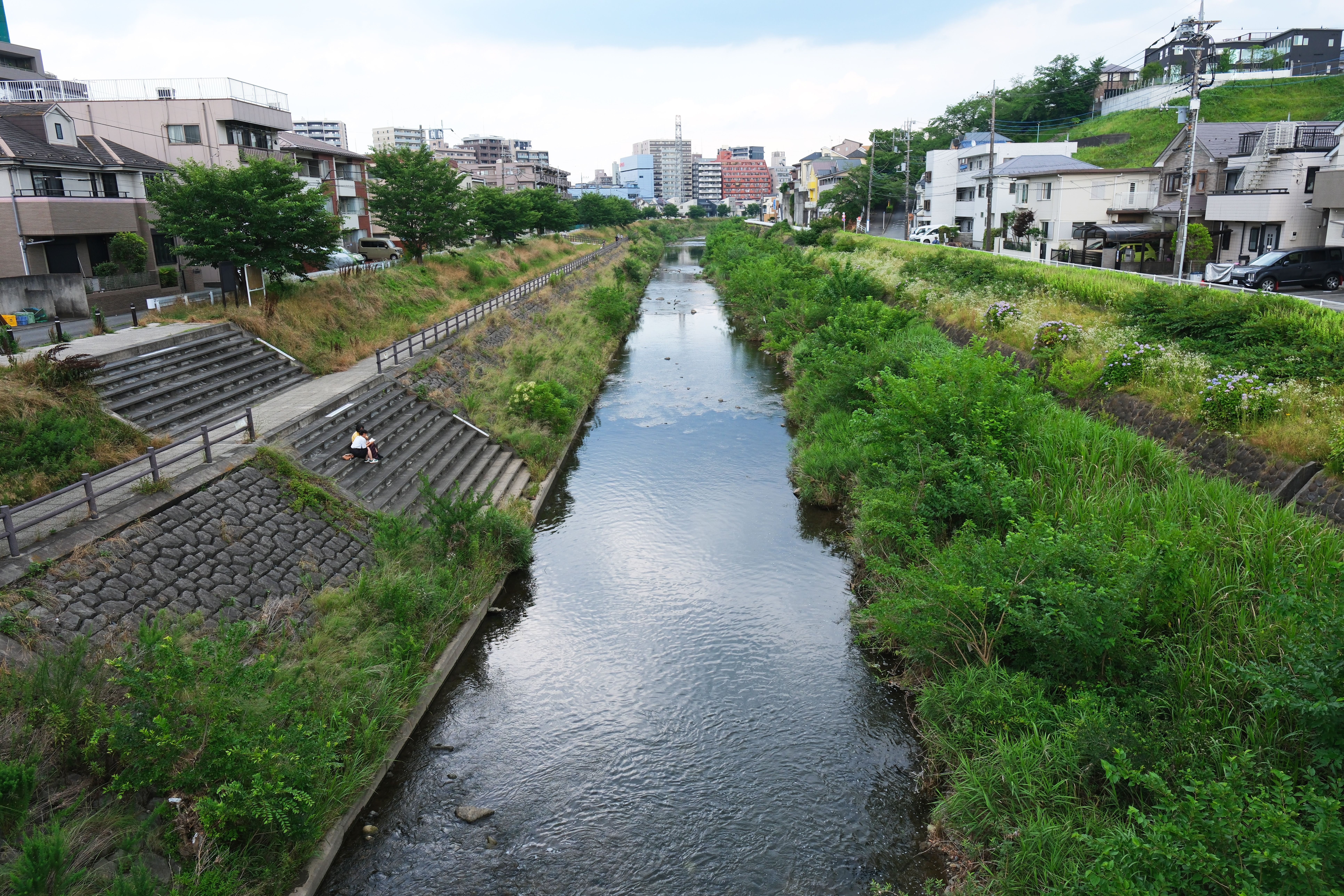
And then there’s the train station, which makes no secret of its connection. There are stamps you can get for following the movie path, you can write messages to the Baron, and when the train arrives the speakers play Country Road, the film’s theme song. It was one of those moments that blurred the line between animation and reality: A familiar tune in the exact place it belongs.

For us, the connection ran even deeper. Earlier this year, when we re-watched the film, we noticed that Seiji plans to go to Cremona, Italy to study violin making. We looked it up, and not only is Cremona real, it’s world-renowned for violins. On our spring trip to Italy, we made a stop there, visiting the Museo del Violino and exploring the town’s musical heritage. So by the time we reached Seiseki-Sakuragaoka this summer, we had already seen the “Italian side” of Whisper of the Heart. Following the story’s path, first to Cremona, then to the Tokyo neighborhood that inspired its setting – felt like closing a loop between two worlds that we love.
This post barely scratches the surface of our time in Tokyo, but by the end of our first week there, we already knew it was a place we had fallen in love with. My next post will focus on gashapon, anime, and more Ghibli magic.
 Abroad With Ashley
I’ve got a soft spot for a waving cat and some Studio Ghibli too…this all looks great!
It is not an exaggeration to say this was our best summer ever! I’ve got 3 more posts to write about Tokyo alone.