My first and only trip to New York City was in 2007. I was 17 and it was Spring Break. I was spending my time visiting universities and NYC had two on my list: NYU and Columbia.
Fast forward another 17 years (and during Spring Break no less) and it was time for a repeat visit. Other than visiting universities, I remember Broadway, the Statue of Liberty, and finding my prom dress. That pretty much sums up my time in NYC.
This time around, we still went to Broadway, but my other focuses had shifted to museums and restaurants. I wanted to see incredible art and eat some mouth-watering meals. Plus, Spring Break in NYC is still chilly! So indoor activities were prioritized over the outdoors.
This is my first blog (and major trip) since upgrading my camera this winter. While the museums don’t really allow me a lot of creativity when it comes to photographs (and I only used my iPhone for the food shots), I have to say I’m 100% in love with my Fujifilm X-T5 (I could probably write a whole blog about how I agonized over this decision, but in the end, Fuji just gets me!).
You might think that with limited priorities it would have been easy to plan 5 days in NYC, but then you’d be wrong. Did you know there are over 170 museums in NYC? Also, my initial restaurant net landed me 40 places to get tasty grub. And how does one even begin to narrow it down to just one Broadway show?
Let’s start with Broadway. Do you watch a classic that has stood the test of time: Wicked? Do you pick something only a few will get to see with a short-term run: Days of Wine and Roses? Do you choose something with absolutely stunning music: Hadestown? Or did you skip the music all together: Purlie Victorious? And, lest you think I’m above it all, do you go for the star factor: Sweeney Todd. (And don’t even get me started on Off-Broadway shows!)
This question was so impossible that I turned to social media for advice. Luckily, they gave it. Hadestown was the clear winner, but since I’m obsessed with Sutton Foster (if you haven’t seen Younger, what are you doing with your life – also, did you know TV Land made TV shows?), Sweeney Todd also made the cut.
Feeling good about my decision, I went to buy tickets. Do you know what I learned? Broadway.com lies. A quick perusal a few weeks prior had told me that both shows sold tickets starting at $65. And maybe that’s true if you buy tickets a thousand years in advance, but I had missed that memo. Instead, available seats started at $200 and went up from there.
Now, let’s sidetrack to how Chandler was feeling about this – the man does not listen to musicals. So the thought of paying $800+ to go to both of these shows did not give him the warm and fuzzies. I needed a new plan.
My search let me to discounted Broadway tickets at NYTix (yes, I worried it was a scam). For $5, the website claims you will have access to discount codes, lottery tickets, standing room only, and rush tickets. I decided to risk it – a $5 scam wouldn’t set me back nearly as much as 4 full-price tickets.
Guess what – it’s not a scam! Instead of paying $400+ to see Sweeney Todd, our orchestra level seats cost half that. But we were out of luck for Hadestown – that super tiny theater had already sold out. And while we purchased standing tickets at London’s Globe Theater in 2017 (because they were the best “seats”), we opted out of attempting to get standing room only seats for Hadestown. Perhaps we’ll see it on another trip.
I have to say, I have zero regrets about Sweeney Todd. Yes, Aaron Tveit was on Gossip Girl (but he also won a Tony when he was in Moulin Rouge! The Musical) and yes, I love Sutton Foster for her role on Younger (but she’s received Tonys for Anything Goes and Thoroughly Modern Millie), so they’re both great singers. Neither 100% succeeded with their British accents, but they added a lot of unexpected humor to show.
The best part of the show was at intermission – when Chandler admitted that he had thought Sweeney Todd was about a vampire. We had a lot of catching up to do!
Next up: Museums. Remember when I said NYC has over 170 museums? That’s not an exaggerated number. But I scrolled through them all (have a mentioned I’m a thorough planner?) and came up with a list of nine. Still too many. Two of them happened to be closed while we were visiting and a third was in-between major exhibitions. Six was still a little ambitious, so we scratched two that were in different boroughs – we were sticking to Manhattan for this visit (although we did make a food exception in Brooklyn!).
The final list: The Rubin Museum of Art, the National Museum of the American Indian (I know, the Smithsonian could really update that name), the Metropolitan Museum of Art, and the Museum of Modern Art.
We went to a different museum on each of our full days in NYC (on the fifth day we took a train to Boston). We played around with when the museums were open and which days we thought they might be less busy (plus which museums we thought we would spend the most time at and which days we had other activities planned).
First up was the Rubin. Their permanent collection is focused on art from the Himalayan region. I am so glad that we kept this museum on our list! Once there, we learned that museum has decided to fully embrace and pursue the model of being a global museum, serving the public locally, nationally, and internationally. Which means that in the fall, they will close their NYC building and become a museum without walls.
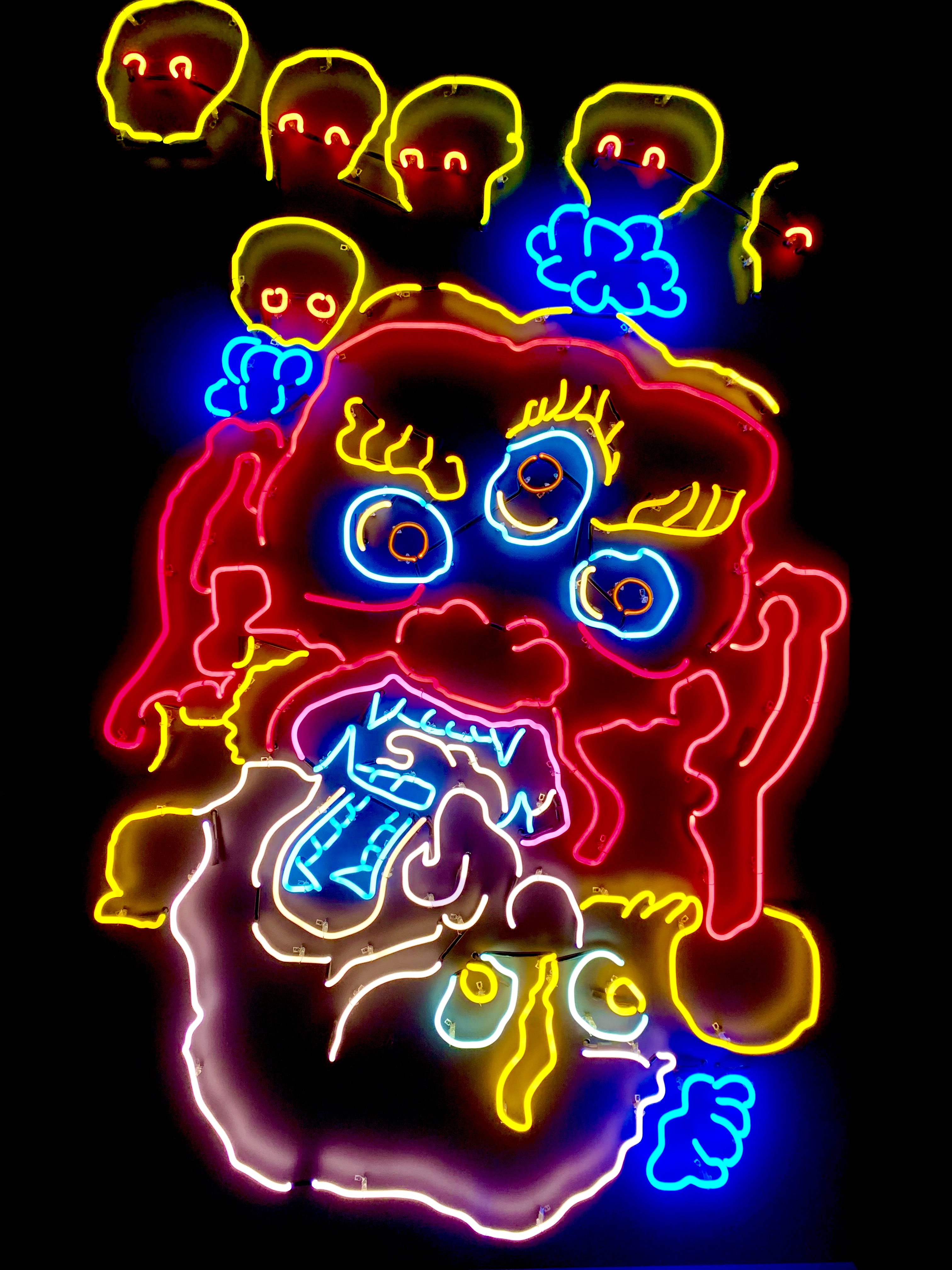
While that’s an incredible initiative, it means their pieces will never again be gathered in one space. And I have to admit, it was a pretty cool space! Long Tibetan prayer flags flow down the museum’s centralized spiral staircase. One of my favorite pieces of art was actually installed right near the entrance. Shezad Dawood’s Wrathful Activity, Fierce Energy is a neon sign that takes a contemporary twist on depictions of Buddhist deities.
They also had an unusual interactive floor – the Mandala Lab. It features five experiences – including videos, scents, sculpture, and curated percussion instruments – that guide you along an inner journey focused on self-awareness and awareness of others. On a whole, that part wasn’t for me, but they had an incredible area where you could visualize your calming breaths – I’ll try to get a video posted on my Instagram in the next few days, because I loved having the visual while I took three deep breaths.
Another favorite piece of mine was by Tsherin Sherpa. He believes that the survival of a tradition like Tibetan Buddhism is predicated on contemporary adaptation, which is why he abstracts, fragments, and reconstructs traditional imagery to investigate his personal diasporic experiences.

The next day was a visit to the Smithsonian’s National Museum of the American Indian. We had visited the sister museum in Washington DC in 2019 and wanted to see what else the Smithsonian had in its collection. Another bonus – nearly all Smithsonian museums have free entry.
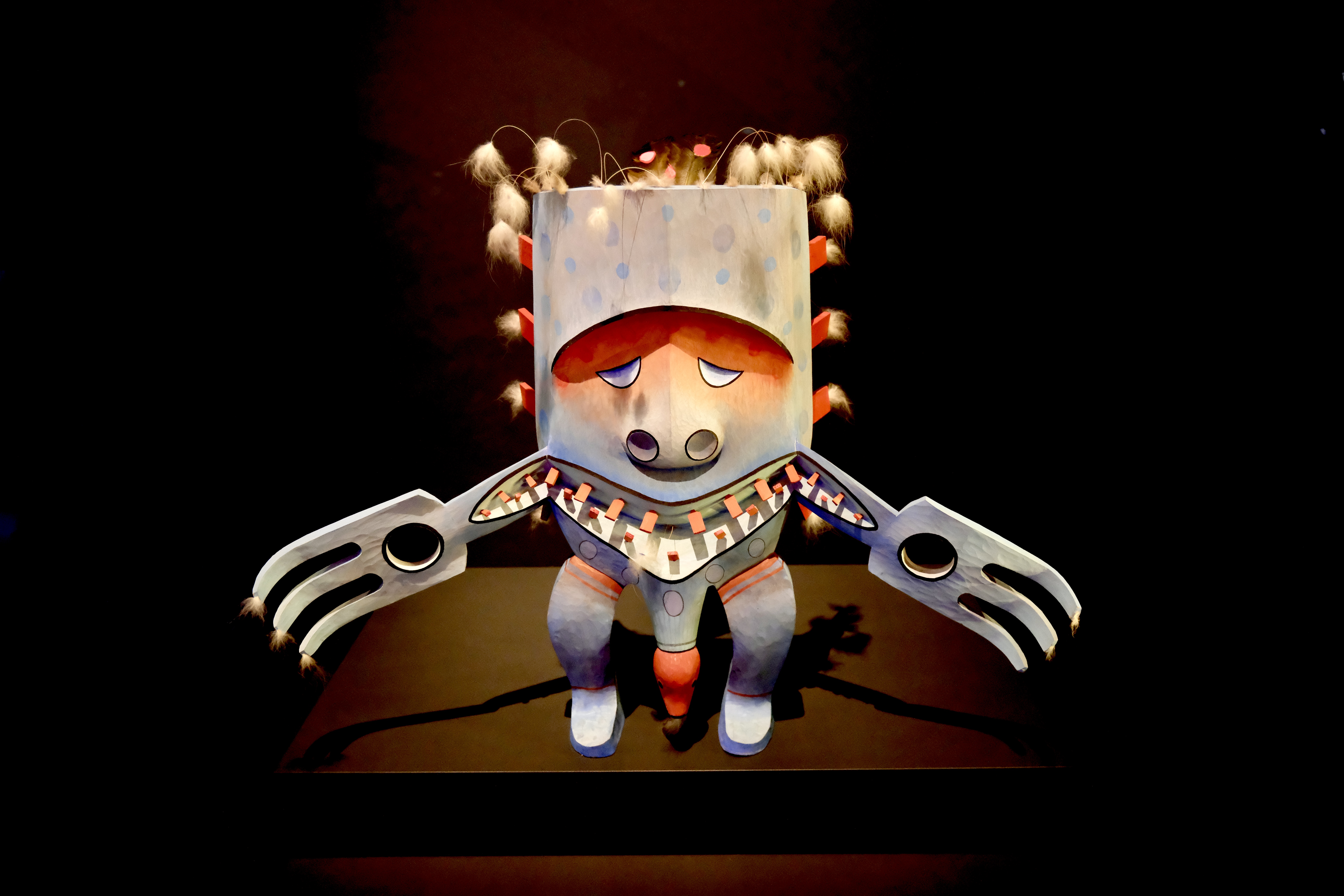
We started at level one to visit the rotating exhibit (though we skipped the imagiNATIONS Activity Center) and happened to find one of my favorite pieces in the entire museum. The following piece, Oosik, was created by Tlingit artist, Jim Schoppert.
The second level houses the rest of the museum. We also skipped the rotunda – it was just a glorification of the relationship between Indigenous peoples and the US military. I understand that native service men and women are honored first at powwows and other celebrations, but it isn’t a part of the culture that I can get behind.
The south gallery surprised us – it contained over 700 pieces of work (mostly historical, but some contemporary) from tribes throughout North, South, and Central America. There was a lot of representation, but at a very surface level.
One of my favorite things to read was an excerpt from Inshata-Theumba’s 1880 essay The Indian Question: “When the Indian, being a man and not a child or thing, or merely an animal, as some of the would-be civilizers have termed him, fights for his property, liberty, and life, they call him a savage. When the first settlers in this country fought for their property, liberty, and lives, they were called heroes. When the Indian in fighting this great nation wins a battle it is called a massacre; when this great nation in fighting the Indian wins, it is called a victory.”
And the clear parallels between what happened with Indigenous tribes in the US and what is happening in Palestine right now is astounding and it is heartbreaking that we are watching history repeat itself with not enough people doing enough to help stop it.
The exhibit in the west gallery is called Native New York and what stuck with me was an installation giving the history of George Washington’s interactions with the Haudenosaunee (Iroquois) during the American Revolutionary War. Some of the Haudenosaunee nations sided with the British, others with the Americans, but in 1779, George Washington ordered his generals Clinton and Sullivan to attack and burn Haudenosaunee towns.
The American armies destroyed 40 Haudenosaunee towns and burned their harvests while residents fled. At Chonodote, or Peach Town, the army burned 1,500 peach trees and the Cayuga clan was forced to flee. The Haudenosaunee still call George Washington and all US presidents Hanadahguyus, which means town destroyer.
By 1807, the Cayuga had been forced to give up all their territory. But in 2005, they bought back 70 acres near the site of Chonodote and the community has been replanting and caring for peach orchards ever since. The hashtag #wearestillhere has never felt more relevant.
The museum also has areas dedicated to the Lenape (Delaware), highlighting Manhattan’s original residents.
The museum was pretty light in their Anishinaabe collection (my family’s ancestry), but the Boston Museum of Fine Arts would make up for that in a few days. But before we got there, we visited the Metropolitan Museum of Art. This museum will go down in history for us, because we arrived just before it opened (at 10am) and left just as it was closing (at 5pm). Seven hours in one museum is a record for us! We didn’t even spend that much time in the Louvre (although when we visited it together, we’d both already been before).
When we go to big museums these days, we tend to start in either the African or Asian galleries. At the Met, we walked in and were steered to the Temple of Dendur by a very kind docent who didn’t want us to miss it. Our timing was perfect in that after a brief crowd, we had the room to ourselves.
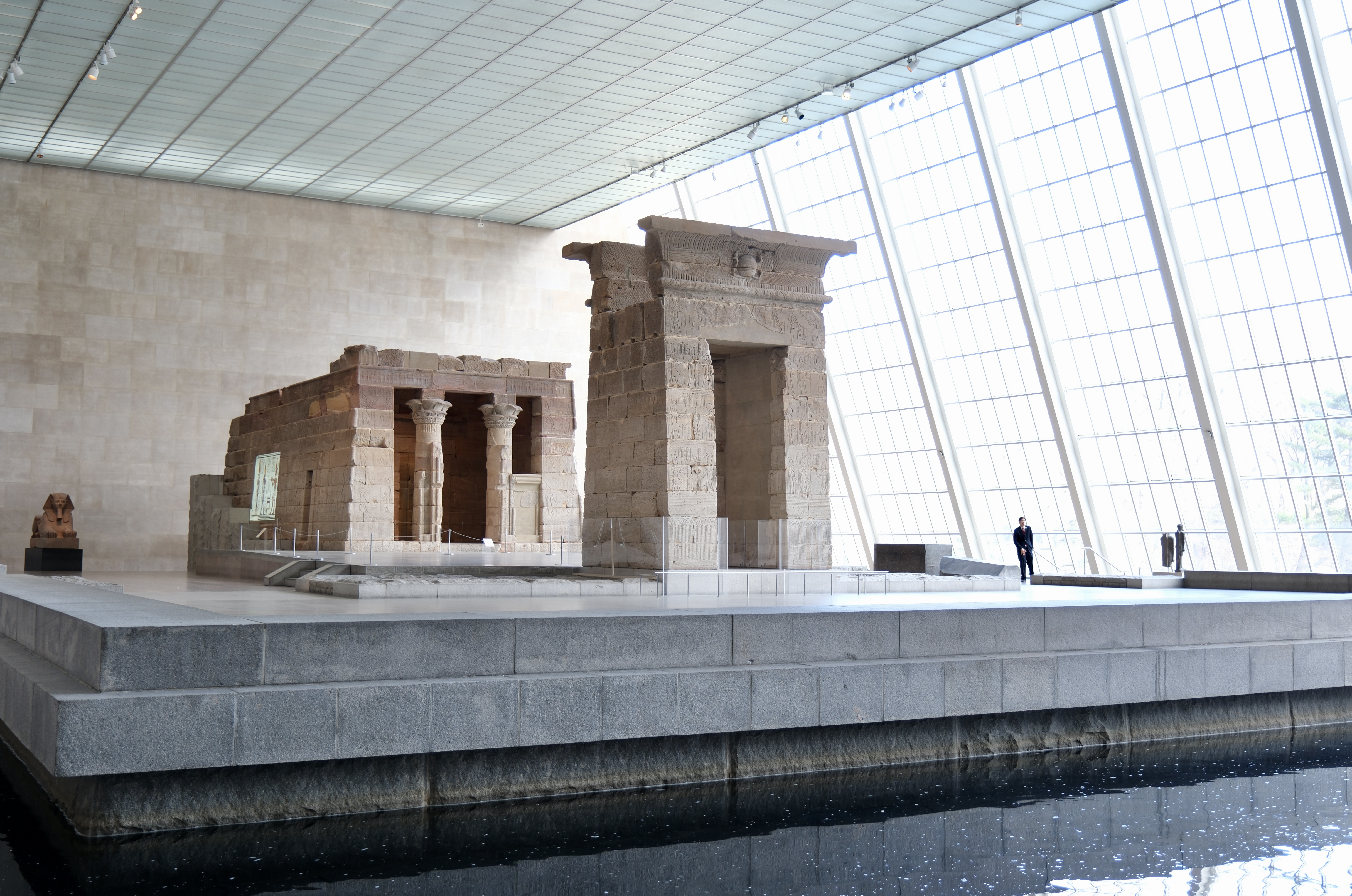
Being frequent museum-goers, we’ve had to ask ourselves over the years how ethical collections are. Many museums around the world have built their collections with stolen art or art with ambiguous origins. Which is why the story of the Temple of Dendur was so interesting.
The temple was gifted to the United States by Egypt in 1965, awarded to the Met in 1967, and installed in 1978. The temple was originally built around 15 BC during the reign of the Roman Emperor Augustus and is dedicated to the goddess Isis and two deified Nubian brothers, Pedesi and Pihor.
The construction of the Aswan High Dam in the 1960s threatened several ancient monuments. As part of an international rescue operation led by UNESCO, the temple was dismantled and gifted to the the US by Egypt as a token of gratitude for American assistance during the preservation efforts.
You may have noticed that the temple was built during Roman rule – so maybe Egypt thought of its gift as getting rid of something that didn’t really feel like theirs anyway. But the Met has done a beautiful job of reconstructing the (rather small) temple in a space of its own.
Our next stop took us to the Asian galleries. We always spend a significant amount of time in the Buddhist spaces and this visit was no exception. Two of my favorite pieces below are Jūichimen Kannon, the Bodhisattva of Compassion with Eleven Heads (from the mid-to-late 14th century) and Dainichi, the Cosmic Buddha (12th century).


But the Met did a great job of incorporating modern art in this wing as well and I found myself spending a lot of time in their Korean gallery.
The two pieces that captivated me most were Kwon Young-woo’s piece that attempts to emphasize the paper in ink painting, as well as Lee Jong-gu’s Earth-at-Oziri (Orziri People). Jong-gu’s piece was in response to the increasing authoritarianism in South Korea from the 1960s to 1980s as the country underwent rapid industrialization and urbanization.


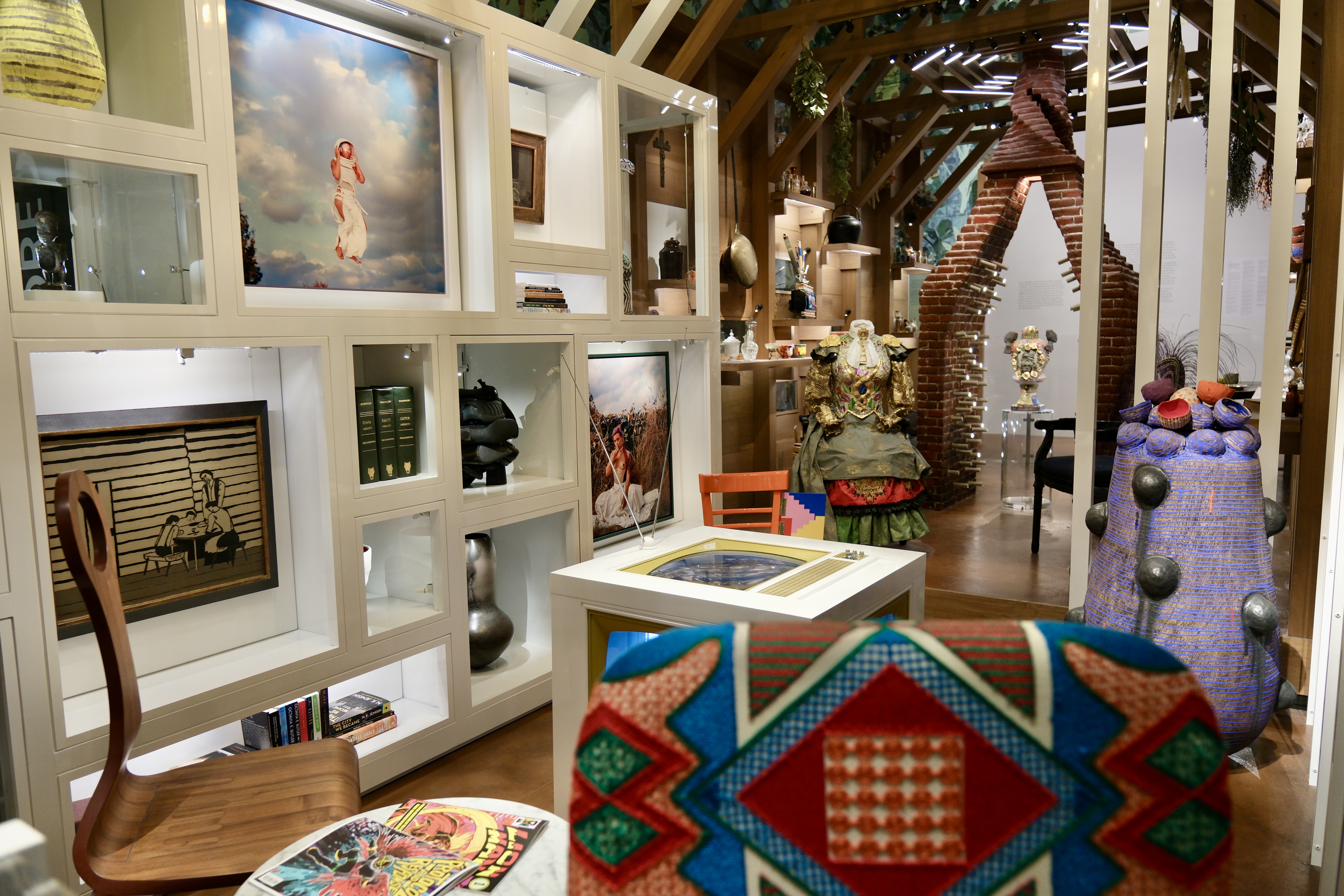
We were heartbroken to discover that their African galleries were under renovation (for the entire year!) and so we had to search out the handful of galleries that had African art. We stumbled upon an Afrofuturist Period Room. We’ve tried to get into Afrofuturist films – with middling success – but this room was incredible.
In the room’s bio, the museum claims that “unlike other spaces, this room rejects the notion of one historical period and embraces the African and African diasporic belief that the past, present, and future are interconnected and that informed speculation may uncover many possibilities.”
There was also a small space dedicated to the African Origin of Civilization. In this space, African art was compared with similarly styled Egyptian art (also African, I know). There were some great Nigerian and Ghanaian pieces, among others.
I’ve only seen two museums styled in a similar manner, when Berlin’s the Bode-Museum displayed their Beyond Compare: Art from Africa exhibit, where African art was compared to similarly styled European art. Also, at Abu Dhabi’s Louvre Museum, where their art is arranged chronologically, as opposed to geographically.
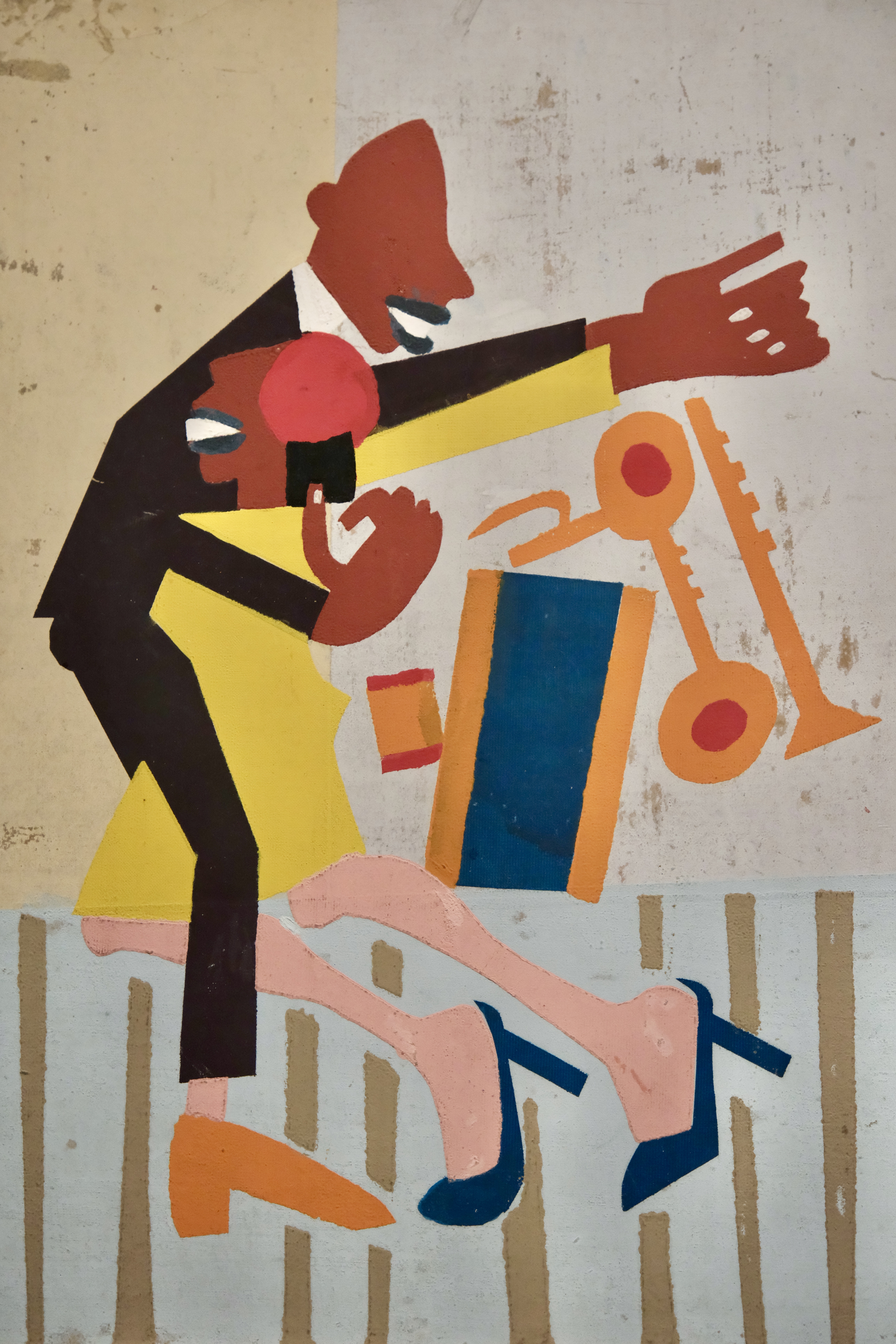
Another fun surprise for us was the museum’s Harlem Renaissance and Transatlantic Modernism exhibit that had incredible pieces by Aaron Douglas (who we also got to see in an exhibit at the Dallas Museum of Art this January), as well as William H. Johnson’s Woman in Blue and Jitterbugs II.

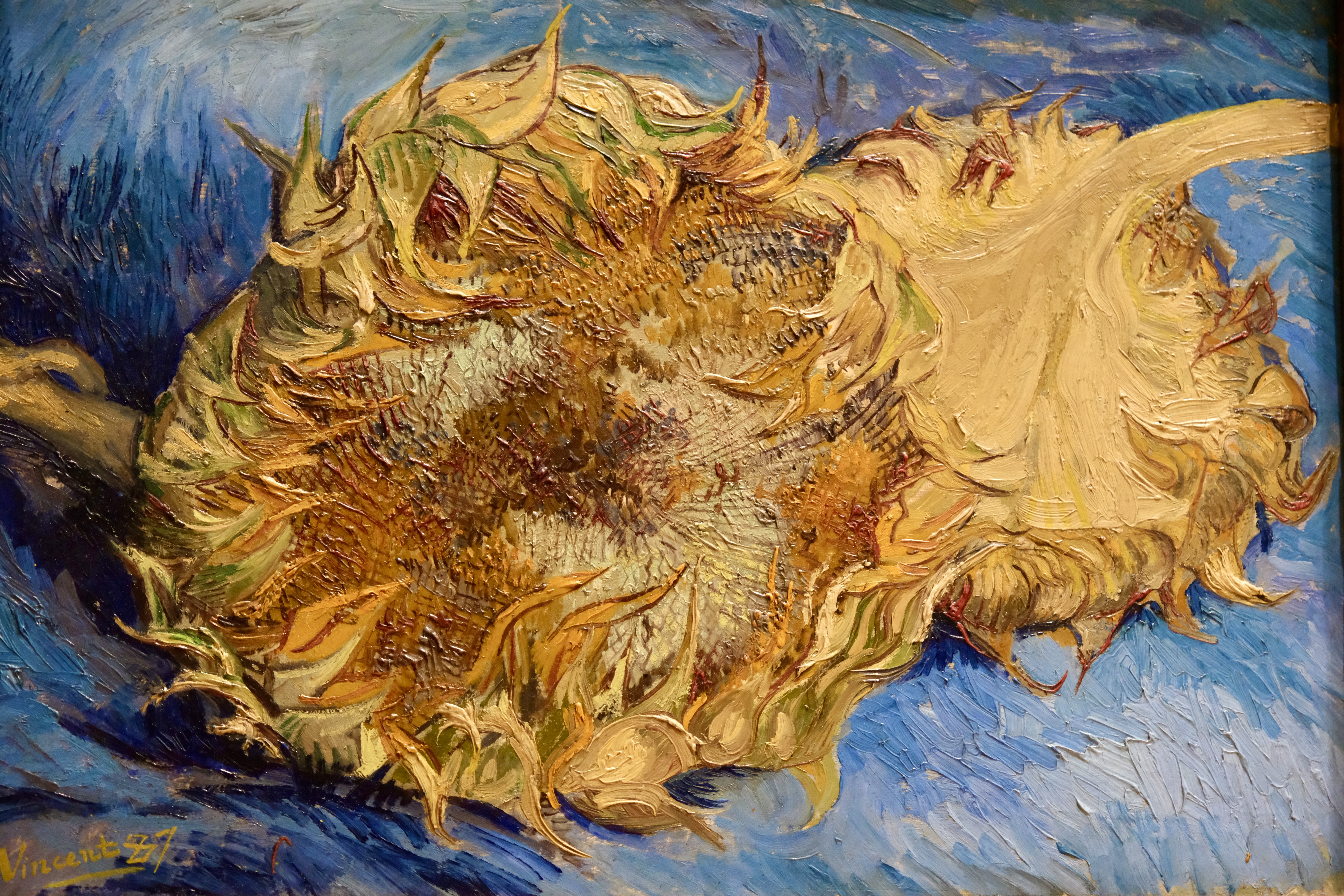
At this point we were feeling pretty museumed-out, so with 30 minutes to go, we made our way to the museum gift shop. Inside, I made the hilarious discovery that the Met contains one of Vincent van Gogh’s Sunflowers. Chandler and I made a joke years ago after seeing two of his Sunflowers practically back to back that we should make a goal to see them all.
I didn’t know that the Met had one because it turns out there are two series. We’ve been on the hunt for the Arles set, showing a bouquet of sunflowers in a vase. The Met had one from the Paris set, depicting the flowers laying on the ground. Right set or not, we couldn’t pass it up. We had pretty much skipped the European Art in the museum (despite having spent all day there), so we raced for it with only 15 minutes to spare. Success.
We were a little wary by day 4 in New York about spending another day at a museum – the seven hours at the Met had really tuckered us out. But I had never been to the Museum of Modern Art, so it seemed we couldn’t miss it. Two things worked against us that day.
One: We arrived 30 minutes early and had to wait in line outside (the MoMA is the only museum we went to that opens at 10:30am, instead of on an hour mark). Luckily, the weather was nice for the first time since our arrival, so we were able to soak in some vitamin D. Two: The MoMA has insane room quotas and nearly every room was packed with people – something we only experienced in the special exhibits at the Met. There were times when I couldn’t see the art, there were so many people standing around. That said, there were still some incredible pieces worth seeing.
People blew through the first side rooms on the top floor, which was too bad for them because I loved the collections by Jacob Lawrence (30 of his pieces in the Migration Series) and Elizabeth Catlett’s 14 linoleum cuts titled the Black Woman. Honestly, I’m a sucker for social justice art.
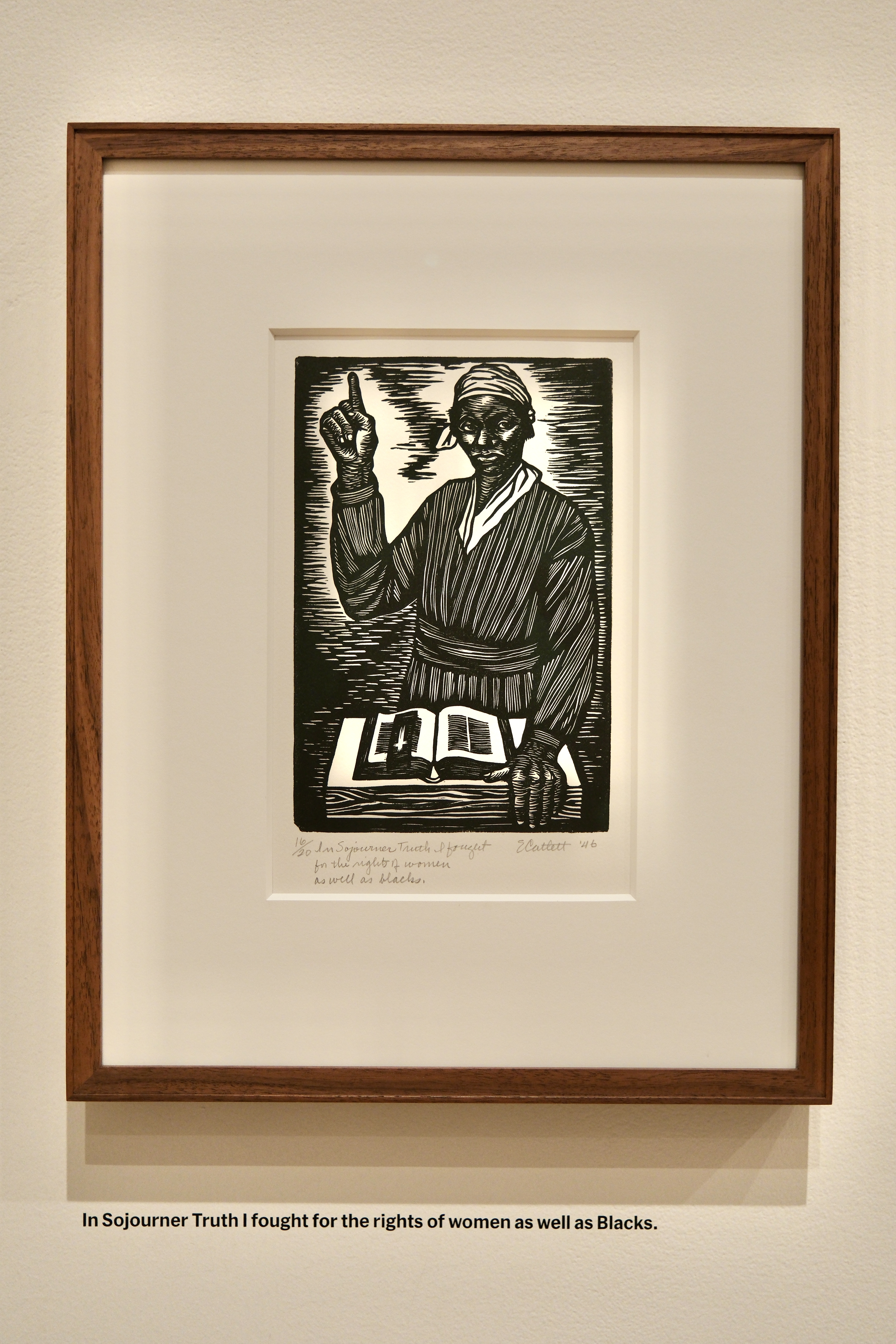
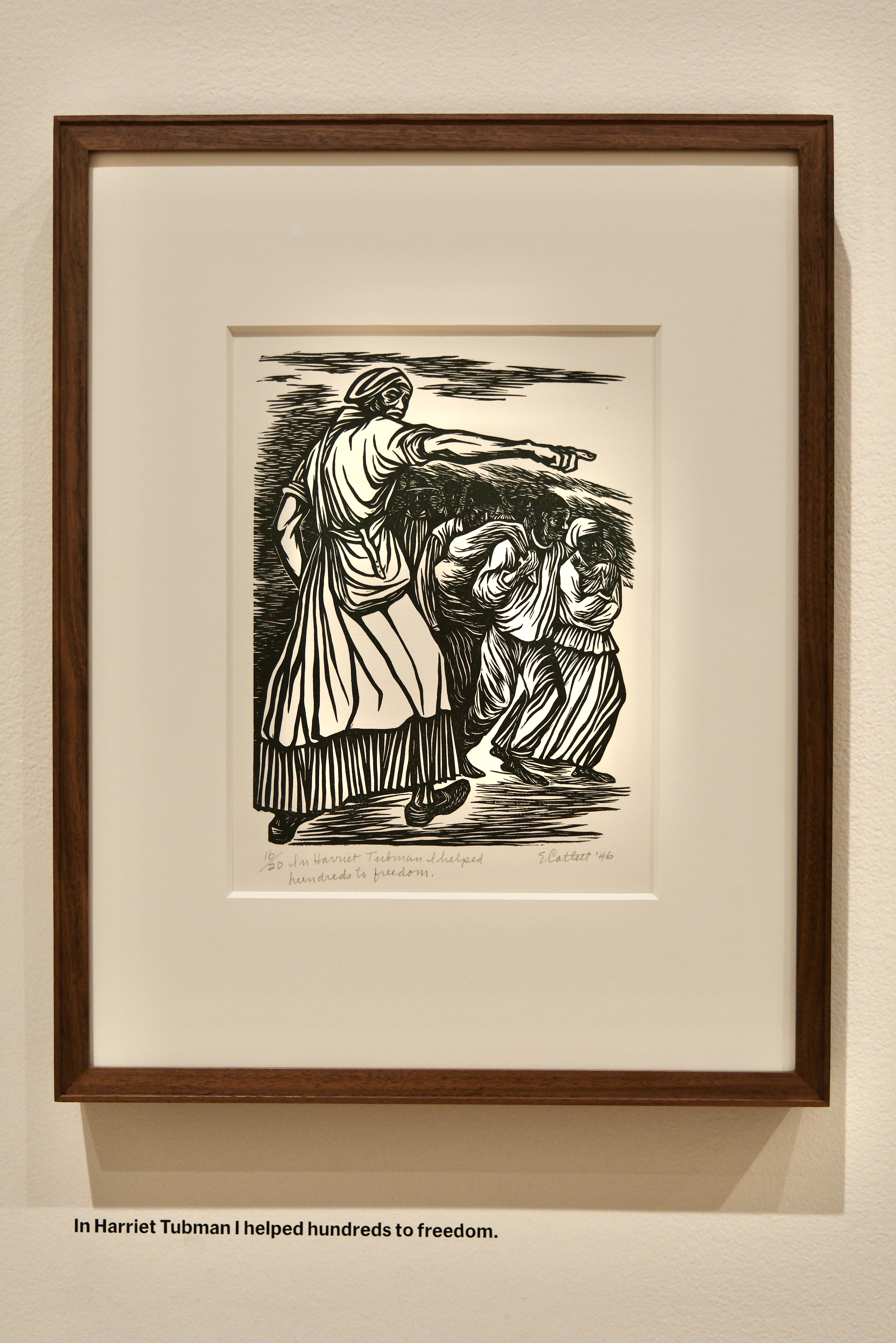

But of course, that’s not what people come for – they come to see van Gogh’s Starry Night. Fucking Starry Night – did you know the MoMA had that? I didn’t – it even has its own special staircase to get to it! Another super famous piece in their collection is Claude Monet’s Water Lilies.
While we enjoyed both pieces, we learned a lot of fun things about other artists as well. We walked past a statue that I could have sworn was by Max Ernst (we hunt for his statues everywhere we go) only to learn that it was by Alberto Giacometti. “Bullshit,” I said, Giacometti is the Swiss artist who makes the skinny statues. Then, we stumbled upon a skinny statue – but it was by Ernst, NOT Giacometti. What was going on???
Well, it turns out that Ernst spent the summer of 1934 with Giacometti. And these two pieces were sculpted in 1934 and 1935 – so clearly the artists had a huge influence on each other. So, below: First is Alberto Giacometti’s Hands Holding the Void (Invisible Object) and second is Max Ernst’s Lunar Asparagus. Great names, BTW.


Like all modern art museums, some pieces are fun because they’re large and Matt Keegan’s Have You Seen My Language? is no exception. The 45 prints were inspired by his mother’s use of homemade flashcards, which she used as an English as a Second Language (ESL) teacher for 25 years.
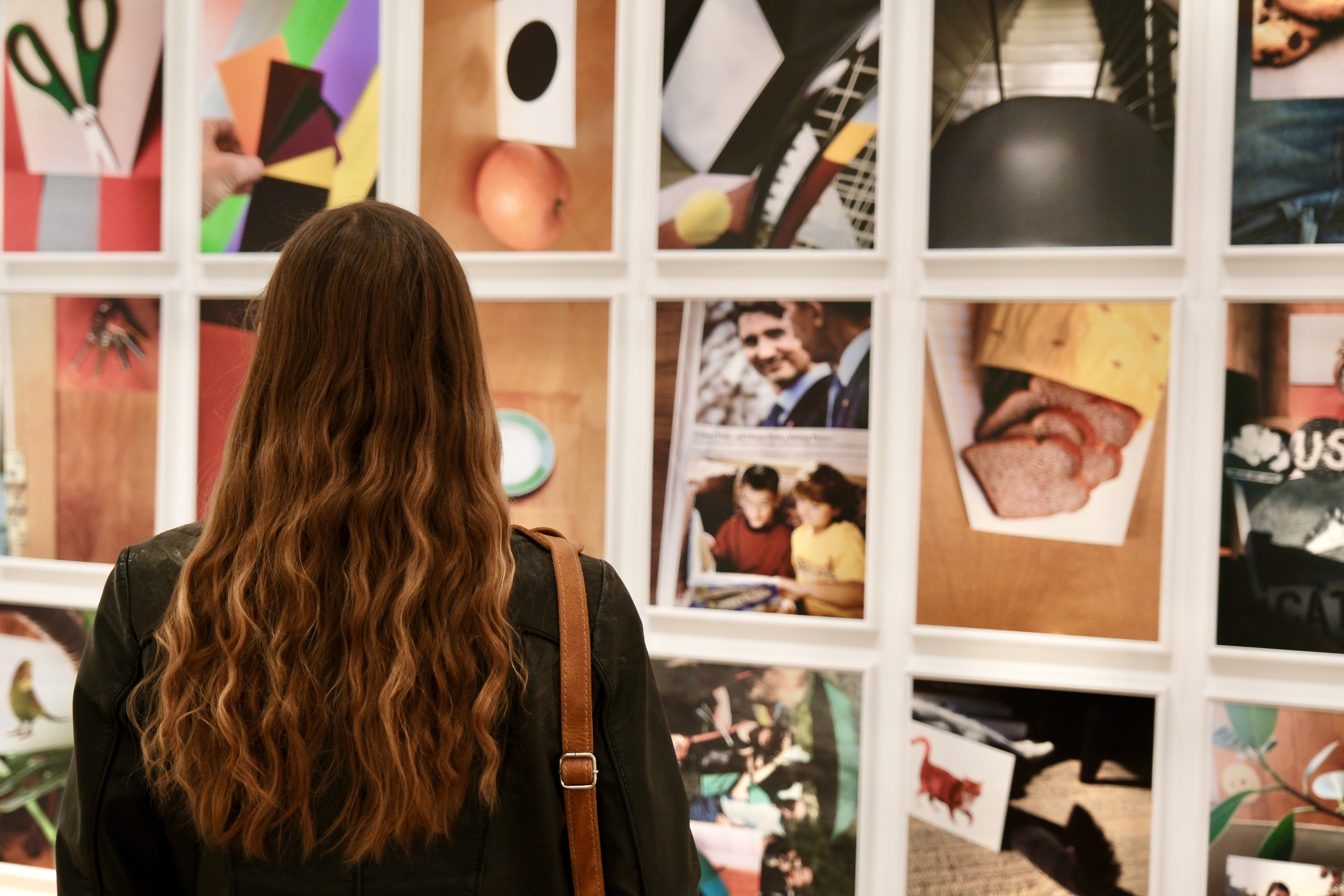
There were other incredible pieces on display like Corita Kent’s I Should Like to Be Able to Love My Country and Still Love Justice (just as relevant in 2024 as it was in 1968) and William Copley’s untitled screenprint, which replaces the stars in the American flag with the word “Think.”
We also got to see all 32 panels of Andy Warhol’s Campbell’s Soup Cans – there were some great Instagram worthy photo shoots going on in front of that piece.
All-in-all, while the MoMA was hands down the busiest museum (and we went on a Tuesday), it was also the most fun! But after four days in museums, we were excited to take a break (we only had one museum to visit in Boston and we would wait until Friday to see it).
Which brings us to the last big topic of this blog: FOOD. When first deciding what food to eat, I did a couple of searches. We had looked into Boston first and I was amazed that they organized their Italian restaurants into two categories: Italian and Italian American. I am a huge lover of Italian food, but I have a strong distaste for American Italian, so I decided to look for the same distinction in NYC. I found a number of restaurants that fit my criteria!
I also simply searched vegan restaurants on Google Maps. I got some diamonds in the rough, but mostly fast vegan chains. Another actual Google search led me to Veg News’ article, 15 of the Hottest Vegan Restaurants in New York City Right Now (we ended up eating at 4 of them!).
Like I said, these searches led me to a list of 40 restaurants I wanted to eat at even though we had a max of 10 meals in the city. We painstakingly narrowed it down and then, as all things go, changed things up as we went – including our first night.
Our flight arrived after 8pm our first night, so we looked for something still open in walking distance to our hotel – and Coletta (which hadn’t made it through our final round of cuts) was the clear winner. Advertised primarily as a vegan pizza spot, their vegan pasta was incredible – so were their vegan knots – but the pizza I could actually have done without.
Other incredible pasta spots included Nonna Dora’s and Rezdora. Our most expensive meal was at Nonna Dora’s because I ordered the vegetarian pasta tasting (amazing) and a glass of orange verdichhio (too bizarrely wonderful not to try). It was the best pasta I had all week. But Rezdora was also amazing (if hilarious); when we told our server that Chandler was vegan her response was, “We’ve never had a vegan before!” This is NYC! But they sweetly found something for him to eat.
After a couple of heavy meals, we cut some of our original ideas – vegan Mediterranean and vegan French – for a fast salad on the way to Sweeney Todd and possibly the best Indian food I’ve ever had (also walking distance from our hotel) – Sahib (potatoes made their dahl so creamy). We also stood outside eating Jerrell’s BETR BRGR in the cold, but luckily they had hanging heaters!
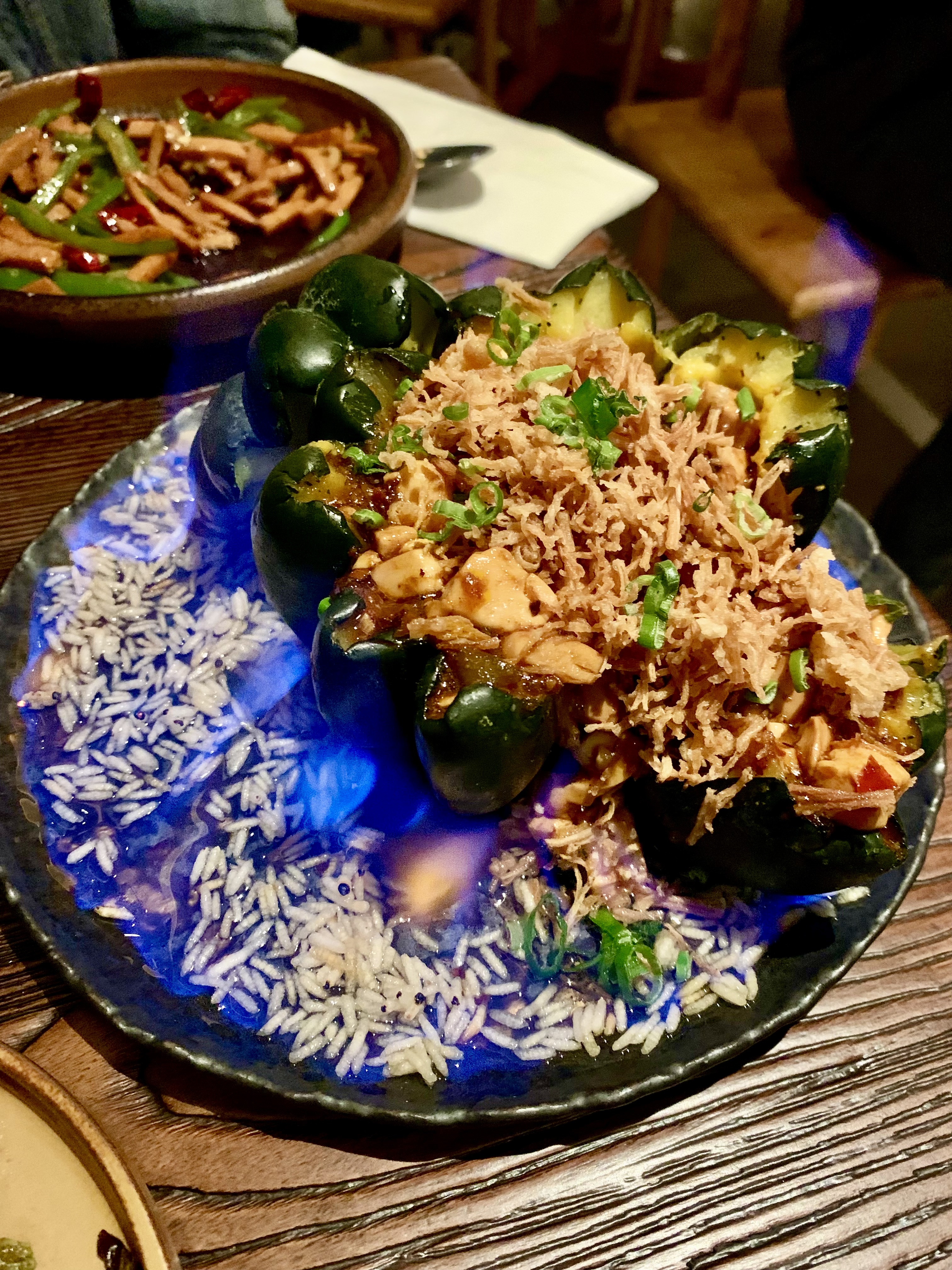
We had amazing vegan sushi at Beyond Sushi (go for the rainbow roll!) and our most creative meal was the one we traipsed to Brooklyn for: 璞素Púsù. An authentic vegetarian Chinese restaurant, I’ve never tasted anything like it. We ordered stir-fried shredded pork (tofu) & green pepper 青椒肉丝 as our appetizer (my personal fav), the mala dry pot 麻辣香锅 (oh so spicy and perfect for Chandler), and their specialty, the pumpkin mapo tofu 南瓜麻婆豆腐盅, which comes in a cooked squash and is then lit on fire at your table. I was so stuffed that Chandler had to roll me back to the subway afterward.

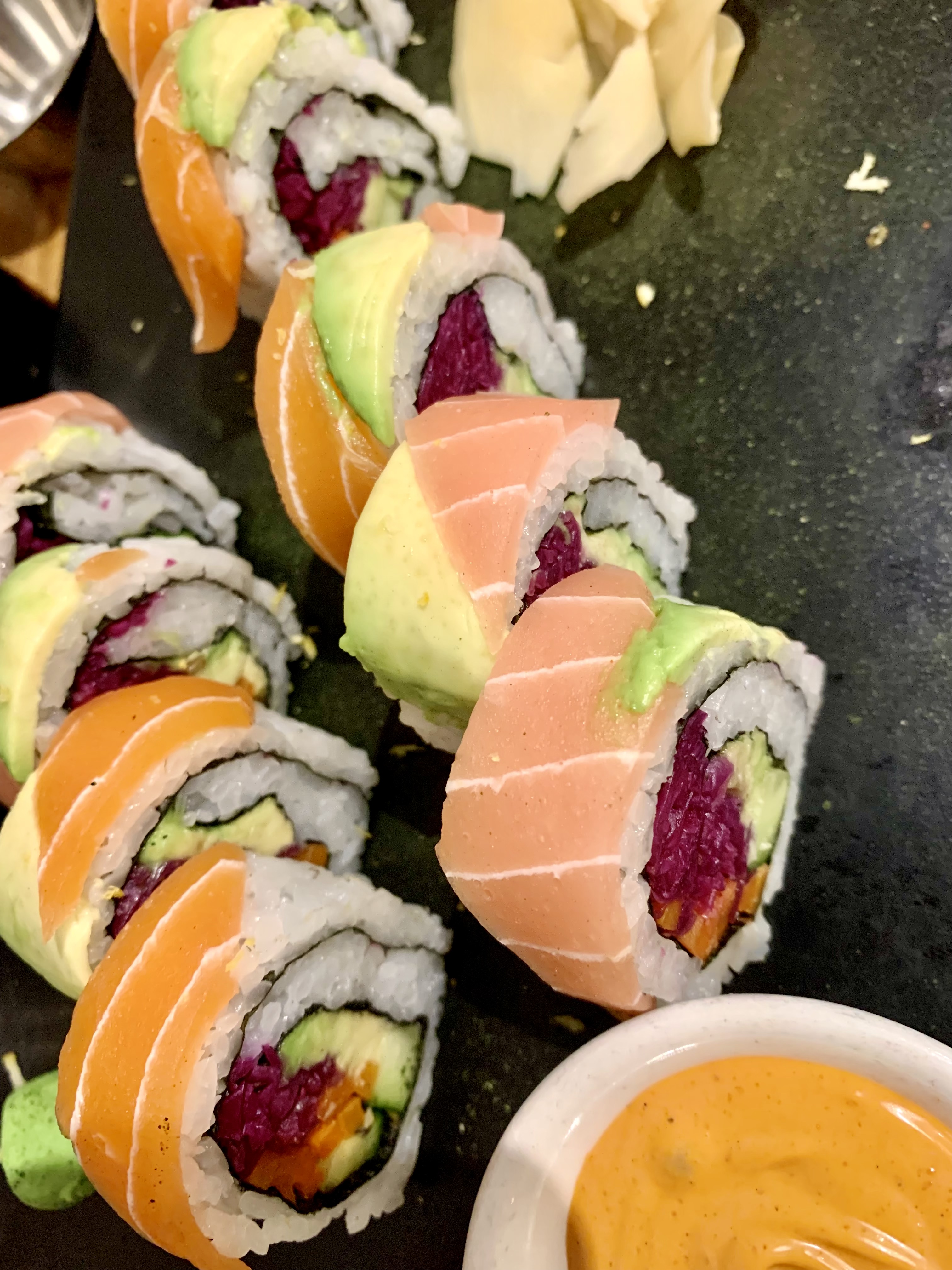

We also trekked over to the Hudson Yards for breakfast at Russ & Daughters for bagels. Not the original location, I know, but I wanted to see the Vessel. And now I can attest, those are some damn good bagels (and the goat cream cheese – heavenly).
Our final foodie stop was at Confectionery! in the East Village. A vegan chocolate shop and bakery, we walked away with so many tasty treats. Some begging to be eaten right away: The glutenous brownie and campfire square. We also got an 8-piece box of assorted truffles & caramels and a peanut butter caramel bar. Everything was exquisite.
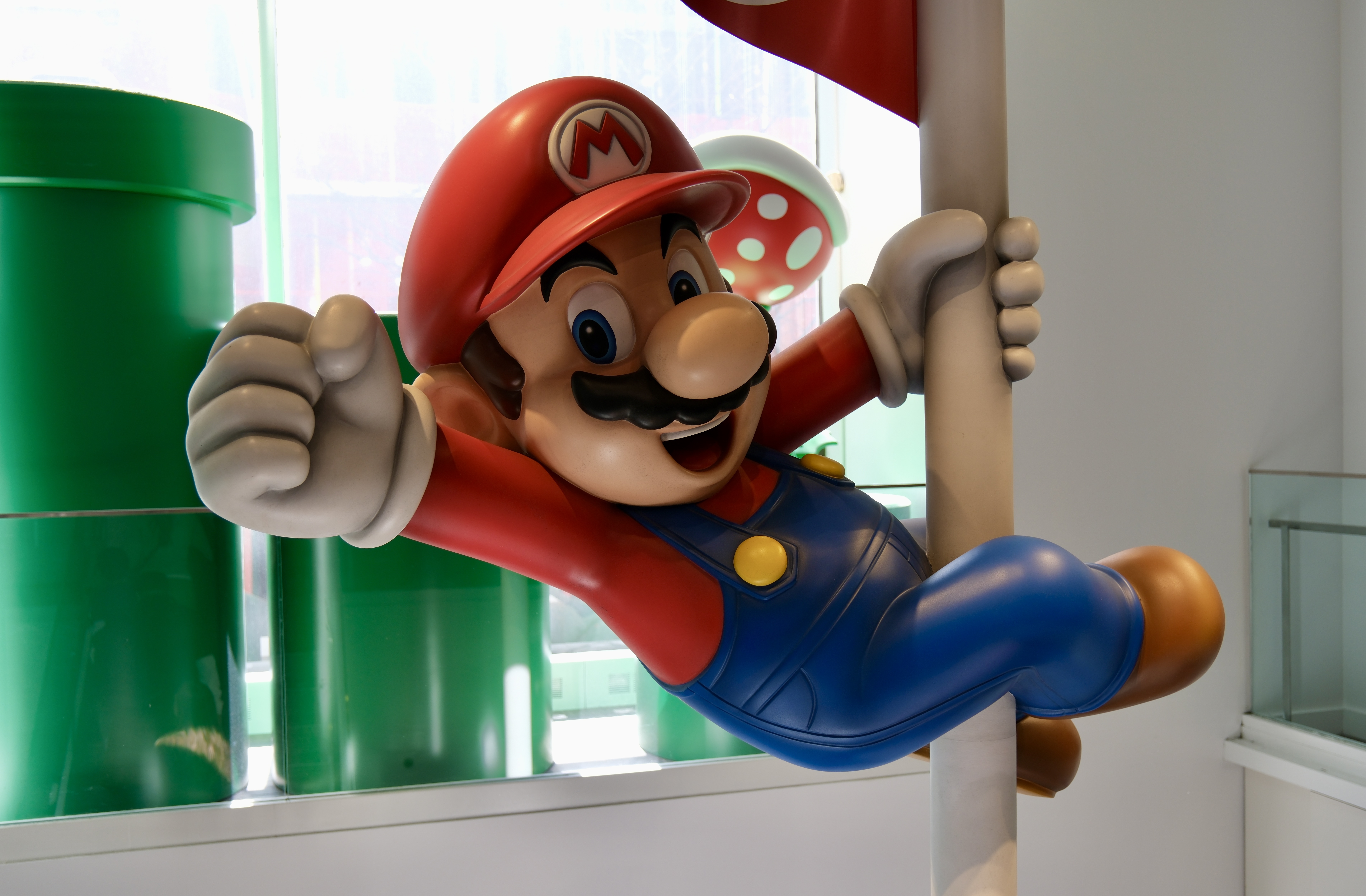
The rest of our time in NYC involved wandering. We passed by the Ghostbusters Headquarters and I have since seen (for the first time) the original two Ghostbusters, Ghostbusters Afterlife, and Ghostbusters Frozen Empire. I’m giving the franchise 10/10 stars because it is hilarious and I’ve been missing out! Another fun stop was the Nintendo Store – Chandler was stoked the whole time we were inside.

We visited a number of bookstores – buying the most at Housing Works Bookstore (staffed by volunteers, with profits supporting the end of the AIDS epidemic and homelessness crisis). Also, Bluestockings Cooperative Bookstore (New York’s only queer, trans, and sex worker run bookstore) had an incredible Anishinaabe graphic novel retelling of Alice in Wonderland – Rabbit Chase by Elizabeth LaPensée. And we had to visit the Strand Book Store just to experience its size (18 miles of books!).
We also spent a morning at the African Burial Ground National Monument. We lucked into a tour, so we got to hear a lot about the site and how government officials tried to hide the scope of the burial grounds so they could continue with their construction. Somehow I’m always amazed at what people will do (or won’t do) for money. The African Burial Ground is the oldest and largest known excavated burial ground in North America for both free and enslaved Africans. It is a reminder of the role slavery played in building New York.

Overall, I’d say we learned a lot during our time in NYC – including that it’s not the city for us either! Everyone we interacted with in the city was kind, but no one smiled. Everything was drab and sad (winter, I know). There are things you can only experience in NYC, but it’s not someplace I could ever call home. Which I think was kind of the point when I started my “American Cities” posts.
Now that I know we’re moving to Senegal this summer (surprise!) it makes sense that so many US cities haven’t felt like the right fit for us. I still have to reflect on our time in Boston and we’ve got a pretty full summer road trip planned in the SW and California, but our move to Dakar feels like moving home – even though we’ve never been there. With Ethiopia and Ghana under our belt, Senegal feels like the right next step.
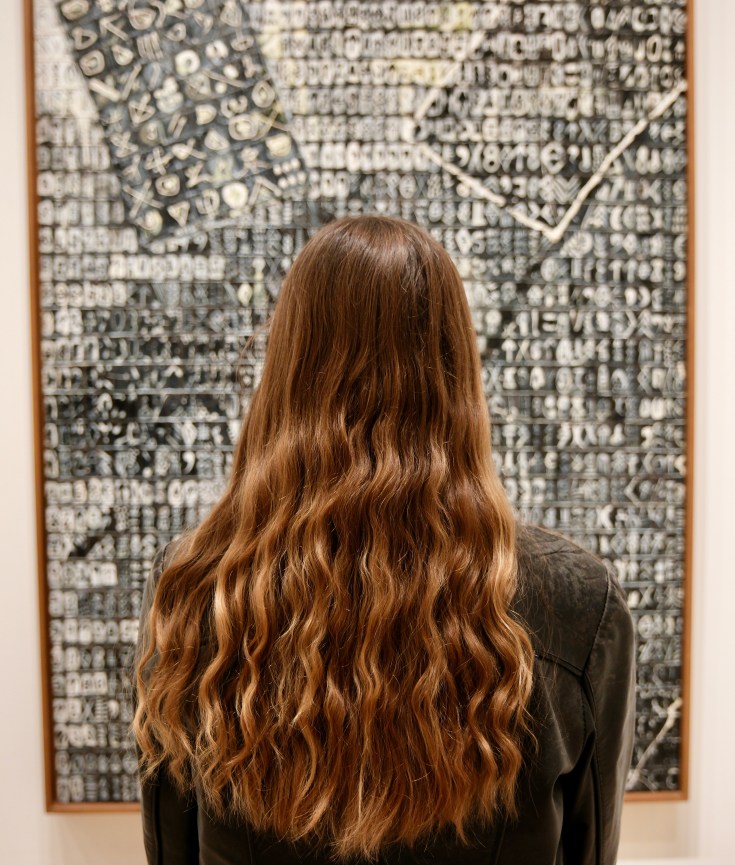
*The featured image showcases an untitled piece by Japanese artist Shuji Mukai on display at the MoMA.
 Abroad With Ashley