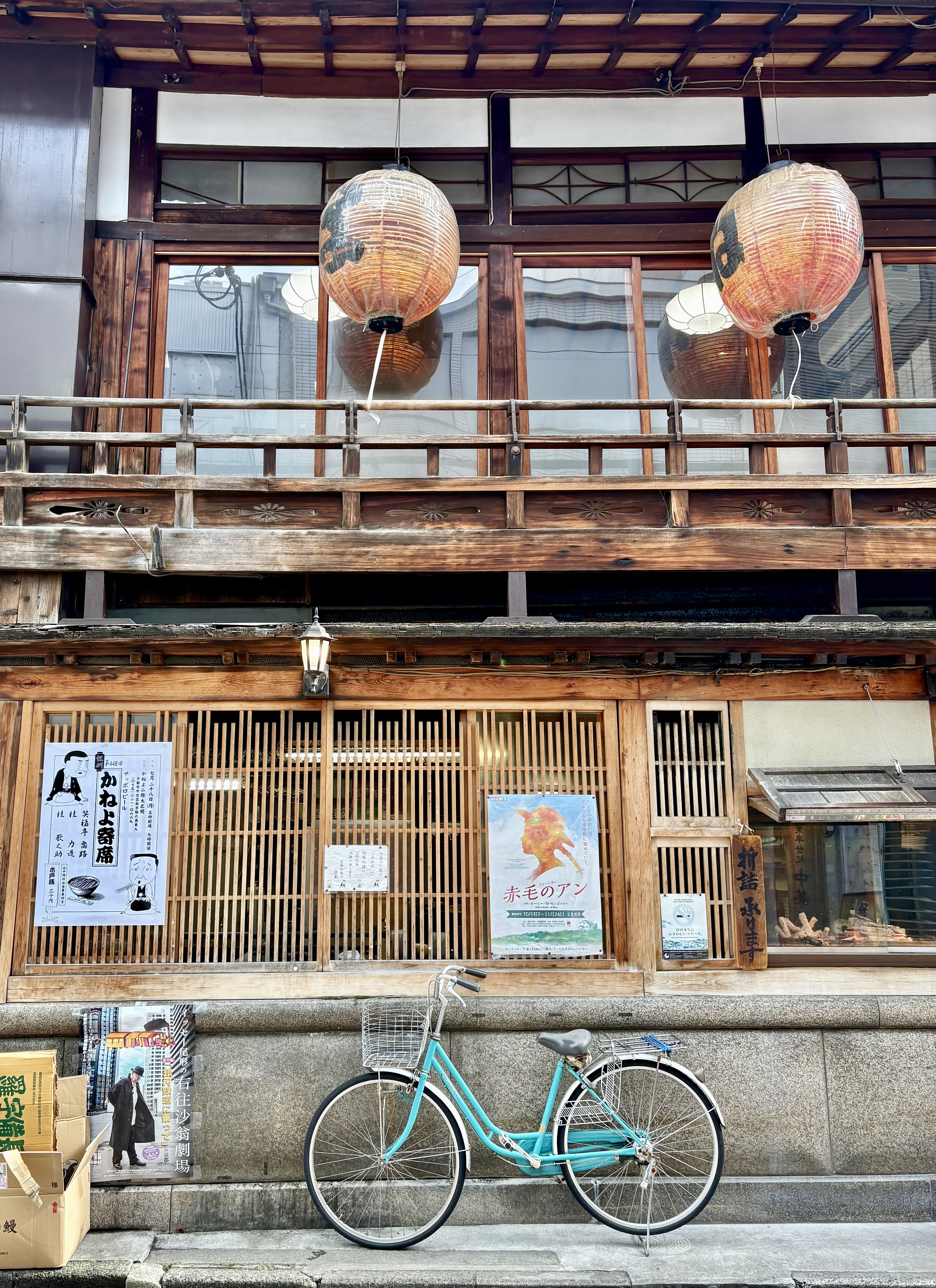
I hope I don’t offend anyone while writing this post – because while I enjoyed our time in Kyoto, if I’m being completely honest, it was our most stressful city. And I think that has to do with the sheer number of tourists.
Our anecdote is that Kyoto was the only city in Japan where the Taxi Go drivers spoke to us in English.
I’m not saying that Kyoto gets more tourists than other cities in Japan, but for its size, there were a lot of them – and I know that includes us too! Which means I’m not judging the others who also wanted to experience this magical city. But some of the side effects were waking up super early, timed entries, and having to be more thoughtful of our timing in general, as opposed to going with the flow in all of the previous cities.
One of the only chill things we did in Kyoto was go to Ryōan-ji Temple. We arrived maybe 30 minutes before closing and made our way to the Hojo Teien (Rock Garden). We got to sit in peace among the rocks, tracing the sand with our eyes.
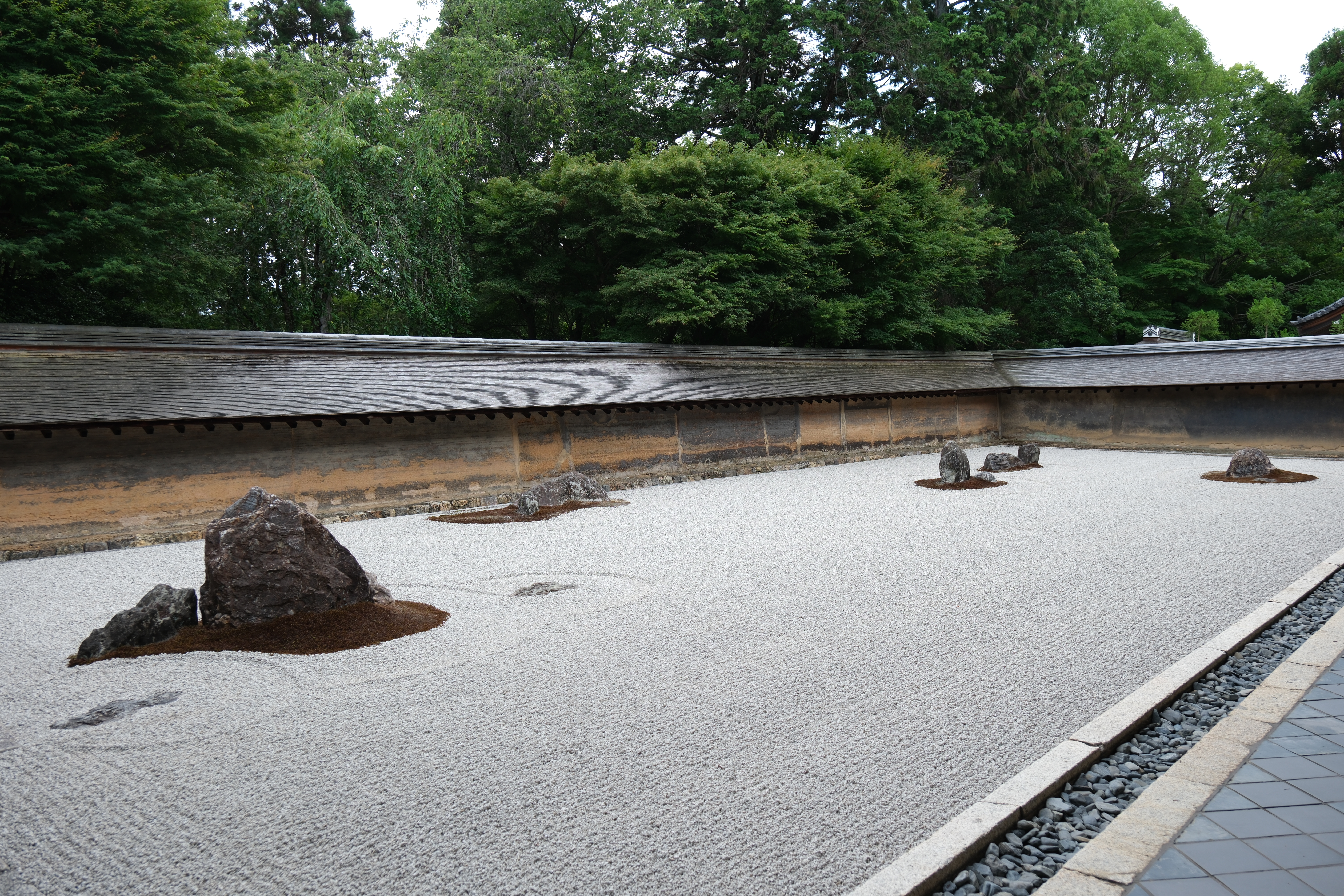
The garden contains 15 stones, though only 14 are ever visible from any chosen perspective. The only vegetation in the garden is the moss around the stones. The white gravel is raked daily by the monks.
Its history is unclear. The temple was founded in 1450, however, it burnt down and was rebuilt before 1500 and again 1779. The first description of the garden dates from 1680, however, it wasn’t until 1799 that an image of the garden was published as it is today.
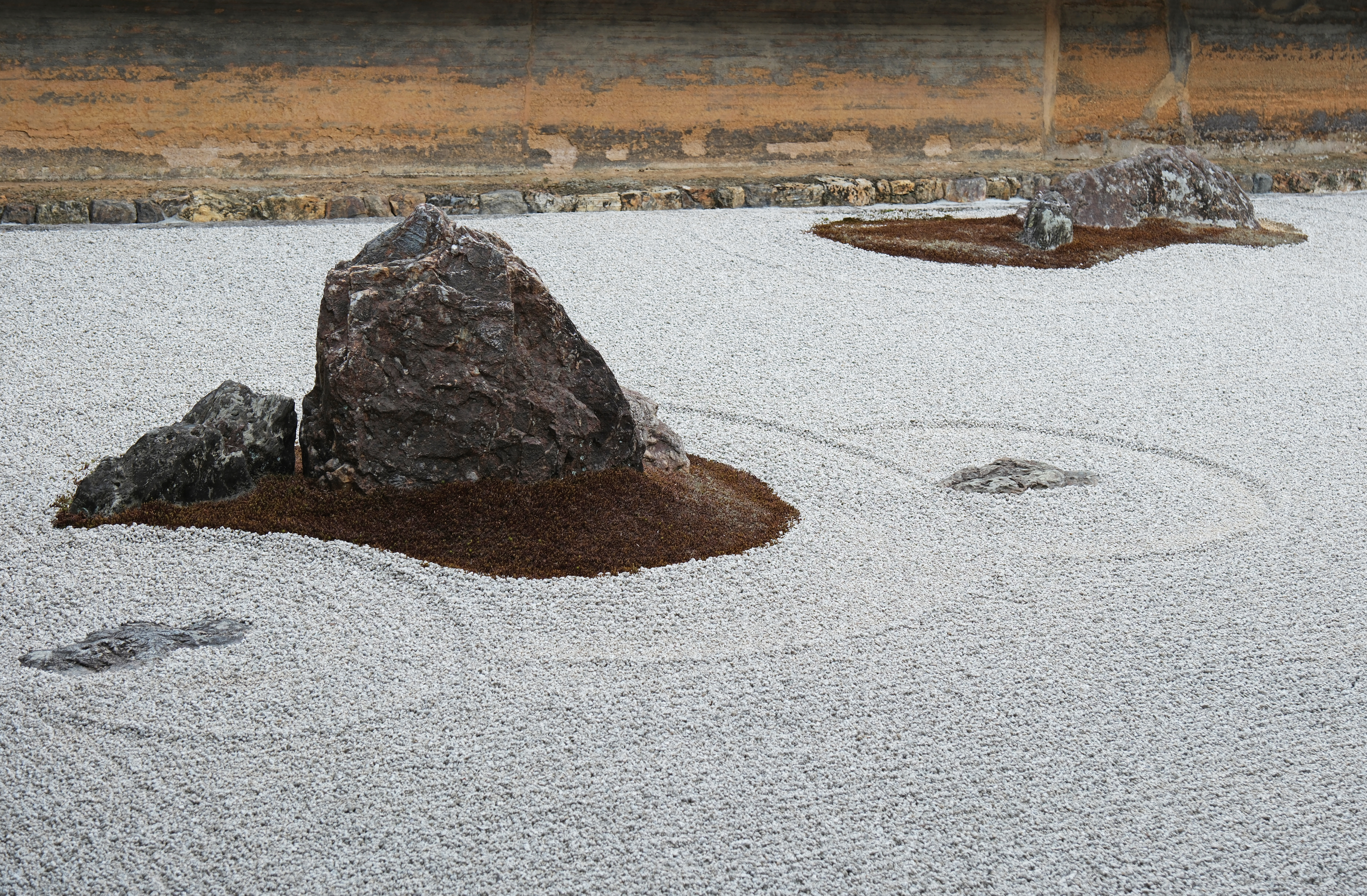
The real reason we went to this garden is because Chandler considers it his “childhood garden.” The Japanese Garden in the Fort Worth Botanical Garden is modeled after this one and he said it was shocking how familiar it felt.
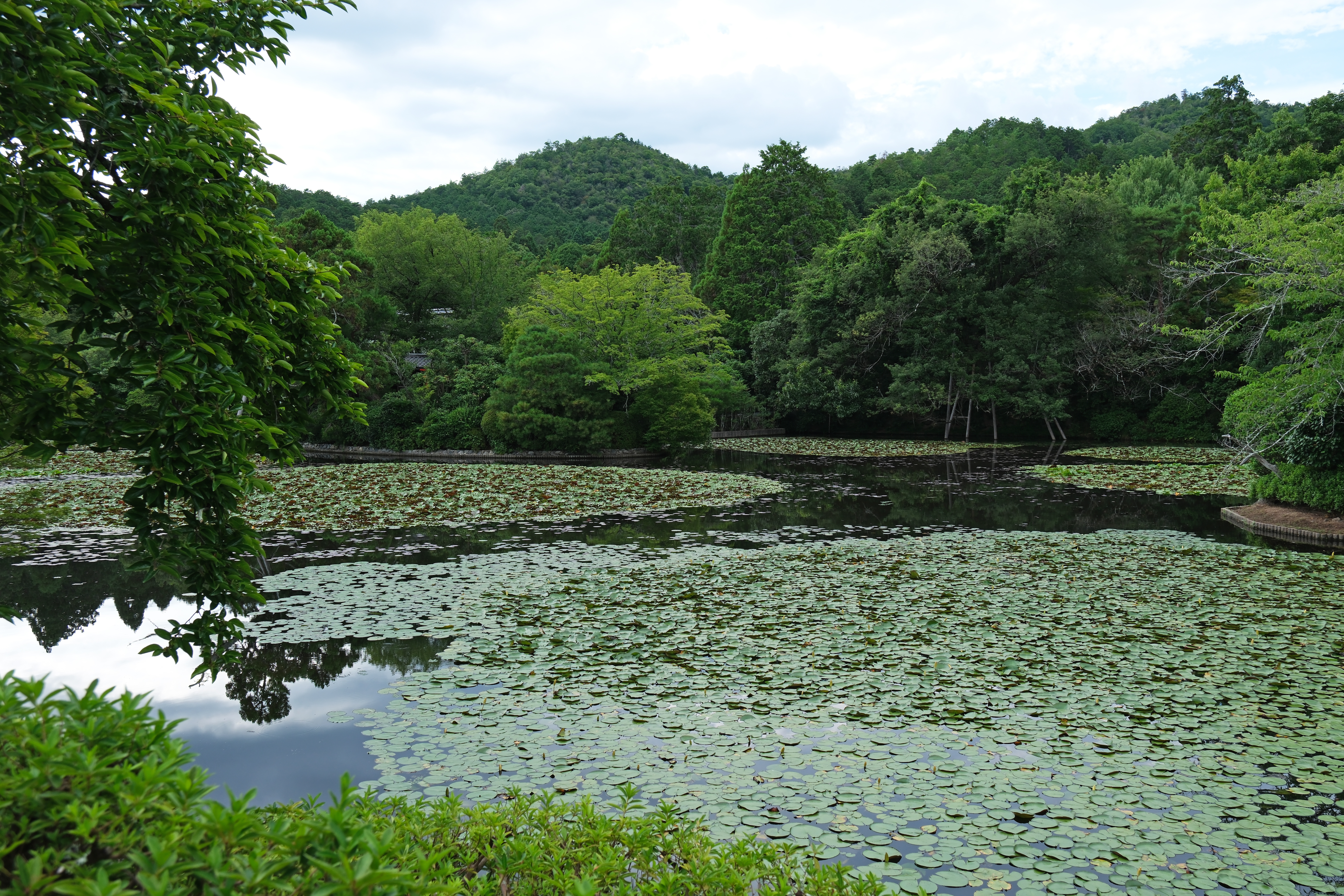
On our way out, we slowly walked around Kyoyochi Pond, the temple’s water garden.
One thing that we were going to learn about Kyoto is that it is a very outdoor city and we were not arriving at an opportune time. Summer in Japan can get unpleasantly hot, but we were given a brief respite with the promise of rain.
Because of our luck at Ryōan-ji Temple, we wondered if the late time of day, plus the incoming rain, would give us the opportunity to visit the Fushimi Inari Taisha without the crowds of people that normally accompany it.
The lighting was a bit darker than I’d have liked, but our luck held out. The majority of people were leaving as we arrived and the rain wasn’t quite ready to fall. If I’m being honest, we made our way past the initial gate and shrine at the bottom of the mountain quickly.
I was most excited to see the Senbon Torii (Thousand Torii) farther up the mountain. I knew with the rain eminent, we weren’t going to make it all the way to the top (that would have taken over two hours), but I wanted to see how far we could get.
Despite the name, Senbon Torii is made up of about 800 torii gates, though it is estimated that there are around a thousand on the entirety of the mountain. But these 800 are lined up one after another, giving the illusion of a tunnel.
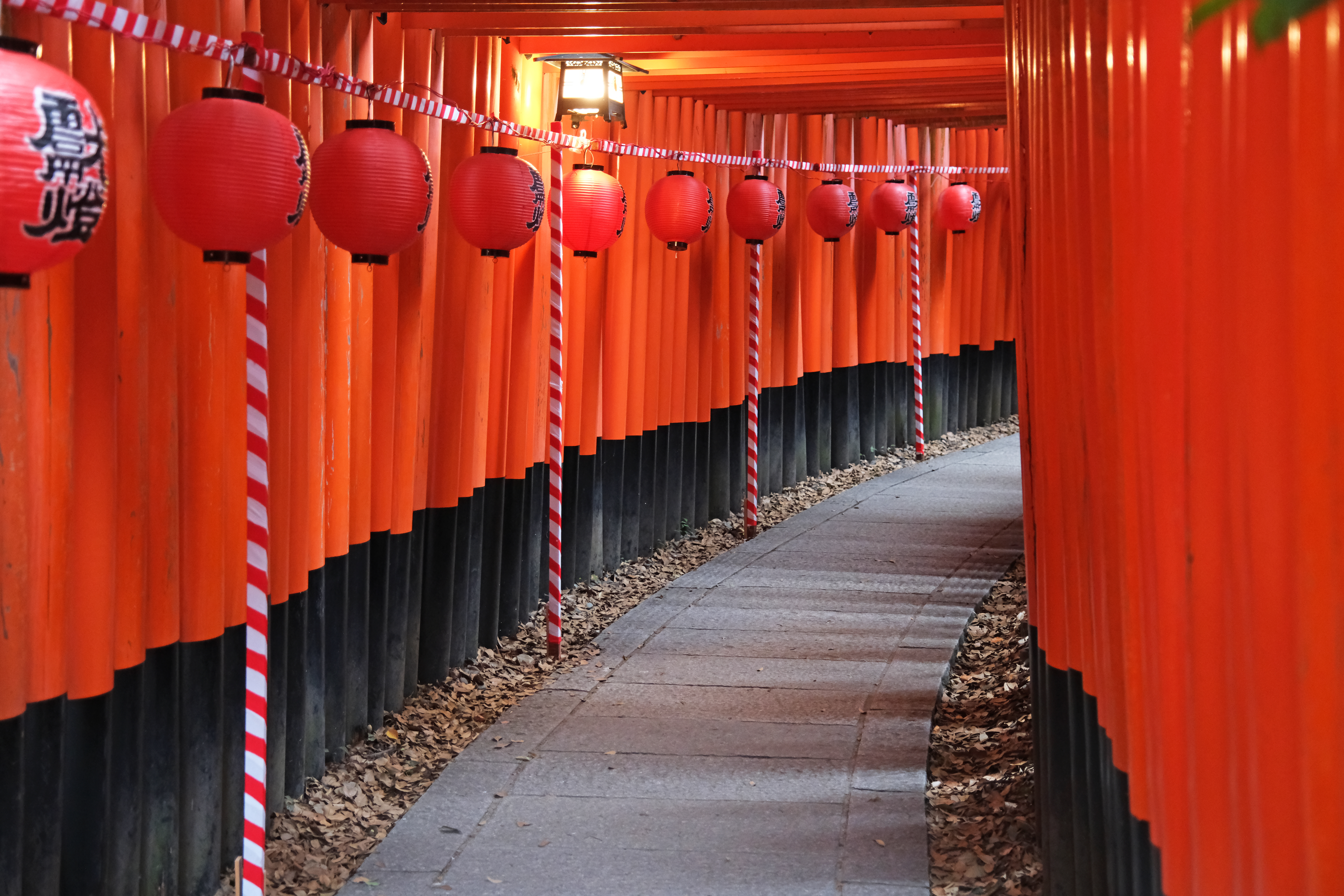
There were still quite a number of people around, so I was shocked that we were able to turn the corner and get stretches of the gates to ourselves.
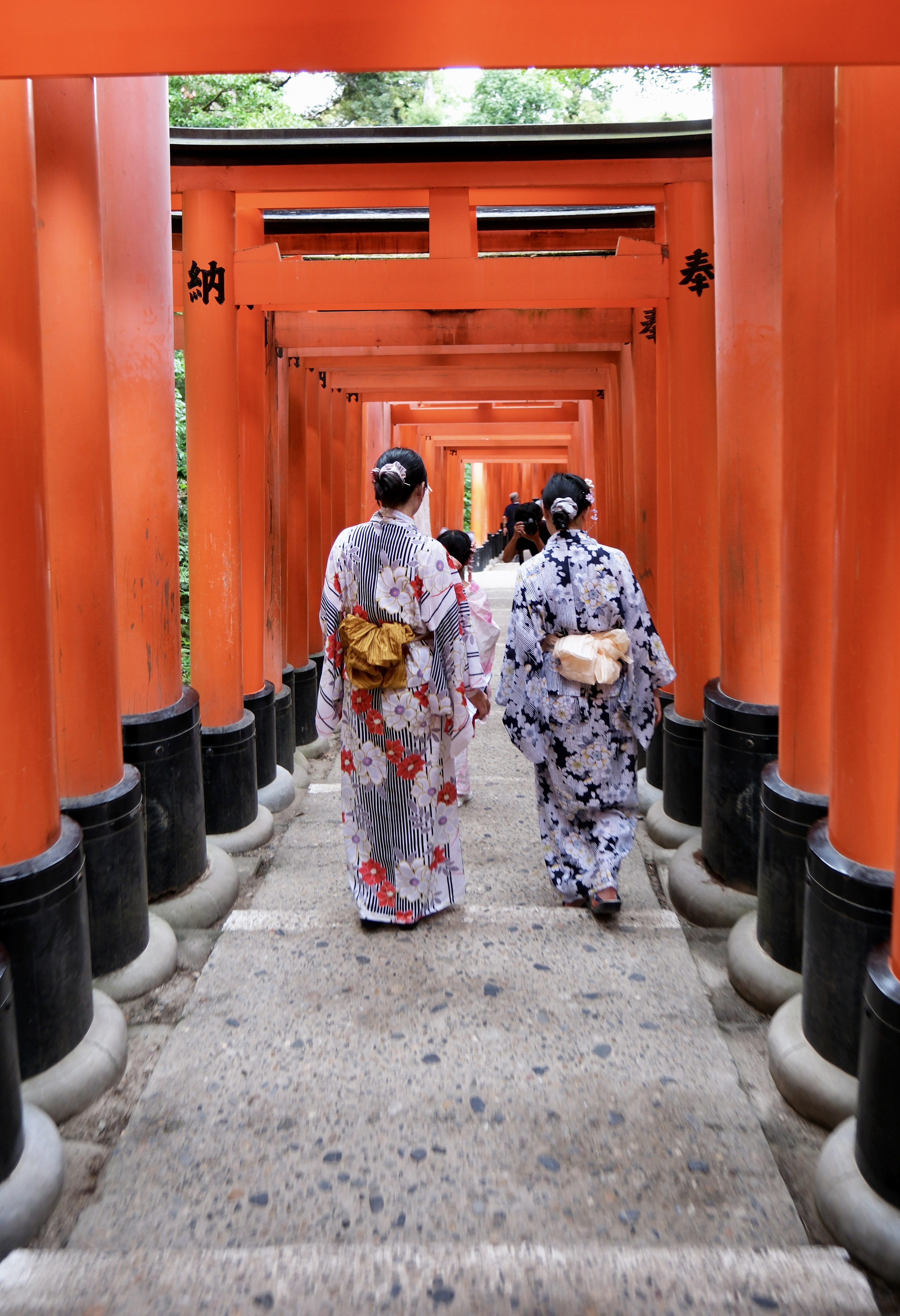
That said, sometimes having people around can enhance a photo. We weren’t too upset to get stuck behind this family taking traditional photos.
However, this was also the part that was difficult for me – wanting to slow down and take as many photos as possible, while also knowing that our time was running out. I’ve never liked to feel like I’m in a time crunch.
Halfway up the mountain there’s a rest area with restaurants and shops. You can buy tsujiura senbei, a type of fortune cookie that some believe are the origin of the Chinese-American fortune cookie.
Since foxes are believed to be the divine messengers of the deity Inari, statues of foxes can be seen throughout the shrine. In Japanese mythology, foxes like to eat aburaage (deep-fried tofu). Stalls sell inari sushi (rice stuffed into pockets of aburaage) and kitsune udon (wheat noodles in broth topped with aburaage).
We happily would have eaten any of those options, but everything was already closed for the day – either due to the time or the incoming weather. We decided that would be a good spot to turn back.
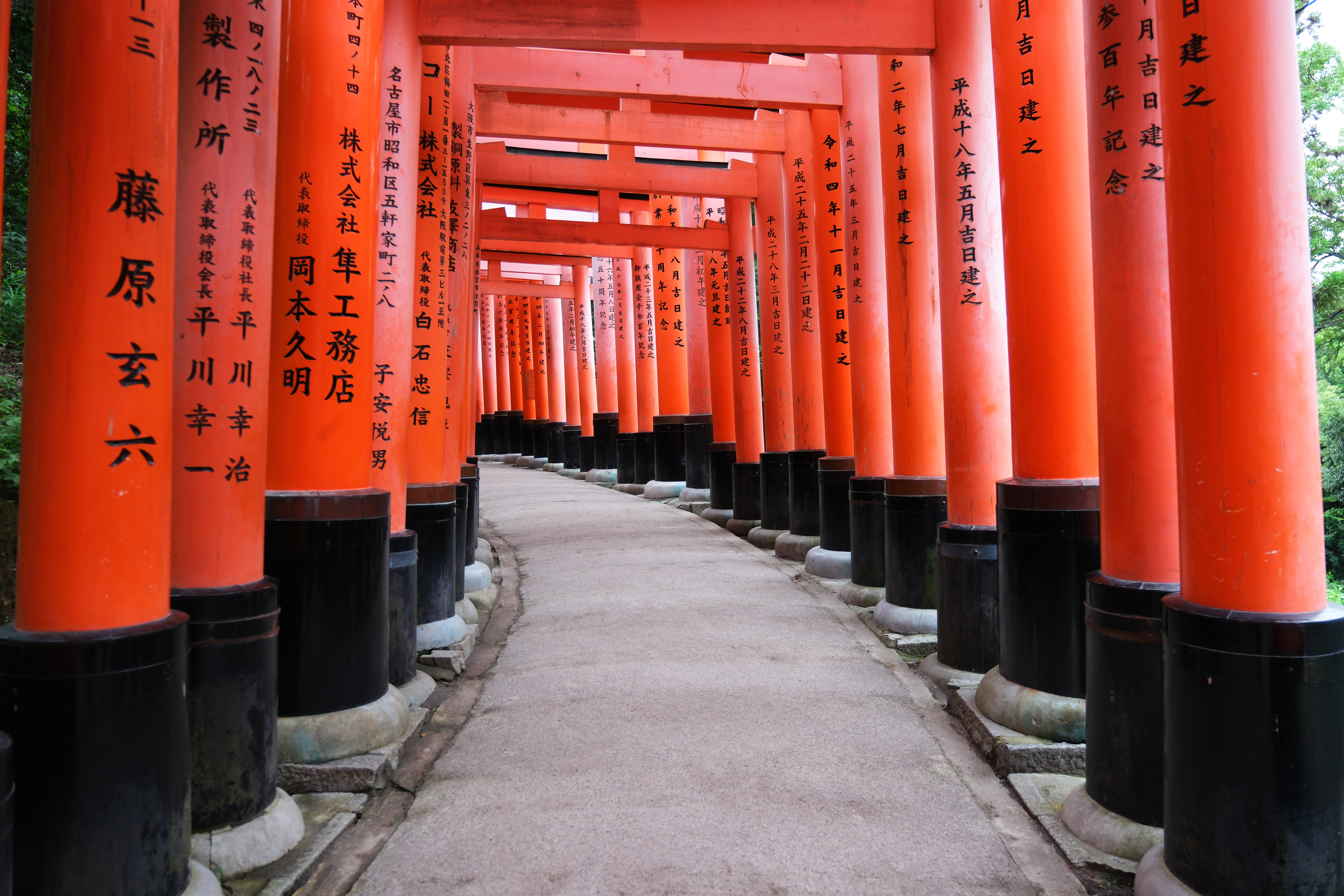
We had just made it back through the Senbon Torii when the sprinkles started to fall. By the time we made it to the train station, it was full-on raining. But one final tidbit that I’ve learned about the gates – they are typically purchased by companies or individuals, so the writing that you see on them is actually branding/advertisements.
We were pleased with our success at Fushima Inari Taisha, but we knew that we had an early morning the next day. We were headed to the Arashiyama Bamboo Grove (also known as the Sagano Bamboo Forest) and everything I’d read said be up early if you want photos of the bamboo, rather than photos of other tourists.
I was looking for a balance between getting the perfect camera shot, while also prioritizing sleep on what was supposed to be our vacation. I ignored the 5am suggestions and we arrived at the bamboo grove around 7am instead.
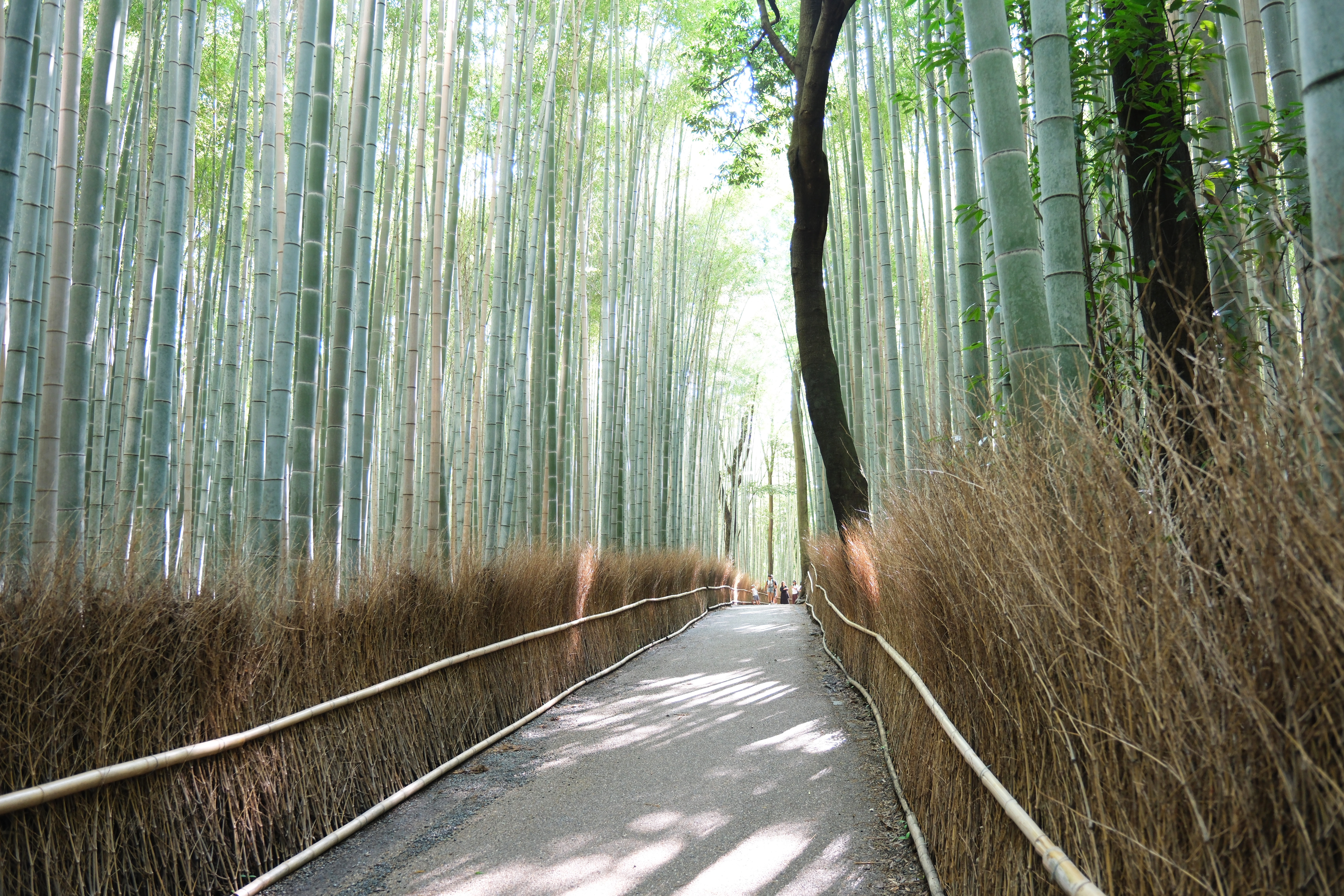
The lighting was perfect. Luckily, the sun rises unreasonably early in the summer – I have a feeling that the magic in the grove wouldn’t quite be the same in the dark.
And while we weren’t the only ones there, it was plenty easy to turn a corner and have some space to ourselves.
The natural, meditative quality of the grove is so lovely, in fact, that Japan’s Ministry of the Environment designated the location’s aural pleasures as one of the country’s “100 Soundscapes of Japan.” In 1986, in an effort to combat noise pollution, the idea arose to compile a list of national sounds. Thousands of entries were submitted and the ministry whittled them down to the top 100.
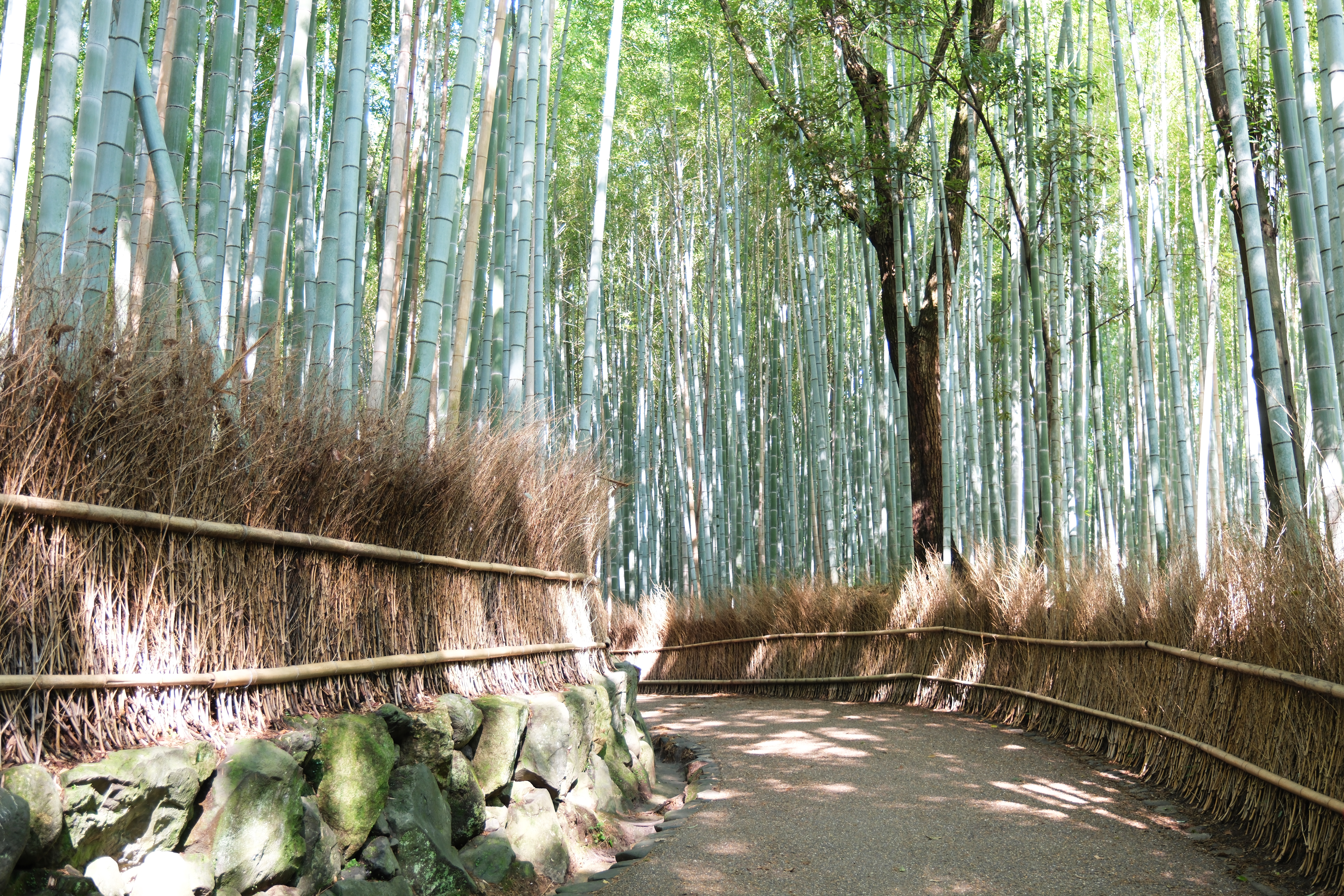
We strolled around for about 30 minutes before more people started arriving, at which point, we made our way to our second bamboo stop of the day – Adashino Nenbutsuji Temple. The temple is about a 20 minute walk away, so we decided to set out on foot. We arrived around 8am and discovered a fabulous reason for not waking up at 5am – Adashino Nenbutsuji Temple doesn’t open until 9am.
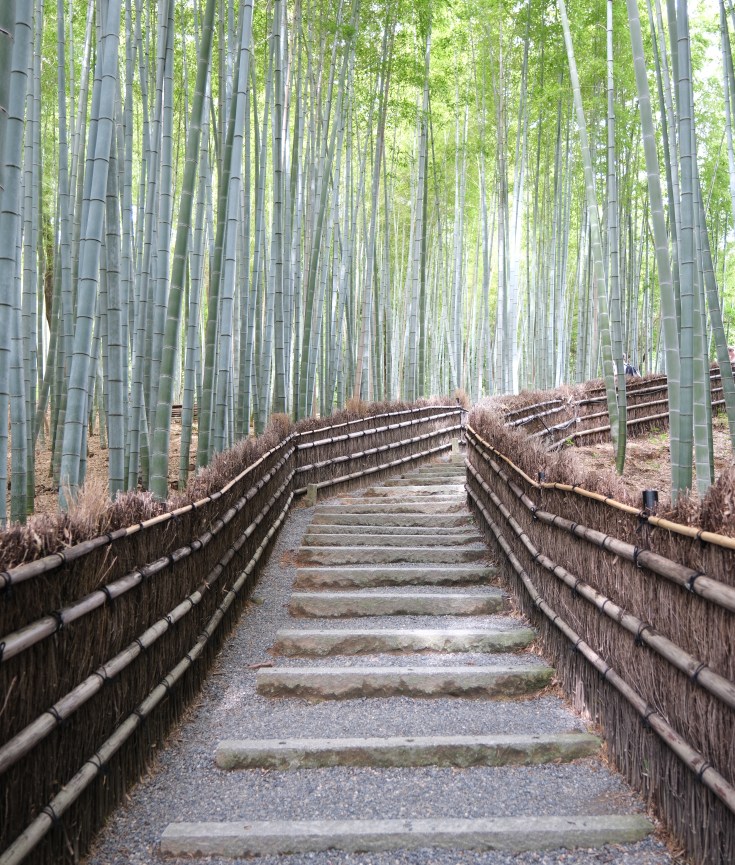
The bamboo grove inside is quite small compared to the bamboo forest, but it has something that Arashiyama does not – a staircase. There were only a handful of other people around (we actually initially thought we were in the wrong place), so we decided to hang around and wait for the temple to open. I think Chandler would have preferred breakfast. And in his defense – had we fully understood the situation, we would have found a breakfast shop to pass the time in.
By the time the temple opened, a few others had made their way over, so once we were inside, I beelined for the bamboo. And my friends, it was worth the wait.
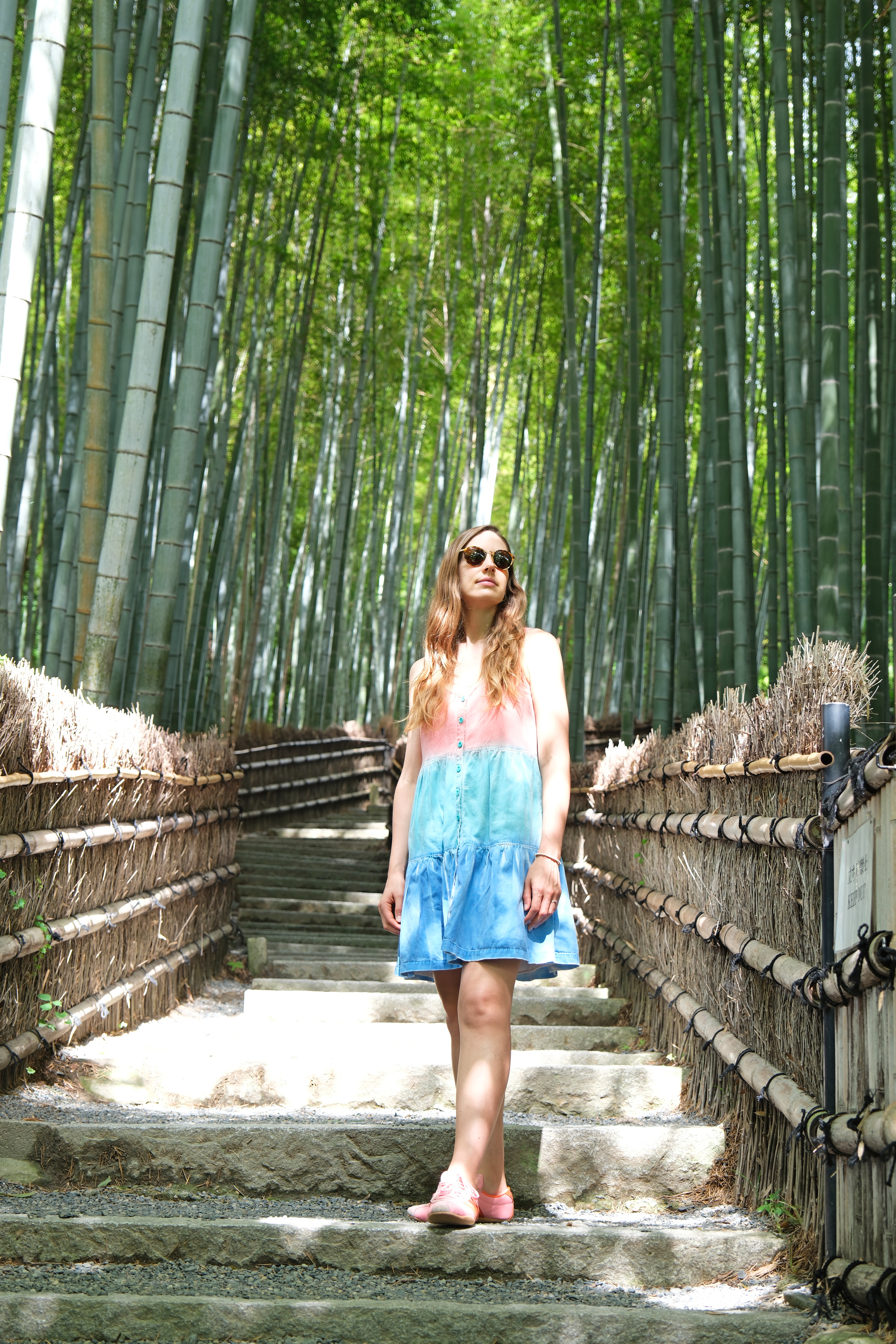
Yes, we paused (for longer than Chandler would have liked) to take photos at the base the of stairs. But then we began to make our way up.
The walk takes a minute max, but if possible, it was even more peaceful than the bamboo forest. At the end is just a small grove.
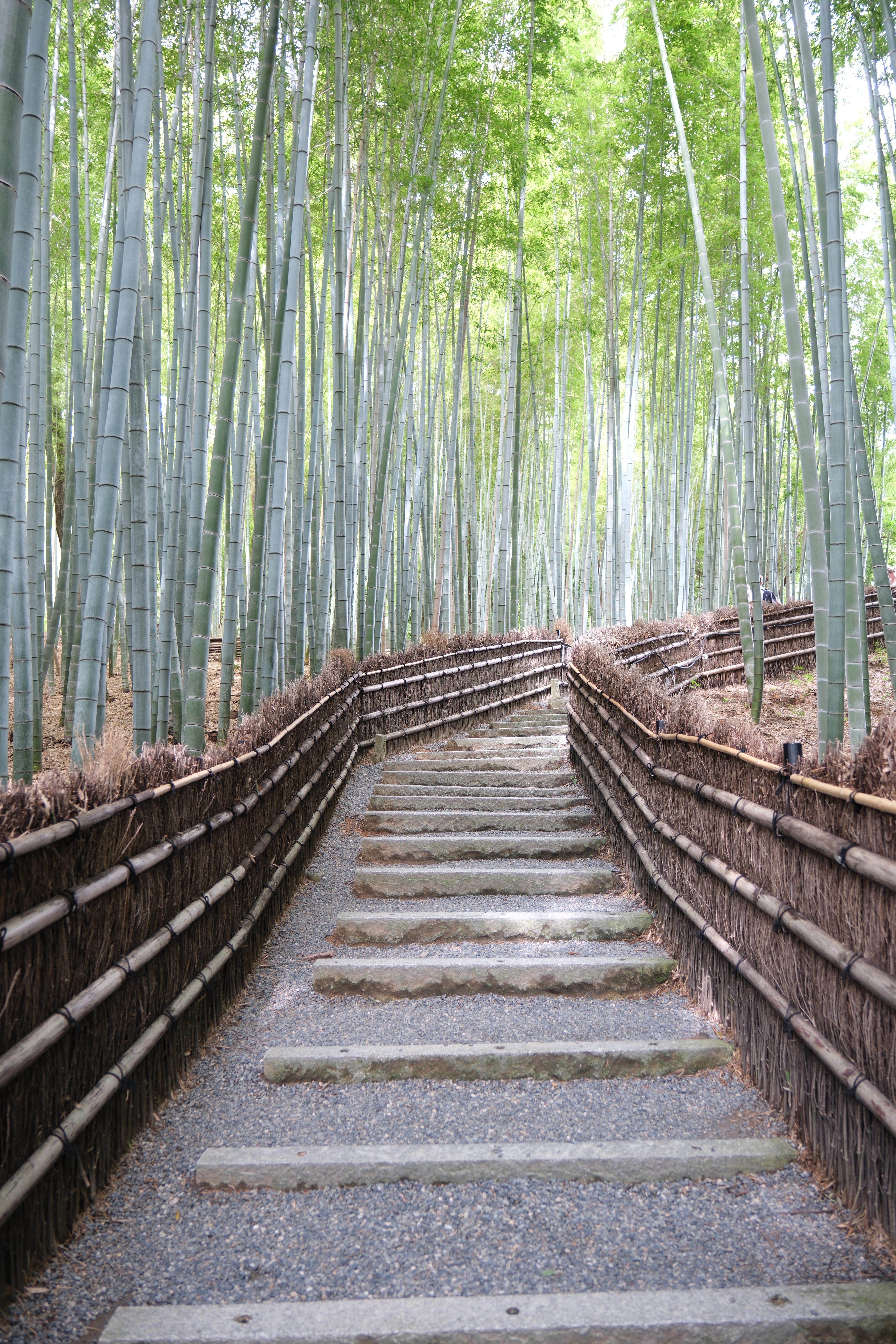
If that’s all the temple had to offer, we would have been out after ten minutes. Luckily, there was a lot more magic to behold.
The grounds have served as a burial and memorial site since ancient times, and the name of the area carries the meaning of transience. It is said that Kukai, the founder of the Shingon school of Buddhism, established a temple in the area about 1,200 years ago.
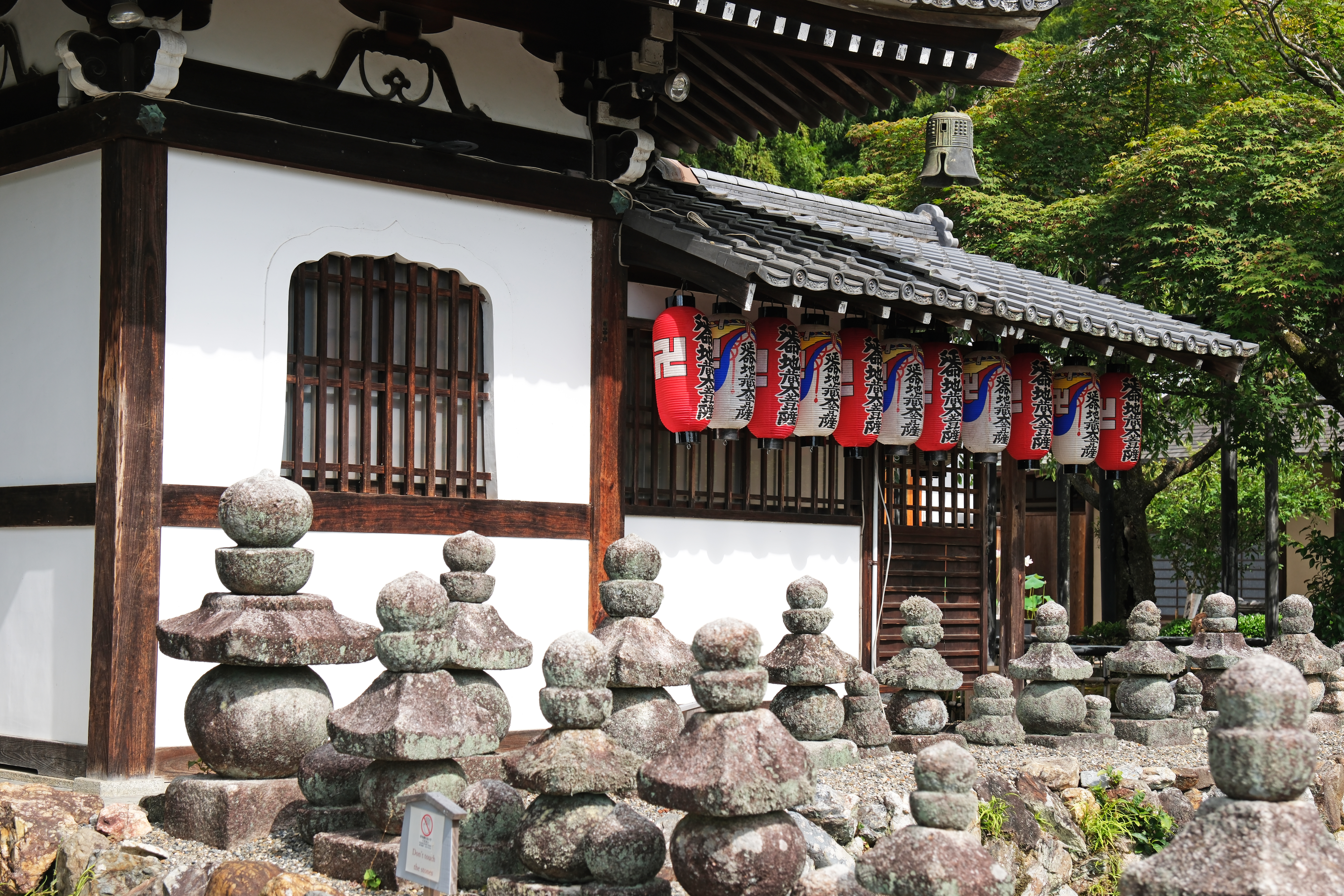
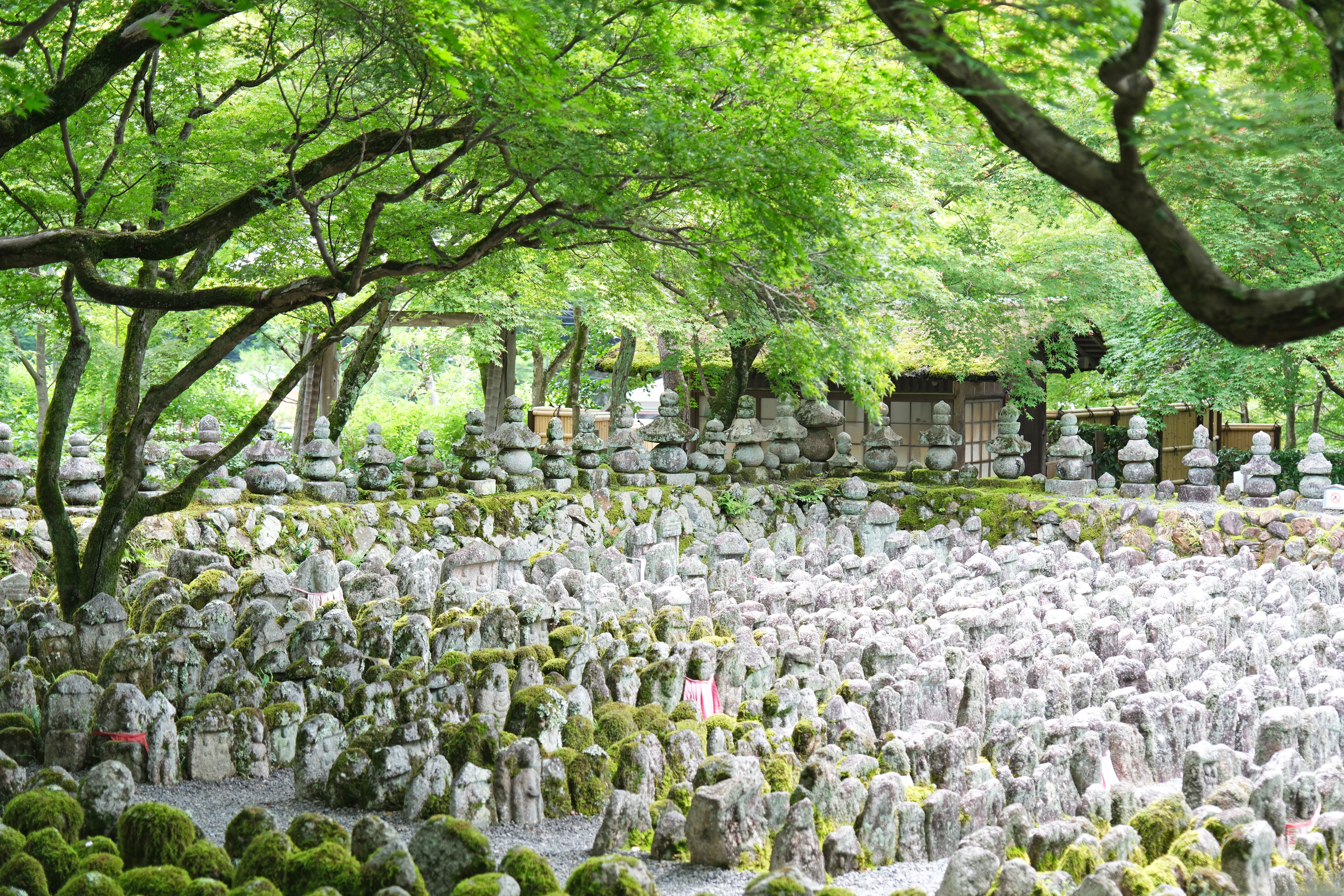
The Adashino area was used as a burial site as early as the Heian period (794-1185). Initially, people would leave the bodies of the deceased in the mountains, but later they began to bury them in simple graves, sometimes placing stone markers at the grave sites.
As centuries passed, these markers were covered with soil and plant growth. Around 100 years ago, an organized effort began to collect the grave markers scattered throughout the area and relocate them to a safe space where they could be properly memorialized. The stone markers were assembled at Adashino Nenbutsuji Temple and carefully arranged in a dedicated spot so that respects could be paid to the souls of the departed.
There are now more than 8,000 stone grave markers.
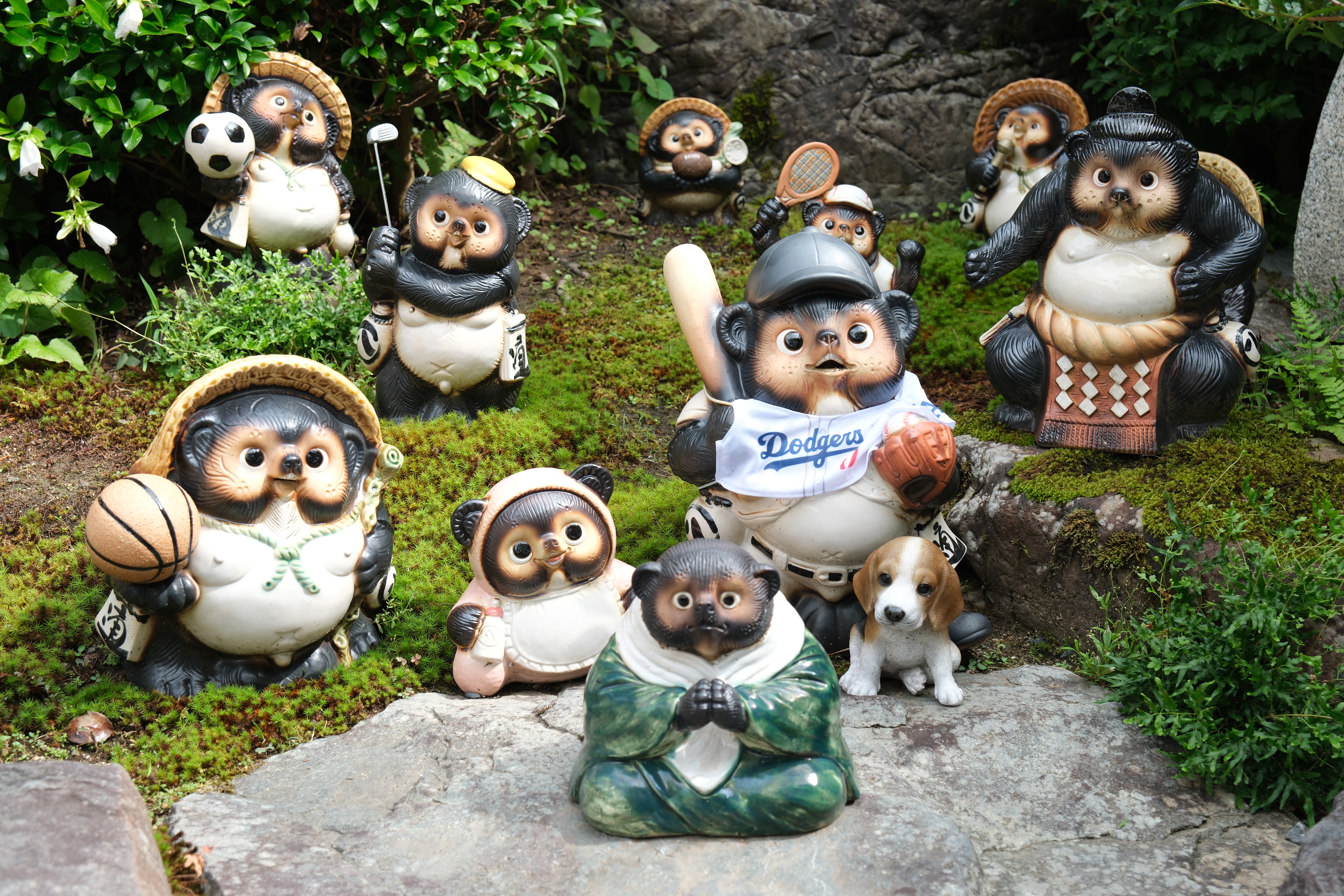
They also had this adorable collection of tanuki ceramics. In case you didn’t know, tanukis are a Japanese raccoon dog – absolutely adorable, but also the main characters in one of my least favorite Studio Ghibli films.
Pom Poko centers around a colony of tanuki living on the outskirts of Tokyo as they work to combat the growing deforestation of their home. And while I loved the premise, the giant scrotums hanging from each tanuki (which is how they’re always depicted) was just a lot for me. So I appreciated that some of these wore clothing – including one dressed as the baseball player Shohei Ohtani.
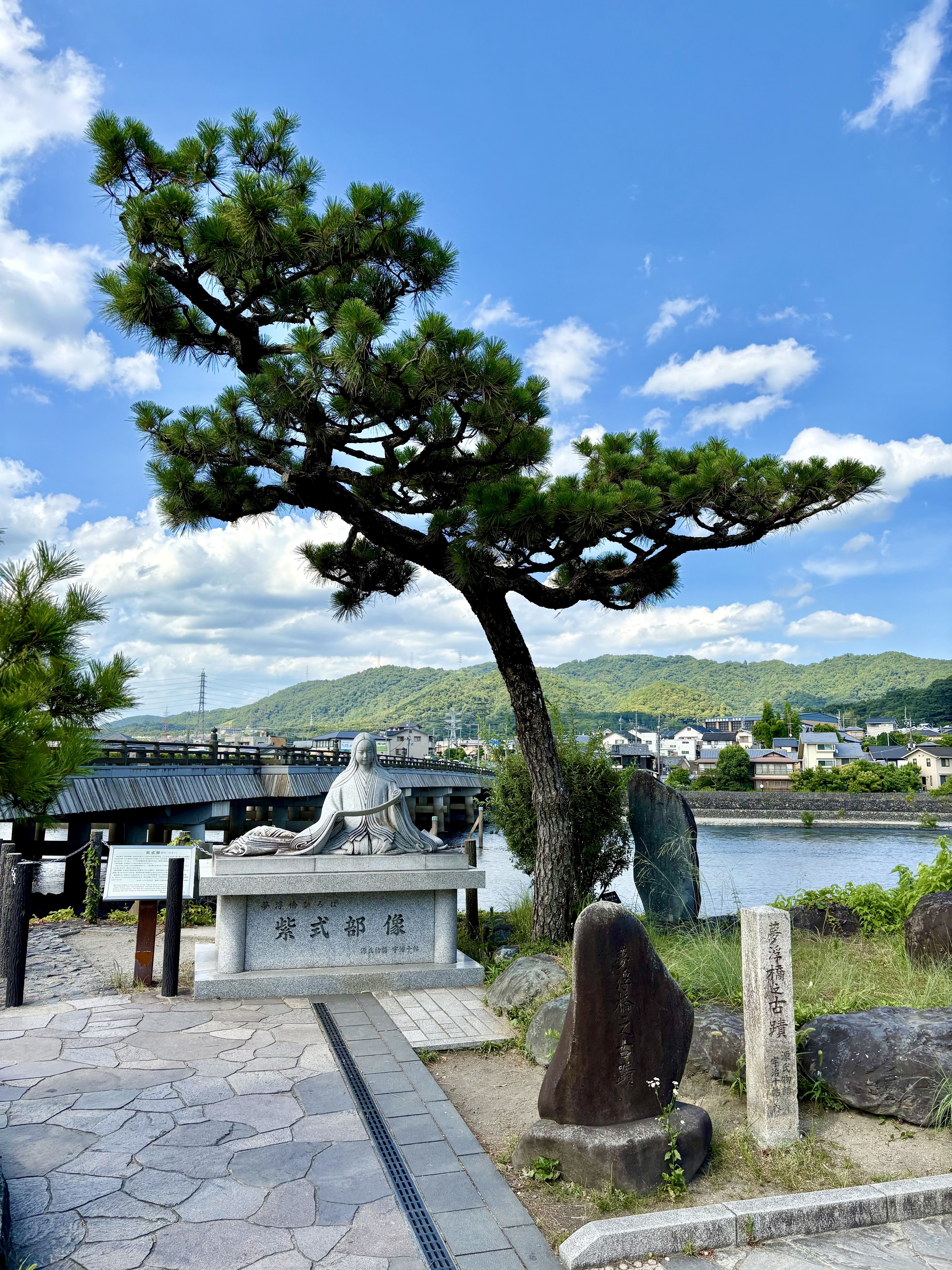
We felt like we had completed some pretty big ticket items in Kyoto, so we decided to make our way to the nearby city of Uji. Just a quick 20 minute ride on the JR Rail and we had arrived.
Since Uji was one of the first places to cultivate green tea in Japan, it became synonymous with the drink, and its reputation for producing high-quality green tea has grown. Therefore, there are numerous tea shops and restaurants in the city.
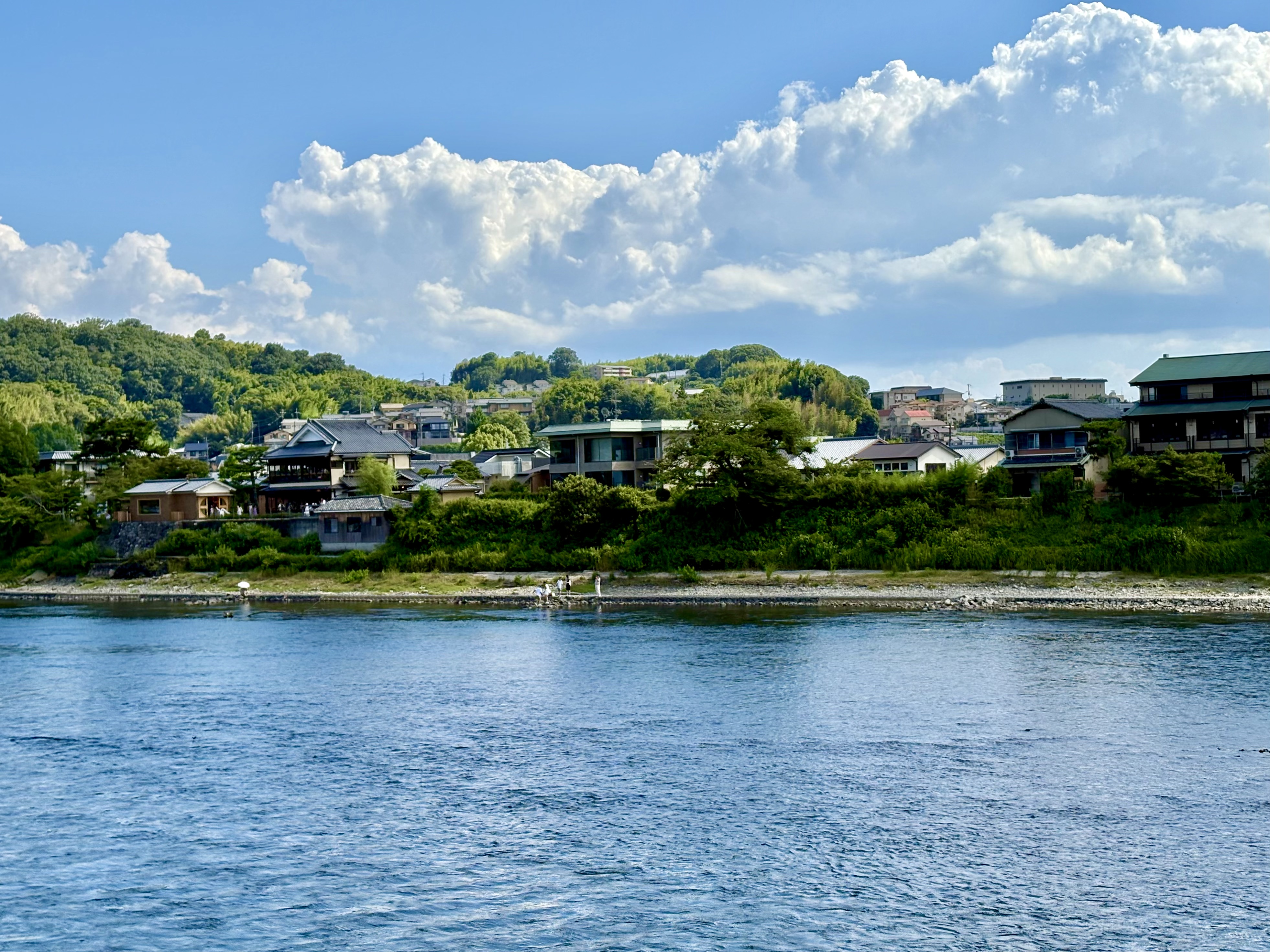
We crossed over the Uji Bridge and began enjoying the scenery.
Before looking for a spot to drink tea, we went in search for a shop to stock up on some. I’m not much of a tea drinker (before Japan, I’d last had a cup in Sri Lanka), but Chandler drinks green tea every morning. We had a lovely time in Tobi-En, and came away with an impressive haul.
We had a couple of top choices ranging from tea stalls to tea houses and as our luck would have it, they were all either closed, closing, or full for the foreseeable future.
We finally popped into a place that had space in their upstairs, where Chandler could enjoy a pot of tea. Having said that, it was clear after a few minutes that they were much better known for their extravagant desserts. It was a surprisingly boisterous spot for such a serene city.
Before we left Uji, we walked along the Uji River to soak in a bit more of the beauty.
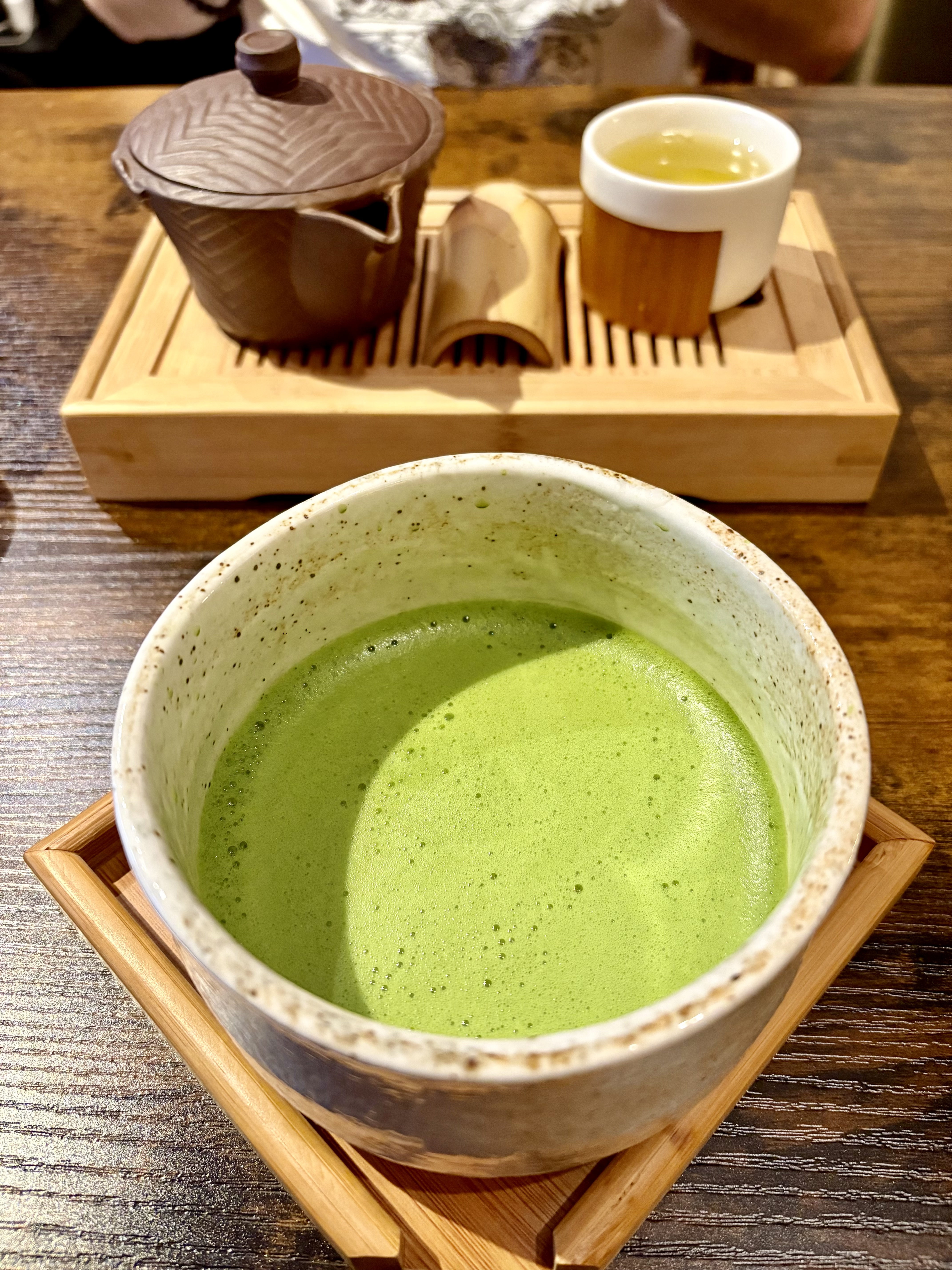
I think we might have been a little bummed that we hadn’t found the perfect pot of tea in Uji, so I convinced Chandler to try Mandaracha, a vegan tea house we had pinned back in Kyoto.
It ended up being perfect. Their collection of tea was incredible and they even talked with me to find a suitable matcha (I like a lot of froth and a lot of bold flavor).
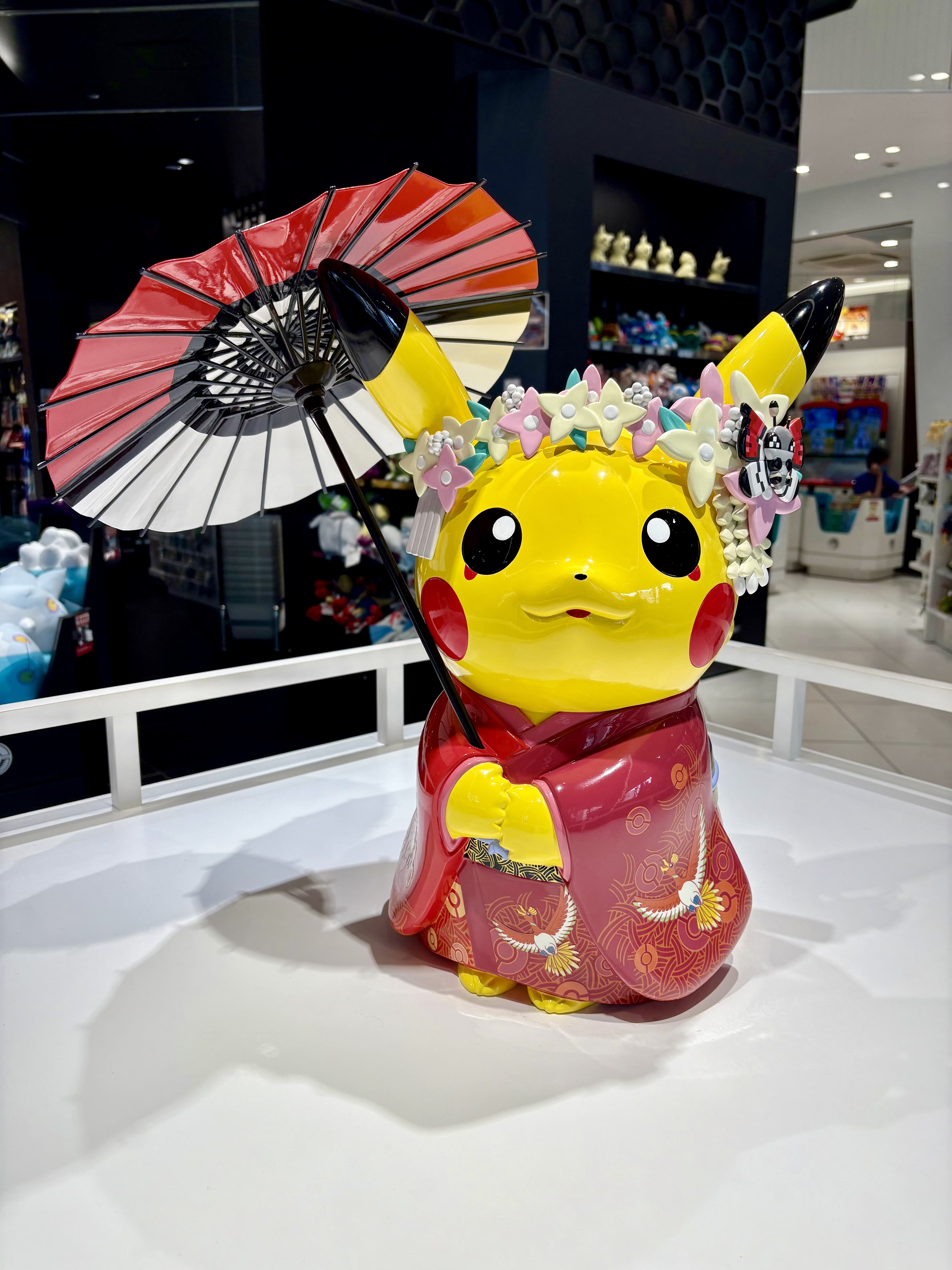
Now, Kyoto isn’t all about tea, temples, and the outdoors. It also has the same things every Japanese city has: Shopping! We had lunch and searched for vintage at the indoor/outdoor Nishiki Market before making our way to our favorite store in any city – the Pokémon Center!
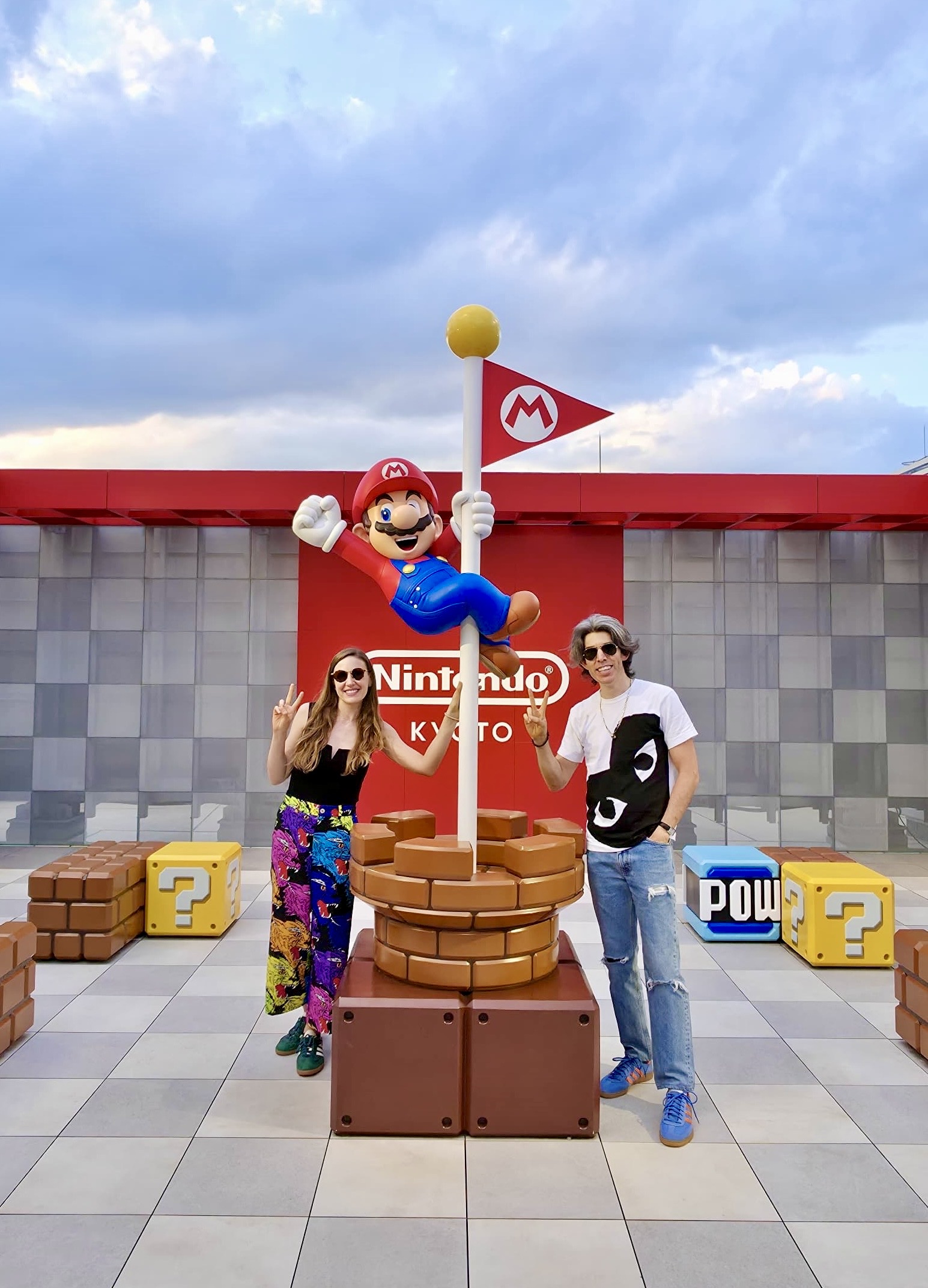
We also enjoyed some mall time at Aeon Mall before making our way to the best Nintendo Store in Japan. We ran up to the rooftop and got the next photo minutes before it started pouring – our time in Kyoto was marked by plenty of rain!
In fact, the store has a dedicated employee whose job it is to take this photo. One of many thoughtful things I love about Japan.
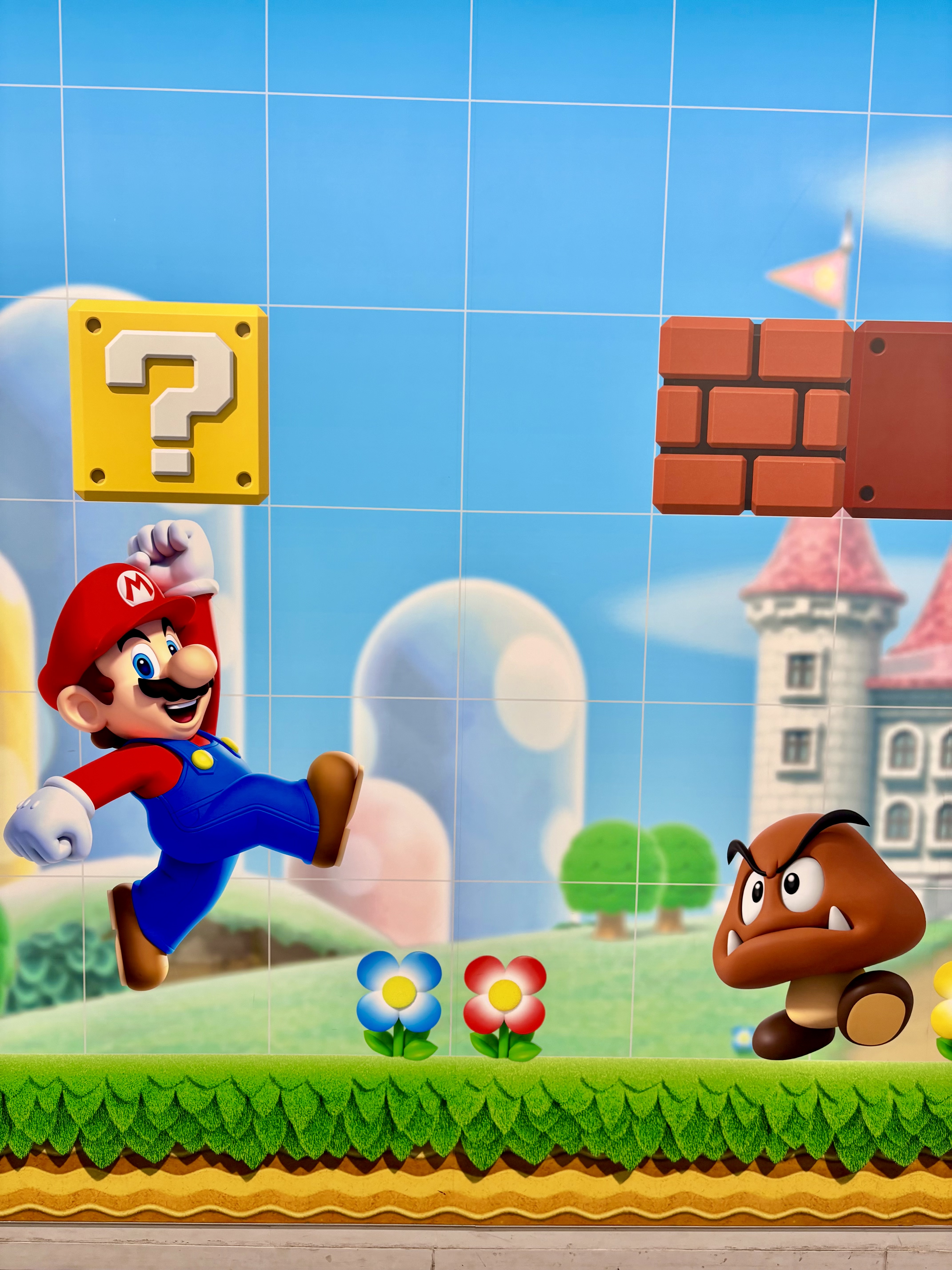
Even the underground tunnels between buildings were decorated with Mario. And why was that? Are you ready for it? Because Kyoto is the birthplace of Nintendo!
The first time Chandler told me, I made him say it again. It felt so counter to everything I thought I knew about Kyoto. But it is very true – in fact, the Nintendo Museum had just opened on October 2, 2024 and by the time we went in July 2025, we still needed to enter a random lottery three months in advance to try and get tickets.
Spoiler: We got the tickets! Which meant a trip to the Nintendo Museum was what we had in store for our final day in Kyoto.

We arrived a bit before our 11am ticket window and then proceeded to spend the next seven hours at the Nintendo Museum. There are approximately five sections to the museum: The exhibit area, game room, hands-on experiences, gift shop, and cafe.
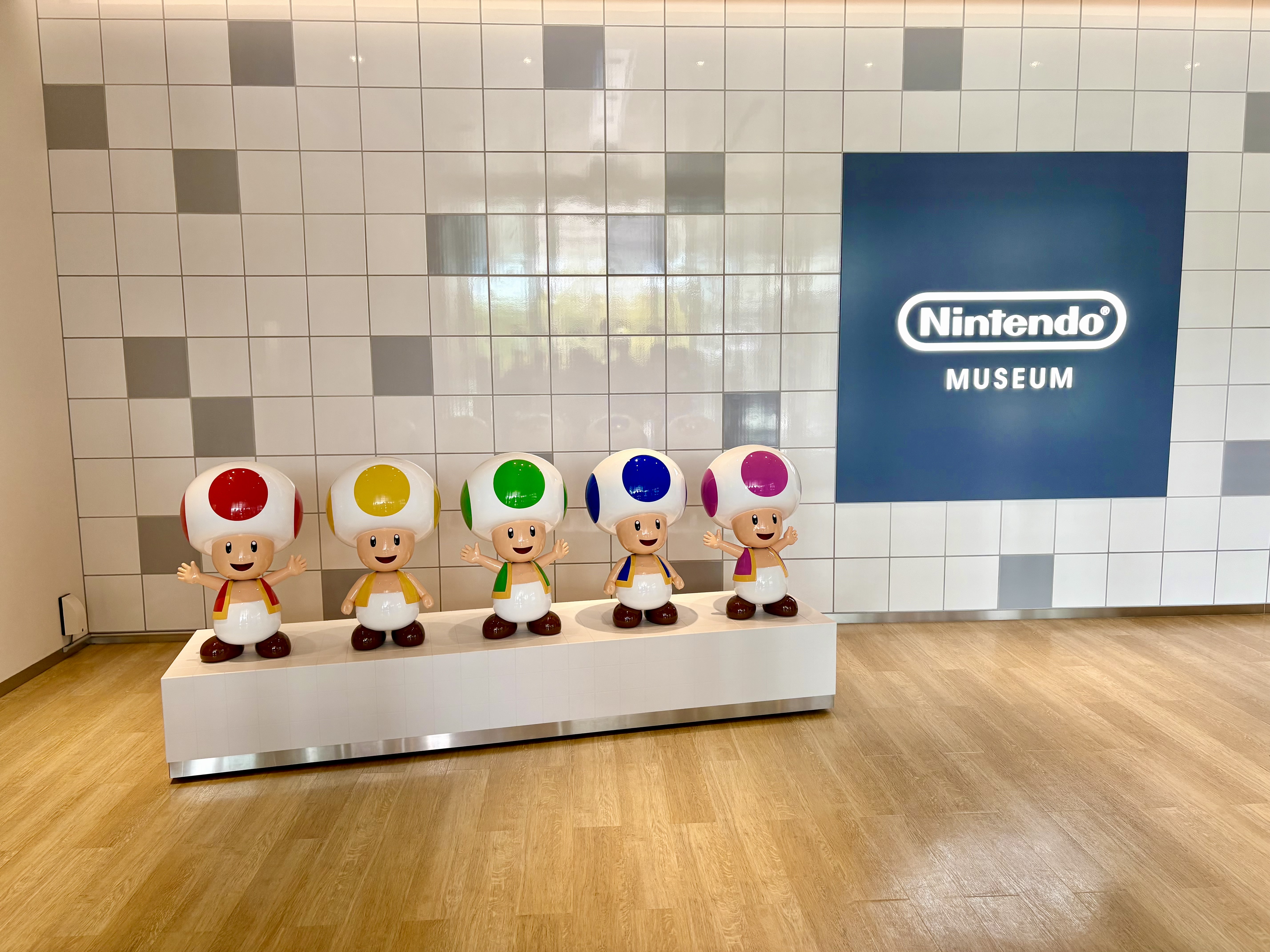
Once inside, we had to decide if we wanted to add a hands-on experience to our visit. In addition to the museum, you could also sign up to paint your own Hanafuda cards or learn how to play the game itself. We had purchased a deck of cards at the Nintendo Store, so we figured it wouldn’t be a bad idea to learn how to play the game. We scheduled a time hours later and then made our way to the exhibit area.
You can’t take photos of this floor, but it includes every major product that Nintendo has released. There isn’t a lot of explanation in the signage, but we still learned that Nintendo got its start by making Hanafuda cards, not by selling video games and consoles!
Hanafuda are traditional Japanese playing cards that date back to the 16th century. They consist of 48 small cards that are divided into 12 suits (one for each month) and feature seasonal flowers and wildlife. Nintendo has been making their own since 1889.
Of course, they also made board games and toys, before finally starting what they do best: Video games. Chandler and I had a blast reliving our childhoods and looking through the different consoles and games. I was a neglected child and only had a Game Boy Advance, but I remember playing the other consoles at friends’ homes. Chandler, on the other hand, had owned all but one of the consoles – turns out, nobody really understood that the Wii U was different from the Wii and it was their worst selling console.
But the funniest part about the exhibit hall? It was where parents take their kids to teach them about video games. We passed lecture after lecture by Millennial parents explaining the history of gaming to their kids.
My favorite display was a set of eight screens showing the evolution of different games – it would show you the graphics of the original and then rotate to each version that came after.
Once finishing upstairs, we went downstairs, which in retrospect, is probably where you should start. Because that is the game floor and lines only get longer the later you arrive. When we checked in, we were given ten digital coins and you get to decide how you want to spend them. I loved the giant controllers. You play a classic game, but you have to have a partner who can hit the buttons on the other end of the controller, which is a hilarious lesson in the difficulties of teamwork.
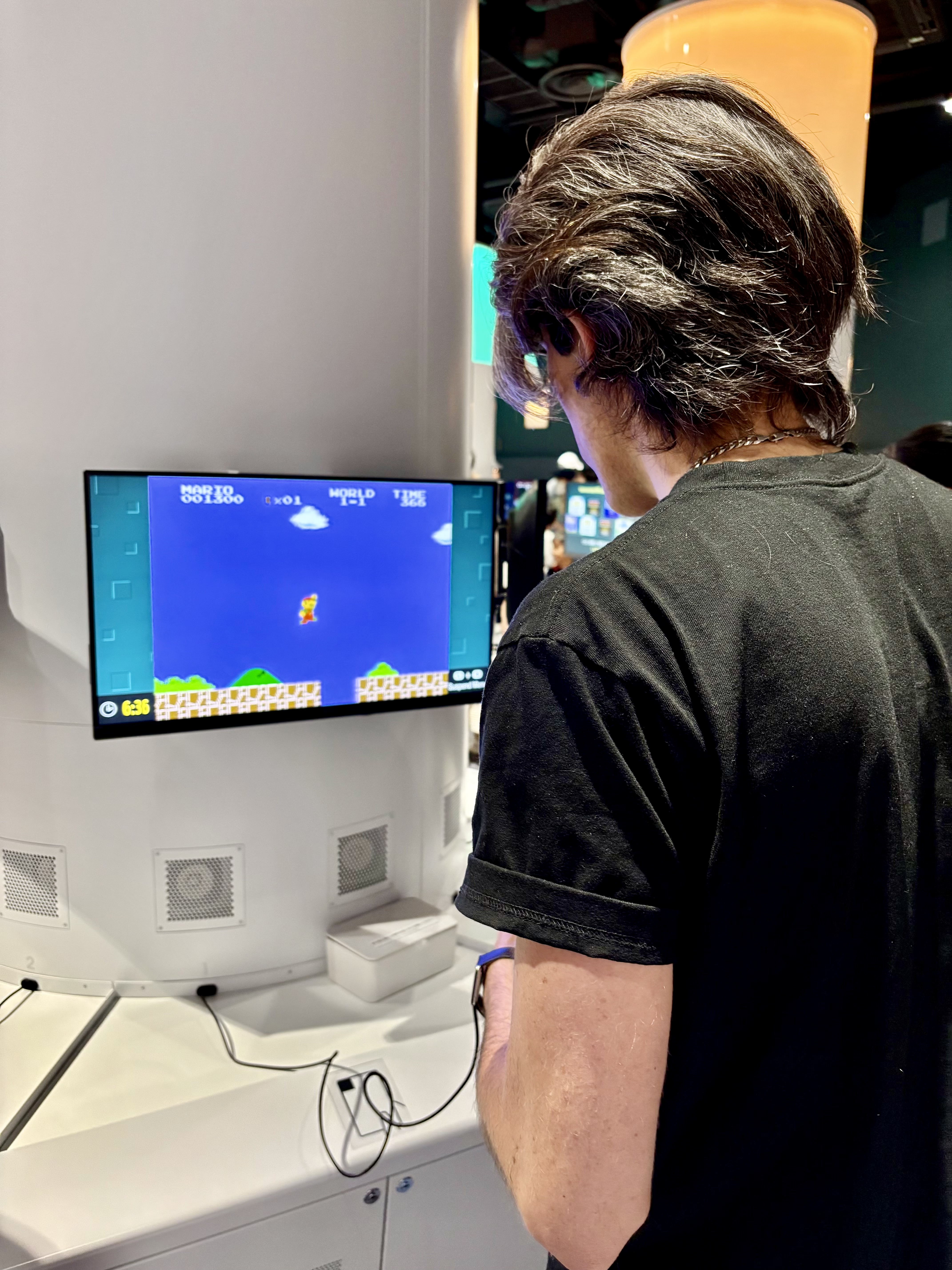
I also really enjoyed the classic gaming area where you can play old games – I discovered that Super Mario 3 was my childhood jam! There were tons of other games and activities on that floor, but by the time we’d used our coins, we were starving. We weren’t really sure what to expect from the cafe, but we didn’t have any other choices – we still had Hanafuda and the gift shop to look forward to.
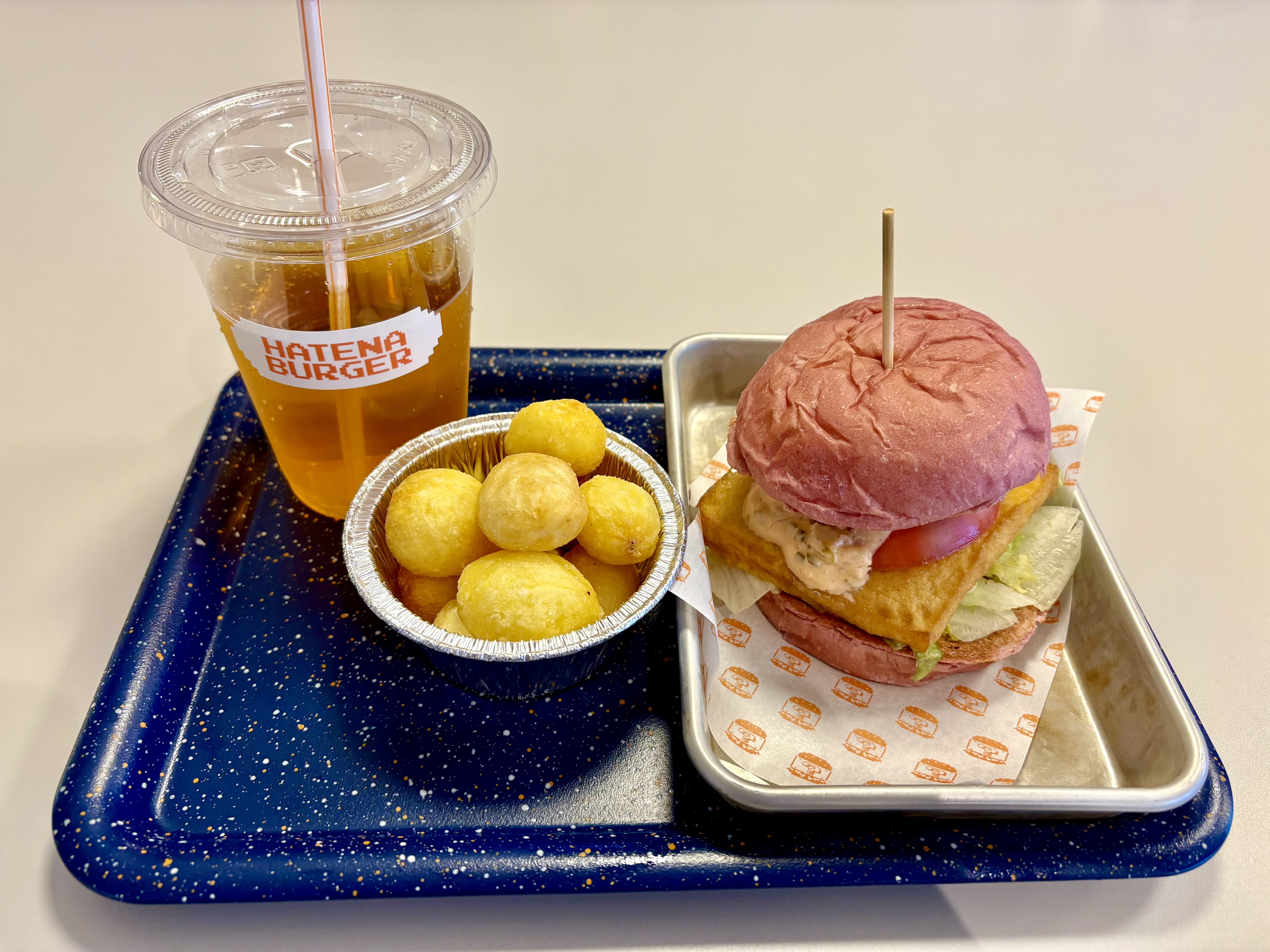
We were pleasantly surprised to find that for an extremely reasonable price (unlike most theme parks and museums) you can assemble your own hatena burger, with two vegan choices (fried tofu or mushroom).
After lunch we were ready to explore the gift shop. Turns out, we’d made our favorite purchases at the Nintendo Store already, but the big crowd pleasers were giant stuffy controllers.
Our final activity of the day was playing Hanafuda. Initially, we’d been unsure if we wanted to spend any of our precious time in the museum on this task, but I’m so glad we did! First, you play on a smart board and it tells you which cards to move. Second, there are staff around to explain why some moves are more advantageous than others. Third, the staff are also there to do what might have been the cutest thing we saw all day.
A boy was playing with a stuffy in his lap. A worker brought over a chair for his stuffy. Within a few minutes, nearly every table had taken out their stuffed animals and chairs were being passed around. Japan is a country where at least half the population has a stuffy on them at all times, oftentimes as an oversized key chain.
Easy to say, we had an absolutely fabulous time at the Nintendo Museum.
We also had a fabulous time eating in Kyoto.
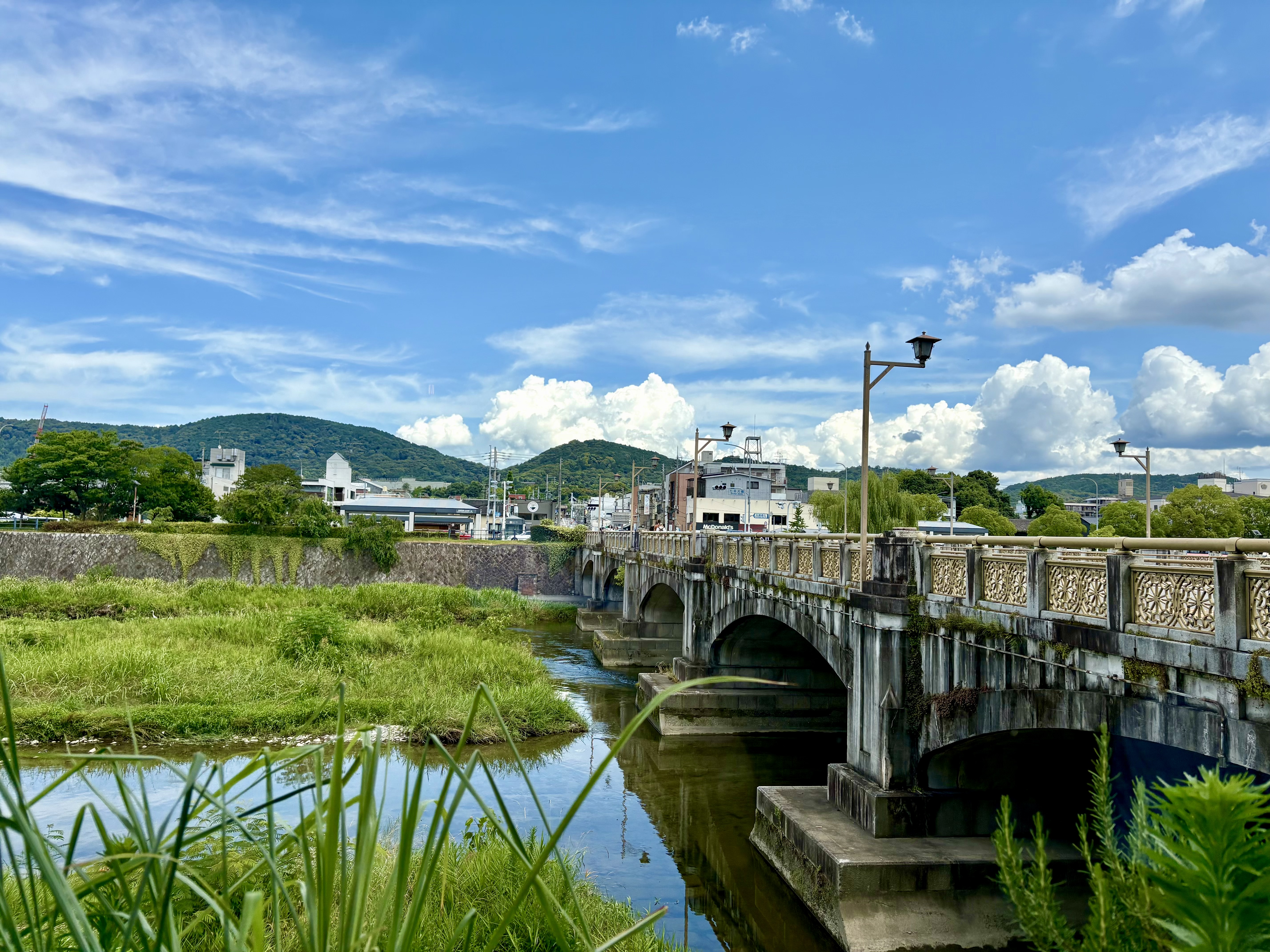
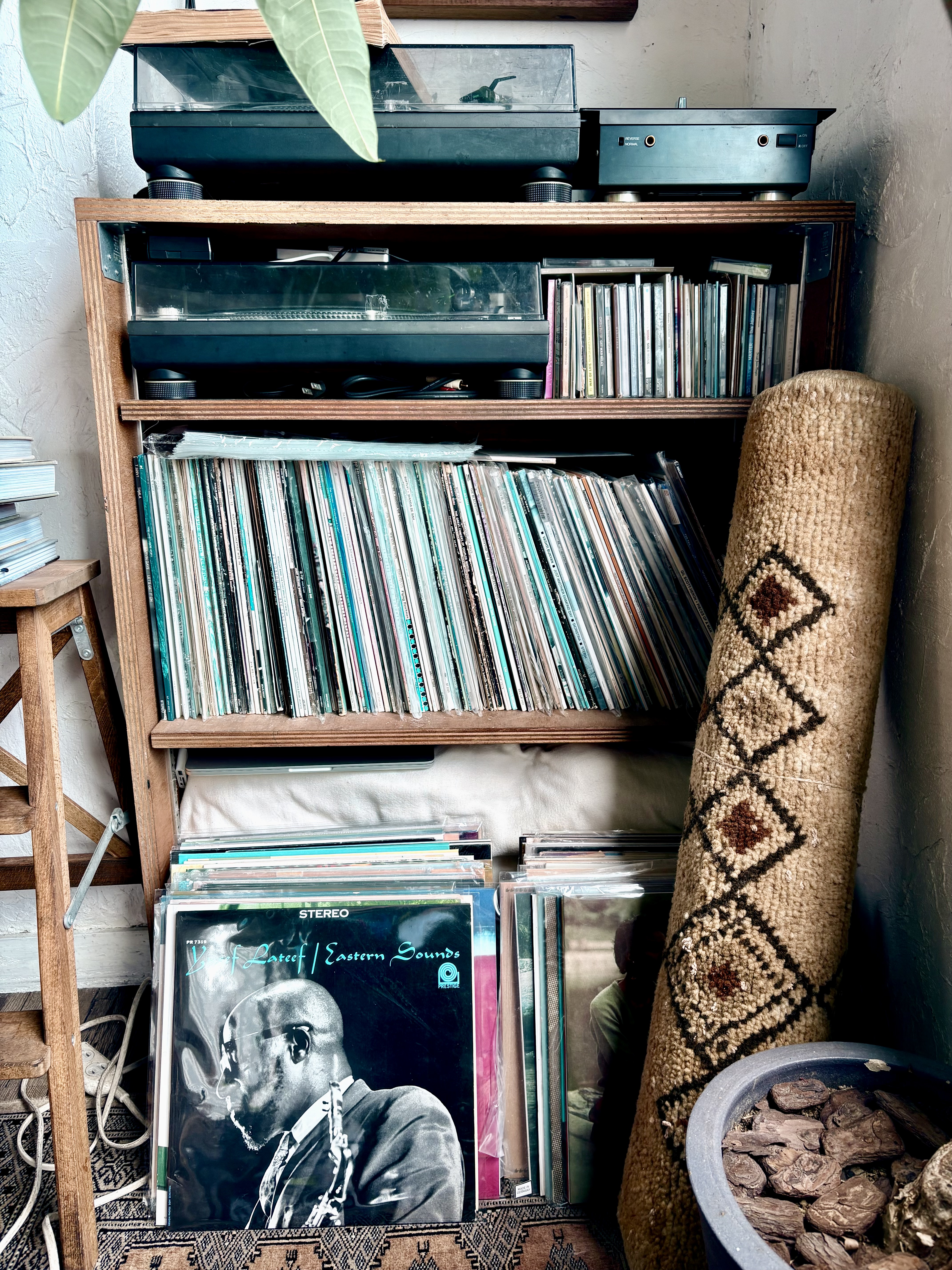
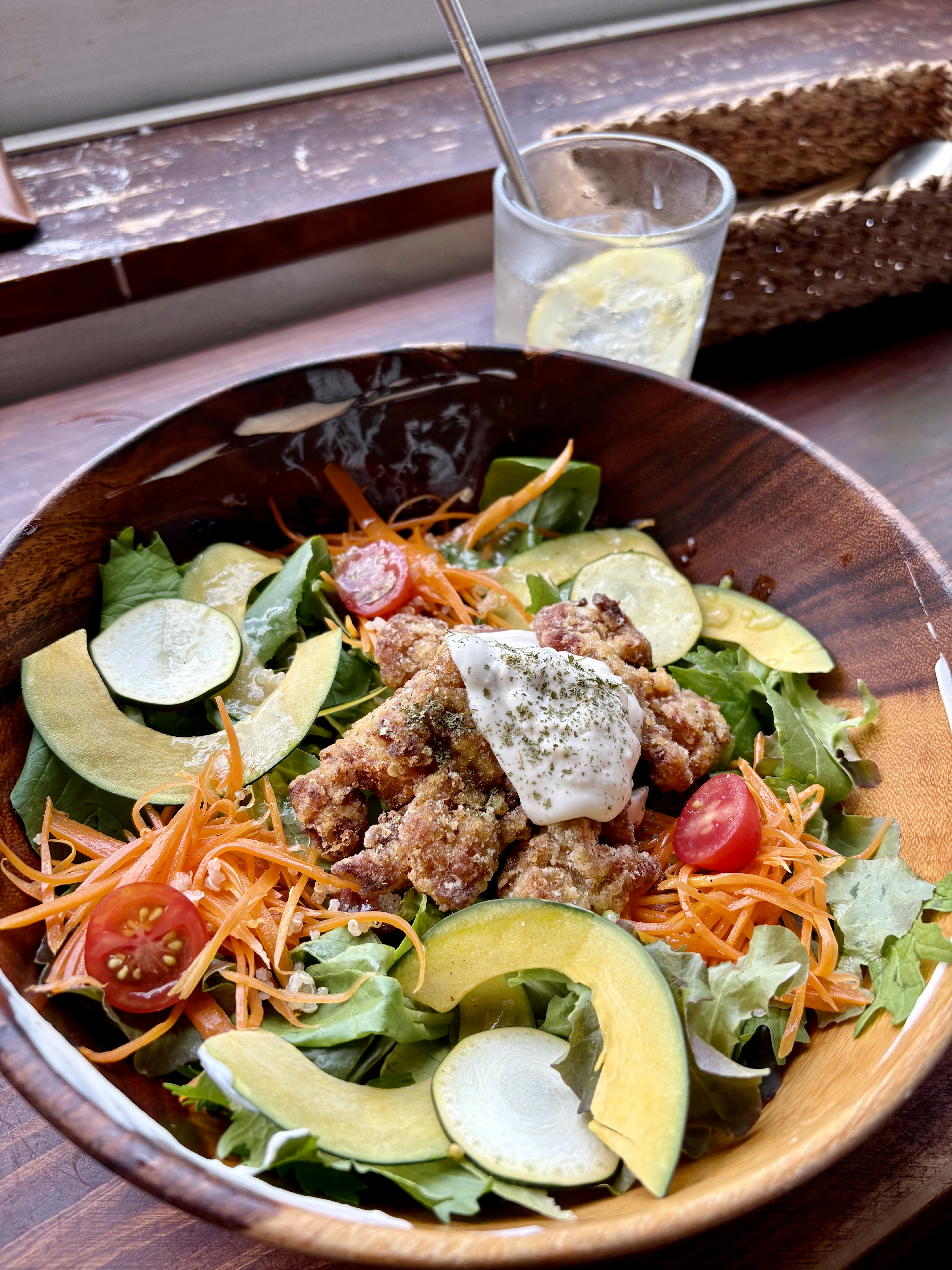
We went to our favorite restaurant, Veg Out, twice. Their menu was so fresh and tasty, we tried 3/4 of it! But we also went back because they had such amazing views of the Kamo River. One day we just sat and watched a heron stalk through the tall grass. They also had an excellent collection of records and a generally chill atmosphere.
We met up with a friend while we were in Kyoto and we got dinner together. We rolled into Hyssop and found out that we needed a reservation. No problem, we got put on a waiting list and spent the next hour exploring the Good Nature Station below. Part healthy food grocery, part hotel, part restaurants, part small shops – they had a little bit of everything and we were able to get some drinks.
Hyssop was worth the wait. The meal was excellent, but the dessert – a pineapple pastry with the perfect flaky crust – was the icing on the cake.
Another restaurant we really enjoyed was Vegginy – they also had a tiny menu, but every item was so good! We even got not terrible burritos at Qué Pasa, high praise from people who love Mexican food.
Kyoto was a city that I’d like to go back to during a different season. Summer was just too hot to enjoy many of the other outdoor experiences, but I know springtime would be even more chaotic with cherry blossom season. Maybe someday we’ll make the trip in the fall.