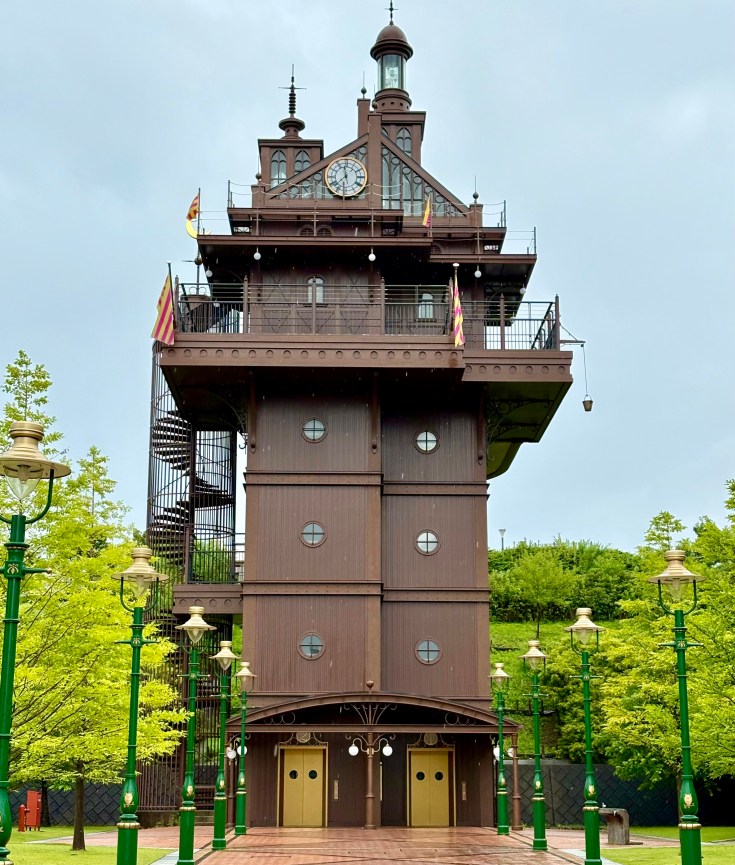
Our arrival in Nagoya meant a return to the calmer side of Japan. Yes, we would venture out to Ghibli Park (possibly the most magical thing we did in Japan!), but in the city itself we got to return to our “wander and discover” routine.
Our favorite discovery was the KOMEHYO Flagship Store. KOMEHYO is a luxury reseller, but what made this store so much fun was its outrageous size! Seven floors of exceptional shopping – with floors dedicated to clothing, purses, watches, and even guitars. In fact, we got held up on the guitar floor because they had an old Nintendo that you could sit down and play.
Of course, I had the most fun on the clothing floor, but my favorite find of the day was a Bao Bao bag. I had been low-key looking for the perfect Issey Miyake souvenir since we arrived in Japan and they had a multicolored paint edition that was so much more fun than the neutrals being sold in most of the stores.
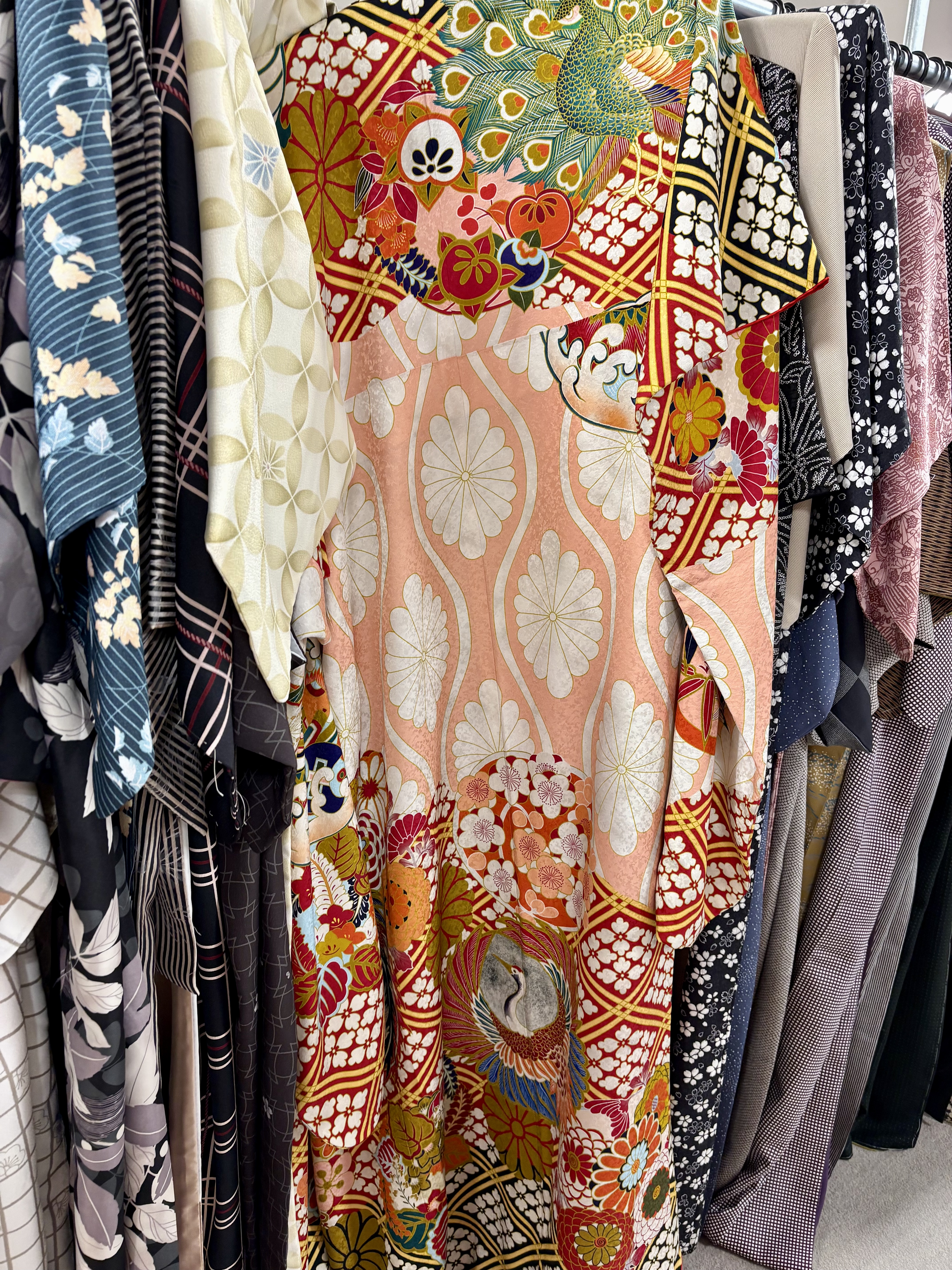
KOMEHYO also had a store dedicated solely to kimonos just around the corner and one of my only regrets of the summer was not buying the most beautiful kimono I’d ever seen – mostly because I couldn’t think of a lot of use cases and I didn’t know how I’d possibly clean it in Senegal. But also because I couldn’t quite find the line for cultural appropriation. I’ve now come down on the side that I could absolutely have worn the beauty photographed below around my house.
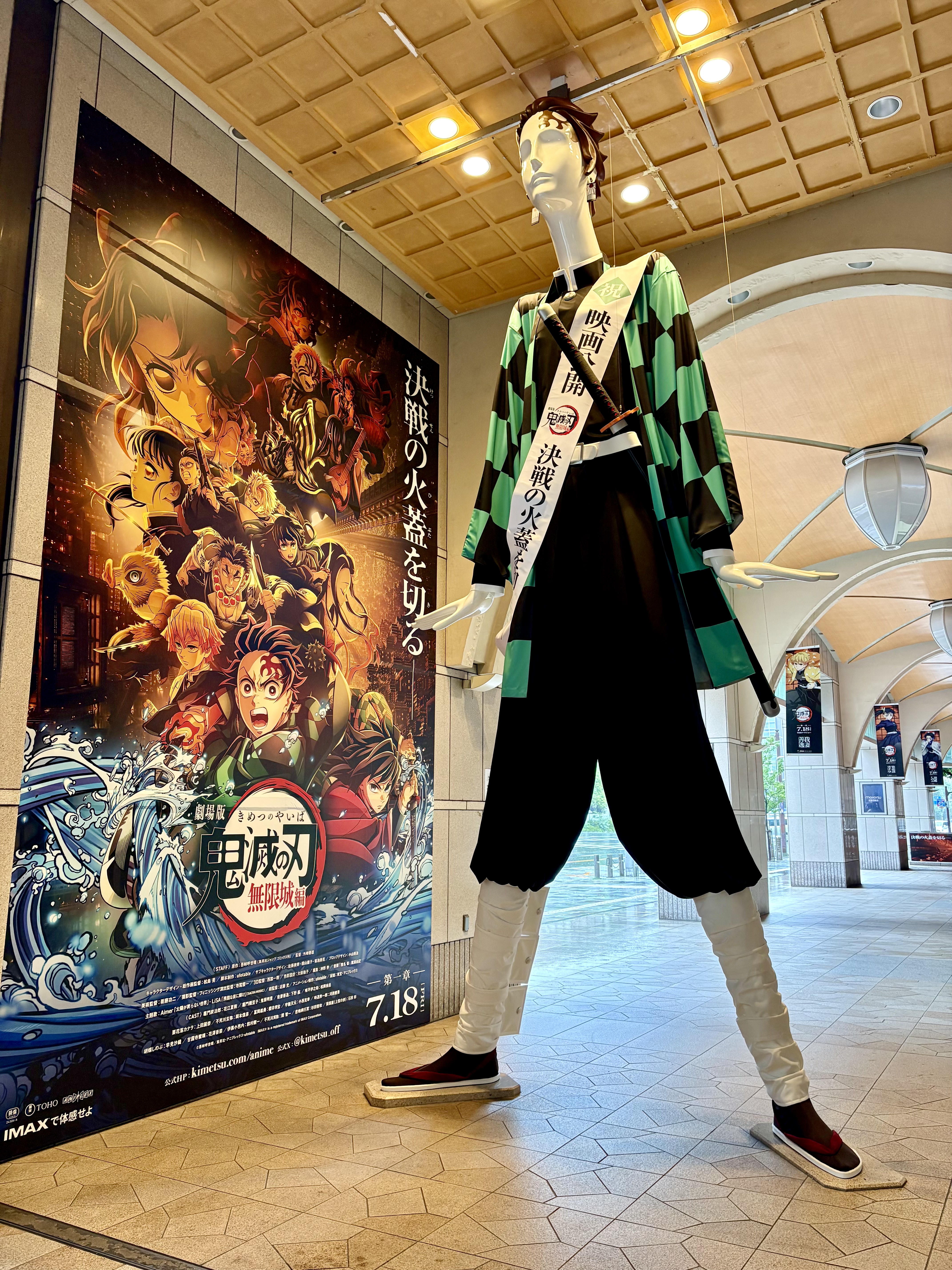
But our finds in Nagoya didn’t just involve clothing. Chandler loved the giant Nano Chan statue. When we arrived, he said it was in a tiered dress, much like mine from Mokuyobi. However, by the time we went back, she’d been updated to match the upcoming release of Demon Slayer in theaters.
I don’t know the origin of this giant mannequin, but changing outfits every week is the perfect kind of whimsy I’m looking for in my life – and everyone in Nagoya loved that we’d heard of it.
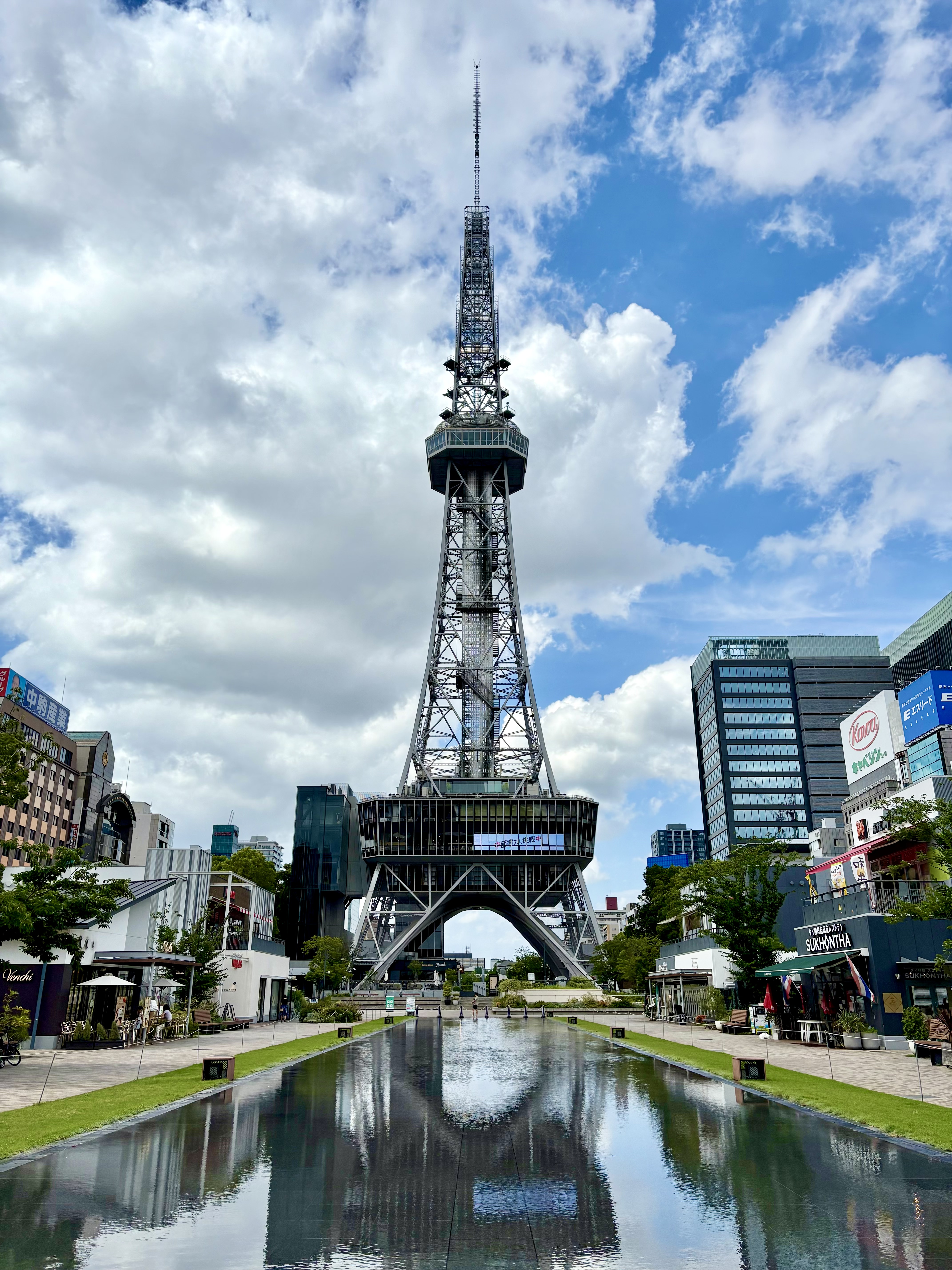
Wandering around also took us to more towers and city signs, but we were still looking forward to our next city – Sapporo – for some much needed relief from the heat!
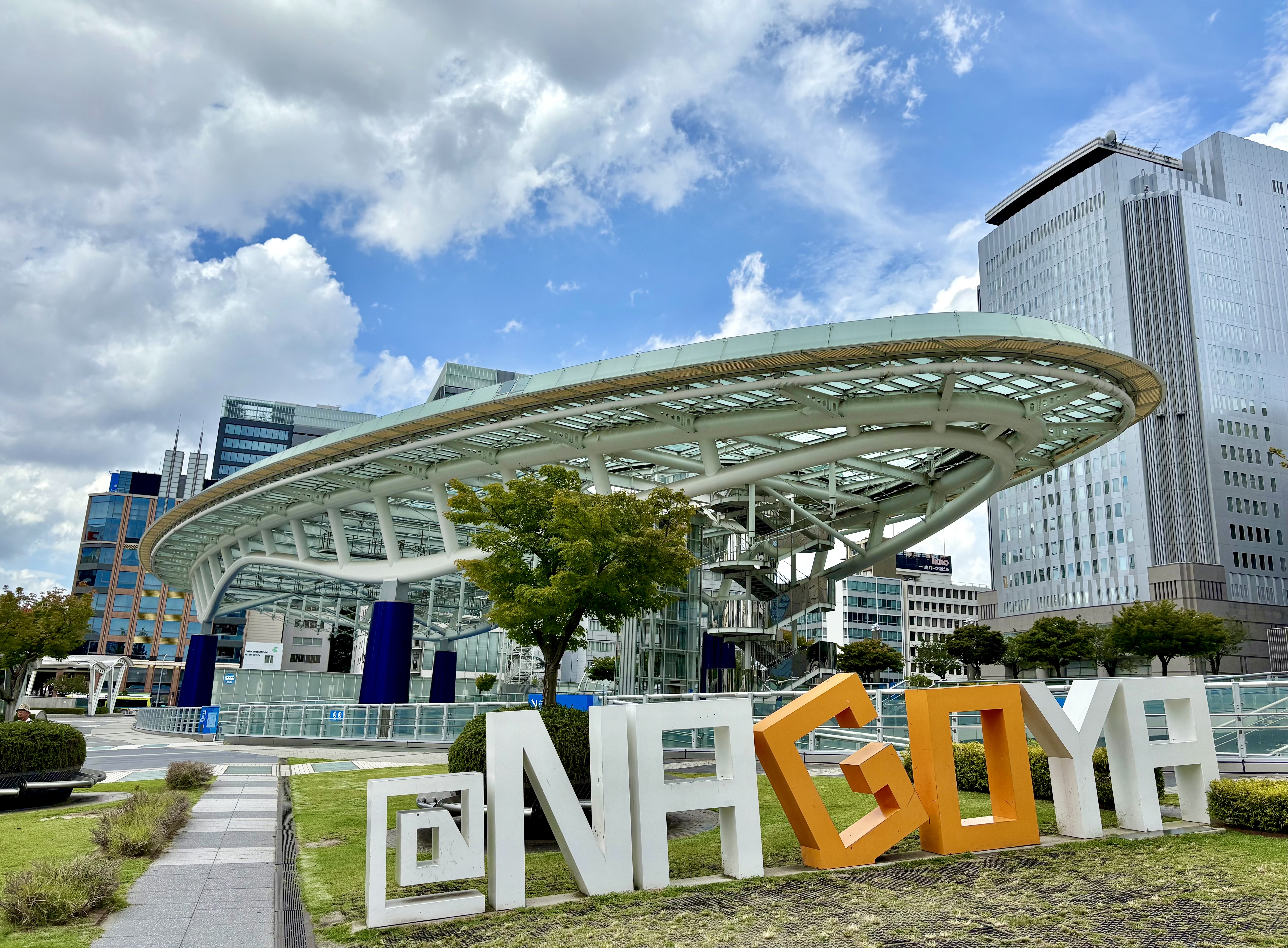
And it’s silly to even have to say it at this point, but yes, we went to the Pokémon Center. It had less regional flair than some of the other centers, but, like always, we still found something to buy.
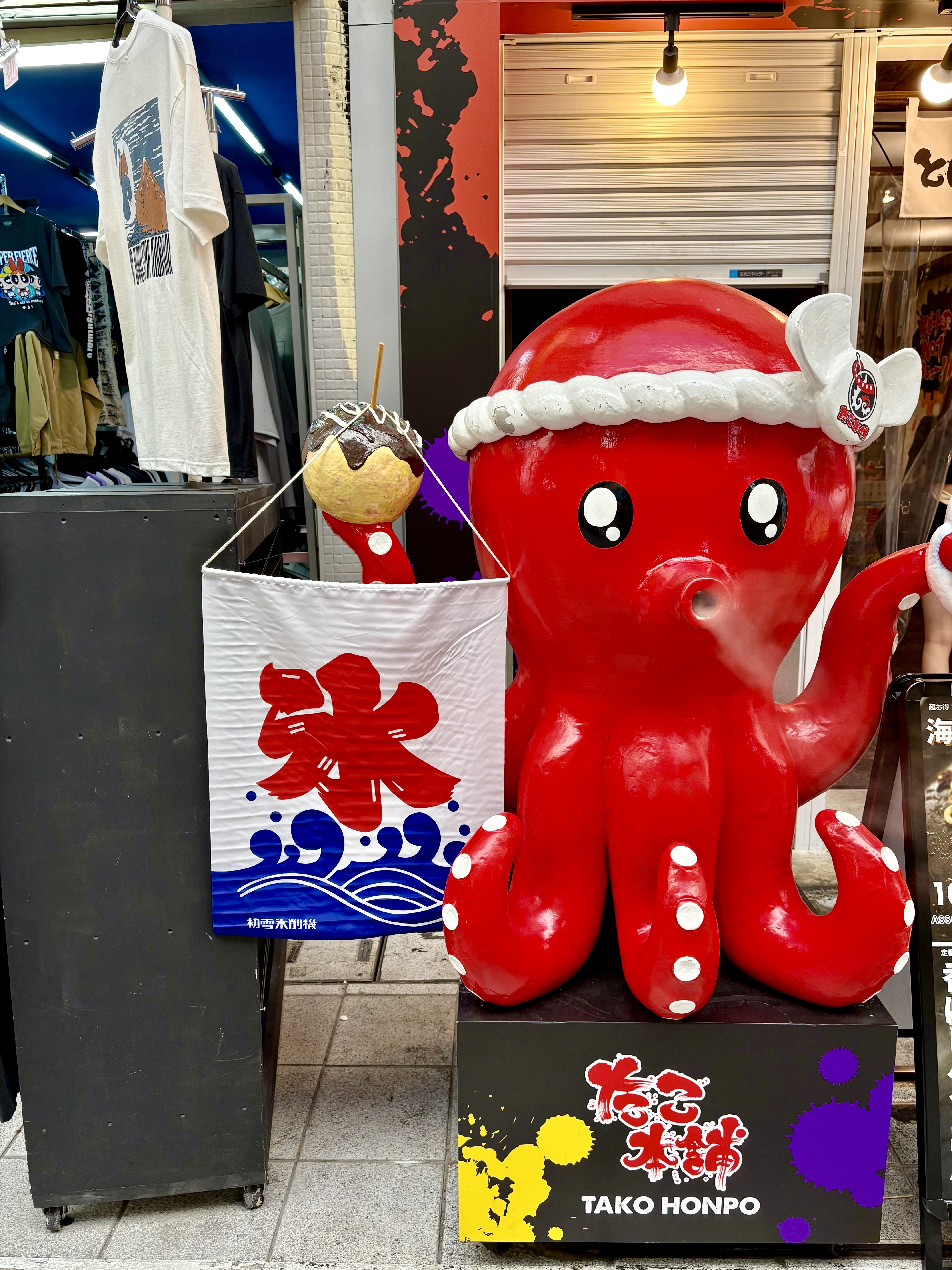
Just like in Osaka, the eating of octopus was abundant and it was so hard to square away the horror of their deaths with the adorable advertisements.
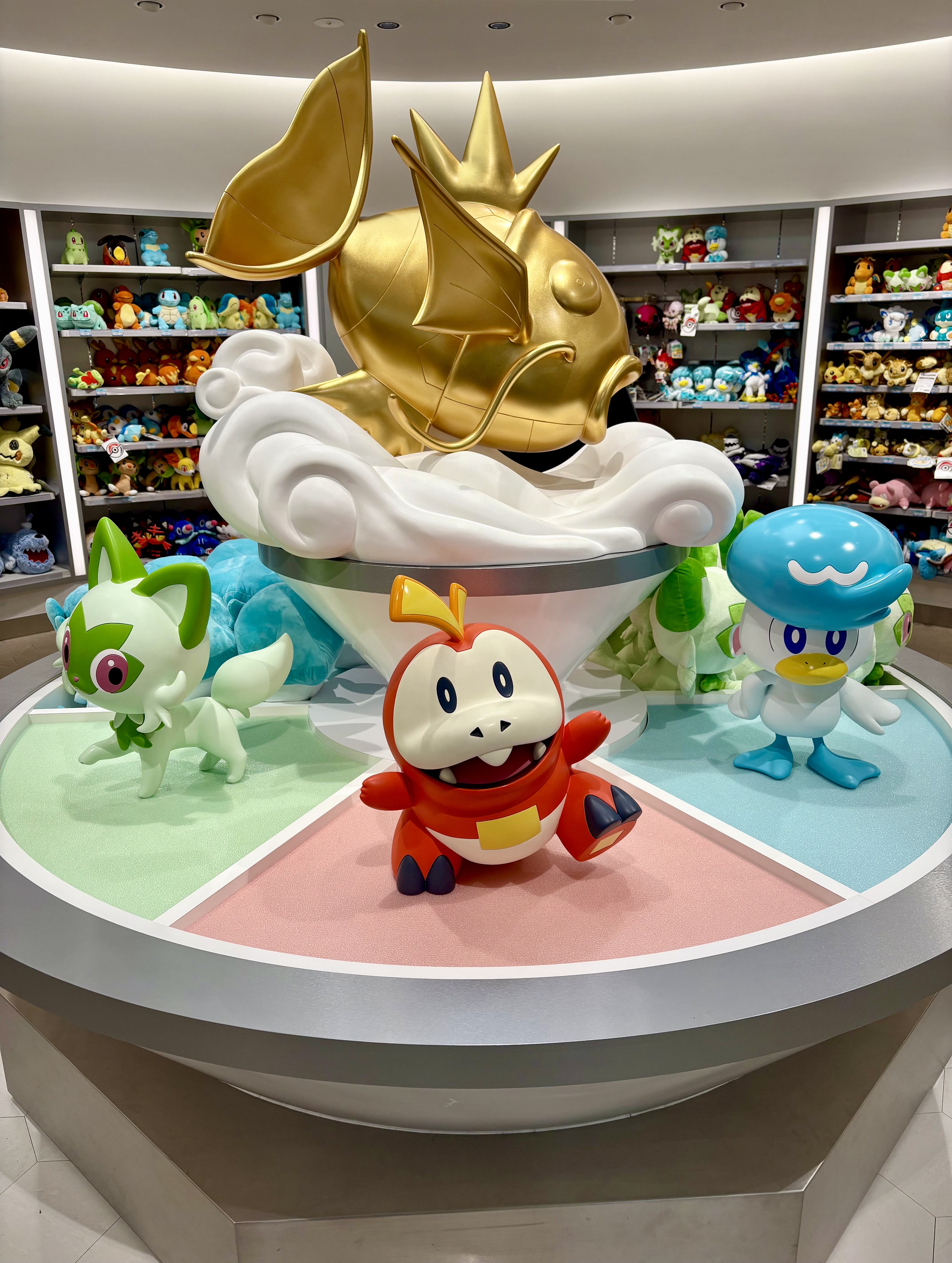
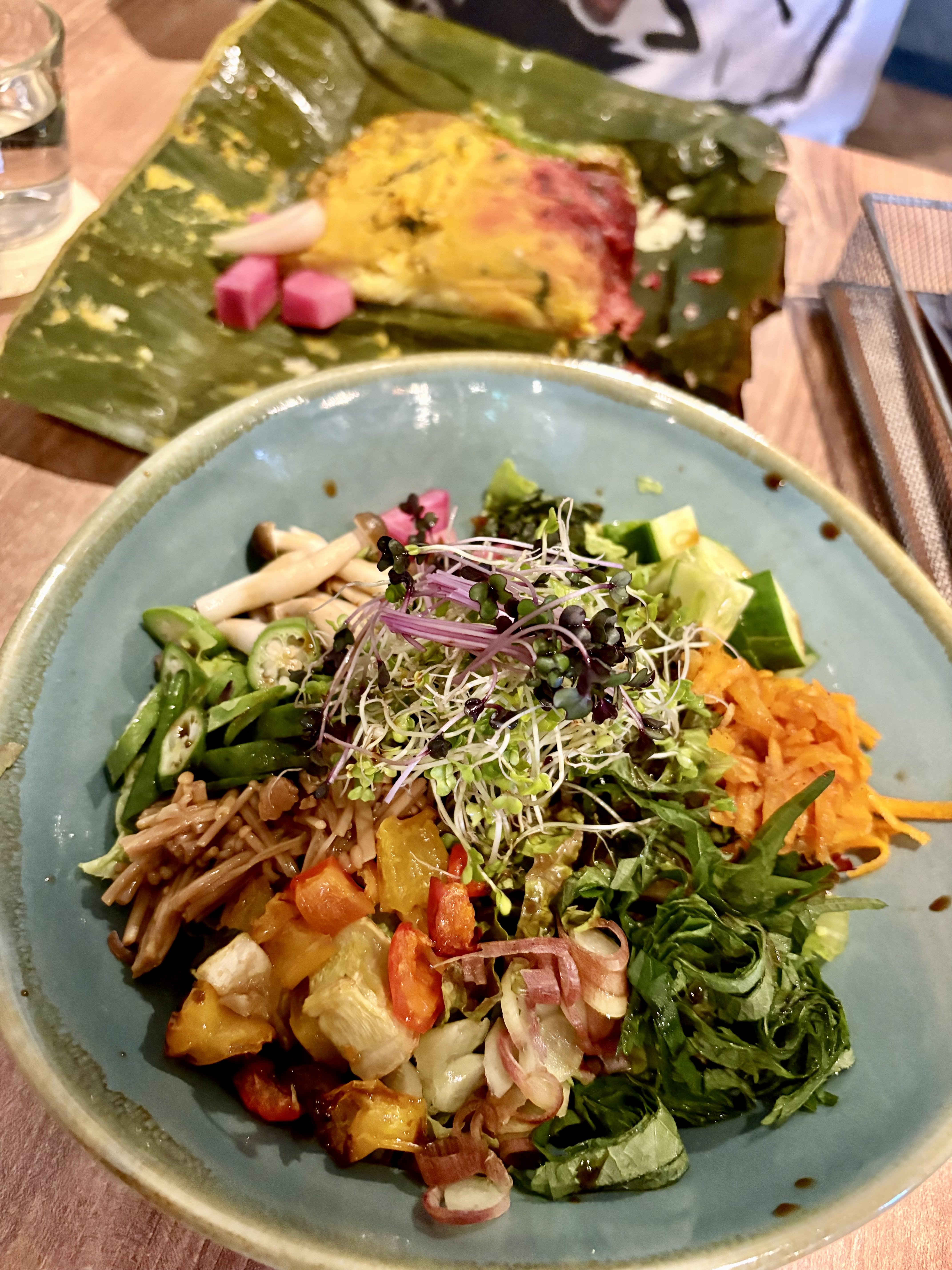
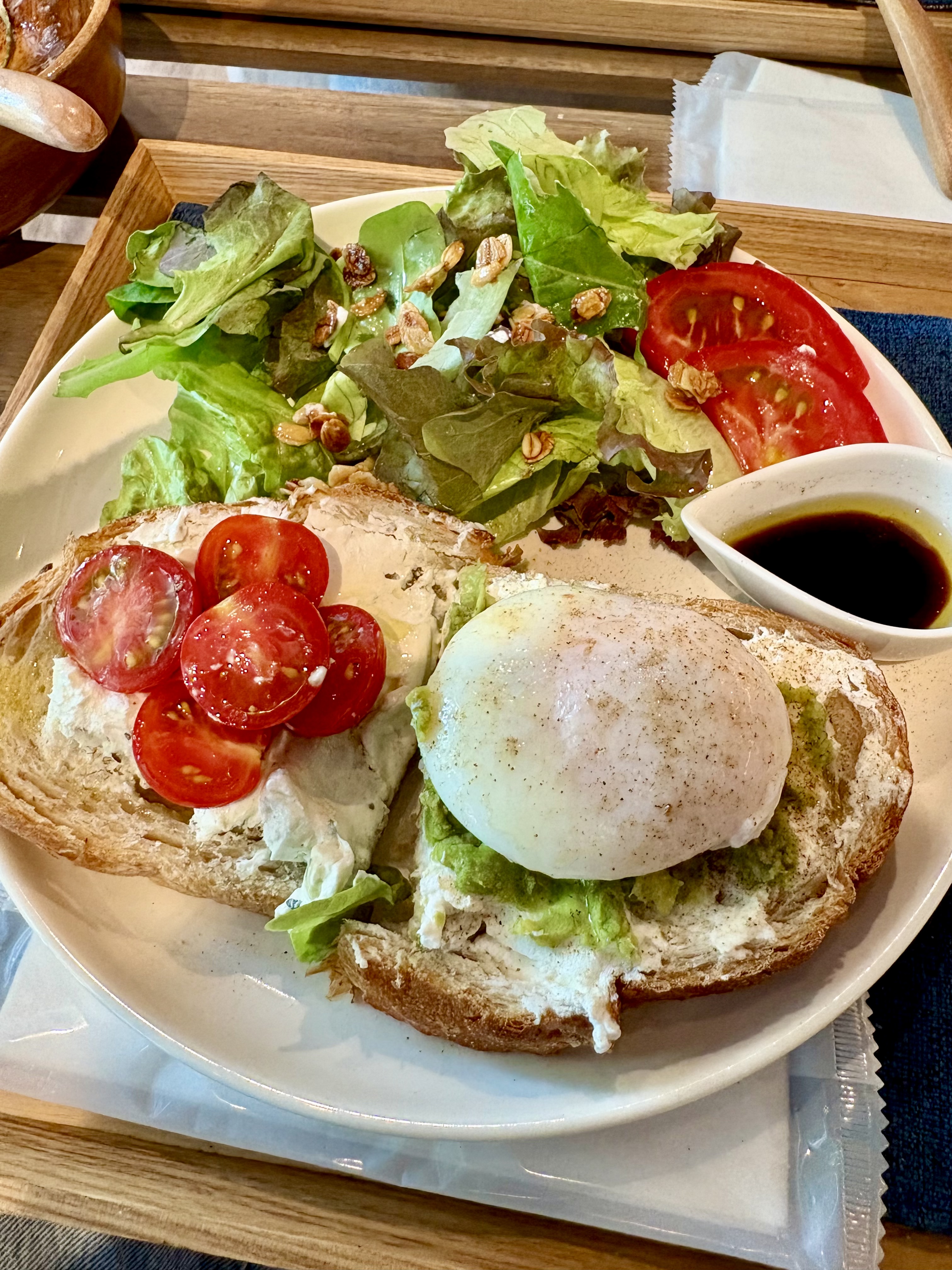
Our favorite restaurant in Nagoya was Café Dream. I don’t think I’m exaggerating when I say that the pitaya bowl was life changing and the Sri Lankan style banana leaf curry was also incredible. Another great find was en-kitchen, their menu is also small, but very thoughtful about allergens. And our most unique concept restaurant was Your,GURT&GRANOLA – a menu filled to the brim with yogurt.

Now, on to the main events!
Two activities in Nagoya required a reservation. The first was the Toyota Commemorative Museum of Industry and Technology. Notice how it doesn’t say car museum? That will become important soon.
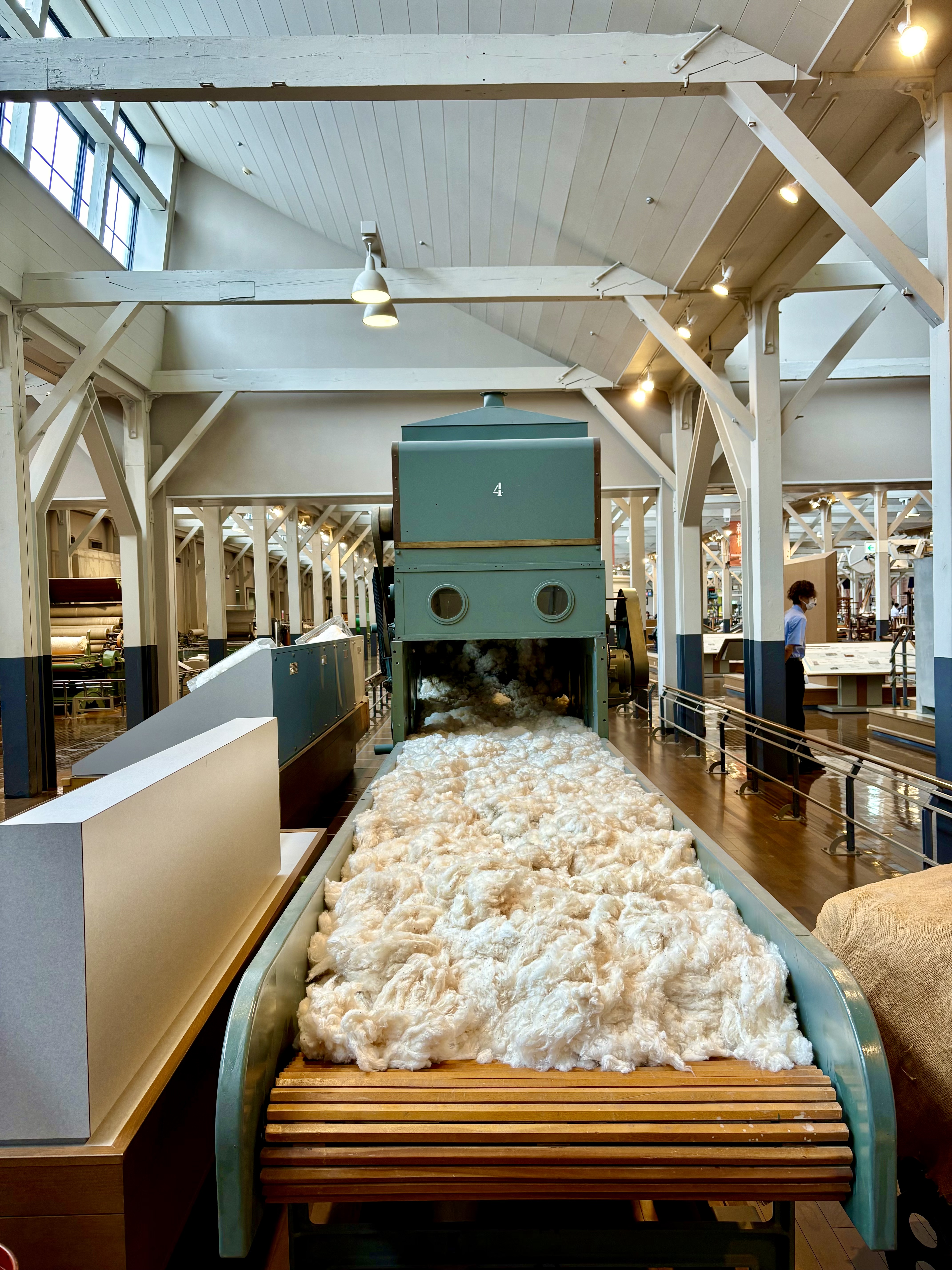
We arrived at the Toyota Museum and walked into something we absolutely didn’t expect: A warehouse about textile machinery. We soon realized, this was no mere car museum – that would be the Toyota Automobile Museum, a 40-minute drive away (or an hour on the metro).
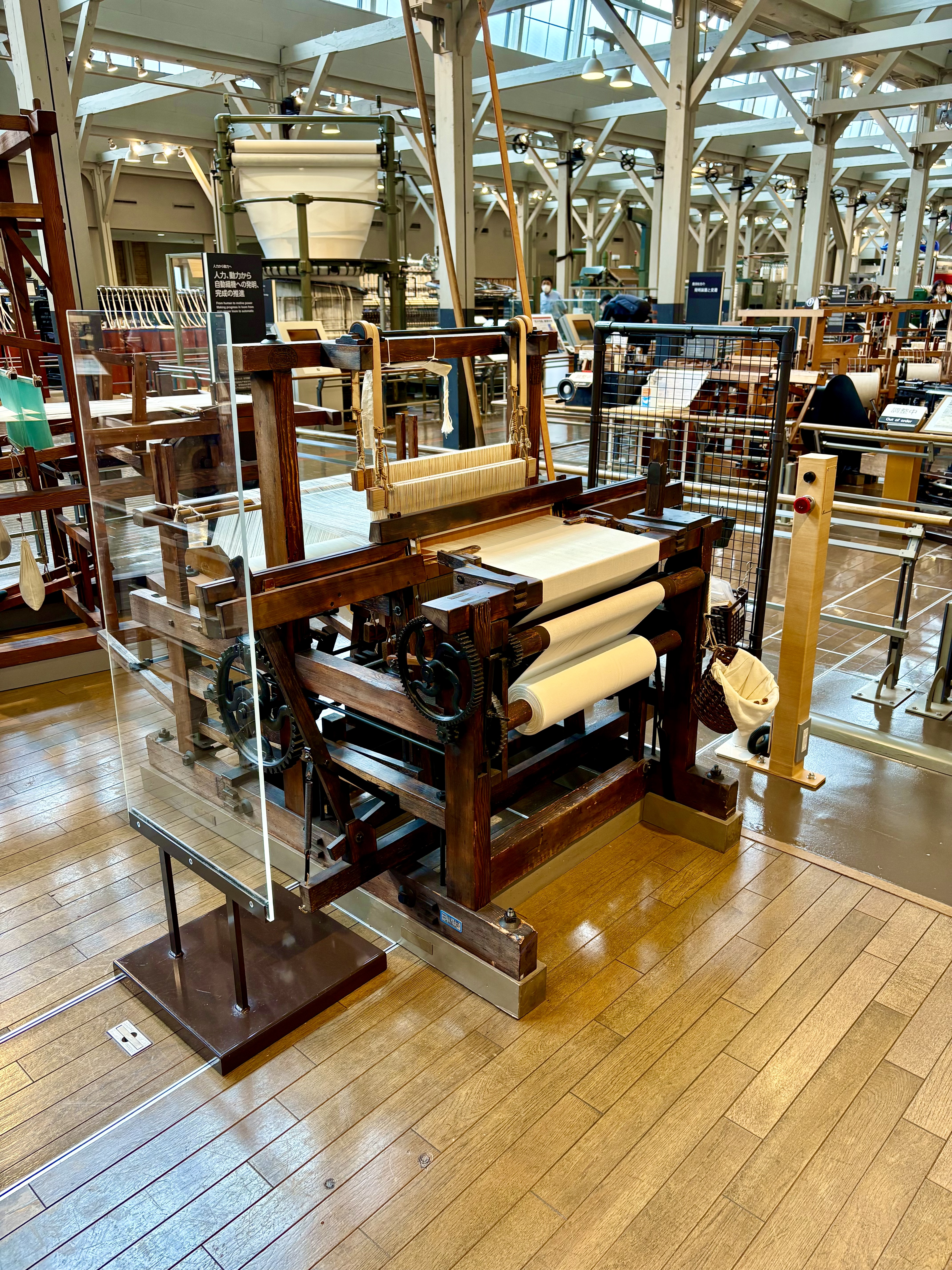
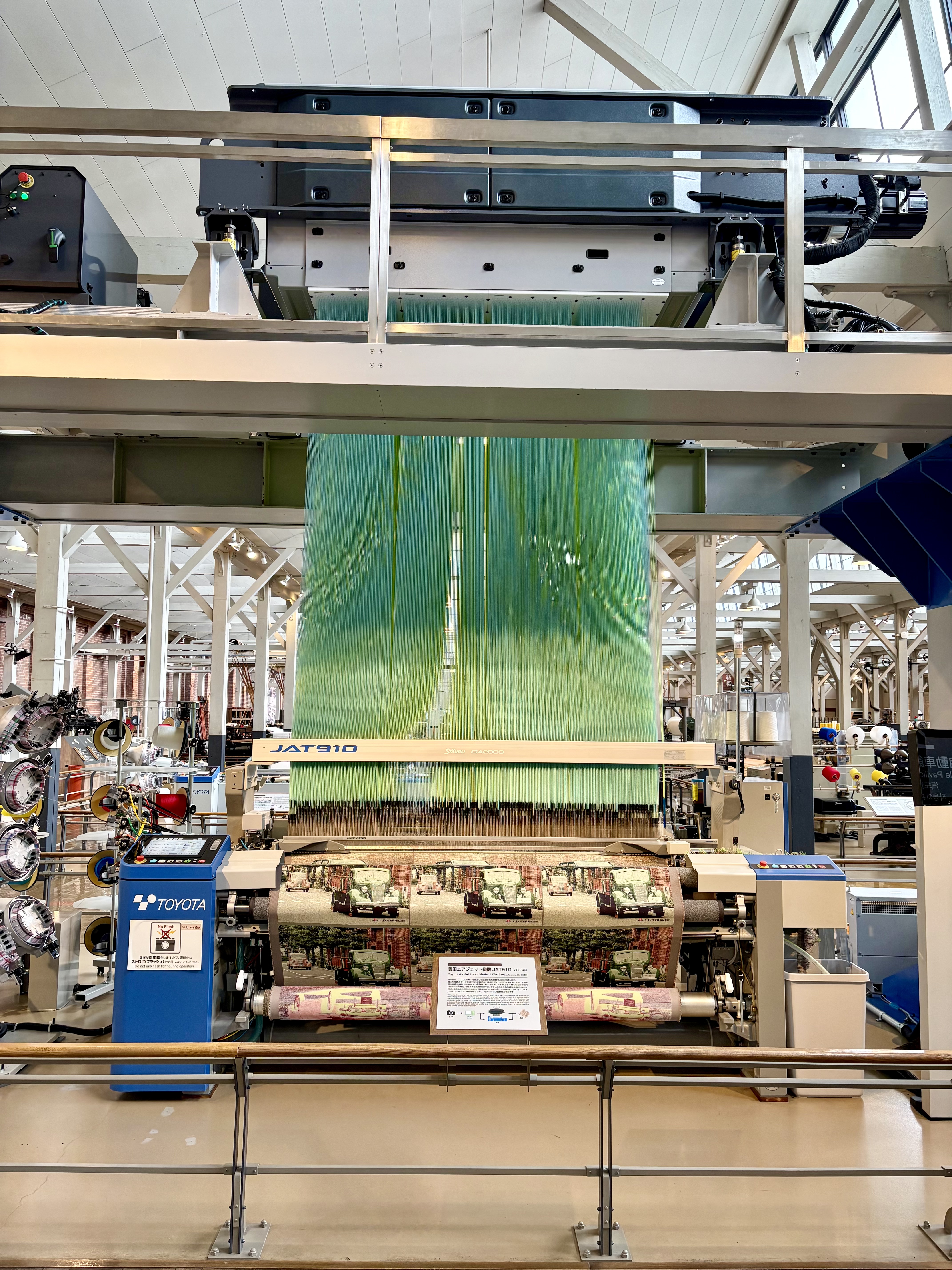
This museum was about the Toyota legacy – in a super cult-y way. Toyoda Automatic Loom Works (not a misspelling, but named after Sakichi Toyoda, owner of the company and inventor of the automatic loom) was established in 1926. Seven years later, his son Kiichiro Toyoda established its Automobile Division.
Ford and General Motors already had assembly plants in Japan and had started production in order to supply cars for the rapid demand for automobiles after the 1923 Great Kanto Earthquake. 90% of the market was made up of cars assembled and imported by foreign manufacturers. Kiichiro Toyoda planned to “make cars with our own hands, to establish the automobile industry in Japan, and make people’s lives richer.”
As we all know, it was a success. And to say that he was revered as a god in this museum would be an understatement.
Over a third of the museum was dedicated to the looms (both old and new) and discussed why theirs were superior to what was used in other countries and how/why they keep their machines in better working order than others. Honestly, I liked the symmetry of the visuals, but I can’t say textile machines exactly thrill me.
Next up, however, was weirder. We literally went into a room all about Kiichiro Toyoda. His life story and quotes – by him and about him – all laid out to help us understand why he was more god-like than man-like. It was a lot.
But then we got on to the cars. In 1937, Toyota Motor Co was officially established and we got to learn all about Toyoda’s work ethic (I’ll give you a heads up – it’s intense!). The museum includes cars, models, graphics, texts, and even a wall full of comics.
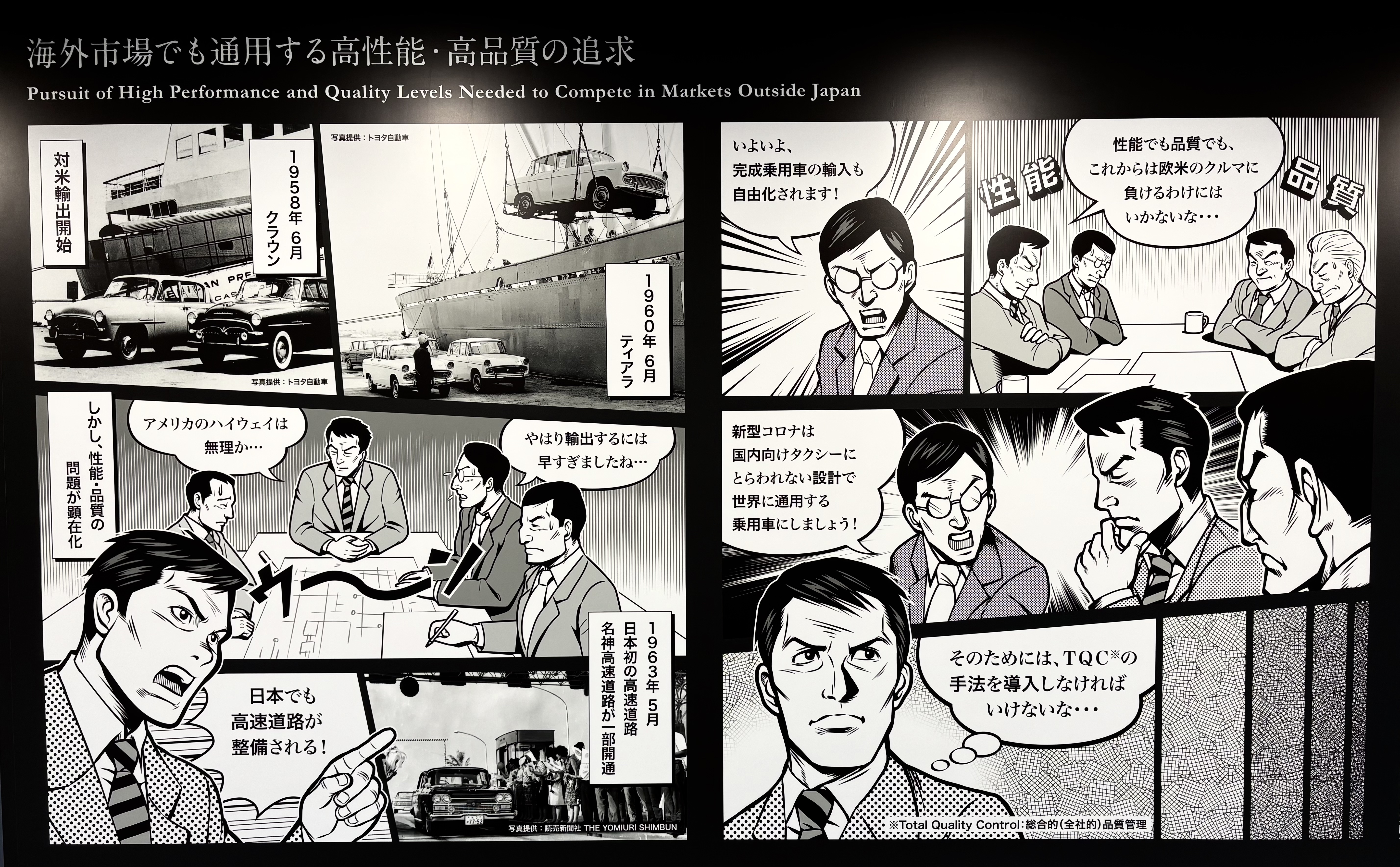
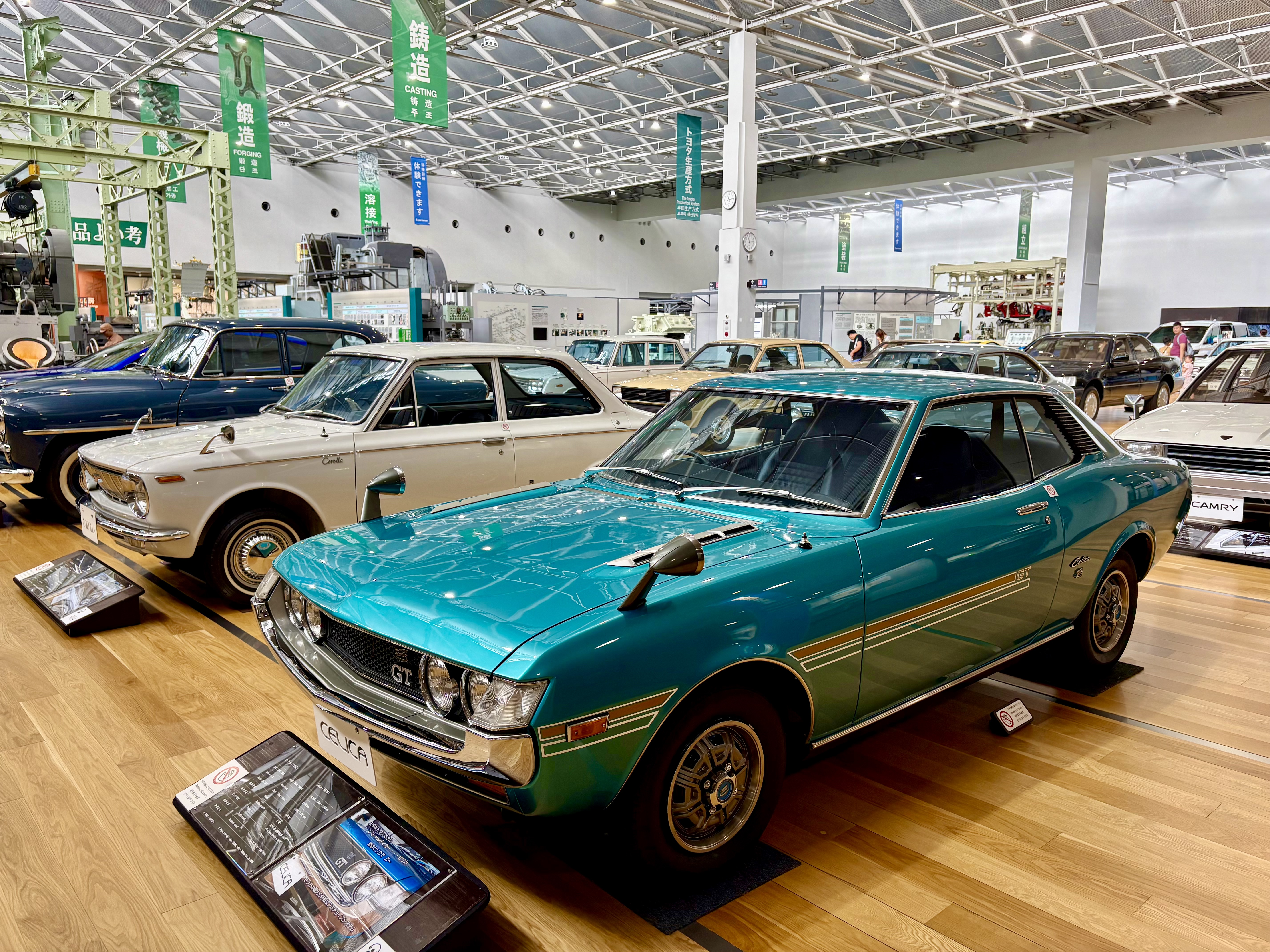
There were a handful of cars on display, but it was more about how they’re built and why. Big features existed on the Prius and the Vellfire – the first for its safety and durability, the second for its luxury. Neither fits into our vehicle preferences, instead we enjoyed the cars photographed below.
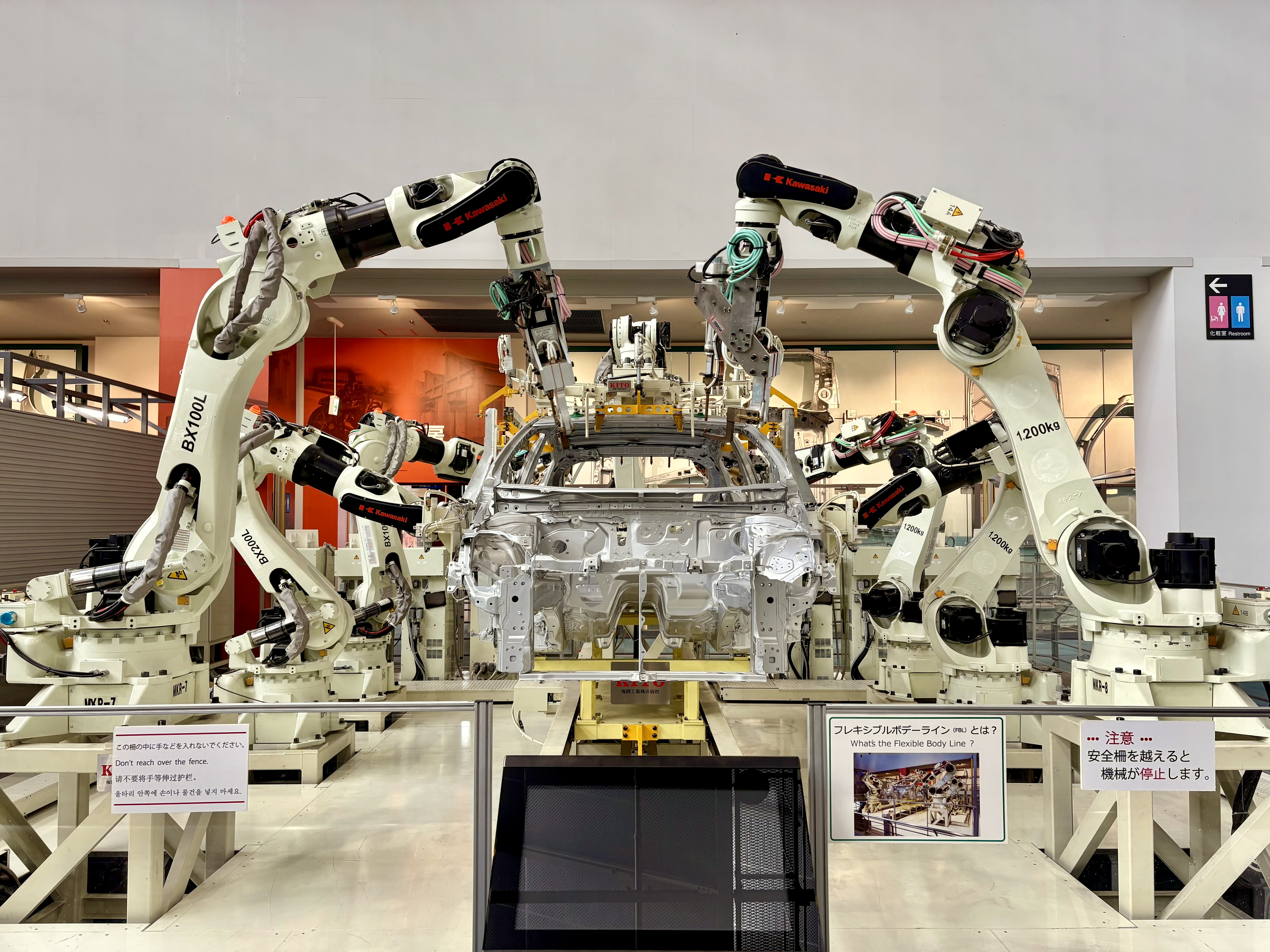
But there was fun to be had with the machines that show you how the cars are built. It was interesting to be able to compare it to what we’d seen in Hiroshima at the Mazda Factory and Museum.

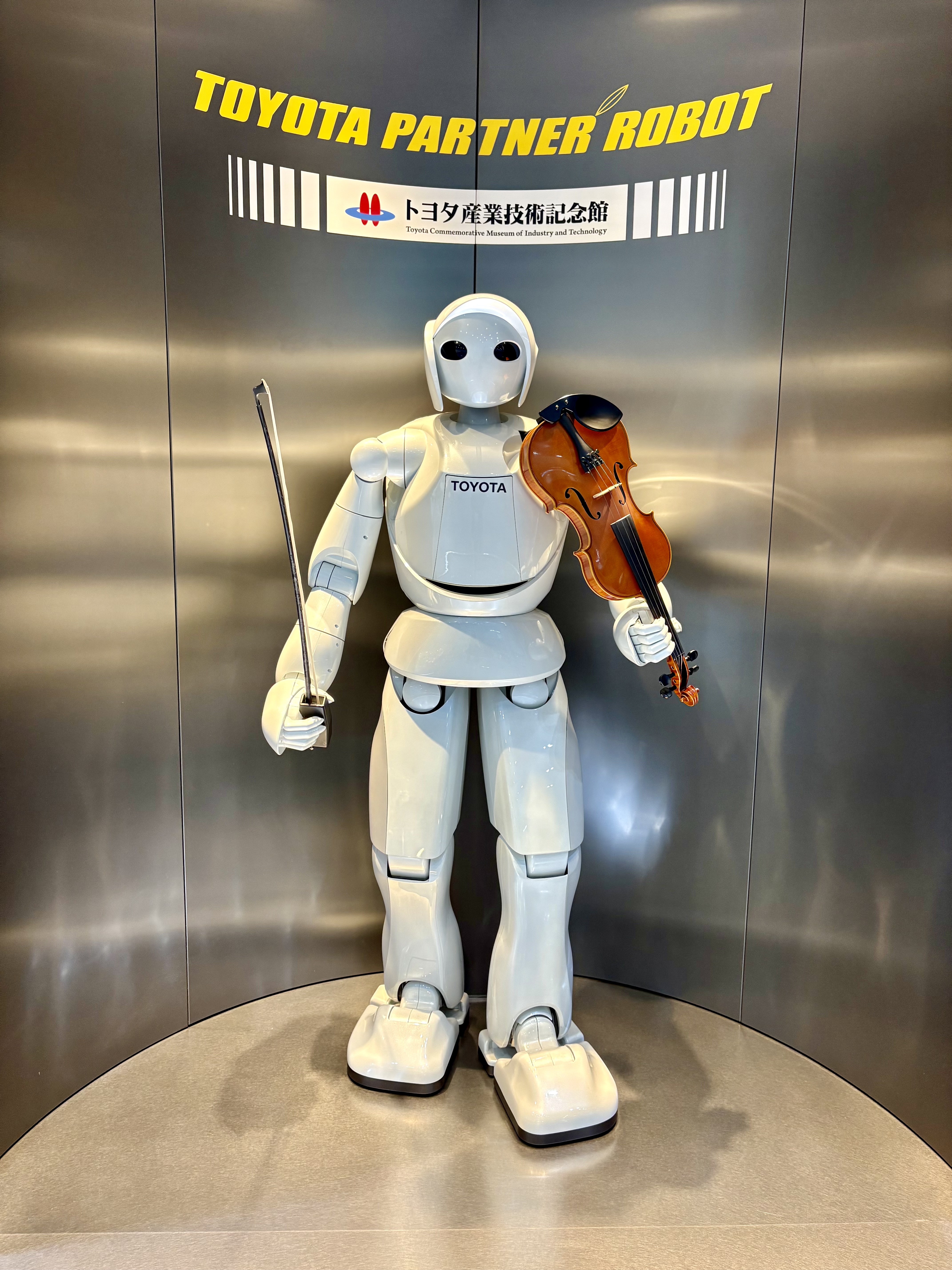
But if I’m being 100% honest, I probably most enjoyed the musician robots – not why most people go, but I love music and they were so adorable! The following photo is just of a violinist, but they also have an entire band.
If you’re interested in the Toyoda family and the history of Toyota, this is definitely the museum for you. If you just love cars, might I recommend the Toyota Automobile Museum?
One of our favorite experiences in all of Japan was our afternoon at Ghibli Park. We arrived at noon because tickets are hard to come by and that was the earliest time available! Tickets go on sale two months in advance on the 10th of each month at 2pm JST. Which meant our July 17th tickets went on sale April 10th at 2pm. Chandler logged in on time and the 10am and 11am time slots were already sold out. Timing is important at Ghibli Park because the park closes at 5pm.
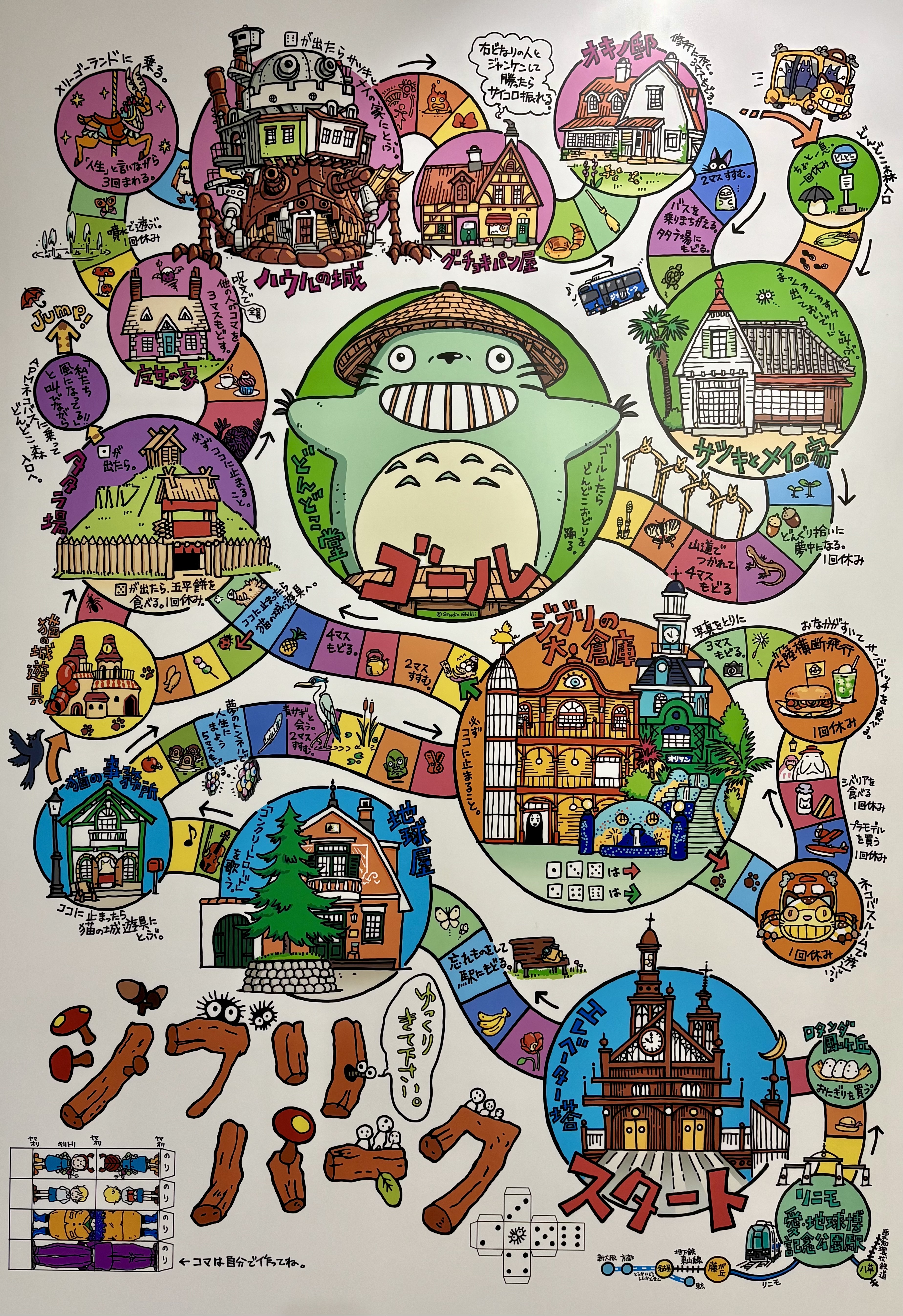
Ghibli Park is located in Nagakute City at the Expo 2005 Aichi Commemorative Park and it is HUGE. It takes an hour to get there by metro from Nagoya and we arrived early to get in line for our entrance time (every second counts!). It was raining when we arrived, so after entering the park through an epic elevator, we headed to Ghibli’s Grand Warehouse hoping the rain would stop while we explored inside.
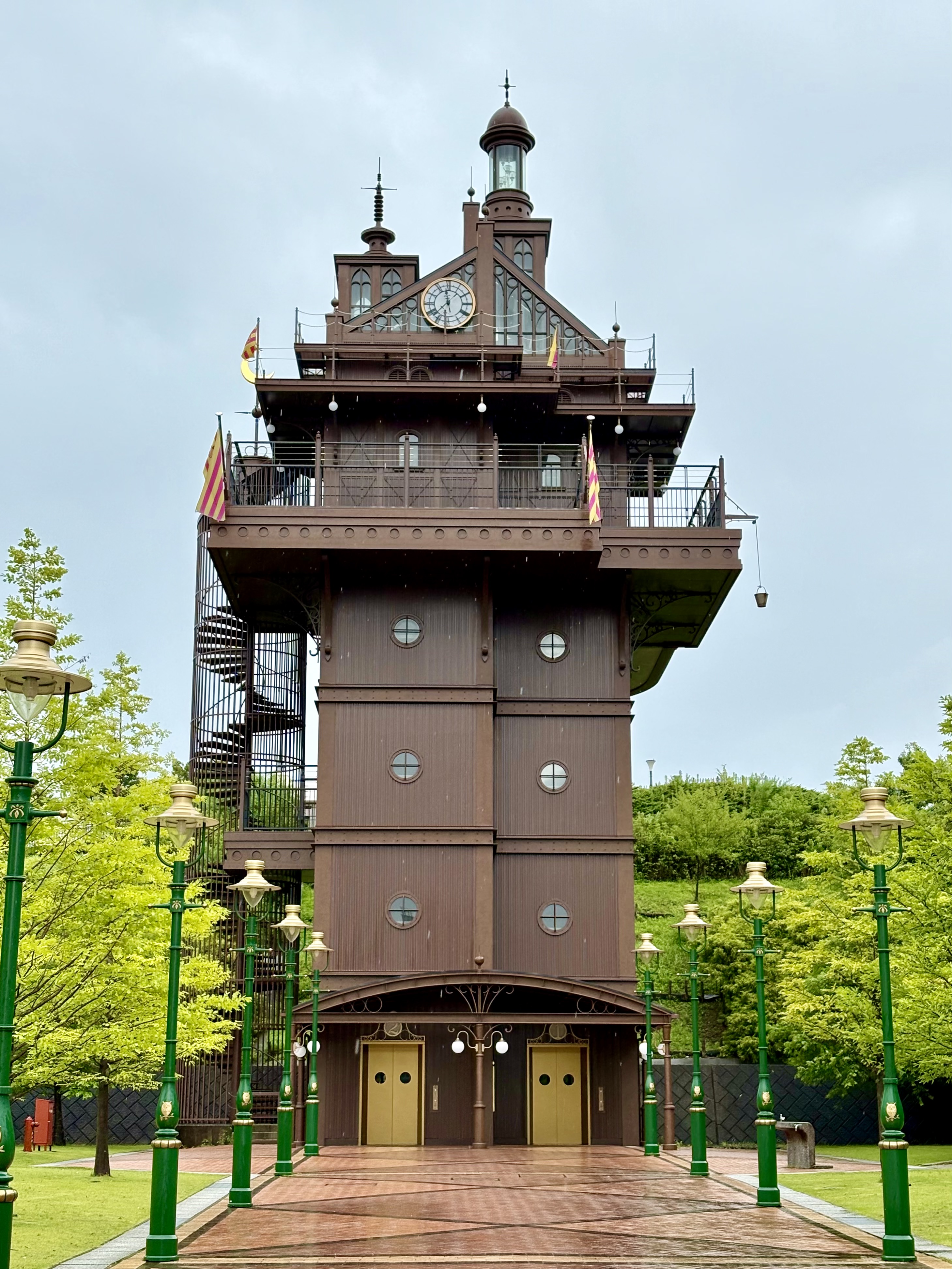
This turned into an impossible day in the best way – in some sense, we wanted to rush so that we could maximize how much we’d get to see, but at the same time, everything was so spectacular that we had to slow down to enjoy it all.
I’d definitely recommend starting in the Grand Warehouse – I wouldn’t say it was our favorite part of Ghibli Park, but it felt like it grounded the rest of the experience. The Grand Warehouse is the most photographer-friendly place in the park, with a lot of it consisting of life-size recreations of the films that you could take photos of yourself interacting with. This is a much beloved past-time in Japan.
My favorite recreations were of The Secret World of Arrietty and Castle in the Sky. To be honest, I could have lived in Arrietty’s world all day!
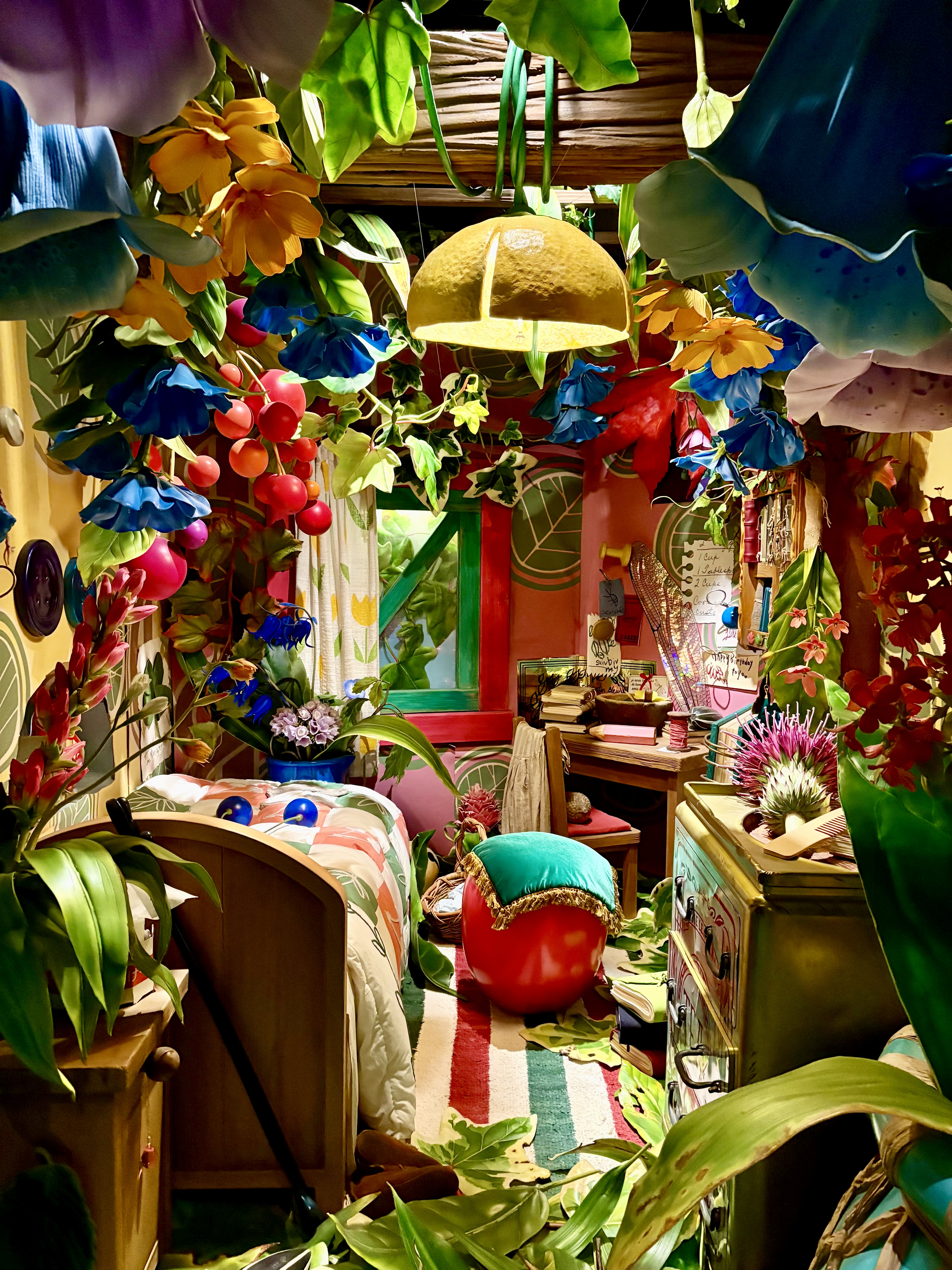
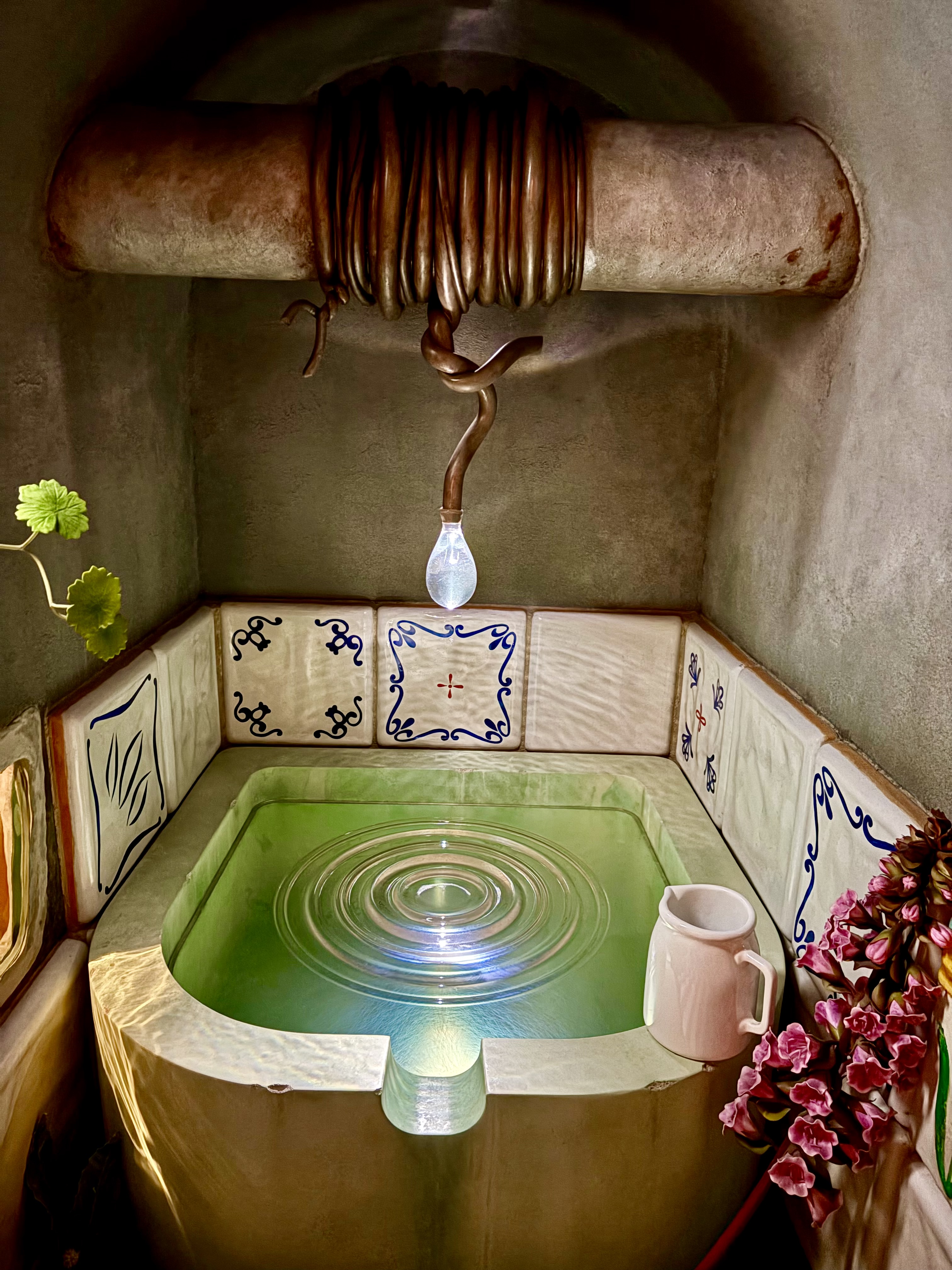
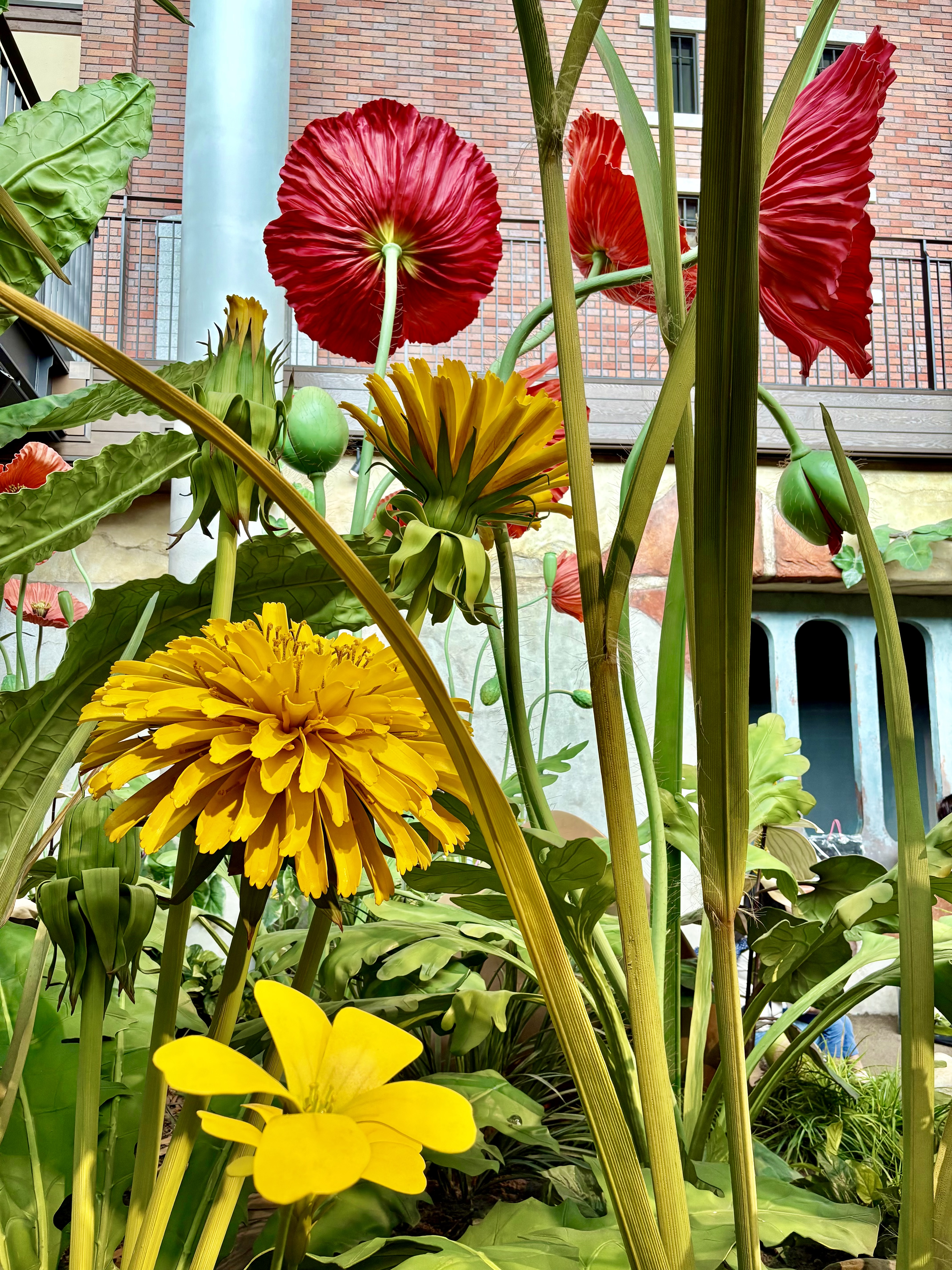
There were also homages to Ponyo, Pom Poko, Porco Rosso, Spirited Away, From Up on Poppy Hill, Princess Mononoke, and When Marnie Was There. The only really wild moment was seeing a huge line and discovering it was people waiting to take a photo with No-Face from Spirited Away – luckily, we’d already done that at the Ghibli shop in Osaka, so we didn’t have to use up our precious time!
I included photos of myself 1) Because that’s what you’re supposed to do and 2) So you can see just how large these recreations are!
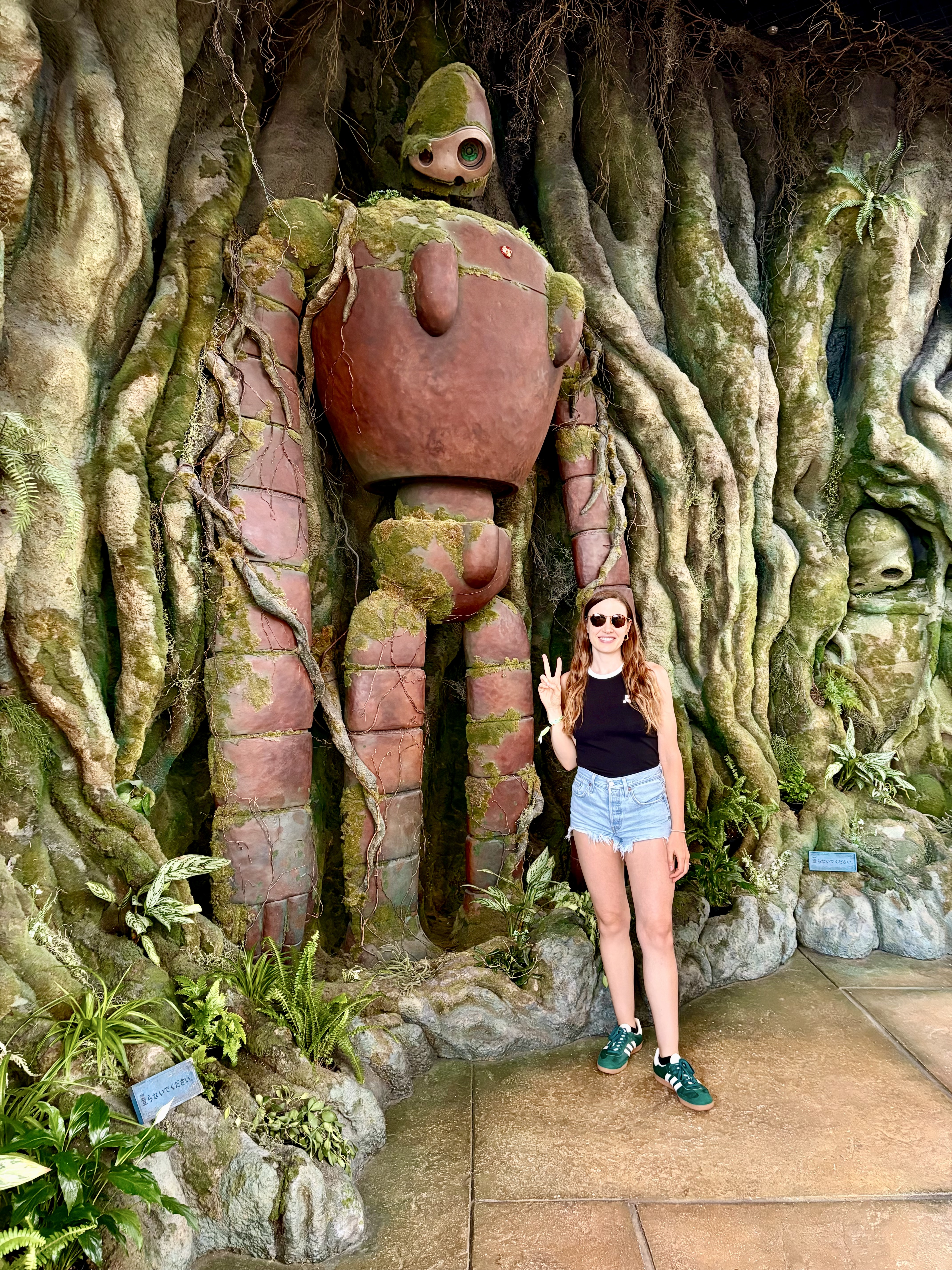
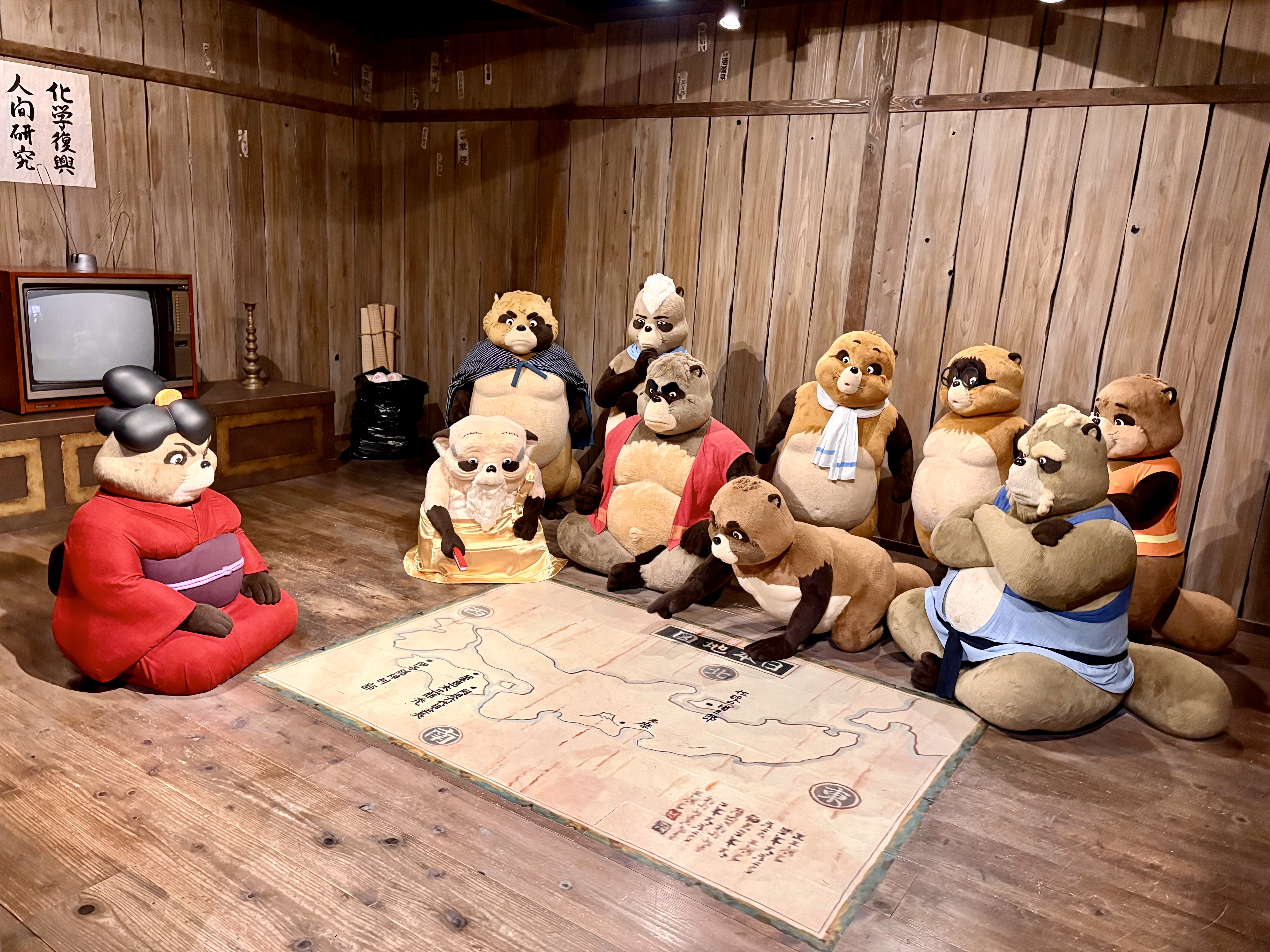
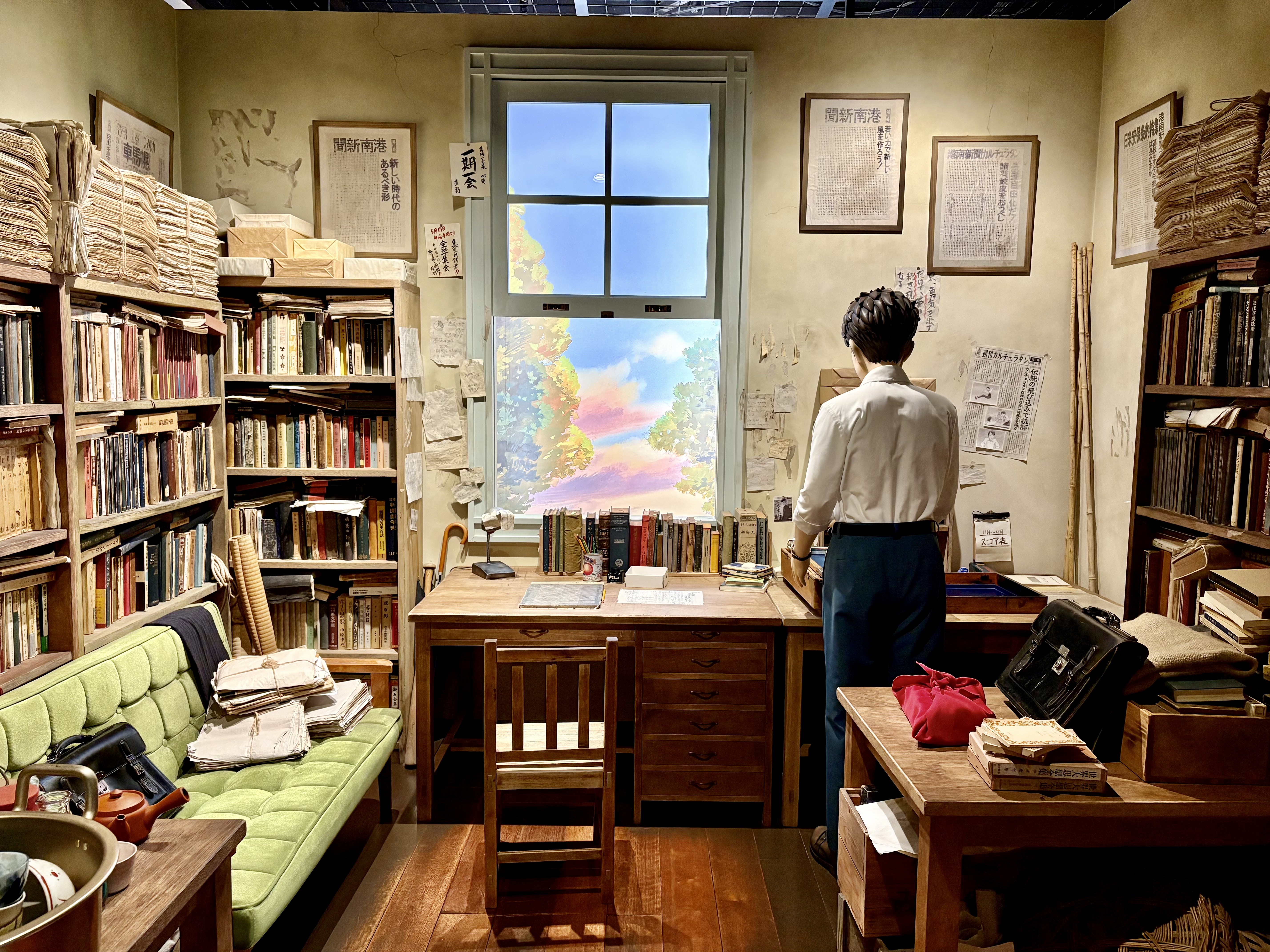
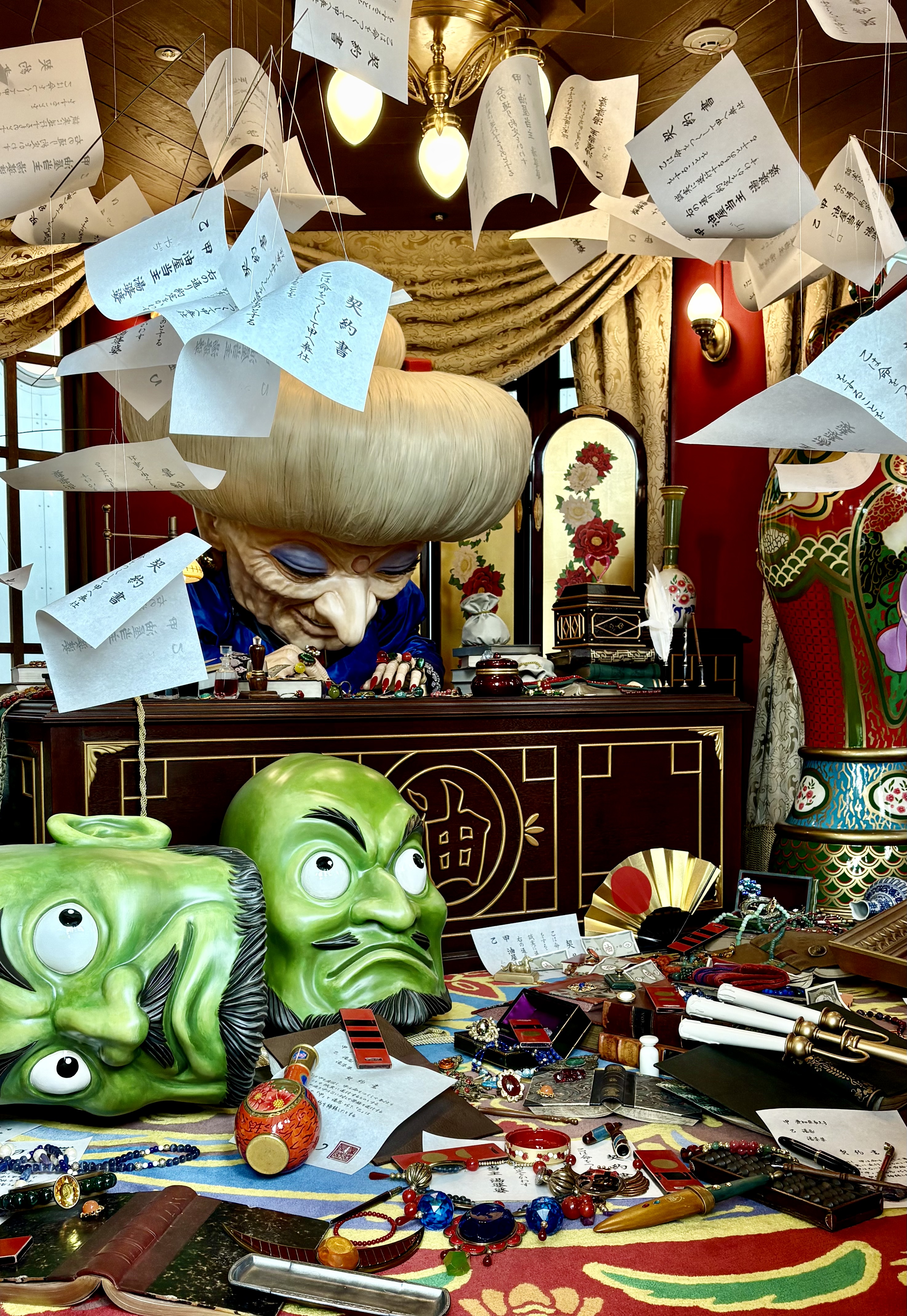
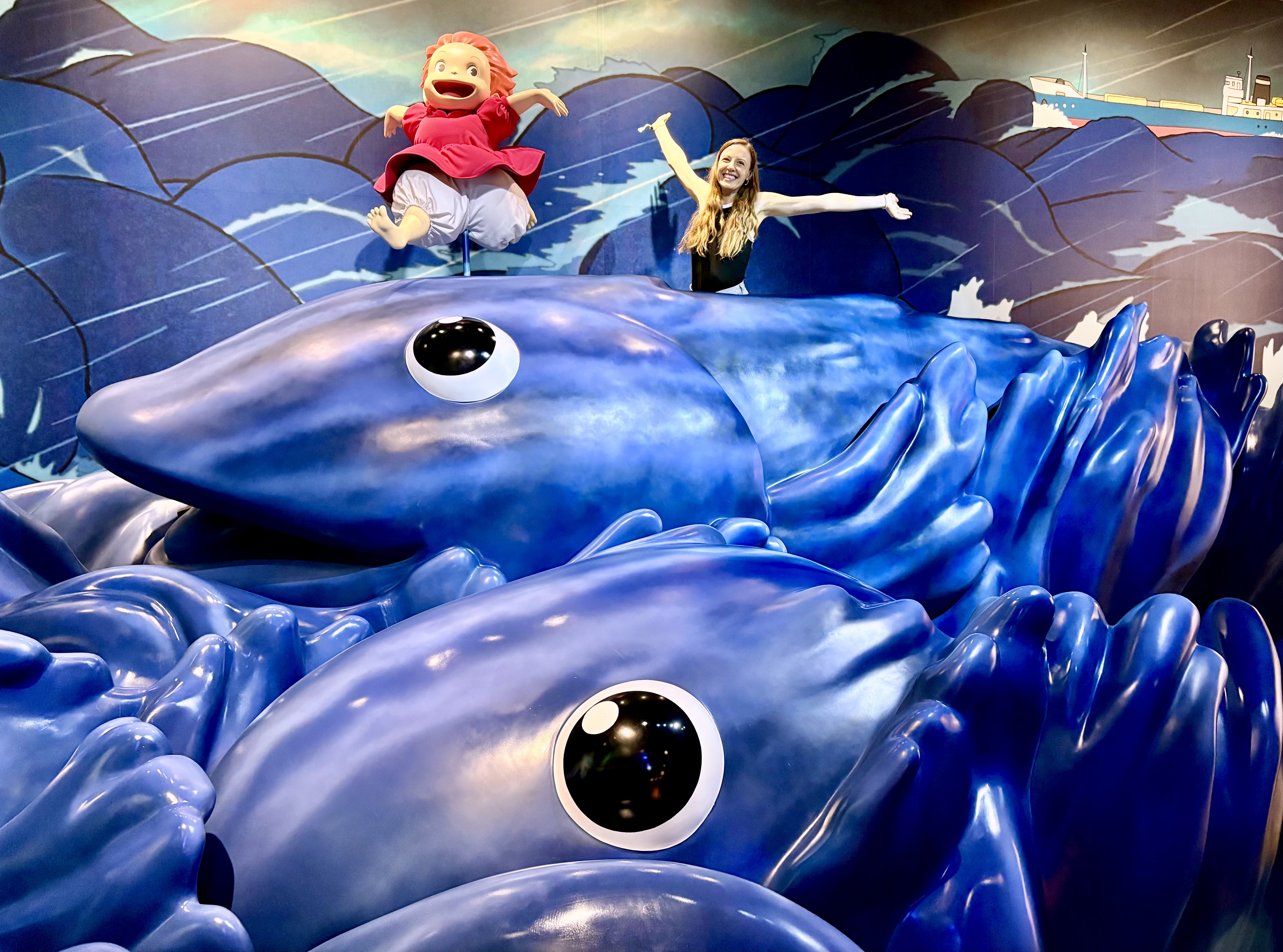
Just like at the Ghibli Museum in Tokyo, the Grand Warehouse included a small theater where they showed a rotating Ghibli short film. We’d seen Mon Mon the Water Spider at the Ghibli Museum and got to watch Treasure Hunting at Ghibli Park – I’d love to see all ten shorts someday.
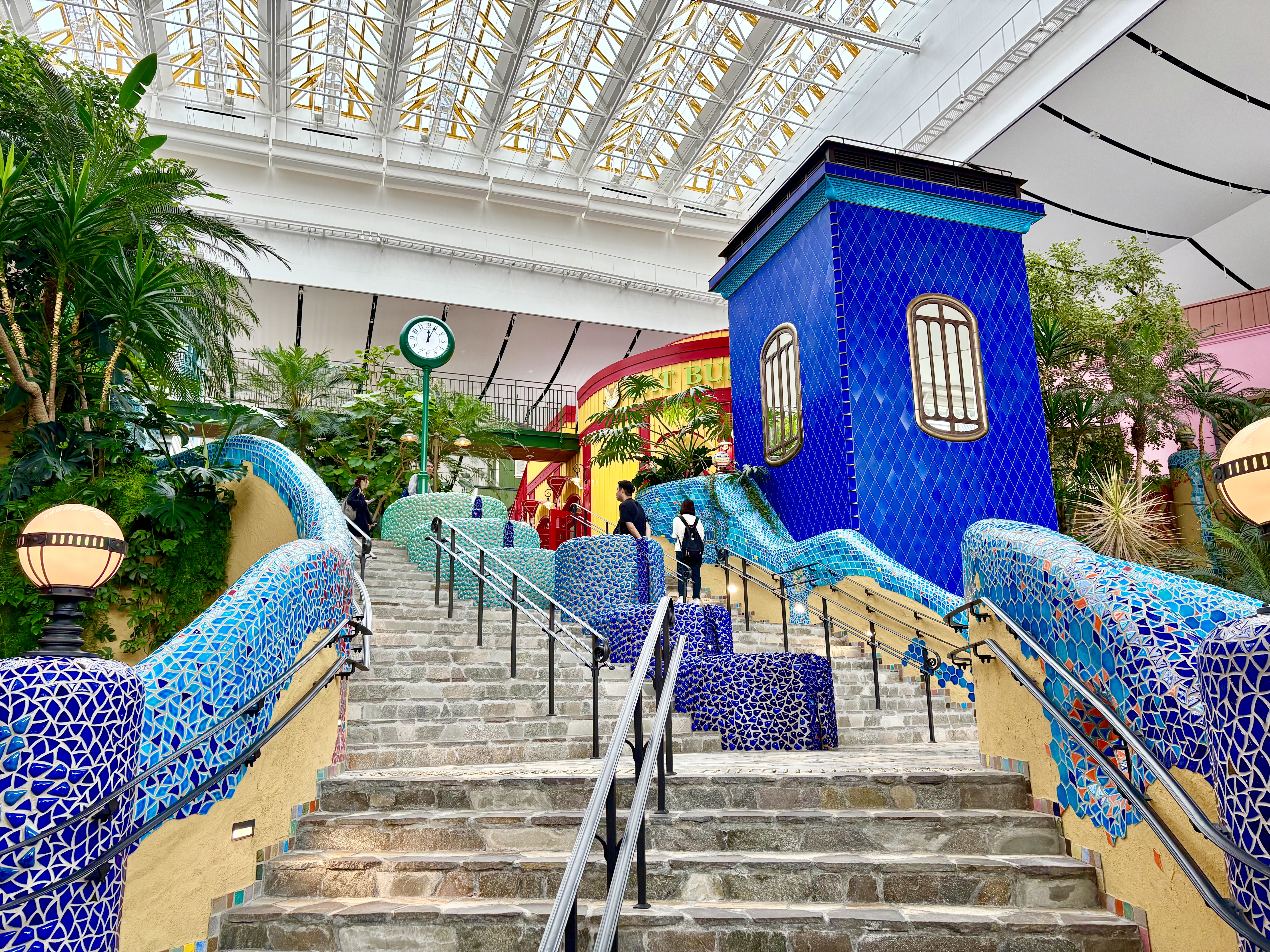
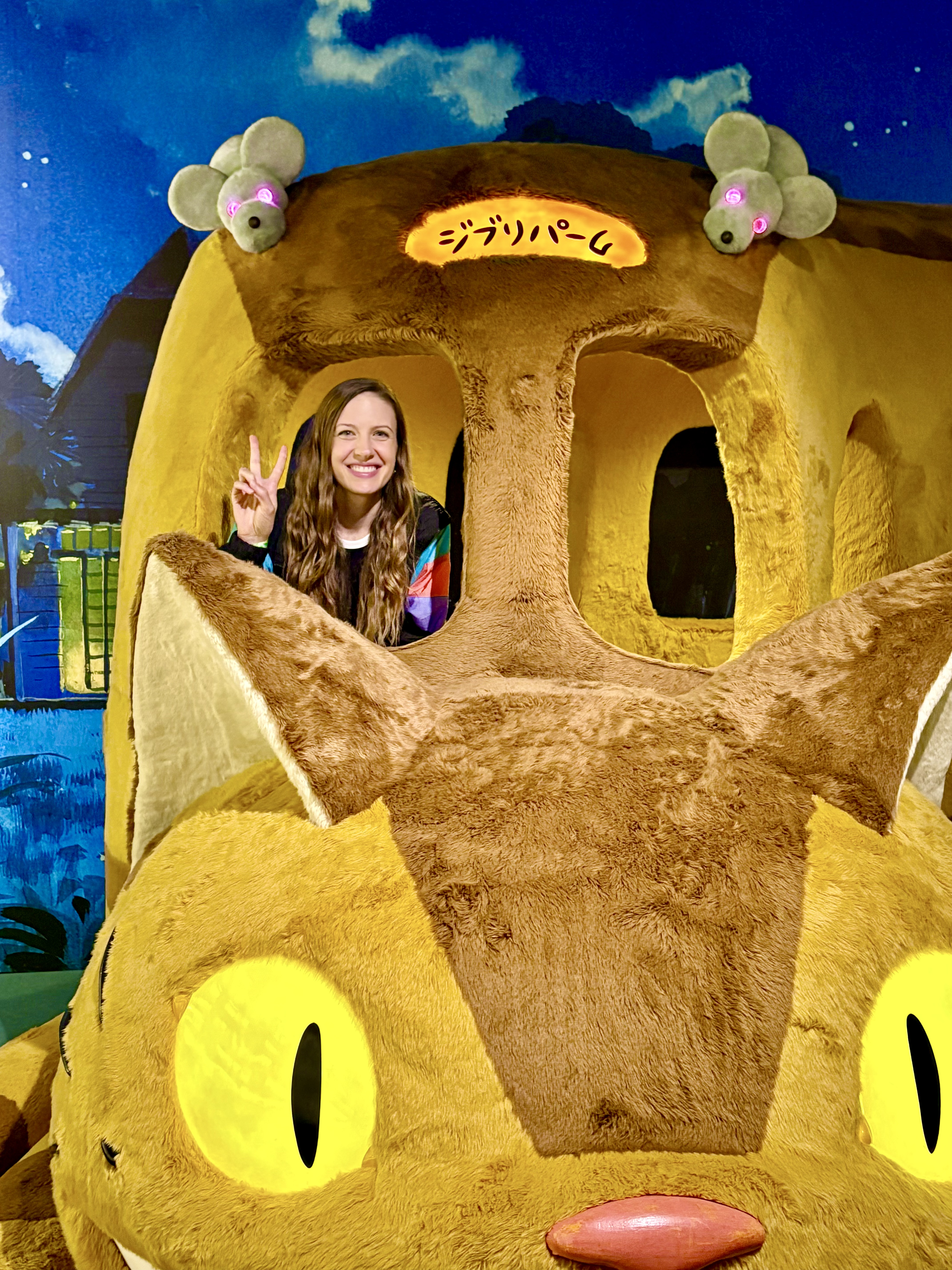
There was also a giant plush Catbus – and unlike the one in Ghibli Museum, this one is for kids and adults! Plus there’s grand staircase, which was lovely.
There were also a few rooms more reminiscent of a museum, with artwork and memorabilia on the walls. As well as what looked like “Ghibli storage,” a room piled with artifacts that you looked at from a walkway above.
We ended our time at the Grand Warehouse with some pizza and a Valley of Witches white beer, which was tastier than it needed to be, because clearly I was going to buy it anyway.
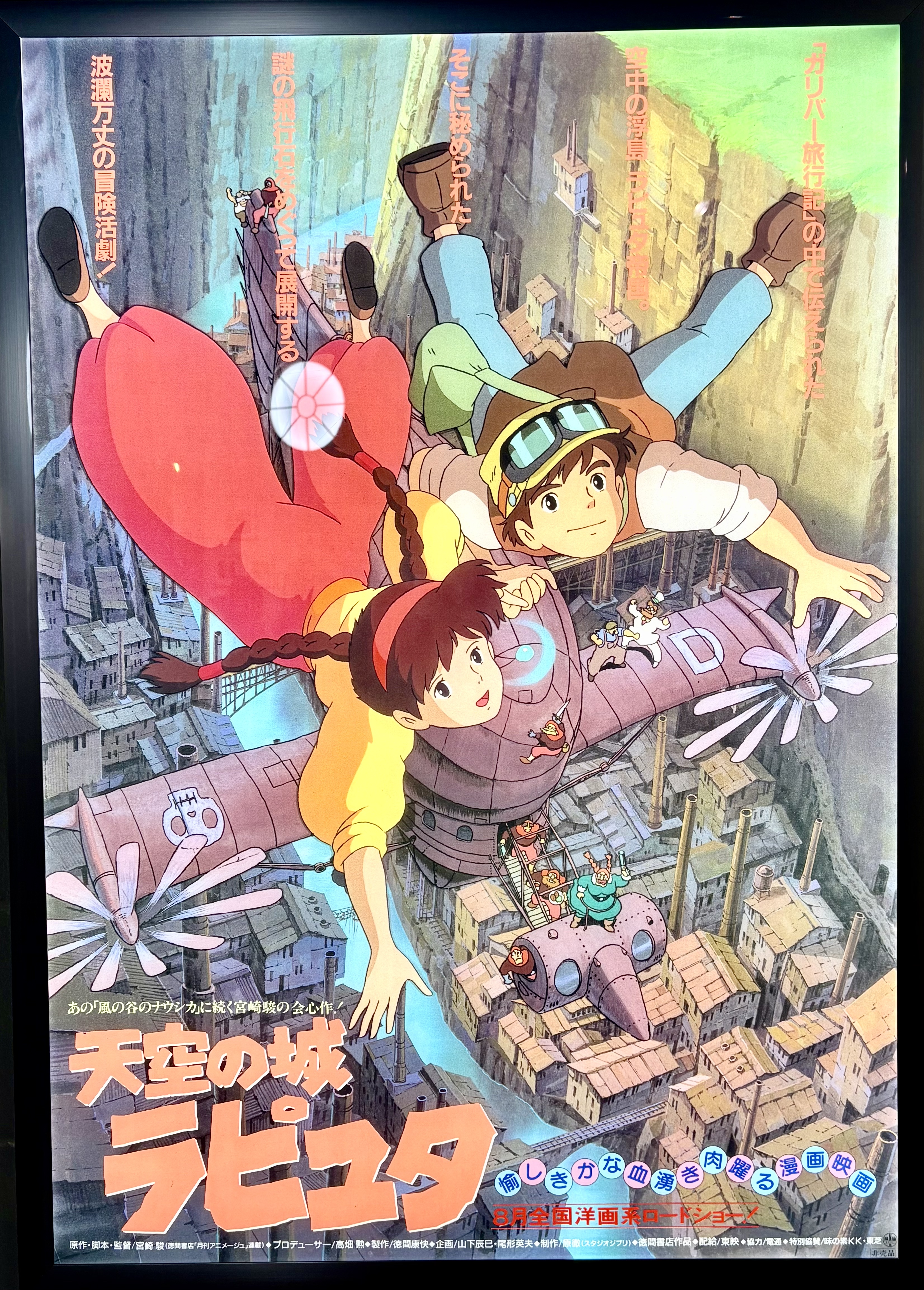
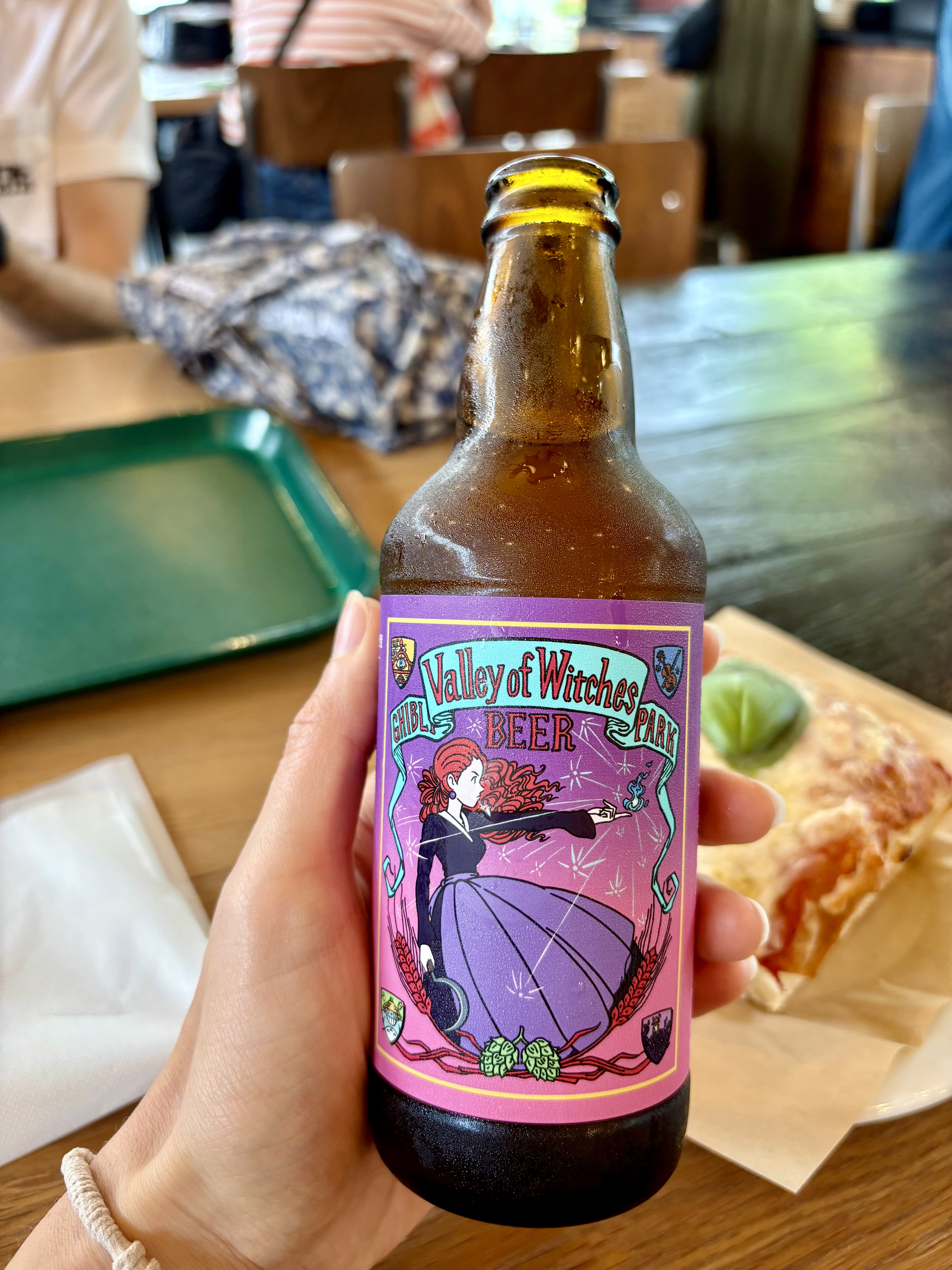
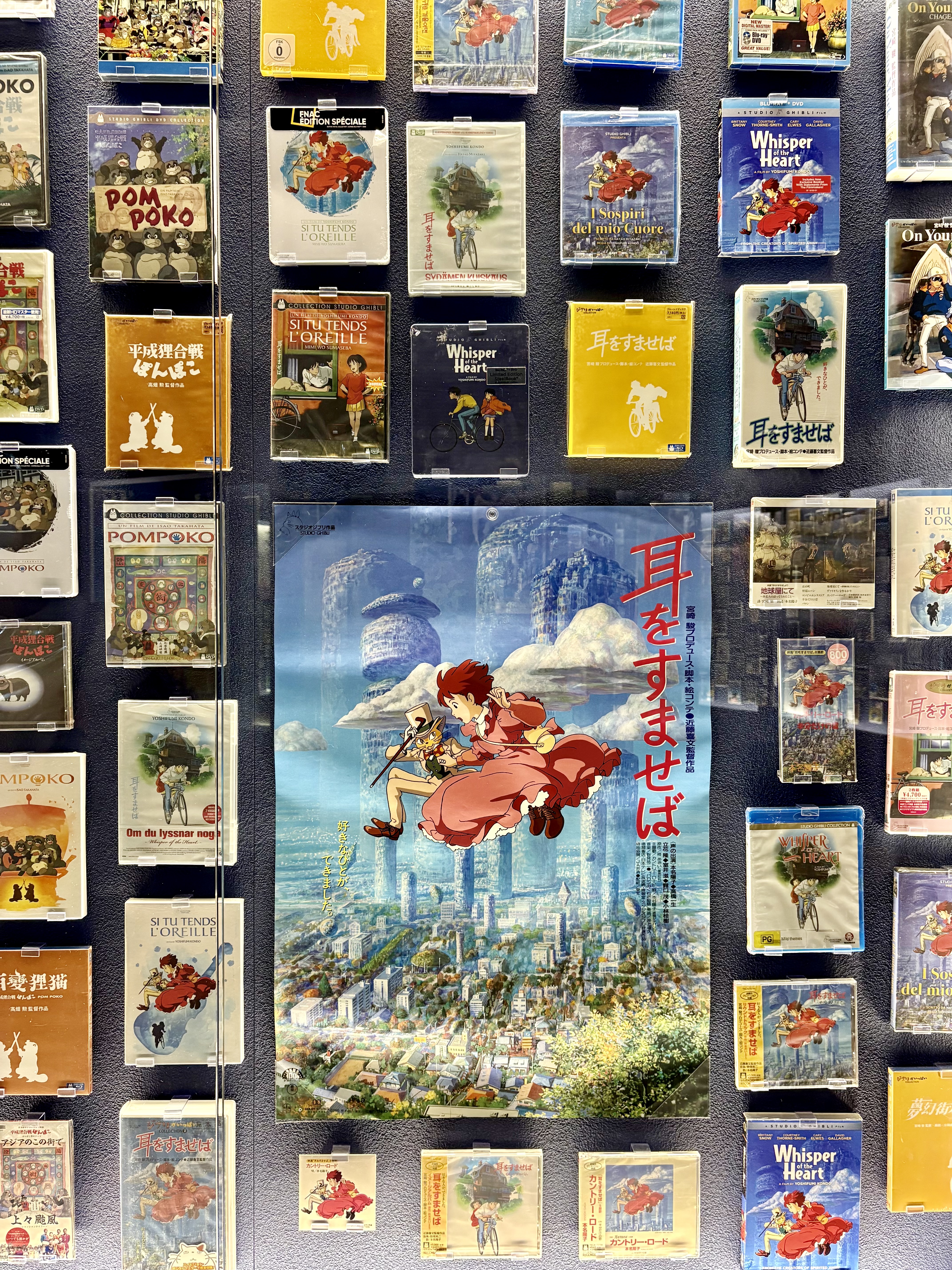
Outside of the Ghibli Grand Warehouse there are four other big sites – Hill of Youth, Valley of Witches, Dondoko Forest, and Mononoke Village. We were starting to fear that we’d never get to all of them before the park closed, so we decided to prioritize our favorite Ghibli films.
Hill of Youth is closest to the Grand Warehouse and it contains the antique shop World Emporium from Whisper of the Heart and the Cat Bureau from The Cat Returns. Whisper of the Heart is easily my favorite Ghibli film, so we went there first.
Unlike the Grand Warehouse, photographs are not allowed inside these recreations, you can only take photos from the outside. The idea is that these are real-life versions from the animated films and no detail has been overlooked. The purpose of the park is to be able to enter these buildings and experience life as the characters did. You can pick things up, move them around, and in general, live life – you just can’t take any photos.
This was both amazing and heartbreaking. All I wanted was photos of the amazing World Emporium, and yet, having dozens of tourists taking photos would absolutely have taken us out of the intended mindset. Instead of observing the antique shop, we interacted with it. When we went inside someone asked if we’d like to listen to music. We said yes and proceeded to sit on the couch while they played a record. Later we went downstairs and saw the workshop where Seiji makes his violins.
We were thoroughly enjoying ourselves, while slowly realizing that the time was ticking away. When we started to leave, a worker asked if we might be interested in staying just three minutes more. If we waited, we’d be rewarded with seeing a performance from the grandfather clock with the dwarf king and elf princess.
When I tell you that was the highlight of my day, I am not exaggerating. While the clock in the film (and in the recreation) is full sized, a table clock version was made and I am low-key obsessed with it. We also got to see the Baron, but that was the one thing you couldn’t touch!
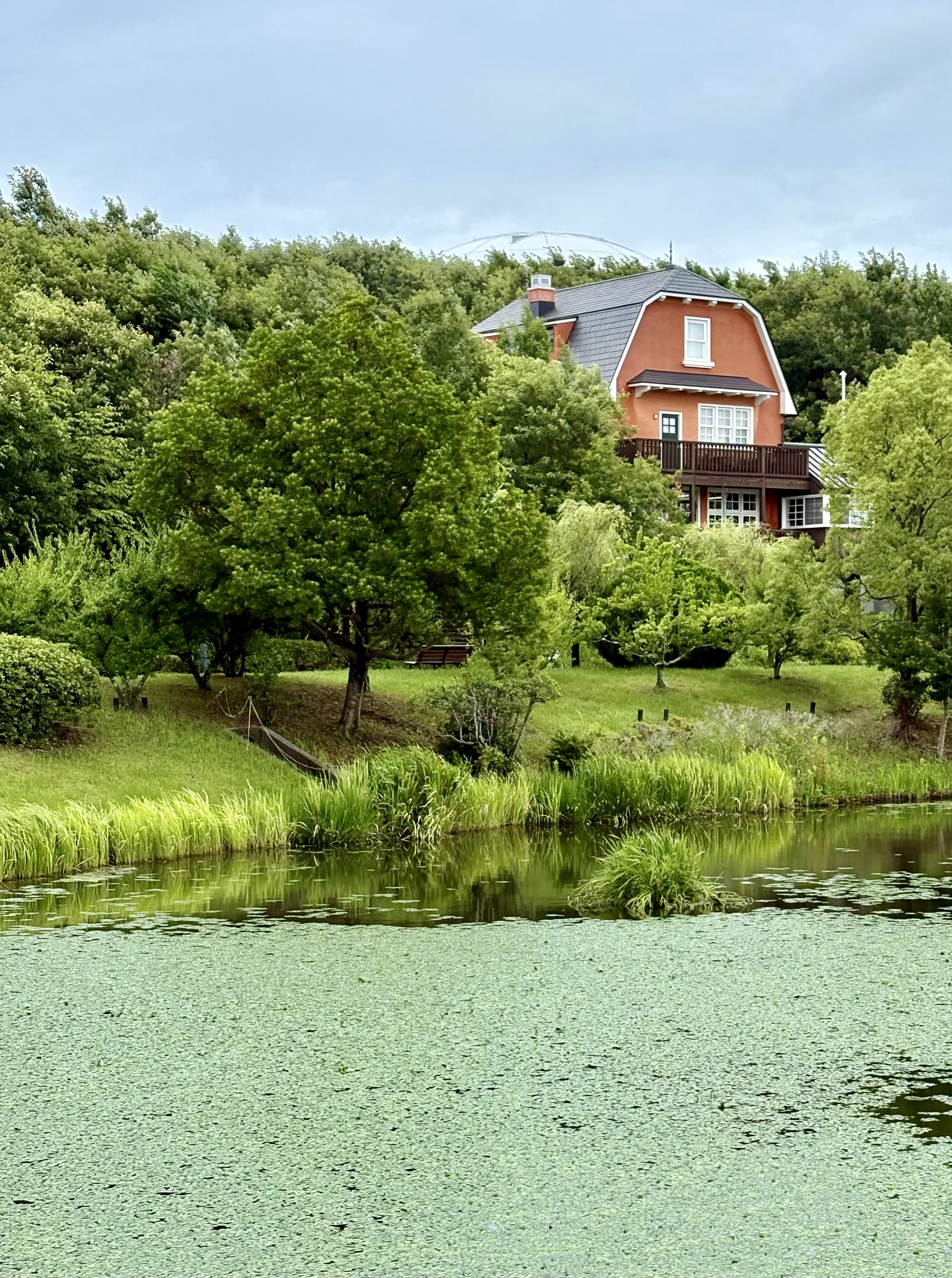
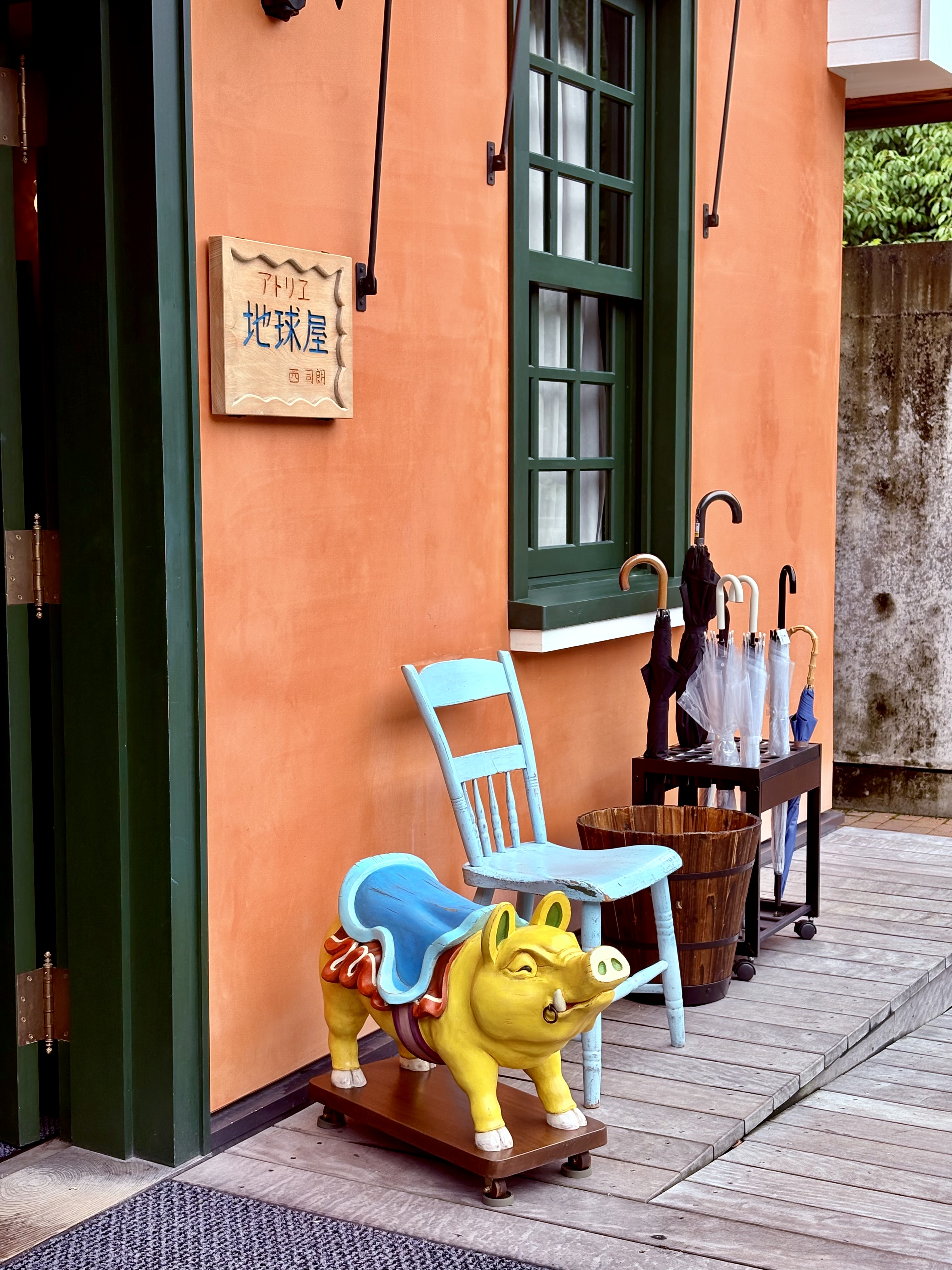
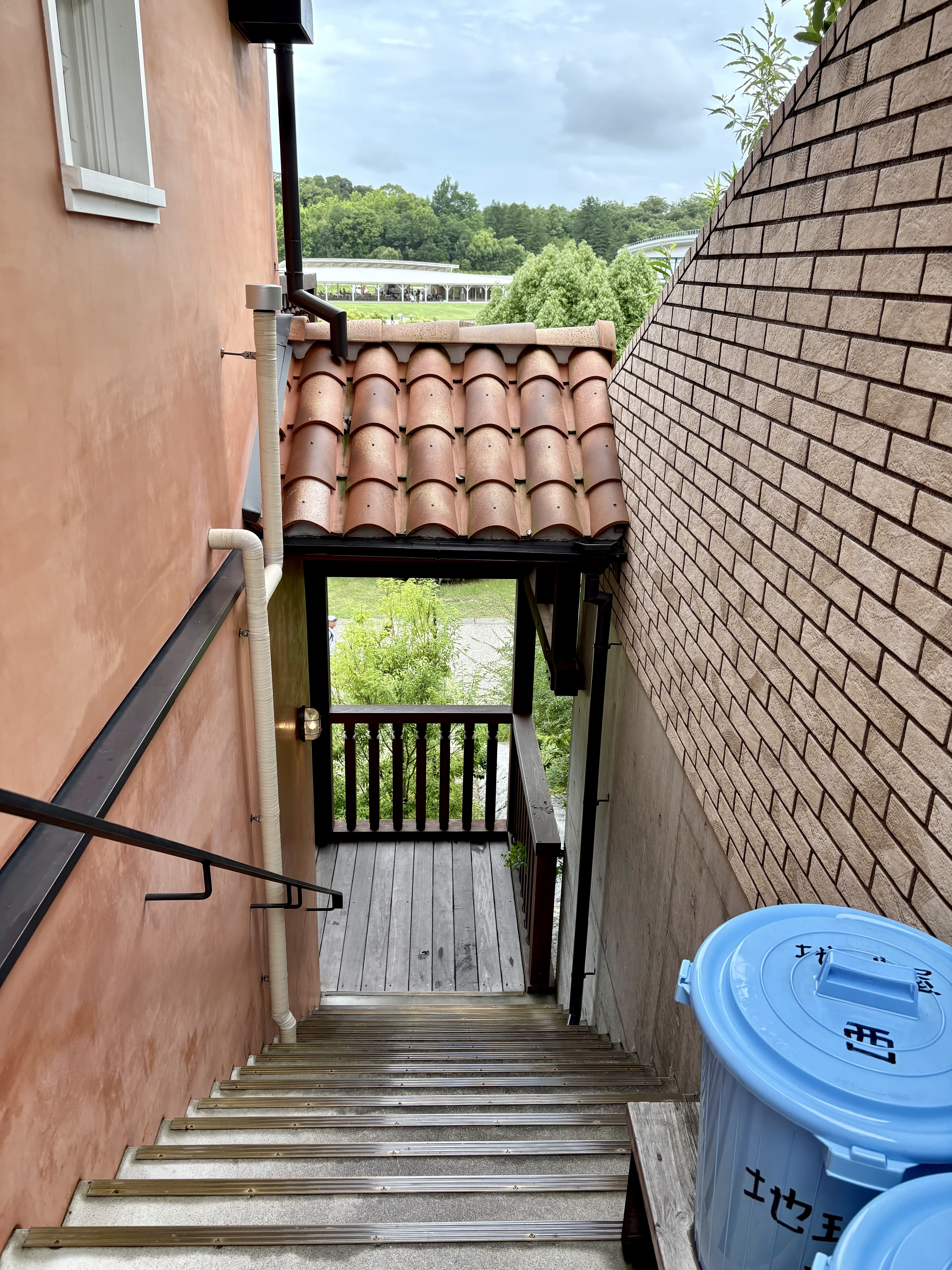
Next up was the Valley of the Witches, which contains Kiki’s Delivery Service (Chandler’s favorite), Howl’s Moving Castle (the most impressive structure in the whole park), and Earwig and the Witch (one of our least favorite Ghibli films).
We skipped past the Earwig recreations, delighted to find that not only had they recreated Kiki’s bakery (where we stopped for a snack) and loft bedroom, they’d also done her entire childhood home, complete with her mother’s sun-drenched greenhouse. Once again, we were in awe at all of the details – including Kiki’s messy bed with a working red portable radio. No detail was too small and you could touch and interact with all of it.
As much as Chandler and I love Whisper of the Heart and Kiki’s Delivery Service, if you got the rough end of the stick and received a 4pm entry time, the most magical spot in all of Ghibli Park is the recreation of Howl’s Moving Castle.
With no photos allowed, all I can show you is the outside of the castle, but it’s clear from that alone how spectacular the inside is going to be. Howl’s Moving Castle is perhaps one of Ghibli’s most chaotic films and the recreation absolutely nails it.
You walk inside, past Calcifer’s fire pit and the kitchen table. I should note that the recreation they went with is of the castle before Sophie comes around to clean it. So the table is overflowing with plates and food, books piling up everywhere. They bedroom upstairs is a mess – you’re actually not allowed inside because there would be nowhere to walk. However, you are allowed to walk into the bathroom. There are giant signs saying that it’s not in use (I don’t want to know how many people took the idea of “make yourself at home” too literally and tried to take a shit).
The inside of bathtub is a pukish green and while I was taking a closer look, someone on staff asked me to flush the toilet. I thought it was a trick, since the signs were clear – but he was delighted when I did it, proving to me that everything in the house did work, even if they didn’t want people regularly using it. He then encouraged me to use the sink to wash my hands.
I literally think you could spend from 10am to 5pm inside the castle and not see everything it contains.
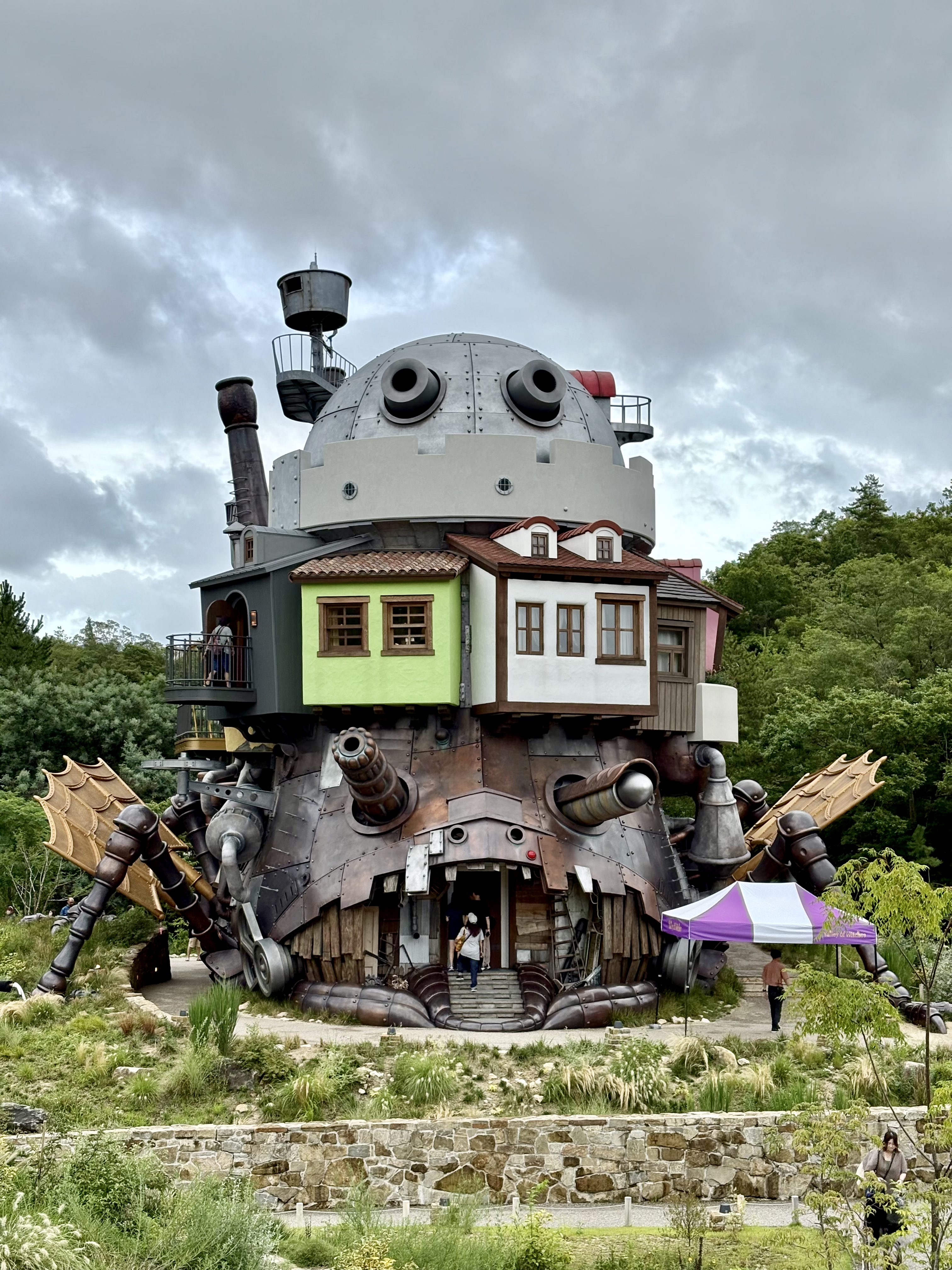
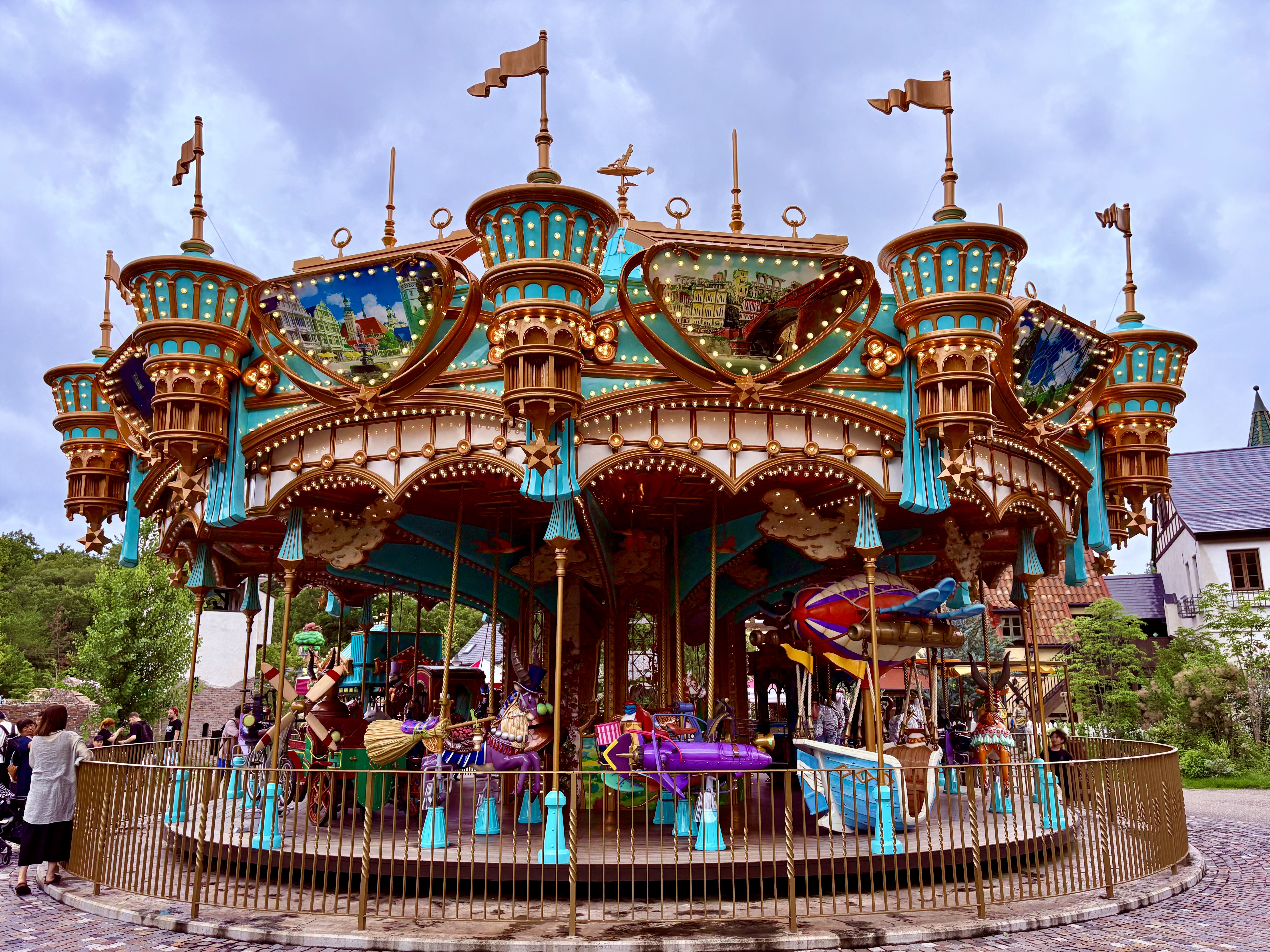
Despite this being a theme park, there are actually only two rides inside the whole park and both are in the Valley of the Witches. They require additional tickets and consist of a carousel that I was enamored with and a flying machine.
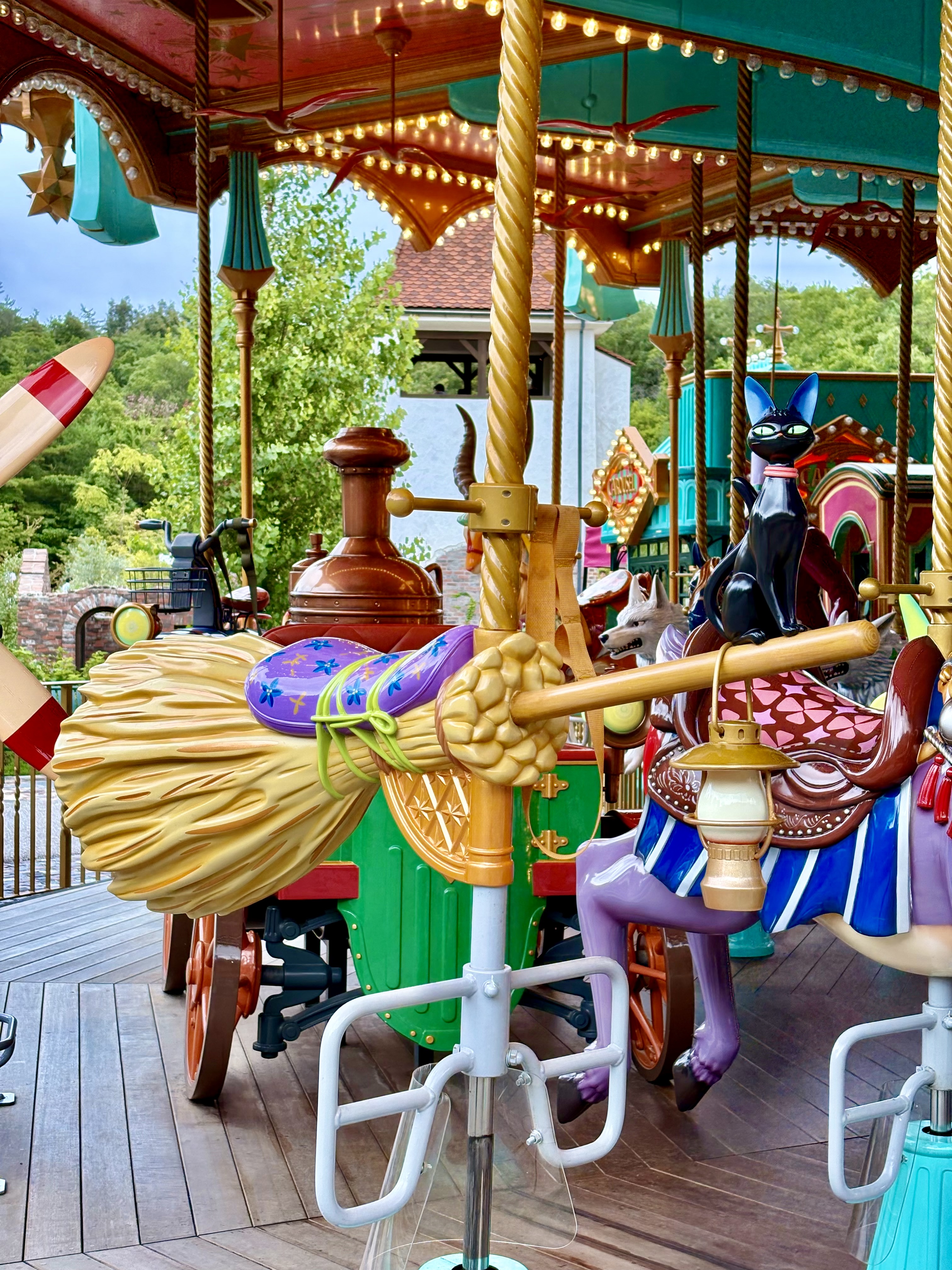
At this point, it was clear that we had time for only one more area in Ghibli park. We could either go up to Mononoke Village or down to Dondoko Forest. It seemed like a crime to not visit Totoro. While it’s not one of our favorite Ghiblis, it is one of their most beloved so we headed to the forest.
It was absolutely stunning. It consists of Satsuki and Mei’s house and overgrown yard, as well as Dondoko-do, which is apparently a playground kids can go inside, but since it was nearing closing time, we had the space to ourselves. It was a magical little area. Then we got to take the Dondoko-go (a small cable car) down the hill.
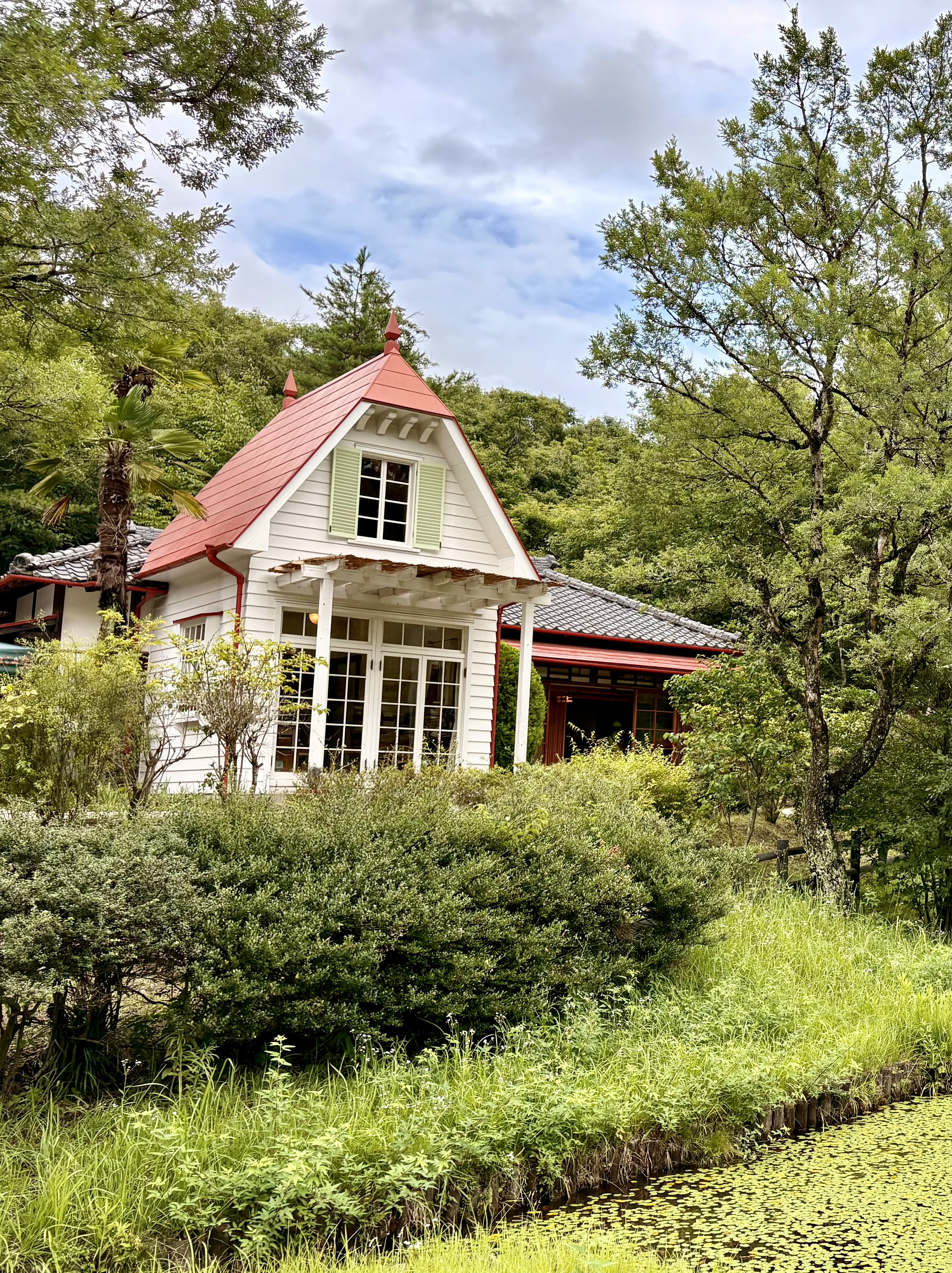
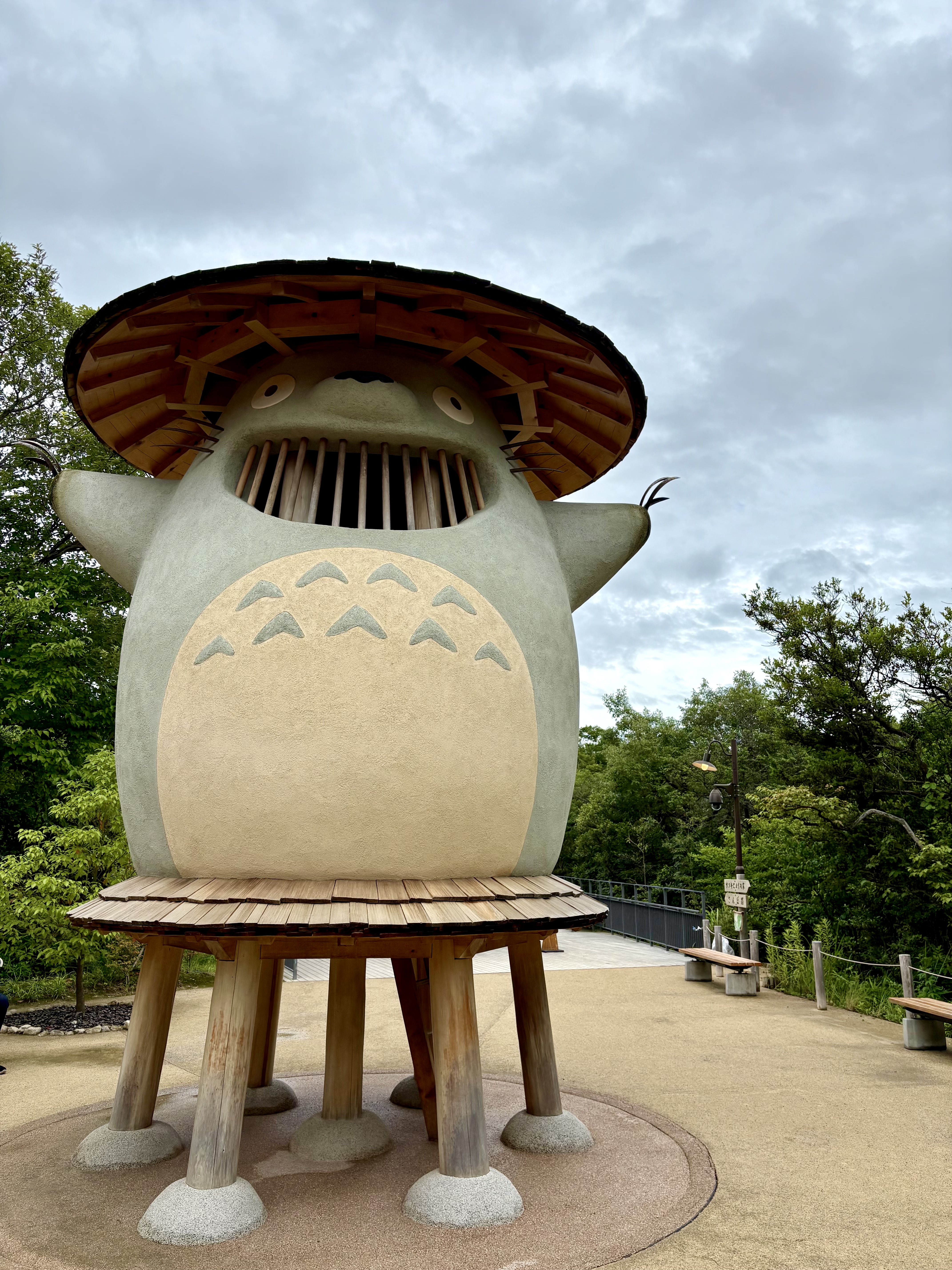
There’s another way to get around the park if the terrain is difficult or you don’t mind paying and that’s a real-life cat bus! We saw it right before leaving and were so tempted to take it to Mononoke Village even though we knew we didn’t have time.
Instead, we headed to the exit via the Toromon Gate, reminiscent of the world of Spirited Away. It was originally at an old restaurant in Nagoya, but was relocated to the park and restored.
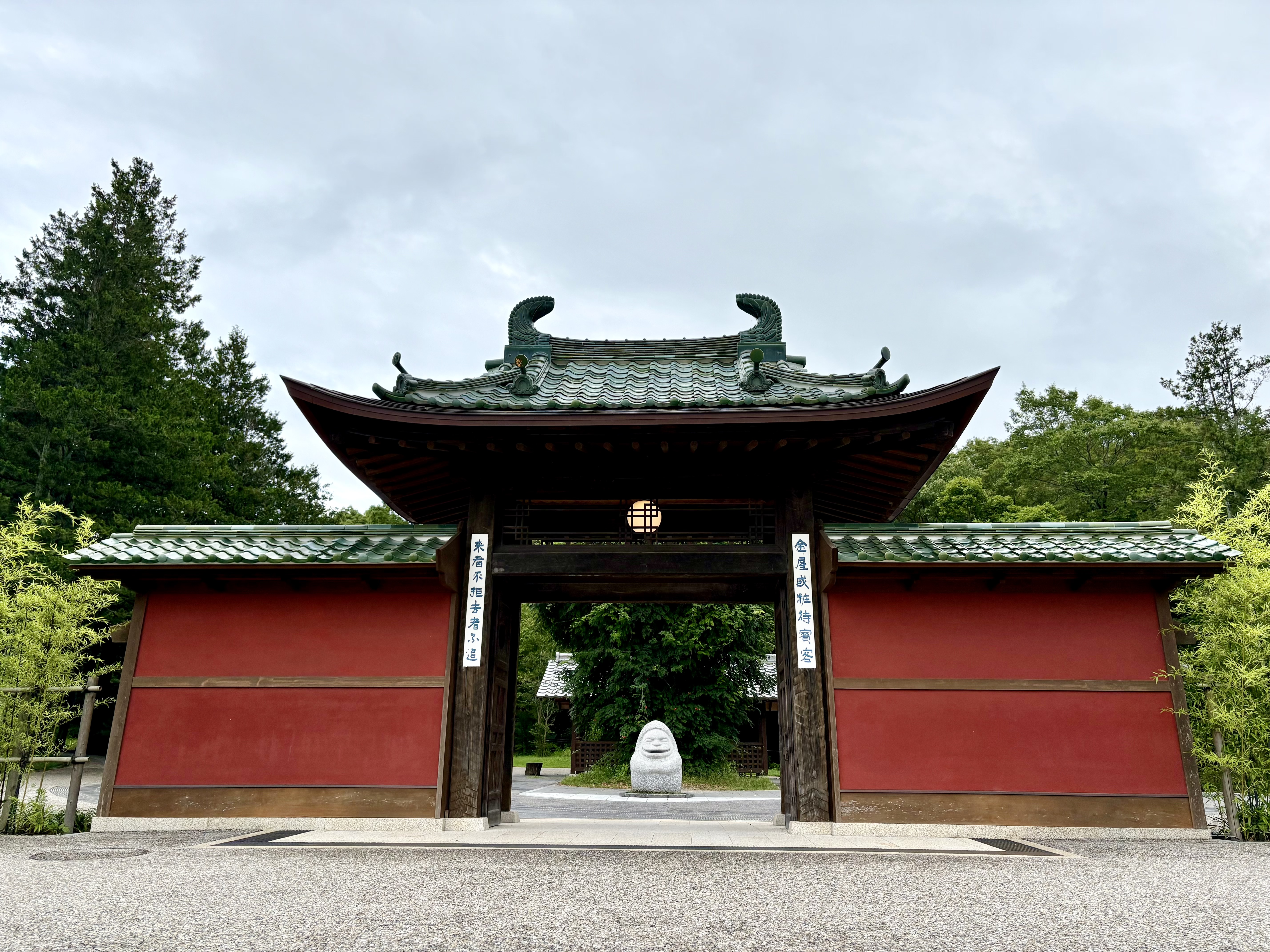
We were mildly bummed that we’d run out of time to visit Mononoke Village, however, we were happy to console ourselves with the fact that we’d happily come back to explore Ghibli Park again. We also missed out on the Maneki Neko Musem (also an hour outside of Nagoya on a different metro line), so Nagoya jumped to first place for Japanese cities we want to return to.
With that, we headed to the airport – this would be our only flight within Japan itself. We were headed to Sapporo, up in Hokkaido. We had traveled between the islands of Honshu and Kyushu via train, but the Shinkansen (bullet train) didn’t extend to Hokkaido. We had plans to travel by train south again to stop in some smaller cities, so we decided to save time by flying to Sapporo.
This ended up being the right call because both airports are amazing – Nagoya’s is decorated with ninjas hanging from ceiling and we literally spent hours shopping and exploring Sapporo’s airport. But that’s a story for my next post.

