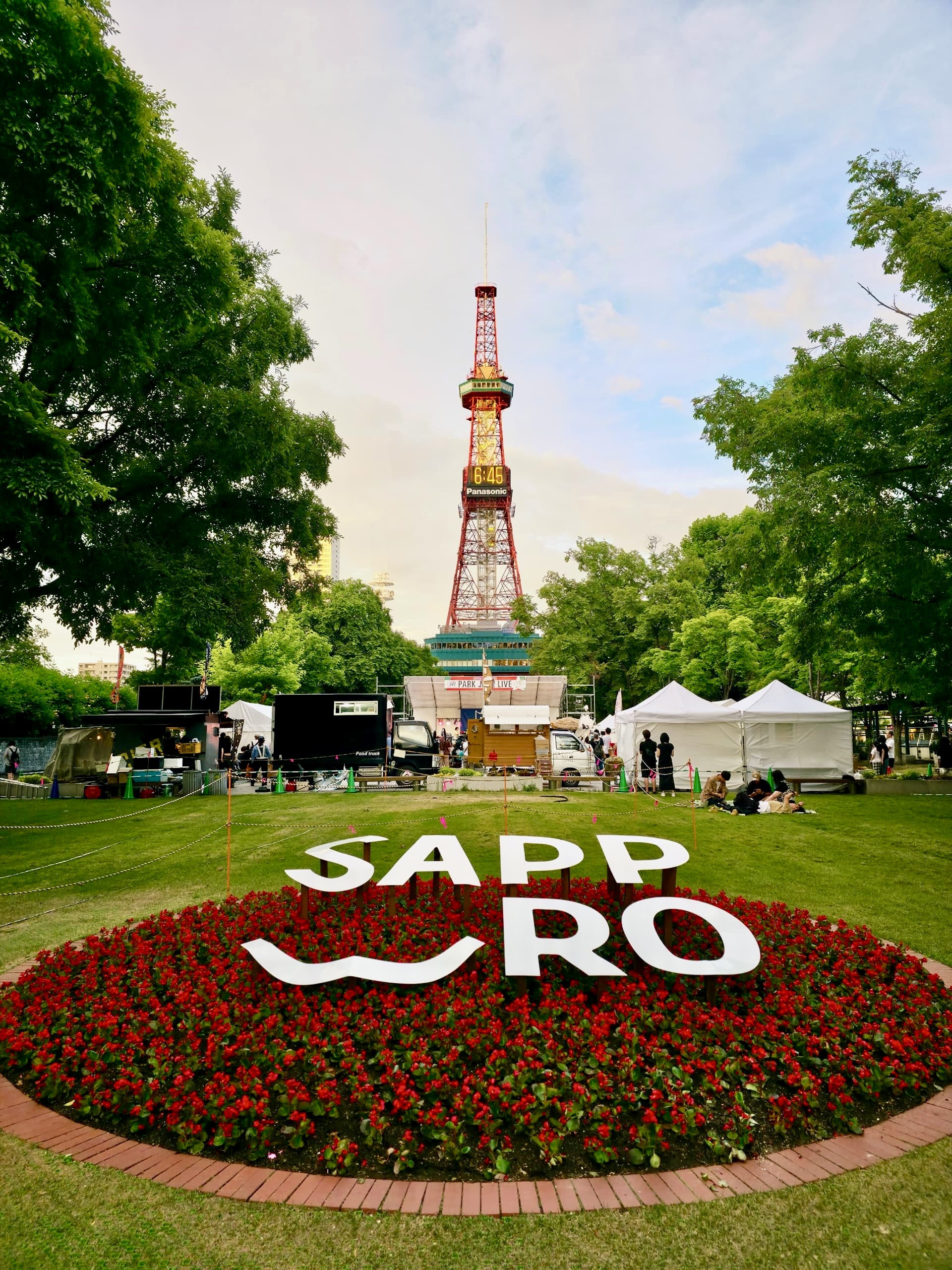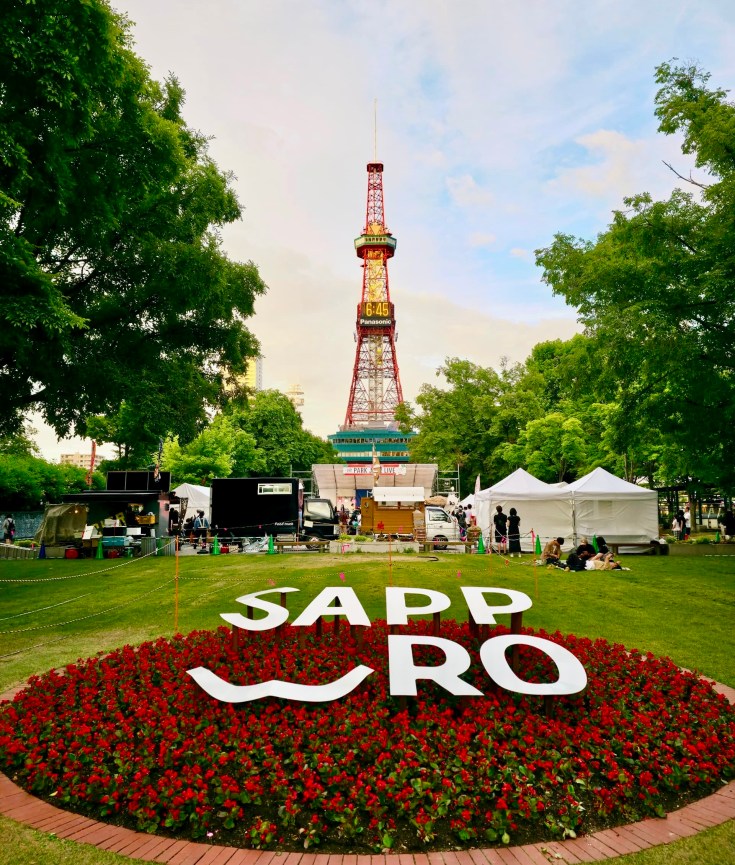
Tokyo, Fukuoka, and Sapporo are my three favorite cities in Japan – and they have almost nothing in common.
Every time we explored Tokyo, we came back to the hotel with three more things to add to the agenda for the already packed next day. Fukuoka was a breath of fresh air and very community oriented. Sapporo felt like home (Minnesota) – which is not a sentence I anticipated writing before experiencing the area for myself!
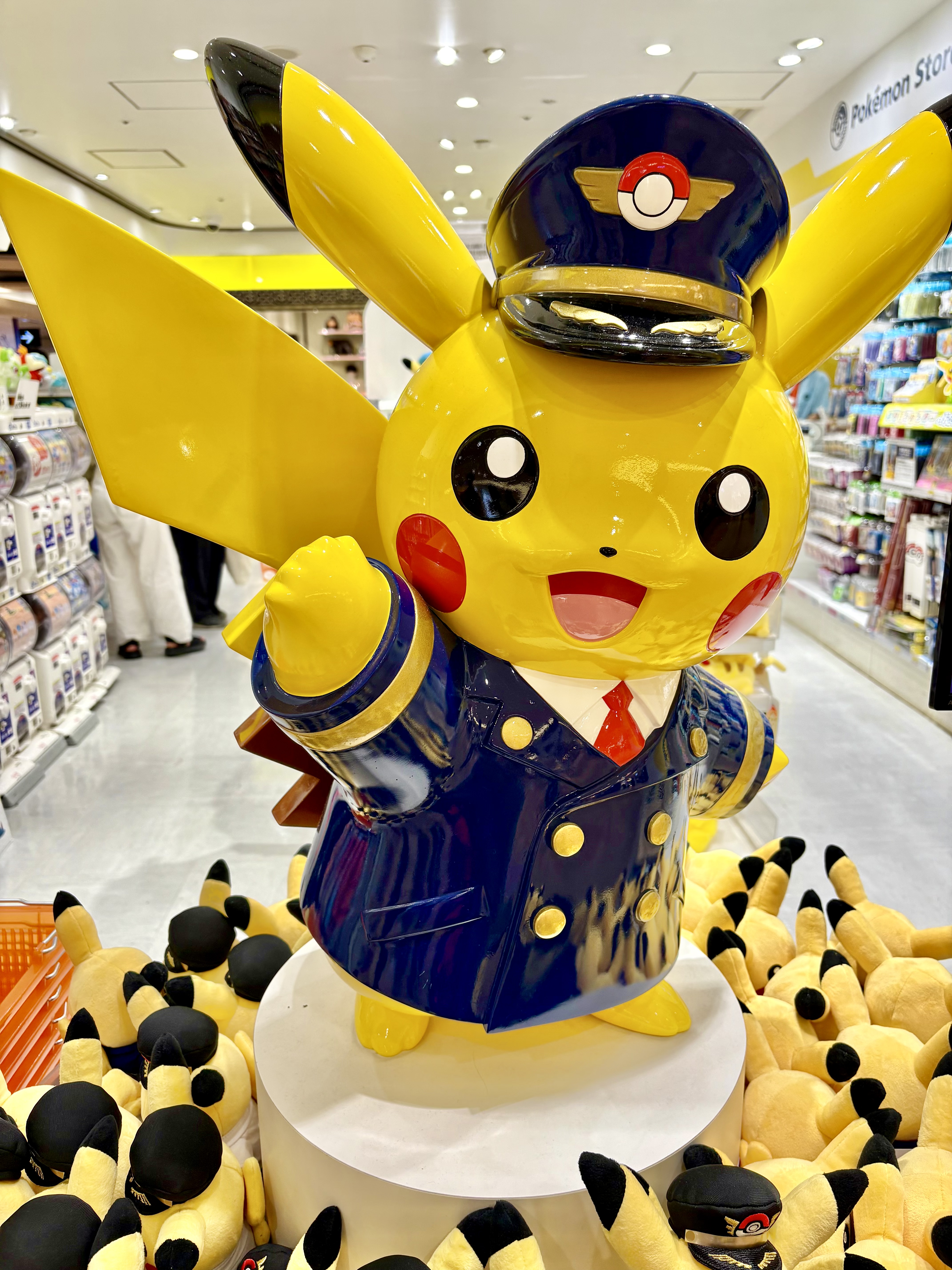
Our first introduction to Sapporo was the New Chitose Airport. Airports are usually places to get in and out of as fast as possible but instead, we found coin lockers to store our luggage so that we could explore. In total, we spent two hours at the airport – not waiting on our bags or going through immigration – but shopping! We found the Pokémon Center, Ainu Handicrafts, Gundam, Hello Kitty Happy Flight Shop, and Royce’ Chocolate World, to name a few.


But we didn’t go to Sapporo for the airport, so we eventually made our way to our hotel. We really wanted to relax in Sapporo – we’d been traveling for a month at this point – so we’d booked a room at Hotel Sosei, an MGallery boutique hotel. It was exactly what we needed.
Our favorite way to relax in a city is to eat and that’s what our time in Sapporo revolved around. We were especially excited to eat up north because Hokkaido is the northern most prefecture in Japan and therefore has a very different climate.
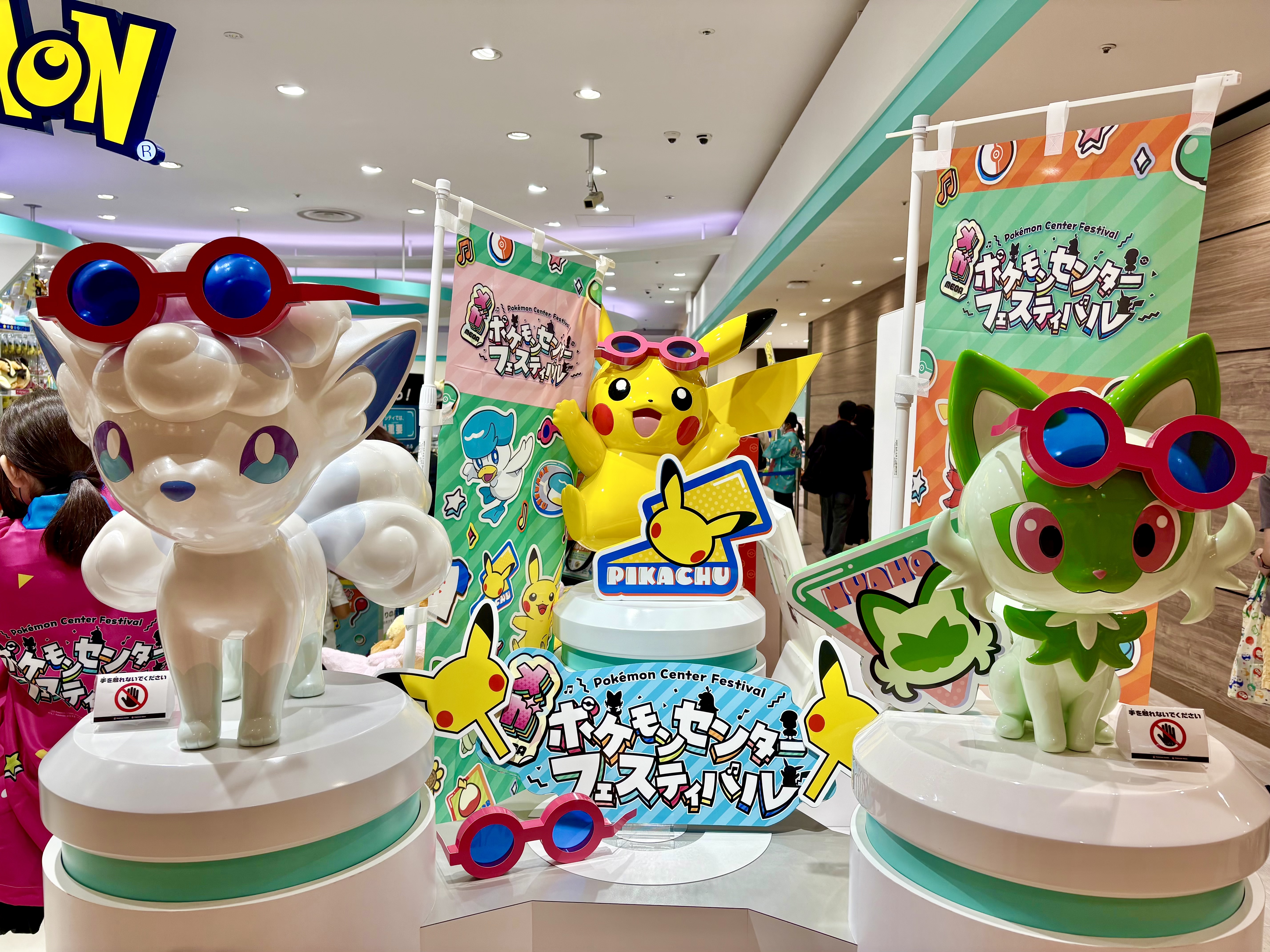
It even shows in their Pokémon Center – Sapporo has adopted Vulpix as their mascot! While the original Vulpix is a fire-type and has a reddish-brown coat, the Alolan Vulpix is an ice-type adapted to snowy mountain peaks with a white pelt and freezing breath. Adorable, right?
In my title, I connected Sapporo to my home, Minnesota, and that’s not an exaggeration. In addition to freezing winters, as well as farming that takes place in both locations (hello, corn!), they also have some of my favorite trees: Birch.
We found ourselves in Maruyama Park surrounded by birch trees. And the weather is spot on – brutally cold winters are rewarded with perfect summers. After a sweltering month in the rest of Japan, Sapporo was gorgeous at 75°F most days.
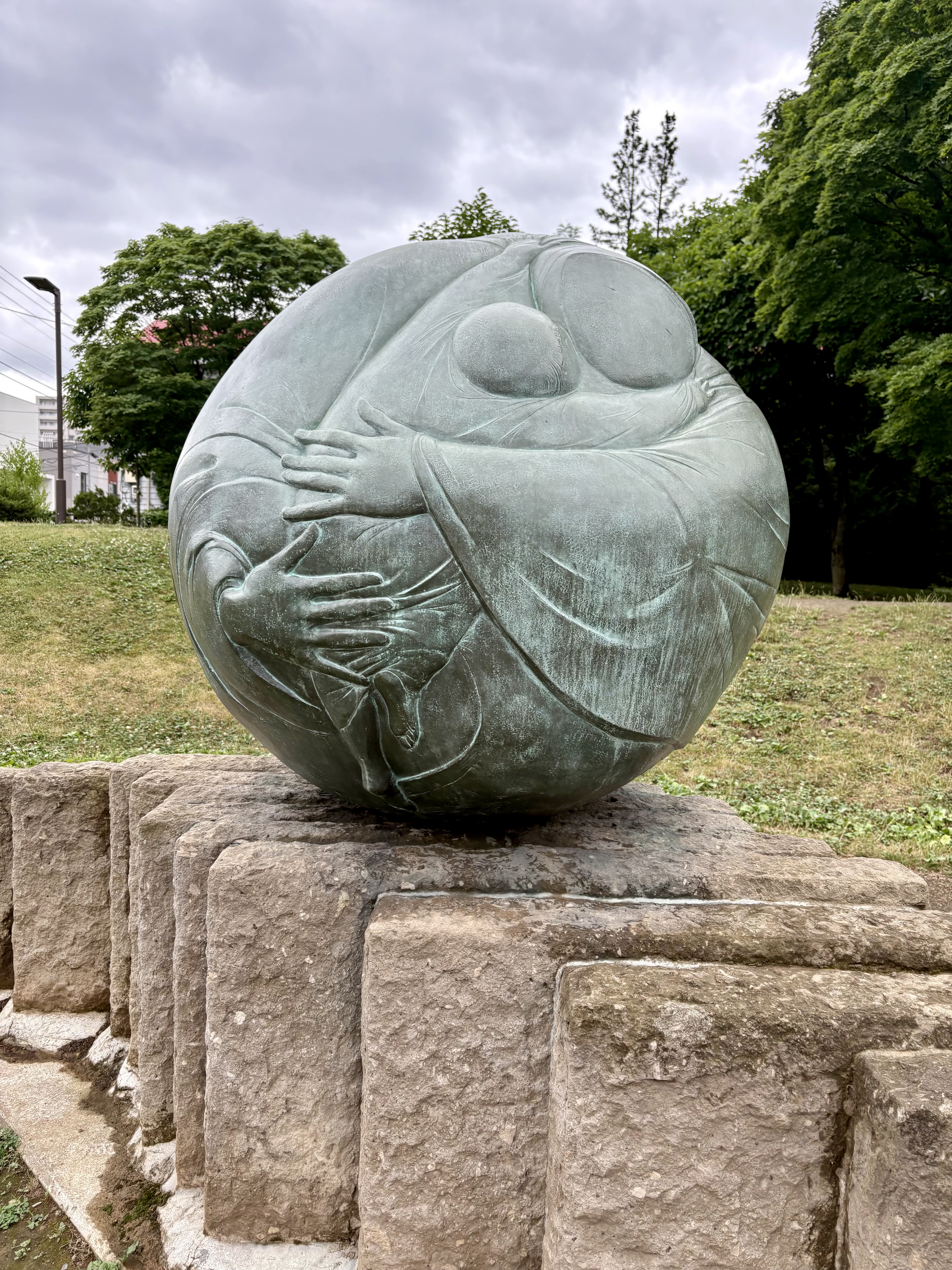
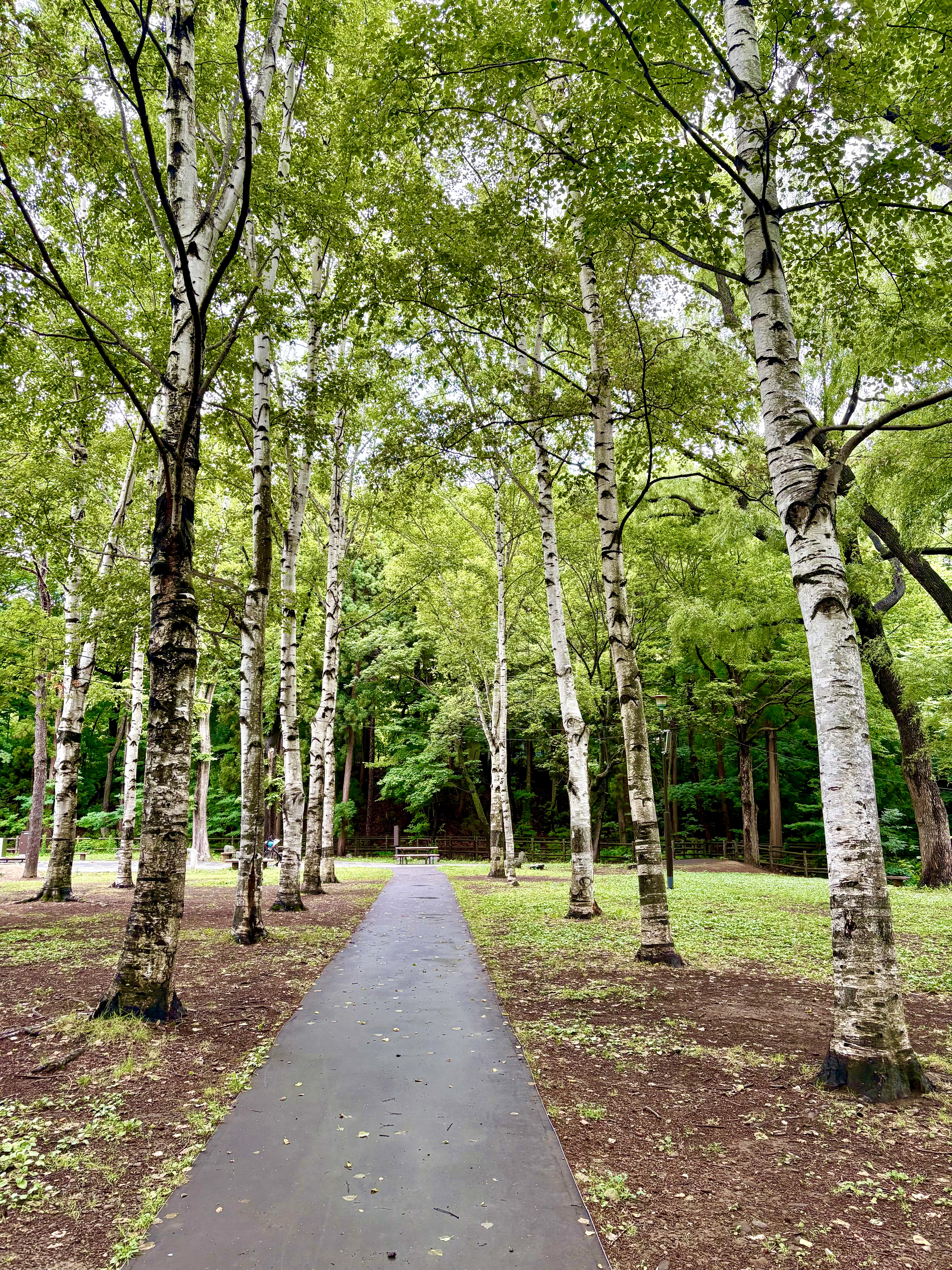
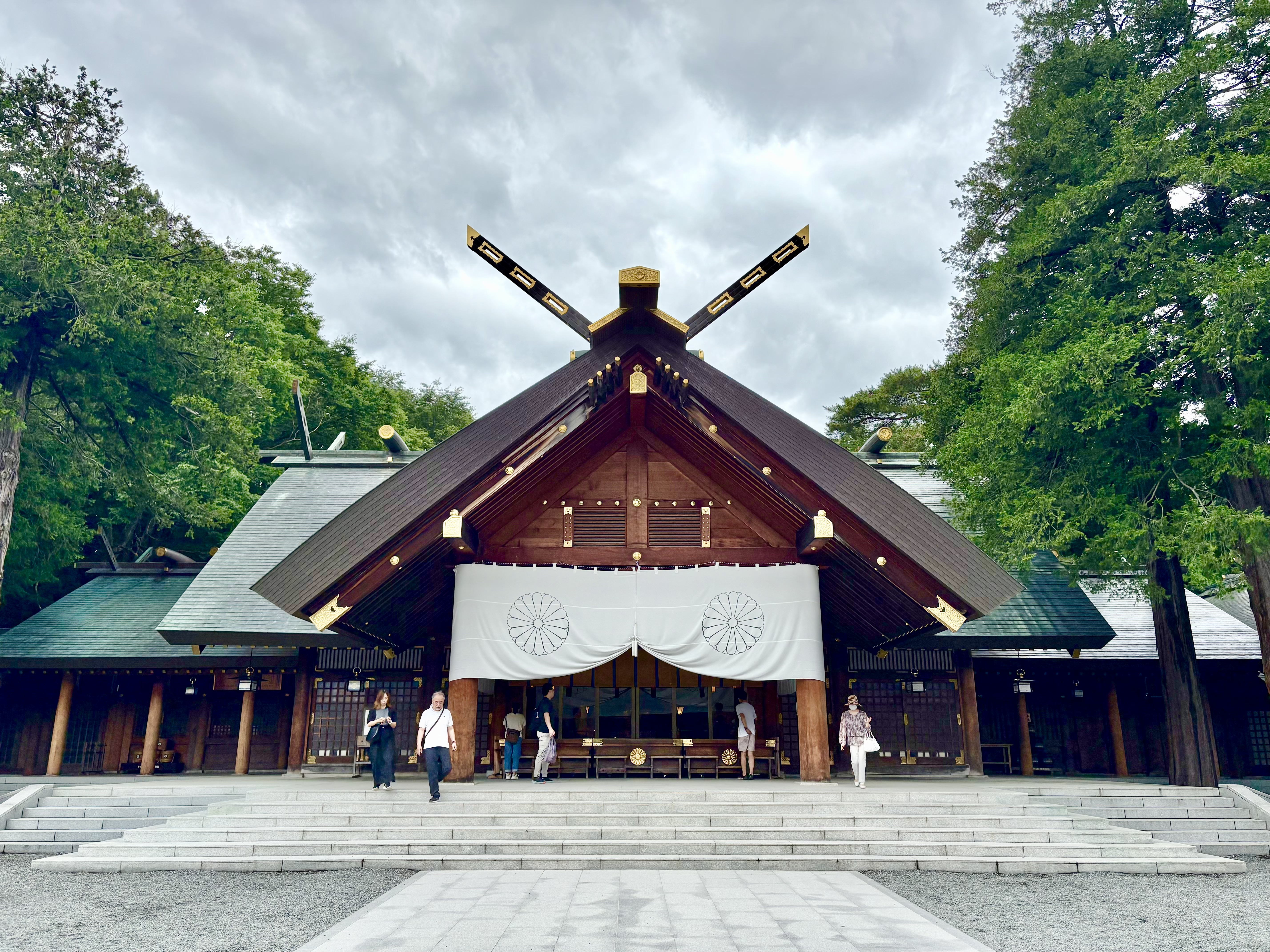
Which is why Maruyama Park is one of the few parks in Japan we were actually able to spend some time at! Of course, I loved the trees, but we were also there to see the Hokkaido Shrine. While there, we were told to keep an eye out for birds, as well as the occasional wild chipmunk – I’ve definitely seen plenty of those in my life! We’d spent nearly every day in Japan walking around all day, every day, but aside from Kyoto, this was one of the few natural spaces we’d been in.
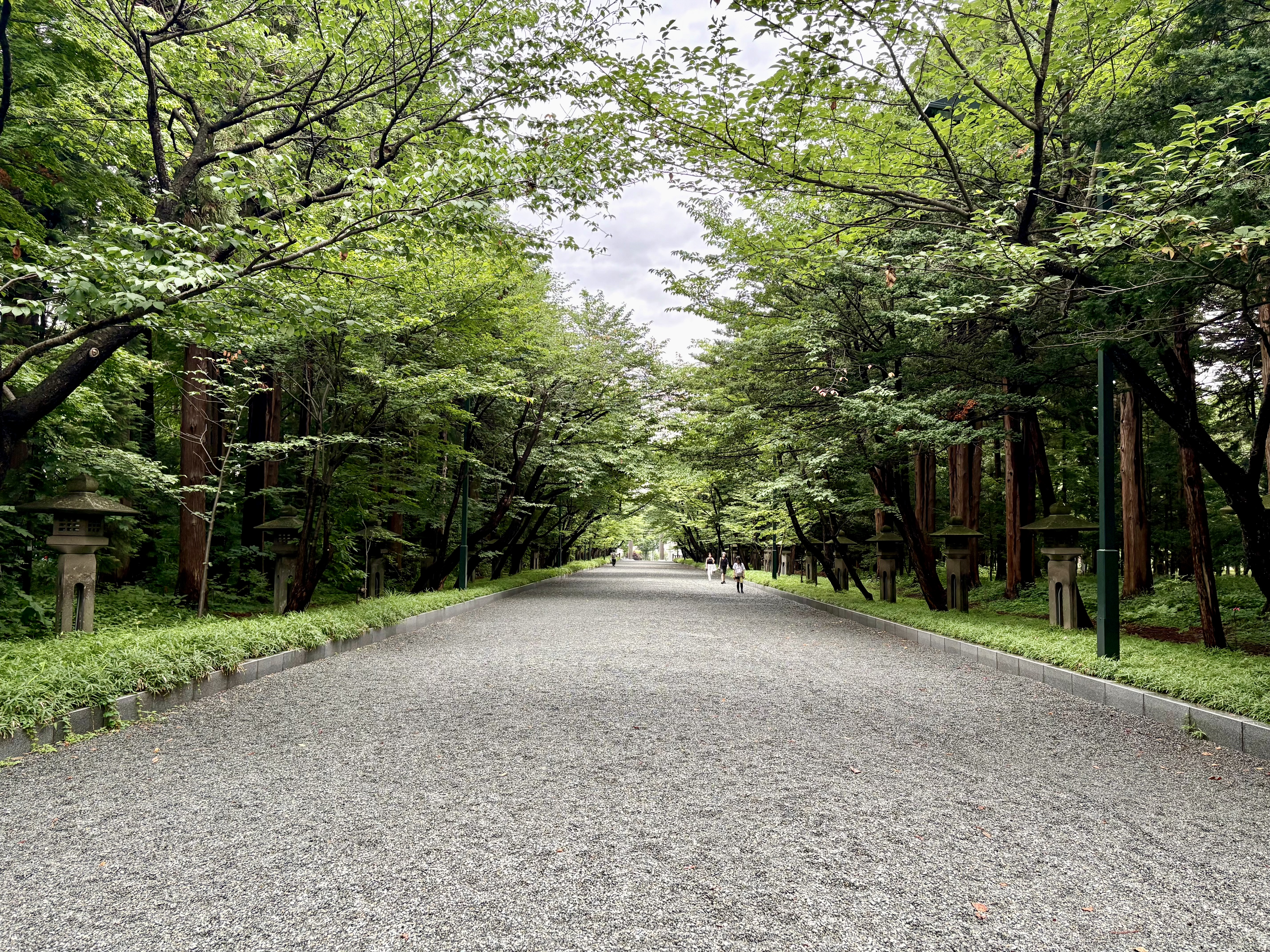
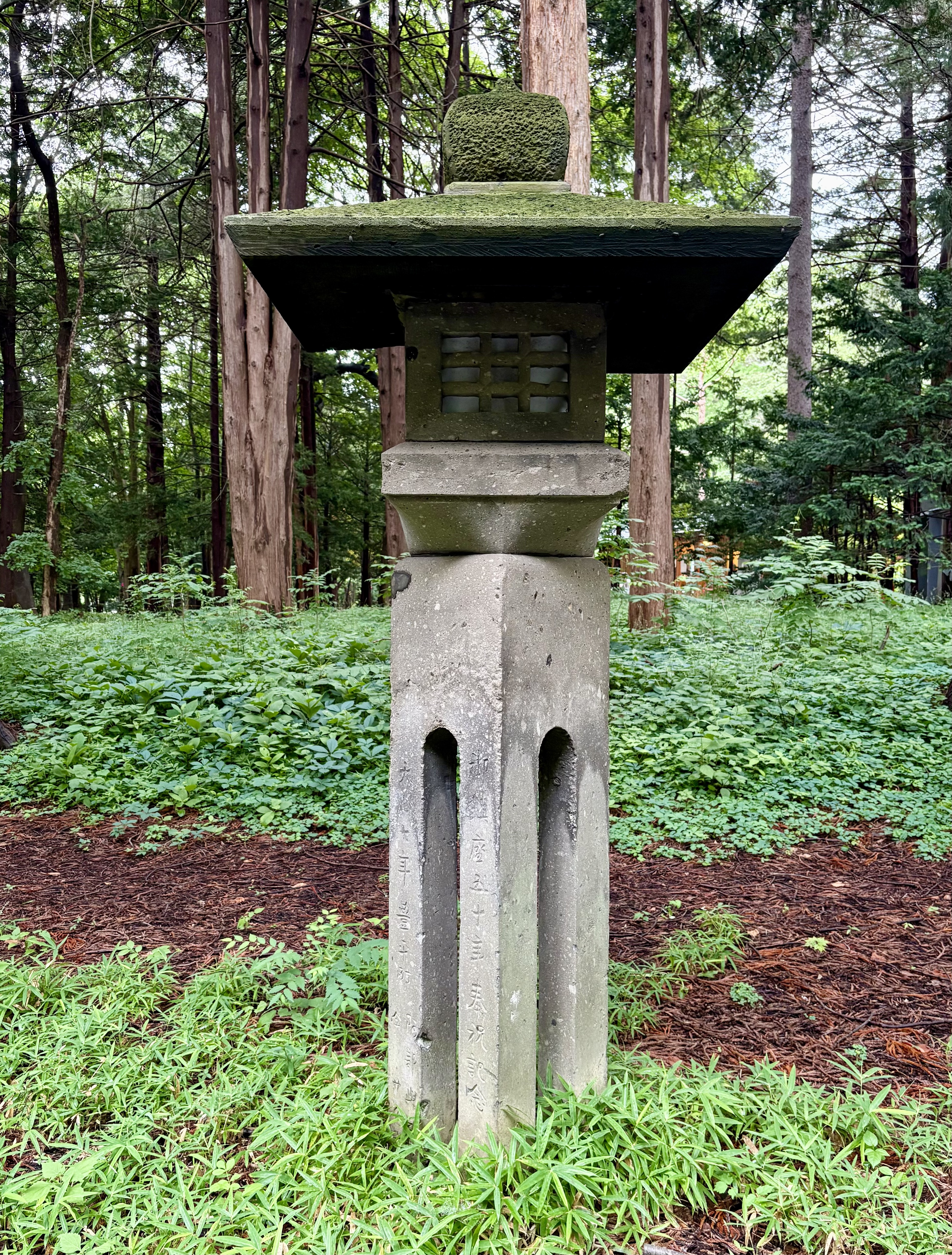
Minnesota is obsessed with patio culture in the summer, as a way to enjoy what little good weather we get, and Sapporo definitely had that vibe with outdoor seating and parks full of beer gardens and food stands. And since we’re talking about food:
Instead of a heavy focus on ramen and rice, Hokkaido is known for its produce. Which means meals up north are much better balanced. Europeans were also brought in when the city of Sapporo was constructed and the Japanese perfected wine, beer, dairy, and bread, completely altering the palate in the north.
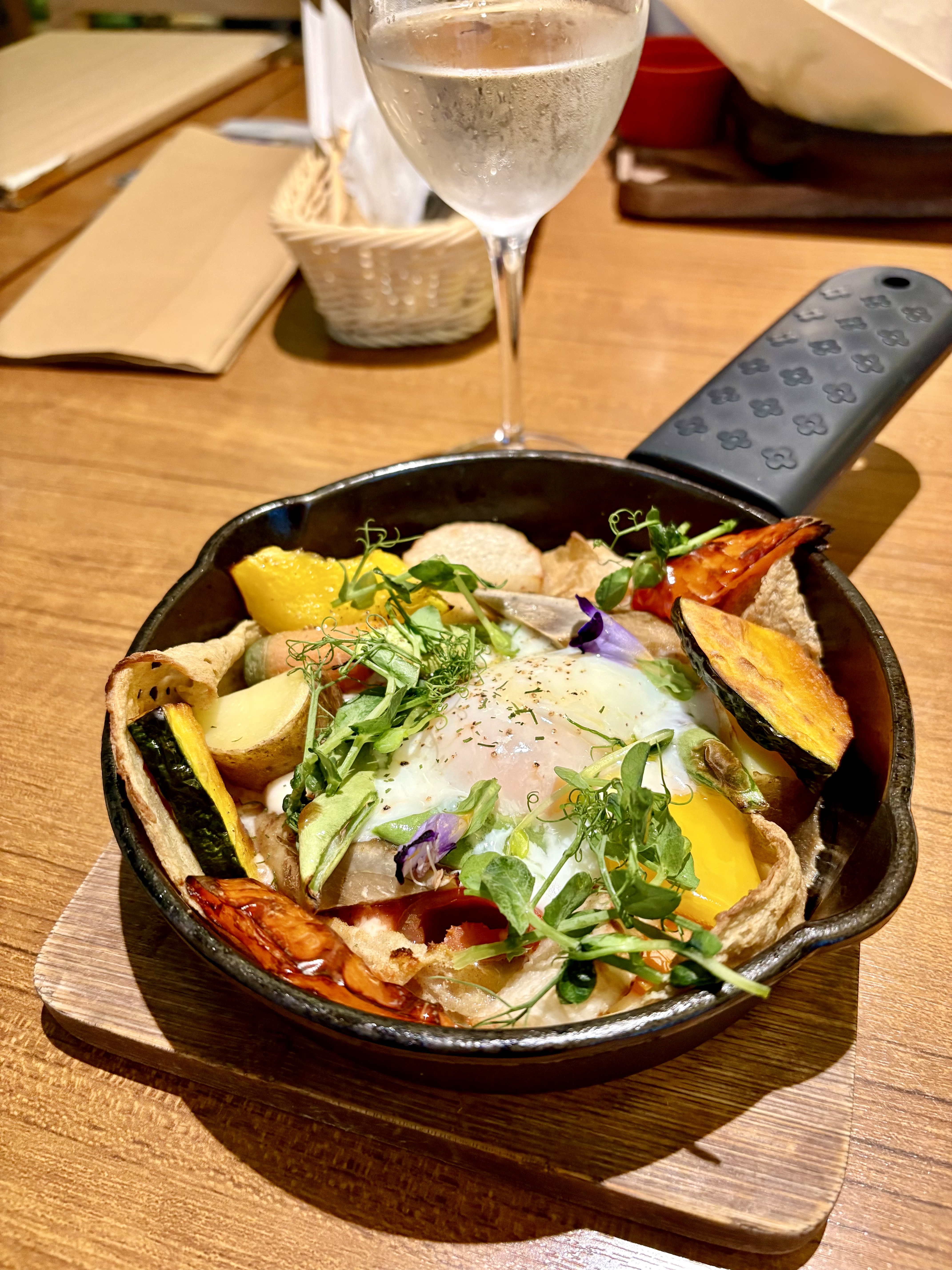
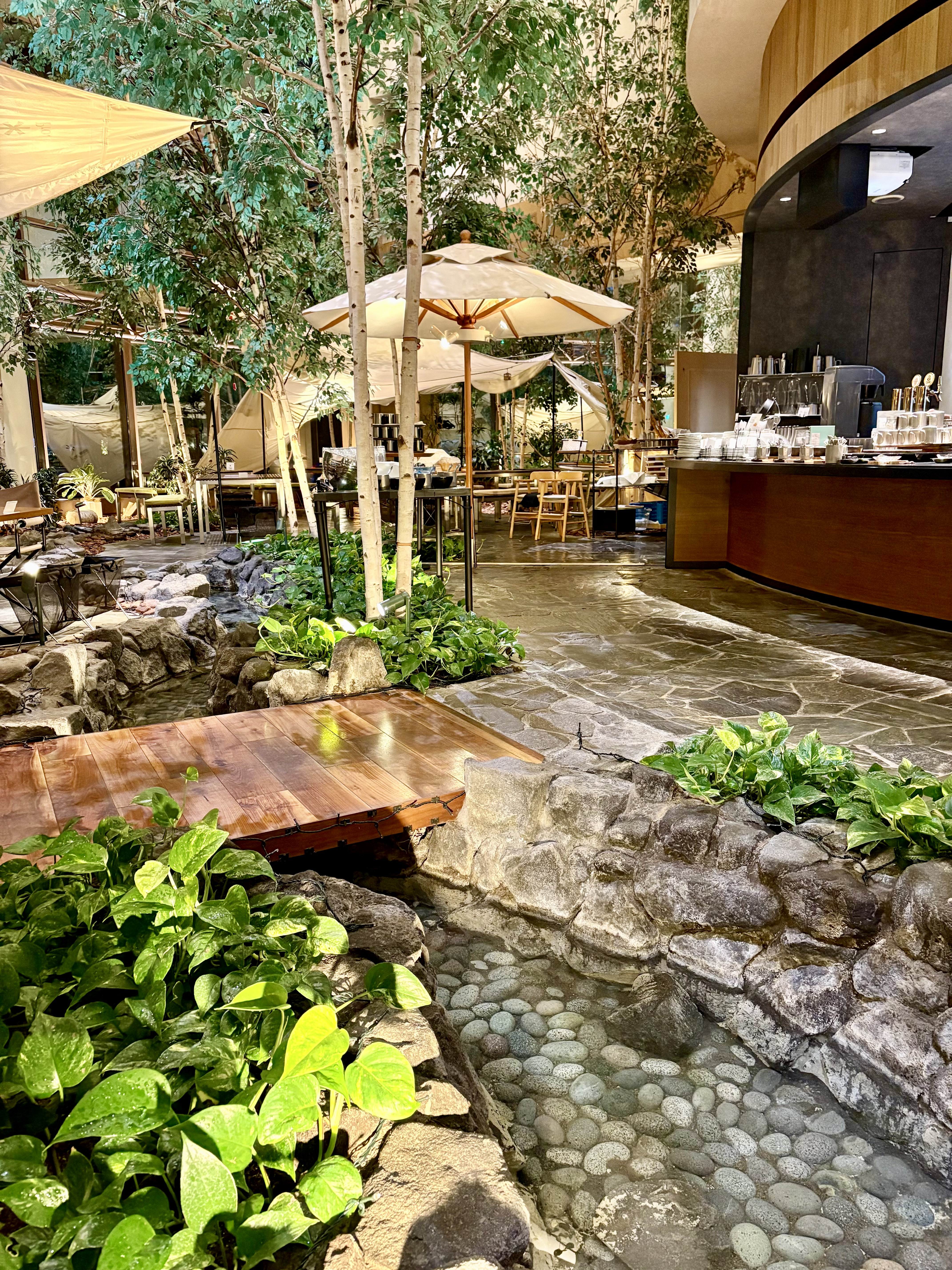
The location of our first meal was a bit of a surprise. Terra: Farm to Table is actually in Hotel Mystays Premier, but it has a beautiful setting – think glamping in the city. We filled up on quinoa soup with Hokkaido beans, a savory galette, and a raclette plate that focused more on veggies than cheese. It was also my first encounter with Hokkaido wine – from Yoichi Winery. It was clear from the beginning that our meals in Sapporo would stand out.
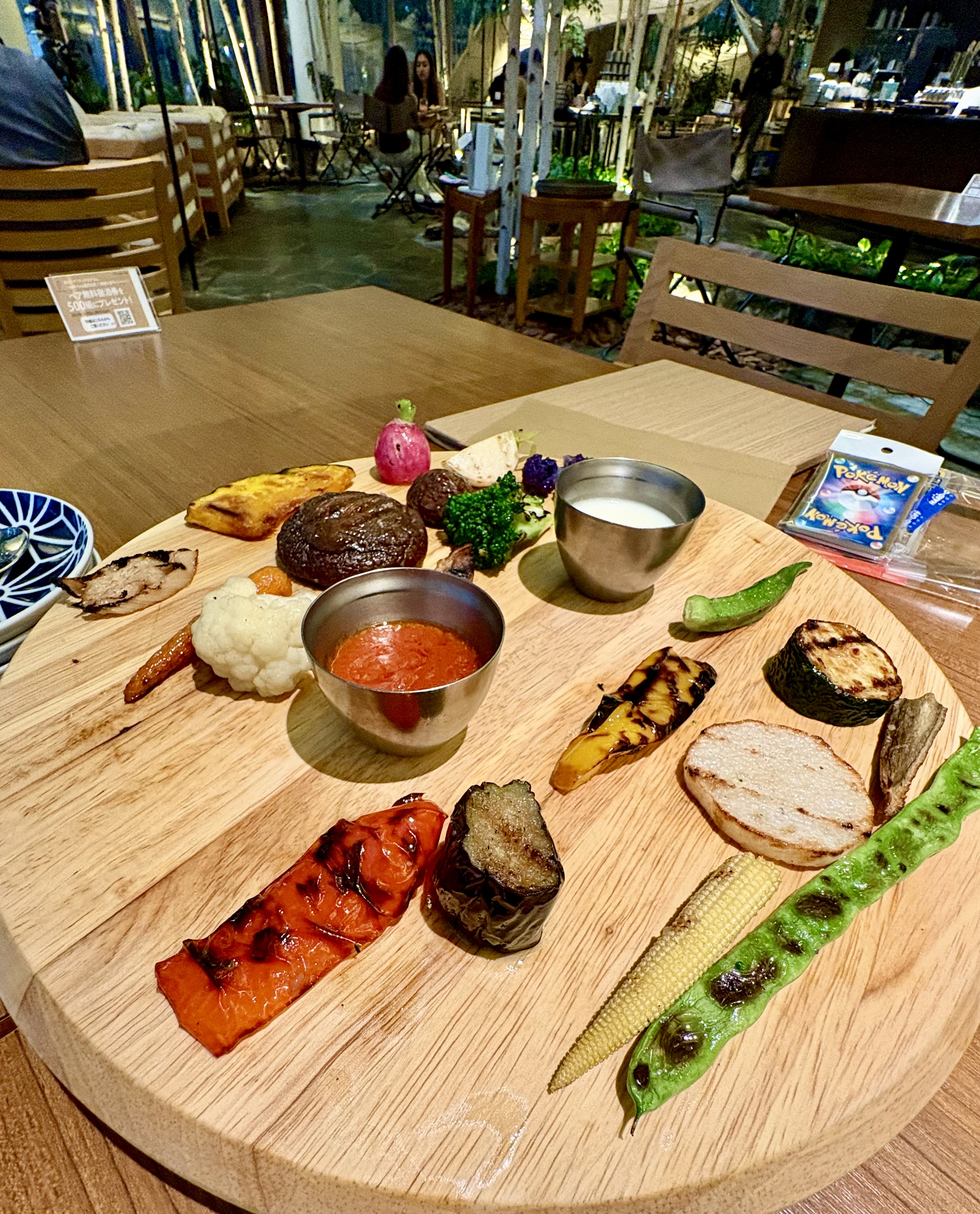
Lohas is hard to explain. Part of their menu is raw and we enjoyed a mushroom salad, as well as raw sushi made with nuts & veggies. But we also had pad gaprao soy meat and veggie nuggets. We had to endure one of the rudest Americans we encountered on our trip, because he didn’t believe some of his food was flavored enough, but once he left, the mood visibly relaxed. There’s also a gelateria called La Giostra across the street that people started lining up at while we ate – by the time we finished, the line was halfway around the block.
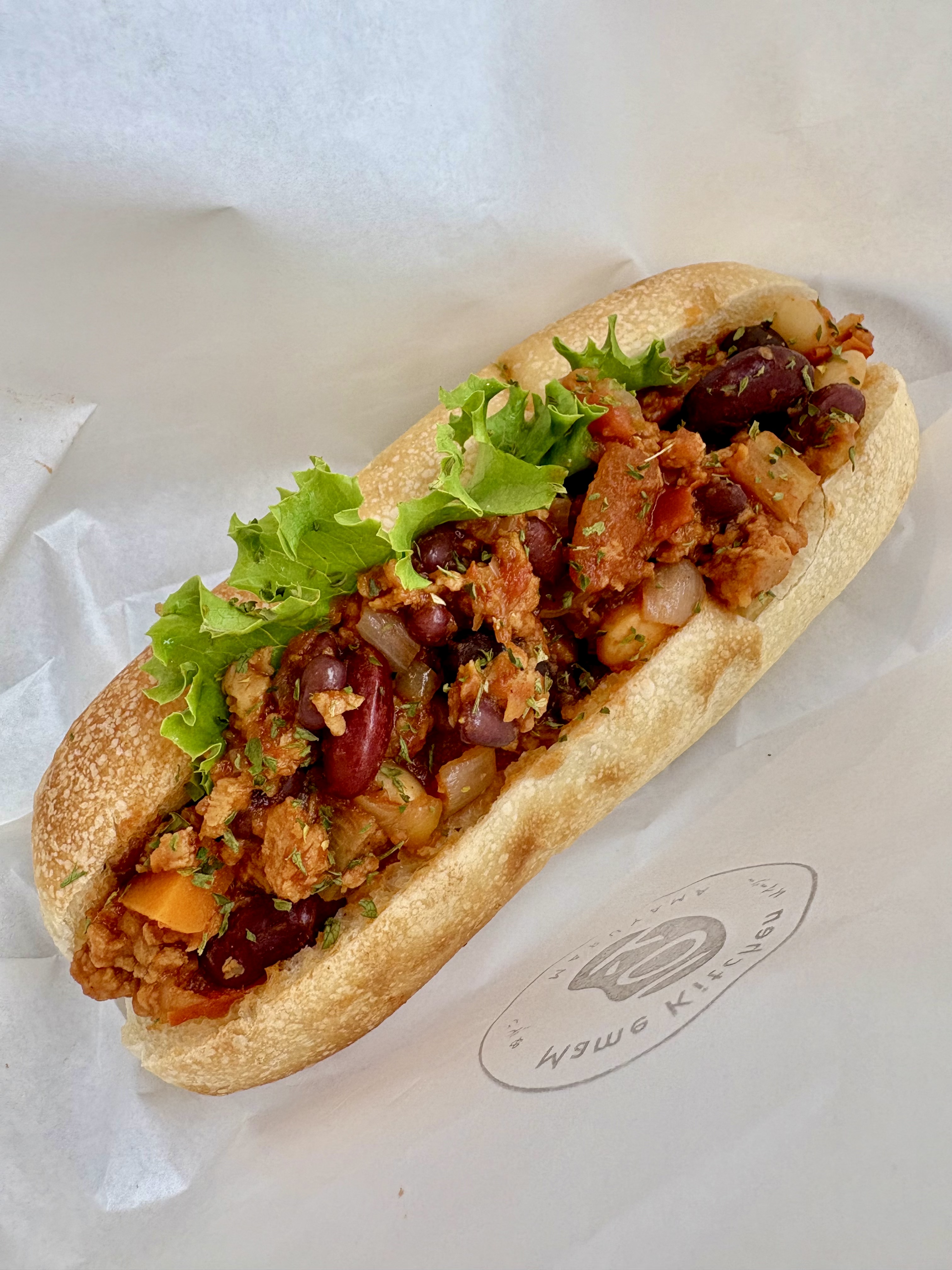
Another standout meal was at Mame Kitchen Maruyama. The shop is run by two women and we definitely benefited from Chandler’s beginner Japanese. We ate incredible bean sandwiches and amazingly fresh onigiri, but only because Chandler ordered in Japanese – otherwise we would have missed out on the extra onigiri we bought to take with us!
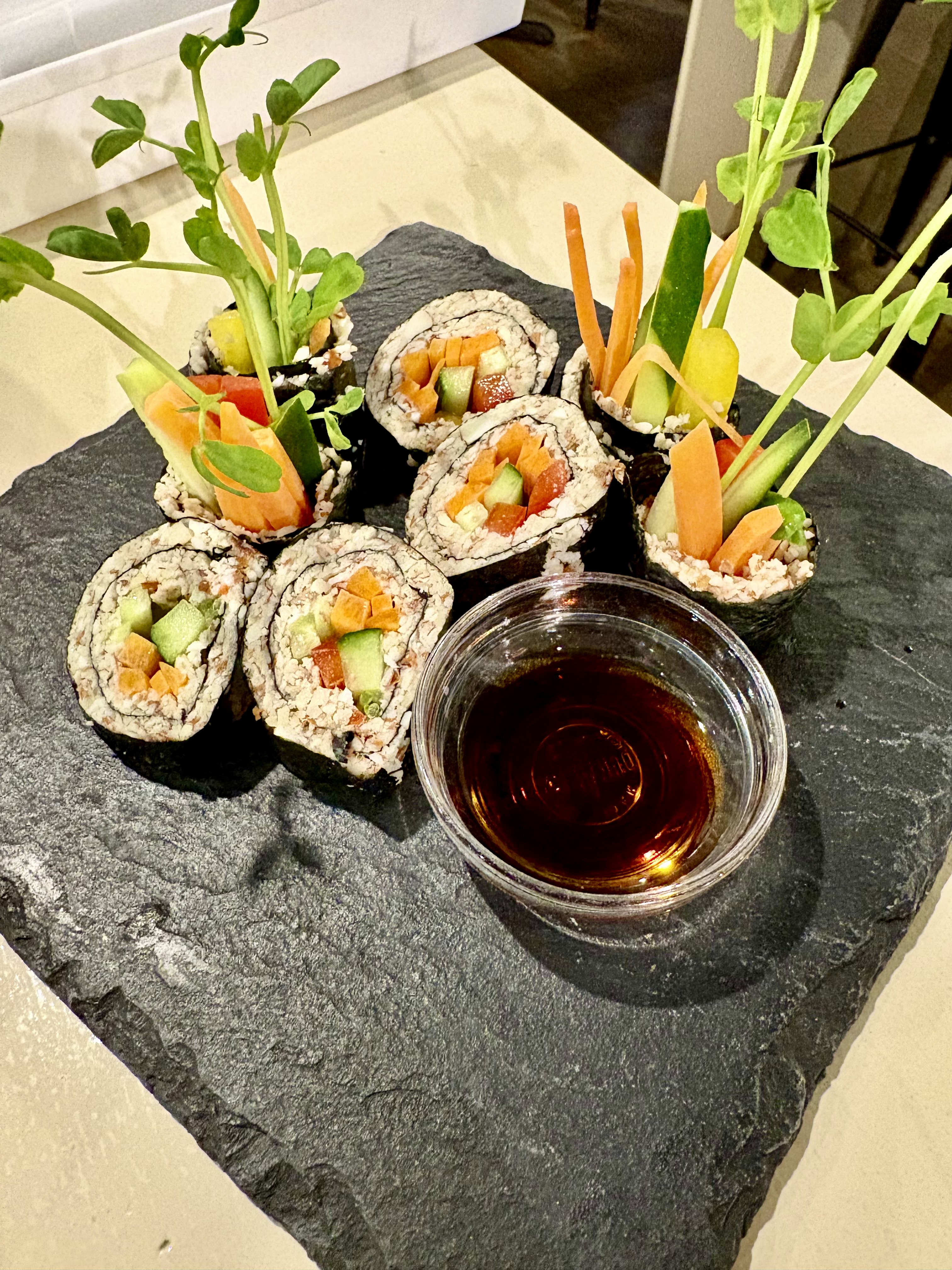
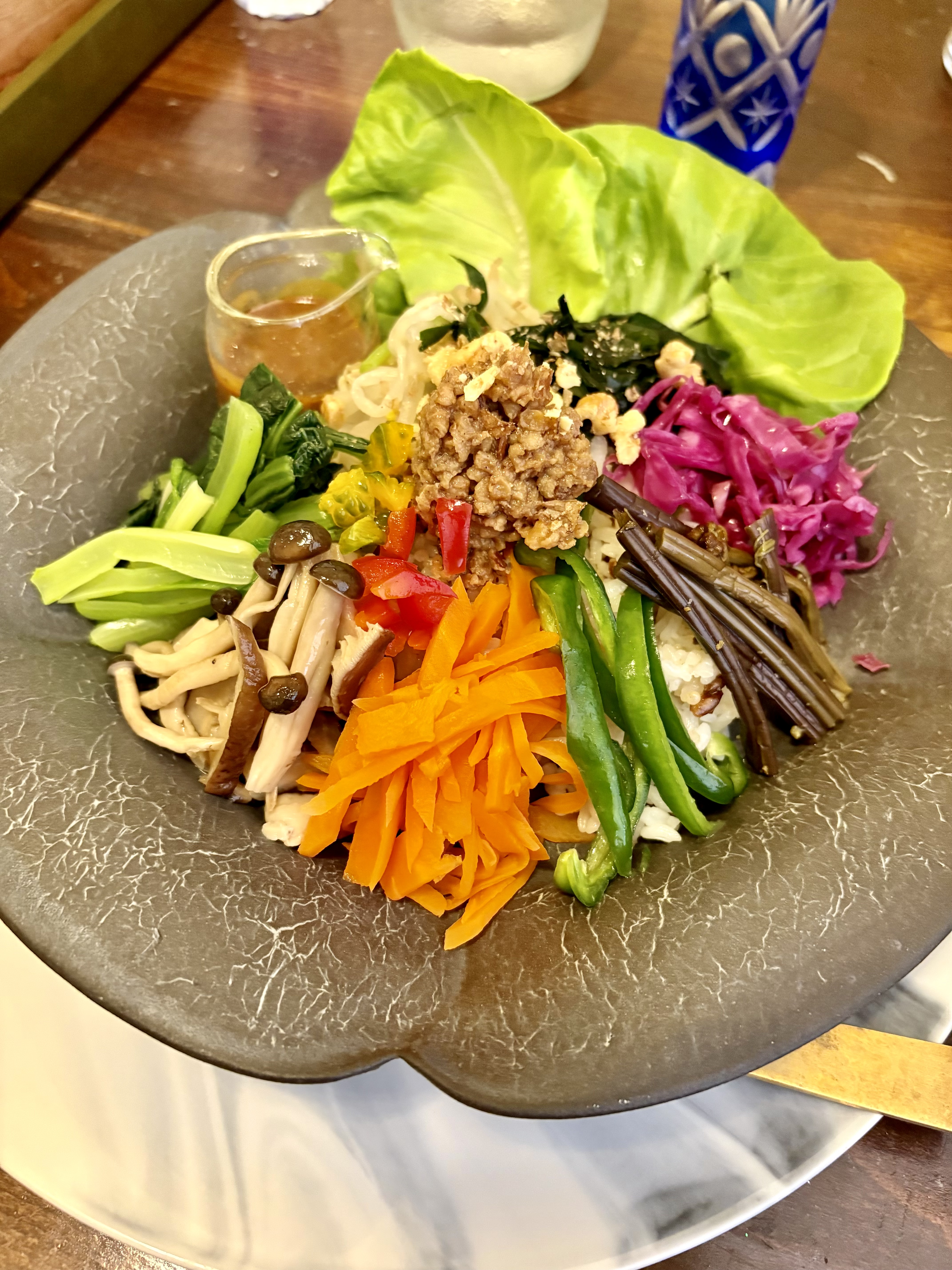
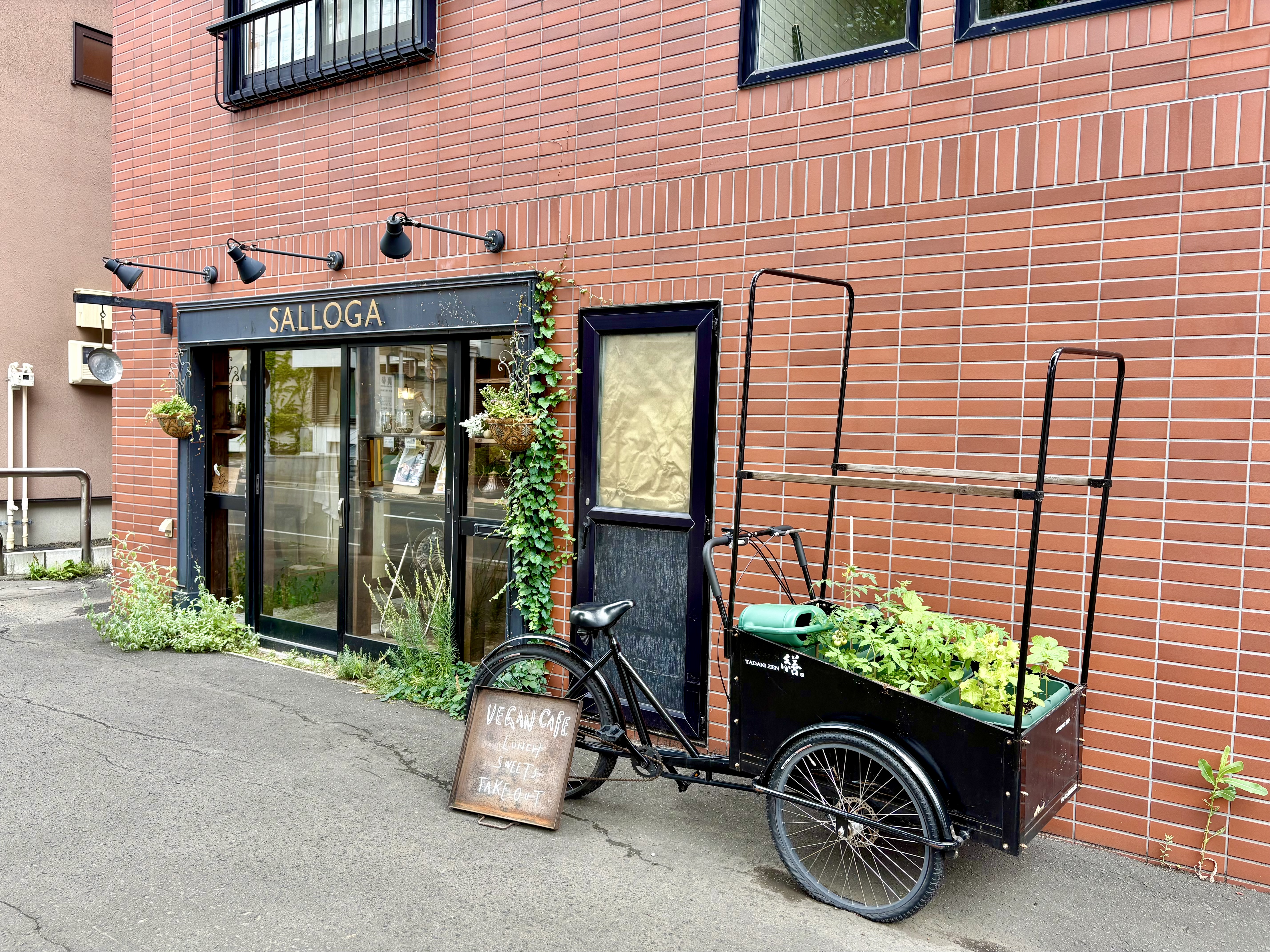
Salloga (formerly known as Itadakizen) was a unique experience. The front room is a natural food shop, but for lunch, you go back into the house, right next to the kitchen. This was another encounter that was greatly enhanced by Chandler’s Japanese as it was run solo by an older woman. The menu was limited, so we ordered both mains and a side – the potatoes were amazing and so was the miso veggie platter and the deconstructed kimbap salad. We were eating fresh and loving it.
Our absolute standout meal occurred at l’Espérance and this time I was the one to facilitate it. In order to eat there, you need a reservation. They don’t open if they don’t have any reservations and those can only be made by phone or on Instagram.
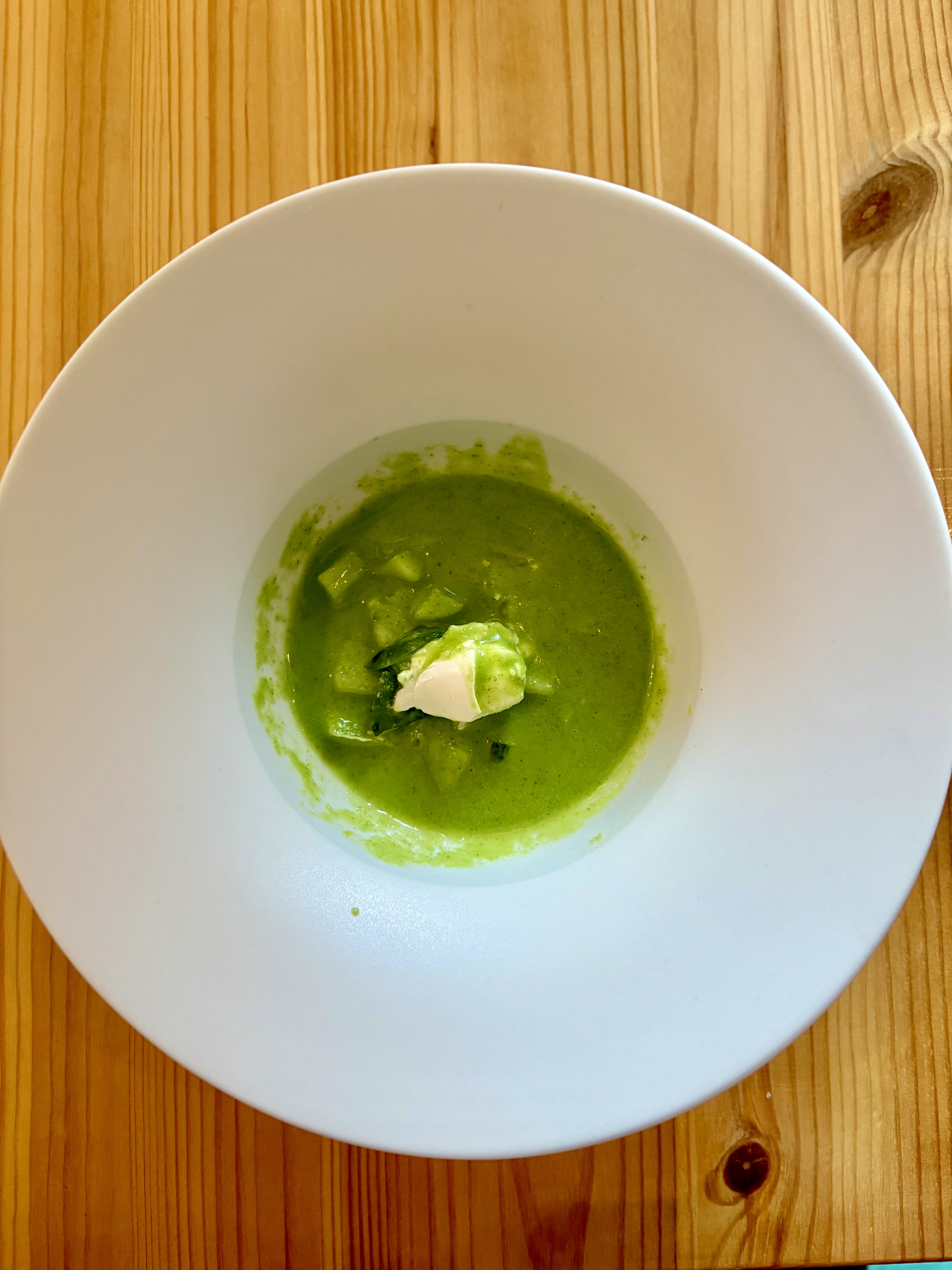
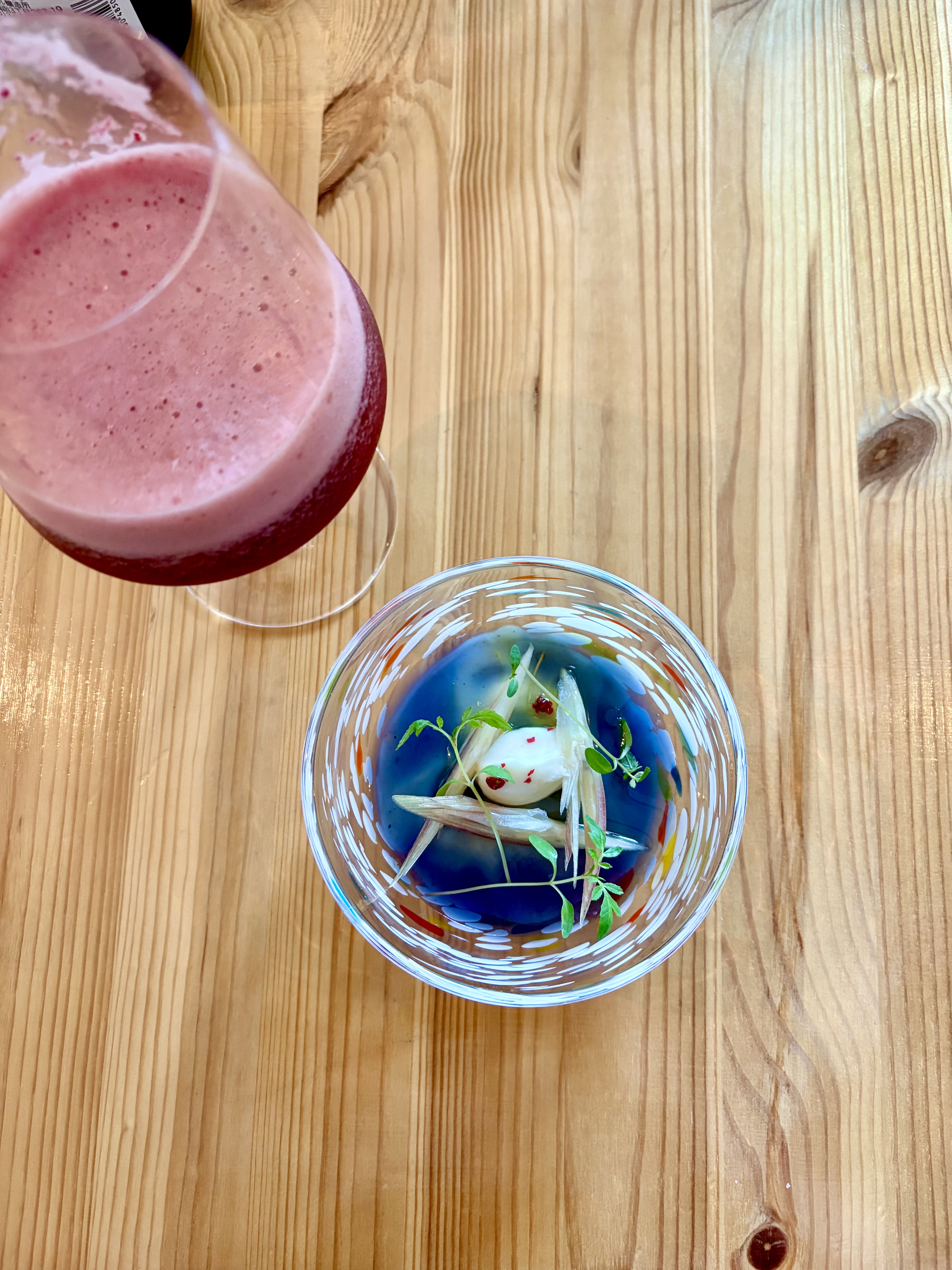
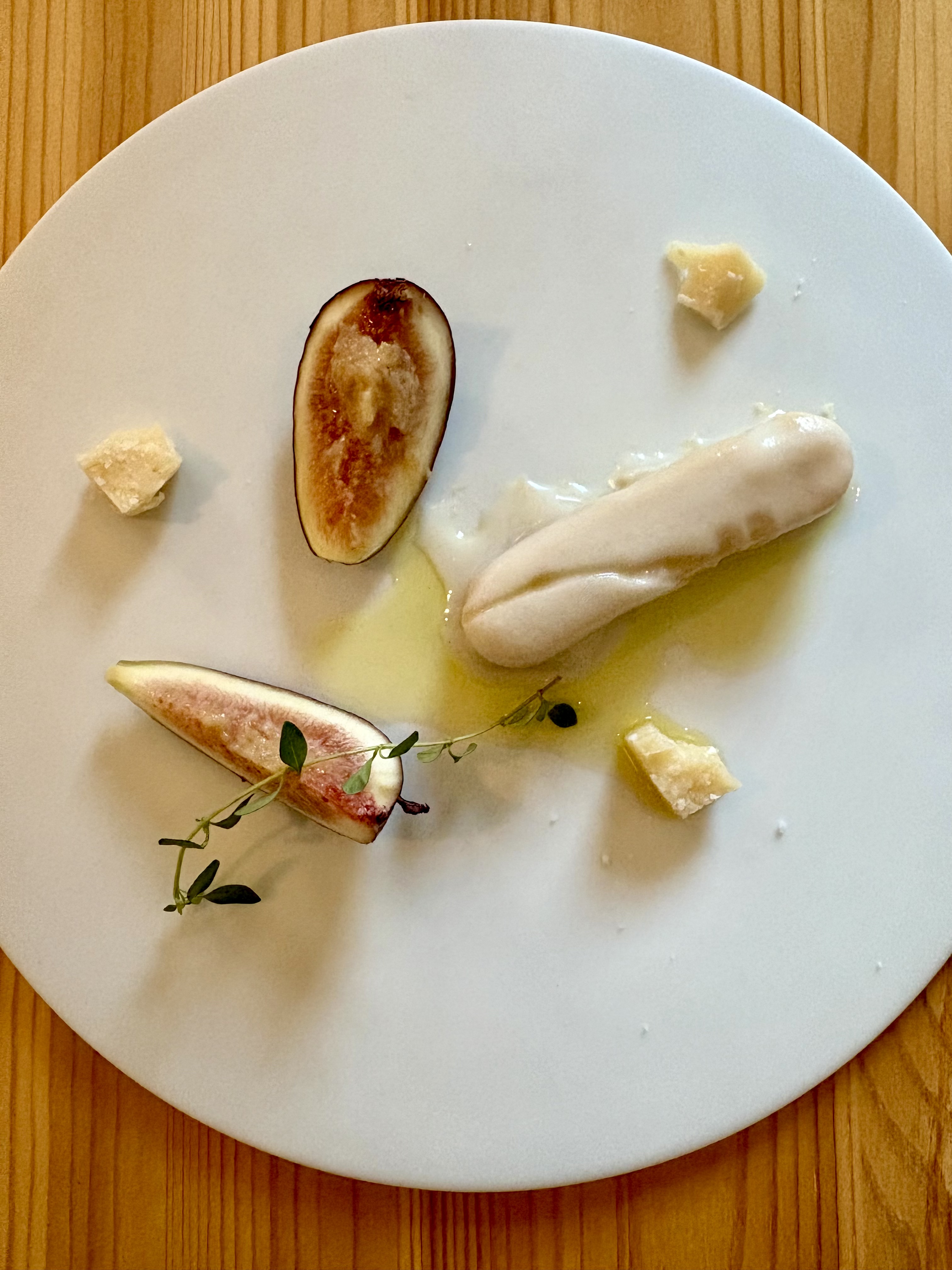
The cook/owner only spoke Japanese, but he had a new server who spoke English, and like we always do, we got into a long talk about how we had found our way 1) To this hard to find restaurant and 2) To Sapporo in general. We ordered one vegetarian and one vegan tasting menu, which came with eight completely unknown French/Japanese fusion courses. I couldn’t explain them if I tried, but it ranks as one of our top three meals in Japan along with the vegan Hakata ramen in Fukuoka and vegan sushi in Osaka.
But our time in Sapporo wasn’t just about amazing food. Our first local wine had been sampled at Terra and our enjoyment of it had us exploring a nearby wine shop, where we were thrilled to find a local option of our favorite type of wine: A salty white.
With grapes often grown near volcanoes or the sea (hence the salinity), Okushiri Winery is located on the island of Okushiri. We brought a bottle back to our hotel and paid a cork fee to enjoy it with their surprisingly good veggie burgers, while having a great talk with the sommelier. He couldn’t wait to go to the wine shop and sample some himself before adding another Hokkaido wine to the hotel’s list.
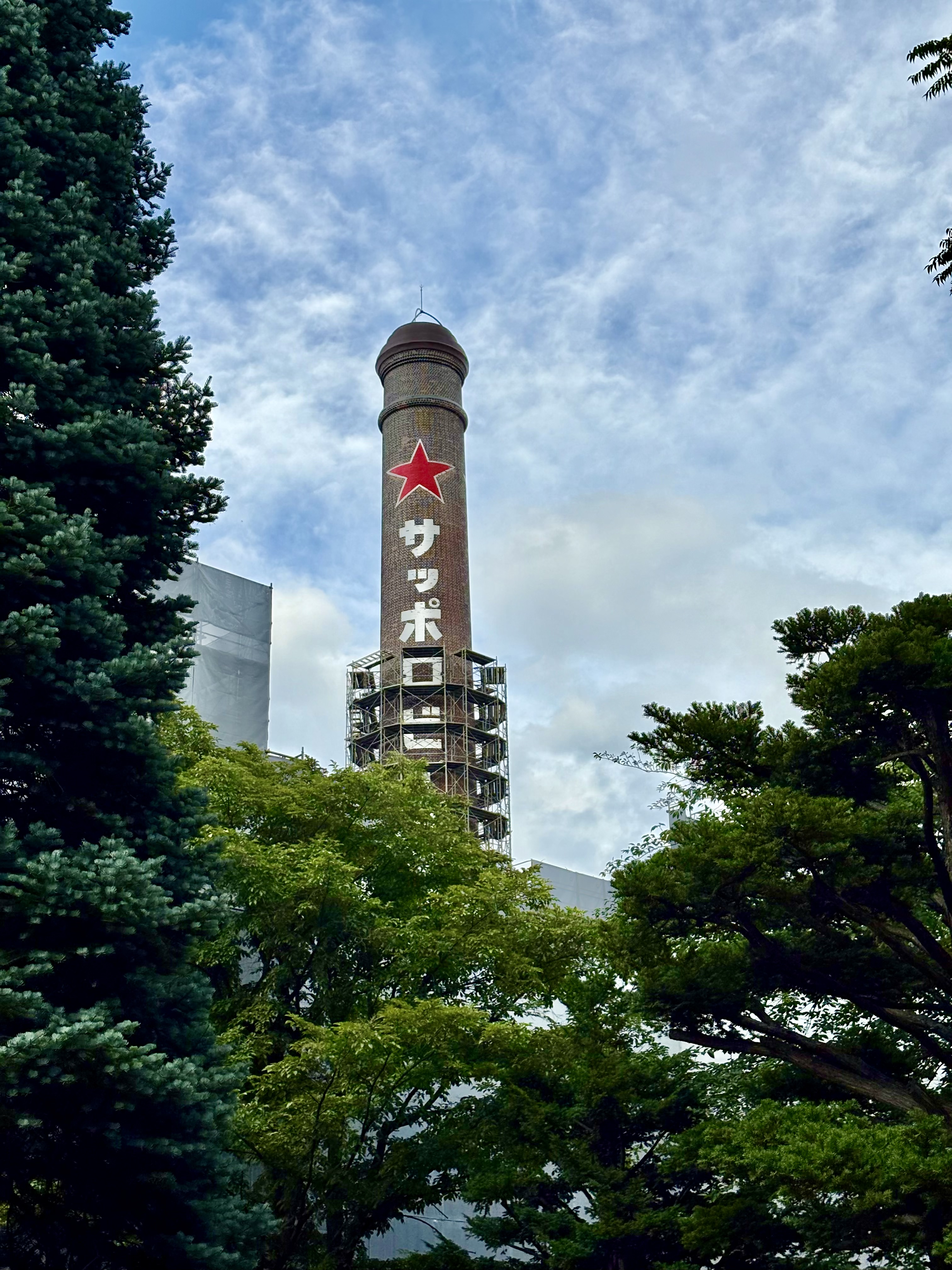
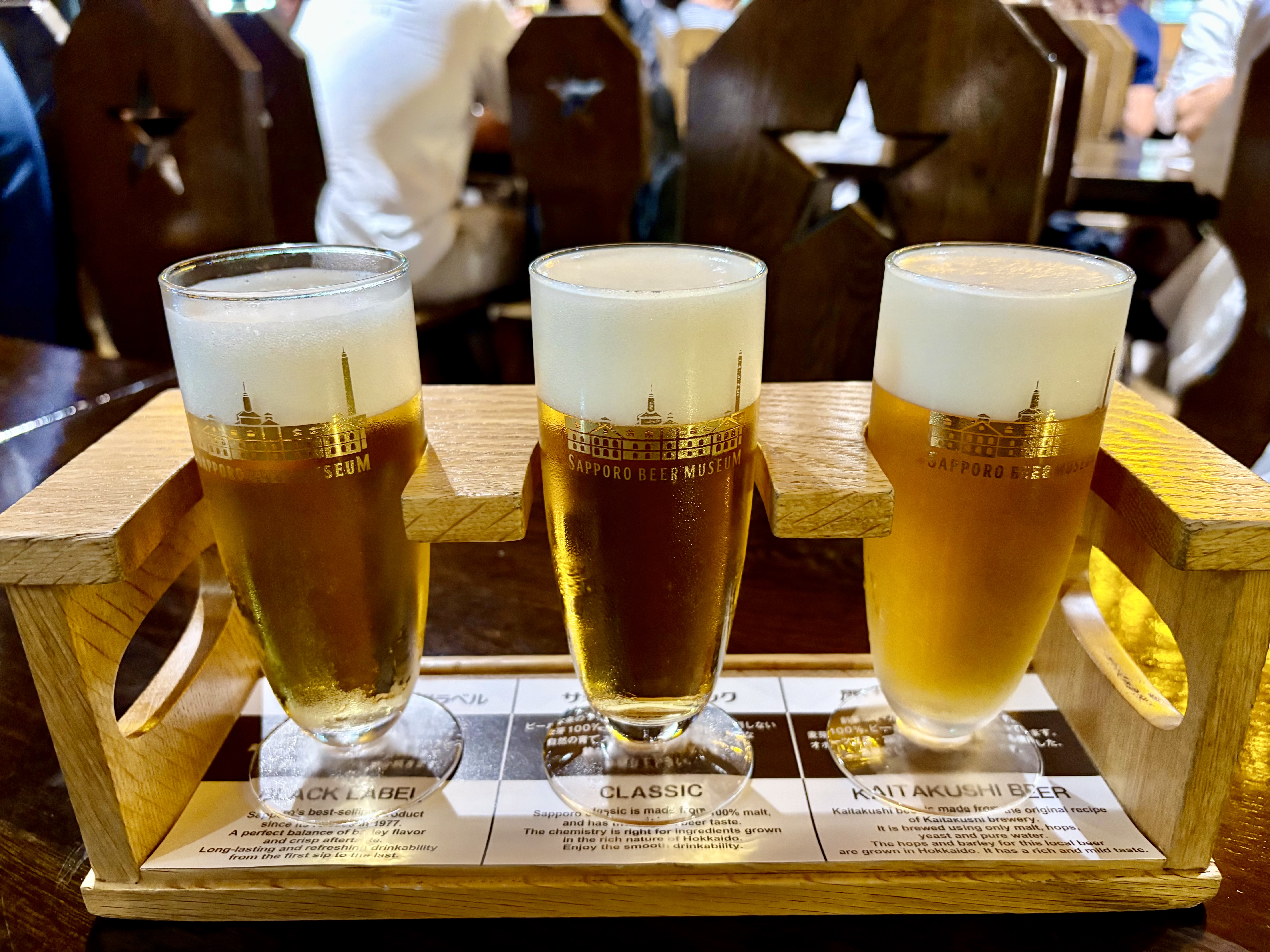
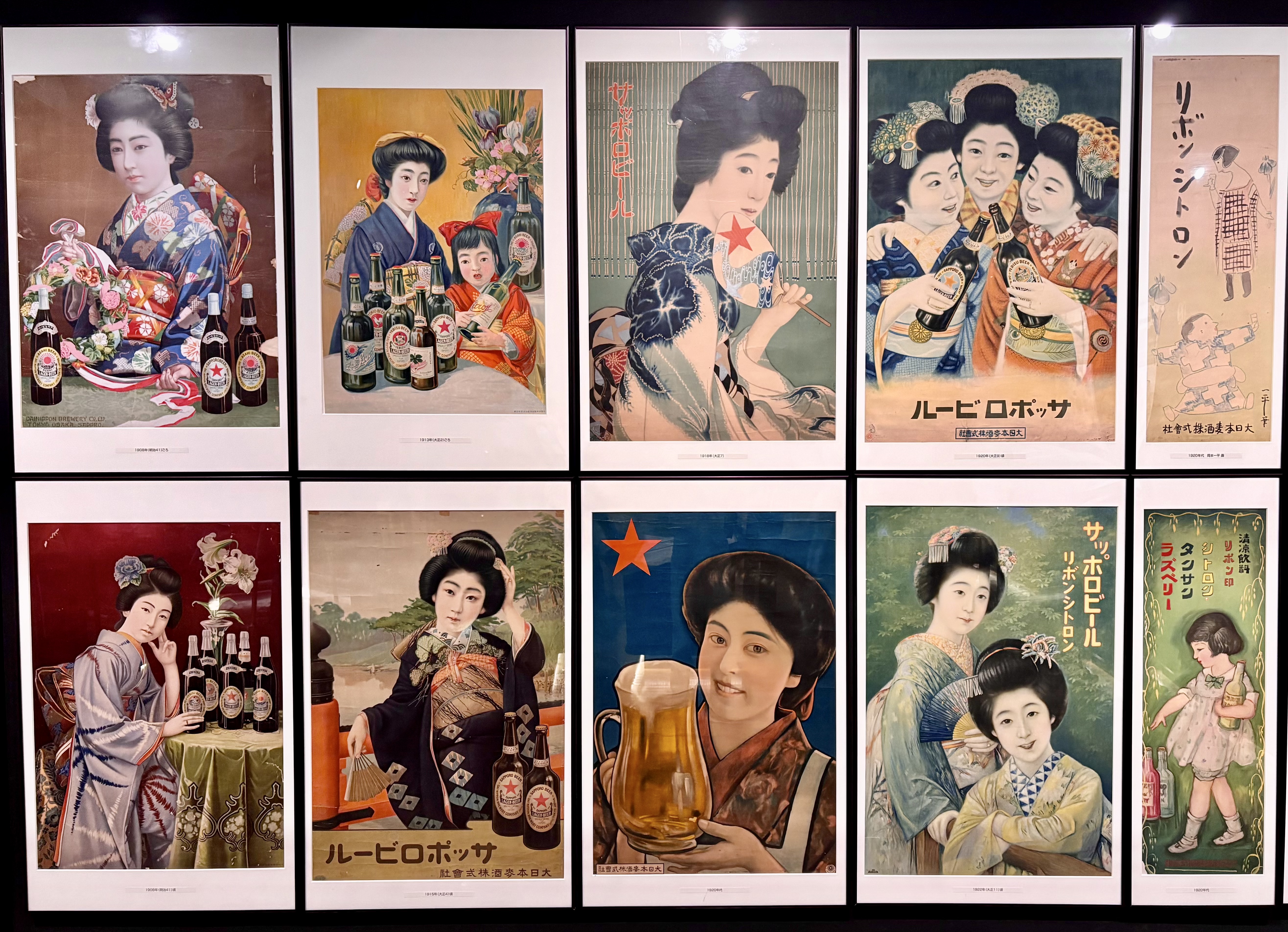
But while Hokkaido might have some unique wine, Sapporo is actually well-known for their beer and we decided to learn more about it at the Sapporo Beer Museum. While the outside was under construction during our visit, we still got to tour the exhibits and then drink a flight ourselves. The black label was tasty, the classic was syrupy, and the kaitakushi was more like drinking pennies! But we learned so much about beer making in Sapporo and why the climate and snow helped the brewery preserve beer before the rest of the country.
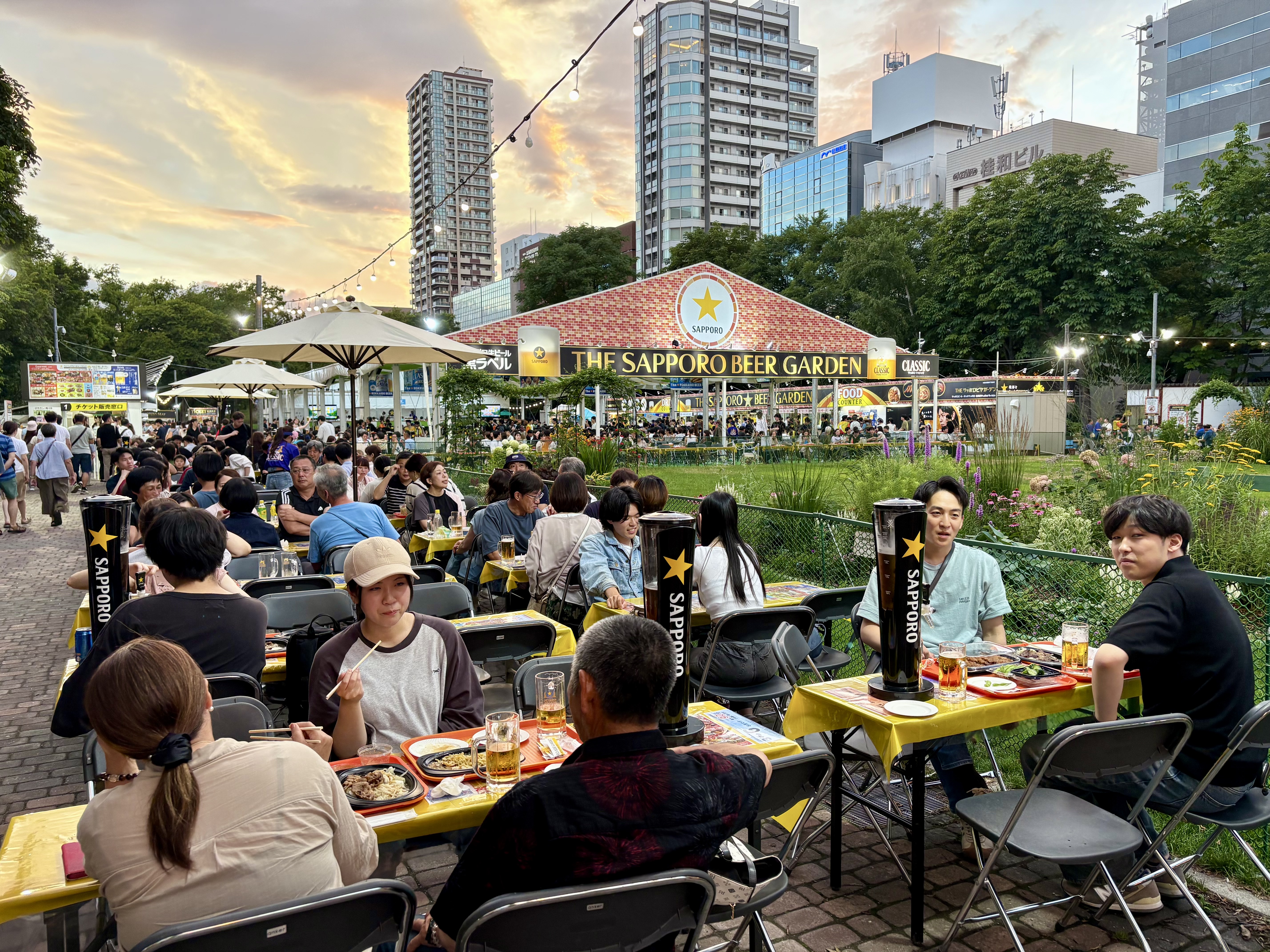
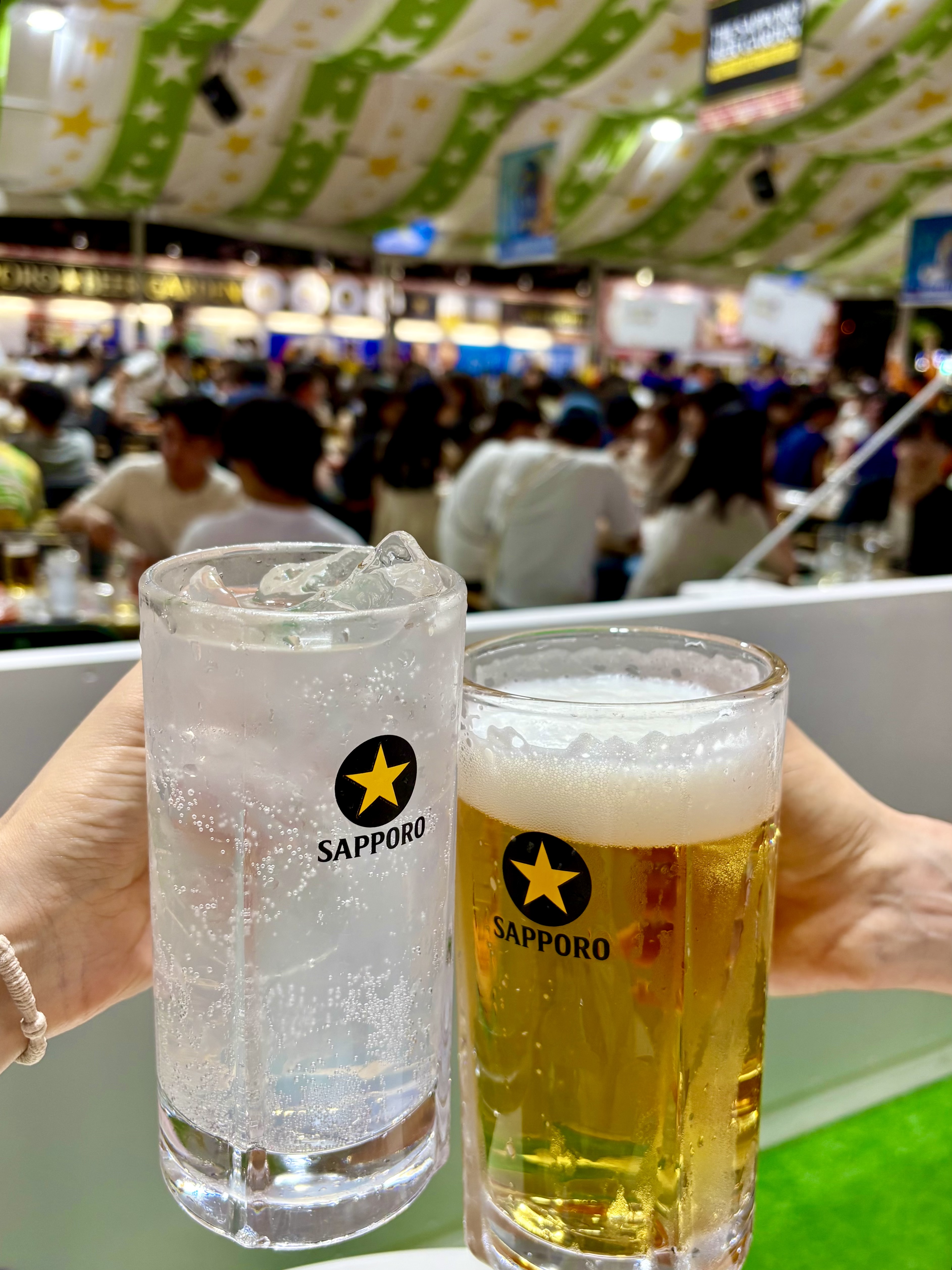
Sapporo loves their beer so much that not only can you drink it at the museum and other beer halls throughout the city, but summer is beer season! They open up the Sapporo Beer Garden in Odori Park every summer and it’s so big that even Germany’s Hofbräuhaus has a formal tent, along with other Japanese beers.
Honestly, if Munich and Minnesota had a baby, it just might be summertime in Sapporo!
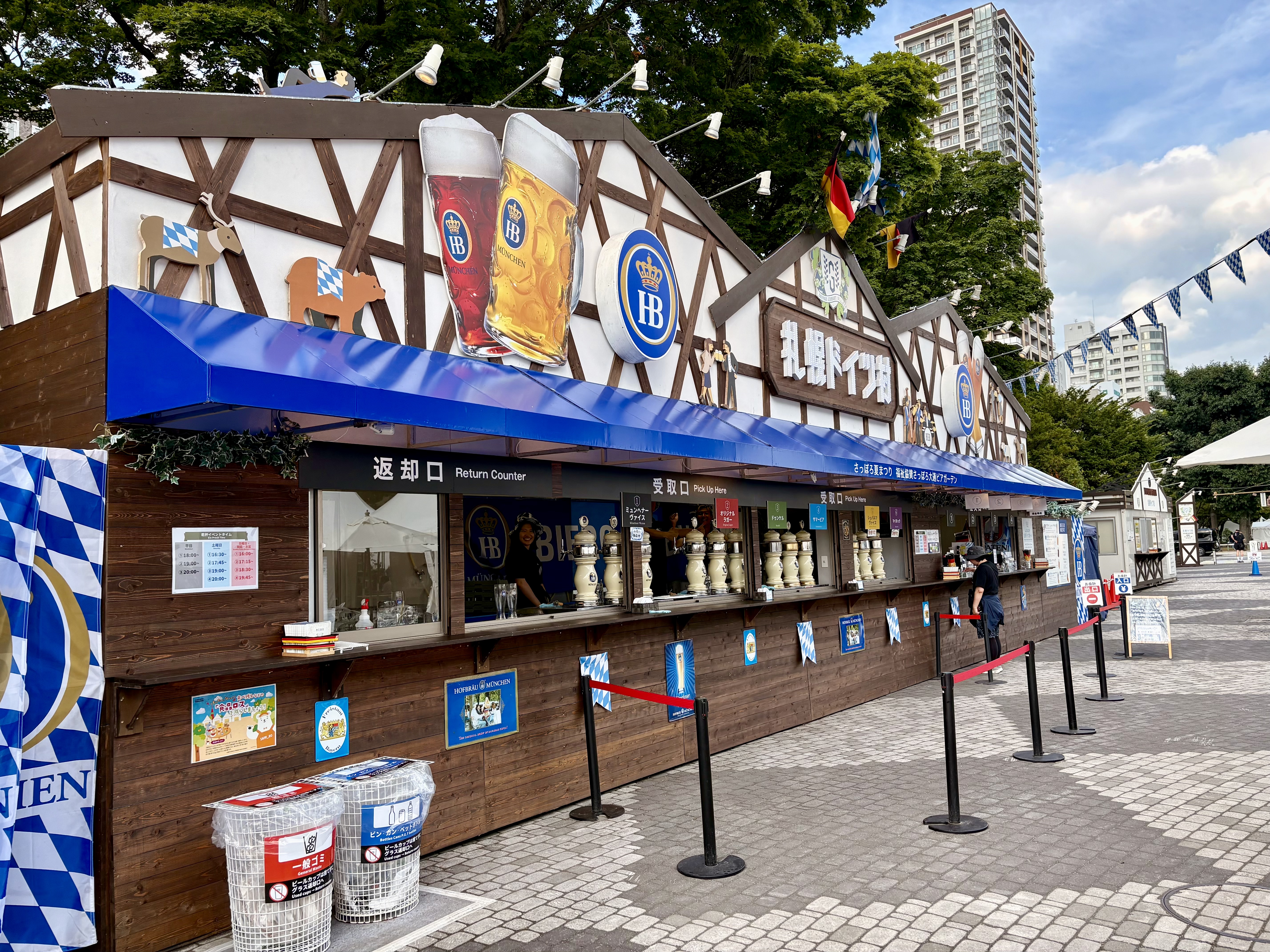
These beer gardens are open from mid-July to mid-August and we found ourselves going back again and again. The vibe is so festive, the weather so perfect, and everyone is so friendly! And when we needed a break from beer (which we sometimes did), Chandler was always able to order an NA and I could get a Sapporo Lemon Sour.
The only meal we missed was at Umizora No Haru, one of the only restaurants in the world that serves indigenous Ainu cuisine. We couldn’t find anything on the menu for vegetarians, so this would be my recommendation for carnivores.
Part of what makes Hokkaido unique is that it was settled later than the rest of Japan. In fact, although Japanese settlers have controlled the southern tip of the island since the 16th century, Hokkaido was primarily inhabited by the Ainu people. In 1869, the entire island was colonized following the Meiji Restoration.
Japanese settlers dispossessed the Ainu from their land and forced them to assimilate. Plenty of parallels can be drawn between what happened to the Ainu and what happened to Indigenous tribes in the United States and Canada. Minnesota alone has 11 reservations, mainly Ojibwe and Dakota (my family is from White Earth Reservation).
As a lover of cultural foods (I always try to eat wild rice and fry bread when I go back home), I was curious about what traditional foods the Ainu made. Thwarted by the menu, we decided to visit Upopoy: National Ainu Museum and Park instead. Upopoy is a national center for learning about and promoting Ainu history and culture and includes a museum, traditional village, crafts studio, workshop, cultural exchange hall, gardens, and more, all around Lake Poroto.
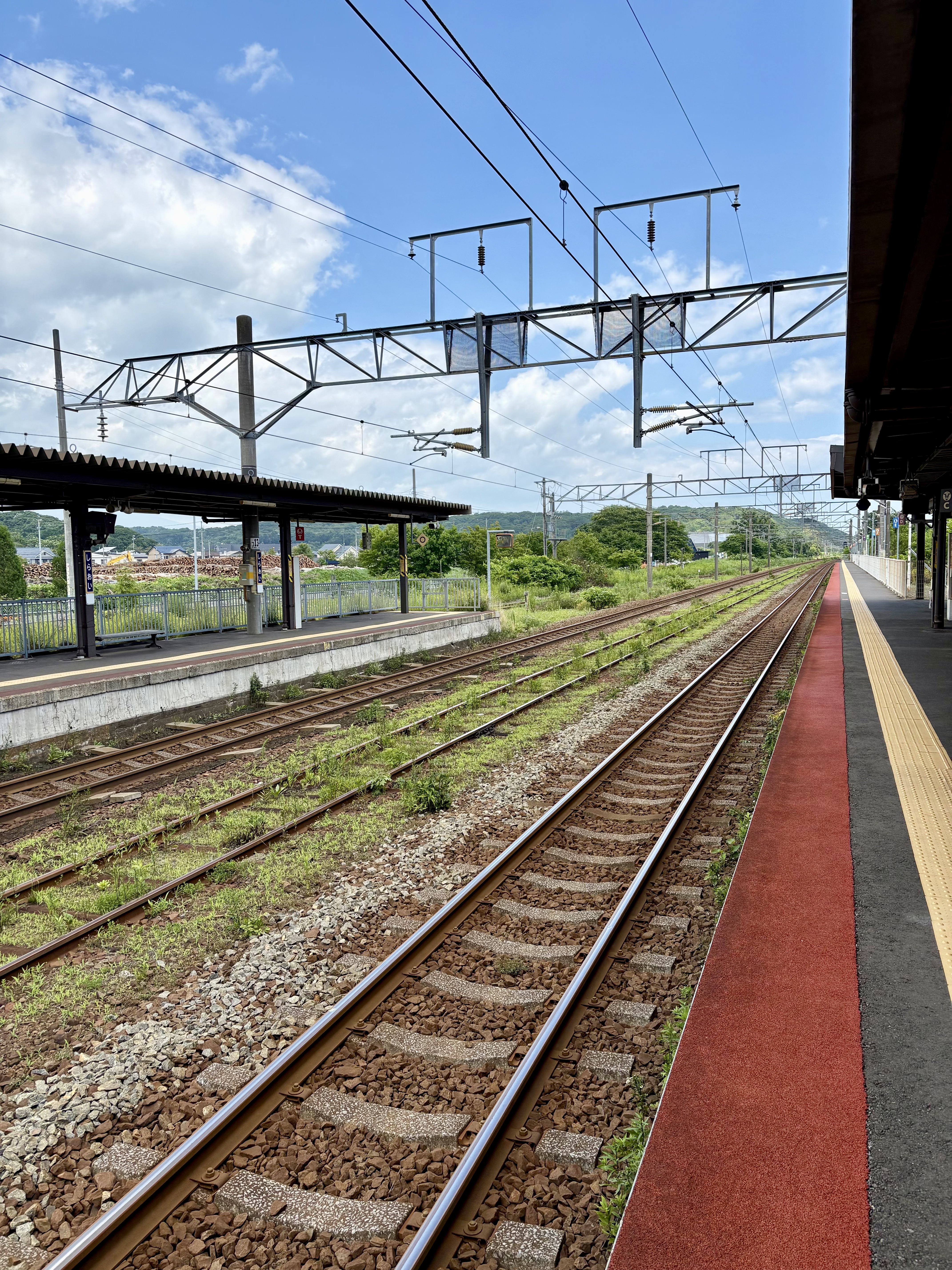
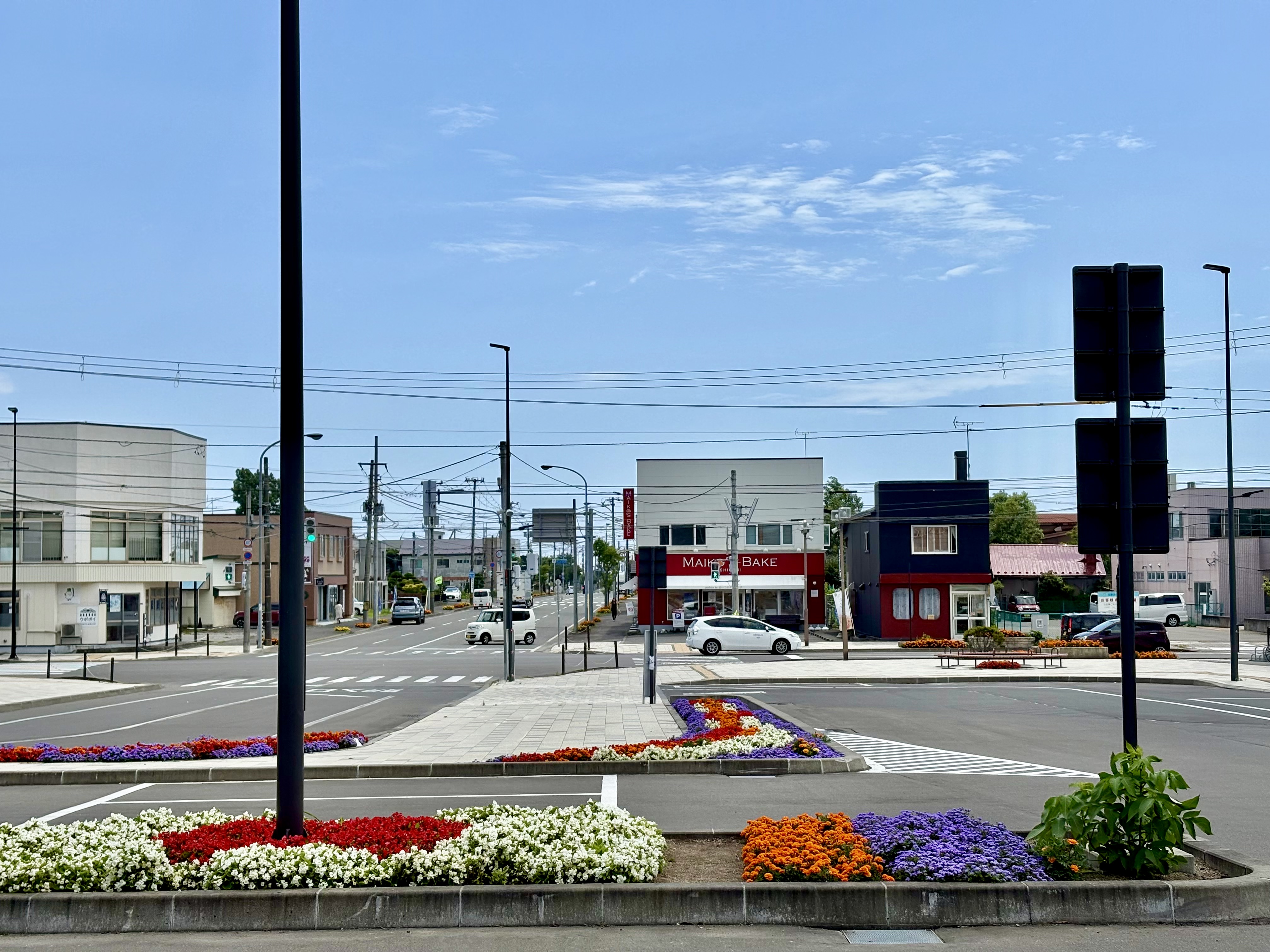
An hour train ride away from Sapporo, we chose a Tuesday to visit, since we’d read that they’re closed on Mondays. We hopped on the train and arrived in Shiraoi, only to discover that the museum is closed on Tuesdays when Monday is a holiday. That’s very specific.
On most other trips, this would have been extremely frustrating (and I’m not going to lie, I was disappointed), but we got to buy made-in-Hokkaido snacks for the train, sit in a local station, and see the ocean while on the train ride. So after agreeing that we’d return to Hokkaido in the future (we also wanted to visit the lavender fields in Furano), we ended up just enjoying our misadventure. It also helped that we were able to eat at Harukor Ainu in Tokyo the following week. It wasn’t much more vegetarian friendly, but I was determined to make it work!
All of the connections to Minnesota made Sapporo feel so relaxed and welcoming. It felt so incredibly far away from Tokyo (both in distance and culture), but I can honestly say that I cannot wait for our return trip – likely again in the summer!
And look, another great tower!